Passage
Research suggests that cognitive changes occur with age. Though dementia is common, occurring in about 14% of individuals age 71 and older and in almost 34% of individuals 90 and older, a majority of older adults exhibit some degree of "normal" cognitive decline. The following studies were conducted on 605 older adults (mean age = 78.2) who did not show any signs of dementia and 590 younger adult participants (mean age = 28.8) .Cognition studiesParticipants were asked to solve five puzzles designed to test their ability to apply new information, reason inductively and deductively, and use logic. Participants were also asked to complete a 20-item vocabulary and grammar test. The older adults performed significantly worse than the younger adults on the puzzles, but there was no significant difference between the groups on the vocabulary/grammar test.Focus studiesWhen asked to read a short story and then answer a series of questions assessing comprehension (focused condition) , older adults performed equally well as the younger adults. However, when asked to read a similar story while wearing headphones playing another story that was to be ignored (distraction condition) , older adults performed worse than younger adults when answering questions assessing comprehension of the story they read.Memory studiesWhen asked to memorize 30 neutral items (eg, a key, a pencil, a book) , the images of which were presented serially, younger adults performed significantly better when asked to list the items immediately after seeing them and when asked to list the items after performing a distraction task. In a second trial, both groups were serially presented with 30 pictures of faces showing positive, negative, or neutral expressions. The groups were later asked to identify these faces among a set of 100. Results are shown in Figure 1.
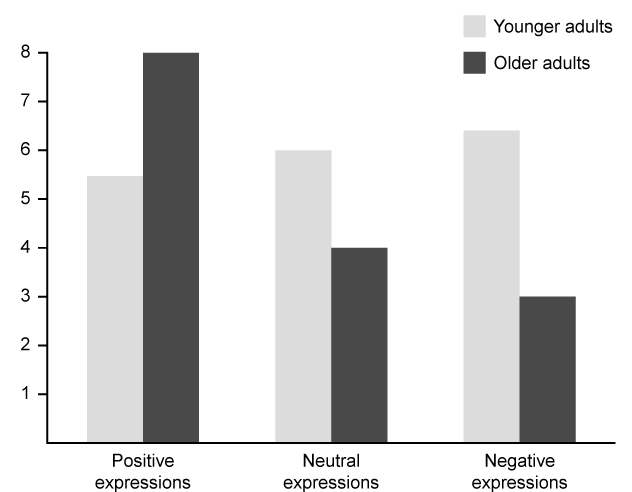 Figure 1 Average number of correctly identified faces for older and younger adult groups
-The cognition studies and focus studies suggest that aging is correlated with declines in:
A) crystallized intelligence and divided attention.
B) crystallized intelligence and selective attention.
C) fluid intelligence and divided attention.
D) fluid intelligence and selective attention.
Correct Answer:

Verified
Q90: Passage
Suicide is one of the leading causes
Q91: Passage
Suicide is one of the leading causes
Q92: Passage
Suicide is one of the leading causes
Q93: Passage
People tend to believe that they are
Q94: Passage
People tend to believe that they are
Q96: The graph below represents the relationship between
Q97: Passage
Research suggests that cognitive changes occur with
Q98: Passage
Suicide is one of the leading causes
Q99: Passage
Language is a skill acquired during early
Q100: Passage
Research suggests that cognitive changes occur with
Unlock this Answer For Free Now!
View this answer and more for free by performing one of the following actions

Scan the QR code to install the App and get 2 free unlocks

Unlock quizzes for free by uploading documents