A 68-year-old woman arrives at the clinic after suffering from recurrent bacterial sinusitis, pneumonia, and urinary tract infections for several months. There are no preexisting medical issues or a history of serious illnesses in infancy for the patient. She does not smoke, drink, or use illegal drugs. The temperature is 36.6 C (97.9 F) , the blood pressure is 130/76 mm Hg, and the pulse rate is 72 beats per minute. The lungs are clear to auscultation, the heart sounds are normal, and the belly is soft and nontender with no hepatosplenomegaly on physical examination. Laboratory results show normocytic normochromic anemia. As demonstrated here, a bone marrow aspirate has an increased number of cells. 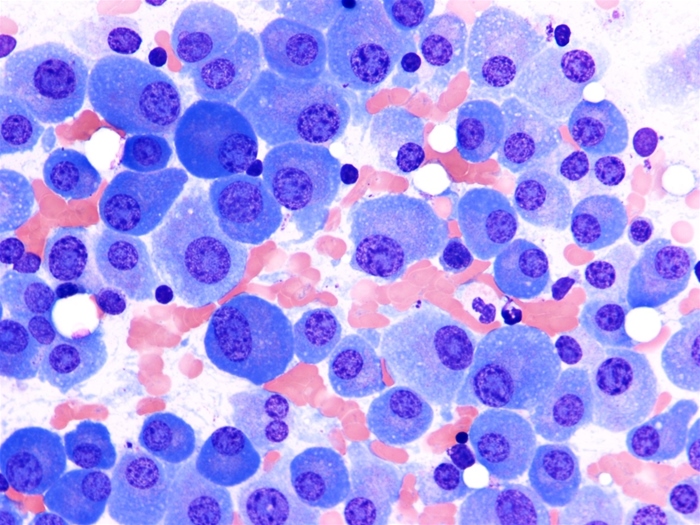 Which of the following is the most likely cause of this patient's increased susceptibility to infections?
A) Aberrant lysosomal transport and fusion in leukocytes
B) Decreased production of functional immunoglobulins
C) Defective adhesion and transmigration of leukocytes
D) Impaired formation of membrane attack complex
E) Impaired phagocytic ability to generate superoxide
Correct Answer:

Verified
Q36: A 68-year-old man with a history of
Q37: A 29-year-old woman, gravida 2 para 2,
Q38: A 64-year-old man is brought to the
Q39: A 4-month-old girl is brought to the
Q40: Physicians involved in regenerative medicine research conduct
Q41: Fourth-year medical students are recruited for a
Q42: A 50-year-old lady visits the office to
Q43: A 19-year-old man arrives to the office
Q45: A 22-year-old woman arrives to the clinic
Q46: An 8-year-old boy is evaluated in the
Unlock this Answer For Free Now!
View this answer and more for free by performing one of the following actions

Scan the QR code to install the App and get 2 free unlocks

Unlock quizzes for free by uploading documents