A 34-year-old guy visits the office to have his opioid use disorder assessed. In his mid-20s, oxycodone was prescribed for a sports-related injury. He became dependent on medication and started injecting heroin to replace it. The patient has experienced many overdoses in the last few years that have necessitated the use of naloxone. He recently attempted to stop using heroin on his own, but kept relapsing. He has been abstaining for two days, yet he still has intense desires. The patient is given a prescription for buprenorphine after a review of alternative treatment options. Below is an illustration of this medication's dose-response curve: 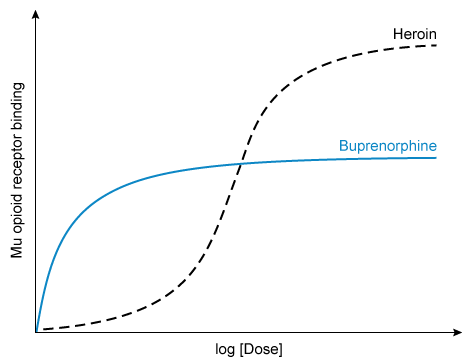 Which of the following clinical pharmacologic effects of buprenorphine is most likely?
A) Buprenorphine can fully reverse the effect of heroin overdose
B) Buprenorphine can precipitate or treat opioid withdrawal from heroin
C) Buprenorphine carries a higher risk of hypoventilation compared to heroin
D) Buprenorphine overdose is more easily reversed with naloxone compared to heroin
Correct Answer:

Verified
Q180: A 32-year-old woman comes to the physician
Q181: A 43-year-old woman visits the clinic because
Q182: A pharmaceutical researcher is researching a brand-new
Q183: A 44-year-old woman comes to the physician
Q184: A 54-year-old man's paroxysmal atrial fibrillation is
Q186: A 42-year-old woman comes to the physician
Q187: A 62-year-old man is admitted to the
Q188: A 48-year-old guy visits the clinic because
Q189: A 23-year-old man comes to the physician
Q190: A 44-year-old woman arrives at the clinic
Unlock this Answer For Free Now!
View this answer and more for free by performing one of the following actions

Scan the QR code to install the App and get 2 free unlocks

Unlock quizzes for free by uploading documents