







 تكلم مع الذكاء الاصطناعي


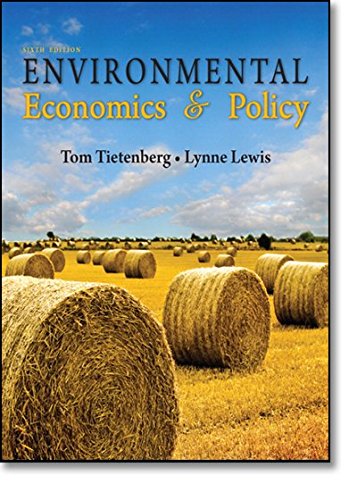
Environmental Economics & Policy 6th Edition by Tom Tietenberg,Lynne Lewis
النسخة 6الرقم المعياري الدولي: 978-0321599490Environmental Economics & Policy 6th Edition by Tom Tietenberg,Lynne Lewis
النسخة 6الرقم المعياري الدولي: 978-0321599490 تمرين 3
What Is a "Public Purpose"?
The U.S. Constitution only allows the eminent domain power to be used to accomplish a "public purpose." What exactly is a public purpose?
Although acquiring land for typical facilities such as parks and jails is settled terrain, recent decisions that justify the use of eminent domain to condemn private neighborhoods to facilitate urban renewal by private developers are much more controversial.
For example, in Kelo v. City of New London, Conn. 125 S.Ct. 2655 (2005) the court upheld the city's development authority to use eminent domain to acquire parcels of land that it planned to lease to private developers in exchange for their agreement to develop the land according to the terms of a development plan. Can private development such as this fulfill the "public purpose" test?
Those who support this decision point out that large-scale private developments face many of the same market power obstacles (such as "holdouts") as faced by the public sector. Furthermore, since large-scale private developments of this type provide such societal benefits as jobs and increased taxes to the community, eminent domain is seen as justified to prevent inefficient barriers that inhibit development.
Opponents suggest that this is merely using governmental power to favor one set of private landowners (the developers) over others (the current owners of the land).
Should the scope of "public use" include large-scale private developments such as this? When it is allowed, should the developers be under any special requirements to assure that the public benefits are forthcoming?
The U.S. Constitution only allows the eminent domain power to be used to accomplish a "public purpose." What exactly is a public purpose?
Although acquiring land for typical facilities such as parks and jails is settled terrain, recent decisions that justify the use of eminent domain to condemn private neighborhoods to facilitate urban renewal by private developers are much more controversial.
For example, in Kelo v. City of New London, Conn. 125 S.Ct. 2655 (2005) the court upheld the city's development authority to use eminent domain to acquire parcels of land that it planned to lease to private developers in exchange for their agreement to develop the land according to the terms of a development plan. Can private development such as this fulfill the "public purpose" test?
Those who support this decision point out that large-scale private developments face many of the same market power obstacles (such as "holdouts") as faced by the public sector. Furthermore, since large-scale private developments of this type provide such societal benefits as jobs and increased taxes to the community, eminent domain is seen as justified to prevent inefficient barriers that inhibit development.
Opponents suggest that this is merely using governmental power to favor one set of private landowners (the developers) over others (the current owners of the land).
Should the scope of "public use" include large-scale private developments such as this? When it is allowed, should the developers be under any special requirements to assure that the public benefits are forthcoming?
التوضيح موثّق
موثّق
موثّق
In our views, scope of "public use" shou...

Environmental Economics & Policy 6th Edition by Tom Tietenberg,Lynne Lewis

لماذا لم يعجبك هذا التمرين؟
أخرى 8 أحرف كحد أدنى و 255 حرفاً كحد أقصى
حرف 255






