







 تكلم مع الذكاء الاصطناعي


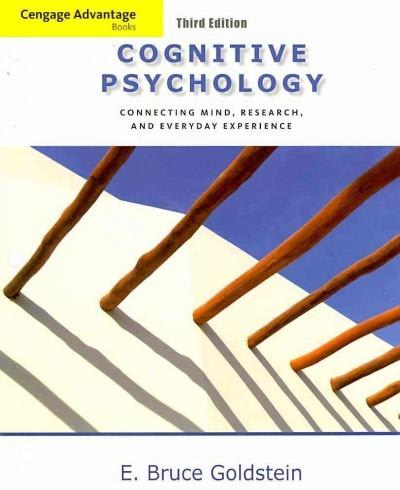
Cognitive Psychology 3rd Edition by Robert Hershberger, Goldstein,Bruce Goldstein
النسخة 3الرقم المعياري الدولي: 978-1133009122Cognitive Psychology 3rd Edition by Robert Hershberger, Goldstein,Bruce Goldstein
النسخة 3الرقم المعياري الدولي: 978-1133009122 تمرين 2
The idea that we have something called "the mind" that is responsible for our thoughts and behavior is reflected in the many ways that the word mind can be used. A few examples of the use of mind in everyday language were cited at the beginning of the chapter. See how many more examples you can think of that illustrate different uses of the word mind, and decide how relevant each is to what you will be studying in cognitive psychology (as indicated by the table of contents of this book).
التوضيح موثّق
موثّق
موثّق
Mind has different definitions and the word 'mind' can be used in different ways. It can be said as a set of cognitive abilities, such as thinking, memory, reasoning, attention, perception and judgment. This applies to either humans or other life forms on earth. Many psychologists have developed influential theories and approaches on the nature of human mind. Many approaches helped to understand the ways how the mental phenomena of human have been replicated in the machines such as computers.
Mind is a group of independent properties, which may include visualizing, believing, thinking, reasoning, memorizing, feeling and being conscious. Some of the examples of uses of mind in our daily language are as follows:
i. I am going to give my neighbor a piece of my mind. (The mind involved in anger, a feeling).
ii. During my presentation before my managers, I was so nervous that my mind went blank. (The mind relating to the weak memory and indicates that I forgot everything)
iii. She is an open-minded person. (The mind used to describe a character that she believes in new ideas).
iv. Those hurting words stayed in my mind the whole day. (The mind as involved in memory).
v. She has the right to change her mind anytime, depending on the situation. (The mind involved in decision-making).
vi. My friend took my mind back to childhood memories with her talk. (The mind involved in thinking the past). Mind related to Cognitive psychology: Cognitive psychology is the scientific study of different mental processes, which is carried out by our mind. It focuses on the way people process the information and the behavioral response. This study helps to read one's mind and the operation of mind. The most important fact about mind is that it is always 'on'. Thus, each of the mental properties involved in the above examples tell us that the mind can act in different ways for different things and in different situations. The mind, not only controls all the processes, but also knows the answers to various questions, solves problems, takes decision, expresses feelings, indicates the memory capacity, tells the thought process, focuses on different things, believes on various ideas emerging from different persons, wants to achieve something, remembering and many more.
Mind is a group of independent properties, which may include visualizing, believing, thinking, reasoning, memorizing, feeling and being conscious. Some of the examples of uses of mind in our daily language are as follows:
i. I am going to give my neighbor a piece of my mind. (The mind involved in anger, a feeling).
ii. During my presentation before my managers, I was so nervous that my mind went blank. (The mind relating to the weak memory and indicates that I forgot everything)
iii. She is an open-minded person. (The mind used to describe a character that she believes in new ideas).
iv. Those hurting words stayed in my mind the whole day. (The mind as involved in memory).
v. She has the right to change her mind anytime, depending on the situation. (The mind involved in decision-making).
vi. My friend took my mind back to childhood memories with her talk. (The mind involved in thinking the past). Mind related to Cognitive psychology: Cognitive psychology is the scientific study of different mental processes, which is carried out by our mind. It focuses on the way people process the information and the behavioral response. This study helps to read one's mind and the operation of mind. The most important fact about mind is that it is always 'on'. Thus, each of the mental properties involved in the above examples tell us that the mind can act in different ways for different things and in different situations. The mind, not only controls all the processes, but also knows the answers to various questions, solves problems, takes decision, expresses feelings, indicates the memory capacity, tells the thought process, focuses on different things, believes on various ideas emerging from different persons, wants to achieve something, remembering and many more.

Cognitive Psychology 3rd Edition by Robert Hershberger, Goldstein,Bruce Goldstein

لماذا لم يعجبك هذا التمرين؟
أخرى 8 أحرف كحد أدنى و 255 حرفاً كحد أقصى
حرف 255






