expand icon
book Basic Econometrics 5th Edition by Damodar Gujarati,Dawn Porter cover

Basic Econometrics 5th Edition by Damodar Gujarati,Dawn Porter

النسخة 5الرقم المعياري الدولي: 978-0073375779
book Basic Econometrics 5th Edition by Damodar Gujarati,Dawn Porter cover

Basic Econometrics 5th Edition by Damodar Gujarati,Dawn Porter

النسخة 5الرقم المعياري الدولي: 978-0073375779
تمرين 1
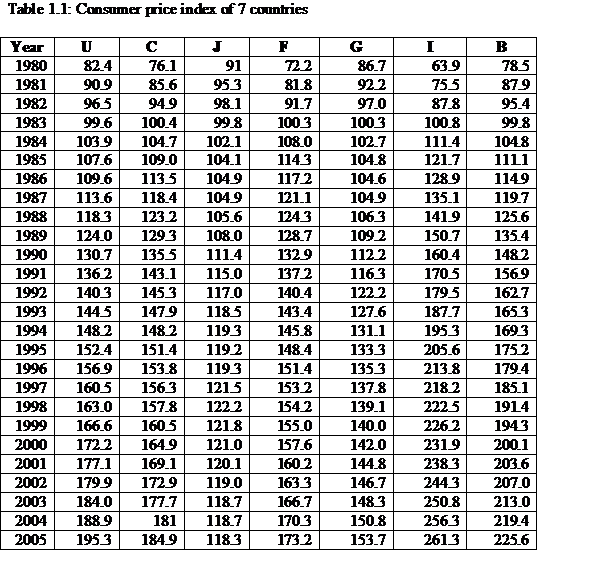
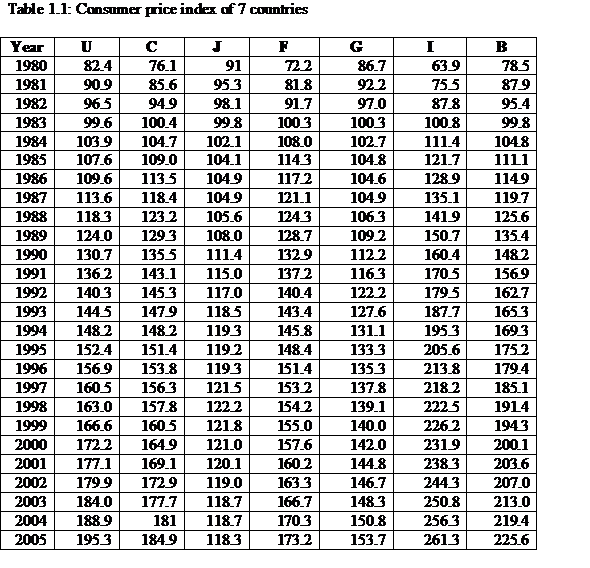
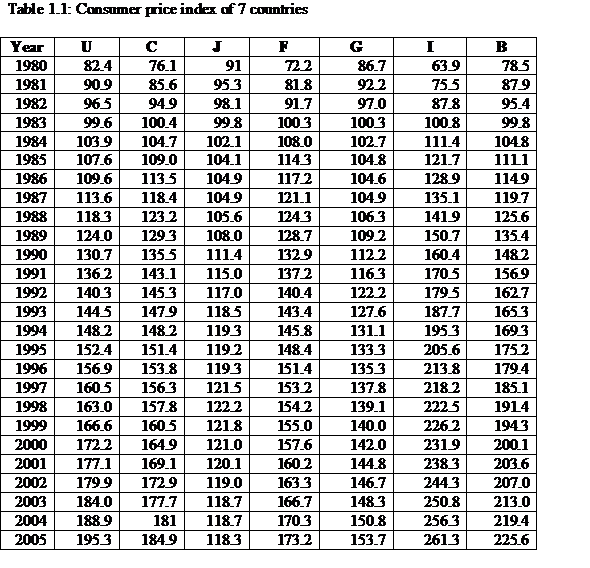
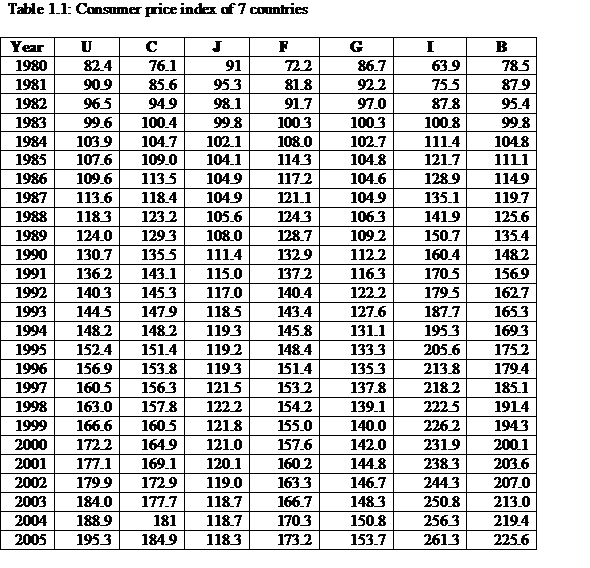
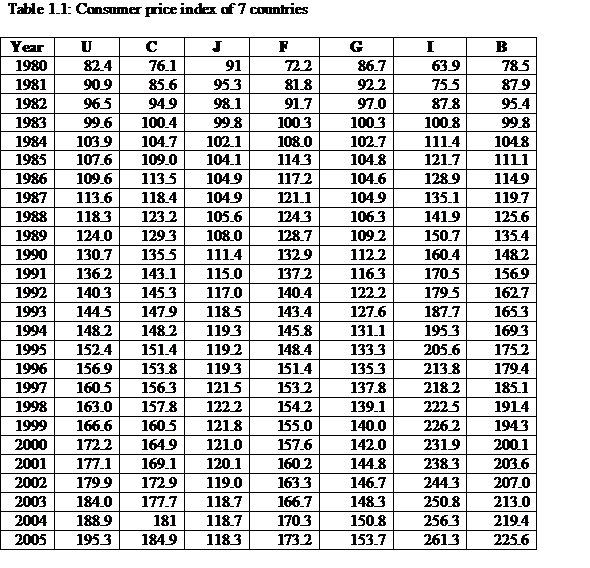
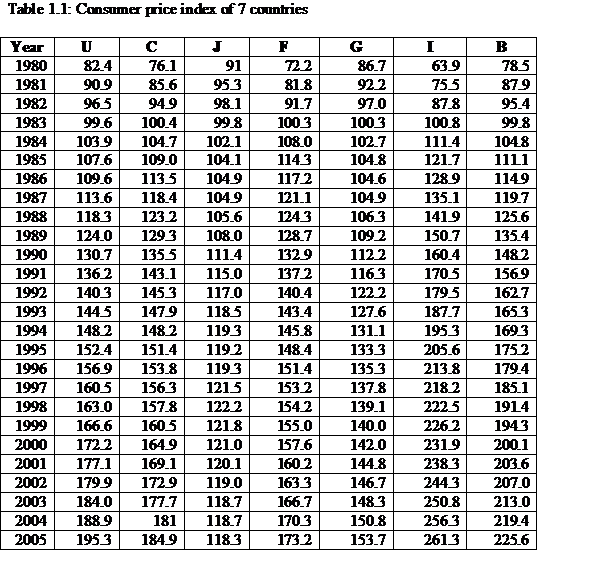
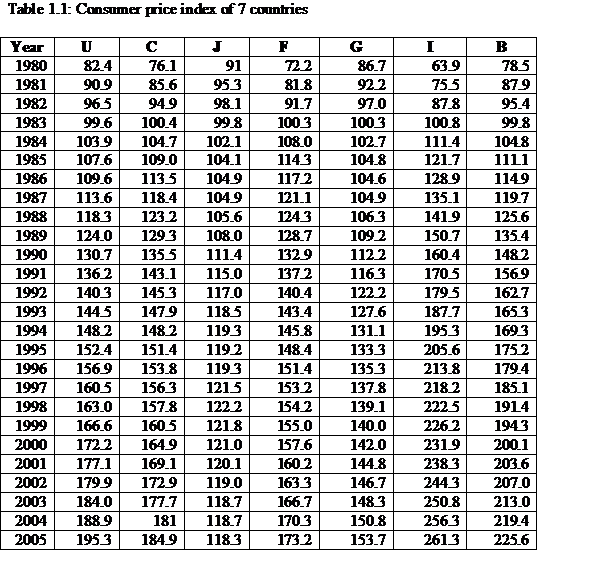
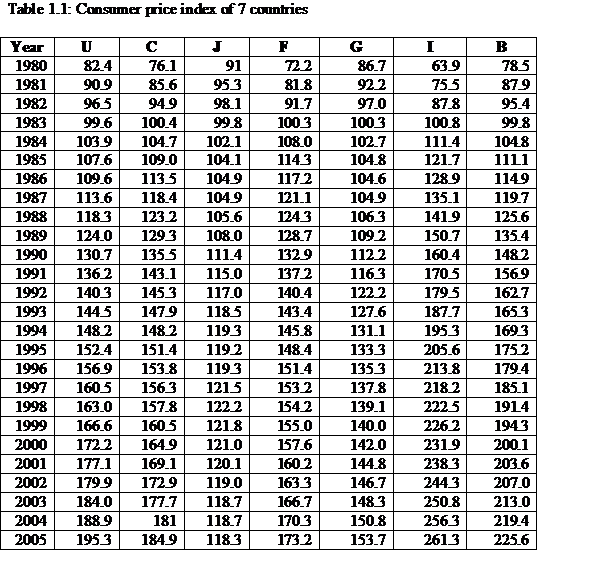
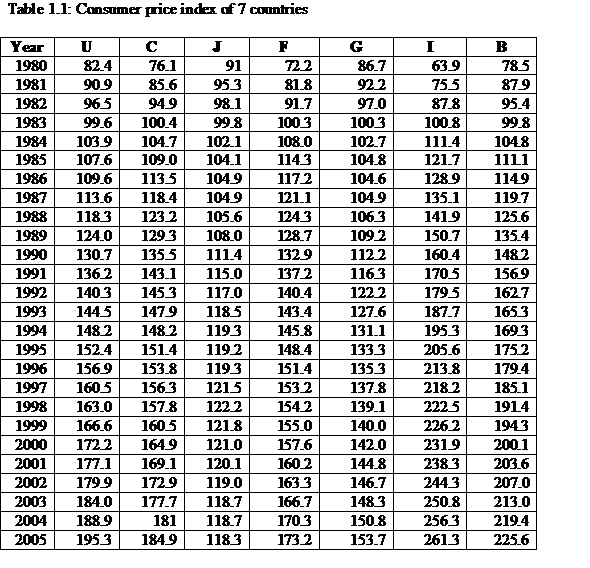
Table 1.3 gives data on the Consumer Price Index (CPI) for seven industrialized countries with 19821984 = 100 as the base of the index.
a. From the given data, compute the inflation rate for each country. 17
b. Plot the inflation rate for each country against time (i.e., use the horizontal axis for time and the vertical axis for the inflation rate).
c. What broad conclusions can you draw about the inflation experience in the seven countries
d. Which countrys inflation rate seems to be most variable Can you offer any explanation
التوضيح
موثّق
like image
like image
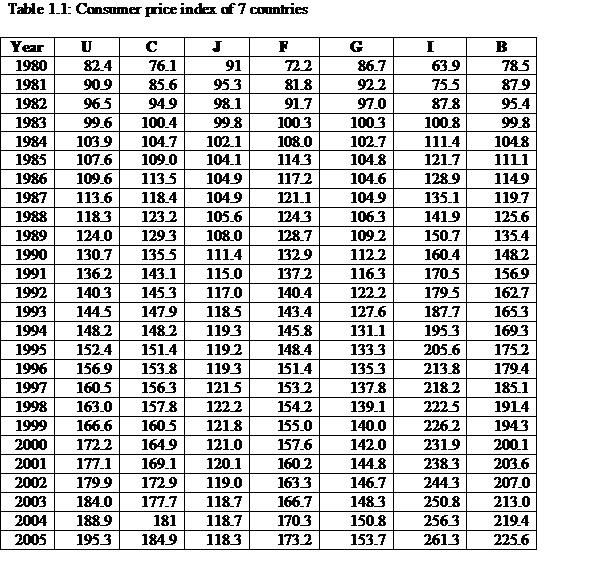
Consumer Price Index measures the weighted average of prices of consumer goods and services purchased in an economy. Table 1.1 gives data on Consumer Price index of 7 countries during period of 1980-2005, with 100 as the base of index during 1982-84. Consumer Price Index measures the weighted average of prices of consumer goods and services purchased in an economy. Table 1.1 gives data on Consumer Price index of 7 countries during period of 1980-2005, with 100 as the base of index during 1982-84.   a. Inflation rate is measure of rate of increase in price level in an economy over a period of time. To find inflation rate of current year, subtract CPI of previous year from CPI of current year, divide the difference by CPI of previous year. And multiply the result by 100. CPI of country U in 1980 is 82.4 and CPI in 1981 is 90.0. Inflation rate of country U in 1981 is given by,   Inflation rate of country U in 1981 is 10.32%. Similarly, CPI of country G in 1994 is 131.1 and CPI in 1995 is 133.3. Inflation rate of country G in 1995 is given by,   Inflation rate of country G in 1995 is 1.68%. Similarly, inflation rate of the 7 countries for each year is calculated in table 1.2   b. Plot the inflation rate of the 7 countries for each year, using Table1.2. The vertical axis shows inflation rate and horizontal axis shows time.   c. The graph 1.1, which shows inflation rate of the 7 countries, can be divided into 4 periods. Separate conclusions can be drawn for each period. From 1981 to 1986, the inflation rate of countries is generally declining. From 1987 to 1990, inflation rate of countries is generally rising. From 1991 to 1994, inflation rate of countries is generally declining. And from 1995 to 2005, inflation rate of countries is generally constant. d. Standard deviation can be used to measure variability in inflation rate of each country over time. It measures the variability of data of a group from mean value of the group. Formula of standard deviation is,   Where n is number of observations X bar is mean of data set Calculate standard deviation for inflation rate of country U, using above formula.   Standard deviation is,   Standard deviation of country U is 1.77 Calculate standard deviation for inflation rate of country C.   Standard deviation is,   0 Standard deviation of country C is 2.79 Calculate standard deviation for inflation rate of country J.   1 Standard deviation is,   2 Standard deviation of country J is 1.45 Calculate standard deviation for inflation rate of country F.   3 Standard deviation is,   4 Standard deviation of country F is 3.34 Calculate standard deviation for inflation rate of country G.   5 Standard deviation is,   6 Standard deviation of country G is 1.57 Calculate standard deviation for inflation rate of country I.   7 Standard deviation is,   8 Standard deviation of country I is 4.48 Calculate standard deviation for inflation rate of country B.   9 Standard deviation is,   0 Standard deviation of country B is 2.60 Standard deviation for country I is highest. Therefore, inflation rate of country I is most variable. a.


Inflation rate is measure of rate of increase in price level in an economy over a period of time.
To find inflation rate of current year, subtract CPI of previous year from CPI of current year, divide the difference by CPI of previous year. And multiply the result by 100.
CPI of country U in 1980 is 82.4 and CPI in 1981 is 90.0. Inflation rate of country U in 1981 is given by, Consumer Price Index measures the weighted average of prices of consumer goods and services purchased in an economy. Table 1.1 gives data on Consumer Price index of 7 countries during period of 1980-2005, with 100 as the base of index during 1982-84.   a. Inflation rate is measure of rate of increase in price level in an economy over a period of time. To find inflation rate of current year, subtract CPI of previous year from CPI of current year, divide the difference by CPI of previous year. And multiply the result by 100. CPI of country U in 1980 is 82.4 and CPI in 1981 is 90.0. Inflation rate of country U in 1981 is given by,   Inflation rate of country U in 1981 is 10.32%. Similarly, CPI of country G in 1994 is 131.1 and CPI in 1995 is 133.3. Inflation rate of country G in 1995 is given by,   Inflation rate of country G in 1995 is 1.68%. Similarly, inflation rate of the 7 countries for each year is calculated in table 1.2   b. Plot the inflation rate of the 7 countries for each year, using Table1.2. The vertical axis shows inflation rate and horizontal axis shows time.   c. The graph 1.1, which shows inflation rate of the 7 countries, can be divided into 4 periods. Separate conclusions can be drawn for each period. From 1981 to 1986, the inflation rate of countries is generally declining. From 1987 to 1990, inflation rate of countries is generally rising. From 1991 to 1994, inflation rate of countries is generally declining. And from 1995 to 2005, inflation rate of countries is generally constant. d. Standard deviation can be used to measure variability in inflation rate of each country over time. It measures the variability of data of a group from mean value of the group. Formula of standard deviation is,   Where n is number of observations X bar is mean of data set Calculate standard deviation for inflation rate of country U, using above formula.   Standard deviation is,   Standard deviation of country U is 1.77 Calculate standard deviation for inflation rate of country C.   Standard deviation is,   0 Standard deviation of country C is 2.79 Calculate standard deviation for inflation rate of country J.   1 Standard deviation is,   2 Standard deviation of country J is 1.45 Calculate standard deviation for inflation rate of country F.   3 Standard deviation is,   4 Standard deviation of country F is 3.34 Calculate standard deviation for inflation rate of country G.   5 Standard deviation is,   6 Standard deviation of country G is 1.57 Calculate standard deviation for inflation rate of country I.   7 Standard deviation is,   8 Standard deviation of country I is 4.48 Calculate standard deviation for inflation rate of country B.   9 Standard deviation is,   0 Standard deviation of country B is 2.60 Standard deviation for country I is highest. Therefore, inflation rate of country I is most variable. Inflation rate of country U in 1981 is 10.32%.
Similarly, CPI of country G in 1994 is 131.1 and CPI in 1995 is 133.3. Inflation rate of country G in 1995 is given by, Consumer Price Index measures the weighted average of prices of consumer goods and services purchased in an economy. Table 1.1 gives data on Consumer Price index of 7 countries during period of 1980-2005, with 100 as the base of index during 1982-84.   a. Inflation rate is measure of rate of increase in price level in an economy over a period of time. To find inflation rate of current year, subtract CPI of previous year from CPI of current year, divide the difference by CPI of previous year. And multiply the result by 100. CPI of country U in 1980 is 82.4 and CPI in 1981 is 90.0. Inflation rate of country U in 1981 is given by,   Inflation rate of country U in 1981 is 10.32%. Similarly, CPI of country G in 1994 is 131.1 and CPI in 1995 is 133.3. Inflation rate of country G in 1995 is given by,   Inflation rate of country G in 1995 is 1.68%. Similarly, inflation rate of the 7 countries for each year is calculated in table 1.2   b. Plot the inflation rate of the 7 countries for each year, using Table1.2. The vertical axis shows inflation rate and horizontal axis shows time.   c. The graph 1.1, which shows inflation rate of the 7 countries, can be divided into 4 periods. Separate conclusions can be drawn for each period. From 1981 to 1986, the inflation rate of countries is generally declining. From 1987 to 1990, inflation rate of countries is generally rising. From 1991 to 1994, inflation rate of countries is generally declining. And from 1995 to 2005, inflation rate of countries is generally constant. d. Standard deviation can be used to measure variability in inflation rate of each country over time. It measures the variability of data of a group from mean value of the group. Formula of standard deviation is,   Where n is number of observations X bar is mean of data set Calculate standard deviation for inflation rate of country U, using above formula.   Standard deviation is,   Standard deviation of country U is 1.77 Calculate standard deviation for inflation rate of country C.   Standard deviation is,   0 Standard deviation of country C is 2.79 Calculate standard deviation for inflation rate of country J.   1 Standard deviation is,   2 Standard deviation of country J is 1.45 Calculate standard deviation for inflation rate of country F.   3 Standard deviation is,   4 Standard deviation of country F is 3.34 Calculate standard deviation for inflation rate of country G.   5 Standard deviation is,   6 Standard deviation of country G is 1.57 Calculate standard deviation for inflation rate of country I.   7 Standard deviation is,   8 Standard deviation of country I is 4.48 Calculate standard deviation for inflation rate of country B.   9 Standard deviation is,   0 Standard deviation of country B is 2.60 Standard deviation for country I is highest. Therefore, inflation rate of country I is most variable. Inflation rate of country G in 1995 is 1.68%.
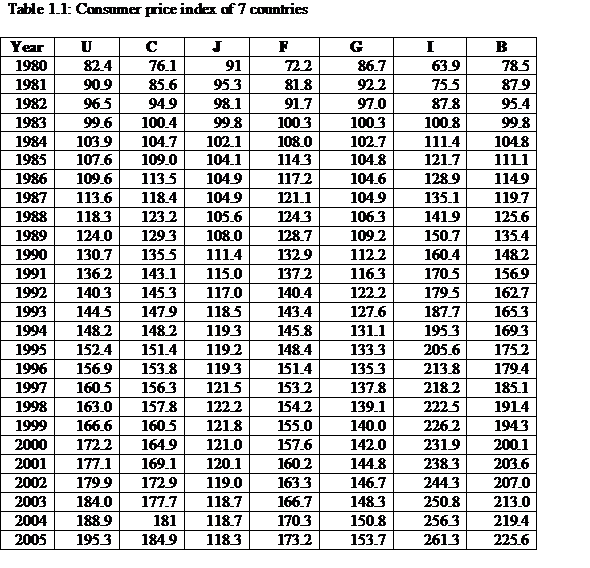
Similarly, inflation rate of the 7 countries for each year is calculated in table 1.2 Consumer Price Index measures the weighted average of prices of consumer goods and services purchased in an economy. Table 1.1 gives data on Consumer Price index of 7 countries during period of 1980-2005, with 100 as the base of index during 1982-84.   a. Inflation rate is measure of rate of increase in price level in an economy over a period of time. To find inflation rate of current year, subtract CPI of previous year from CPI of current year, divide the difference by CPI of previous year. And multiply the result by 100. CPI of country U in 1980 is 82.4 and CPI in 1981 is 90.0. Inflation rate of country U in 1981 is given by,   Inflation rate of country U in 1981 is 10.32%. Similarly, CPI of country G in 1994 is 131.1 and CPI in 1995 is 133.3. Inflation rate of country G in 1995 is given by,   Inflation rate of country G in 1995 is 1.68%. Similarly, inflation rate of the 7 countries for each year is calculated in table 1.2   b. Plot the inflation rate of the 7 countries for each year, using Table1.2. The vertical axis shows inflation rate and horizontal axis shows time.   c. The graph 1.1, which shows inflation rate of the 7 countries, can be divided into 4 periods. Separate conclusions can be drawn for each period. From 1981 to 1986, the inflation rate of countries is generally declining. From 1987 to 1990, inflation rate of countries is generally rising. From 1991 to 1994, inflation rate of countries is generally declining. And from 1995 to 2005, inflation rate of countries is generally constant. d. Standard deviation can be used to measure variability in inflation rate of each country over time. It measures the variability of data of a group from mean value of the group. Formula of standard deviation is,   Where n is number of observations X bar is mean of data set Calculate standard deviation for inflation rate of country U, using above formula.   Standard deviation is,   Standard deviation of country U is 1.77 Calculate standard deviation for inflation rate of country C.   Standard deviation is,   0 Standard deviation of country C is 2.79 Calculate standard deviation for inflation rate of country J.   1 Standard deviation is,   2 Standard deviation of country J is 1.45 Calculate standard deviation for inflation rate of country F.   3 Standard deviation is,   4 Standard deviation of country F is 3.34 Calculate standard deviation for inflation rate of country G.   5 Standard deviation is,   6 Standard deviation of country G is 1.57 Calculate standard deviation for inflation rate of country I.   7 Standard deviation is,   8 Standard deviation of country I is 4.48 Calculate standard deviation for inflation rate of country B.   9 Standard deviation is,   0 Standard deviation of country B is 2.60 Standard deviation for country I is highest. Therefore, inflation rate of country I is most variable. b.
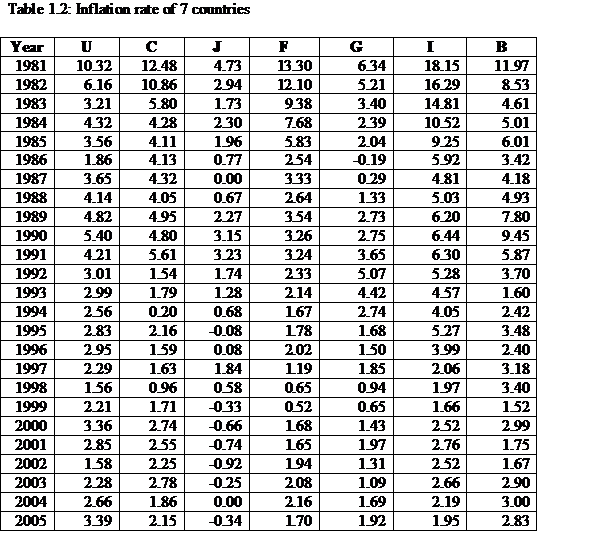
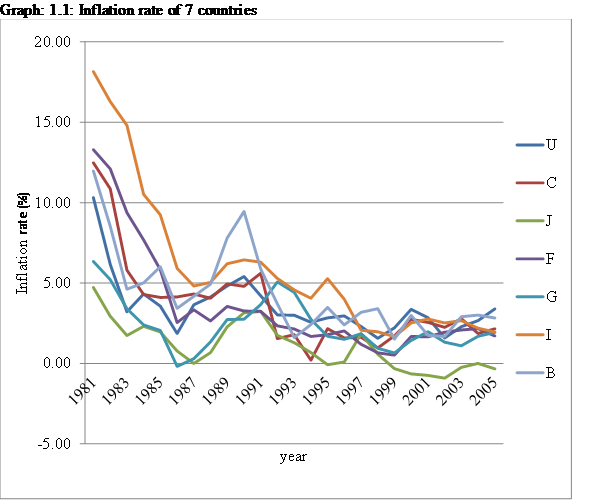
Plot the inflation rate of the 7 countries for each year, using Table1.2. The vertical axis shows inflation rate and horizontal axis shows time. Consumer Price Index measures the weighted average of prices of consumer goods and services purchased in an economy. Table 1.1 gives data on Consumer Price index of 7 countries during period of 1980-2005, with 100 as the base of index during 1982-84.   a. Inflation rate is measure of rate of increase in price level in an economy over a period of time. To find inflation rate of current year, subtract CPI of previous year from CPI of current year, divide the difference by CPI of previous year. And multiply the result by 100. CPI of country U in 1980 is 82.4 and CPI in 1981 is 90.0. Inflation rate of country U in 1981 is given by,   Inflation rate of country U in 1981 is 10.32%. Similarly, CPI of country G in 1994 is 131.1 and CPI in 1995 is 133.3. Inflation rate of country G in 1995 is given by,   Inflation rate of country G in 1995 is 1.68%. Similarly, inflation rate of the 7 countries for each year is calculated in table 1.2   b. Plot the inflation rate of the 7 countries for each year, using Table1.2. The vertical axis shows inflation rate and horizontal axis shows time.   c. The graph 1.1, which shows inflation rate of the 7 countries, can be divided into 4 periods. Separate conclusions can be drawn for each period. From 1981 to 1986, the inflation rate of countries is generally declining. From 1987 to 1990, inflation rate of countries is generally rising. From 1991 to 1994, inflation rate of countries is generally declining. And from 1995 to 2005, inflation rate of countries is generally constant. d. Standard deviation can be used to measure variability in inflation rate of each country over time. It measures the variability of data of a group from mean value of the group. Formula of standard deviation is,   Where n is number of observations X bar is mean of data set Calculate standard deviation for inflation rate of country U, using above formula.   Standard deviation is,   Standard deviation of country U is 1.77 Calculate standard deviation for inflation rate of country C.   Standard deviation is,   0 Standard deviation of country C is 2.79 Calculate standard deviation for inflation rate of country J.   1 Standard deviation is,   2 Standard deviation of country J is 1.45 Calculate standard deviation for inflation rate of country F.   3 Standard deviation is,   4 Standard deviation of country F is 3.34 Calculate standard deviation for inflation rate of country G.   5 Standard deviation is,   6 Standard deviation of country G is 1.57 Calculate standard deviation for inflation rate of country I.   7 Standard deviation is,   8 Standard deviation of country I is 4.48 Calculate standard deviation for inflation rate of country B.   9 Standard deviation is,   0 Standard deviation of country B is 2.60 Standard deviation for country I is highest. Therefore, inflation rate of country I is most variable. c.
The graph 1.1, which shows inflation rate of the 7 countries, can be divided into 4 periods. Separate conclusions can be drawn for each period.
From 1981 to 1986, the inflation rate of countries is generally declining. From 1987 to 1990, inflation rate of countries is generally rising. From 1991 to 1994, inflation rate of countries is generally declining. And from 1995 to 2005, inflation rate of countries is generally constant.
d.
Standard deviation can be used to measure variability in inflation rate of each country over time. It measures the variability of data of a group from mean value of the group.
Formula of standard deviation is, Consumer Price Index measures the weighted average of prices of consumer goods and services purchased in an economy. Table 1.1 gives data on Consumer Price index of 7 countries during period of 1980-2005, with 100 as the base of index during 1982-84.   a. Inflation rate is measure of rate of increase in price level in an economy over a period of time. To find inflation rate of current year, subtract CPI of previous year from CPI of current year, divide the difference by CPI of previous year. And multiply the result by 100. CPI of country U in 1980 is 82.4 and CPI in 1981 is 90.0. Inflation rate of country U in 1981 is given by,   Inflation rate of country U in 1981 is 10.32%. Similarly, CPI of country G in 1994 is 131.1 and CPI in 1995 is 133.3. Inflation rate of country G in 1995 is given by,   Inflation rate of country G in 1995 is 1.68%. Similarly, inflation rate of the 7 countries for each year is calculated in table 1.2   b. Plot the inflation rate of the 7 countries for each year, using Table1.2. The vertical axis shows inflation rate and horizontal axis shows time.   c. The graph 1.1, which shows inflation rate of the 7 countries, can be divided into 4 periods. Separate conclusions can be drawn for each period. From 1981 to 1986, the inflation rate of countries is generally declining. From 1987 to 1990, inflation rate of countries is generally rising. From 1991 to 1994, inflation rate of countries is generally declining. And from 1995 to 2005, inflation rate of countries is generally constant. d. Standard deviation can be used to measure variability in inflation rate of each country over time. It measures the variability of data of a group from mean value of the group. Formula of standard deviation is,   Where n is number of observations X bar is mean of data set Calculate standard deviation for inflation rate of country U, using above formula.   Standard deviation is,   Standard deviation of country U is 1.77 Calculate standard deviation for inflation rate of country C.   Standard deviation is,   0 Standard deviation of country C is 2.79 Calculate standard deviation for inflation rate of country J.   1 Standard deviation is,   2 Standard deviation of country J is 1.45 Calculate standard deviation for inflation rate of country F.   3 Standard deviation is,   4 Standard deviation of country F is 3.34 Calculate standard deviation for inflation rate of country G.   5 Standard deviation is,   6 Standard deviation of country G is 1.57 Calculate standard deviation for inflation rate of country I.   7 Standard deviation is,   8 Standard deviation of country I is 4.48 Calculate standard deviation for inflation rate of country B.   9 Standard deviation is,   0 Standard deviation of country B is 2.60 Standard deviation for country I is highest. Therefore, inflation rate of country I is most variable. Where n is number of observations

X bar is mean of data set
Calculate standard deviation for inflation rate of country U, using above formula. Consumer Price Index measures the weighted average of prices of consumer goods and services purchased in an economy. Table 1.1 gives data on Consumer Price index of 7 countries during period of 1980-2005, with 100 as the base of index during 1982-84.   a. Inflation rate is measure of rate of increase in price level in an economy over a period of time. To find inflation rate of current year, subtract CPI of previous year from CPI of current year, divide the difference by CPI of previous year. And multiply the result by 100. CPI of country U in 1980 is 82.4 and CPI in 1981 is 90.0. Inflation rate of country U in 1981 is given by,   Inflation rate of country U in 1981 is 10.32%. Similarly, CPI of country G in 1994 is 131.1 and CPI in 1995 is 133.3. Inflation rate of country G in 1995 is given by,   Inflation rate of country G in 1995 is 1.68%. Similarly, inflation rate of the 7 countries for each year is calculated in table 1.2   b. Plot the inflation rate of the 7 countries for each year, using Table1.2. The vertical axis shows inflation rate and horizontal axis shows time.   c. The graph 1.1, which shows inflation rate of the 7 countries, can be divided into 4 periods. Separate conclusions can be drawn for each period. From 1981 to 1986, the inflation rate of countries is generally declining. From 1987 to 1990, inflation rate of countries is generally rising. From 1991 to 1994, inflation rate of countries is generally declining. And from 1995 to 2005, inflation rate of countries is generally constant. d. Standard deviation can be used to measure variability in inflation rate of each country over time. It measures the variability of data of a group from mean value of the group. Formula of standard deviation is,   Where n is number of observations X bar is mean of data set Calculate standard deviation for inflation rate of country U, using above formula.   Standard deviation is,   Standard deviation of country U is 1.77 Calculate standard deviation for inflation rate of country C.   Standard deviation is,   0 Standard deviation of country C is 2.79 Calculate standard deviation for inflation rate of country J.   1 Standard deviation is,   2 Standard deviation of country J is 1.45 Calculate standard deviation for inflation rate of country F.   3 Standard deviation is,   4 Standard deviation of country F is 3.34 Calculate standard deviation for inflation rate of country G.   5 Standard deviation is,   6 Standard deviation of country G is 1.57 Calculate standard deviation for inflation rate of country I.   7 Standard deviation is,   8 Standard deviation of country I is 4.48 Calculate standard deviation for inflation rate of country B.   9 Standard deviation is,   0 Standard deviation of country B is 2.60 Standard deviation for country I is highest. Therefore, inflation rate of country I is most variable. Standard deviation is, Consumer Price Index measures the weighted average of prices of consumer goods and services purchased in an economy. Table 1.1 gives data on Consumer Price index of 7 countries during period of 1980-2005, with 100 as the base of index during 1982-84.   a. Inflation rate is measure of rate of increase in price level in an economy over a period of time. To find inflation rate of current year, subtract CPI of previous year from CPI of current year, divide the difference by CPI of previous year. And multiply the result by 100. CPI of country U in 1980 is 82.4 and CPI in 1981 is 90.0. Inflation rate of country U in 1981 is given by,   Inflation rate of country U in 1981 is 10.32%. Similarly, CPI of country G in 1994 is 131.1 and CPI in 1995 is 133.3. Inflation rate of country G in 1995 is given by,   Inflation rate of country G in 1995 is 1.68%. Similarly, inflation rate of the 7 countries for each year is calculated in table 1.2   b. Plot the inflation rate of the 7 countries for each year, using Table1.2. The vertical axis shows inflation rate and horizontal axis shows time.   c. The graph 1.1, which shows inflation rate of the 7 countries, can be divided into 4 periods. Separate conclusions can be drawn for each period. From 1981 to 1986, the inflation rate of countries is generally declining. From 1987 to 1990, inflation rate of countries is generally rising. From 1991 to 1994, inflation rate of countries is generally declining. And from 1995 to 2005, inflation rate of countries is generally constant. d. Standard deviation can be used to measure variability in inflation rate of each country over time. It measures the variability of data of a group from mean value of the group. Formula of standard deviation is,   Where n is number of observations X bar is mean of data set Calculate standard deviation for inflation rate of country U, using above formula.   Standard deviation is,   Standard deviation of country U is 1.77 Calculate standard deviation for inflation rate of country C.   Standard deviation is,   0 Standard deviation of country C is 2.79 Calculate standard deviation for inflation rate of country J.   1 Standard deviation is,   2 Standard deviation of country J is 1.45 Calculate standard deviation for inflation rate of country F.   3 Standard deviation is,   4 Standard deviation of country F is 3.34 Calculate standard deviation for inflation rate of country G.   5 Standard deviation is,   6 Standard deviation of country G is 1.57 Calculate standard deviation for inflation rate of country I.   7 Standard deviation is,   8 Standard deviation of country I is 4.48 Calculate standard deviation for inflation rate of country B.   9 Standard deviation is,   0 Standard deviation of country B is 2.60 Standard deviation for country I is highest. Therefore, inflation rate of country I is most variable. Standard deviation of country U is 1.77
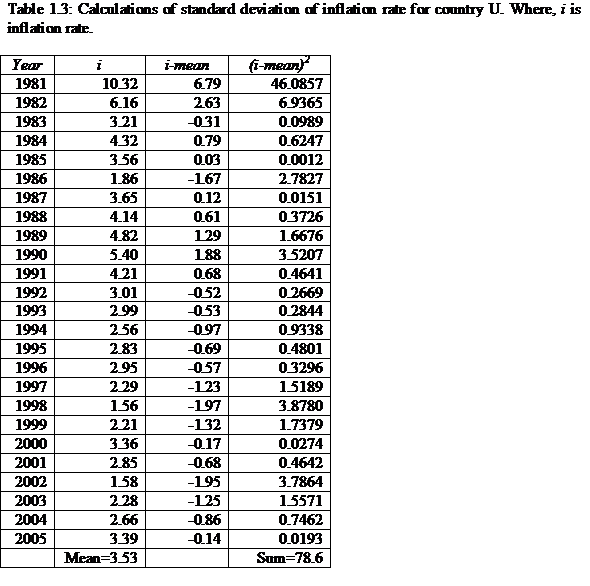
Calculate standard deviation for inflation rate of country C. Consumer Price Index measures the weighted average of prices of consumer goods and services purchased in an economy. Table 1.1 gives data on Consumer Price index of 7 countries during period of 1980-2005, with 100 as the base of index during 1982-84.   a. Inflation rate is measure of rate of increase in price level in an economy over a period of time. To find inflation rate of current year, subtract CPI of previous year from CPI of current year, divide the difference by CPI of previous year. And multiply the result by 100. CPI of country U in 1980 is 82.4 and CPI in 1981 is 90.0. Inflation rate of country U in 1981 is given by,   Inflation rate of country U in 1981 is 10.32%. Similarly, CPI of country G in 1994 is 131.1 and CPI in 1995 is 133.3. Inflation rate of country G in 1995 is given by,   Inflation rate of country G in 1995 is 1.68%. Similarly, inflation rate of the 7 countries for each year is calculated in table 1.2   b. Plot the inflation rate of the 7 countries for each year, using Table1.2. The vertical axis shows inflation rate and horizontal axis shows time.   c. The graph 1.1, which shows inflation rate of the 7 countries, can be divided into 4 periods. Separate conclusions can be drawn for each period. From 1981 to 1986, the inflation rate of countries is generally declining. From 1987 to 1990, inflation rate of countries is generally rising. From 1991 to 1994, inflation rate of countries is generally declining. And from 1995 to 2005, inflation rate of countries is generally constant. d. Standard deviation can be used to measure variability in inflation rate of each country over time. It measures the variability of data of a group from mean value of the group. Formula of standard deviation is,   Where n is number of observations X bar is mean of data set Calculate standard deviation for inflation rate of country U, using above formula.   Standard deviation is,   Standard deviation of country U is 1.77 Calculate standard deviation for inflation rate of country C.   Standard deviation is,   0 Standard deviation of country C is 2.79 Calculate standard deviation for inflation rate of country J.   1 Standard deviation is,   2 Standard deviation of country J is 1.45 Calculate standard deviation for inflation rate of country F.   3 Standard deviation is,   4 Standard deviation of country F is 3.34 Calculate standard deviation for inflation rate of country G.   5 Standard deviation is,   6 Standard deviation of country G is 1.57 Calculate standard deviation for inflation rate of country I.   7 Standard deviation is,   8 Standard deviation of country I is 4.48 Calculate standard deviation for inflation rate of country B.   9 Standard deviation is,   0 Standard deviation of country B is 2.60 Standard deviation for country I is highest. Therefore, inflation rate of country I is most variable. Standard deviation is, Consumer Price Index measures the weighted average of prices of consumer goods and services purchased in an economy. Table 1.1 gives data on Consumer Price index of 7 countries during period of 1980-2005, with 100 as the base of index during 1982-84.   a. Inflation rate is measure of rate of increase in price level in an economy over a period of time. To find inflation rate of current year, subtract CPI of previous year from CPI of current year, divide the difference by CPI of previous year. And multiply the result by 100. CPI of country U in 1980 is 82.4 and CPI in 1981 is 90.0. Inflation rate of country U in 1981 is given by,   Inflation rate of country U in 1981 is 10.32%. Similarly, CPI of country G in 1994 is 131.1 and CPI in 1995 is 133.3. Inflation rate of country G in 1995 is given by,   Inflation rate of country G in 1995 is 1.68%. Similarly, inflation rate of the 7 countries for each year is calculated in table 1.2   b. Plot the inflation rate of the 7 countries for each year, using Table1.2. The vertical axis shows inflation rate and horizontal axis shows time.   c. The graph 1.1, which shows inflation rate of the 7 countries, can be divided into 4 periods. Separate conclusions can be drawn for each period. From 1981 to 1986, the inflation rate of countries is generally declining. From 1987 to 1990, inflation rate of countries is generally rising. From 1991 to 1994, inflation rate of countries is generally declining. And from 1995 to 2005, inflation rate of countries is generally constant. d. Standard deviation can be used to measure variability in inflation rate of each country over time. It measures the variability of data of a group from mean value of the group. Formula of standard deviation is,   Where n is number of observations X bar is mean of data set Calculate standard deviation for inflation rate of country U, using above formula.   Standard deviation is,   Standard deviation of country U is 1.77 Calculate standard deviation for inflation rate of country C.   Standard deviation is,   0 Standard deviation of country C is 2.79 Calculate standard deviation for inflation rate of country J.   1 Standard deviation is,   2 Standard deviation of country J is 1.45 Calculate standard deviation for inflation rate of country F.   3 Standard deviation is,   4 Standard deviation of country F is 3.34 Calculate standard deviation for inflation rate of country G.   5 Standard deviation is,   6 Standard deviation of country G is 1.57 Calculate standard deviation for inflation rate of country I.   7 Standard deviation is,   8 Standard deviation of country I is 4.48 Calculate standard deviation for inflation rate of country B.   9 Standard deviation is,   0 Standard deviation of country B is 2.60 Standard deviation for country I is highest. Therefore, inflation rate of country I is most variable. 0
Standard deviation of country C is 2.79
Calculate standard deviation for inflation rate of country J. Consumer Price Index measures the weighted average of prices of consumer goods and services purchased in an economy. Table 1.1 gives data on Consumer Price index of 7 countries during period of 1980-2005, with 100 as the base of index during 1982-84.   a. Inflation rate is measure of rate of increase in price level in an economy over a period of time. To find inflation rate of current year, subtract CPI of previous year from CPI of current year, divide the difference by CPI of previous year. And multiply the result by 100. CPI of country U in 1980 is 82.4 and CPI in 1981 is 90.0. Inflation rate of country U in 1981 is given by,   Inflation rate of country U in 1981 is 10.32%. Similarly, CPI of country G in 1994 is 131.1 and CPI in 1995 is 133.3. Inflation rate of country G in 1995 is given by,   Inflation rate of country G in 1995 is 1.68%. Similarly, inflation rate of the 7 countries for each year is calculated in table 1.2   b. Plot the inflation rate of the 7 countries for each year, using Table1.2. The vertical axis shows inflation rate and horizontal axis shows time.   c. The graph 1.1, which shows inflation rate of the 7 countries, can be divided into 4 periods. Separate conclusions can be drawn for each period. From 1981 to 1986, the inflation rate of countries is generally declining. From 1987 to 1990, inflation rate of countries is generally rising. From 1991 to 1994, inflation rate of countries is generally declining. And from 1995 to 2005, inflation rate of countries is generally constant. d. Standard deviation can be used to measure variability in inflation rate of each country over time. It measures the variability of data of a group from mean value of the group. Formula of standard deviation is,   Where n is number of observations X bar is mean of data set Calculate standard deviation for inflation rate of country U, using above formula.   Standard deviation is,   Standard deviation of country U is 1.77 Calculate standard deviation for inflation rate of country C.   Standard deviation is,   0 Standard deviation of country C is 2.79 Calculate standard deviation for inflation rate of country J.   1 Standard deviation is,   2 Standard deviation of country J is 1.45 Calculate standard deviation for inflation rate of country F.   3 Standard deviation is,   4 Standard deviation of country F is 3.34 Calculate standard deviation for inflation rate of country G.   5 Standard deviation is,   6 Standard deviation of country G is 1.57 Calculate standard deviation for inflation rate of country I.   7 Standard deviation is,   8 Standard deviation of country I is 4.48 Calculate standard deviation for inflation rate of country B.   9 Standard deviation is,   0 Standard deviation of country B is 2.60 Standard deviation for country I is highest. Therefore, inflation rate of country I is most variable. 1
Standard deviation is, Consumer Price Index measures the weighted average of prices of consumer goods and services purchased in an economy. Table 1.1 gives data on Consumer Price index of 7 countries during period of 1980-2005, with 100 as the base of index during 1982-84.   a. Inflation rate is measure of rate of increase in price level in an economy over a period of time. To find inflation rate of current year, subtract CPI of previous year from CPI of current year, divide the difference by CPI of previous year. And multiply the result by 100. CPI of country U in 1980 is 82.4 and CPI in 1981 is 90.0. Inflation rate of country U in 1981 is given by,   Inflation rate of country U in 1981 is 10.32%. Similarly, CPI of country G in 1994 is 131.1 and CPI in 1995 is 133.3. Inflation rate of country G in 1995 is given by,   Inflation rate of country G in 1995 is 1.68%. Similarly, inflation rate of the 7 countries for each year is calculated in table 1.2   b. Plot the inflation rate of the 7 countries for each year, using Table1.2. The vertical axis shows inflation rate and horizontal axis shows time.   c. The graph 1.1, which shows inflation rate of the 7 countries, can be divided into 4 periods. Separate conclusions can be drawn for each period. From 1981 to 1986, the inflation rate of countries is generally declining. From 1987 to 1990, inflation rate of countries is generally rising. From 1991 to 1994, inflation rate of countries is generally declining. And from 1995 to 2005, inflation rate of countries is generally constant. d. Standard deviation can be used to measure variability in inflation rate of each country over time. It measures the variability of data of a group from mean value of the group. Formula of standard deviation is,   Where n is number of observations X bar is mean of data set Calculate standard deviation for inflation rate of country U, using above formula.   Standard deviation is,   Standard deviation of country U is 1.77 Calculate standard deviation for inflation rate of country C.   Standard deviation is,   0 Standard deviation of country C is 2.79 Calculate standard deviation for inflation rate of country J.   1 Standard deviation is,   2 Standard deviation of country J is 1.45 Calculate standard deviation for inflation rate of country F.   3 Standard deviation is,   4 Standard deviation of country F is 3.34 Calculate standard deviation for inflation rate of country G.   5 Standard deviation is,   6 Standard deviation of country G is 1.57 Calculate standard deviation for inflation rate of country I.   7 Standard deviation is,   8 Standard deviation of country I is 4.48 Calculate standard deviation for inflation rate of country B.   9 Standard deviation is,   0 Standard deviation of country B is 2.60 Standard deviation for country I is highest. Therefore, inflation rate of country I is most variable. 2
Standard deviation of country J is 1.45
Calculate standard deviation for inflation rate of country F. Consumer Price Index measures the weighted average of prices of consumer goods and services purchased in an economy. Table 1.1 gives data on Consumer Price index of 7 countries during period of 1980-2005, with 100 as the base of index during 1982-84.   a. Inflation rate is measure of rate of increase in price level in an economy over a period of time. To find inflation rate of current year, subtract CPI of previous year from CPI of current year, divide the difference by CPI of previous year. And multiply the result by 100. CPI of country U in 1980 is 82.4 and CPI in 1981 is 90.0. Inflation rate of country U in 1981 is given by,   Inflation rate of country U in 1981 is 10.32%. Similarly, CPI of country G in 1994 is 131.1 and CPI in 1995 is 133.3. Inflation rate of country G in 1995 is given by,   Inflation rate of country G in 1995 is 1.68%. Similarly, inflation rate of the 7 countries for each year is calculated in table 1.2   b. Plot the inflation rate of the 7 countries for each year, using Table1.2. The vertical axis shows inflation rate and horizontal axis shows time.   c. The graph 1.1, which shows inflation rate of the 7 countries, can be divided into 4 periods. Separate conclusions can be drawn for each period. From 1981 to 1986, the inflation rate of countries is generally declining. From 1987 to 1990, inflation rate of countries is generally rising. From 1991 to 1994, inflation rate of countries is generally declining. And from 1995 to 2005, inflation rate of countries is generally constant. d. Standard deviation can be used to measure variability in inflation rate of each country over time. It measures the variability of data of a group from mean value of the group. Formula of standard deviation is,   Where n is number of observations X bar is mean of data set Calculate standard deviation for inflation rate of country U, using above formula.   Standard deviation is,   Standard deviation of country U is 1.77 Calculate standard deviation for inflation rate of country C.   Standard deviation is,   0 Standard deviation of country C is 2.79 Calculate standard deviation for inflation rate of country J.   1 Standard deviation is,   2 Standard deviation of country J is 1.45 Calculate standard deviation for inflation rate of country F.   3 Standard deviation is,   4 Standard deviation of country F is 3.34 Calculate standard deviation for inflation rate of country G.   5 Standard deviation is,   6 Standard deviation of country G is 1.57 Calculate standard deviation for inflation rate of country I.   7 Standard deviation is,   8 Standard deviation of country I is 4.48 Calculate standard deviation for inflation rate of country B.   9 Standard deviation is,   0 Standard deviation of country B is 2.60 Standard deviation for country I is highest. Therefore, inflation rate of country I is most variable. 3
Standard deviation is, Consumer Price Index measures the weighted average of prices of consumer goods and services purchased in an economy. Table 1.1 gives data on Consumer Price index of 7 countries during period of 1980-2005, with 100 as the base of index during 1982-84.   a. Inflation rate is measure of rate of increase in price level in an economy over a period of time. To find inflation rate of current year, subtract CPI of previous year from CPI of current year, divide the difference by CPI of previous year. And multiply the result by 100. CPI of country U in 1980 is 82.4 and CPI in 1981 is 90.0. Inflation rate of country U in 1981 is given by,   Inflation rate of country U in 1981 is 10.32%. Similarly, CPI of country G in 1994 is 131.1 and CPI in 1995 is 133.3. Inflation rate of country G in 1995 is given by,   Inflation rate of country G in 1995 is 1.68%. Similarly, inflation rate of the 7 countries for each year is calculated in table 1.2   b. Plot the inflation rate of the 7 countries for each year, using Table1.2. The vertical axis shows inflation rate and horizontal axis shows time.   c. The graph 1.1, which shows inflation rate of the 7 countries, can be divided into 4 periods. Separate conclusions can be drawn for each period. From 1981 to 1986, the inflation rate of countries is generally declining. From 1987 to 1990, inflation rate of countries is generally rising. From 1991 to 1994, inflation rate of countries is generally declining. And from 1995 to 2005, inflation rate of countries is generally constant. d. Standard deviation can be used to measure variability in inflation rate of each country over time. It measures the variability of data of a group from mean value of the group. Formula of standard deviation is,   Where n is number of observations X bar is mean of data set Calculate standard deviation for inflation rate of country U, using above formula.   Standard deviation is,   Standard deviation of country U is 1.77 Calculate standard deviation for inflation rate of country C.   Standard deviation is,   0 Standard deviation of country C is 2.79 Calculate standard deviation for inflation rate of country J.   1 Standard deviation is,   2 Standard deviation of country J is 1.45 Calculate standard deviation for inflation rate of country F.   3 Standard deviation is,   4 Standard deviation of country F is 3.34 Calculate standard deviation for inflation rate of country G.   5 Standard deviation is,   6 Standard deviation of country G is 1.57 Calculate standard deviation for inflation rate of country I.   7 Standard deviation is,   8 Standard deviation of country I is 4.48 Calculate standard deviation for inflation rate of country B.   9 Standard deviation is,   0 Standard deviation of country B is 2.60 Standard deviation for country I is highest. Therefore, inflation rate of country I is most variable. 4
Standard deviation of country F is 3.34
Calculate standard deviation for inflation rate of country G. Consumer Price Index measures the weighted average of prices of consumer goods and services purchased in an economy. Table 1.1 gives data on Consumer Price index of 7 countries during period of 1980-2005, with 100 as the base of index during 1982-84.   a. Inflation rate is measure of rate of increase in price level in an economy over a period of time. To find inflation rate of current year, subtract CPI of previous year from CPI of current year, divide the difference by CPI of previous year. And multiply the result by 100. CPI of country U in 1980 is 82.4 and CPI in 1981 is 90.0. Inflation rate of country U in 1981 is given by,   Inflation rate of country U in 1981 is 10.32%. Similarly, CPI of country G in 1994 is 131.1 and CPI in 1995 is 133.3. Inflation rate of country G in 1995 is given by,   Inflation rate of country G in 1995 is 1.68%. Similarly, inflation rate of the 7 countries for each year is calculated in table 1.2   b. Plot the inflation rate of the 7 countries for each year, using Table1.2. The vertical axis shows inflation rate and horizontal axis shows time.   c. The graph 1.1, which shows inflation rate of the 7 countries, can be divided into 4 periods. Separate conclusions can be drawn for each period. From 1981 to 1986, the inflation rate of countries is generally declining. From 1987 to 1990, inflation rate of countries is generally rising. From 1991 to 1994, inflation rate of countries is generally declining. And from 1995 to 2005, inflation rate of countries is generally constant. d. Standard deviation can be used to measure variability in inflation rate of each country over time. It measures the variability of data of a group from mean value of the group. Formula of standard deviation is,   Where n is number of observations X bar is mean of data set Calculate standard deviation for inflation rate of country U, using above formula.   Standard deviation is,   Standard deviation of country U is 1.77 Calculate standard deviation for inflation rate of country C.   Standard deviation is,   0 Standard deviation of country C is 2.79 Calculate standard deviation for inflation rate of country J.   1 Standard deviation is,   2 Standard deviation of country J is 1.45 Calculate standard deviation for inflation rate of country F.   3 Standard deviation is,   4 Standard deviation of country F is 3.34 Calculate standard deviation for inflation rate of country G.   5 Standard deviation is,   6 Standard deviation of country G is 1.57 Calculate standard deviation for inflation rate of country I.   7 Standard deviation is,   8 Standard deviation of country I is 4.48 Calculate standard deviation for inflation rate of country B.   9 Standard deviation is,   0 Standard deviation of country B is 2.60 Standard deviation for country I is highest. Therefore, inflation rate of country I is most variable. 5
Standard deviation is, Consumer Price Index measures the weighted average of prices of consumer goods and services purchased in an economy. Table 1.1 gives data on Consumer Price index of 7 countries during period of 1980-2005, with 100 as the base of index during 1982-84.   a. Inflation rate is measure of rate of increase in price level in an economy over a period of time. To find inflation rate of current year, subtract CPI of previous year from CPI of current year, divide the difference by CPI of previous year. And multiply the result by 100. CPI of country U in 1980 is 82.4 and CPI in 1981 is 90.0. Inflation rate of country U in 1981 is given by,   Inflation rate of country U in 1981 is 10.32%. Similarly, CPI of country G in 1994 is 131.1 and CPI in 1995 is 133.3. Inflation rate of country G in 1995 is given by,   Inflation rate of country G in 1995 is 1.68%. Similarly, inflation rate of the 7 countries for each year is calculated in table 1.2   b. Plot the inflation rate of the 7 countries for each year, using Table1.2. The vertical axis shows inflation rate and horizontal axis shows time.   c. The graph 1.1, which shows inflation rate of the 7 countries, can be divided into 4 periods. Separate conclusions can be drawn for each period. From 1981 to 1986, the inflation rate of countries is generally declining. From 1987 to 1990, inflation rate of countries is generally rising. From 1991 to 1994, inflation rate of countries is generally declining. And from 1995 to 2005, inflation rate of countries is generally constant. d. Standard deviation can be used to measure variability in inflation rate of each country over time. It measures the variability of data of a group from mean value of the group. Formula of standard deviation is,   Where n is number of observations X bar is mean of data set Calculate standard deviation for inflation rate of country U, using above formula.   Standard deviation is,   Standard deviation of country U is 1.77 Calculate standard deviation for inflation rate of country C.   Standard deviation is,   0 Standard deviation of country C is 2.79 Calculate standard deviation for inflation rate of country J.   1 Standard deviation is,   2 Standard deviation of country J is 1.45 Calculate standard deviation for inflation rate of country F.   3 Standard deviation is,   4 Standard deviation of country F is 3.34 Calculate standard deviation for inflation rate of country G.   5 Standard deviation is,   6 Standard deviation of country G is 1.57 Calculate standard deviation for inflation rate of country I.   7 Standard deviation is,   8 Standard deviation of country I is 4.48 Calculate standard deviation for inflation rate of country B.   9 Standard deviation is,   0 Standard deviation of country B is 2.60 Standard deviation for country I is highest. Therefore, inflation rate of country I is most variable. 6
Standard deviation of country G is 1.57
Calculate standard deviation for inflation rate of country I. Consumer Price Index measures the weighted average of prices of consumer goods and services purchased in an economy. Table 1.1 gives data on Consumer Price index of 7 countries during period of 1980-2005, with 100 as the base of index during 1982-84.   a. Inflation rate is measure of rate of increase in price level in an economy over a period of time. To find inflation rate of current year, subtract CPI of previous year from CPI of current year, divide the difference by CPI of previous year. And multiply the result by 100. CPI of country U in 1980 is 82.4 and CPI in 1981 is 90.0. Inflation rate of country U in 1981 is given by,   Inflation rate of country U in 1981 is 10.32%. Similarly, CPI of country G in 1994 is 131.1 and CPI in 1995 is 133.3. Inflation rate of country G in 1995 is given by,   Inflation rate of country G in 1995 is 1.68%. Similarly, inflation rate of the 7 countries for each year is calculated in table 1.2   b. Plot the inflation rate of the 7 countries for each year, using Table1.2. The vertical axis shows inflation rate and horizontal axis shows time.   c. The graph 1.1, which shows inflation rate of the 7 countries, can be divided into 4 periods. Separate conclusions can be drawn for each period. From 1981 to 1986, the inflation rate of countries is generally declining. From 1987 to 1990, inflation rate of countries is generally rising. From 1991 to 1994, inflation rate of countries is generally declining. And from 1995 to 2005, inflation rate of countries is generally constant. d. Standard deviation can be used to measure variability in inflation rate of each country over time. It measures the variability of data of a group from mean value of the group. Formula of standard deviation is,   Where n is number of observations X bar is mean of data set Calculate standard deviation for inflation rate of country U, using above formula.   Standard deviation is,   Standard deviation of country U is 1.77 Calculate standard deviation for inflation rate of country C.   Standard deviation is,   0 Standard deviation of country C is 2.79 Calculate standard deviation for inflation rate of country J.   1 Standard deviation is,   2 Standard deviation of country J is 1.45 Calculate standard deviation for inflation rate of country F.   3 Standard deviation is,   4 Standard deviation of country F is 3.34 Calculate standard deviation for inflation rate of country G.   5 Standard deviation is,   6 Standard deviation of country G is 1.57 Calculate standard deviation for inflation rate of country I.   7 Standard deviation is,   8 Standard deviation of country I is 4.48 Calculate standard deviation for inflation rate of country B.   9 Standard deviation is,   0 Standard deviation of country B is 2.60 Standard deviation for country I is highest. Therefore, inflation rate of country I is most variable. 7
Standard deviation is, Consumer Price Index measures the weighted average of prices of consumer goods and services purchased in an economy. Table 1.1 gives data on Consumer Price index of 7 countries during period of 1980-2005, with 100 as the base of index during 1982-84.   a. Inflation rate is measure of rate of increase in price level in an economy over a period of time. To find inflation rate of current year, subtract CPI of previous year from CPI of current year, divide the difference by CPI of previous year. And multiply the result by 100. CPI of country U in 1980 is 82.4 and CPI in 1981 is 90.0. Inflation rate of country U in 1981 is given by,   Inflation rate of country U in 1981 is 10.32%. Similarly, CPI of country G in 1994 is 131.1 and CPI in 1995 is 133.3. Inflation rate of country G in 1995 is given by,   Inflation rate of country G in 1995 is 1.68%. Similarly, inflation rate of the 7 countries for each year is calculated in table 1.2   b. Plot the inflation rate of the 7 countries for each year, using Table1.2. The vertical axis shows inflation rate and horizontal axis shows time.   c. The graph 1.1, which shows inflation rate of the 7 countries, can be divided into 4 periods. Separate conclusions can be drawn for each period. From 1981 to 1986, the inflation rate of countries is generally declining. From 1987 to 1990, inflation rate of countries is generally rising. From 1991 to 1994, inflation rate of countries is generally declining. And from 1995 to 2005, inflation rate of countries is generally constant. d. Standard deviation can be used to measure variability in inflation rate of each country over time. It measures the variability of data of a group from mean value of the group. Formula of standard deviation is,   Where n is number of observations X bar is mean of data set Calculate standard deviation for inflation rate of country U, using above formula.   Standard deviation is,   Standard deviation of country U is 1.77 Calculate standard deviation for inflation rate of country C.   Standard deviation is,   0 Standard deviation of country C is 2.79 Calculate standard deviation for inflation rate of country J.   1 Standard deviation is,   2 Standard deviation of country J is 1.45 Calculate standard deviation for inflation rate of country F.   3 Standard deviation is,   4 Standard deviation of country F is 3.34 Calculate standard deviation for inflation rate of country G.   5 Standard deviation is,   6 Standard deviation of country G is 1.57 Calculate standard deviation for inflation rate of country I.   7 Standard deviation is,   8 Standard deviation of country I is 4.48 Calculate standard deviation for inflation rate of country B.   9 Standard deviation is,   0 Standard deviation of country B is 2.60 Standard deviation for country I is highest. Therefore, inflation rate of country I is most variable. 8
Standard deviation of country I is 4.48
Calculate standard deviation for inflation rate of country B. Consumer Price Index measures the weighted average of prices of consumer goods and services purchased in an economy. Table 1.1 gives data on Consumer Price index of 7 countries during period of 1980-2005, with 100 as the base of index during 1982-84.   a. Inflation rate is measure of rate of increase in price level in an economy over a period of time. To find inflation rate of current year, subtract CPI of previous year from CPI of current year, divide the difference by CPI of previous year. And multiply the result by 100. CPI of country U in 1980 is 82.4 and CPI in 1981 is 90.0. Inflation rate of country U in 1981 is given by,   Inflation rate of country U in 1981 is 10.32%. Similarly, CPI of country G in 1994 is 131.1 and CPI in 1995 is 133.3. Inflation rate of country G in 1995 is given by,   Inflation rate of country G in 1995 is 1.68%. Similarly, inflation rate of the 7 countries for each year is calculated in table 1.2   b. Plot the inflation rate of the 7 countries for each year, using Table1.2. The vertical axis shows inflation rate and horizontal axis shows time.   c. The graph 1.1, which shows inflation rate of the 7 countries, can be divided into 4 periods. Separate conclusions can be drawn for each period. From 1981 to 1986, the inflation rate of countries is generally declining. From 1987 to 1990, inflation rate of countries is generally rising. From 1991 to 1994, inflation rate of countries is generally declining. And from 1995 to 2005, inflation rate of countries is generally constant. d. Standard deviation can be used to measure variability in inflation rate of each country over time. It measures the variability of data of a group from mean value of the group. Formula of standard deviation is,   Where n is number of observations X bar is mean of data set Calculate standard deviation for inflation rate of country U, using above formula.   Standard deviation is,   Standard deviation of country U is 1.77 Calculate standard deviation for inflation rate of country C.   Standard deviation is,   0 Standard deviation of country C is 2.79 Calculate standard deviation for inflation rate of country J.   1 Standard deviation is,   2 Standard deviation of country J is 1.45 Calculate standard deviation for inflation rate of country F.   3 Standard deviation is,   4 Standard deviation of country F is 3.34 Calculate standard deviation for inflation rate of country G.   5 Standard deviation is,   6 Standard deviation of country G is 1.57 Calculate standard deviation for inflation rate of country I.   7 Standard deviation is,   8 Standard deviation of country I is 4.48 Calculate standard deviation for inflation rate of country B.   9 Standard deviation is,   0 Standard deviation of country B is 2.60 Standard deviation for country I is highest. Therefore, inflation rate of country I is most variable. 9
Standard deviation is, Consumer Price Index measures the weighted average of prices of consumer goods and services purchased in an economy. Table 1.1 gives data on Consumer Price index of 7 countries during period of 1980-2005, with 100 as the base of index during 1982-84.   a. Inflation rate is measure of rate of increase in price level in an economy over a period of time. To find inflation rate of current year, subtract CPI of previous year from CPI of current year, divide the difference by CPI of previous year. And multiply the result by 100. CPI of country U in 1980 is 82.4 and CPI in 1981 is 90.0. Inflation rate of country U in 1981 is given by,   Inflation rate of country U in 1981 is 10.32%. Similarly, CPI of country G in 1994 is 131.1 and CPI in 1995 is 133.3. Inflation rate of country G in 1995 is given by,   Inflation rate of country G in 1995 is 1.68%. Similarly, inflation rate of the 7 countries for each year is calculated in table 1.2   b. Plot the inflation rate of the 7 countries for each year, using Table1.2. The vertical axis shows inflation rate and horizontal axis shows time.   c. The graph 1.1, which shows inflation rate of the 7 countries, can be divided into 4 periods. Separate conclusions can be drawn for each period. From 1981 to 1986, the inflation rate of countries is generally declining. From 1987 to 1990, inflation rate of countries is generally rising. From 1991 to 1994, inflation rate of countries is generally declining. And from 1995 to 2005, inflation rate of countries is generally constant. d. Standard deviation can be used to measure variability in inflation rate of each country over time. It measures the variability of data of a group from mean value of the group. Formula of standard deviation is,   Where n is number of observations X bar is mean of data set Calculate standard deviation for inflation rate of country U, using above formula.   Standard deviation is,   Standard deviation of country U is 1.77 Calculate standard deviation for inflation rate of country C.   Standard deviation is,   0 Standard deviation of country C is 2.79 Calculate standard deviation for inflation rate of country J.   1 Standard deviation is,   2 Standard deviation of country J is 1.45 Calculate standard deviation for inflation rate of country F.   3 Standard deviation is,   4 Standard deviation of country F is 3.34 Calculate standard deviation for inflation rate of country G.   5 Standard deviation is,   6 Standard deviation of country G is 1.57 Calculate standard deviation for inflation rate of country I.   7 Standard deviation is,   8 Standard deviation of country I is 4.48 Calculate standard deviation for inflation rate of country B.   9 Standard deviation is,   0 Standard deviation of country B is 2.60 Standard deviation for country I is highest. Therefore, inflation rate of country I is most variable. 0
Standard deviation of country B is 2.60
Standard deviation for country I is highest. Therefore, inflation rate of country I is most variable.
close menu
Basic Econometrics 5th Edition by Damodar Gujarati,Dawn Porter
cross icon