







 تكلم مع الذكاء الاصطناعي


The Living World 8th Edition by George Johnson
النسخة 8الرقم المعياري الدولي: 978-0078024214The Living World 8th Edition by George Johnson
النسخة 8الرقم المعياري الدولي: 978-0078024214 تمرين 18
Do Big Hearts Beat Faster?
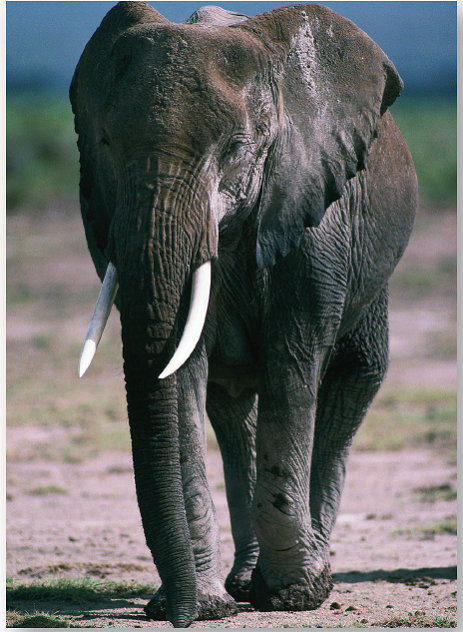
Small animals live at a much faster pace than large animals. They reproduce more quickly and live shorter lives. As a rule, they tend to move about more quickly and so consume more oxygen per unit body weight. Interestingly, small and large mammals have about the same size heart relative to body size (about 0.6% of body mass). But do all mammalian hearts beat at the same rate? the heart of a 7,000-kilogram (a kilogram is 1,000 grams) African bull elephant must push a far greater volume of blood through its body than the heart of a 20-gram mouse, but the elephant is able to do it through much-larger-diameter arteries, which impose far less resistance to the blood's flow. Does the elephant's heart beat faster? Or does the mouse's, in order to deliver more oxygen to its muscles? Or perhaps the mouse's heart beats more slowly because of increased resistance to flow through narrower blood vessels.
The graph to the right displays the pulse rate of a number of mammals of different body sizes (the pulse rate is the number of heartbeats counted per minute, a measure of how rapidly the heart is beating).

Drawing Conclusions If you plotted data for an experiment measuring body mass versus resting oxygen consumption, you would get exactly the same slope of the line as shown in this graph. What does this tell us about why body size affects heart rate in mammals as it does?
Small animals live at a much faster pace than large animals. They reproduce more quickly and live shorter lives. As a rule, they tend to move about more quickly and so consume more oxygen per unit body weight. Interestingly, small and large mammals have about the same size heart relative to body size (about 0.6% of body mass). But do all mammalian hearts beat at the same rate? the heart of a 7,000-kilogram (a kilogram is 1,000 grams) African bull elephant must push a far greater volume of blood through its body than the heart of a 20-gram mouse, but the elephant is able to do it through much-larger-diameter arteries, which impose far less resistance to the blood's flow. Does the elephant's heart beat faster? Or does the mouse's, in order to deliver more oxygen to its muscles? Or perhaps the mouse's heart beats more slowly because of increased resistance to flow through narrower blood vessels.
The graph to the right displays the pulse rate of a number of mammals of different body sizes (the pulse rate is the number of heartbeats counted per minute, a measure of how rapidly the heart is beating).
Drawing Conclusions If you plotted data for an experiment measuring body mass versus resting oxygen consumption, you would get exactly the same slope of the line as shown in this graph. What does this tell us about why body size affects heart rate in mammals as it does?
التوضيح موثّق
موثّق
موثّق
If the body mass of the experimental ani...

The Living World 8th Edition by George Johnson

لماذا لم يعجبك هذا التمرين؟
أخرى 8 أحرف كحد أدنى و 255 حرفاً كحد أقصى
حرف 255






