







 تكلم مع الذكاء الاصطناعي


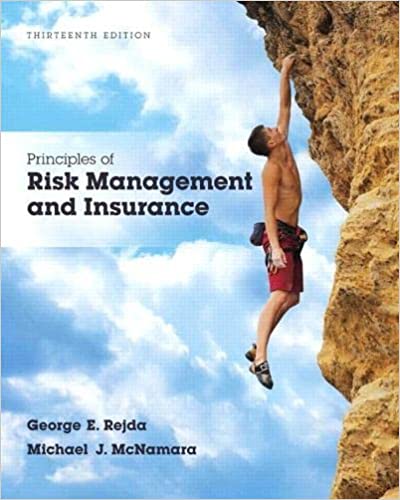
Principles of Risk Management and Insurance 13th Edition by George Rejda,Michael McNamara
النسخة 13الرقم المعياري الدولي: 978-0134082578Principles of Risk Management and Insurance 13th Edition by George Rejda,Michael McNamara
النسخة 13الرقم المعياري الدولي: 978-0134082578 تمرين 1
Assume that the chance of loss is 3 percent for two different fleets of trucks. Explain how it is possible that objective risk for both fleets can be different even though the chance of loss is identical
التوضيح موثّق
موثّق
موثّق
The relative variation of actual loss from expected loss is called objective risk. It is also known as degree of risk. The objective risk can be different for two different fleet because may be because one of the fleet is carrying more weight and travelling longer distance than the other fleet. So, the risk can be greater of first fleet than the second one.
Chance of loss is the probability that an event resulting in a loss will occur. Chance of loss can be identical for both the fleets because the possibility that something can go wrong is same for both fleets.
It is possible that chance of loss for two different groups is identical but the objective risk is different. For example, assume that both the fleets have 1000 trucks. The chance of loss for the two fleets is 3 percent. Thus, on an average, 30 trucks would suffer losses. However, if the annual variation in losses ranges from 27 to 33 in case of one fleet of trucks and from 24 to 36 in case of another. The objective risk in case of one fleet is 3 percent and in case of the second fleet it is 6 percent even though the chance of loss for both the fleets is identical.
Chance of loss is the probability that an event resulting in a loss will occur. Chance of loss can be identical for both the fleets because the possibility that something can go wrong is same for both fleets.
It is possible that chance of loss for two different groups is identical but the objective risk is different. For example, assume that both the fleets have 1000 trucks. The chance of loss for the two fleets is 3 percent. Thus, on an average, 30 trucks would suffer losses. However, if the annual variation in losses ranges from 27 to 33 in case of one fleet of trucks and from 24 to 36 in case of another. The objective risk in case of one fleet is 3 percent and in case of the second fleet it is 6 percent even though the chance of loss for both the fleets is identical.

Principles of Risk Management and Insurance 13th Edition by George Rejda,Michael McNamara

لماذا لم يعجبك هذا التمرين؟
أخرى 8 أحرف كحد أدنى و 255 حرفاً كحد أقصى
حرف 255






