







 تكلم مع الذكاء الاصطناعي


Marketing 16th Edition by William Pride,Ferrell
النسخة 16الرقم المعياري الدولي: 978-1111526191Marketing 16th Edition by William Pride,Ferrell
النسخة 16الرقم المعياري الدولي: 978-1111526191 تمرين 20
Online retail pioneer Amazon.com has built a profitable $24.5 billion business by paying close attention to pricing details. Founded as a web-based bookstore with discount prices, Amazon has since expanded into dozens of product categories and countries. The company never stops investing in technology to upgrade its sites, systems, and offerings. Although hefty high-tech costs are a drag on profit margins, they are essential to Amazon's strategy of attracting customers and keeping them loyal by making the shopping experience easy, fast, and fun.
One hallmark of Amazon's pricing is its long-running offer of free shipping for orders of $25 or more. Because shoppers know they are saving money, they are more inclined to keep spending even after they reach the $25 order threshold to qualify for free shipping. Free shipping has helped Amazon build sales over the years, but it has also added to the company's costs and cut into profits. In the wake of Amazon's success with free shipping, L.L. Bean and others have tested free shipping with no minimum purchase requirement during some holiday periods. But making free shipping pay off is tricky, notes a marketing executive at L.L. Bean: "It is expensive to ; do, and it is easy to lose a lot of money doing it."
Amazon is earning significant profits from serving as an online storefront for other marketers (and consumers) to sell their products. Every time a customer buys something from a seller participating in the Amazon Marketplace, Amazon collects a fee. The margins are especially attractive in this fast-growing part of the business because Amazon does not pay to buy or store any inventory, and the cost of posting items for others is extremely low now that the electronic storefront is up and running.
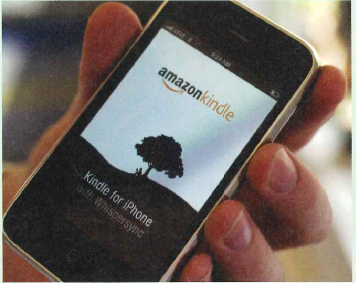
All-digital products like electronic books, music, movies, and games are lucrative because they entail no inventory or shipping costs. This is why Amazon is moving aggressively into digital content and related products. Its popular Kindle, first introduced in 2007, is an e-book reader that wirelessly connects to the Internet so customers can download an electronic book, newspaper, or magazine in seconds. Initially, Amazon priced the Kindle higher than the Sony Reader, its main competitor at the time. Despite the high price, demand outstripped supply for a time, and Amazon smuggled to increase output. As Barnes Noble and others began offering their own e-book readers, Amazon lowered the price and poured on the promotion to keep up the Kindle's sales momentum.
The Kindle also created a controversy over e-book pricing. When Amazon first launched the Kindle, it priced most best-selling e-books at only $9.99 each, with a few priced even lower. Publishers fumed, because the hard-cover price of these books was considerably higher. The situation changed in early 2010, as Apple prepared to debut its iPad tablet computer. Apple was trumpeting the iPad's capabilities as an e-book reader and making deals with publishers to carry downloadable digital content. Under pressure from the publishers and faced with a new level of competition from Apple's much-anticipated device, Amazon took a step back from its digital discounting. It listened to the publishers and raised the retail price of many digital best-sellers by a few dollars but retained the $9.99 price for selected e-books.
Today, Kindle customers can buy and instantly down-load more than 450,000 books. "Our vision is to have every book that has ever been in print available in less than 60 seconds," says Amazon founder Jeff Bezos. The Kindle has become Amazon's best-selling product and dramatically increased sales of electronic books, magazines, and similar products. In fact, when Amazon offers the same book in printed and digital format, it sells 6 digital downloads for every 10 physical units. Multiply the savings in ship-ping costs alone, and it's easy to see why Amazon has put so much emphasis on electronic delivery of books and other content.
Looking ahead, Amazon will be paying close attention to the pricing of rival gadgets and the way digital content is being priced. Although it's now the undisputed leader in electronic book sales, that market share is likely to erode little by little as more customers are offered the opportunity to buy and download more books from additional sources?
1. Are Amazon's shipping costs variable or fixed? How is the company's profitability likely to be affected if customers do not buy more than $25 worth each time they shop?
2. Why would publishers be so concerned about the difference in price between a hard-cover best-seller and the digital version? Explain your answer in terms of this chapter's pricing concepts.
3. Do you think Amazon should be concerned about losing market share in e-book retailing? What are the implications for its pricing decisions?
One hallmark of Amazon's pricing is its long-running offer of free shipping for orders of $25 or more. Because shoppers know they are saving money, they are more inclined to keep spending even after they reach the $25 order threshold to qualify for free shipping. Free shipping has helped Amazon build sales over the years, but it has also added to the company's costs and cut into profits. In the wake of Amazon's success with free shipping, L.L. Bean and others have tested free shipping with no minimum purchase requirement during some holiday periods. But making free shipping pay off is tricky, notes a marketing executive at L.L. Bean: "It is expensive to ; do, and it is easy to lose a lot of money doing it."
Amazon is earning significant profits from serving as an online storefront for other marketers (and consumers) to sell their products. Every time a customer buys something from a seller participating in the Amazon Marketplace, Amazon collects a fee. The margins are especially attractive in this fast-growing part of the business because Amazon does not pay to buy or store any inventory, and the cost of posting items for others is extremely low now that the electronic storefront is up and running.
All-digital products like electronic books, music, movies, and games are lucrative because they entail no inventory or shipping costs. This is why Amazon is moving aggressively into digital content and related products. Its popular Kindle, first introduced in 2007, is an e-book reader that wirelessly connects to the Internet so customers can download an electronic book, newspaper, or magazine in seconds. Initially, Amazon priced the Kindle higher than the Sony Reader, its main competitor at the time. Despite the high price, demand outstripped supply for a time, and Amazon smuggled to increase output. As Barnes Noble and others began offering their own e-book readers, Amazon lowered the price and poured on the promotion to keep up the Kindle's sales momentum.
The Kindle also created a controversy over e-book pricing. When Amazon first launched the Kindle, it priced most best-selling e-books at only $9.99 each, with a few priced even lower. Publishers fumed, because the hard-cover price of these books was considerably higher. The situation changed in early 2010, as Apple prepared to debut its iPad tablet computer. Apple was trumpeting the iPad's capabilities as an e-book reader and making deals with publishers to carry downloadable digital content. Under pressure from the publishers and faced with a new level of competition from Apple's much-anticipated device, Amazon took a step back from its digital discounting. It listened to the publishers and raised the retail price of many digital best-sellers by a few dollars but retained the $9.99 price for selected e-books.
Today, Kindle customers can buy and instantly down-load more than 450,000 books. "Our vision is to have every book that has ever been in print available in less than 60 seconds," says Amazon founder Jeff Bezos. The Kindle has become Amazon's best-selling product and dramatically increased sales of electronic books, magazines, and similar products. In fact, when Amazon offers the same book in printed and digital format, it sells 6 digital downloads for every 10 physical units. Multiply the savings in ship-ping costs alone, and it's easy to see why Amazon has put so much emphasis on electronic delivery of books and other content.
Looking ahead, Amazon will be paying close attention to the pricing of rival gadgets and the way digital content is being priced. Although it's now the undisputed leader in electronic book sales, that market share is likely to erode little by little as more customers are offered the opportunity to buy and download more books from additional sources?
1. Are Amazon's shipping costs variable or fixed? How is the company's profitability likely to be affected if customers do not buy more than $25 worth each time they shop?
2. Why would publishers be so concerned about the difference in price between a hard-cover best-seller and the digital version? Explain your answer in terms of this chapter's pricing concepts.
3. Do you think Amazon should be concerned about losing market share in e-book retailing? What are the implications for its pricing decisions?
التوضيح موثّق
موثّق
موثّق
(1)
The company's shipping costs are var...

Marketing 16th Edition by William Pride,Ferrell

لماذا لم يعجبك هذا التمرين؟
أخرى 8 أحرف كحد أدنى و 255 حرفاً كحد أقصى
حرف 255






