expand icon
book Marketing 16th Edition by William Pride,Ferrell cover

Marketing 16th Edition by William Pride,Ferrell

النسخة 16الرقم المعياري الدولي: 978-1111526191
book Marketing 16th Edition by William Pride,Ferrell cover

Marketing 16th Edition by William Pride,Ferrell

النسخة 16الرقم المعياري الدولي: 978-1111526191
تمرين 18
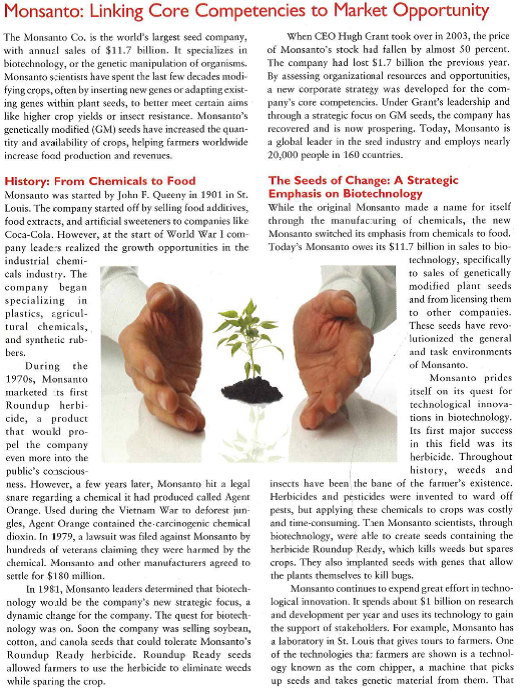
       Monsanto still has many challenges to face that go beyond legal or technological factors. These challenges involve the problem of feeding a growing population. Monsanto points out that its biotech products added more than 100 million tons to worldwide agriculture production between 1996 and 2006. It has also created partnerships to !wick the lives of fanners in developing countries, including India and Africa. Biotech crops have helped to improve the size of yields in India, and Monsanto estimates that Indian cot-ton farmers using biotech crops earn about $176 more in revenues per acre than their non-biotech contemporaries. In 2009, Monsanto stated that it would launch Project SHARE, a sustainable yield initiative done in conjunction with a nonprofit organization to improve the lives of 10,000 cotton farmers in 1,100 villages. In Africa, Monsanto has helped farmers survive through difficult periods. For instance, Monsanto has participated in Project Malawi, a program to improve food security and health care to thousands of Malawians. Monsanto has provided the program with hybrid maize seed and has sent experts from the company to provide training for farmers in how to use the seed. Monsanto has also agreed to donate 240 tons of hybrid corn seed to villages in Malawi, Tanzania, and Kenya. Monsanto's goal is to improve farmers' lives in a way that will help them become self-sufficient. Not all view Monsanto's presence in Africa as socially responsible. Critics sec Monsanto as trying to control African agriculture and destroy thousand-year-old agricultural practices. Others agree, but rake a more utilitarian view: the benefits (combating starvation in Africa) outweigh these disadvantages. There is no denying that Monsanto has positively affected African farmer? lives, along with increasing the company's profits for shareholders. As CEO Hugh Grant writes, This initiative isn't simply altruistic; we see it as a unique business proposition that rewards farmers and shareowners. These emerging industries are a major opportunity for company growth. The future challenges facing Monsanto Monsanto faces challenges that it needs to address, including lingering concerns over the safety and the environmental impact of tis products. This requires a SWOT analysis that examines the company's strengths, weaknesses, opportunities and threats. Monsanto is also facing the threat of increased competition. The seed company Pioneer Hi-Bred International Inc. uses pricing strategies and seed sampling to attract price-conscious customers. Additionally, lower grain prices may convince farmers to switch from Monsanto to less expensive brands. Monsanto most recently faces generic weed killer competition and a farmer backlash against high-priced, genetically modified seeds. Monsanto is slashing its prices of Roundup, which is based on the active ingredient glyphosate, to cope with a flood of cheap glyphosate from factories in China that have the capacity to make twice as much of the herbicide as the world needs. The company is also planning to lower prices for two recently introduced lines of generically modified seeds to spur broader adoption by U.S. farmers, who bought far fewer of the seeds in 2010. The decrease in sales of Monsanto may relate to environmental concerns and the fear that these products may inflict harm on the environment, such as killing harmless insects, butterflies, and other forms of life. Despite these challenges. Monsanto has numerous opportunities to thrive. The company is currently working on new innovations that could increase its competitive edge and provide enormous benefits to farmers world-wide. In a further act of social responsibility, Monsanto is donating intellectual property and seeds to aid in developing drought-tolerant white corn seeds for Africa. Although Monsanto has made mistakes in the past, it is trying to portray itself as a responsible company that is helping society with sustainable agriculture. It is using its technology and market share to meet challenges, including the global and political-legal factors facing the company. With the growing popularity of organic food and staunch criticism from opponents, Monsanto has to continue working with stakeholders to promote its technological innovations and eliminate challenges concerning its industry.  1. What are the major strengths, weaknesses,opportunities, and threats (SWOT) associated with Monsanto? 2. Explain how Monsanto has utilized the marketing concept and developed a market orientation. 3. What is the importance of gaining the support of Monsanto's stakehohlders in achieving long-term success?
       Monsanto still has many challenges to face that go beyond legal or technological factors. These challenges involve the problem of feeding a growing population. Monsanto points out that its biotech products added more than 100 million tons to worldwide agriculture production between 1996 and 2006. It has also created partnerships to !wick the lives of fanners in developing countries, including India and Africa. Biotech crops have helped to improve the size of yields in India, and Monsanto estimates that Indian cot-ton farmers using biotech crops earn about $176 more in revenues per acre than their non-biotech contemporaries. In 2009, Monsanto stated that it would launch Project SHARE, a sustainable yield initiative done in conjunction with a nonprofit organization to improve the lives of 10,000 cotton farmers in 1,100 villages. In Africa, Monsanto has helped farmers survive through difficult periods. For instance, Monsanto has participated in Project Malawi, a program to improve food security and health care to thousands of Malawians. Monsanto has provided the program with hybrid maize seed and has sent experts from the company to provide training for farmers in how to use the seed. Monsanto has also agreed to donate 240 tons of hybrid corn seed to villages in Malawi, Tanzania, and Kenya. Monsanto's goal is to improve farmers' lives in a way that will help them become self-sufficient. Not all view Monsanto's presence in Africa as socially responsible. Critics sec Monsanto as trying to control African agriculture and destroy thousand-year-old agricultural practices. Others agree, but rake a more utilitarian view: the benefits (combating starvation in Africa) outweigh these disadvantages. There is no denying that Monsanto has positively affected African farmer? lives, along with increasing the company's profits for shareholders. As CEO Hugh Grant writes, This initiative isn't simply altruistic; we see it as a unique business proposition that rewards farmers and shareowners. These emerging industries are a major opportunity for company growth. The future challenges facing Monsanto Monsanto faces challenges that it needs to address, including lingering concerns over the safety and the environmental impact of tis products. This requires a SWOT analysis that examines the company's strengths, weaknesses, opportunities and threats. Monsanto is also facing the threat of increased competition. The seed company Pioneer Hi-Bred International Inc. uses pricing strategies and seed sampling to attract price-conscious customers. Additionally, lower grain prices may convince farmers to switch from Monsanto to less expensive brands. Monsanto most recently faces generic weed killer competition and a farmer backlash against high-priced, genetically modified seeds. Monsanto is slashing its prices of Roundup, which is based on the active ingredient glyphosate, to cope with a flood of cheap glyphosate from factories in China that have the capacity to make twice as much of the herbicide as the world needs. The company is also planning to lower prices for two recently introduced lines of generically modified seeds to spur broader adoption by U.S. farmers, who bought far fewer of the seeds in 2010. The decrease in sales of Monsanto may relate to environmental concerns and the fear that these products may inflict harm on the environment, such as killing harmless insects, butterflies, and other forms of life. Despite these challenges. Monsanto has numerous opportunities to thrive. The company is currently working on new innovations that could increase its competitive edge and provide enormous benefits to farmers world-wide. In a further act of social responsibility, Monsanto is donating intellectual property and seeds to aid in developing drought-tolerant white corn seeds for Africa. Although Monsanto has made mistakes in the past, it is trying to portray itself as a responsible company that is helping society with sustainable agriculture. It is using its technology and market share to meet challenges, including the global and political-legal factors facing the company. With the growing popularity of organic food and staunch criticism from opponents, Monsanto has to continue working with stakeholders to promote its technological innovations and eliminate challenges concerning its industry.  1. What are the major strengths, weaknesses,opportunities, and threats (SWOT) associated with Monsanto? 2. Explain how Monsanto has utilized the marketing concept and developed a market orientation. 3. What is the importance of gaining the support of Monsanto's stakehohlders in achieving long-term success?
Monsanto still has many challenges to face that go beyond legal or technological factors. These challenges involve the problem of feeding a growing population. Monsanto points out that its biotech products added more than 100 million tons to worldwide agriculture production between 1996 and 2006. It has also created partnerships to !wick the lives of fanners in developing countries, including India and Africa.
Biotech crops have helped to improve the size of yields in India, and Monsanto estimates that Indian cot-ton farmers using biotech crops earn about $176 more in revenues per acre than their non-biotech contemporaries. In 2009, Monsanto stated that it would launch Project SHARE, a sustainable yield initiative done in conjunction with a nonprofit organization to improve the lives of 10,000 cotton farmers in 1,100 villages.
In Africa, Monsanto has helped farmers survive through difficult periods. For instance, Monsanto has participated in Project Malawi, a program to improve food security and health care to thousands of Malawians. Monsanto has provided the program with hybrid maize seed and has sent experts from the company to provide training for farmers in how to use the seed. Monsanto has also agreed to donate 240 tons of hybrid corn seed to villages in Malawi, Tanzania, and Kenya. Monsanto's goal is to improve farmers' lives in a way that will help them become self-sufficient.
Not all view Monsanto's presence in Africa as socially responsible. Critics sec Monsanto as trying to control African agriculture and destroy thousand-year-old agricultural practices. Others agree, but rake a more utilitarian view: the benefits (combating starvation in Africa) outweigh these disadvantages. There is no denying that Monsanto has positively affected African farmer? lives, along with increasing the company's profits for shareholders. As CEO Hugh Grant writes, "This initiative isn't simply altruistic; we see it as a unique business proposition that rewards farmers and shareowners." These emerging industries are a major opportunity for company growth.
The future challenges facing Monsanto
Monsanto faces challenges that it needs to address, including lingering concerns over the safety and the environmental impact of tis products. This requires a SWOT analysis that examines the company's strengths, weaknesses, opportunities and threats. Monsanto is also facing the threat of increased competition. The seed company Pioneer Hi-Bred International Inc. uses pricing strategies and seed sampling to attract price-conscious customers. Additionally, lower grain prices may convince farmers to switch from Monsanto to less expensive brands.
Monsanto most recently faces generic weed killer competition and a farmer backlash against high-priced, genetically modified seeds. Monsanto is slashing its prices of Roundup, which is based on the active ingredient glyphosate, to cope with a flood of cheap glyphosate from factories in China that have the capacity to make twice as much of the herbicide as the world needs. The company is also planning to lower prices for two recently introduced lines of generically modified seeds to spur broader adoption by U.S. farmers, who bought far fewer of the seeds in 2010. The decrease in sales of Monsanto may relate to environmental concerns and the fear that these products may inflict harm on the environment, such as killing harmless insects, butterflies, and other forms of life.
Despite these challenges. Monsanto has numerous opportunities to thrive. The company is currently working on new innovations that could increase its competitive edge and provide enormous benefits to farmers world-wide. In a further act of social responsibility, Monsanto is donating intellectual property and seeds to aid in developing drought-tolerant white corn seeds for Africa.
Although Monsanto has made mistakes in the past, it is trying to portray itself as a responsible company that is helping society with sustainable agriculture. It is using its technology and market share to meet challenges, including the global and political-legal factors facing the company. With the growing popularity of organic food and staunch criticism from opponents, Monsanto has to continue working with stakeholders to promote its technological innovations and eliminate challenges concerning its industry."
1. What are the major strengths, weaknesses,opportunities, and threats (SWOT) associated with Monsanto?
2. Explain how Monsanto has utilized the marketing concept and developed a market orientation.
3. What is the importance of gaining the support of Monsanto's stakehohlders in achieving long-term success?
التوضيح
موثّق
like image
like image

1.
SWOT analysis of Company M
Strengths...

close menu
Marketing 16th Edition by William Pride,Ferrell
cross icon