







 تكلم مع الذكاء الاصطناعي


Marketing 16th Edition by William Pride,Ferrell
النسخة 16الرقم المعياري الدولي: 978-1111526191Marketing 16th Edition by William Pride,Ferrell
النسخة 16الرقم المعياري الدولي: 978-1111526191 تمرين 15
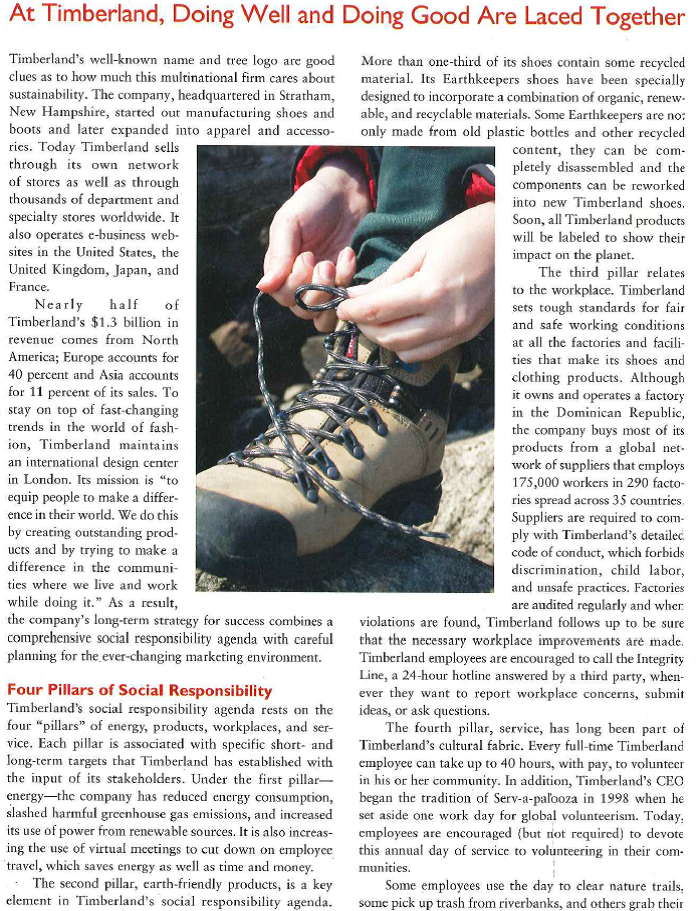 tool belts to build arts facilities or repair neighborhood schools. In more than a decade with Timberland, the vice president of corporate culture has enthusiastically laced up his Timberland boots and volunteered on three continents, doing everything from protecting the rain-forest to improving the gardens around a senior center. He explains that the company's philosophy is to make local communities better, which makes Timberland better: "Our CEO believes that doing well and doing good are inextricably linked. It engages your employees, customers, and suppliers."
 The Changing Marketing Environment
Because Timberland has a diverse product portfolio and is active in retailing and wholesaling as well as manufacturing, it has to keep an eye on competitors in several industries. The outdoor retailer L.L.Bean, headquartered in Maine, is a powerful competitor, with its wide variety of private-branded footwear and clothing products. Another strong U.S.-based rival is Wolverine World Wide, which manufactures Hush Puppies, Sebago, Merrell, Patagonia Footwear, and other brands of casual and work shoes. Like Timberland, Wolverine operates company stores in the United States and the United Kingdom. The U.K.-based R. Griggs Group, maker of Doc Martens boots, shoes, and sandals, is a key competitor. Finally, particular Timberland shoes styles compete directly with footwear marketed by the world's largest athletic shoe companies.
Economic conditions can also affect Timberland's marketing situation. During the recent recession, when many consumers held back on discretionary purchases, the company's overall revenue fell. However, sales of its work boots remained flat, even as some competitors saw their sales drop. Timberland's marketing executives realized that the brand was holding its own among construction workers and other buyers who need tough, reliable footwear to use day in and day out.
Timberland's marketers have also noticed that the challenging global economic situation is influencing the way consumers think and feel about buying products such as shoes and clothing. When unemployment was low and buying power was high, consumers often used such purchases as a way to display their wealth. As the economy moved into recession, however, many cash-strapped consumers cut back on purchases of showy, expensive items, in favor of products that conveyed a more subtle message about cultural values such as concern for the environment. Today, "self worth is tied to thoughtful purchases as a way to impress your peers, instead of conspicuous consumption," states Timberland's senior director of merchandising.
In addition to its international marketing initiatives in China and Europe, Timberland sees promising opportunities. for growth in India. It recently signed a strategic alliance with Reliance Industries, a local company known for marketing international brands. Reliance will dis-tribute shoes, boots, and clothing through Timberland-branded stores and through selected department stores in major Indian cities. Timberland's CEO says that Reliance has "a clear understanding of the Timberland brand and consumer" and, just as important, it's "as committed as we are to our ideology and passion for the outdoors."
High-Tech Shoes and Communications
Timberland is applying technological advances to improve its footwear products and to reach out to customers through digital media. For example, to satisfy customer? needs for comfort, the company has introduced parented "Smart Comfort" footbeds in its shoes. As part of its commitment to sustainability, Timberland makes Green Rubber soles from recycled rubber and is designing its new footwear products for easy disassembly and recycling at the end of their useful lives.
Moving into digital media is helping Timberland bring its marketing messages to the attention of consumers who use the Web. Through brand-specific sites, Facebook fan pages, blog entries, a Twitter feed, YouTube videos, and online games, Timberland supplements its traditional marketing activities and engages consumers who seek a deeper level of involvement with their favorite brands."
1. What forces in the marketing environment appear to pose the greatest challenges to Timberland's marketing performance? Explain.
2. What kinds of ethical issues does Timberland face in its marketing? What is the Company doing to address these issues?
3. How does Timberland's reputation for social responsibility serve as a strength when consumers are turning away from showy, expensive products?
4. Over time, Timberland plans to add labels to show how eco-friendly each of its products really is. What are the marketing advantages and disadvantages of this move?
التوضيح موثّق
موثّق
موثّق
(1)
Forces in the marketing environment ...

Marketing 16th Edition by William Pride,Ferrell

لماذا لم يعجبك هذا التمرين؟
أخرى 8 أحرف كحد أدنى و 255 حرفاً كحد أقصى
حرف 255






