







 تكلم مع الذكاء الاصطناعي


Marketing 16th Edition by William Pride,Ferrell
النسخة 16الرقم المعياري الدولي: 978-1111526191Marketing 16th Edition by William Pride,Ferrell
النسخة 16الرقم المعياري الدولي: 978-1111526191 تمرين 5
When Michael Dell started his Texas-based computer business in 1984, he chose a distribution strategy that was radically different from that of other computer marketers. Instead of selling through wholesalers and retailers, the company dealt directly with customers. This kept costs low and allowed Dell to cater to customers' needs by building each computer to order. Using a direct channel also minimized inventory costs and reduced the risk that parts and products would become obsolete even before customers placed their orders, a constant concern in high-tech industries.
By 1997, Dell's website alone was responsible for $1 million a day in sales. Relying on the strength of its online sales, catalogs, and phone orders, Dell expanded beyond the United States and added new products for four target markets: consumers, large corporations, small businesses, and government agencies. Meanwhile, Apple, Hewlett-Packard, and other competitors were reaching out to many of the same segments with a combination of direct and indirect channels. Apple Stores, for example, proved to be major customer magnets and gave a significant boost to sales of Macintosh computers and other Apple electronics. Hewlett-Packard forged strong ties with value-added resellers (VARs), intermediaries that assemble systems of computers, servers, and other products customized to meet the special needs of business buyers.
Although Dell tested retail distribution on a number of occasions, it never let the experiments go on too long. In the 1990s, it tried selling PCs through a few big U.S. retail chains, but soon discontinued the arrangement because the profit margins weren't as healthy as in the direct channel. Later, it opened a series of branded retail kiosks in major U.S. markets to display its products and answer customers' questions. Unlike stores, however, the kiosks didn't actually sell any-thing: Customers could only place orders for future delivery. Dell ultimately closed the kiosks down. By 2007, with competitors coming on strong, Dell was ready to rethink its worldwide channel strategy. As convenient as online shopping was for many U.S. computer buyers, it was much less popular in many other countries. To gain market share domestically and internationally, Dell would have to follow consumers into stores, malls, and downtown shopping districts. The company began selling a few models through Walmart's U.S. stores, Carphone Warehouse's U.K. stores,. Bic Camera's Japanese stores, and Gome's Chinese stores. In addition, it opened Dell stores in Moscow, Budapest, and other world capitals.
By 2010, sales through retailers had gained enough momentum that Dell sought out other retail deals. In another channel change, it began selling through VAR partners that serve small- and medium-sized businesses and lined up wholesalers to distribute its products in Europe, Latin America, and elsewhere. When Dell introduced a new line of smart-phones, it needed a new channel arrangement to reach buyers. Therefore, it arranged for cell phone carriers such as AT T to sell the new models to their customers.
As successful as Dell has been in revamping its indirect channels, selling directly to customers remains a top priority. Dell invites orders around the clock through Web pages tailored to the needs of each 'target market. It also maintains an online outlet store to sell 4 discontinued and refurbished products. It mails millions of catalogs and direct-mail pieces every year. And its sales force calls on government officials and big businesses that buy in volume. Dell's website notes, with pride, that the 10 largest U.S. corporations and five largest U.S. commercial banks "run on Dell."
Moreover, the company is a pioneer in stimulating exchanges with customers through social media. Dell has 139,000 fans on Facebook, for example, and regularly posts offers that drive customers to its various websites. It's become a pioneer in selling directly to customers via the microblog site Twitter. In less than three years, it generated $6.5 million in revenue from sales transactions that originated on Twitter. That may be a tiny sliver of Dell's $53 billion in annual revenue, but it demonstrates the company's flexibility in adapting to shifts in customer behavior and environmental forces, such as technological advances.
With market share and profit-margin challenges still facing the company, and global demand just picking up steam after a long, difficult recession, watch for Dell to make more channel adjustments in the coming years.
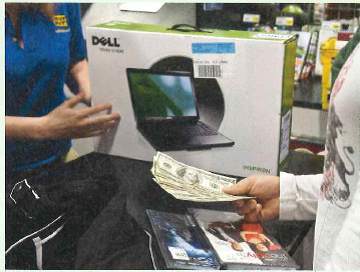
1. Is Dell using intensive, selective, or exclusive distribution.
2. How does Dell's preference for direct channels affect its for its market coverage? Why is this appropriate for decisions about physical distribution? Dell's products and target markets?
3. What issues in channel conflict might arise from Dell's current distribution arrangements?
By 1997, Dell's website alone was responsible for $1 million a day in sales. Relying on the strength of its online sales, catalogs, and phone orders, Dell expanded beyond the United States and added new products for four target markets: consumers, large corporations, small businesses, and government agencies. Meanwhile, Apple, Hewlett-Packard, and other competitors were reaching out to many of the same segments with a combination of direct and indirect channels. Apple Stores, for example, proved to be major customer magnets and gave a significant boost to sales of Macintosh computers and other Apple electronics. Hewlett-Packard forged strong ties with value-added resellers (VARs), intermediaries that assemble systems of computers, servers, and other products customized to meet the special needs of business buyers.
Although Dell tested retail distribution on a number of occasions, it never let the experiments go on too long. In the 1990s, it tried selling PCs through a few big U.S. retail chains, but soon discontinued the arrangement because the profit margins weren't as healthy as in the direct channel. Later, it opened a series of branded retail kiosks in major U.S. markets to display its products and answer customers' questions. Unlike stores, however, the kiosks didn't actually sell any-thing: Customers could only place orders for future delivery. Dell ultimately closed the kiosks down. By 2007, with competitors coming on strong, Dell was ready to rethink its worldwide channel strategy. As convenient as online shopping was for many U.S. computer buyers, it was much less popular in many other countries. To gain market share domestically and internationally, Dell would have to follow consumers into stores, malls, and downtown shopping districts. The company began selling a few models through Walmart's U.S. stores, Carphone Warehouse's U.K. stores,. Bic Camera's Japanese stores, and Gome's Chinese stores. In addition, it opened Dell stores in Moscow, Budapest, and other world capitals.
By 2010, sales through retailers had gained enough momentum that Dell sought out other retail deals. In another channel change, it began selling through VAR partners that serve small- and medium-sized businesses and lined up wholesalers to distribute its products in Europe, Latin America, and elsewhere. When Dell introduced a new line of smart-phones, it needed a new channel arrangement to reach buyers. Therefore, it arranged for cell phone carriers such as AT T to sell the new models to their customers.
As successful as Dell has been in revamping its indirect channels, selling directly to customers remains a top priority. Dell invites orders around the clock through Web pages tailored to the needs of each 'target market. It also maintains an online outlet store to sell 4 discontinued and refurbished products. It mails millions of catalogs and direct-mail pieces every year. And its sales force calls on government officials and big businesses that buy in volume. Dell's website notes, with pride, that the 10 largest U.S. corporations and five largest U.S. commercial banks "run on Dell."
Moreover, the company is a pioneer in stimulating exchanges with customers through social media. Dell has 139,000 fans on Facebook, for example, and regularly posts offers that drive customers to its various websites. It's become a pioneer in selling directly to customers via the microblog site Twitter. In less than three years, it generated $6.5 million in revenue from sales transactions that originated on Twitter. That may be a tiny sliver of Dell's $53 billion in annual revenue, but it demonstrates the company's flexibility in adapting to shifts in customer behavior and environmental forces, such as technological advances.
With market share and profit-margin challenges still facing the company, and global demand just picking up steam after a long, difficult recession, watch for Dell to make more channel adjustments in the coming years.
1. Is Dell using intensive, selective, or exclusive distribution.
2. How does Dell's preference for direct channels affect its for its market coverage? Why is this appropriate for decisions about physical distribution? Dell's products and target markets?
3. What issues in channel conflict might arise from Dell's current distribution arrangements?
التوضيح موثّق
موثّق
موثّق
1.
Company D is using selective distribu...

Marketing 16th Edition by William Pride,Ferrell

لماذا لم يعجبك هذا التمرين؟
أخرى 8 أحرف كحد أدنى و 255 حرفاً كحد أقصى
حرف 255






