







 تكلم مع الذكاء الاصطناعي


Marketing 16th Edition by William Pride,Ferrell
النسخة 16الرقم المعياري الدولي: 978-1111526191Marketing 16th Edition by William Pride,Ferrell
النسخة 16الرقم المعياري الدولي: 978-1111526191 تمرين 4
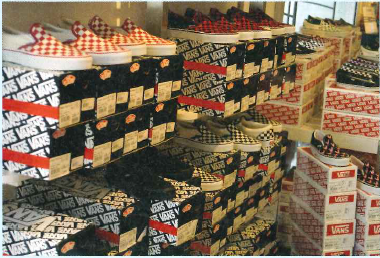
For most people, surfing and skate boarding come to mind immedi-ately when they think of southern California culture. For 40 years, Vans has embodied the California lifestyle and remains one of the preeminent skater-shoe companies. Founded in Los Angeles in 1966 by Paul Van Doren, his brother Steve, and Belgian investor Serge D'Elia, Vans quickly became a staple in southern California. Starting with a few versions of the traditional lace-up deck shoe sold out of a factory, the style of shoe became popular almost immediately. Vans rapidly increased its level of popularity by customizing shoes in all kinds of different fabrics and designs. The Van Dorens secured their local customized shoe business by selling plaid shoes to Catholic schools and sneakers with school colors to high school athletes. But when the checkered slip-on was donned by Sean Penn and his surfer buddies in the film Fast Times at Ridgemont High, skaters all over the country were demanding their own pairs of Vans. The shoes went from local wear to an iconic symbol in just a few years.
Contrary to many corporate success stories, the Vans company never spent much money on advertising. Paul Van Doren knew that he offered a superior product, and he relied on word of mouth to popularize the high-quality, extremely durable shoes. The most marketing Van Doren did at first was to have his children canvas their neighborhood with flyers. At all early Vans scores, signs encouraged customers to "tell a friend about Vans.- For years, Van Doren focused mostly on the manufacturing aspect of the company so that, even with a minimal amount of advertising, popularity grew because Vans were, quite simply, quality shoes. It wasn't until the late 1980s and early 1990s, when manufacturing was taken overseas, that Vans turned its attention to marketing.
One of Vans's earliest forays into promotion came about by chance. As skateboarders began to discover Vans shoes, the company responded by creating styles more amenable to skating. With their skater following growing, Vans paid some top skaters a few hundred dollars apiece to wear their shoes at skating events. In 1989, Vans produced its first signature skateboarding shoe, the Steve Caballero shoe. Since then, Vans has partnered with numerous athletes like Geoff Rowley, who has the best-selling signature Vans shoe to date, and Johnny Layton. As skateboarding culture has continued,to flourish over the decades, Vans's connection to the scene has remained strong.
Vans's two-man marketing and promotional team focuses on spreading interest in Vans by doing its best to remain plugged into the youth culture and by fueling teenage interest in Vans products. To this end, the company advertises through print, online, TV, and sporting and music events. Currently, the key to Vans's marketing strategy is developing advertising partnerships with athletes, artists, and media outlets. People immersed in this culture want to own Vans products. Vans is not just a shoe; it is a lifestyle.
Young extreme-sports athletes, like skaters and surfers, remain Vans's most important customer base. In 1995, Vans hosted its first Triple Crown event. The Triple Crown spot-lights skateboarding, surfing, snowboarding, BMX, FMX, and wakeboarding. Tony Hawk won the skateboarding com-petition that first year and has since become a household name. Also in 1995, Vans launched its first annual Warped Tour, blending skating with music through concerts and competitions. These types of events allow Vans to build brand recognition, cement its integral place in the skating lifestyle, and connect with customers via giveaways and promotions, such as designing custom shoes.
In addition to events, Vans connects with its audience through magazine advertisements, tele-vision, and the Internet, especially in an effort to attract young female consumers, who represent a growing part of the Vans consumer base. In the past, the company has partnered with magazines like Teen Vogue and CosntoGirl to reach the female demo-graphic. In addition, the company works with some of tele-vision's action-sports networks and hosts a weekly show, Vans Off the Wall Hour, on FSN. Although it is more than 40 years old, Vans still connects with youth culture as well as ever-and shows no signs of slowing down.
1. Evaluate Vans's early word-of-mouth marketing strategy.
2. Why were the early Vans advertising activities related to skateboard shoes so successful?
3. How does Vans continue to capture its target market?
Contrary to many corporate success stories, the Vans company never spent much money on advertising. Paul Van Doren knew that he offered a superior product, and he relied on word of mouth to popularize the high-quality, extremely durable shoes. The most marketing Van Doren did at first was to have his children canvas their neighborhood with flyers. At all early Vans scores, signs encouraged customers to "tell a friend about Vans.- For years, Van Doren focused mostly on the manufacturing aspect of the company so that, even with a minimal amount of advertising, popularity grew because Vans were, quite simply, quality shoes. It wasn't until the late 1980s and early 1990s, when manufacturing was taken overseas, that Vans turned its attention to marketing.
One of Vans's earliest forays into promotion came about by chance. As skateboarders began to discover Vans shoes, the company responded by creating styles more amenable to skating. With their skater following growing, Vans paid some top skaters a few hundred dollars apiece to wear their shoes at skating events. In 1989, Vans produced its first signature skateboarding shoe, the Steve Caballero shoe. Since then, Vans has partnered with numerous athletes like Geoff Rowley, who has the best-selling signature Vans shoe to date, and Johnny Layton. As skateboarding culture has continued,to flourish over the decades, Vans's connection to the scene has remained strong.
Vans's two-man marketing and promotional team focuses on spreading interest in Vans by doing its best to remain plugged into the youth culture and by fueling teenage interest in Vans products. To this end, the company advertises through print, online, TV, and sporting and music events. Currently, the key to Vans's marketing strategy is developing advertising partnerships with athletes, artists, and media outlets. People immersed in this culture want to own Vans products. Vans is not just a shoe; it is a lifestyle.
Young extreme-sports athletes, like skaters and surfers, remain Vans's most important customer base. In 1995, Vans hosted its first Triple Crown event. The Triple Crown spot-lights skateboarding, surfing, snowboarding, BMX, FMX, and wakeboarding. Tony Hawk won the skateboarding com-petition that first year and has since become a household name. Also in 1995, Vans launched its first annual Warped Tour, blending skating with music through concerts and competitions. These types of events allow Vans to build brand recognition, cement its integral place in the skating lifestyle, and connect with customers via giveaways and promotions, such as designing custom shoes.
In addition to events, Vans connects with its audience through magazine advertisements, tele-vision, and the Internet, especially in an effort to attract young female consumers, who represent a growing part of the Vans consumer base. In the past, the company has partnered with magazines like Teen Vogue and CosntoGirl to reach the female demo-graphic. In addition, the company works with some of tele-vision's action-sports networks and hosts a weekly show, Vans Off the Wall Hour, on FSN. Although it is more than 40 years old, Vans still connects with youth culture as well as ever-and shows no signs of slowing down.
1. Evaluate Vans's early word-of-mouth marketing strategy.
2. Why were the early Vans advertising activities related to skateboard shoes so successful?
3. How does Vans continue to capture its target market?
التوضيح موثّق
موثّق
موثّق
(1)
The company's word-of-mouth marketin...

Marketing 16th Edition by William Pride,Ferrell

لماذا لم يعجبك هذا التمرين؟
أخرى 8 أحرف كحد أدنى و 255 حرفاً كحد أقصى
حرف 255






