







 تكلم مع الذكاء الاصطناعي


Cornerstones of Cost Accounting 1st Edition by Don Hansen,Maryanne Mowen
النسخة 1الرقم المعياري الدولي: 978-0538736787Cornerstones of Cost Accounting 1st Edition by Don Hansen,Maryanne Mowen
النسخة 1الرقم المعياري الدولي: 978-0538736787 تمرين 28
ROI, RESIDUAL INCOME
Raddington Industries produces tool and die machinery for manufacturers. The company expanded vertically in 2010 by acquiring one of its suppliers of alloy steel plates, Keimer Steel Company. To manage the two separate businesses, the operations of Keimer are reported separately as an investment center. Raddington monitors its divisions on the basis of both unit contribution and return on average investment (ROI), with investment defined as average operating assets employed. Management bonuses are determined on ROI. All investments in operating assets are expected to earn a minimum return of 13 percent before income taxes.
Keimer's cost of goods sold is considered to be entirely variable, while the division's administrative expenses are not dependent on volume. Selling expenses are a mixed cost with 40 percent attributed to sales volume. Keimer contemplated a capital acquisition with an estimated ROI of 14.5 percent; however, division management decided against the investment because it believed that the investment would decrease Keimer's overall ROI.
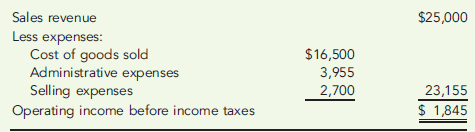
The 2011 operating statement for Keimer follows. The division's operating assets employed were $12,600,000 at November 30, 2011, a 5 percent increase over the 2010 year-end balance.
Keimer Steel Company Operating Statement For the Year Ended November 30, 2011 ($000 omitted)
Required:
1. Calculate the unit contribution for Keimer Steel Company if 1,187,000 units were produced and sold during the year ended November 30, 2011.
2. Calculate the following performance measures for 2011 for Keimer Steel Company: a. Pretax return on average investment in operating assets employed (ROI). b. Residual income calculated on the basis of average operating assets employed.
3. Explain why the management of Keimer Steel Company would have been more likely to accept the contemplated capital acquisition if residual income rather than ROI were used as a performance measure.
4. Keimer Steel Company is a separate investment center within Raddington Industries. Identify several items that Keimer should control if it is to be evaluated fairly by either the ROI or residual income performance measures. (CMA adapted)
Raddington Industries produces tool and die machinery for manufacturers. The company expanded vertically in 2010 by acquiring one of its suppliers of alloy steel plates, Keimer Steel Company. To manage the two separate businesses, the operations of Keimer are reported separately as an investment center. Raddington monitors its divisions on the basis of both unit contribution and return on average investment (ROI), with investment defined as average operating assets employed. Management bonuses are determined on ROI. All investments in operating assets are expected to earn a minimum return of 13 percent before income taxes.
Keimer's cost of goods sold is considered to be entirely variable, while the division's administrative expenses are not dependent on volume. Selling expenses are a mixed cost with 40 percent attributed to sales volume. Keimer contemplated a capital acquisition with an estimated ROI of 14.5 percent; however, division management decided against the investment because it believed that the investment would decrease Keimer's overall ROI.
The 2011 operating statement for Keimer follows. The division's operating assets employed were $12,600,000 at November 30, 2011, a 5 percent increase over the 2010 year-end balance.
Keimer Steel Company Operating Statement For the Year Ended November 30, 2011 ($000 omitted)
Required:
1. Calculate the unit contribution for Keimer Steel Company if 1,187,000 units were produced and sold during the year ended November 30, 2011.
2. Calculate the following performance measures for 2011 for Keimer Steel Company: a. Pretax return on average investment in operating assets employed (ROI). b. Residual income calculated on the basis of average operating assets employed.
3. Explain why the management of Keimer Steel Company would have been more likely to accept the contemplated capital acquisition if residual income rather than ROI were used as a performance measure.
4. Keimer Steel Company is a separate investment center within Raddington Industries. Identify several items that Keimer should control if it is to be evaluated fairly by either the ROI or residual income performance measures. (CMA adapted)
التوضيح موثّق
موثّق
موثّق
1).
Calculation of the unit contributio...

Cornerstones of Cost Accounting 1st Edition by Don Hansen,Maryanne Mowen

لماذا لم يعجبك هذا التمرين؟
أخرى 8 أحرف كحد أدنى و 255 حرفاً كحد أقصى
حرف 255






