







 تكلم مع الذكاء الاصطناعي


Cornerstones of Cost Accounting 1st Edition by Don Hansen,Maryanne Mowen
النسخة 1الرقم المعياري الدولي: 978-0538736787Cornerstones of Cost Accounting 1st Edition by Don Hansen,Maryanne Mowen
النسخة 1الرقم المعياري الدولي: 978-0538736787 تمرين 18
EXTERNAL LINKAGES, ACTIVITY-BASED SUPPLIER COSTING
Amado, Inc., manufactures riding lawn mowers. Amado uses JIT manufacturing and carries insignificant levels of inventory. Amado manufactures everything needed for the riding lawn mowers except for the engines. Several sizes of mowers are produced. The most popular line is the small mower line. The engines for the small mower line are purchased from two sources: Rivera Engines and Bach Machining. The Rivera engine is the more expensive of the two sources and has a price of $300. The Bach engine is $270 per unit. Amado produces and sells 13,200 units of the small mower. Of the 13,200 engines purchased, 2,400 are purchased from Rivera Engines, and 10,800 are purchased from Bach Machining. Although Bill Jackson, production manager, prefers the Rivera engine, Carlos Lopez, purchasing manager, maintains that the price difference is too great to buy more than the 2,400 units currently purchased. Carlos, however, does want to maintain a significant connection with Rivera just in case the less expensive source cannot supply the needed quantities. Even though Bill understands the price argument, he has argued in many meetings that the quality of the Rivera engine is worth the price difference. Carlos remains unconvinced.
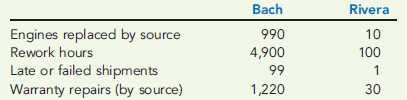
Sam Miller, controller, has recently overseen the implementation of an activity-based costing system. He has indicated that an ABC analysis would shed some light on the conflict between production and purchasing. To support this position, the following data have been collected:
I. Activity cost data:
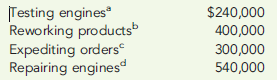
II. Supplier data:
Upon hearing of the proposed ABC analysis, Bill and Carlos were both supportive. Carlos, however, noted that even if the analysis revealed that the Rivera engine was actually less expensive, it would be unwise to completely abandon Bach. He argued that Rivera may be hard pressed to meet the entire demand. Its productive capacity was not sufficient to handle the kind of increased demand that would be imposed. Additionally, having only one supplier was simply too risky.
Required:
1. Calculate the total supplier cost (acquisition cost plus supplier-related activity costs). Convert this to a per-engine cost to find out how much the company is paying for the engines. Which of the two suppliers is the low-cost supplier? Explain why this is a better measure of engine cost than the usual purchase costs assigned to the engines.
2. Consider the supplier cost information obtained in Requirement 1. Suppose further that Rivera can supply only a total of 6,000 units. What actions would you advise Amado to undertake with its suppliers? Comment on the strategic value of activitybased supplier costing.
Amado, Inc., manufactures riding lawn mowers. Amado uses JIT manufacturing and carries insignificant levels of inventory. Amado manufactures everything needed for the riding lawn mowers except for the engines. Several sizes of mowers are produced. The most popular line is the small mower line. The engines for the small mower line are purchased from two sources: Rivera Engines and Bach Machining. The Rivera engine is the more expensive of the two sources and has a price of $300. The Bach engine is $270 per unit. Amado produces and sells 13,200 units of the small mower. Of the 13,200 engines purchased, 2,400 are purchased from Rivera Engines, and 10,800 are purchased from Bach Machining. Although Bill Jackson, production manager, prefers the Rivera engine, Carlos Lopez, purchasing manager, maintains that the price difference is too great to buy more than the 2,400 units currently purchased. Carlos, however, does want to maintain a significant connection with Rivera just in case the less expensive source cannot supply the needed quantities. Even though Bill understands the price argument, he has argued in many meetings that the quality of the Rivera engine is worth the price difference. Carlos remains unconvinced.
Sam Miller, controller, has recently overseen the implementation of an activity-based costing system. He has indicated that an ABC analysis would shed some light on the conflict between production and purchasing. To support this position, the following data have been collected:
I. Activity cost data:
II. Supplier data:
Upon hearing of the proposed ABC analysis, Bill and Carlos were both supportive. Carlos, however, noted that even if the analysis revealed that the Rivera engine was actually less expensive, it would be unwise to completely abandon Bach. He argued that Rivera may be hard pressed to meet the entire demand. Its productive capacity was not sufficient to handle the kind of increased demand that would be imposed. Additionally, having only one supplier was simply too risky.
Required:
1. Calculate the total supplier cost (acquisition cost plus supplier-related activity costs). Convert this to a per-engine cost to find out how much the company is paying for the engines. Which of the two suppliers is the low-cost supplier? Explain why this is a better measure of engine cost than the usual purchase costs assigned to the engines.
2. Consider the supplier cost information obtained in Requirement 1. Suppose further that Rivera can supply only a total of 6,000 units. What actions would you advise Amado to undertake with its suppliers? Comment on the strategic value of activitybased supplier costing.
التوضيح موثّق
موثّق
موثّق
1.
Calculation of thee total supplier c...

Cornerstones of Cost Accounting 1st Edition by Don Hansen,Maryanne Mowen

لماذا لم يعجبك هذا التمرين؟
أخرى 8 أحرف كحد أدنى و 255 حرفاً كحد أقصى
حرف 255






