







 تكلم مع الذكاء الاصطناعي


Biology 1st Edition by Jerome Krueger, Kendra Hill, Robert Noyd
النسخة 1الرقم المعياري الدولي: 978-1305747852Biology 1st Edition by Jerome Krueger, Kendra Hill, Robert Noyd
النسخة 1الرقم المعياري الدولي: 978-1305747852 تمرين 19
To navigate and find food, dolphins use a type of echolocation similar to that used by bats. They emit a focused, wide-angle beam of high-frequency clicks and listen for the echo. To make the sounds, dolphins move air through bony nasal structures and a specialized structure within their forehead ( Fig. ). The bones of the skull and various structures all play important roles in forming the beam of sound, while the lower jaw acts as the primary echo reception pathway to the internal ear. Based on this background information, predict what category of sensory receptors helps the dolphin detect its prey.
Figure Pathway of echolocation in dolphins.
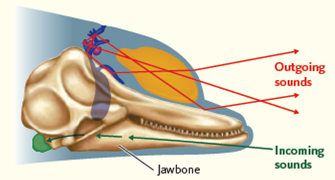
Figure Pathway of echolocation in dolphins.
التوضيح موثّق
موثّق
موثّق
Based on the echolocation, Dolphins rely...

Biology 1st Edition by Jerome Krueger, Kendra Hill, Robert Noyd

لماذا لم يعجبك هذا التمرين؟
أخرى 8 أحرف كحد أدنى و 255 حرفاً كحد أقصى
حرف 255






