







 تكلم مع الذكاء الاصطناعي


Marketing 4th Edition by Dhruv Grewal,Michael Levy
النسخة 4الرقم المعياري الدولي: 978-0077861025Marketing 4th Edition by Dhruv Grewal,Michael Levy
النسخة 4الرقم المعياري الدولي: 978-0077861025 تمرين 3
ZIPCAR: DELIVERING ONLY AS MUCH DRIVING AS YOU WANT
Historically, the expectation that your car will be waiting for you at the curb every morning got hard-wired into many Americans with the growth of the auto industry. But that expectation has gone haywire by now for many city dwellers, who have been frustrated by the soaring costs and parking pressures that confront modern drivers. For them, Zipcar, the world's leading car-sharing company, 51 offers the pleasure of driving without the hassles of ownership.
The Cambridge, Massachusetts-based company rents self-service vehicles by the hour or day to urban residents who prefer to pay for just as much driving as they absolutely need. Car sharing eliminates issues related to parking shortages; overnight parking restrictions; or soaring gas, insurance, and tax bills. That promise resonates well with consumer expectations on many fronts, especially among Zipcar's primary urban customers, the large segments of college students who also enjoy the service, and even suburbanites who just work in the city.
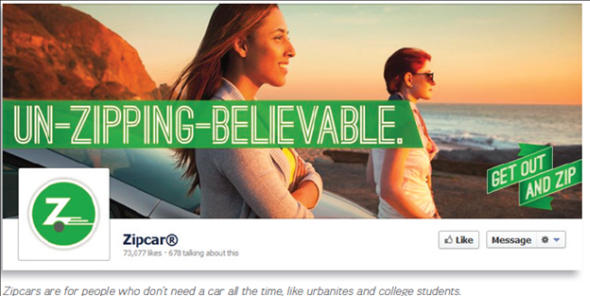
Still Zipcar CEO Scott Griffith realizes that the company's biggest growth obstacle is Americans' inability to envision life without a car. To push an attitude shift, Zipcar makes the car-sharing experience as easy as possible, with just four simple steps:
1. Join the network.
2. Reserve your car online or from your smartphone.
3. Unlock the car with your Zipcard.
4. Drive away.
Today the car-sharing network has more than 650,000 members and 9,500 vehicles in 13 major metropolitan areas and on 150 college campuses throughout the United States, Canada, and Britain. With so many locations, the company could bring convenient car sharing to a far larger market; it estimates that 10 million residents, business commuters, and university students now live or work just a short walk away from an available Zipcar.
Zipcar is banking on more than shifting attitudes. Emerging trends due to the economic downturn and changing buying habits have helped spur growth. On average, automobiles consume 19 percent of household incomes, 55 yet many cars stand idle for 90 percent of each day. Drivers seeking a less expensive and less wasteful alternative thus might save up to 70 percent on their transportation costs, because an annual Zipcar membership costs just $42, and the average member spends $428 a year.
Zipcar's service model fits in with the emergence of on-demand, pay-per-use options, such as Netflix for movies, iTunes for music, and e-readers for books. Moreover, the popularity of mobile shopping and the growing expectation that they can order anything, anywhere, anytime from their smartphones have made urban young adults and college students two of Zipcar's most fervent member groups. For these "Zipsters," ordering up a set of wheels on the go is far more appealing than being saddled with car payments.
A strong urban public transportation system also helps make car sharing more attractive. That's why Zipcar started offin high-density urban areas such as Boston, New York, and Washington, DC, with their great public transportation systems already in place. Wherever subways and buses work, car sharing can extend the transit system's reach. By locating cars near transit route endpoints, travelers gain an easy extension on subway or bus schedules to their final destinations. Zipcar even offers members an overnight option, for grabbing a car in the evening and returning it the next morning.
Finally, the logic of car sharing works well in settings marked by increased urbanization. According to the United Nations, cities will contain 59 percent of the world's population by 2030. Many of these areas already face congestion, space demands, and environmental threats from crowding too many gas-driven vehicles into a small, population-dense space. Griffith estimates that every Zipcar would replace 15-20 personal cars. Thus some cities work with Zipcar to identify and secure parking spaces close to subway stops and rail stations. New York and Chicago also rent Zipcars for municipal workers so they can shuttle more efficiently across city locations during their workday. Zipcar also provides fleet management services to local, state, and federal agencies.
Car sharing could translate into a $10 billion market globally. Cities in Europe and Asia are well primed for car sharing, by virtue of their strong rail systems, heavy reliance on public transit, and widespread adoption of mobile and wireless technologies. A deal with Spain's largest car-sharing company, Avancar, is a first venture in Zipcar's planned global expansion.
Such growth requires strong logistics, and Zipcar is backed by a corps of fleet managers and vehicle coordinators who track, schedule, and oversee vehicle maintenance; proprietary hardware and software technology that helps it communicate with drivers and track vehicles; and a large fleet that includes hybrid vehicles for fuel efficiency, as well as minivans to appeal to families who want to take a trip to the beach. Zipcar estimates that it processes 2.6 million reservations per year, and its reservation system has almost never failed.
These behind-the-scenes moves aim to make Zipcar's service simple, convenient, and reliable. But failures are inevitable, as one customer's experience showed. The customer went to pick up his designated vehicle at the time and place reserved for him, but he discovered no car there. The Zipcar representative told him that it might be out, being serviced or cleaned, or it could have been delayed by another driver running late. But such excuses did little to alleviate the frustration of being stuck with no transportation.
Learning of his predicament, Zipcar tried but was unable to find another car in close proximity. Therefore, it quickly authorized the customer to take a taxi and promised to reimburse him up to $100. Although the "free ride" did not altogether mitigate the stress and inconvenience of the service failure, Zipcar's response showed him that the company was committed to doing right by him, even if that meant sending business to a competitor, the taxi company.
The considerable dimensions of a global car-sharing market are already emerging. Zipcar's 10-year experience and first-mover status in the market positions it well to compete. But the race to dominate is sure to intensify, especially as traditional car rental companies with great name recognition, such as Hertz and Enterprise, move into the marketplace. Whether Zipcar can maintain its space in this market depends mostly on its ability to meet its own standards for customer service-simplicity, convenience, and reliability-consistently and effectively.
How well has Zipcar handled service failure situations What could it do to improve recovery efforts
Historically, the expectation that your car will be waiting for you at the curb every morning got hard-wired into many Americans with the growth of the auto industry. But that expectation has gone haywire by now for many city dwellers, who have been frustrated by the soaring costs and parking pressures that confront modern drivers. For them, Zipcar, the world's leading car-sharing company, 51 offers the pleasure of driving without the hassles of ownership.
The Cambridge, Massachusetts-based company rents self-service vehicles by the hour or day to urban residents who prefer to pay for just as much driving as they absolutely need. Car sharing eliminates issues related to parking shortages; overnight parking restrictions; or soaring gas, insurance, and tax bills. That promise resonates well with consumer expectations on many fronts, especially among Zipcar's primary urban customers, the large segments of college students who also enjoy the service, and even suburbanites who just work in the city.
Still Zipcar CEO Scott Griffith realizes that the company's biggest growth obstacle is Americans' inability to envision life without a car. To push an attitude shift, Zipcar makes the car-sharing experience as easy as possible, with just four simple steps:
1. Join the network.
2. Reserve your car online or from your smartphone.
3. Unlock the car with your Zipcard.
4. Drive away.
Today the car-sharing network has more than 650,000 members and 9,500 vehicles in 13 major metropolitan areas and on 150 college campuses throughout the United States, Canada, and Britain. With so many locations, the company could bring convenient car sharing to a far larger market; it estimates that 10 million residents, business commuters, and university students now live or work just a short walk away from an available Zipcar.
Zipcar is banking on more than shifting attitudes. Emerging trends due to the economic downturn and changing buying habits have helped spur growth. On average, automobiles consume 19 percent of household incomes, 55 yet many cars stand idle for 90 percent of each day. Drivers seeking a less expensive and less wasteful alternative thus might save up to 70 percent on their transportation costs, because an annual Zipcar membership costs just $42, and the average member spends $428 a year.
Zipcar's service model fits in with the emergence of on-demand, pay-per-use options, such as Netflix for movies, iTunes for music, and e-readers for books. Moreover, the popularity of mobile shopping and the growing expectation that they can order anything, anywhere, anytime from their smartphones have made urban young adults and college students two of Zipcar's most fervent member groups. For these "Zipsters," ordering up a set of wheels on the go is far more appealing than being saddled with car payments.
A strong urban public transportation system also helps make car sharing more attractive. That's why Zipcar started offin high-density urban areas such as Boston, New York, and Washington, DC, with their great public transportation systems already in place. Wherever subways and buses work, car sharing can extend the transit system's reach. By locating cars near transit route endpoints, travelers gain an easy extension on subway or bus schedules to their final destinations. Zipcar even offers members an overnight option, for grabbing a car in the evening and returning it the next morning.
Finally, the logic of car sharing works well in settings marked by increased urbanization. According to the United Nations, cities will contain 59 percent of the world's population by 2030. Many of these areas already face congestion, space demands, and environmental threats from crowding too many gas-driven vehicles into a small, population-dense space. Griffith estimates that every Zipcar would replace 15-20 personal cars. Thus some cities work with Zipcar to identify and secure parking spaces close to subway stops and rail stations. New York and Chicago also rent Zipcars for municipal workers so they can shuttle more efficiently across city locations during their workday. Zipcar also provides fleet management services to local, state, and federal agencies.
Car sharing could translate into a $10 billion market globally. Cities in Europe and Asia are well primed for car sharing, by virtue of their strong rail systems, heavy reliance on public transit, and widespread adoption of mobile and wireless technologies. A deal with Spain's largest car-sharing company, Avancar, is a first venture in Zipcar's planned global expansion.
Such growth requires strong logistics, and Zipcar is backed by a corps of fleet managers and vehicle coordinators who track, schedule, and oversee vehicle maintenance; proprietary hardware and software technology that helps it communicate with drivers and track vehicles; and a large fleet that includes hybrid vehicles for fuel efficiency, as well as minivans to appeal to families who want to take a trip to the beach. Zipcar estimates that it processes 2.6 million reservations per year, and its reservation system has almost never failed.
These behind-the-scenes moves aim to make Zipcar's service simple, convenient, and reliable. But failures are inevitable, as one customer's experience showed. The customer went to pick up his designated vehicle at the time and place reserved for him, but he discovered no car there. The Zipcar representative told him that it might be out, being serviced or cleaned, or it could have been delayed by another driver running late. But such excuses did little to alleviate the frustration of being stuck with no transportation.
Learning of his predicament, Zipcar tried but was unable to find another car in close proximity. Therefore, it quickly authorized the customer to take a taxi and promised to reimburse him up to $100. Although the "free ride" did not altogether mitigate the stress and inconvenience of the service failure, Zipcar's response showed him that the company was committed to doing right by him, even if that meant sending business to a competitor, the taxi company.
The considerable dimensions of a global car-sharing market are already emerging. Zipcar's 10-year experience and first-mover status in the market positions it well to compete. But the race to dominate is sure to intensify, especially as traditional car rental companies with great name recognition, such as Hertz and Enterprise, move into the marketplace. Whether Zipcar can maintain its space in this market depends mostly on its ability to meet its own standards for customer service-simplicity, convenience, and reliability-consistently and effectively.
How well has Zipcar handled service failure situations What could it do to improve recovery efforts
التوضيح موثّق
موثّق
موثّق
Case origin:
Z a company is involved in...

Marketing 4th Edition by Dhruv Grewal,Michael Levy

لماذا لم يعجبك هذا التمرين؟
أخرى 8 أحرف كحد أدنى و 255 حرفاً كحد أقصى
حرف 255






