







 تكلم مع الذكاء الاصطناعي


Economics: A Contemporary Introduction 9th Edition by William McEachern
النسخة 9الرقم المعياري الدولي: 9780538453745Economics: A Contemporary Introduction 9th Edition by William McEachern
النسخة 9الرقم المعياري الدولي: 9780538453745 تمرين 2
Case Study: Housing Markets and Lumber Prices ? Between 2001 and 2009, how was the demand for lumber affected by the demand for housing? In what sense is the demand for lumber a derived demand?
Reference Case Study:
Lumber Prices and Housing Markets ? The demand for lumber, like that for carpenters, is a derived demand-derived from lumber demand in its many uses, particularly housing. When the demand for new housing increases, so does the demand for lumber. For example, as the U.S. economy recovered from the 2001 recession, the demand for housing increased. Housing prices rose. This fueled the demand for lumber, a key resource in residential construction. The demand curve for lumber shifted rightward. Increased demand for housing boosted lumber prices between late 2001 and mid-2004. For example, the price per thousand board feet of framing lumber jumped from $281 in October 2001 to $473 in August 2004, a rise of 68 percent. But in 2005, the U.S. housing market began to slump, and the slide stretched into 2009. The decline in housing demand reduced the demand for building products, shifting the demand curve for lumber to the left. All this had the expected effect on lumber prices, which fell sharply-for some types of lumber, to levels not seen in a decade. For example, the price per thousand board feet of framing lumber bottomed at $140 in 2009, a 70 percent drop from the high of 2004. As the price of lumber declined, so did lumber's profitability. Lumber mills cut production by 45 percent between 2005 and 2009. Weyerhaeuser Corporation, for example, suspended production indefinitely at two of its mills. Louisiana-Pacific Corporation closed its major mills. But as housing recovered in 2010, so did lumber prices, increasing to about $300 per thousand board feet by March of that year.
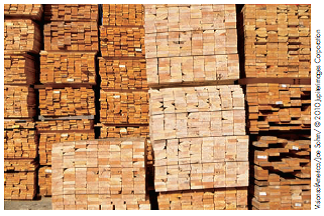
The demand for lumber is a prime example of derived demand.
Reference Case Study:
Lumber Prices and Housing Markets ? The demand for lumber, like that for carpenters, is a derived demand-derived from lumber demand in its many uses, particularly housing. When the demand for new housing increases, so does the demand for lumber. For example, as the U.S. economy recovered from the 2001 recession, the demand for housing increased. Housing prices rose. This fueled the demand for lumber, a key resource in residential construction. The demand curve for lumber shifted rightward. Increased demand for housing boosted lumber prices between late 2001 and mid-2004. For example, the price per thousand board feet of framing lumber jumped from $281 in October 2001 to $473 in August 2004, a rise of 68 percent. But in 2005, the U.S. housing market began to slump, and the slide stretched into 2009. The decline in housing demand reduced the demand for building products, shifting the demand curve for lumber to the left. All this had the expected effect on lumber prices, which fell sharply-for some types of lumber, to levels not seen in a decade. For example, the price per thousand board feet of framing lumber bottomed at $140 in 2009, a 70 percent drop from the high of 2004. As the price of lumber declined, so did lumber's profitability. Lumber mills cut production by 45 percent between 2005 and 2009. Weyerhaeuser Corporation, for example, suspended production indefinitely at two of its mills. Louisiana-Pacific Corporation closed its major mills. But as housing recovered in 2010, so did lumber prices, increasing to about $300 per thousand board feet by March of that year.
The demand for lumber is a prime example of derived demand.
التوضيح موثّق
موثّق
موثّق
Derived demand is a term used to describ...

Economics: A Contemporary Introduction 9th Edition by William McEachern

لماذا لم يعجبك هذا التمرين؟
أخرى 8 أحرف كحد أدنى و 255 حرفاً كحد أقصى
حرف 255






