







 تكلم مع الذكاء الاصطناعي


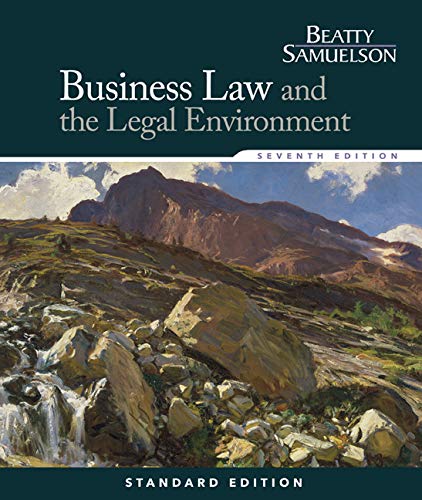
Business Law and the Legal Environment 7th Edition by Jeffrey Beatty,Susan Samuelson
النسخة 7الرقم المعياري الدولي: 978-1305633612Business Law and the Legal Environment 7th Edition by Jeffrey Beatty,Susan Samuelson
النسخة 7الرقم المعياري الدولي: 978-1305633612 تمرين 44
When James Kilts became CEO of Gillette Co., the consumer products giant had been a mainstay of the Boston community for 100 years. But the organization was going through hard times: Its stock was trading at less than half its peak price, and some of its established brands of razors were suffering under intense competitive pressure. In four short years, Kilts turned Gillette around-strengthening its core brands, cutting jobs, and paying off debt. With the company's stock up 61 percent, Kilts had added $20 billion in shareholder value.
Then Kilts suddenly sold Gillette to Procter Gamble (P G) for $57 billion. So short was Kilts's stay in Boston that he never moved his family from their home in Rye, New York. The deal was sweet for Gillette shareholders-the company's stock price went up 13 percent in one day. And also for Kilts-his payoff was $153 million, including a $23.9 million reward from P G for having made the deal and a "change in control" clause in his employment contract that was worth $12.6 million. In addition, P G agreed to pay him $8 million a year to serve as vice chairman after the merger. When he retired, his pension would be $1.2 million per year. Moreover, two of his top lieutenants were offered payments totaling $57 million.
Was there any downside to this deal? Four percent of the Gillette workforce- 6,000 employees-were fired. If the payouts to the top three Gillette executives were divided among these 6,000, each unemployed worker would receive $35,000. The loss of this many employees (4,000 of whom lived in New England) had a ripple effect throughout the area's economy. Although Gillette shareholders certainly benefited in the short run from the sale, their profit would have been even greater without this $210 million payout to the executives. Moreover, about half the increase in Gillette revenues during the time that Kilts was running the show were attributable to currency fluctuations. A cheaper dollar increased revenue overseas. If the dollar had moved in the opposite direction, there might not have been any increase in revenue. Indeed, for the first two years after Kilts joined Gillette, the stock price declined. It was not until the dollar turned down that the stock price improved.
Do CEOs who receive incentives have too strong of a motivation to sell their companies? Should their incentives be based on factors that they do not control or even affect (such as the strength of the dollar)? Is it unseemly for them to be paid so much when many employees will lose their jobs?
Then Kilts suddenly sold Gillette to Procter Gamble (P G) for $57 billion. So short was Kilts's stay in Boston that he never moved his family from their home in Rye, New York. The deal was sweet for Gillette shareholders-the company's stock price went up 13 percent in one day. And also for Kilts-his payoff was $153 million, including a $23.9 million reward from P G for having made the deal and a "change in control" clause in his employment contract that was worth $12.6 million. In addition, P G agreed to pay him $8 million a year to serve as vice chairman after the merger. When he retired, his pension would be $1.2 million per year. Moreover, two of his top lieutenants were offered payments totaling $57 million.
Was there any downside to this deal? Four percent of the Gillette workforce- 6,000 employees-were fired. If the payouts to the top three Gillette executives were divided among these 6,000, each unemployed worker would receive $35,000. The loss of this many employees (4,000 of whom lived in New England) had a ripple effect throughout the area's economy. Although Gillette shareholders certainly benefited in the short run from the sale, their profit would have been even greater without this $210 million payout to the executives. Moreover, about half the increase in Gillette revenues during the time that Kilts was running the show were attributable to currency fluctuations. A cheaper dollar increased revenue overseas. If the dollar had moved in the opposite direction, there might not have been any increase in revenue. Indeed, for the first two years after Kilts joined Gillette, the stock price declined. It was not until the dollar turned down that the stock price improved.
Do CEOs who receive incentives have too strong of a motivation to sell their companies? Should their incentives be based on factors that they do not control or even affect (such as the strength of the dollar)? Is it unseemly for them to be paid so much when many employees will lose their jobs?
التوضيح موثّق
موثّق
موثّق
In the present case a company by the nam...

Business Law and the Legal Environment 7th Edition by Jeffrey Beatty,Susan Samuelson

لماذا لم يعجبك هذا التمرين؟
أخرى 8 أحرف كحد أدنى و 255 حرفاً كحد أقصى
حرف 255






