expand icon
book Electronic Communication Systems 2nd Edition by Roy Blake cover

Electronic Communication Systems 2nd Edition by Roy Blake

النسخة 2الرقم المعياري الدولي: 978-0766826847
book Electronic Communication Systems 2nd Edition by Roy Blake cover

Electronic Communication Systems 2nd Edition by Roy Blake

النسخة 2الرقم المعياري الدولي: 978-0766826847
تمرين 2
(a) The signal voltage at the input of an amplifie is 100 µV, and the noise voltage is 2 µV. What is the signal-to-noise ratio in decibels
(b) The signal-to-noise ratio at the output of the same amplifier is 30 dB. What is the noise figure of the amplifier
التوضيح
موثّق
like image
like image
(a)
The expression for the signal-to-noise ratio at the input of the amplifier is,
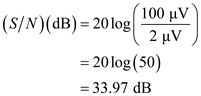
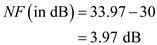
(a) The expression for the signal-to-noise ratio at the input of the amplifier is,    Substitute     for     , and     for     .    Therefore, the signal-to-noise ratio value is     (b) The noise figure of the amplifier calculation:    …… (1) Here,    is the signal-to-noise ratio at input of the amplifier,    is the signal-to-noise ratio at output of the amplifier,    is the noise figure of the amplifier. Substitute     for     , and     for     in equation (1).    Therefore, the noise figure value is    Substitute

(a) The expression for the signal-to-noise ratio at the input of the amplifier is,    Substitute     for     , and     for     .    Therefore, the signal-to-noise ratio value is     (b) The noise figure of the amplifier calculation:    …… (1) Here,    is the signal-to-noise ratio at input of the amplifier,    is the signal-to-noise ratio at output of the amplifier,    is the noise figure of the amplifier. Substitute     for     , and     for     in equation (1).    Therefore, the noise figure value is    for
(a) The expression for the signal-to-noise ratio at the input of the amplifier is,    Substitute     for     , and     for     .    Therefore, the signal-to-noise ratio value is     (b) The noise figure of the amplifier calculation:    …… (1) Here,    is the signal-to-noise ratio at input of the amplifier,    is the signal-to-noise ratio at output of the amplifier,    is the noise figure of the amplifier. Substitute     for     , and     for     in equation (1).    Therefore, the noise figure value is    , and
(a) The expression for the signal-to-noise ratio at the input of the amplifier is,    Substitute     for     , and     for     .    Therefore, the signal-to-noise ratio value is     (b) The noise figure of the amplifier calculation:    …… (1) Here,    is the signal-to-noise ratio at input of the amplifier,    is the signal-to-noise ratio at output of the amplifier,    is the noise figure of the amplifier. Substitute     for     , and     for     in equation (1).    Therefore, the noise figure value is    for
(a) The expression for the signal-to-noise ratio at the input of the amplifier is,    Substitute     for     , and     for     .    Therefore, the signal-to-noise ratio value is     (b) The noise figure of the amplifier calculation:    …… (1) Here,    is the signal-to-noise ratio at input of the amplifier,    is the signal-to-noise ratio at output of the amplifier,    is the noise figure of the amplifier. Substitute     for     , and     for     in equation (1).    Therefore, the noise figure value is    .
(a) The expression for the signal-to-noise ratio at the input of the amplifier is,    Substitute     for     , and     for     .    Therefore, the signal-to-noise ratio value is     (b) The noise figure of the amplifier calculation:    …… (1) Here,    is the signal-to-noise ratio at input of the amplifier,    is the signal-to-noise ratio at output of the amplifier,    is the noise figure of the amplifier. Substitute     for     , and     for     in equation (1).    Therefore, the noise figure value is    Therefore, the signal-to-noise ratio value is
(a) The expression for the signal-to-noise ratio at the input of the amplifier is,    Substitute     for     , and     for     .    Therefore, the signal-to-noise ratio value is     (b) The noise figure of the amplifier calculation:    …… (1) Here,    is the signal-to-noise ratio at input of the amplifier,    is the signal-to-noise ratio at output of the amplifier,    is the noise figure of the amplifier. Substitute     for     , and     for     in equation (1).    Therefore, the noise figure value is    (b)
The noise figure of the amplifier calculation:
(a) The expression for the signal-to-noise ratio at the input of the amplifier is,    Substitute     for     , and     for     .    Therefore, the signal-to-noise ratio value is     (b) The noise figure of the amplifier calculation:    …… (1) Here,    is the signal-to-noise ratio at input of the amplifier,    is the signal-to-noise ratio at output of the amplifier,    is the noise figure of the amplifier. Substitute     for     , and     for     in equation (1).    Therefore, the noise figure value is    …… (1)
Here,
(a) The expression for the signal-to-noise ratio at the input of the amplifier is,    Substitute     for     , and     for     .    Therefore, the signal-to-noise ratio value is     (b) The noise figure of the amplifier calculation:    …… (1) Here,    is the signal-to-noise ratio at input of the amplifier,    is the signal-to-noise ratio at output of the amplifier,    is the noise figure of the amplifier. Substitute     for     , and     for     in equation (1).    Therefore, the noise figure value is    is the signal-to-noise ratio at input of the amplifier,
(a) The expression for the signal-to-noise ratio at the input of the amplifier is,    Substitute     for     , and     for     .    Therefore, the signal-to-noise ratio value is     (b) The noise figure of the amplifier calculation:    …… (1) Here,    is the signal-to-noise ratio at input of the amplifier,    is the signal-to-noise ratio at output of the amplifier,    is the noise figure of the amplifier. Substitute     for     , and     for     in equation (1).    Therefore, the noise figure value is    is the signal-to-noise ratio at output of the amplifier,
(a) The expression for the signal-to-noise ratio at the input of the amplifier is,    Substitute     for     , and     for     .    Therefore, the signal-to-noise ratio value is     (b) The noise figure of the amplifier calculation:    …… (1) Here,    is the signal-to-noise ratio at input of the amplifier,    is the signal-to-noise ratio at output of the amplifier,    is the noise figure of the amplifier. Substitute     for     , and     for     in equation (1).    Therefore, the noise figure value is    is the noise figure of the amplifier.
Substitute
(a) The expression for the signal-to-noise ratio at the input of the amplifier is,    Substitute     for     , and     for     .    Therefore, the signal-to-noise ratio value is     (b) The noise figure of the amplifier calculation:    …… (1) Here,    is the signal-to-noise ratio at input of the amplifier,    is the signal-to-noise ratio at output of the amplifier,    is the noise figure of the amplifier. Substitute     for     , and     for     in equation (1).    Therefore, the noise figure value is    for
(a) The expression for the signal-to-noise ratio at the input of the amplifier is,    Substitute     for     , and     for     .    Therefore, the signal-to-noise ratio value is     (b) The noise figure of the amplifier calculation:    …… (1) Here,    is the signal-to-noise ratio at input of the amplifier,    is the signal-to-noise ratio at output of the amplifier,    is the noise figure of the amplifier. Substitute     for     , and     for     in equation (1).    Therefore, the noise figure value is    , and
(a) The expression for the signal-to-noise ratio at the input of the amplifier is,    Substitute     for     , and     for     .    Therefore, the signal-to-noise ratio value is     (b) The noise figure of the amplifier calculation:    …… (1) Here,    is the signal-to-noise ratio at input of the amplifier,    is the signal-to-noise ratio at output of the amplifier,    is the noise figure of the amplifier. Substitute     for     , and     for     in equation (1).    Therefore, the noise figure value is    for
(a) The expression for the signal-to-noise ratio at the input of the amplifier is,    Substitute     for     , and     for     .    Therefore, the signal-to-noise ratio value is     (b) The noise figure of the amplifier calculation:    …… (1) Here,    is the signal-to-noise ratio at input of the amplifier,    is the signal-to-noise ratio at output of the amplifier,    is the noise figure of the amplifier. Substitute     for     , and     for     in equation (1).    Therefore, the noise figure value is    in equation (1).
(a) The expression for the signal-to-noise ratio at the input of the amplifier is,    Substitute     for     , and     for     .    Therefore, the signal-to-noise ratio value is     (b) The noise figure of the amplifier calculation:    …… (1) Here,    is the signal-to-noise ratio at input of the amplifier,    is the signal-to-noise ratio at output of the amplifier,    is the noise figure of the amplifier. Substitute     for     , and     for     in equation (1).    Therefore, the noise figure value is    Therefore, the noise figure value is
(a) The expression for the signal-to-noise ratio at the input of the amplifier is,    Substitute     for     , and     for     .    Therefore, the signal-to-noise ratio value is     (b) The noise figure of the amplifier calculation:    …… (1) Here,    is the signal-to-noise ratio at input of the amplifier,    is the signal-to-noise ratio at output of the amplifier,    is the noise figure of the amplifier. Substitute     for     , and     for     in equation (1).    Therefore, the noise figure value is
close menu
Electronic Communication Systems 2nd Edition by Roy Blake
cross icon