







 تكلم مع الذكاء الاصطناعي


Principles of Environmental Science 6th Edition by William Cunningham, Mary Cunningham
النسخة 6الرقم المعياري الدولي: 978-1121779211Principles of Environmental Science 6th Edition by William Cunningham, Mary Cunningham
النسخة 6الرقم المعياري الدولي: 978-1121779211 تمرين 22
Examining Nutrients in a Wetland System
As you have read, movements of nitrogen and phosphorus are among the most important considerations in many wetland systems, because high levels of these nutrients can cause excessive algae and bacteria growth. This is a topic of great interest, and many studies have examined how nutrients move in a wetland, and in other ecosystems. Taking a little time to examine these nutrient cycles in detail will draw on your knowledge of atoms, compounds, systems, cycles, and other ideas in this chapter. Understanding nutrient cycling will also help you in later chapters of this book.
One excellent overview was produced by the Environmental Protection Agency. Go to this website and download a PDF document of the study: http://www.epa.gov/waterscience/criteria/nutrient/guidance/wetlands/index.html. If you prefer, you can also look at just one chapter at a time on this website.
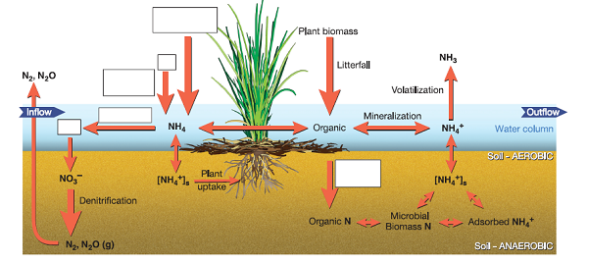
Figure 1 A detailed schematic diagram of the nitrogen cycle in a wetland. Study the online original to fill in the boxes. Source: EPA Nutrient Criteria Technical Guidance
Manual www.epa.gov/waterscience/criteria/nutrient/guidance/.
Find chapter 2, An Overview of Wetland Science, and answer the following questions:
What is meant by "organic N"? (Think about what the term organic means in this chapter.) In what form does the plant take up N? How does N return from a living plant to the floor of the wetland?
As you have read, movements of nitrogen and phosphorus are among the most important considerations in many wetland systems, because high levels of these nutrients can cause excessive algae and bacteria growth. This is a topic of great interest, and many studies have examined how nutrients move in a wetland, and in other ecosystems. Taking a little time to examine these nutrient cycles in detail will draw on your knowledge of atoms, compounds, systems, cycles, and other ideas in this chapter. Understanding nutrient cycling will also help you in later chapters of this book.
One excellent overview was produced by the Environmental Protection Agency. Go to this website and download a PDF document of the study: http://www.epa.gov/waterscience/criteria/nutrient/guidance/wetlands/index.html. If you prefer, you can also look at just one chapter at a time on this website.
Figure 1 A detailed schematic diagram of the nitrogen cycle in a wetland. Study the online original to fill in the boxes. Source: EPA Nutrient Criteria Technical Guidance
Manual www.epa.gov/waterscience/criteria/nutrient/guidance/.
Find chapter 2, An Overview of Wetland Science, and answer the following questions:
What is meant by "organic N"? (Think about what the term organic means in this chapter.) In what form does the plant take up N? How does N return from a living plant to the floor of the wetland?
التوضيح موثّق
موثّق
موثّق
Organic nitrogen:
Explanation
Organic n...

Principles of Environmental Science 6th Edition by William Cunningham, Mary Cunningham

لماذا لم يعجبك هذا التمرين؟
أخرى 8 أحرف كحد أدنى و 255 حرفاً كحد أقصى
حرف 255






