







 Chat with AI

Deck 16: Life on Earth
Full screen (f)

Question

Question
Question
Question
Question
Question
Question
Question
Question
Question
Question
Question
Question
Question
Question
Question
Question
Question
Question
Question
Question
Question
Question
Question
Question
On the tree below,which number represents the most recent common ancestor of humans and corn? 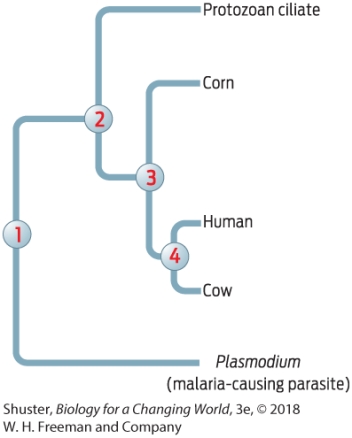
A) 1
B) 2
C) 3
D) 4
E) Humans and corn do not share any ancestors.
A) 1
B) 2
C) 3
D) 4
E) Humans and corn do not share any ancestors.
Question
Question
Question
Question
Question
Question
Question
Question
Question
Question
Question
Question
Question
Question
Question
Question
Question
Question
Question
Question
Question
Question
Question
Question
Question
Question
Question
Question
Question
Question
Question
Question
Question
Question
Question
Based on the information in the graph,approximately how old are two rocks,one containing 25% uranium-238 and 75% lead,and one containing 50% uranium-238 and 50% lead? 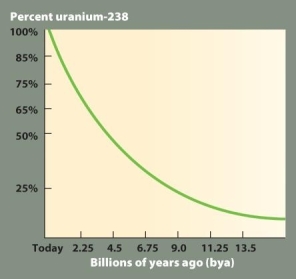
A) around 2.25 billion years and 4.5 billion years,respectively
B) around 9 billion years and 4.5 billion years,respectively
C) around 1.3 billion years and 2.4 billion years,respectively
D) around 4.5 billion years and 9 billion years,respectively
E) The question cannot be answered with the information provided.
A) around 2.25 billion years and 4.5 billion years,respectively
B) around 9 billion years and 4.5 billion years,respectively
C) around 1.3 billion years and 2.4 billion years,respectively
D) around 4.5 billion years and 9 billion years,respectively
E) The question cannot be answered with the information provided.
Question
Question
Question
Question
Question
Question
Question
Question
Question
Question
Question
Question
Question
Question
Question
Question
Question
Question
Question
Question

Unlock Deck
Sign up to unlock the cards in this deck!
Unlock Deck
Unlock Deck
1/114

Play

Full screen (f)
Deck 16: Life on Earth
1
When 50%-90% of all species die off rapidly,this is called _____.
A) punctuated equilibrium
B) descent with modification
C) mass extinction
D) adaptive radiation
E) natural selection
A) punctuated equilibrium
B) descent with modification
C) mass extinction
D) adaptive radiation
E) natural selection
C
2
Which factor might affect the physical distribution of a particular species?
A) plate tectonics
B) convergent evolution
C) genetic drift
D) phylogeny
E) all of these
A) plate tectonics
B) convergent evolution
C) genetic drift
D) phylogeny
E) all of these
A
3
Why are genes from ribosomal RNA (rRNA)used to compare genetic sequences between species?
A) They are found in all living organisms.
B) They are the largest genes in an organism.
C) They are easier to obtain than other genes.
D) They are only present in humans.
E) They are found only on prokaryotes.
A) They are found in all living organisms.
B) They are the largest genes in an organism.
C) They are easier to obtain than other genes.
D) They are only present in humans.
E) They are found only on prokaryotes.
A
4
If you found a fossil of an animal that inhabited many areas of Gondwana,on which continent might you expect to find its descendants?
A) South America
B) Europe
C) Pangaea
D) North America
E) Asia
A) South America
B) Europe
C) Pangaea
D) North America
E) Asia
Unlock Deck
Unlock for access to all 114 flashcards in this deck.
Unlock Deck
k this deck
5
Scientists can use _____ to determine the age of an igneous rock surrounding a fossil.
A) radiometric dating
B) radioactive wavelengths
C) sedimentary rock layers
D) a microscope
E) the Miller-Urey experiment
A) radiometric dating
B) radioactive wavelengths
C) sedimentary rock layers
D) a microscope
E) the Miller-Urey experiment
Unlock Deck
Unlock for access to all 114 flashcards in this deck.
Unlock Deck
k this deck
6
The evidence that scientists currently have suggests that life on Earth _____.
A) began in the water
B) first evolved around 3,500 million years ago
C) began as single-celled organisms
D) first evolved in the water around 3,500 million years ago
E) all of these
A) began in the water
B) first evolved around 3,500 million years ago
C) began as single-celled organisms
D) first evolved in the water around 3,500 million years ago
E) all of these
Unlock Deck
Unlock for access to all 114 flashcards in this deck.
Unlock Deck
k this deck
7
Which materials can be used to estimate the age of Earth and our solar system?
A) rocks and materials collected from the moon
B) pieces of meteorites that have fallen to Earth
C) minerals collected from ancient rocks
D) all of these
E) none of these
A) rocks and materials collected from the moon
B) pieces of meteorites that have fallen to Earth
C) minerals collected from ancient rocks
D) all of these
E) none of these
Unlock Deck
Unlock for access to all 114 flashcards in this deck.
Unlock Deck
k this deck
8
On a phylogenetic tree,the _____ represents the most recent common ancestor shared by all of the organisms depicted in the tree.
A) branch
B) node
C) leg
D) root
E) leaves
A) branch
B) node
C) leg
D) root
E) leaves
Unlock Deck
Unlock for access to all 114 flashcards in this deck.
Unlock Deck
k this deck
9
The Miller-Urey experiment was important because it showed _____.
A) exactly how life began on Earth
B) when life first began on Earth
C) that is was possible to form organic molecules from inorganic molecules
D) the kinds of rocks that would contain fossils
E) all of these
A) exactly how life began on Earth
B) when life first began on Earth
C) that is was possible to form organic molecules from inorganic molecules
D) the kinds of rocks that would contain fossils
E) all of these
Unlock Deck
Unlock for access to all 114 flashcards in this deck.
Unlock Deck
k this deck
10
A phylogenetic tree represents
A) a grouping of organisms on the basis of shared structural features.
B) a grouping of organisms on the basis of cell type.
C) a grouping of organisms on the basis of complexity.
D) a grouping of organisms on the basis of evolutionary history.
E) a grouping of organisms on the basis of where they are found.
A) a grouping of organisms on the basis of shared structural features.
B) a grouping of organisms on the basis of cell type.
C) a grouping of organisms on the basis of complexity.
D) a grouping of organisms on the basis of evolutionary history.
E) a grouping of organisms on the basis of where they are found.
Unlock Deck
Unlock for access to all 114 flashcards in this deck.
Unlock Deck
k this deck
11
Which answers can be explained by the biogeography of a species?
A) how a species originally came to populate a specific region.
B) how two geographically isolated species can share a common ancestor.
C) why a species is confined to some parts of the world,even though other areas have suitable habitats.
D) None of these can be explained by the examining the biogeography of a species.
E) All of these can be determined from studying the biogeography of a species.
A) how a species originally came to populate a specific region.
B) how two geographically isolated species can share a common ancestor.
C) why a species is confined to some parts of the world,even though other areas have suitable habitats.
D) None of these can be explained by the examining the biogeography of a species.
E) All of these can be determined from studying the biogeography of a species.
Unlock Deck
Unlock for access to all 114 flashcards in this deck.
Unlock Deck
k this deck
12
What is the best explanation as to why early penguin fossils have been found in New Zealand?
A) Penguins can swim up to 3,000 miles in the ocean.
B) Penguins traveled to New Zealand with the early settlers.
C) New Zealand was once much closer to Antarctica.
D) Penguins floated to New Zealand on an iceberg.
E) New Zealand was once underwater.
A) Penguins can swim up to 3,000 miles in the ocean.
B) Penguins traveled to New Zealand with the early settlers.
C) New Zealand was once much closer to Antarctica.
D) Penguins floated to New Zealand on an iceberg.
E) New Zealand was once underwater.
Unlock Deck
Unlock for access to all 114 flashcards in this deck.
Unlock Deck
k this deck
13
The first multicellular eukaryotic organisms to use the oxygen on Earth were _____.
A) jelly fish
B) amphibians
C) Tiktaaliks
D) humans
E) green algae
A) jelly fish
B) amphibians
C) Tiktaaliks
D) humans
E) green algae
Unlock Deck
Unlock for access to all 114 flashcards in this deck.
Unlock Deck
k this deck
14
If two organisms are placed in the same phylum,which statement is true?
A) They do not belong to the same Kingdom.
B) They definitely share a most recent common ancestor.
C) They are separated from their last common ancestor by only a few million years.
D) They have some major body structures in common.
E) all of these
A) They do not belong to the same Kingdom.
B) They definitely share a most recent common ancestor.
C) They are separated from their last common ancestor by only a few million years.
D) They have some major body structures in common.
E) all of these
Unlock Deck
Unlock for access to all 114 flashcards in this deck.
Unlock Deck
k this deck
15
According to scientists,how many species exist on Earth today?
A) 5 to 30 million
B) 1.8 million
C) 30 billion
D) 5 to 30 billion
E) 10,000
A) 5 to 30 million
B) 1.8 million
C) 30 billion
D) 5 to 30 billion
E) 10,000
Unlock Deck
Unlock for access to all 114 flashcards in this deck.
Unlock Deck
k this deck
16
Which statement is false?
A) All organisms belong to one of three domains: Bacteria,Archaea,and Eukarya.
B) Once an organism is classified,the classification cannot change.
C) DNA evidence can be used to classify organisms.
D) Humans belong to the domain Eukarya.
E) Prokaryotes can be found in both the Archaea and Bacteria domains.
Match the following:
A) All organisms belong to one of three domains: Bacteria,Archaea,and Eukarya.
B) Once an organism is classified,the classification cannot change.
C) DNA evidence can be used to classify organisms.
D) Humans belong to the domain Eukarya.
E) Prokaryotes can be found in both the Archaea and Bacteria domains.
Match the following:
Unlock Deck
Unlock for access to all 114 flashcards in this deck.
Unlock Deck
k this deck
17
Which molecules have not been synthesized from experiments similar to the ones performed by Miller and Urey?
A) ATP
B) DNA
C) lipids
D) amino acids
E) sugars
A) ATP
B) DNA
C) lipids
D) amino acids
E) sugars
Unlock Deck
Unlock for access to all 114 flashcards in this deck.
Unlock Deck
k this deck
18
An animal with a rigid backbone would belong to which phylum?
A) genus
B) mammalian
C) primates
D) species
E) chordate
A) genus
B) mammalian
C) primates
D) species
E) chordate
Unlock Deck
Unlock for access to all 114 flashcards in this deck.
Unlock Deck
k this deck
19
The evolutionary history of an organism is called its _____.
A) taxonomy
B) systematics
C) ontogeny
D) phylogeny
E) adaptability
A) taxonomy
B) systematics
C) ontogeny
D) phylogeny
E) adaptability
Unlock Deck
Unlock for access to all 114 flashcards in this deck.
Unlock Deck
k this deck
20
Which of these would be used to develop a phylogenetic tree?
A) fossil records
B) physical traits
C) shared DNA sequences
D) All of these are used to develop a phylogenetic tree.
E) None of these are used to develop a phylogenetic tree.
A) fossil records
B) physical traits
C) shared DNA sequences
D) All of these are used to develop a phylogenetic tree.
E) None of these are used to develop a phylogenetic tree.
Unlock Deck
Unlock for access to all 114 flashcards in this deck.
Unlock Deck
k this deck
21
Which CANNOT be accurately dated using radiometric techniques?
A) peat
B) wood
C) charcoal
D) sedimentary rocks
E) igneous rocks
A) peat
B) wood
C) charcoal
D) sedimentary rocks
E) igneous rocks
Unlock Deck
Unlock for access to all 114 flashcards in this deck.
Unlock Deck
k this deck
22
Which element has the longest half-life?
A) rubidium-87
B) lead-214
C) uranium-238
D) carbon-14
E) potassium-40
A) rubidium-87
B) lead-214
C) uranium-238
D) carbon-14
E) potassium-40
Unlock Deck
Unlock for access to all 114 flashcards in this deck.
Unlock Deck
k this deck
23
The half-life of carbon-14 is _____ years.
A) 12
B) 57,000
C) 5730
D) 1 billion
E) 4.5 billion
A) 12
B) 57,000
C) 5730
D) 1 billion
E) 4.5 billion
Unlock Deck
Unlock for access to all 114 flashcards in this deck.
Unlock Deck
k this deck
24
Which element has the shortest half-life?
A) rubidium-87
B) lead-214
C) uranium-238
D) carbon-14
E) potassium-40
A) rubidium-87
B) lead-214
C) uranium-238
D) carbon-14
E) potassium-40
Unlock Deck
Unlock for access to all 114 flashcards in this deck.
Unlock Deck
k this deck
25
On the tree below,which number represents the most recent common ancestor of humans and corn?
A) 1
B) 2
C) 3
D) 4
E) Humans and corn do not share any ancestors.
A) 1
B) 2
C) 3
D) 4
E) Humans and corn do not share any ancestors.
Unlock Deck
Unlock for access to all 114 flashcards in this deck.
Unlock Deck
k this deck
26
A radioactive isotope is
A) a pair of identical molecules.
B) two molecules with the same tonicity.
C) an element with an unstable nucleus that decays to a more stable form.
D) an element that generates electrons.
A) a pair of identical molecules.
B) two molecules with the same tonicity.
C) an element with an unstable nucleus that decays to a more stable form.
D) an element that generates electrons.
Unlock Deck
Unlock for access to all 114 flashcards in this deck.
Unlock Deck
k this deck
27
Which ratio is NOT analyzed for radiometric analysis?
A) rubidium-strontium
B) uranium-lead
C) potassium-argon
D) carbon-nitrogen
E) uranium-nitrogen
A) rubidium-strontium
B) uranium-lead
C) potassium-argon
D) carbon-nitrogen
E) uranium-nitrogen
Unlock Deck
Unlock for access to all 114 flashcards in this deck.
Unlock Deck
k this deck
28
An isotope is the same element with a different number of
A) protons.
B) neutrons.
C) electrons.
D) electrons and protons.
E) protons and neutrons.
A) protons.
B) neutrons.
C) electrons.
D) electrons and protons.
E) protons and neutrons.
Unlock Deck
Unlock for access to all 114 flashcards in this deck.
Unlock Deck
k this deck
29
How old is Earth?
A) 1-2 million years old
B) 3-4 million years old
C) 1-2 billion years old
D) 4-5 billion years old
E) 1-2 trillion years old
A) 1-2 million years old
B) 3-4 million years old
C) 1-2 billion years old
D) 4-5 billion years old
E) 1-2 trillion years old
Unlock Deck
Unlock for access to all 114 flashcards in this deck.
Unlock Deck
k this deck
30
Uranium-238 has a half-life of 4.5 billion years.You have a rock that formed with 100,000 uranium-238 molecules.How many uranium-238 molecules will be left in 4.5 billion years?
A) 100,000
B) 75,000
C) 50,000
D) 25,000
E) 0
A) 100,000
B) 75,000
C) 50,000
D) 25,000
E) 0
Unlock Deck
Unlock for access to all 114 flashcards in this deck.
Unlock Deck
k this deck
31
All of the following are TRUE of radioactive isotopes,EXCEPT
A) they are unstable.
B) they transform into other elements.
C) they release high-energy electrons.
D) they are used in radioactive dating.
E) the amount of time for a radioactive isotope to decay to half its original quantity is called its half-life.
A) they are unstable.
B) they transform into other elements.
C) they release high-energy electrons.
D) they are used in radioactive dating.
E) the amount of time for a radioactive isotope to decay to half its original quantity is called its half-life.
Unlock Deck
Unlock for access to all 114 flashcards in this deck.
Unlock Deck
k this deck
32
Which of the following radioactive isotopes is used to date organic remains?
A) carbon-14
B) potassium-40
C) rubidium-87
D) uranium-238
E) lead-206
A) carbon-14
B) potassium-40
C) rubidium-87
D) uranium-238
E) lead-206
Unlock Deck
Unlock for access to all 114 flashcards in this deck.
Unlock Deck
k this deck
33
Uranium-238 after many decay events becomes this stable element.
A) radon-222
B) uranium-234
C) thorium-234
D) lead-206
E) polonium-210
A) radon-222
B) uranium-234
C) thorium-234
D) lead-206
E) polonium-210
Unlock Deck
Unlock for access to all 114 flashcards in this deck.
Unlock Deck
k this deck
34
To determine the age of organic remains,the decay of which radioactive element(s)are measured?
A) carbon-14
B) uranium-238
C) uranium-238 and carbon-14
D) carbon-12
E) uranium-240
A) carbon-14
B) uranium-238
C) uranium-238 and carbon-14
D) carbon-12
E) uranium-240
Unlock Deck
Unlock for access to all 114 flashcards in this deck.
Unlock Deck
k this deck
35
Radiometric decay of carbon-14 would be used in dating
A) sedimentary rock.
B) a trace fossil.
C) an insect in amber.
D) a fossil imprint.
E) All of the answers are correct.
A) sedimentary rock.
B) a trace fossil.
C) an insect in amber.
D) a fossil imprint.
E) All of the answers are correct.
Unlock Deck
Unlock for access to all 114 flashcards in this deck.
Unlock Deck
k this deck
36
Uranium-238 decays into thorium-234 and finally into
A) thorium-232.
B) lead-232.
C) radon-222.
D) radon-224.
E) lead-206.
A) thorium-232.
B) lead-232.
C) radon-222.
D) radon-224.
E) lead-206.
Unlock Deck
Unlock for access to all 114 flashcards in this deck.
Unlock Deck
k this deck
37
Carbon-14 decays and becomes
A) carbon-16.
B) nitrogen-14.
C) carbon-11.
D) boron-12.
E) oxygen-15.
A) carbon-16.
B) nitrogen-14.
C) carbon-11.
D) boron-12.
E) oxygen-15.
Unlock Deck
Unlock for access to all 114 flashcards in this deck.
Unlock Deck
k this deck
38
To determine the age of rocks,the decay of which radioactive element(s)can be used?
A) carbon-14
B) uranium-238,rubidium-87,and/or potassium-40
C) phosphorus-40,uranium-234,and/or rubidium-87
D) carbon-14 and uranium-238
E) uranium-240
A) carbon-14
B) uranium-238,rubidium-87,and/or potassium-40
C) phosphorus-40,uranium-234,and/or rubidium-87
D) carbon-14 and uranium-238
E) uranium-240
Unlock Deck
Unlock for access to all 114 flashcards in this deck.
Unlock Deck
k this deck
39
The half-life of potassium-40 is 1.3 billion years.If a rock starts with 12,000 atoms of potassium-40,how many atoms will remain in 650 million years?
A) 1,000
B) 3,000
C) 4,000
D) 6,000
E) 9,000
A) 1,000
B) 3,000
C) 4,000
D) 6,000
E) 9,000
Unlock Deck
Unlock for access to all 114 flashcards in this deck.
Unlock Deck
k this deck
40
Half-life is an estimate of
A) half of the age of a rock's life.
B) the age of a rock's life that is at least 50% likely to be correct.
C) the former size of a rock.
D) the time it takes for half of a rock's isotope atoms to decay.
E) the weight of the isotope in a rock.
A) half of the age of a rock's life.
B) the age of a rock's life that is at least 50% likely to be correct.
C) the former size of a rock.
D) the time it takes for half of a rock's isotope atoms to decay.
E) the weight of the isotope in a rock.
Unlock Deck
Unlock for access to all 114 flashcards in this deck.
Unlock Deck
k this deck
41
If a radiometric analysis of an isotope and its stable element yielded 50% of each,how many half-lives would have occurred?
A) 5
B) 4
C) 3
D) 2
E) 1
A) 5
B) 4
C) 3
D) 2
E) 1
Unlock Deck
Unlock for access to all 114 flashcards in this deck.
Unlock Deck
k this deck
42
The first fossil remains are from this geologic time.
A) Pre-Cambrian
B) Cambrian
C) Paleozoic
D) Cenozoic
E) Mesozoic
A) Pre-Cambrian
B) Cambrian
C) Paleozoic
D) Cenozoic
E) Mesozoic
Unlock Deck
Unlock for access to all 114 flashcards in this deck.
Unlock Deck
k this deck
43
The first diverse animal world appeared during the
A) Cambrian explosion.
B) Ordovician explosion.
C) Silurian explosion.
D) Devonian explosion.
E) Carboniferous explosion.
A) Cambrian explosion.
B) Ordovician explosion.
C) Silurian explosion.
D) Devonian explosion.
E) Carboniferous explosion.
Unlock Deck
Unlock for access to all 114 flashcards in this deck.
Unlock Deck
k this deck
44
Where are MOST fossils found?
A) igneous rock
B) sedimentary rock
C) amber
D) in frozen ice packs
E) in deserts
A) igneous rock
B) sedimentary rock
C) amber
D) in frozen ice packs
E) in deserts
Unlock Deck
Unlock for access to all 114 flashcards in this deck.
Unlock Deck
k this deck
45
The half-life of an isotope is 5,000 years.With a starting material of 1 g of an isotope,after 5,000 years,how much would remain?
A) 2 g
B) 0.5 g
C) 1 g
D) 2.5 g
E) 0.25 g
A) 2 g
B) 0.5 g
C) 1 g
D) 2.5 g
E) 0.25 g
Unlock Deck
Unlock for access to all 114 flashcards in this deck.
Unlock Deck
k this deck
46
Where would the most lead be found in a radiometric analysis of a 5-foot,millions of years old deposit of volcanic ash?
A) at the top
B) at the bottom
C) in the middle
D) in the mid-center
E) in the mid-bottom
A) at the top
B) at the bottom
C) in the middle
D) in the mid-center
E) in the mid-bottom
Unlock Deck
Unlock for access to all 114 flashcards in this deck.
Unlock Deck
k this deck
47
This gas began to accumulate between 3 and 2.5 billion years ago.
A) hydrogen
B) oxygen
C) methane
D) ammonia
E) carbon dioxide
A) hydrogen
B) oxygen
C) methane
D) ammonia
E) carbon dioxide
Unlock Deck
Unlock for access to all 114 flashcards in this deck.
Unlock Deck
k this deck
48
Miller and Urey demonstrated the formation of organic molecules from simulating a primitive Earth atmosphere containing water vapor and the gases
A) carbon dioxide,hydrogen,methane,and ammonia.
B) carbon dioxide,methane,and ammonia.
C) hydrogen,methane,and ammonia.
D) oxygen,hydrogen,methane,and ammonia.
E) oxygen,methane,and ammonia.
A) carbon dioxide,hydrogen,methane,and ammonia.
B) carbon dioxide,methane,and ammonia.
C) hydrogen,methane,and ammonia.
D) oxygen,hydrogen,methane,and ammonia.
E) oxygen,methane,and ammonia.
Unlock Deck
Unlock for access to all 114 flashcards in this deck.
Unlock Deck
k this deck
49
Which of these is most likely to be used to directly date the age of a fossil?
A) carbon-12
B) uranium-238
C) lead-206
D) carbon-14
E) thorium-234
A) carbon-12
B) uranium-238
C) lead-206
D) carbon-14
E) thorium-234
Unlock Deck
Unlock for access to all 114 flashcards in this deck.
Unlock Deck
k this deck
50
All of the following are TRUE of earth's early atmosphere,EXCEPT
A) ammonia was abundant.
B) hydrogen was abundant.
C) methane was abundant.
D) oxygen was nearly absent.
E) the very first organisms that could survive the early atmosphere were photosynthetic organisms.
A) ammonia was abundant.
B) hydrogen was abundant.
C) methane was abundant.
D) oxygen was nearly absent.
E) the very first organisms that could survive the early atmosphere were photosynthetic organisms.
Unlock Deck
Unlock for access to all 114 flashcards in this deck.
Unlock Deck
k this deck
51
The half-life of uranium-238 is 4.5 billion years.Uranium-238 decays to lead-206.You find a rock with 18,000 atoms of uranium-238 and 6,000 atoms of lead-206.How old is the rock?
A) 1.12 billion years old
B) 2.25 billion years old
C) 4.45 billion years old
D) 6.75 billion years old
E) 8.90 billion years old
A) 1.12 billion years old
B) 2.25 billion years old
C) 4.45 billion years old
D) 6.75 billion years old
E) 8.90 billion years old
Unlock Deck
Unlock for access to all 114 flashcards in this deck.
Unlock Deck
k this deck
52
Which period contains the present day?
A) Tertiary
B) Quaternary
C) Cambrian
D) Carboniferous
E) Cenozoic
A) Tertiary
B) Quaternary
C) Cambrian
D) Carboniferous
E) Cenozoic
Unlock Deck
Unlock for access to all 114 flashcards in this deck.
Unlock Deck
k this deck
53
Earth is estimated to be around
A) 6,000-8,000 years old.
B) 4,000-6,000 years old.
C) 4,600,000 years old.
D) 4,600,000,000 years old.
E) 4,600,000,000,000 years old.
A) 6,000-8,000 years old.
B) 4,000-6,000 years old.
C) 4,600,000 years old.
D) 4,600,000,000 years old.
E) 4,600,000,000,000 years old.
Unlock Deck
Unlock for access to all 114 flashcards in this deck.
Unlock Deck
k this deck
54
If a radiometric analysis of an isotope and its stable element yielded 25% of the isotope and 75% of its stable element,how many half-lives would have occurred?
A) 5
B) 4
C) 3
D) 2
E) 1
A) 5
B) 4
C) 3
D) 2
E) 1
Unlock Deck
Unlock for access to all 114 flashcards in this deck.
Unlock Deck
k this deck
55
If a rock contains 70% uranium-238,you would estimate it to be about ____ billion years old.
A) 13.5
B) 9
C) 1
D) 6.75
E) 2.25
A) 13.5
B) 9
C) 1
D) 6.75
E) 2.25
Unlock Deck
Unlock for access to all 114 flashcards in this deck.
Unlock Deck
k this deck
56
The first organisms on land were
A) plants.
B) insects.
C) fish.
D) amphibians.
E) reptiles.
A) plants.
B) insects.
C) fish.
D) amphibians.
E) reptiles.
Unlock Deck
Unlock for access to all 114 flashcards in this deck.
Unlock Deck
k this deck
57
How old are the oldest known fossils?
A) 30-40 million years old
B) 400-500 million years old
C) 800-900 million years old
D) 1-2 billion years old
E) 3-4 billion years old
A) 30-40 million years old
B) 400-500 million years old
C) 800-900 million years old
D) 1-2 billion years old
E) 3-4 billion years old
Unlock Deck
Unlock for access to all 114 flashcards in this deck.
Unlock Deck
k this deck
58
If a rock contains 75% lead-206,you would estimate it to be about ____ billion years old.
A) 13.5
B) 9
C) 1
D) 6.75
E) 11.25
A) 13.5
B) 9
C) 1
D) 6.75
E) 11.25
Unlock Deck
Unlock for access to all 114 flashcards in this deck.
Unlock Deck
k this deck
59
Based on the information in the partial geological timeline,which of the following sequences correctly identifies the order in which organisms arose on Earth?
A) vertebrate ancestors,seedless plants on land,amphibians,reptiles
B) vertebrates,insects,seedless plants,reptiles
C) vertebrate ancestors,insects,fungi,reptiles
D) fungi,primitive insects,reptiles,amphibians
E) None of the answers are correct.
A) vertebrate ancestors,seedless plants on land,amphibians,reptiles
B) vertebrates,insects,seedless plants,reptiles
C) vertebrate ancestors,insects,fungi,reptiles
D) fungi,primitive insects,reptiles,amphibians
E) None of the answers are correct.
Unlock Deck
Unlock for access to all 114 flashcards in this deck.
Unlock Deck
k this deck
60
Based on the information in the graph,approximately how old are two rocks,one containing 25% uranium-238 and 75% lead,and one containing 50% uranium-238 and 50% lead?
A) around 2.25 billion years and 4.5 billion years,respectively
B) around 9 billion years and 4.5 billion years,respectively
C) around 1.3 billion years and 2.4 billion years,respectively
D) around 4.5 billion years and 9 billion years,respectively
E) The question cannot be answered with the information provided.
A) around 2.25 billion years and 4.5 billion years,respectively
B) around 9 billion years and 4.5 billion years,respectively
C) around 1.3 billion years and 2.4 billion years,respectively
D) around 4.5 billion years and 9 billion years,respectively
E) The question cannot be answered with the information provided.
Unlock Deck
Unlock for access to all 114 flashcards in this deck.
Unlock Deck
k this deck
61
Large plant-eating dinosaurs were common during the _____ period.
A) Cambrian
B) Tertiary
C) Cretaceous
D) Carboniferous
E) Jurassic
A) Cambrian
B) Tertiary
C) Cretaceous
D) Carboniferous
E) Jurassic
Unlock Deck
Unlock for access to all 114 flashcards in this deck.
Unlock Deck
k this deck
62
The geologic process that divided the continents is called
A) continental divide.
B) plate tectonics.
C) desertification.
D) continental realignment.
E) continental shift.
A) continental divide.
B) plate tectonics.
C) desertification.
D) continental realignment.
E) continental shift.
Unlock Deck
Unlock for access to all 114 flashcards in this deck.
Unlock Deck
k this deck
63
All of the following statements about the evolution of life on Earth are TRUE,EXCEPT
A) evolution has involved several mass extinctions followed by periods of diversification.
B) the first diversification of animal life occurred during the Cenozoic era.
C) when life colonizes new habitats,it rapidly diversifies into new species.
D) the dinosaurs most likely went extinct when a huge asteroid crashed into Earth.
E) oxygen only became abundant in the atmosphere as a result of the evolution of photosynthetic organisms.
A) evolution has involved several mass extinctions followed by periods of diversification.
B) the first diversification of animal life occurred during the Cenozoic era.
C) when life colonizes new habitats,it rapidly diversifies into new species.
D) the dinosaurs most likely went extinct when a huge asteroid crashed into Earth.
E) oxygen only became abundant in the atmosphere as a result of the evolution of photosynthetic organisms.
Unlock Deck
Unlock for access to all 114 flashcards in this deck.
Unlock Deck
k this deck
64
Plate tectonics influences
A) local climate.
B) distribution of organisms.
C) evolution of species on land.
D) evolution of species near land.
E) All of the answers are correct.
A) local climate.
B) distribution of organisms.
C) evolution of species on land.
D) evolution of species near land.
E) All of the answers are correct.
Unlock Deck
Unlock for access to all 114 flashcards in this deck.
Unlock Deck
k this deck
65
Approximately 245 million years ago,near the end of Paleozoic,Earth's plates were joined in a land mass called
A) Rhodinia.
B) Pangaea.
C) Laurasia.
D) Gondwana.
E) Pannotia.
A) Rhodinia.
B) Pangaea.
C) Laurasia.
D) Gondwana.
E) Pannotia.
Unlock Deck
Unlock for access to all 114 flashcards in this deck.
Unlock Deck
k this deck
66
What percentage of life on the planet died off during the Permian extinction?
A) 10%
B) 80%
C) 75%
D) 95%
E) 99%
A) 10%
B) 80%
C) 75%
D) 95%
E) 99%
Unlock Deck
Unlock for access to all 114 flashcards in this deck.
Unlock Deck
k this deck
67
Millions of years ago,all the continents were one big landmass called ________.Eventually,however,the continents separated by a geologic process called ________.
A) Pangaea;plate tectonics
B) Gaia;plate tectonics
C) Pangaea;continental tectonics
D) Gaia;continental tectonics
E) Pangaea;geotectonics
A) Pangaea;plate tectonics
B) Gaia;plate tectonics
C) Pangaea;continental tectonics
D) Gaia;continental tectonics
E) Pangaea;geotectonics
Unlock Deck
Unlock for access to all 114 flashcards in this deck.
Unlock Deck
k this deck
68
Bison and wildebeest are both large grazing animals with similar adaptations to life on relatively arid grasslands.Bison are found only in North America;wildebeest are found only in Africa.Which of the following explains why they share similar adaptations but live on different continents?
A) Their common adaptations are due to the similarities in their environments,but they evolved on separate continents and have always been isolated from one another.
B) Their common adaptations are due to the fact that they both evolved in Africa and later spread to North America.Bison outcompeted wildebeest in North America,though,and wildebeest outcompeted bison in Africa,leaving them separated from one another.
C) Their common adaptations are due to the fact that they are closely related evolutionarily.They live in different areas because wildebeest are extinct in North America.
D) Each species evolved on a separate continent,where the arid grasslands in which they lived forced each species to evolve the same adaptations.
E) None of the answers are correct.
A) Their common adaptations are due to the similarities in their environments,but they evolved on separate continents and have always been isolated from one another.
B) Their common adaptations are due to the fact that they both evolved in Africa and later spread to North America.Bison outcompeted wildebeest in North America,though,and wildebeest outcompeted bison in Africa,leaving them separated from one another.
C) Their common adaptations are due to the fact that they are closely related evolutionarily.They live in different areas because wildebeest are extinct in North America.
D) Each species evolved on a separate continent,where the arid grasslands in which they lived forced each species to evolve the same adaptations.
E) None of the answers are correct.
Unlock Deck
Unlock for access to all 114 flashcards in this deck.
Unlock Deck
k this deck
69
Put the following in order of their evolution.
A) invertebrates algae amphibians birds reptiles mammals
B) invertebrates algae vertebrates reptiles amphibians mammals
C) algae invertebrates vertebrates reptiles amphibians mammals
D) algae vertebrates amphibians reptiles mammals invertebrates
E) algae invertebrates vertebrates amphibians reptiles mammals
A) invertebrates algae amphibians birds reptiles mammals
B) invertebrates algae vertebrates reptiles amphibians mammals
C) algae invertebrates vertebrates reptiles amphibians mammals
D) algae vertebrates amphibians reptiles mammals invertebrates
E) algae invertebrates vertebrates amphibians reptiles mammals
Unlock Deck
Unlock for access to all 114 flashcards in this deck.
Unlock Deck
k this deck
70
How long ago did dinosaurs go extinct?
A) 65,000 years ago
B) 650,000 years ago
C) 6.5 million years ago
D) 65 million years ago
E) 650 million years ago
A) 65,000 years ago
B) 650,000 years ago
C) 6.5 million years ago
D) 65 million years ago
E) 650 million years ago
Unlock Deck
Unlock for access to all 114 flashcards in this deck.
Unlock Deck
k this deck
71
Forests of large seedless plants dominated the planet during the ______ period.
A) Cambrian
B) Jurassic
C) Cretaceous
D) Carboniferous
E) Tertiary
A) Cambrian
B) Jurassic
C) Cretaceous
D) Carboniferous
E) Tertiary
Unlock Deck
Unlock for access to all 114 flashcards in this deck.
Unlock Deck
k this deck
72
The field of biogeography provides information about
A) the geographic location of a species.
B) the distribution or range of a species.
C) the adaptations of a species over time.
D) the evolutionary history of a species.
E) All of the answers are correct.
A) the geographic location of a species.
B) the distribution or range of a species.
C) the adaptations of a species over time.
D) the evolutionary history of a species.
E) All of the answers are correct.
Unlock Deck
Unlock for access to all 114 flashcards in this deck.
Unlock Deck
k this deck
73
During which of the following eras did the atmosphere have the least oxygen?
A) Cambrian
B) Archean
C) Jurassic
D) Cretaceous
E) Tertiary
A) Cambrian
B) Archean
C) Jurassic
D) Cretaceous
E) Tertiary
Unlock Deck
Unlock for access to all 114 flashcards in this deck.
Unlock Deck
k this deck
74
Humans are currently living in which era?
A) Cenozoic
B) Mesozoic
C) Paleozoic
D) Cambrian
E) Pre-Cambrian
A) Cenozoic
B) Mesozoic
C) Paleozoic
D) Cambrian
E) Pre-Cambrian
Unlock Deck
Unlock for access to all 114 flashcards in this deck.
Unlock Deck
k this deck
75
When life first began,
A) the planet had a lot of oxygen in the atmosphere and was much warmer.
B) the planet had a lot of oxygen in the atmosphere and was much cooler.
C) the planet had a lot of methane in the atmosphere and was much warmer.
D) the planet had a lot of methane in the atmosphere and was much cooler.
E) the planet had very little oxygen in the atmosphere and was much cooler.
A) the planet had a lot of oxygen in the atmosphere and was much warmer.
B) the planet had a lot of oxygen in the atmosphere and was much cooler.
C) the planet had a lot of methane in the atmosphere and was much warmer.
D) the planet had a lot of methane in the atmosphere and was much cooler.
E) the planet had very little oxygen in the atmosphere and was much cooler.
Unlock Deck
Unlock for access to all 114 flashcards in this deck.
Unlock Deck
k this deck
76
The movement of Earth's crust is termed
A) volcanism.
B) pangaea.
C) plate tectonics.
D) biogeography.
E) the continental divide.
A) volcanism.
B) pangaea.
C) plate tectonics.
D) biogeography.
E) the continental divide.
Unlock Deck
Unlock for access to all 114 flashcards in this deck.
Unlock Deck
k this deck
77
Which of the following BEST describes the current distribution of life on Earth?
A) The distribution of species is determined by the current habitat and climate.
B) The distribution of species is determined by the habitat and climate that prevailed millions of years ago.
C) The distribution of species is determined by where species occurred when Earth's landmasses moved and separated from each other.
D) The distribution of species is determined by ancient and modern barriers to dispersal.
E) All of the answers are correct.
A) The distribution of species is determined by the current habitat and climate.
B) The distribution of species is determined by the habitat and climate that prevailed millions of years ago.
C) The distribution of species is determined by where species occurred when Earth's landmasses moved and separated from each other.
D) The distribution of species is determined by ancient and modern barriers to dispersal.
E) All of the answers are correct.
Unlock Deck
Unlock for access to all 114 flashcards in this deck.
Unlock Deck
k this deck
78
Life first began during the _____ period.
A) Cambrian
B) Archean
C) Jurassic
D) Proterozoic
E) Tertiary
A) Cambrian
B) Archean
C) Jurassic
D) Proterozoic
E) Tertiary
Unlock Deck
Unlock for access to all 114 flashcards in this deck.
Unlock Deck
k this deck
79
During which of the following eras was the planet the warmest?
A) Cambrian
B) Tertiary
C) Jurassic
D) Triassic
E) Archean
A) Cambrian
B) Tertiary
C) Jurassic
D) Triassic
E) Archean
Unlock Deck
Unlock for access to all 114 flashcards in this deck.
Unlock Deck
k this deck
80
Animal life greatly diversified during the _____ period.
A) Cambrian
B) Triassic
C) Jurassic
D) Proterozoic
E) Tertiary
A) Cambrian
B) Triassic
C) Jurassic
D) Proterozoic
E) Tertiary
Unlock Deck
Unlock for access to all 114 flashcards in this deck.
Unlock Deck
k this deck
Unlock Deck
Unlock for access to all 114 flashcards in this deck.






