







 Chat with AI

Deck 18: Railroads, Business, and Politics in the Gilded Age
Full screen (f)

Question

Question
Question
Question
According to Map 18.1: Railroad Expansion, 1870-1890, which city was a major railroad hub in 1870? 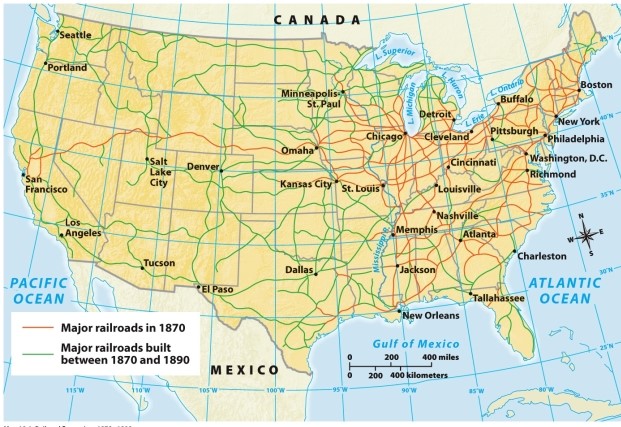
A) Chicago
B) Seattle
C) Dallas
D) Jackson
A) Chicago
B) Seattle
C) Dallas
D) Jackson
Question
Question
Question
Question
Question
Question
Question
Question
Question
Question
Question
Question
Question
Question
Question
According to Map 18.1: Railroad Expansion, 1870-1890, which of the following statements is true? 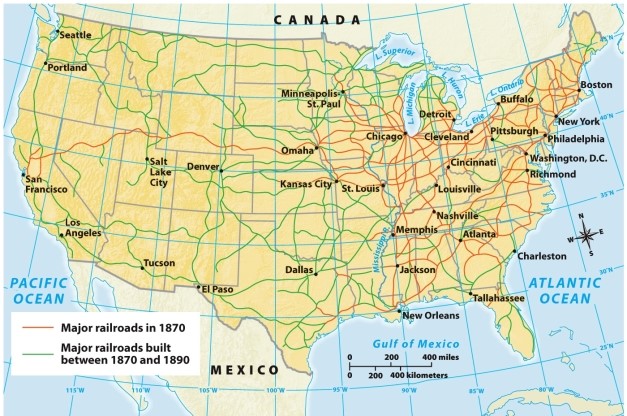
A) Most major railroads along the East Coast were built before 1870.
B) Most major railroads converged in Salt Lake City.
C) Most major railroads along the West Coast were built before 1870.
D) Most major railroads converged in Dallas.
A) Most major railroads along the East Coast were built before 1870.
B) Most major railroads converged in Salt Lake City.
C) Most major railroads along the West Coast were built before 1870.
D) Most major railroads converged in Dallas.
Question
Question
Question
Question
Question
Question
Question
Question
Question
Question
Question
Question
Question
Question
Question
Question
What is the woman warrior crusading for in the political cartoon titled "Woman's Holy War"? 
A) Women's suffrage
B) Legalized interracial marriage
C) Equal pay
D) Temperance
A) Women's suffrage
B) Legalized interracial marriage
C) Equal pay
D) Temperance
Question
Question
Question
Question
Question
Question
Question
Question
Question
Question
Question
Question
Question
Question
Question
Question
Question
Question
Question
Question
Question
Question
Question
Question
Question
Question
Question
Question
Question
Question
Question
Question
Question
Question
Question
Question
Question
Question
Question
Question
Question
Question

Unlock Deck
Sign up to unlock the cards in this deck!
Unlock Deck
Unlock Deck
1/77

Play

Full screen (f)
Deck 18: Railroads, Business, and Politics in the Gilded Age
1
Which of the following big businesses came to dominate American life in the second half of the nineteenth century?
A) Steel manufacturing
B) Oil refining
C) Railroading
D) Meatpacking
A) Steel manufacturing
B) Oil refining
C) Railroading
D) Meatpacking
Railroading
2
Which of the following was true of Standard Oil in the 1890s?
A) It was not as strong as it had been in the 1880s.
B) It controlled more than 90 percent of the oil business.
C) It had cut its workforce to 50,000 people.
D) It was broken up into a number of smaller companies by the federal government.
A) It was not as strong as it had been in the 1880s.
B) It controlled more than 90 percent of the oil business.
C) It had cut its workforce to 50,000 people.
D) It was broken up into a number of smaller companies by the federal government.
It controlled more than 90 percent of the oil business.
3
The industries that grew up around the revolutionary inventions of Alexander Graham Bell and Thomas Alva Edison demonstrated that
A) technological know-how was vital for controlling large corporations.
B) the federal government had a tight rein on industrial development at the time.
C) large corporations were particularly committed to helping people in their everyday lives.
D) the age of the inventor was becoming the age of the corporation.
A) technological know-how was vital for controlling large corporations.
B) the federal government had a tight rein on industrial development at the time.
C) large corporations were particularly committed to helping people in their everyday lives.
D) the age of the inventor was becoming the age of the corporation.
the age of the inventor was becoming the age of the corporation.
4
According to Map 18.1: Railroad Expansion, 1870-1890, which city was a major railroad hub in 1870?
A) Chicago
B) Seattle
C) Dallas
D) Jackson
A) Chicago
B) Seattle
C) Dallas
D) Jackson
Unlock Deck
Unlock for access to all 77 flashcards in this deck.
Unlock Deck
k this deck
5
Prominent business leader of the late nineteenth century J. P. Morgan believed that
A) he was making American business more democratic and competitive.
B) consolidation and central control were preferable to competition.
C) he should make a huge amount of money and then give it all away before he died.
D) his Christian faith led to his fabulous success in business and that he deserved that wealth.
A) he was making American business more democratic and competitive.
B) consolidation and central control were preferable to competition.
C) he should make a huge amount of money and then give it all away before he died.
D) his Christian faith led to his fabulous success in business and that he deserved that wealth.
Unlock Deck
Unlock for access to all 77 flashcards in this deck.
Unlock Deck
k this deck
6
The turn of the twentieth century saw individual entrepreneurship in the United States yield to
A) industrial capitalism.
B) joint stock investment.
C) finance capitalism.
D) limited partnerships.
A) industrial capitalism.
B) joint stock investment.
C) finance capitalism.
D) limited partnerships.
Unlock Deck
Unlock for access to all 77 flashcards in this deck.
Unlock Deck
k this deck
7
Which of the following factors boosted nineteenth-century railroad construction in America significantly?
A) Monetary aid and land grants from federal and state governments
B) Federal restrictions of rates and railroad company competition
C) The transportation demands of homesteaders
D) The deterioration of the National Road
A) Monetary aid and land grants from federal and state governments
B) Federal restrictions of rates and railroad company competition
C) The transportation demands of homesteaders
D) The deterioration of the National Road
Unlock Deck
Unlock for access to all 77 flashcards in this deck.
Unlock Deck
k this deck
8
Which of the following describes the Gilded Age?
A) The peak of the social reform era in the nineteenth century
B) An era marked by personal greed and a corrupt partnership between business and politics
C) The period when the success of mining operations significantly lowered the price of gold
D) The time in which poverty was nonexistent and wealth was shared by all
A) The peak of the social reform era in the nineteenth century
B) An era marked by personal greed and a corrupt partnership between business and politics
C) The period when the success of mining operations significantly lowered the price of gold
D) The time in which poverty was nonexistent and wealth was shared by all
Unlock Deck
Unlock for access to all 77 flashcards in this deck.
Unlock Deck
k this deck
9
What was the purpose of vertical integration, which was pioneered by Andrew Carnegie in the late nineteenth century?
A) It restructured the administrative hierarchy and, in the process, revolutionized managerial productivity.
B) It focused on the systemic promotion of immigrants and African Americans who were working for Carnegie Steel.
C) It concentrated on one aspect of production to the exclusion of all others.
D) It placed all aspects of the business, from mining raw materials to marketing and transporting finished products, under the control of the chief operating officer.
A) It restructured the administrative hierarchy and, in the process, revolutionized managerial productivity.
B) It focused on the systemic promotion of immigrants and African Americans who were working for Carnegie Steel.
C) It concentrated on one aspect of production to the exclusion of all others.
D) It placed all aspects of the business, from mining raw materials to marketing and transporting finished products, under the control of the chief operating officer.
Unlock Deck
Unlock for access to all 77 flashcards in this deck.
Unlock Deck
k this deck
10
Why did first organize Standard Oil as a trust?
A) To offer legal protections to oil refineries
B) To divide the oil market among the top five competitors in the business
C) To purchase shares of stock in competing companies
D) To control the key elements of production and corner the market for oil
A) To offer legal protections to oil refineries
B) To divide the oil market among the top five competitors in the business
C) To purchase shares of stock in competing companies
D) To control the key elements of production and corner the market for oil
Unlock Deck
Unlock for access to all 77 flashcards in this deck.
Unlock Deck
k this deck
11
How did Morgan achieve his stunning reorganization and consolidation of businesses in the late nineteenth century?
A) He sometimes formed holding companies to run his operations.
B) He used rebates to put his competition out of business.
C) He refused to get involved in the steel industry, which he considered too speculative.
D) He sometimes formed a community of interest comprised of a handful of directors.
A) He sometimes formed holding companies to run his operations.
B) He used rebates to put his competition out of business.
C) He refused to get involved in the steel industry, which he considered too speculative.
D) He sometimes formed a community of interest comprised of a handful of directors.
Unlock Deck
Unlock for access to all 77 flashcards in this deck.
Unlock Deck
k this deck
12
Which statement describes the oil industry before John D. Rockefeller's rise to power?
A) A few large refineries controlled most of the oil business.
B) Low entry costs allowed riotous competition.
C) Small refineries worked together to minimize competition.
D) Competition was limited owing to government regulations.
A) A few large refineries controlled most of the oil business.
B) Low entry costs allowed riotous competition.
C) Small refineries worked together to minimize competition.
D) Competition was limited owing to government regulations.
Unlock Deck
Unlock for access to all 77 flashcards in this deck.
Unlock Deck
k this deck
13
How did Alexander Graham Bell's telephone revolutionize both communications and business in America?
A) He had an instant monopoly on the communications market when he combined telephone and telegraph services in AT&T.
B) He installed telephones in every office building in New York to facilitate communications between business and the stock exchange.
C) He used a complicated organizational structure in his new company that allowed both local and cross-country communication.
D) He sold the rights to his invention to John D. Rockefeller, who put it into national use.
A) He had an instant monopoly on the communications market when he combined telephone and telegraph services in AT&T.
B) He installed telephones in every office building in New York to facilitate communications between business and the stock exchange.
C) He used a complicated organizational structure in his new company that allowed both local and cross-country communication.
D) He sold the rights to his invention to John D. Rockefeller, who put it into national use.
Unlock Deck
Unlock for access to all 77 flashcards in this deck.
Unlock Deck
k this deck
14
What was the main purpose of crude oil in the United States before the advent of the automobile?
A) Lubrication and lighting in the form of kerosene
B) Use as an additive to make paint adhere better to plaster surfaces
C) Use as a cleaning fluid for printing and typesetting equipment
D) Use as a food additive to retard spoilage
A) Lubrication and lighting in the form of kerosene
B) Use as an additive to make paint adhere better to plaster surfaces
C) Use as a cleaning fluid for printing and typesetting equipment
D) Use as a food additive to retard spoilage
Unlock Deck
Unlock for access to all 77 flashcards in this deck.
Unlock Deck
k this deck
15
Why did Rockefeller ultimately reorganize Standard Oil as a holding company in the late nineteenth century?
A) To control competition by purchasing the production facilities of competitors and shutting them down
B) To purchase and hold the assets of competitors so that those competitors had no capital or collateral to use for expansion
C) To legally combine competing companies under a central administration
D) To minimize competition by investing heavily in both the production and the distribution of products
A) To control competition by purchasing the production facilities of competitors and shutting them down
B) To purchase and hold the assets of competitors so that those competitors had no capital or collateral to use for expansion
C) To legally combine competing companies under a central administration
D) To minimize competition by investing heavily in both the production and the distribution of products
Unlock Deck
Unlock for access to all 77 flashcards in this deck.
Unlock Deck
k this deck
16
Where had electricity been put to use in the United States by the late nineteenth century?
A) Mostly in rural areas
B) Mostly in urban areas
C) Only in factories
D) Only in government offices
A) Mostly in rural areas
B) Mostly in urban areas
C) Only in factories
D) Only in government offices
Unlock Deck
Unlock for access to all 77 flashcards in this deck.
Unlock Deck
k this deck
17
Which of the following developments was a key factor in the rise of the Gilded Age?
A) The growth of industrialism in the United States
B) Urban political reform
C) The separation of business and politics
D) Massive government programs to help the poor
A) The growth of industrialism in the United States
B) Urban political reform
C) The separation of business and politics
D) Massive government programs to help the poor
Unlock Deck
Unlock for access to all 77 flashcards in this deck.
Unlock Deck
k this deck
18
In her History of the Standard Oil Company published in McClure's Magazine, Ida M. Tarbell characterized John D. Rockefeller as
A) a benevolent businessman whose company had provided cheap kerosene to millions.
B) an inept businessman whose success rested on a host of overworked and underpaid managers.
C) a success and a model for others hoping to prosper in business.
D) a man who had used illegal methods to take over the oil industry.
A) a benevolent businessman whose company had provided cheap kerosene to millions.
B) an inept businessman whose success rested on a host of overworked and underpaid managers.
C) a success and a model for others hoping to prosper in business.
D) a man who had used illegal methods to take over the oil industry.
Unlock Deck
Unlock for access to all 77 flashcards in this deck.
Unlock Deck
k this deck
19
According to Map 18.1: Railroad Expansion, 1870-1890, which of the following statements is true?
A) Most major railroads along the East Coast were built before 1870.
B) Most major railroads converged in Salt Lake City.
C) Most major railroads along the West Coast were built before 1870.
D) Most major railroads converged in Dallas.
A) Most major railroads along the East Coast were built before 1870.
B) Most major railroads converged in Salt Lake City.
C) Most major railroads along the West Coast were built before 1870.
D) Most major railroads converged in Dallas.
Unlock Deck
Unlock for access to all 77 flashcards in this deck.
Unlock Deck
k this deck
20
Carnegie Steel achieved the tremendous productivity that Andrew Carnegie insisted on
A) through the adoption of personnel policies that included profit-sharing and paid vacations.
B) by forcing employees to work long hours under extremely dangerous conditions for low pay.
C) by scheduling shifts at night, when it was cooler, which helped workers endure the high temperatures in the plant.
D) by operating the plant for only part of the year, which made the equipment last longer.
A) through the adoption of personnel policies that included profit-sharing and paid vacations.
B) by forcing employees to work long hours under extremely dangerous conditions for low pay.
C) by scheduling shifts at night, when it was cooler, which helped workers endure the high temperatures in the plant.
D) by operating the plant for only part of the year, which made the equipment last longer.
Unlock Deck
Unlock for access to all 77 flashcards in this deck.
Unlock Deck
k this deck
21
Who wrote the social Darwinist book What Social Classes Owe to Each Other?
A) Charles Darwin
B) William Graham Sumner
C) Herbert Spencer
D) Andrew Carnegie
A) Charles Darwin
B) William Graham Sumner
C) Herbert Spencer
D) Andrew Carnegie
Unlock Deck
Unlock for access to all 77 flashcards in this deck.
Unlock Deck
k this deck
22
"Thirty-one men were arrested and thrown in jail as 'conspirators,' although they all declared more than once they did not know they were firing on officers. Excitement was at fever heat until the morning papers, two days after, announced that the wounded deputy sheriffs were out of danger. This hindered rather than helped the plans of the whites. There was no law on the statute books which would execute an Afro-American for wounding a white man, but the 'unwritten law' did. Three of these men, the president, the manager and the clerk of the grocery-'the leaders of the conspiracy'-were secretly taken from jail and lynched in a shockingly brutal manner. 'The Negroes are getting too independent,' they say 'we must teach them a lesson.'" What "unwritten law" was Ida B. Wells referring to in this 1892 editorial?
A) That blacks had to serve whites
B) That whites had the right to kill blacks who wounded whites
C) That black men were not allowed to speak to white women
D) That white officers did not have to protect black neighborhoods
A) That blacks had to serve whites
B) That whites had the right to kill blacks who wounded whites
C) That black men were not allowed to speak to white women
D) That white officers did not have to protect black neighborhoods
Unlock Deck
Unlock for access to all 77 flashcards in this deck.
Unlock Deck
k this deck
23
What was the outcome of the notion that black men were a threat to white women in the South in the late nineteenth century?
A) The desertion of southern whites from the Democratic party
B) The decreased participation of white women in politics
C) The solidification of cross-racial political alliances
D) An increasing number of lynchings across the South
A) The desertion of southern whites from the Democratic party
B) The decreased participation of white women in politics
C) The solidification of cross-racial political alliances
D) An increasing number of lynchings across the South
Unlock Deck
Unlock for access to all 77 flashcards in this deck.
Unlock Deck
k this deck
24
What idea was promoted by the theory of social Darwinism in the late nineteenth century?
A) Certain inequities should be ameliorated by government intervention.
B) Charles Darwin actually was writing about people when he authored On the Origin of Species.
C) Progress is the result of competition where the strong survived and the weak died out.
D) Competition led rich Americans to have an unfair advantage over the poor.
A) Certain inequities should be ameliorated by government intervention.
B) Charles Darwin actually was writing about people when he authored On the Origin of Species.
C) Progress is the result of competition where the strong survived and the weak died out.
D) Competition led rich Americans to have an unfair advantage over the poor.
Unlock Deck
Unlock for access to all 77 flashcards in this deck.
Unlock Deck
k this deck
25
Morgan acquired the core of what would be the largest corporation in the world when he purchased
A) oil interests formerly controlled by John D. Rockefeller.
B) railroads formerly controlled by Collis P. Huntington.
C) steel interests formerly controlled by Andrew Carnegie.
D) meatpacking interests formerly controlled by the Armour and Swift companies.
A) oil interests formerly controlled by John D. Rockefeller.
B) railroads formerly controlled by Collis P. Huntington.
C) steel interests formerly controlled by Andrew Carnegie.
D) meatpacking interests formerly controlled by the Armour and Swift companies.
Unlock Deck
Unlock for access to all 77 flashcards in this deck.
Unlock Deck
k this deck
26
The Pendleton Act of 1883 established the Civil Service Commission and
A) made an examination a requirement for holding any federal job.
B) placed fifty thousand federal jobs under a merit system that required continuing education and yearly examinations.
C) legalized the removal of jobholders with a change of presidential administration.
D) made it impossible to remove people in civil service jobs for political reasons.
A) made an examination a requirement for holding any federal job.
B) placed fifty thousand federal jobs under a merit system that required continuing education and yearly examinations.
C) legalized the removal of jobholders with a change of presidential administration.
D) made it impossible to remove people in civil service jobs for political reasons.
Unlock Deck
Unlock for access to all 77 flashcards in this deck.
Unlock Deck
k this deck
27
According to American businessmen who subscribed to the economic theory of laissez-faire, what was the role of the government in the economy?
A) It should always intervene in the nation's economic affairs.
B) It should not interfere in economic affairs except to protect private property.
C) It had the responsibility to foster competition in industry.
D) Only state governments should intervene in the nation's social and economic affairs.
A) It should always intervene in the nation's economic affairs.
B) It should not interfere in economic affairs except to protect private property.
C) It had the responsibility to foster competition in industry.
D) Only state governments should intervene in the nation's social and economic affairs.
Unlock Deck
Unlock for access to all 77 flashcards in this deck.
Unlock Deck
k this deck
28
How did the Republican party attempt to foster unity for the election of 1880?
A) It forced voters to choose among its factions.
B) It convinced the popular Rutherford B. Hayes to run for reelection.
C) It nominated a Stalwart, Chester A. Arthur, for vice president.
D) It nominated former Union general Winfield Scott Hancock for president.
A) It forced voters to choose among its factions.
B) It convinced the popular Rutherford B. Hayes to run for reelection.
C) It nominated a Stalwart, Chester A. Arthur, for vice president.
D) It nominated former Union general Winfield Scott Hancock for president.
Unlock Deck
Unlock for access to all 77 flashcards in this deck.
Unlock Deck
k this deck
29
The economic theory of laissez-faire gained political clout in the late nineteenth century because
A) the Supreme Court increasingly was reinterpreting the Constitution to protect business.
B) businessmen bribed congressmen to stay out of their affairs in exchange for stock trading tips.
C) the Supreme Court increasingly was reinterpreting the Constitution to the detriment of big business.
D) Republicans and Democrats in Congress could not agree on its tenets.
A) the Supreme Court increasingly was reinterpreting the Constitution to protect business.
B) businessmen bribed congressmen to stay out of their affairs in exchange for stock trading tips.
C) the Supreme Court increasingly was reinterpreting the Constitution to the detriment of big business.
D) Republicans and Democrats in Congress could not agree on its tenets.
Unlock Deck
Unlock for access to all 77 flashcards in this deck.
Unlock Deck
k this deck
30
Which group of Republicans fiercely supported the patronage system?
A) Northern reformers
B) Half breeds
C) Mugwumps
D) Stalwarts
A) Northern reformers
B) Half breeds
C) Mugwumps
D) Stalwarts
Unlock Deck
Unlock for access to all 77 flashcards in this deck.
Unlock Deck
k this deck
31
"[T]he police and the legally-constituted authorities showed plainly where their sympathies were, for in no case reported through the daily papers does there appear the arrest, trial and conviction of one of the mob for any of the brutalities which occurred. The ringleaders of the mob were at no time disguised. Men were chased, beaten and killed by white brutes, who boasted of their crimes, and the murderers still walk the streets of New Orleans, well known and absolutely exempt from prosecution. Not only were they exempt from prosecution by the police while the town was in the hands of the mob, but even now that law and order is supposed to resume control, these men, well known, are not now, nor ever will be, called to account for the unspeakable brutalities of that terrible week." How did Wells portray the role of law enforcement?
A) They were sympathetic to the white mob.
B) They were sympathetic to blacks and defended them.
C) They were sympathetic to blacks, but were not powerful enough to defend them.
D) They were completely neutral.
A) They were sympathetic to the white mob.
B) They were sympathetic to blacks and defended them.
C) They were sympathetic to blacks, but were not powerful enough to defend them.
D) They were completely neutral.
Unlock Deck
Unlock for access to all 77 flashcards in this deck.
Unlock Deck
k this deck
32
Which of the following factors explains the high voter turnout in national elections during the last three decades of the nineteenth century?
A) Presidential candidates were incredibly charismatic.
B) Most Americans were very knowledgeable about the issues of the day.
C) Voting was an important way to get a government job.
D) Voters believed that failure to participate in politics had greatly contributed to the Civil War.
A) Presidential candidates were incredibly charismatic.
B) Most Americans were very knowledgeable about the issues of the day.
C) Voting was an important way to get a government job.
D) Voters believed that failure to participate in politics had greatly contributed to the Civil War.
Unlock Deck
Unlock for access to all 77 flashcards in this deck.
Unlock Deck
k this deck
33
What was an important consequence of the civil service reform of the 1880s?
A) Business became even more influential in politics than before.
B) Big business lost its political power on the national level.
C) Party bosses gained tremendous influence in national politics.
D) Government was run more efficiently and honestly.
A) Business became even more influential in politics than before.
B) Big business lost its political power on the national level.
C) Party bosses gained tremendous influence in national politics.
D) Government was run more efficiently and honestly.
Unlock Deck
Unlock for access to all 77 flashcards in this deck.
Unlock Deck
k this deck
34
The presidents who served in the last part of the nineteenth century-Rutherford B. Hayes through William McKinley-
A) were all largely incompetent and elected because of their personal charisma.
B) lacked influence owing to the control of powerful state governors.
C) were talented leaders but misunderstood by those who wrote about them.
D) were overshadowed by party politics at state and local levels.
A) were all largely incompetent and elected because of their personal charisma.
B) lacked influence owing to the control of powerful state governors.
C) were talented leaders but misunderstood by those who wrote about them.
D) were overshadowed by party politics at state and local levels.
Unlock Deck
Unlock for access to all 77 flashcards in this deck.
Unlock Deck
k this deck
35
What is the woman warrior crusading for in the political cartoon titled "Woman's Holy War"?
A) Women's suffrage
B) Legalized interracial marriage
C) Equal pay
D) Temperance
A) Women's suffrage
B) Legalized interracial marriage
C) Equal pay
D) Temperance
Unlock Deck
Unlock for access to all 77 flashcards in this deck.
Unlock Deck
k this deck
36
Where did the South's iron and steel industry develop?
A) Durham, North Carolina
B) Atlanta, Georgia
C) Birmingham, Alabama
D) Memphis, Tennessee
A) Durham, North Carolina
B) Atlanta, Georgia
C) Birmingham, Alabama
D) Memphis, Tennessee
Unlock Deck
Unlock for access to all 77 flashcards in this deck.
Unlock Deck
k this deck
37
Having stated that "the paramount issue this year is moral rather than political," supporters of Grover Cleveland in 1884 were chagrined to learn that Cleveland had
A) become rich through a slush fund while he was governor of New York.
B) fathered a child out of wedlock.
C) taken kickbacks from builders in New York and New Jersey.
D) lied about his academic and professional background.
A) become rich through a slush fund while he was governor of New York.
B) fathered a child out of wedlock.
C) taken kickbacks from builders in New York and New Jersey.
D) lied about his academic and professional background.
Unlock Deck
Unlock for access to all 77 flashcards in this deck.
Unlock Deck
k this deck
38
President James A. Garfield unwittingly helped the cause of civil service reform when he
A) mistakenly signed a legislative act enabling that reform.
B) was shot by Charles Guiteau, a disappointed office seeker.
C) made a series of speeches that appeared to endorse government reforms.
D) refused to speak out on standardizing the requirements for federal jobs.
A) mistakenly signed a legislative act enabling that reform.
B) was shot by Charles Guiteau, a disappointed office seeker.
C) made a series of speeches that appeared to endorse government reforms.
D) refused to speak out on standardizing the requirements for federal jobs.
Unlock Deck
Unlock for access to all 77 flashcards in this deck.
Unlock Deck
k this deck
39
What message did Andrew Carnegie promote in his gospel of wealth?
A) Poverty is more than likely caused by moral weakness.
B) Successful businessmen should be respected by the society at large.
C) His own success was more due to luck than hard work.
D) Millionaires should be trustees and agents for the poor.
A) Poverty is more than likely caused by moral weakness.
B) Successful businessmen should be respected by the society at large.
C) His own success was more due to luck than hard work.
D) Millionaires should be trustees and agents for the poor.
Unlock Deck
Unlock for access to all 77 flashcards in this deck.
Unlock Deck
k this deck
40
How did American women respond to the denial of their right to vote in the late nineteenth century?
A) They turned inward and refused to engage in the political process.
B) They conceded that politics was a man's game and confined themselves to domestic concerns.
C) They participated in the political process though the antilynching, suffrage, and temperance movements.
D) They decided to take up a major role in the behind-the-scenes work of presidential politics.
A) They turned inward and refused to engage in the political process.
B) They conceded that politics was a man's game and confined themselves to domestic concerns.
C) They participated in the political process though the antilynching, suffrage, and temperance movements.
D) They decided to take up a major role in the behind-the-scenes work of presidential politics.
Unlock Deck
Unlock for access to all 77 flashcards in this deck.
Unlock Deck
k this deck
41
How did the tariff issue demonstrate the Republicans' new commitment to economics over ideology after the 1888 election?
Unlock Deck
Unlock for access to all 77 flashcards in this deck.
Unlock Deck
k this deck
42
Explain the concept of laissez-faire and how the Supreme Court supported that economic philosophy by protecting business interests during the 1880s and 1890s.
Unlock Deck
Unlock for access to all 77 flashcards in this deck.
Unlock Deck
k this deck
43
President Grover Cleveland hoped to increase the nation's flagging gold reserves during the economic depression in the winter of 1894-95
A) by sending an increasing number of miners to the West in an effort to find new gold mines.
B) by asking Americans to contribute whatever gold they had to an important national cause.
C) by sending the army to Mexico to capture gold mines that the Mexicans could not exploit because of their lack of technology.
D) through making a deal with a private group of bankers who would buy government bonds with gold.
A) by sending an increasing number of miners to the West in an effort to find new gold mines.
B) by asking Americans to contribute whatever gold they had to an important national cause.
C) by sending the army to Mexico to capture gold mines that the Mexicans could not exploit because of their lack of technology.
D) through making a deal with a private group of bankers who would buy government bonds with gold.
Unlock Deck
Unlock for access to all 77 flashcards in this deck.
Unlock Deck
k this deck
44
In the midst of America's raucous industrial development, Andrew Carnegie's fabulous success in the steel business turned him into something of a hero. Why?
Unlock Deck
Unlock for access to all 77 flashcards in this deck.
Unlock Deck
k this deck
45
Why were Irish Catholic voters offended by James G. Blaine's campaign?
A) He neglected to respond to a slur on Catholic voters.
B) He denied his Irish heritage in order to gain votes.
C) His campaign office refused to hire Irish workers.
D) He often drank on the campaign trail, bringing truth to the phrase "Rum, Romanism, and Rebellion."
A) He neglected to respond to a slur on Catholic voters.
B) He denied his Irish heritage in order to gain votes.
C) His campaign office refused to hire Irish workers.
D) He often drank on the campaign trail, bringing truth to the phrase "Rum, Romanism, and Rebellion."
Unlock Deck
Unlock for access to all 77 flashcards in this deck.
Unlock Deck
k this deck
46
Although the men who served as president in the late nineteenth century were less than memorable, Americans of that era participated in electoral politics with great enthusiasm. Cite three reasons why people were so interested in politics.
Unlock Deck
Unlock for access to all 77 flashcards in this deck.
Unlock Deck
k this deck
47
Jay Gould was not typical of railroad builders in the late nineteenth century. Explain why.
Unlock Deck
Unlock for access to all 77 flashcards in this deck.
Unlock Deck
k this deck
48
How effective was the Interstate Commerce Commission, the nation's first federal regulatory agency?
A) It was so weak in its early years that it served as little more than a historical precedent.
B) It had unprecedented power to clean up and regulate the railroads.
C) It was authorized to set interest rates for small-business loans.
D) It was so powerful initially that the Supreme Court declared it unconstitutional.
A) It was so weak in its early years that it served as little more than a historical precedent.
B) It had unprecedented power to clean up and regulate the railroads.
C) It was authorized to set interest rates for small-business loans.
D) It was so powerful initially that the Supreme Court declared it unconstitutional.
Unlock Deck
Unlock for access to all 77 flashcards in this deck.
Unlock Deck
k this deck
49
The tariff posed a threat to America's prosperity in the 1880s because
A) it was too low to be effective.
B) a number of foreign nations refused to export their goods to the United States.
C) it created a surplus that was not used to produce goods and services.
D) it exempted manufactured goods such as textiles.
A) it was too low to be effective.
B) a number of foreign nations refused to export their goods to the United States.
C) it created a surplus that was not used to produce goods and services.
D) it exempted manufactured goods such as textiles.
Unlock Deck
Unlock for access to all 77 flashcards in this deck.
Unlock Deck
k this deck
50
The Supreme Court's decision in Wabash v. Illinois (1886), which reversed its ruling in Munn v. Illinois (1877),
A) increased states' regulation of the railroads.
B) created a new alliance between the court and members of the Grange.
C) led to an outpouring of criticism of the court by the railroad industry.
D) led to passage of the first federal law regulating the railroad industry.
A) increased states' regulation of the railroads.
B) created a new alliance between the court and members of the Grange.
C) led to an outpouring of criticism of the court by the railroad industry.
D) led to passage of the first federal law regulating the railroad industry.
Unlock Deck
Unlock for access to all 77 flashcards in this deck.
Unlock Deck
k this deck
51
How did Ida B. Wells challenge dominant views of race, gender, and politics in the late nineteenth century?
Unlock Deck
Unlock for access to all 77 flashcards in this deck.
Unlock Deck
k this deck
52
In The Gilded Age, Mark Twain and Charles Dudley Warner satirized American society in the late nineteenth century. Briefly describe the characteristics of this era.
Unlock Deck
Unlock for access to all 77 flashcards in this deck.
Unlock Deck
k this deck
53
Democrats dubbed the Republican-dominated Fifty-first Congress the "Billion Dollar Congress" because it spent the nation's surplus on
A) large subsidies for farmers.
B) lawmakers' own constituents.
C) compensation for the revenue foreign nations lost because of the tariff.
D) programs to promote big business.
A) large subsidies for farmers.
B) lawmakers' own constituents.
C) compensation for the revenue foreign nations lost because of the tariff.
D) programs to promote big business.
Unlock Deck
Unlock for access to all 77 flashcards in this deck.
Unlock Deck
k this deck
54
Why did Ida Tarbell and others criticize Standard Oil and John D. Rockefeller?
Unlock Deck
Unlock for access to all 77 flashcards in this deck.
Unlock Deck
k this deck
55
The Greenback Labor party believed that the government should issue paper currency based on
A) the gold supply.
B) gold and silver.
C) gold, silver, and Civil War bonds.
D) the country's total wealth.
A) the gold supply.
B) gold and silver.
C) gold, silver, and Civil War bonds.
D) the country's total wealth.
Unlock Deck
Unlock for access to all 77 flashcards in this deck.
Unlock Deck
k this deck
56
Which group enthusiastically supported the tariff in the nineteenth century?
A) Industrialists
B) Southern farmers
C) Midwestern farmers
D) Advocates of free trade
A) Industrialists
B) Southern farmers
C) Midwestern farmers
D) Advocates of free trade
Unlock Deck
Unlock for access to all 77 flashcards in this deck.
Unlock Deck
k this deck
57
When advocates of bimetallism referred to the crime of '73, they were talking about
A) the financial panic that hit the United States in 1873.
B) Ulysses S. Grant's return to the Oval Office for a second term.
C) the decision by Congress in 1873 to stop buying and minting silver.
D) the decision by Congress in 1873 to stop buying and minting gold.
A) the financial panic that hit the United States in 1873.
B) Ulysses S. Grant's return to the Oval Office for a second term.
C) the decision by Congress in 1873 to stop buying and minting silver.
D) the decision by Congress in 1873 to stop buying and minting gold.
Unlock Deck
Unlock for access to all 77 flashcards in this deck.
Unlock Deck
k this deck
58
At the turn of the twentieth century, how did electricity contribute to the growing divergence between urban and rural life in America?
Unlock Deck
Unlock for access to all 77 flashcards in this deck.
Unlock Deck
k this deck
59
What did the Interstate Commerce Act and the Sherman Antitrust Act have in common?
A) Both testified to big business's concern about government abuses in chartering and licensing corporations.
B) Both testified to the nation's growing willingness to use federal measures to intervene in big business on behalf of the public interest.
C) Both had an immediate and significant impact on the conduct of business in the United States.
D) Both were compromises supported by big business to distract the public from corporate abuses.
A) Both testified to big business's concern about government abuses in chartering and licensing corporations.
B) Both testified to the nation's growing willingness to use federal measures to intervene in big business on behalf of the public interest.
C) Both had an immediate and significant impact on the conduct of business in the United States.
D) Both were compromises supported by big business to distract the public from corporate abuses.
Unlock Deck
Unlock for access to all 77 flashcards in this deck.
Unlock Deck
k this deck
60
Why did civil service reform become more and more popular in the years following the Civil War? What was the result of civil service reform?
Unlock Deck
Unlock for access to all 77 flashcards in this deck.
Unlock Deck
k this deck
61
In what ways did the changing economic system restructure American politics in the years following Reconstruction?
Unlock Deck
Unlock for access to all 77 flashcards in this deck.
Unlock Deck
k this deck
62
Match the term with the definition.
Congress created this regulatory agency designed to oversee the railroad industry after the Supreme Court decision in Wabash v. Illinois (1886) effectively denied states the right to regulate railroads. The agency proved weak and did not immediately pose a threat to the industry.
A)civil service reform
B)finance capitalism
C)free silver
D)Gilded Age
E)gospel of wealth
F)Interstate Commerce Commission (ICC)
G)Jim Crow
H)trust
I)Sherman Antitrust Act
J)social Darwinism
K)spoils system
L)Woman's Christian Temperance Union (WCTU)
Congress created this regulatory agency designed to oversee the railroad industry after the Supreme Court decision in Wabash v. Illinois (1886) effectively denied states the right to regulate railroads. The agency proved weak and did not immediately pose a threat to the industry.
A)civil service reform
B)finance capitalism
C)free silver
D)Gilded Age
E)gospel of wealth
F)Interstate Commerce Commission (ICC)
G)Jim Crow
H)trust
I)Sherman Antitrust Act
J)social Darwinism
K)spoils system
L)Woman's Christian Temperance Union (WCTU)
Unlock Deck
Unlock for access to all 77 flashcards in this deck.
Unlock Deck
k this deck
63
Match the term with the definition.
A period of enormous economic growth and ostentatious displays of wealth during the last quarter of the nineteenth century. Industrialization dramatically changed in U.S. society and created a newly dominant group of rich entrepreneurs and an impoverished working class.
A)civil service reform
B)finance capitalism
C)free silver
D)Gilded Age
E)gospel of wealth
F)Interstate Commerce Commission (ICC)
G)Jim Crow
H)trust
I)Sherman Antitrust Act
J)social Darwinism
K)spoils system
L)Woman's Christian Temperance Union (WCTU)
A period of enormous economic growth and ostentatious displays of wealth during the last quarter of the nineteenth century. Industrialization dramatically changed in U.S. society and created a newly dominant group of rich entrepreneurs and an impoverished working class.
A)civil service reform
B)finance capitalism
C)free silver
D)Gilded Age
E)gospel of wealth
F)Interstate Commerce Commission (ICC)
G)Jim Crow
H)trust
I)Sherman Antitrust Act
J)social Darwinism
K)spoils system
L)Woman's Christian Temperance Union (WCTU)
Unlock Deck
Unlock for access to all 77 flashcards in this deck.
Unlock Deck
k this deck
64
Discuss the concept of social Darwinism. Include a summary of its roots and an explanation of the theory itself. How did Andrew Carnegie's gospel of wealth refine the concept?
Unlock Deck
Unlock for access to all 77 flashcards in this deck.
Unlock Deck
k this deck
65
Match the term with the definition.
A system in which corporations give shares of their stock to trustees who hold the stocks "in trust" for their stockholders, thereby coordinating the industry to ensure profits to the participating corporations and curb competition.
A)civil service reform
B)finance capitalism
C)free silver
D)Gilded Age
E)gospel of wealth
F)Interstate Commerce Commission (ICC)
G)Jim Crow
H)trust
I)Sherman Antitrust Act
J)social Darwinism
K)spoils system
L)Woman's Christian Temperance Union (WCTU)
A system in which corporations give shares of their stock to trustees who hold the stocks "in trust" for their stockholders, thereby coordinating the industry to ensure profits to the participating corporations and curb competition.
A)civil service reform
B)finance capitalism
C)free silver
D)Gilded Age
E)gospel of wealth
F)Interstate Commerce Commission (ICC)
G)Jim Crow
H)trust
I)Sherman Antitrust Act
J)social Darwinism
K)spoils system
L)Woman's Christian Temperance Union (WCTU)
Unlock Deck
Unlock for access to all 77 flashcards in this deck.
Unlock Deck
k this deck
66
Match the term with the definition.
System of racial segregation in the South lasting from after the Civil War into the twentieth century. These laws segregated African Americans in public facilities such as trains and streetcars, curtailed their voting rights, and denied other basic civil rights.
A)civil service reform
B)finance capitalism
C)free silver
D)Gilded Age
E)gospel of wealth
F)Interstate Commerce Commission (ICC)
G)Jim Crow
H)trust
I)Sherman Antitrust Act
J)social Darwinism
K)spoils system
L)Woman's Christian Temperance Union (WCTU)
System of racial segregation in the South lasting from after the Civil War into the twentieth century. These laws segregated African Americans in public facilities such as trains and streetcars, curtailed their voting rights, and denied other basic civil rights.
A)civil service reform
B)finance capitalism
C)free silver
D)Gilded Age
E)gospel of wealth
F)Interstate Commerce Commission (ICC)
G)Jim Crow
H)trust
I)Sherman Antitrust Act
J)social Darwinism
K)spoils system
L)Woman's Christian Temperance Union (WCTU)
Unlock Deck
Unlock for access to all 77 flashcards in this deck.
Unlock Deck
k this deck
67
Match the term with the definition.
Investment sponsored by banks and bankers that typified the American business scene at the end of the nineteenth century. After the Panic of 1893, bankers stepped in and reorganized major industries to stabilize them, leaving power concentrated in the hands of a few influential capitalists.
A)civil service reform
B)finance capitalism
C)free silver
D)Gilded Age
E)gospel of wealth
F)Interstate Commerce Commission (ICC)
G)Jim Crow
H)trust
I)Sherman Antitrust Act
J)social Darwinism
K)spoils system
L)Woman's Christian Temperance Union (WCTU)
Investment sponsored by banks and bankers that typified the American business scene at the end of the nineteenth century. After the Panic of 1893, bankers stepped in and reorganized major industries to stabilize them, leaving power concentrated in the hands of a few influential capitalists.
A)civil service reform
B)finance capitalism
C)free silver
D)Gilded Age
E)gospel of wealth
F)Interstate Commerce Commission (ICC)
G)Jim Crow
H)trust
I)Sherman Antitrust Act
J)social Darwinism
K)spoils system
L)Woman's Christian Temperance Union (WCTU)
Unlock Deck
Unlock for access to all 77 flashcards in this deck.
Unlock Deck
k this deck
68
Match the term with the definition.
Patronage scheme in which politicians doled out government positions to their loyal supporters; it led to widespread corruption during the Gilded Age.
A)civil service reform
B)finance capitalism
C)free silver
D)Gilded Age
E)gospel of wealth
F)Interstate Commerce Commission (ICC)
G)Jim Crow
H)trust
I)Sherman Antitrust Act
J)social Darwinism
K)spoils system
L)Woman's Christian Temperance Union (WCTU)
Patronage scheme in which politicians doled out government positions to their loyal supporters; it led to widespread corruption during the Gilded Age.
A)civil service reform
B)finance capitalism
C)free silver
D)Gilded Age
E)gospel of wealth
F)Interstate Commerce Commission (ICC)
G)Jim Crow
H)trust
I)Sherman Antitrust Act
J)social Darwinism
K)spoils system
L)Woman's Christian Temperance Union (WCTU)
Unlock Deck
Unlock for access to all 77 flashcards in this deck.
Unlock Deck
k this deck
69
Match the term with the definition.
Effort in the 1880s to end the spoils system and reduce government corruption. New legislation awarded government jobs under a merit system that required examinations for office and made it impossible to remove jobholders for political reasons.
A)civil service reform
B)finance capitalism
C)free silver
D)Gilded Age
E)gospel of wealth
F)Interstate Commerce Commission (ICC)
G)Jim Crow
H)trust
I)Sherman Antitrust Act
J)social Darwinism
K)spoils system
L)Woman's Christian Temperance Union (WCTU)
Effort in the 1880s to end the spoils system and reduce government corruption. New legislation awarded government jobs under a merit system that required examinations for office and made it impossible to remove jobholders for political reasons.
A)civil service reform
B)finance capitalism
C)free silver
D)Gilded Age
E)gospel of wealth
F)Interstate Commerce Commission (ICC)
G)Jim Crow
H)trust
I)Sherman Antitrust Act
J)social Darwinism
K)spoils system
L)Woman's Christian Temperance Union (WCTU)
Unlock Deck
Unlock for access to all 77 flashcards in this deck.
Unlock Deck
k this deck
70
Match the term with the definition.
Founded in 1874 to advocate for total abstinence from alcohol, this organization provided important political training for women, which many used in the suffrage movement.
A)civil service reform
B)finance capitalism
C)free silver
D)Gilded Age
E)gospel of wealth
F)Interstate Commerce Commission (ICC)
G)Jim Crow
H)trust
I)Sherman Antitrust Act
J)social Darwinism
K)spoils system
L)Woman's Christian Temperance Union (WCTU)
Founded in 1874 to advocate for total abstinence from alcohol, this organization provided important political training for women, which many used in the suffrage movement.
A)civil service reform
B)finance capitalism
C)free silver
D)Gilded Age
E)gospel of wealth
F)Interstate Commerce Commission (ICC)
G)Jim Crow
H)trust
I)Sherman Antitrust Act
J)social Darwinism
K)spoils system
L)Woman's Christian Temperance Union (WCTU)
Unlock Deck
Unlock for access to all 77 flashcards in this deck.
Unlock Deck
k this deck
71
Match the term with the definition.
The idea that the financially successful should use their wisdom, experience, and wealth as stewards for the poor. Andrew Carnegie promoted this view in an 1889 essay in which he maintained that the wealthy should serve as stewards for society as a whole.
A)civil service reform
B)finance capitalism
C)free silver
D)Gilded Age
E)gospel of wealth
F)Interstate Commerce Commission (ICC)
G)Jim Crow
H)trust
I)Sherman Antitrust Act
J)social Darwinism
K)spoils system
L)Woman's Christian Temperance Union (WCTU)
The idea that the financially successful should use their wisdom, experience, and wealth as stewards for the poor. Andrew Carnegie promoted this view in an 1889 essay in which he maintained that the wealthy should serve as stewards for society as a whole.
A)civil service reform
B)finance capitalism
C)free silver
D)Gilded Age
E)gospel of wealth
F)Interstate Commerce Commission (ICC)
G)Jim Crow
H)trust
I)Sherman Antitrust Act
J)social Darwinism
K)spoils system
L)Woman's Christian Temperance Union (WCTU)
Unlock Deck
Unlock for access to all 77 flashcards in this deck.
Unlock Deck
k this deck
72
Discuss the concept of laissez-faire as it was used in the late nineteenth century to describe the ideal relationship between the U.S. government and economy. How was the relationship between the two truly "laissez-faire" during the Gilded Age and how, on the other hand, did government actually work to build and strengthen corporate capitalism?
Unlock Deck
Unlock for access to all 77 flashcards in this deck.
Unlock Deck
k this deck
73
Match the term with the definition.
Term used in the late nineteenth century by those who advocated minting silver dollars in addition to supporting the gold standard and the paper currency backed by gold. Western silver barons and poor farmers from the West and South hoped this would result in inflation, effectively providing them with debt relief.
A)civil service reform
B)finance capitalism
C)free silver
D)Gilded Age
E)gospel of wealth
F)Interstate Commerce Commission (ICC)
G)Jim Crow
H)trust
I)Sherman Antitrust Act
J)social Darwinism
K)spoils system
L)Woman's Christian Temperance Union (WCTU)
Term used in the late nineteenth century by those who advocated minting silver dollars in addition to supporting the gold standard and the paper currency backed by gold. Western silver barons and poor farmers from the West and South hoped this would result in inflation, effectively providing them with debt relief.
A)civil service reform
B)finance capitalism
C)free silver
D)Gilded Age
E)gospel of wealth
F)Interstate Commerce Commission (ICC)
G)Jim Crow
H)trust
I)Sherman Antitrust Act
J)social Darwinism
K)spoils system
L)Woman's Christian Temperance Union (WCTU)
Unlock Deck
Unlock for access to all 77 flashcards in this deck.
Unlock Deck
k this deck
74
Match the term with the definition.
In this theory popularized in the late nineteenth century by Herbert Spencer and William Graham Sumner, only relentless competition could produce social progress, with wealth a sign of "fitness" and poverty one of "unfitness" for survival.
A)civil service reform
B)finance capitalism
C)free silver
D)Gilded Age
E)gospel of wealth
F)Interstate Commerce Commission (ICC)
G)Jim Crow
H)trust
I)Sherman Antitrust Act
J)social Darwinism
K)spoils system
L)Woman's Christian Temperance Union (WCTU)
In this theory popularized in the late nineteenth century by Herbert Spencer and William Graham Sumner, only relentless competition could produce social progress, with wealth a sign of "fitness" and poverty one of "unfitness" for survival.
A)civil service reform
B)finance capitalism
C)free silver
D)Gilded Age
E)gospel of wealth
F)Interstate Commerce Commission (ICC)
G)Jim Crow
H)trust
I)Sherman Antitrust Act
J)social Darwinism
K)spoils system
L)Woman's Christian Temperance Union (WCTU)
Unlock Deck
Unlock for access to all 77 flashcards in this deck.
Unlock Deck
k this deck
75
Discuss three ways that leading industrialists transformed American business in the late nineteenth century. Considering Ida Tarbell's criticism of John D. Rockefeller, should those industrialists be considered symbols of American business ingenuity or of ruthless business practices?
Unlock Deck
Unlock for access to all 77 flashcards in this deck.
Unlock Deck
k this deck
76
Match the term with the definition.
1890 act that outlawed pools and trusts, ruling that businesses could no longer enter into agreements to restrict competition. Government inaction, combined with the Supreme Court's narrow reading of the act in the United States v. E. C. Knight Company decision, undermined the law's effectiveness.
A)civil service reform
B)finance capitalism
C)free silver
D)Gilded Age
E)gospel of wealth
F)Interstate Commerce Commission (ICC)
G)Jim Crow
H)trust
I)Sherman Antitrust Act
J)social Darwinism
K)spoils system
L)Woman's Christian Temperance Union (WCTU)
1890 act that outlawed pools and trusts, ruling that businesses could no longer enter into agreements to restrict competition. Government inaction, combined with the Supreme Court's narrow reading of the act in the United States v. E. C. Knight Company decision, undermined the law's effectiveness.
A)civil service reform
B)finance capitalism
C)free silver
D)Gilded Age
E)gospel of wealth
F)Interstate Commerce Commission (ICC)
G)Jim Crow
H)trust
I)Sherman Antitrust Act
J)social Darwinism
K)spoils system
L)Woman's Christian Temperance Union (WCTU)
Unlock Deck
Unlock for access to all 77 flashcards in this deck.
Unlock Deck
k this deck
77
How did the notion of separate spheres for men and women shape late-nineteenth-century American politics? How did black and white women challenge dominant conceptions of their prescribed roles?
Unlock Deck
Unlock for access to all 77 flashcards in this deck.
Unlock Deck
k this deck
Unlock Deck
Unlock for access to all 77 flashcards in this deck.






