







 Chat with AI

Deck 15: The Crucible of War
Full screen (f)

Question

Question
Question
Question
Question
Question
Question
Question
Question
Question
Why might have this federal recruiting poster have exclaimed: "Don't wait to be drafted!"? 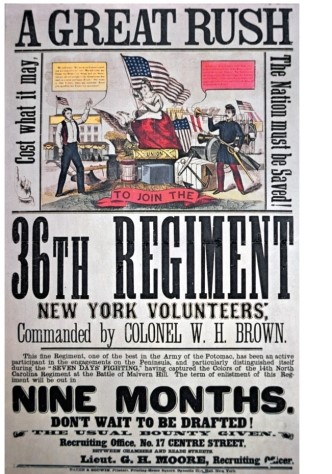
A) Because being drafted was more shameful than enlisting
B) Because those who waited to be drafted were given more dangerous jobs
C) Because the instatement of a draft would signify that the Union was in grave danger of losing the war
D) Because the draft was associated with the South
A) Because being drafted was more shameful than enlisting
B) Because those who waited to be drafted were given more dangerous jobs
C) Because the instatement of a draft would signify that the Union was in grave danger of losing the war
D) Because the draft was associated with the South
Question
Question
Question
Question
Question
Question
Question
According to Map 15.1: Secession, 1860-1861, which slave state seceded from the Union? 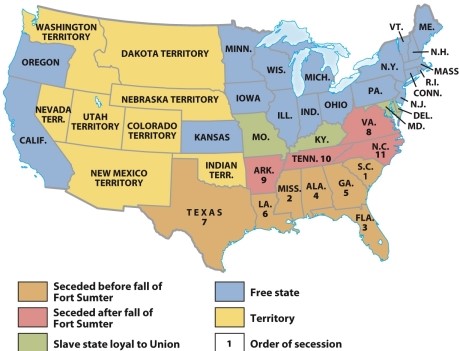
A) Missouri
B) Arkansas
C) Kentucky
D) Maryland
A) Missouri
B) Arkansas
C) Kentucky
D) Maryland
Question
Question
Question
Question
Question
Question
Question
Question
Question
Question
Question
Question
Question
Question
Question
Question
Question
Question
Question
Question
Question
Question
Question
Question
Question
Question
Question
Question
Question
Question
Question
Question
Question
Question
Question
Question
Question
Question
Question
Question
Question
Question
Question
Question
Question
Question
Question
Question
Question
Question
Question
Question
Question
Question
Question
Question
Question
Question
Question
Question

Unlock Deck
Sign up to unlock the cards in this deck!
Unlock Deck
Unlock Deck
1/77

Play

Full screen (f)
Deck 15: The Crucible of War
1
What was the significance of the first battle at Manassas (or Bull Run) in July 1861?
A) It disheartened northerners to the extent that men stopped volunteering for the Union army.
B) The Union's defeat encouraged Lincoln to authorize the enlistment of one million more men for three years.
C) It was a bloodbath in which over ten thousand men died.
D) Confederate soldiers questioned whether they had the mettle to compete with Union troops.
A) It disheartened northerners to the extent that men stopped volunteering for the Union army.
B) The Union's defeat encouraged Lincoln to authorize the enlistment of one million more men for three years.
C) It was a bloodbath in which over ten thousand men died.
D) Confederate soldiers questioned whether they had the mettle to compete with Union troops.
The Union's defeat encouraged Lincoln to authorize the enlistment of one million more men for three years.
2
Initially the Confederacy sought King Cotton diplomacy, a strategy based on the belief that
A) European nations' need for cotton would lead them to support the Confederacy.
B) raising the price of cotton would force the North to negotiate a peaceful settlement.
C) European nations would loan the South more money if it reduced the price of cotton.
D) growing less cotton and freeing more slaves would convince England to recognize the Confederacy.
A) European nations' need for cotton would lead them to support the Confederacy.
B) raising the price of cotton would force the North to negotiate a peaceful settlement.
C) European nations would loan the South more money if it reduced the price of cotton.
D) growing less cotton and freeing more slaves would convince England to recognize the Confederacy.
European nations' need for cotton would lead them to support the Confederacy.
3
At the end of 1862, the eastern theater of the Civil War
A) made it obvious that the rebellion was nearly over.
B) had been a great success for the Confederates.
C) had seen one Union victory after another.
D) had reached a stalemate.
A) made it obvious that the rebellion was nearly over.
B) had been a great success for the Confederates.
C) had seen one Union victory after another.
D) had reached a stalemate.
had reached a stalemate.
4
Why did the South experience greater inflation than the North during the Civil War?
A) The South increased its taxes.
B) The Confederacy issued war bonds.
C) The South owed substantial debt to the North.
D) The Confederacy printed more money.
A) The South increased its taxes.
B) The Confederacy issued war bonds.
C) The South owed substantial debt to the North.
D) The Confederacy printed more money.
Unlock Deck
Unlock for access to all 77 flashcards in this deck.
Unlock Deck
k this deck
5
Who led the Union forces to victory at the Battle of Shiloh?
A) William Clarke Quantrill
B) "Bloody Bill" Anderson
C) Albert Sidney Johnston
D) Ulysses S. Grant
A) William Clarke Quantrill
B) "Bloody Bill" Anderson
C) Albert Sidney Johnston
D) Ulysses S. Grant
Unlock Deck
Unlock for access to all 77 flashcards in this deck.
Unlock Deck
k this deck
6
What event marked the official beginning of armed hostilities between the North and South in April 1861?
A) Confederates firing on the frigate Star of the West
B) An assault on Washington, D.C.
C) The assault on federal troops passing through Baltimore
D) Confederates firing on Fort Sumter
A) Confederates firing on the frigate Star of the West
B) An assault on Washington, D.C.
C) The assault on federal troops passing through Baltimore
D) Confederates firing on Fort Sumter
Unlock Deck
Unlock for access to all 77 flashcards in this deck.
Unlock Deck
k this deck
7
What was the significance of the conflict between the Virginia and the Monitor?
A) It ended the Union blockade.
B) It almost prompted the British to enter the war.
C) It marked the birth of the ironclad warship.
D) It showed the South's superior industrial resources.
A) It ended the Union blockade.
B) It almost prompted the British to enter the war.
C) It marked the birth of the ironclad warship.
D) It showed the South's superior industrial resources.
Unlock Deck
Unlock for access to all 77 flashcards in this deck.
Unlock Deck
k this deck
8
Most northerners viewed secession as
A) an attack on the rule of law.
B) constitutionally viable but impractical.
C) too expensive and therefore illegal.
D) a concept they wished they had thought of first.
A) an attack on the rule of law.
B) constitutionally viable but impractical.
C) too expensive and therefore illegal.
D) a concept they wished they had thought of first.
Unlock Deck
Unlock for access to all 77 flashcards in this deck.
Unlock Deck
k this deck
9
The bloodiest day of the Civil War occurred September 17, 1862, at
A) Fort Henry, Tennessee.
B) Gettysburg, Pennsylvania.
C) Fredericksburg, Virginia.
D) Antietam Creek, Maryland.
A) Fort Henry, Tennessee.
B) Gettysburg, Pennsylvania.
C) Fredericksburg, Virginia.
D) Antietam Creek, Maryland.
Unlock Deck
Unlock for access to all 77 flashcards in this deck.
Unlock Deck
k this deck
10
Why might have this federal recruiting poster have exclaimed: "Don't wait to be drafted!"?
A) Because being drafted was more shameful than enlisting
B) Because those who waited to be drafted were given more dangerous jobs
C) Because the instatement of a draft would signify that the Union was in grave danger of losing the war
D) Because the draft was associated with the South
A) Because being drafted was more shameful than enlisting
B) Because those who waited to be drafted were given more dangerous jobs
C) Because the instatement of a draft would signify that the Union was in grave danger of losing the war
D) Because the draft was associated with the South
Unlock Deck
Unlock for access to all 77 flashcards in this deck.
Unlock Deck
k this deck
11
What was the significance of the Battle of Shiloh?
A) The Confederate victory gave the South control of the Mississippi River.
B) The Union victory ruined the Confederacy's chances to take control of the West.
C) The Confederate victory ensured that the Union would not take New Orleans.
D) The Union's easy victory convinced General Grant that victory was near.
A) The Confederate victory gave the South control of the Mississippi River.
B) The Union victory ruined the Confederacy's chances to take control of the West.
C) The Confederate victory ensured that the Union would not take New Orleans.
D) The Union's easy victory convinced General Grant that victory was near.
Unlock Deck
Unlock for access to all 77 flashcards in this deck.
Unlock Deck
k this deck
12
How many of the fifteen slave states joined the Confederacy?
A) Eight
B) Eleven
C) Thirteen
D) Fifteen
A) Eight
B) Eleven
C) Thirteen
D) Fifteen
Unlock Deck
Unlock for access to all 77 flashcards in this deck.
Unlock Deck
k this deck
13
What happened in the loyal border states of Missouri and Kentucky during the Civil War?
A) State leaders emancipated their slaves.
B) A violent pro-southern minority remained sympathetic to the southern cause.
C) Most soldiers refused to fight against the Confederates.
D) The citizens threatened to split off and create their own separate nation.
A) State leaders emancipated their slaves.
B) A violent pro-southern minority remained sympathetic to the southern cause.
C) Most soldiers refused to fight against the Confederates.
D) The citizens threatened to split off and create their own separate nation.
Unlock Deck
Unlock for access to all 77 flashcards in this deck.
Unlock Deck
k this deck
14
How did northerners view the Civil War once it began?
A) It was a chance to punish the South after decades of political rivalry.
B) It provided an opportunity to integrate all slaves into American society.
C) It was a struggle to preserve the Union.
D) It was an ideal time to emancipate slaves in the Union-loyal border states.
A) It was a chance to punish the South after decades of political rivalry.
B) It provided an opportunity to integrate all slaves into American society.
C) It was a struggle to preserve the Union.
D) It was an ideal time to emancipate slaves in the Union-loyal border states.
Unlock Deck
Unlock for access to all 77 flashcards in this deck.
Unlock Deck
k this deck
15
What disadvantage did the South face when it came to supplying the Confederate armies?
A) It failed to mobilize enough troops.
B) It lacked the resources available to the North.
C) It found it more difficult to build intricate weapons.
D) The Confederate Ordinance Bureau folded a month after it began.
A) It failed to mobilize enough troops.
B) It lacked the resources available to the North.
C) It found it more difficult to build intricate weapons.
D) The Confederate Ordinance Bureau folded a month after it began.
Unlock Deck
Unlock for access to all 77 flashcards in this deck.
Unlock Deck
k this deck
16
What irony emerges when considering the wartime leadership of Abraham Lincoln and Jefferson Davis?
A) Neither man was committed to the efforts he embarked on.
B) While Lincoln was confident, Davis privately believed that the South never had a chance.
C) The inexperienced Lincoln proved to be a more adept leader than the seasoned Davis.
D) Davis and Lincoln agreed more than they disagreed on political policy.
A) Neither man was committed to the efforts he embarked on.
B) While Lincoln was confident, Davis privately believed that the South never had a chance.
C) The inexperienced Lincoln proved to be a more adept leader than the seasoned Davis.
D) Davis and Lincoln agreed more than they disagreed on political policy.
Unlock Deck
Unlock for access to all 77 flashcards in this deck.
Unlock Deck
k this deck
17
According to Map 15.1: Secession, 1860-1861, which slave state seceded from the Union?
A) Missouri
B) Arkansas
C) Kentucky
D) Maryland
A) Missouri
B) Arkansas
C) Kentucky
D) Maryland
Unlock Deck
Unlock for access to all 77 flashcards in this deck.
Unlock Deck
k this deck
18
Why did southerners believe they had a real chance of winning the Civil War?
A) Southern men believed they were physically tougher than northern men.
B) The South had greater industrial might than the North.
C) The South had a larger population of white men who could enlist in the military.
D) The southern military planned to enlist the massive slave population into its ranks.
A) Southern men believed they were physically tougher than northern men.
B) The South had greater industrial might than the North.
C) The South had a larger population of white men who could enlist in the military.
D) The southern military planned to enlist the massive slave population into its ranks.
Unlock Deck
Unlock for access to all 77 flashcards in this deck.
Unlock Deck
k this deck
19
Why did President Lincoln criticize General George B. McClellan early in the war?
A) McClellan had amassed a huge military force but refused to attack.
B) McClellan frequently requested to be reassigned.
C) McClellan took too many unnecessary risks on the battlefield.
D) Congress had appointed McClellan without Lincoln's approval.
A) McClellan had amassed a huge military force but refused to attack.
B) McClellan frequently requested to be reassigned.
C) McClellan took too many unnecessary risks on the battlefield.
D) Congress had appointed McClellan without Lincoln's approval.
Unlock Deck
Unlock for access to all 77 flashcards in this deck.
Unlock Deck
k this deck
20
In his inaugural address, President Lincoln revealed that he hoped to avoid disunion by
A) sending the Union army to South Carolina because it was the first state to secede.
B) dispatching special emissaries to the slave states believed most likely to secede.
C) taking measures to stop the spread of secession.
D) threatening to abolish slavery in all seceding states.
A) sending the Union army to South Carolina because it was the first state to secede.
B) dispatching special emissaries to the slave states believed most likely to secede.
C) taking measures to stop the spread of secession.
D) threatening to abolish slavery in all seceding states.
Unlock Deck
Unlock for access to all 77 flashcards in this deck.
Unlock Deck
k this deck
21
Aside from leading to the legal destruction of slavery, the Civil War itself helped destroy slavery in practice because
A) thousands of weary and disgusted slaveholders freed their slaves.
B) the discipline necessary to keep slavery intact was disrupted.
C) most male slaves joined the Union army.
D) slave owners increasingly realized the advantages of free labor.
A) thousands of weary and disgusted slaveholders freed their slaves.
B) the discipline necessary to keep slavery intact was disrupted.
C) most male slaves joined the Union army.
D) slave owners increasingly realized the advantages of free labor.
Unlock Deck
Unlock for access to all 77 flashcards in this deck.
Unlock Deck
k this deck
22
Why did the "twenty-Negro law" enrage many white southerners during the Civil War?
A) It exempted from military service one white man on every plantation with twenty or more slaves.
B) It paid slaveholders scarce government funds for every twenty slaves they owned or supervised.
C) It forced every slaveholder with at least forty slaves to turn over twenty of them for use by the government.
D) It targeted for military service every slaveholder with at least twenty slaves.
A) It exempted from military service one white man on every plantation with twenty or more slaves.
B) It paid slaveholders scarce government funds for every twenty slaves they owned or supervised.
C) It forced every slaveholder with at least forty slaves to turn over twenty of them for use by the government.
D) It targeted for military service every slaveholder with at least twenty slaves.
Unlock Deck
Unlock for access to all 77 flashcards in this deck.
Unlock Deck
k this deck
23
Republicans generated the economic power they needed to fight a successful war in the early 1860s by
A) creating special government bonds that paid investors a high rate of interest.
B) revolutionizing U.S. banking, monetary, and tax structures.
C) eliminating the federal income tax previously supported by Democrats.
D) negotiating to secure the complete cooperation of the Democrats.
A) creating special government bonds that paid investors a high rate of interest.
B) revolutionizing U.S. banking, monetary, and tax structures.
C) eliminating the federal income tax previously supported by Democrats.
D) negotiating to secure the complete cooperation of the Democrats.
Unlock Deck
Unlock for access to all 77 flashcards in this deck.
Unlock Deck
k this deck
24
How did slaves use the chaos and turmoil of the Civil War to whittle away at their bondage?
A) Most used violence against their masters when they had the chance.
B) They banded together to sabotage the efforts of the Confederate army.
C) They served in the Union army in exchange for their freedom.
D) They forced concessions from their masters and mistresses.
A) Most used violence against their masters when they had the chance.
B) They banded together to sabotage the efforts of the Confederate army.
C) They served in the Union army in exchange for their freedom.
D) They forced concessions from their masters and mistresses.
Unlock Deck
Unlock for access to all 77 flashcards in this deck.
Unlock Deck
k this deck
25
In March 1862, Congress tilted toward emancipating slaves when it
A) forbade the practice of returning fugitive slaves to their masters.
B) labeled all slaves coming within Union military lines as contraband of war.
C) presented emancipation legislation only to see it defeated by Democrats.
D) declared all children born of slave parents free.
A) forbade the practice of returning fugitive slaves to their masters.
B) labeled all slaves coming within Union military lines as contraband of war.
C) presented emancipation legislation only to see it defeated by Democrats.
D) declared all children born of slave parents free.
Unlock Deck
Unlock for access to all 77 flashcards in this deck.
Unlock Deck
k this deck
26
Which statement describes African Americans' experiences in the Union army?
A) The Union placed blacks in segregated units.
B) A few African Americans became commissioned officers.
C) Black soldiers earned the same pay as white soldiers.
D) Harsh treatment kept most blacks from enlisting in the military.
A) The Union placed blacks in segregated units.
B) A few African Americans became commissioned officers.
C) Black soldiers earned the same pay as white soldiers.
D) Harsh treatment kept most blacks from enlisting in the military.
Unlock Deck
Unlock for access to all 77 flashcards in this deck.
Unlock Deck
k this deck
27
Why did King Cotton diplomacy fail?
A) The Union destroyed too many southern plantations.
B) European nations turned to Egypt and India for cotton.
C) The Union refused to trade with Great Britain.
D) Southern slaves refused to work during the war.
A) The Union destroyed too many southern plantations.
B) European nations turned to Egypt and India for cotton.
C) The Union refused to trade with Great Britain.
D) Southern slaves refused to work during the war.
Unlock Deck
Unlock for access to all 77 flashcards in this deck.
Unlock Deck
k this deck
28
Why did President Lincoln choose not to make the Civil War a struggle over slavery?
A) He believed slavery to be a relatively insignificant issue.
B) He doubted his power to tamper with the "domestic institutions" of any state.
C) He doubted that destroying slavery was the best thing for African Americans.
D) He believed that eradicating slavery would destroy the economy of the South.
A) He believed slavery to be a relatively insignificant issue.
B) He doubted his power to tamper with the "domestic institutions" of any state.
C) He doubted that destroying slavery was the best thing for African Americans.
D) He believed that eradicating slavery would destroy the economy of the South.
Unlock Deck
Unlock for access to all 77 flashcards in this deck.
Unlock Deck
k this deck
29
Women served which of the following roles during the Civil War?
A) As government secretaries
B) As spies
C) As soldiers
D) As President Lincoln's advisors
A) As government secretaries
B) As spies
C) As soldiers
D) As President Lincoln's advisors
Unlock Deck
Unlock for access to all 77 flashcards in this deck.
Unlock Deck
k this deck
30
What prompted an Irish-led riot that took the lives of at least 105 people in New York City in the summer of 1863?
A) The prejudices immigrant workers faced
B) The newly enacted draft law
C) Inadequate living conditions and high rents
D) Dangerous working conditions
A) The prejudices immigrant workers faced
B) The newly enacted draft law
C) Inadequate living conditions and high rents
D) Dangerous working conditions
Unlock Deck
Unlock for access to all 77 flashcards in this deck.
Unlock Deck
k this deck
31
What did Lincoln consider the biggest obstacle to the acceptance of emancipation in the Union?
A) The difficulty of finding a suitable place to send the freed slaves
B) Public concern about the constitutionality of emancipation
C) Public reaction to seizing southern property
D) White fears that freed slaves would disrupt northern society
A) The difficulty of finding a suitable place to send the freed slaves
B) Public concern about the constitutionality of emancipation
C) Public reaction to seizing southern property
D) White fears that freed slaves would disrupt northern society
Unlock Deck
Unlock for access to all 77 flashcards in this deck.
Unlock Deck
k this deck
32
What was the result of strikes by workers in northern industries during the Civil War?
A) They increased workers' wages.
B) They undermined the patriotism of most workers.
C) They were more effective for women than for men.
D) They rarely succeeded.
A) They increased workers' wages.
B) They undermined the patriotism of most workers.
C) They were more effective for women than for men.
D) They rarely succeeded.
Unlock Deck
Unlock for access to all 77 flashcards in this deck.
Unlock Deck
k this deck
33
"I think the people will be bound to suffer for something to eat[;] the grain is all destroid and nearly all the fenses is burnt up from yorktown to Richmond: it looks distressing just to travel along the road: the wheat up waist hi some of it and horses and cattle has eat the most of it to the ground and I think the yankees will make a finish of the ballans [balance] that is left but the[y] cant doo much more damage than our army did[;] our own men killed all the cattle and hogs & sheep that the farmers had[,] even took ther chickens[;] every thing is totally destroid in this part of the State. . . . I hope and pray this awful war will soon come to a close some way or another[,] any way to get pease in the world wonst more[;] it seems to me I had drather be at home and live on bred and water than to have this war hanging over us but I pray god pease will soon be made[.] I dont think the war can last long."
Who did Marion Epperly accuse of destroying much of Virginia?
A) Confederate soldiers
B) Union soldiers
C) Angry slaves
D) Disgruntled civilians
Who did Marion Epperly accuse of destroying much of Virginia?
A) Confederate soldiers
B) Union soldiers
C) Angry slaves
D) Disgruntled civilians
Unlock Deck
Unlock for access to all 77 flashcards in this deck.
Unlock Deck
k this deck
34
What economic effect did the Civil War have on the rural North?
A) Plowing, planting, and harvesting were disrupted.
B) Mechanization ceased as technological innovations focused on the war effort.
C) High prices and increased production brought it prosperity.
D) Women found their roles reduced because their husbands refused to fight in the war.
A) Plowing, planting, and harvesting were disrupted.
B) Mechanization ceased as technological innovations focused on the war effort.
C) High prices and increased production brought it prosperity.
D) Women found their roles reduced because their husbands refused to fight in the war.
Unlock Deck
Unlock for access to all 77 flashcards in this deck.
Unlock Deck
k this deck
35
Despite their ideological commitment to states' rights and limited government, Confederate leaders
A) denied the right of West Virginians to create their own state.
B) expanded their power by drafting soldiers into the Confederate army.
C) continued their staunch support of states' rights critic Jefferson Davis.
D) forced every state to issue resolutions in opposition to the Emancipation Proclamation.
A) denied the right of West Virginians to create their own state.
B) expanded their power by drafting soldiers into the Confederate army.
C) continued their staunch support of states' rights critic Jefferson Davis.
D) forced every state to issue resolutions in opposition to the Emancipation Proclamation.
Unlock Deck
Unlock for access to all 77 flashcards in this deck.
Unlock Deck
k this deck
36
What was the purpose of the 1862 Homestead Act?
A) It granted every former slave a homestead with forty acres and a mule.
B) It offered Western land to settlers who would live and labor on it.
C) It instituted America's first public education system.
D) It ended speculation on western land purchases.
A) It granted every former slave a homestead with forty acres and a mule.
B) It offered Western land to settlers who would live and labor on it.
C) It instituted America's first public education system.
D) It ended speculation on western land purchases.
Unlock Deck
Unlock for access to all 77 flashcards in this deck.
Unlock Deck
k this deck
37
Lincoln justified the Emancipation Proclamation as
A) a military necessity.
B) a personal moral statement.
C) a response to the lobbying of abolitionists.
D) a way to appease the entire northern population.
A) a military necessity.
B) a personal moral statement.
C) a response to the lobbying of abolitionists.
D) a way to appease the entire northern population.
Unlock Deck
Unlock for access to all 77 flashcards in this deck.
Unlock Deck
k this deck
38
Who went on to found the Red Cross after serving as a nurse in Union battlefield units during the Civil War?
A) Dorothea Dix
B) Clement Vallandigham
C) Clara Barton
D) Justin Morrill
A) Dorothea Dix
B) Clement Vallandigham
C) Clara Barton
D) Justin Morrill
Unlock Deck
Unlock for access to all 77 flashcards in this deck.
Unlock Deck
k this deck
39
What did southern clergymen think about the Civil War?
A) They argued the time had come for the South to free its slaves.
B) They supported the war effort but opposed slavery.
C) They believed God had blessed slavery and the new nation.
D) They believed the war was punishment for southern greed.
A) They argued the time had come for the South to free its slaves.
B) They supported the war effort but opposed slavery.
C) They believed God had blessed slavery and the new nation.
D) They believed the war was punishment for southern greed.
Unlock Deck
Unlock for access to all 77 flashcards in this deck.
Unlock Deck
k this deck
40
What was the purpose of the second Confiscation Act, passed by Congress on July 17, 1862?
A) It freed all slaves in Union and Confederate states.
B) It made it legal to use slaves as Union army laborers.
C) It freed the slaves of rebel masters.
D) It emancipated slaves in the border states.
A) It freed all slaves in Union and Confederate states.
B) It made it legal to use slaves as Union army laborers.
C) It freed the slaves of rebel masters.
D) It emancipated slaves in the border states.
Unlock Deck
Unlock for access to all 77 flashcards in this deck.
Unlock Deck
k this deck
41
Near the end of the Civil War, Generals Grant and Sherman used a strategy that inflicted hardships on civilians in an attempt to break the will of the Confederacy. What were the pros and cons of this strategy?
Unlock Deck
Unlock for access to all 77 flashcards in this deck.
Unlock Deck
k this deck
42
What problem did President Lincoln face during the election of 1864?
A) The Democrats had an excellent chance of winning.
B) Much of the North's electoral process had shut down.
C) Most Union soldiers threatened to support the Democratic ticket.
D) Key Republicans had vowed to oppose his nomination in 1864.
A) The Democrats had an excellent chance of winning.
B) Much of the North's electoral process had shut down.
C) Most Union soldiers threatened to support the Democratic ticket.
D) Key Republicans had vowed to oppose his nomination in 1864.
Unlock Deck
Unlock for access to all 77 flashcards in this deck.
Unlock Deck
k this deck
43
How did President Lincoln attempt to stifle opposition to the Civil War?
A) He instituted martial law in all northern cities.
B) He disfranchised political opponents.
C) He imprisoned of a vast number of northern Democrats.
D) He suppressed free speech.
A) He instituted martial law in all northern cities.
B) He disfranchised political opponents.
C) He imprisoned of a vast number of northern Democrats.
D) He suppressed free speech.
Unlock Deck
Unlock for access to all 77 flashcards in this deck.
Unlock Deck
k this deck
44
After his victory at Chattanooga, Tennessee, in 1864, General Ulysses S. Grant
A) asked President Lincoln for a ninety-day furlough to recover from the exhaustion of the battle.
B) launched a massive military campaign that would take his troops on a sweep through Virginia down to Louisiana.
C) returned to the western theater of the war to conquer a new rebel threat that had sprung up there.
D) resigned his commission, only to reenlist to fight at Spotsylvania Court House.
A) asked President Lincoln for a ninety-day furlough to recover from the exhaustion of the battle.
B) launched a massive military campaign that would take his troops on a sweep through Virginia down to Louisiana.
C) returned to the western theater of the war to conquer a new rebel threat that had sprung up there.
D) resigned his commission, only to reenlist to fight at Spotsylvania Court House.
Unlock Deck
Unlock for access to all 77 flashcards in this deck.
Unlock Deck
k this deck
45
Which general won the battle of Gettysburg?
A) George G. Meade
B) Robert E. Lee
C) George E. Pickett
D) Andrew "Stonewall" Jackson
A) George G. Meade
B) Robert E. Lee
C) George E. Pickett
D) Andrew "Stonewall" Jackson
Unlock Deck
Unlock for access to all 77 flashcards in this deck.
Unlock Deck
k this deck
46
What peace terms did Grant offer Lee at Appomattox Court House on April 9, 1865?
A) Grant allowed Lee to keep his slaves.
B) Lee's men could keep their horses.
C) Grant required Confederate officers to serve prison time.
D) Lee would be tried for treason in a military court.
A) Grant allowed Lee to keep his slaves.
B) Lee's men could keep their horses.
C) Grant required Confederate officers to serve prison time.
D) Lee would be tried for treason in a military court.
Unlock Deck
Unlock for access to all 77 flashcards in this deck.
Unlock Deck
k this deck
47
When the Civil War ended, President Lincoln was confident that
A) the transition to a peaceful nation would be relatively simple.
B) he would hold the office of president as long as he wanted it.
C) his postwar burdens would weigh almost as heavily as those of wartime.
D) Democrats would support Republican peace policies.
A) the transition to a peaceful nation would be relatively simple.
B) he would hold the office of president as long as he wanted it.
C) his postwar burdens would weigh almost as heavily as those of wartime.
D) Democrats would support Republican peace policies.
Unlock Deck
Unlock for access to all 77 flashcards in this deck.
Unlock Deck
k this deck
48
Under General Ulysses S. Grant's leadership, the Union armies
A) lost the majority of their battles.
B) sustained few casualties.
C) became a sophisticated war machine.
D) focused primarily on the war in the West.
A) lost the majority of their battles.
B) sustained few casualties.
C) became a sophisticated war machine.
D) focused primarily on the war in the West.
Unlock Deck
Unlock for access to all 77 flashcards in this deck.
Unlock Deck
k this deck
49
Describe General Ulysses S. Grant's approach to defeating the Confederates, which in time fashioned the North's victory in the war.
Unlock Deck
Unlock for access to all 77 flashcards in this deck.
Unlock Deck
k this deck
50
What was General William T. Sherman's strategy for defeating the Confederates in Georgia in 1864?
A) He planned to recruit former plantation slaves for the Union army.
B) He planned to have his men confiscate Georgians' cotton and sell it to England.
C) He intended to infect Confederate camps with typhoid fever.
D) He orchestrated a scorched-earth military campaign aimed at destroying the will of the southern people.
A) He planned to recruit former plantation slaves for the Union army.
B) He planned to have his men confiscate Georgians' cotton and sell it to England.
C) He intended to infect Confederate camps with typhoid fever.
D) He orchestrated a scorched-earth military campaign aimed at destroying the will of the southern people.
Unlock Deck
Unlock for access to all 77 flashcards in this deck.
Unlock Deck
k this deck
51
Which statement describes the fighting between Generals Grant and Lee in Virginia in May and June of 1864?
A) The Confederate and Union forces lost similar numbers of soldiers, and the fighting ended in stalemate.
B) Grant's men suffered fewer casualties than Lee's at Spotsylvania Court House, but not at Cold Harbor.
C) Lee's Confederate forces lost more soldiers than Grant's Union forces.
D) More Union soldiers died, but because Grant had twice as many troops as Lee, his losses were equivalent.
A) The Confederate and Union forces lost similar numbers of soldiers, and the fighting ended in stalemate.
B) Grant's men suffered fewer casualties than Lee's at Spotsylvania Court House, but not at Cold Harbor.
C) Lee's Confederate forces lost more soldiers than Grant's Union forces.
D) More Union soldiers died, but because Grant had twice as many troops as Lee, his losses were equivalent.
Unlock Deck
Unlock for access to all 77 flashcards in this deck.
Unlock Deck
k this deck
52
Explain why non-slaveholding white southerners were willing to risk their lives fighting in the Civil War.
Unlock Deck
Unlock for access to all 77 flashcards in this deck.
Unlock Deck
k this deck
53
What was the result of the Battle of Vicksburg in July 1863?
A) A Confederate victory forced Union commanders to question whether they could win the war.
B) Weeks of battle and horrendous casualties produced only a stalemate.
C) The Union army's victory opened up a large portion of the Mississippi River.
D) The Confederates forced the Union army out of the deep South.
A) A Confederate victory forced Union commanders to question whether they could win the war.
B) Weeks of battle and horrendous casualties produced only a stalemate.
C) The Union army's victory opened up a large portion of the Mississippi River.
D) The Confederates forced the Union army out of the deep South.
Unlock Deck
Unlock for access to all 77 flashcards in this deck.
Unlock Deck
k this deck
54
How did the participation of black men in the U.S. army during the Civil War complicate attitudes toward race in the North?
Unlock Deck
Unlock for access to all 77 flashcards in this deck.
Unlock Deck
k this deck
55
Identify three areas in which northern women contributed to the Union war effort.
Unlock Deck
Unlock for access to all 77 flashcards in this deck.
Unlock Deck
k this deck
56
Describe Abraham Lincoln's approach to the secession crisis when he became president on March 4, 1861.
Unlock Deck
Unlock for access to all 77 flashcards in this deck.
Unlock Deck
k this deck
57
Why were northern Democrats opposed to turning the Civil War into a war for black liberation? What were their reactions to Lincoln's inclusion of emancipation in the war goals?
Unlock Deck
Unlock for access to all 77 flashcards in this deck.
Unlock Deck
k this deck
58
What role did slaves play in destroying slavery during the Civil War?
Unlock Deck
Unlock for access to all 77 flashcards in this deck.
Unlock Deck
k this deck
59
What can the New York draft riots of 1863 tell us about the reaction of some northerners to the new direction of the war by that period?
Unlock Deck
Unlock for access to all 77 flashcards in this deck.
Unlock Deck
k this deck
60
Identify key reasons why southerners believed they could win the Civil War.
Unlock Deck
Unlock for access to all 77 flashcards in this deck.
Unlock Deck
k this deck
61
Match the term with the definition.
Battle fought in Maryland on September 17, 1862, between the Union forces of George McClellan and Confederate troops of Robert E. Lee. The battle-a Union victory that left 6,000 dead and 17,000 wounded-was the bloodiest day of the war.
A)battle of Antietam
B)battle of Bull Run (Manassas)
C)battle of Gettysburg
D)battle of Shiloh
E)contraband of war
F)Emancipation Proclamation
G)Fort Sumter
H)King Cotton diplomacy
I)New York City draft riots
J)Sherman's March to the Sea
K)siege of Vicksburg
L)Union blockade
Battle fought in Maryland on September 17, 1862, between the Union forces of George McClellan and Confederate troops of Robert E. Lee. The battle-a Union victory that left 6,000 dead and 17,000 wounded-was the bloodiest day of the war.
A)battle of Antietam
B)battle of Bull Run (Manassas)
C)battle of Gettysburg
D)battle of Shiloh
E)contraband of war
F)Emancipation Proclamation
G)Fort Sumter
H)King Cotton diplomacy
I)New York City draft riots
J)Sherman's March to the Sea
K)siege of Vicksburg
L)Union blockade
Unlock Deck
Unlock for access to all 77 flashcards in this deck.
Unlock Deck
k this deck
62
Compare and contrast Abraham Lincoln and Jefferson Davis as wartime leaders. Did their backgrounds and experience prepare them for the tasks they assumed? Whose leadership was more surprising? Explain why.
Unlock Deck
Unlock for access to all 77 flashcards in this deck.
Unlock Deck
k this deck
63
Match the term with the definition.
First major battle of the Civil War, fought at a railroad junction in northern Virginia on July 21, 1861. The Union suffered a sobering defeat, while the Confederates' felt affirmed in their superiority and the inevitability of Confederate nationhood.
A)battle of Antietam
B)battle of Bull Run (Manassas)
C)battle of Gettysburg
D)battle of Shiloh
E)contraband of war
F)Emancipation Proclamation
G)Fort Sumter
H)King Cotton diplomacy
I)New York City draft riots
J)Sherman's March to the Sea
K)siege of Vicksburg
L)Union blockade
First major battle of the Civil War, fought at a railroad junction in northern Virginia on July 21, 1861. The Union suffered a sobering defeat, while the Confederates' felt affirmed in their superiority and the inevitability of Confederate nationhood.
A)battle of Antietam
B)battle of Bull Run (Manassas)
C)battle of Gettysburg
D)battle of Shiloh
E)contraband of war
F)Emancipation Proclamation
G)Fort Sumter
H)King Cotton diplomacy
I)New York City draft riots
J)Sherman's March to the Sea
K)siege of Vicksburg
L)Union blockade
Unlock Deck
Unlock for access to all 77 flashcards in this deck.
Unlock Deck
k this deck
64
What motivated so many Americans to fight and kill one another in the long and bloody American Civil War? What did they believe they were fighting for?
Unlock Deck
Unlock for access to all 77 flashcards in this deck.
Unlock Deck
k this deck
65
Match the term with the definition.
Six-week assault by General Grant intended to starve out this Mississippi city. On July 4, 1863, the 30,000 Confederate troops holding the city surrendered. The victory gave the Union control of the Mississippi River and, together with Gettysburg, marked a major turning point of the war.
A)battle of Antietam
B)battle of Bull Run (Manassas)
C)battle of Gettysburg
D)battle of Shiloh
E)contraband of war
F)Emancipation Proclamation
G)Fort Sumter
H)King Cotton diplomacy
I)New York City draft riots
J)Sherman's March to the Sea
K)siege of Vicksburg
L)Union blockade
Six-week assault by General Grant intended to starve out this Mississippi city. On July 4, 1863, the 30,000 Confederate troops holding the city surrendered. The victory gave the Union control of the Mississippi River and, together with Gettysburg, marked a major turning point of the war.
A)battle of Antietam
B)battle of Bull Run (Manassas)
C)battle of Gettysburg
D)battle of Shiloh
E)contraband of war
F)Emancipation Proclamation
G)Fort Sumter
H)King Cotton diplomacy
I)New York City draft riots
J)Sherman's March to the Sea
K)siege of Vicksburg
L)Union blockade
Unlock Deck
Unlock for access to all 77 flashcards in this deck.
Unlock Deck
k this deck
66
Match the term with the definition.
Tennessee battle on April 6-7, 1862, between Albert Sidney Johnston's Confederate forces and Ulysses S. Grant's Union army. The Union army ultimately prevailed, though at great cost to both sides. The battle ruined the Confederacy's bid to control the war in the West.
A)battle of Antietam
B)battle of Bull Run (Manassas)
C)battle of Gettysburg
D)battle of Shiloh
E)contraband of war
F)Emancipation Proclamation
G)Fort Sumter
H)King Cotton diplomacy
I)New York City draft riots
J)Sherman's March to the Sea
K)siege of Vicksburg
L)Union blockade
Tennessee battle on April 6-7, 1862, between Albert Sidney Johnston's Confederate forces and Ulysses S. Grant's Union army. The Union army ultimately prevailed, though at great cost to both sides. The battle ruined the Confederacy's bid to control the war in the West.
A)battle of Antietam
B)battle of Bull Run (Manassas)
C)battle of Gettysburg
D)battle of Shiloh
E)contraband of war
F)Emancipation Proclamation
G)Fort Sumter
H)King Cotton diplomacy
I)New York City draft riots
J)Sherman's March to the Sea
K)siege of Vicksburg
L)Union blockade
Unlock Deck
Unlock for access to all 77 flashcards in this deck.
Unlock Deck
k this deck
67
Match the term with the definition.
The United States' use of its navy to patrol the southern coastline to restrict Confederate access to supplies.
A)battle of Antietam
B)battle of Bull Run (Manassas)
C)battle of Gettysburg
D)battle of Shiloh
E)contraband of war
F)Emancipation Proclamation
G)Fort Sumter
H)King Cotton diplomacy
I)New York City draft riots
J)Sherman's March to the Sea
K)siege of Vicksburg
L)Union blockade
The United States' use of its navy to patrol the southern coastline to restrict Confederate access to supplies.
A)battle of Antietam
B)battle of Bull Run (Manassas)
C)battle of Gettysburg
D)battle of Shiloh
E)contraband of war
F)Emancipation Proclamation
G)Fort Sumter
H)King Cotton diplomacy
I)New York City draft riots
J)Sherman's March to the Sea
K)siege of Vicksburg
L)Union blockade
Unlock Deck
Unlock for access to all 77 flashcards in this deck.
Unlock Deck
k this deck
68
Match the term with the definition.
General Benjamin F. Butler's term for runaway slaves, who were considered confiscated property of war, not fugitives, and put to work in the Union army. This policy proved to be a step on the road to emancipation.
A)battle of Antietam
B)battle of Bull Run (Manassas)
C)battle of Gettysburg
D)battle of Shiloh
E)contraband of war
F)Emancipation Proclamation
G)Fort Sumter
H)King Cotton diplomacy
I)New York City draft riots
J)Sherman's March to the Sea
K)siege of Vicksburg
L)Union blockade
General Benjamin F. Butler's term for runaway slaves, who were considered confiscated property of war, not fugitives, and put to work in the Union army. This policy proved to be a step on the road to emancipation.
A)battle of Antietam
B)battle of Bull Run (Manassas)
C)battle of Gettysburg
D)battle of Shiloh
E)contraband of war
F)Emancipation Proclamation
G)Fort Sumter
H)King Cotton diplomacy
I)New York City draft riots
J)Sherman's March to the Sea
K)siege of Vicksburg
L)Union blockade
Unlock Deck
Unlock for access to all 77 flashcards in this deck.
Unlock Deck
k this deck
69
Match the term with the definition.
President Lincoln's January 1, 1863, declaration that all slaves in Confederate-controlled territory were free. This made the Civil War a war to free slaves, although its limitations-exemptions for loyal border states and Union-occupied areas of the Confederacy-made some ridicule the act.
A)battle of Antietam
B)battle of Bull Run (Manassas)
C)battle of Gettysburg
D)battle of Shiloh
E)contraband of war
F)Emancipation Proclamation
G)Fort Sumter
H)King Cotton diplomacy
I)New York City draft riots
J)Sherman's March to the Sea
K)siege of Vicksburg
L)Union blockade
President Lincoln's January 1, 1863, declaration that all slaves in Confederate-controlled territory were free. This made the Civil War a war to free slaves, although its limitations-exemptions for loyal border states and Union-occupied areas of the Confederacy-made some ridicule the act.
A)battle of Antietam
B)battle of Bull Run (Manassas)
C)battle of Gettysburg
D)battle of Shiloh
E)contraband of war
F)Emancipation Proclamation
G)Fort Sumter
H)King Cotton diplomacy
I)New York City draft riots
J)Sherman's March to the Sea
K)siege of Vicksburg
L)Union blockade
Unlock Deck
Unlock for access to all 77 flashcards in this deck.
Unlock Deck
k this deck
70
Match the term with the definition.
Confederate diplomatic strategy built on the hope that European nations starving for cotton would break the Union blockade and recognize the Confederacy. This strategy failed, as Europeans held stores of surplus cotton and developed new sources outside the South.
A)battle of Antietam
B)battle of Bull Run (Manassas)
C)battle of Gettysburg
D)battle of Shiloh
E)contraband of war
F)Emancipation Proclamation
G)Fort Sumter
H)King Cotton diplomacy
I)New York City draft riots
J)Sherman's March to the Sea
K)siege of Vicksburg
L)Union blockade
Confederate diplomatic strategy built on the hope that European nations starving for cotton would break the Union blockade and recognize the Confederacy. This strategy failed, as Europeans held stores of surplus cotton and developed new sources outside the South.
A)battle of Antietam
B)battle of Bull Run (Manassas)
C)battle of Gettysburg
D)battle of Shiloh
E)contraband of war
F)Emancipation Proclamation
G)Fort Sumter
H)King Cotton diplomacy
I)New York City draft riots
J)Sherman's March to the Sea
K)siege of Vicksburg
L)Union blockade
Unlock Deck
Unlock for access to all 77 flashcards in this deck.
Unlock Deck
k this deck
71
Match the term with the definition.
Union fort on an island at the entrance to Charleston harbor in South Carolina. After Confederate leaders learned President Lincoln intended to resupply the fort, Confederate forces attacked it on April 12, 1861, thus marking the start of the Civil War.
A)battle of Antietam
B)battle of Bull Run (Manassas)
C)battle of Gettysburg
D)battle of Shiloh
E)contraband of war
F)Emancipation Proclamation
G)Fort Sumter
H)King Cotton diplomacy
I)New York City draft riots
J)Sherman's March to the Sea
K)siege of Vicksburg
L)Union blockade
Union fort on an island at the entrance to Charleston harbor in South Carolina. After Confederate leaders learned President Lincoln intended to resupply the fort, Confederate forces attacked it on April 12, 1861, thus marking the start of the Civil War.
A)battle of Antietam
B)battle of Bull Run (Manassas)
C)battle of Gettysburg
D)battle of Shiloh
E)contraband of war
F)Emancipation Proclamation
G)Fort Sumter
H)King Cotton diplomacy
I)New York City draft riots
J)Sherman's March to the Sea
K)siege of Vicksburg
L)Union blockade
Unlock Deck
Unlock for access to all 77 flashcards in this deck.
Unlock Deck
k this deck
72
Match the term with the definition.
Battle fought in Pennsylvania (July 1-3, 1863) between Union forces under General Meade and Confederate forces under General Lee. The Union emerged victorious, and Lee lost more than one-third of his men. Together with Vicksburg, this battle marked a major turning point in the war.
A)battle of Antietam
B)battle of Bull Run (Manassas)
C)battle of Gettysburg
D)battle of Shiloh
E)contraband of war
F)Emancipation Proclamation
G)Fort Sumter
H)King Cotton diplomacy
I)New York City draft riots
J)Sherman's March to the Sea
K)siege of Vicksburg
L)Union blockade
Battle fought in Pennsylvania (July 1-3, 1863) between Union forces under General Meade and Confederate forces under General Lee. The Union emerged victorious, and Lee lost more than one-third of his men. Together with Vicksburg, this battle marked a major turning point in the war.
A)battle of Antietam
B)battle of Bull Run (Manassas)
C)battle of Gettysburg
D)battle of Shiloh
E)contraband of war
F)Emancipation Proclamation
G)Fort Sumter
H)King Cotton diplomacy
I)New York City draft riots
J)Sherman's March to the Sea
K)siege of Vicksburg
L)Union blockade
Unlock Deck
Unlock for access to all 77 flashcards in this deck.
Unlock Deck
k this deck
73
Despite being a dry-goods clerk before the war, Ulysses S. Grant became the general in chief of all Union armies. Discuss his success in the West, his view of war, and his eventual victory over Lee.
Unlock Deck
Unlock for access to all 77 flashcards in this deck.
Unlock Deck
k this deck
74
Match the term with the definition.
Four days of mayhem in July 1863, triggered by efforts to enforce the military draft. Suffering economic hardship, infuriated by the draft, and opposed to emancipation, Democratic Irish workingmen killed at least 105 people, most of them black.
A)battle of Antietam
B)battle of Bull Run (Manassas)
C)battle of Gettysburg
D)battle of Shiloh
E)contraband of war
F)Emancipation Proclamation
G)Fort Sumter
H)King Cotton diplomacy
I)New York City draft riots
J)Sherman's March to the Sea
K)siege of Vicksburg
L)Union blockade
Four days of mayhem in July 1863, triggered by efforts to enforce the military draft. Suffering economic hardship, infuriated by the draft, and opposed to emancipation, Democratic Irish workingmen killed at least 105 people, most of them black.
A)battle of Antietam
B)battle of Bull Run (Manassas)
C)battle of Gettysburg
D)battle of Shiloh
E)contraband of war
F)Emancipation Proclamation
G)Fort Sumter
H)King Cotton diplomacy
I)New York City draft riots
J)Sherman's March to the Sea
K)siege of Vicksburg
L)Union blockade
Unlock Deck
Unlock for access to all 77 flashcards in this deck.
Unlock Deck
k this deck
75
Leaders in the Confederate States of America believed they could use King Cotton diplomacy to enlist the aid of powerful European nations in their struggle for independence. Why were southerners so confident that this strategy would work? Why do you think it failed?
Unlock Deck
Unlock for access to all 77 flashcards in this deck.
Unlock Deck
k this deck
76
Match the term with the definition.
Military campaign from September through December 1864 in which Union forces marched from Atlanta, Georgia, to the coast at Savannah, carving a path of destruction as they progressed.
A)battle of Antietam
B)battle of Bull Run (Manassas)
C)battle of Gettysburg
D)battle of Shiloh
E)contraband of war
F)Emancipation Proclamation
G)Fort Sumter
H)King Cotton diplomacy
I)New York City draft riots
J)Sherman's March to the Sea
K)siege of Vicksburg
L)Union blockade
Military campaign from September through December 1864 in which Union forces marched from Atlanta, Georgia, to the coast at Savannah, carving a path of destruction as they progressed.
A)battle of Antietam
B)battle of Bull Run (Manassas)
C)battle of Gettysburg
D)battle of Shiloh
E)contraband of war
F)Emancipation Proclamation
G)Fort Sumter
H)King Cotton diplomacy
I)New York City draft riots
J)Sherman's March to the Sea
K)siege of Vicksburg
L)Union blockade
Unlock Deck
Unlock for access to all 77 flashcards in this deck.
Unlock Deck
k this deck
77
The Civil War devastated both the North and the South. What common experiences and struggles did both sides encounter as they tried to cope with the ravages of war?
Unlock Deck
Unlock for access to all 77 flashcards in this deck.
Unlock Deck
k this deck
Unlock Deck
Unlock for access to all 77 flashcards in this deck.






