







 Chat with AI

Deck 7: Releasing Chemical Energy
Full screen (f)

Question

Question
Question
Question
Question
Question
Question
Question
Question
Question
Question
Question
Question
Question
Question
Question
Question
Question
Question
Question
Question
Question
Question
Question
Question
Question
Question
Question
Question
Question
Question
Question
Question
Question
Question
Question
Question
Question
Question
Question
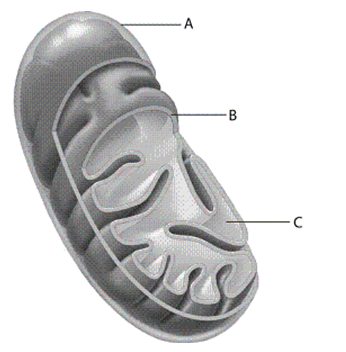
-In the accompanying figure, which letter(s) corresponds to the location where the citric acid cycle takes place?
A)A only
B)B only
C)C only
D)A and B
E)B and C
Question
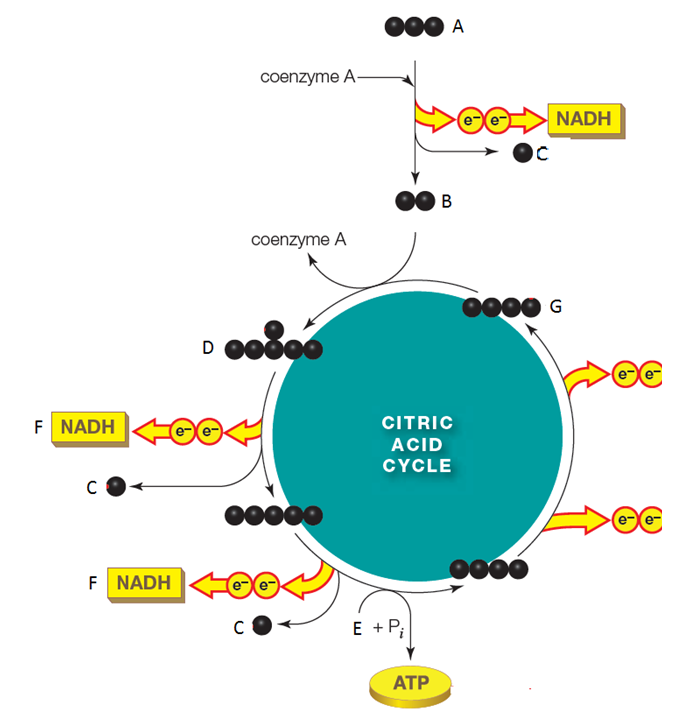
Match the process/substance in the citric acid cycle with the correct description.
-carbon leaves the cell in CO2
A)A
B)B
C)C
D)D
E)E
F)F
G)G
Question
Question
Question
Question
Question
Match the process/substance in the citric acid cycle with the correct description.
-acetyl-CoA
A)A
B)B
C)C
D)D
E)E
F)F
G)G
Question
Match the process/substance in the citric acid cycle with the correct description.
-the product of the final reaction, which is also a substrate in the first reaction
A)A
B)B
C)C
D)D
E)E
F)F
G)G
Question
Match the process/substance in the citric acid cycle with the correct description.
-pyruvate, produced by glycolysis
A)A
B)B
C)C
D)D
E)E
F)F
G)G
Question
Question
Question
Question
Question
Match the process/substance in the citric acid cycle with the correct description.
-ADP; substrate-level phosphorylation
A)A
B)B
C)C
D)D
E)E
F)F
G)G
Question
Match the process/substance in the citric acid cycle with the correct description.
-?electrons and hydrogen ions are transferred from an intermediate to coenzymes, which then become reduced
A)A
B)B
C)C
D)D
E)E
F)F
G)G
Question
Match the process/substance in the citric acid cycle with the correct description.
-citrate is formed by the addition of two carbon atoms to oxaloacetate
A)A
B)B
C)C
D)D
E)E
F)F
G)G
Question
Question
Question
Question
Question
Question
Question
Question
Question
Question
Question
Question
Question
Question
Question
Question
Question
Question
Question
Question
Question
Question
Question
Question
Question

Unlock Deck
Sign up to unlock the cards in this deck!
Unlock Deck
Unlock Deck
1/80

Play

Full screen (f)
Deck 7: Releasing Chemical Energy
1
The final steps of both alcoholic and lactate fermentation regenerate ____.
A)glucose
B)ADP
C)NAD+
D)NADH
E)electrons
A)glucose
B)ADP
C)NAD+
D)NADH
E)electrons
C
2
Alcoholic fermentation is used to produce ____.
A)beer and wine only
B)bread only
C)yogurt only
D)beer, wine, and bread
E)beer, wine, and yogurt
A)beer and wine only
B)bread only
C)yogurt only
D)beer, wine, and bread
E)beer, wine, and yogurt
D
3
Before photosynthesis evolved, ____ was a very small component of Earth's early atmosphere.
A)carbon dioxide
B)nitrogen
C)water
D)oxygen
E)argon
A)carbon dioxide
B)nitrogen
C)water
D)oxygen
E)argon
D
4
The transfer of a phosphate group (Pi) from an intermediate in the glycolysis pathway to ADP is an example of harvesting energy by ____.
A)electron transfer phosphorylation
B)acetyl-CoA formation
C)reduction
D)oxidation
E)substrate-level phosphorylation
A)electron transfer phosphorylation
B)acetyl-CoA formation
C)reduction
D)oxidation
E)substrate-level phosphorylation
Unlock Deck
Unlock for access to all 80 flashcards in this deck.
Unlock Deck
k this deck
5
During aerobic respiration, ____ is/are formed and detoxified by antioxidant molecules in the cell's cytoplasm.
A)free electrons
B)ethanol
C)reduced coenzymes
D)free radicals
E)carbon dioxide
A)free electrons
B)ethanol
C)reduced coenzymes
D)free radicals
E)carbon dioxide
Unlock Deck
Unlock for access to all 80 flashcards in this deck.
Unlock Deck
k this deck
6
What do NADH and FADH2 deliver to electron transfer chains?
A)electrons only
B)hydrogen ions only
C)oxygen
D)electrons and hydrogen ions
E)phosphate
A)electrons only
B)hydrogen ions only
C)oxygen
D)electrons and hydrogen ions
E)phosphate
Unlock Deck
Unlock for access to all 80 flashcards in this deck.
Unlock Deck
k this deck
7
In order for glycolysis to proceed ____.
A)glucose must enter the mitochondria
B)an input of energy from ATP is required
C)oxygen must be available
D)heat must be supplied
E)carbon dioxide must be available
A)glucose must enter the mitochondria
B)an input of energy from ATP is required
C)oxygen must be available
D)heat must be supplied
E)carbon dioxide must be available
Unlock Deck
Unlock for access to all 80 flashcards in this deck.
Unlock Deck
k this deck
8
The ultimate electron acceptor in aerobic respiration is ____.
A)NAD+
B)CO2
C)ADP
D)NADP+
E)O2
A)NAD+
B)CO2
C)ADP
D)NADP+
E)O2
Unlock Deck
Unlock for access to all 80 flashcards in this deck.
Unlock Deck
k this deck
9
Which equation summarizes the overall pathway of aerobic respiration?
A)CO2 + H2O + ATP → C6H12O6 + O2 + ADP + Pi
B)C6H12O6 + O2 + H2O → CO2 + ATP
C)C6H12O6 + O2 → CO2 + H2O + ATP
D)C6H12O6 + O2 + NADH → CO2 + H2O + ATP + NAD+
E)CO2 + H2O + light energy → C6H12O6 + O2
A)CO2 + H2O + ATP → C6H12O6 + O2 + ADP + Pi
B)C6H12O6 + O2 + H2O → CO2 + ATP
C)C6H12O6 + O2 → CO2 + H2O + ATP
D)C6H12O6 + O2 + NADH → CO2 + H2O + ATP + NAD+
E)CO2 + H2O + light energy → C6H12O6 + O2
Unlock Deck
Unlock for access to all 80 flashcards in this deck.
Unlock Deck
k this deck
10
Which pathway generates the most ATP?
A)fermentation
B)glycolysis
C)photosynthesis
D)citric acid cycle
E)electron transport chain
A)fermentation
B)glycolysis
C)photosynthesis
D)citric acid cycle
E)electron transport chain
Unlock Deck
Unlock for access to all 80 flashcards in this deck.
Unlock Deck
k this deck
11
Alcoholic fermentation by yeast produces ____.
A)CO2 only
B)ethanol only
C)lactate only
D)ethanol and CO2
E)ethanol and lactate
A)CO2 only
B)ethanol only
C)lactate only
D)ethanol and CO2
E)ethanol and lactate
Unlock Deck
Unlock for access to all 80 flashcards in this deck.
Unlock Deck
k this deck
12
Which cofactor is reduced during both glycolysis and the citric acid cycle?
A)NAD+
B)FAD+
C)FADH2
D)NADH
E)NADP+
A)NAD+
B)FAD+
C)FADH2
D)NADH
E)NADP+
Unlock Deck
Unlock for access to all 80 flashcards in this deck.
Unlock Deck
k this deck
13
During alcoholic fermentation, electrons and hydrogen ions are transferred from NADH to acetaldehyde, forming ____.
A)lactate and ethanol
B)NAD+ only
C)ethanol only
D)NAD+ and ethanol
E)lactate NAD+
A)lactate and ethanol
B)NAD+ only
C)ethanol only
D)NAD+ and ethanol
E)lactate NAD+
Unlock Deck
Unlock for access to all 80 flashcards in this deck.
Unlock Deck
k this deck
14
When intense exercise depletes oxygen in muscle cells faster than it can be replenished, these cells will produce ____ by ____.
A)ethyl alcohol; alcoholic fermentation
B)acetaldehyde; glycolysis
C)pyruvate; glycolysis
D)lactate; lactate fermentation
E)citrate; citric acid cycle
A)ethyl alcohol; alcoholic fermentation
B)acetaldehyde; glycolysis
C)pyruvate; glycolysis
D)lactate; lactate fermentation
E)citrate; citric acid cycle
Unlock Deck
Unlock for access to all 80 flashcards in this deck.
Unlock Deck
k this deck
15
In order to use the energy stored in sugars, cells must first convert it to energy stored in ____, which is synthesized during aerobic respiration.
A)carbon
B)oxygen
C)ATP
D)NAD+
E)carbon dioxide
A)carbon
B)oxygen
C)ATP
D)NAD+
E)carbon dioxide
Unlock Deck
Unlock for access to all 80 flashcards in this deck.
Unlock Deck
k this deck
16
Pyruvate is the end product of ____.
A)glycolysis
B)acetyl-CoA formation
C)fermentation
D)the citric acid cycle
E)the electron transport chain
A)glycolysis
B)acetyl-CoA formation
C)fermentation
D)the citric acid cycle
E)the electron transport chain
Unlock Deck
Unlock for access to all 80 flashcards in this deck.
Unlock Deck
k this deck
17
Why is pyruvate reduced to lactate during fermentation?
A)to produce more ATP only
B)to produce CO2 only
C)to regenerate NAD+ from NADH
D)to produce both ATP and CO2.
E)to produce ATP and regenerate NAD+ from NADH
A)to produce more ATP only
B)to produce CO2 only
C)to regenerate NAD+ from NADH
D)to produce both ATP and CO2.
E)to produce ATP and regenerate NAD+ from NADH
Unlock Deck
Unlock for access to all 80 flashcards in this deck.
Unlock Deck
k this deck
18
NADH transfers electrons to oxygen during ____.
A)glycolysis
B)acetyl-CoA formation
C)the citric acid cycle
D)electron transfer phosphorylation
E)substrate-level phosphorylation
A)glycolysis
B)acetyl-CoA formation
C)the citric acid cycle
D)electron transfer phosphorylation
E)substrate-level phosphorylation
Unlock Deck
Unlock for access to all 80 flashcards in this deck.
Unlock Deck
k this deck
19
During which phase(s) of aerobic respiration is ATP produced directly by substrate-level phosphorylation?
A)glycolysis only
B)citric acid cycle only
C)electron transfer chain only
D)the citric acid cycle and glycolysis
E)glycolysis, the electron transfer chain, and the citric acid cycle
A)glycolysis only
B)citric acid cycle only
C)electron transfer chain only
D)the citric acid cycle and glycolysis
E)glycolysis, the electron transfer chain, and the citric acid cycle
Unlock Deck
Unlock for access to all 80 flashcards in this deck.
Unlock Deck
k this deck
20
The citric acid cycle takes place in the ____.
A)ribosome
B)cytoplasm
C)nucleus
D)mitochondrion
E)chloroplast
A)ribosome
B)cytoplasm
C)nucleus
D)mitochondrion
E)chloroplast
Unlock Deck
Unlock for access to all 80 flashcards in this deck.
Unlock Deck
k this deck
21
When O2 accepts electrons in aerobic respiration, it is converted to ____.
A)O3
B)CO2
C)OH−
D)H2O
E)CO
A)O3
B)CO2
C)OH−
D)H2O
E)CO
Unlock Deck
Unlock for access to all 80 flashcards in this deck.
Unlock Deck
k this deck
22
How many rounds of the citric acid cycle does it take to harvest the energy from one molecule of glucose?
A)one
B)two
C)three
D)four
E)six
A)one
B)two
C)three
D)four
E)six
Unlock Deck
Unlock for access to all 80 flashcards in this deck.
Unlock Deck
k this deck
23
When fats are broken down as energy sources, the fatty acids are converted to ____ and enter ____.
A)pyruvate; glycolysis
B)acetyl-CoA; substrate-level phosphorylation
C)PGAL; the citric acid cycle
D)acetyl-CoA; the citric acid cycle
E)NADH and FADH2; the electron transfer chain
A)pyruvate; glycolysis
B)acetyl-CoA; substrate-level phosphorylation
C)PGAL; the citric acid cycle
D)acetyl-CoA; the citric acid cycle
E)NADH and FADH2; the electron transfer chain
Unlock Deck
Unlock for access to all 80 flashcards in this deck.
Unlock Deck
k this deck
24
Carbon dioxide, water, sugar, and oxygen cycle through the world via ____ (energy capture) and ____ (energy release).
A)aerobic respiration; photosynthesis
B)photosynthesis; aerobic respiration
C)substrate-level phosphorylation; electron transfer phosphorylation
D)electron transfer phosphorylation; substrate-level phosphorylation
E)aerobic respiration; anaerobic respiration
A)aerobic respiration; photosynthesis
B)photosynthesis; aerobic respiration
C)substrate-level phosphorylation; electron transfer phosphorylation
D)electron transfer phosphorylation; substrate-level phosphorylation
E)aerobic respiration; anaerobic respiration
Unlock Deck
Unlock for access to all 80 flashcards in this deck.
Unlock Deck
k this deck
25
What prevents the first reactions of glycolysis from running in reverse, thereby building and metabolizing glucose at the same time?
A)Free radicals are produced by glycolysis reactions that run in reverse; therefore, cells use antioxidants to inhibit these reactions.
B)The electron transfer phosphorylation required to generate ATP during glycolysis cannot run in reverse, because the coenzymes they require are only found in the mitochondria.
C)The glycolysis reactions are unable to run in reverse; instead, excess energy is stored as fat, not carbohydrates.
D)During times of excess blood glucose, the hormone insulin is required to stimulate the reverse reaction to produce glycogen.
E)Due to the energy input required for glycolysis to proceed, the reverse reaction would require too much energy to run spontaneously.
A)Free radicals are produced by glycolysis reactions that run in reverse; therefore, cells use antioxidants to inhibit these reactions.
B)The electron transfer phosphorylation required to generate ATP during glycolysis cannot run in reverse, because the coenzymes they require are only found in the mitochondria.
C)The glycolysis reactions are unable to run in reverse; instead, excess energy is stored as fat, not carbohydrates.
D)During times of excess blood glucose, the hormone insulin is required to stimulate the reverse reaction to produce glycogen.
E)Due to the energy input required for glycolysis to proceed, the reverse reaction would require too much energy to run spontaneously.
Unlock Deck
Unlock for access to all 80 flashcards in this deck.
Unlock Deck
k this deck
26
During aerobic respiration, glucose becomes ____ and coenzymes become ____.
A)oxidized; reduced
B)reduced; oxidized
C)regenerated; depleted
D)depleted; regenerated
E)phosphorylated; depleted
A)oxidized; reduced
B)reduced; oxidized
C)regenerated; depleted
D)depleted; regenerated
E)phosphorylated; depleted
Unlock Deck
Unlock for access to all 80 flashcards in this deck.
Unlock Deck
k this deck
27
What occurs when glucose molecules are broken apart during cellular respiration?
A)The heat produced is used to drive biological reactions.
B)Oxygen is released and used as an energy source.
C)The energy released is used in ATP synthesis.
D)ATP is converted into ADP.
E)ADP is released as a waste product.
A)The heat produced is used to drive biological reactions.
B)Oxygen is released and used as an energy source.
C)The energy released is used in ATP synthesis.
D)ATP is converted into ADP.
E)ADP is released as a waste product.
Unlock Deck
Unlock for access to all 80 flashcards in this deck.
Unlock Deck
k this deck
28
The flow of electrons through the electron transfer chain generates a(n) ____ gradient that drives ____ by ____.
A)oxidative; oxidation of coenzymes; redox reactions
B)hydrogen ion; ATP synthesis; electron transfer phosphorylation
C)electron; ATP synthesis; electron transfer phosphorylation
D)hydrogen ion; regeneration of coenzymes; substrate-level phosphorylation
E)electron; ATP synthesis; redox reactions
A)oxidative; oxidation of coenzymes; redox reactions
B)hydrogen ion; ATP synthesis; electron transfer phosphorylation
C)electron; ATP synthesis; electron transfer phosphorylation
D)hydrogen ion; regeneration of coenzymes; substrate-level phosphorylation
E)electron; ATP synthesis; redox reactions
Unlock Deck
Unlock for access to all 80 flashcards in this deck.
Unlock Deck
k this deck
29
Glycolysis converts glucose to ____, with a net yield of ____ ATP and ____ NADH.
A)two pyruvate molecules; 2; 2
B)one pyruvate molecule; 4; 2
C)glycogen; 2; 4
D)ATP; 36; 10
E)acetyl-CoA; 2; 2
A)two pyruvate molecules; 2; 2
B)one pyruvate molecule; 4; 2
C)glycogen; 2; 4
D)ATP; 36; 10
E)acetyl-CoA; 2; 2
Unlock Deck
Unlock for access to all 80 flashcards in this deck.
Unlock Deck
k this deck
30
When protein molecules are used as energy sources, the amino groups of the amino acids are ____ and the carbon backbones enter ____.
A)excreted as free amino groups (-NH2); glycolysis
B)build new proteins; the electron transfer chain
C)excreted as ammonia (NH3); the citric acid cycle
D)used to synthesize nucleic acids; glycolysis
E)converted to glycogen; citric acid cycle
A)excreted as free amino groups (-NH2); glycolysis
B)build new proteins; the electron transfer chain
C)excreted as ammonia (NH3); the citric acid cycle
D)used to synthesize nucleic acids; glycolysis
E)converted to glycogen; citric acid cycle
Unlock Deck
Unlock for access to all 80 flashcards in this deck.
Unlock Deck
k this deck
31
Electron flow through the electron transport chain drives the flow of hydrogen ions from the ____ to the ____.
A)mitochondrial matrix; mitochondrial intermembrane space
B)cytoplasm; mitochondrial intermembrane space
C)mitochondrial matrix; cytoplasm
D)cytoplasm; mitochondrial matrix
E)mitochondrial intermembrane; mitochondrial matrix
A)mitochondrial matrix; mitochondrial intermembrane space
B)cytoplasm; mitochondrial intermembrane space
C)mitochondrial matrix; cytoplasm
D)cytoplasm; mitochondrial matrix
E)mitochondrial intermembrane; mitochondrial matrix
Unlock Deck
Unlock for access to all 80 flashcards in this deck.
Unlock Deck
k this deck
32
What is the correct operational sequence of the processes of aerobic respiration?
I. glycolysis
II. electron transfer
III. citric acid cycle
IV. acetyl-CoA formation
A)I ? II ? III ? IV
B)II ? IV ? I ? III
C)IV ? III ? I ? II
D)II ? III ? IV ? I
E)I ? IV ? III ? II
I. glycolysis
II. electron transfer
III. citric acid cycle
IV. acetyl-CoA formation
A)I ? II ? III ? IV
B)II ? IV ? I ? III
C)IV ? III ? I ? II
D)II ? III ? IV ? I
E)I ? IV ? III ? II
Unlock Deck
Unlock for access to all 80 flashcards in this deck.
Unlock Deck
k this deck
33
During electron transfer phosphorylation, ____ ions accumulate in the intermembrane space of the mitochondria.
A)calcium
B)hydrogen
C)oxygen
D)phosphorus
E)sodium
A)calcium
B)hydrogen
C)oxygen
D)phosphorus
E)sodium
Unlock Deck
Unlock for access to all 80 flashcards in this deck.
Unlock Deck
k this deck
34
Of the six carbons in a molecule of glucose, how many are converted to CO2 during aerobic respiration?
A)one
B)two
C)three
D)four
E)six
A)one
B)two
C)three
D)four
E)six
Unlock Deck
Unlock for access to all 80 flashcards in this deck.
Unlock Deck
k this deck
35
The first aerobic organisms could live in the presence of oxygen without harm due to the presence of ____.
A)chloroplasts
B)pigments
C)hexokinase
D)mitochondria
E)antioxidants
A)chloroplasts
B)pigments
C)hexokinase
D)mitochondria
E)antioxidants
Unlock Deck
Unlock for access to all 80 flashcards in this deck.
Unlock Deck
k this deck
36
During glycolysis, glucose is first phosphorylated twice, and then split into two three-carbon compounds called ____.
A)phosphoglyceraldehyde (PGAL)
B)pyruvate
C)acetyl CoA
D)lactate
E)acetaldehyde
A)phosphoglyceraldehyde (PGAL)
B)pyruvate
C)acetyl CoA
D)lactate
E)acetaldehyde
Unlock Deck
Unlock for access to all 80 flashcards in this deck.
Unlock Deck
k this deck
37
Which compound is associated with aerobic respiration pathways, but not anaerobic pathways?
A)pyruvate
B)lactic acid
C)ethanol
D)oxaloacetate
E)phosphoglyceraldehyde (PGAL)
A)pyruvate
B)lactic acid
C)ethanol
D)oxaloacetate
E)phosphoglyceraldehyde (PGAL)
Unlock Deck
Unlock for access to all 80 flashcards in this deck.
Unlock Deck
k this deck
38
Glucose is converted into glycogen primarily in ____.
A)brain cells only
B)liver cells only
C)muscle cells only
D)brain and muscle cells
E)liver and muscle cells
A)brain cells only
B)liver cells only
C)muscle cells only
D)brain and muscle cells
E)liver and muscle cells
Unlock Deck
Unlock for access to all 80 flashcards in this deck.
Unlock Deck
k this deck
39
The ultimate source of energy for living organisms is ____.
A)the citric acid cycle
B)fossil fuels
C)the sun
D)oxygen
E)aerobic respiration
A)the citric acid cycle
B)fossil fuels
C)the sun
D)oxygen
E)aerobic respiration
Unlock Deck
Unlock for access to all 80 flashcards in this deck.
Unlock Deck
k this deck
40
-In the accompanying figure, which letter(s) corresponds to the location where the citric acid cycle takes place?
A)A only
B)B only
C)C only
D)A and B
E)B and C
Unlock Deck
Unlock for access to all 80 flashcards in this deck.
Unlock Deck
k this deck
41
Match the process/substance in the citric acid cycle with the correct description.
-carbon leaves the cell in CO2
A)A
B)B
C)C
D)D
E)E
F)F
G)G
Unlock Deck
Unlock for access to all 80 flashcards in this deck.
Unlock Deck
k this deck
42
Substrate level phosphorylation ____.
A)involves the direct transfer of a phosphate group from a substrate
B)requires the presence of oxygen
C)requires the presence of NADH
D)produces most of the ATPs yield during aerobic respiration
E)involves the generation of a hydrogen ion gradient to produce ATP
A)involves the direct transfer of a phosphate group from a substrate
B)requires the presence of oxygen
C)requires the presence of NADH
D)produces most of the ATPs yield during aerobic respiration
E)involves the generation of a hydrogen ion gradient to produce ATP
Unlock Deck
Unlock for access to all 80 flashcards in this deck.
Unlock Deck
k this deck
43
Match the cellular respiration process with the correct description. Some choices may be used more than once.
a.fermentation
b.aerobic respiration
starts in the cytoplasm and ends in the mitochondrion
a.fermentation
b.aerobic respiration
starts in the cytoplasm and ends in the mitochondrion
Unlock Deck
Unlock for access to all 80 flashcards in this deck.
Unlock Deck
k this deck
44
Aerobic organisms use ____ as the final electron acceptor in electron transport phosphorylation.
A)hydrogen
B)carbon
C)O2
D)H2O
E)NAD+
A)hydrogen
B)carbon
C)O2
D)H2O
E)NAD+
Unlock Deck
Unlock for access to all 80 flashcards in this deck.
Unlock Deck
k this deck
45
The last intermediate produced in the citric acid cycle is ____, which is also a substrate for the first reaction in this pathway, making the citric acid cycle a(n) ____ metabolic pathway.
A)pyruvate; linear
B)acetyl CoA; catalyzed
C)fructose bisphosphate; aerobic
D)oxaloacetate; cyclic
E)citrate; anaerobic
A)pyruvate; linear
B)acetyl CoA; catalyzed
C)fructose bisphosphate; aerobic
D)oxaloacetate; cyclic
E)citrate; anaerobic
Unlock Deck
Unlock for access to all 80 flashcards in this deck.
Unlock Deck
k this deck
46
Match the process/substance in the citric acid cycle with the correct description.
-acetyl-CoA
A)A
B)B
C)C
D)D
E)E
F)F
G)G
Unlock Deck
Unlock for access to all 80 flashcards in this deck.
Unlock Deck
k this deck
47
Match the process/substance in the citric acid cycle with the correct description.
-the product of the final reaction, which is also a substrate in the first reaction
A)A
B)B
C)C
D)D
E)E
F)F
G)G
Unlock Deck
Unlock for access to all 80 flashcards in this deck.
Unlock Deck
k this deck
48
Match the process/substance in the citric acid cycle with the correct description.
-pyruvate, produced by glycolysis
A)A
B)B
C)C
D)D
E)E
F)F
G)G
Unlock Deck
Unlock for access to all 80 flashcards in this deck.
Unlock Deck
k this deck
49
Match the following processes or items with their correct cellular location. Some answers may be used more than once.
a.cytoplasm
b.mitochondrial matrix
c.mitochondrial intermembrane space
d.mitochondrial inner membrane
glucose enters this space through a glucose transporter
a.cytoplasm
b.mitochondrial matrix
c.mitochondrial intermembrane space
d.mitochondrial inner membrane
glucose enters this space through a glucose transporter
Unlock Deck
Unlock for access to all 80 flashcards in this deck.
Unlock Deck
k this deck
50
Match the following processes or items with their correct cellular location. Some answers may be used more than once.
a.cytoplasm
b.mitochondrial matrix
c.mitochondrial intermembrane space
d.mitochondrial inner membrane
fermentation
a.cytoplasm
b.mitochondrial matrix
c.mitochondrial intermembrane space
d.mitochondrial inner membrane
fermentation
Unlock Deck
Unlock for access to all 80 flashcards in this deck.
Unlock Deck
k this deck
51
When blood glucose levels decrease (for example, between meals), which energy reserves are tapped first?
A)glycogen
B)fats
C)proteins
D)ethanol
E)amino acids
A)glycogen
B)fats
C)proteins
D)ethanol
E)amino acids
Unlock Deck
Unlock for access to all 80 flashcards in this deck.
Unlock Deck
k this deck
52
Match the cellular respiration process with the correct description. Some choices may be used more than once.
a.fermentation
b.aerobic respiration
starts and ends in the cytoplasm
a.fermentation
b.aerobic respiration
starts and ends in the cytoplasm
Unlock Deck
Unlock for access to all 80 flashcards in this deck.
Unlock Deck
k this deck
53
Match the process/substance in the citric acid cycle with the correct description.
-ADP; substrate-level phosphorylation
A)A
B)B
C)C
D)D
E)E
F)F
G)G
Unlock Deck
Unlock for access to all 80 flashcards in this deck.
Unlock Deck
k this deck
54
Match the process/substance in the citric acid cycle with the correct description.
-?electrons and hydrogen ions are transferred from an intermediate to coenzymes, which then become reduced
A)A
B)B
C)C
D)D
E)E
F)F
G)G
Unlock Deck
Unlock for access to all 80 flashcards in this deck.
Unlock Deck
k this deck
55
Match the process/substance in the citric acid cycle with the correct description.
-citrate is formed by the addition of two carbon atoms to oxaloacetate
A)A
B)B
C)C
D)D
E)E
F)F
G)G
Unlock Deck
Unlock for access to all 80 flashcards in this deck.
Unlock Deck
k this deck
56
When hydrogen ions accumulate in the mitochondrial intermembrane space, what prevents them from moving back into the mitochondrial matrix without flowing through ATP synthase?
A)The hydrophilic environment of the mitochondrial matrix repels hydrogen ions.
B)The hydrophobic environment of the mitochondrial matrix repels hydrogen ions.
C)Hydrogen ions combine with oxygen gas to form water, which cannot cross the lipid bilayer of the mitochondrial membrane.
D)Hydrogen ions cannot cross the lipid bilayer of the mitochondrial membrane.
E)Entering the matrix would require the ions to move against their concentration gradient.
A)The hydrophilic environment of the mitochondrial matrix repels hydrogen ions.
B)The hydrophobic environment of the mitochondrial matrix repels hydrogen ions.
C)Hydrogen ions combine with oxygen gas to form water, which cannot cross the lipid bilayer of the mitochondrial membrane.
D)Hydrogen ions cannot cross the lipid bilayer of the mitochondrial membrane.
E)Entering the matrix would require the ions to move against their concentration gradient.
Unlock Deck
Unlock for access to all 80 flashcards in this deck.
Unlock Deck
k this deck
57
Match the cellular respiration process with the correct description. Some choices may be used more than once.
a.fermentation
b.aerobic respiration
does not require oxygen
a.fermentation
b.aerobic respiration
does not require oxygen
Unlock Deck
Unlock for access to all 80 flashcards in this deck.
Unlock Deck
k this deck
58
Glycolysis depends on a continuous supply of ____.
A)oxygen
B)pyruvate
C)NAD+
D)NADH
E)H2O
A)oxygen
B)pyruvate
C)NAD+
D)NADH
E)H2O
Unlock Deck
Unlock for access to all 80 flashcards in this deck.
Unlock Deck
k this deck
59
How many ATP molecules (net yield) are produced per molecule of glucose during glycolysis?
A)1
B)2
C)4
D)36
E)38
A)1
B)2
C)4
D)36
E)38
Unlock Deck
Unlock for access to all 80 flashcards in this deck.
Unlock Deck
k this deck
60
The breakdown of glucose in glycolysis and the citric acid cycle yields twelve ____ coenzymes, which will deliver electrons to the electron transfer chain to drive ATP synthesis by ____.
A)reduced; hexokinase
B)reduced; ATP synthase
C)oxidized; hexokinase
D)oxidized; ATP synthase
E)phosphorylated; electron transfer phosphorylation
A)reduced; hexokinase
B)reduced; ATP synthase
C)oxidized; hexokinase
D)oxidized; ATP synthase
E)phosphorylated; electron transfer phosphorylation
Unlock Deck
Unlock for access to all 80 flashcards in this deck.
Unlock Deck
k this deck
61
How are mitochondria passed on from parents to offspring? Describe the process of mitochondrial donation, which is used to prevent children from inheriting mitochondrial disorders.
Unlock Deck
Unlock for access to all 80 flashcards in this deck.
Unlock Deck
k this deck
62
Match the following processes or items with their correct cellular location. Some answers may be used more than once.
a.cytoplasm
b.mitochondrial matrix
c.mitochondrial intermembrane space
d.mitochondrial inner membrane
glycolysis
a.cytoplasm
b.mitochondrial matrix
c.mitochondrial intermembrane space
d.mitochondrial inner membrane
glycolysis
Unlock Deck
Unlock for access to all 80 flashcards in this deck.
Unlock Deck
k this deck
63
Match the cellular respiration process to the correct description. Some answers may be used more than once.
a.alcoholic fermentation only
b.lactate fermentation only
c.both alcoholic and lactate fermentation
d.neither alcoholic nor lactate fermentation
used by some hibernating turtles that become trapped under ice
a.alcoholic fermentation only
b.lactate fermentation only
c.both alcoholic and lactate fermentation
d.neither alcoholic nor lactate fermentation
used by some hibernating turtles that become trapped under ice
Unlock Deck
Unlock for access to all 80 flashcards in this deck.
Unlock Deck
k this deck
64
How did oxygen gas accumulate in Earth's atmosphere following the evolution of photosynthesis?
Unlock Deck
Unlock for access to all 80 flashcards in this deck.
Unlock Deck
k this deck
65
How are photosynthesis and aerobic respiration related?
Unlock Deck
Unlock for access to all 80 flashcards in this deck.
Unlock Deck
k this deck
66
Match the cellular respiration process to the correct description. Some answers may be used more than once.
a.alcoholic fermentation only
b.lactate fermentation only
c.both alcoholic and lactate fermentation
d.neither alcoholic nor lactate fermentation
yogurt production
a.alcoholic fermentation only
b.lactate fermentation only
c.both alcoholic and lactate fermentation
d.neither alcoholic nor lactate fermentation
yogurt production
Unlock Deck
Unlock for access to all 80 flashcards in this deck.
Unlock Deck
k this deck
67
Match the cellular respiration process to the correct description. Some answers may be used more than once.
a.alcoholic fermentation only
b.lactate fermentation only
c.both alcoholic and lactate fermentation
d.neither alcoholic nor lactate fermentation
does not produce CO2
a.alcoholic fermentation only
b.lactate fermentation only
c.both alcoholic and lactate fermentation
d.neither alcoholic nor lactate fermentation
does not produce CO2
Unlock Deck
Unlock for access to all 80 flashcards in this deck.
Unlock Deck
k this deck
68
Match the following processes or items with their correct cellular location. Some answers may be used more than once.
a.cytoplasm
b.mitochondrial matrix
c.mitochondrial intermembrane space
d.mitochondrial inner membrane
citric acid cycle
a.cytoplasm
b.mitochondrial matrix
c.mitochondrial intermembrane space
d.mitochondrial inner membrane
citric acid cycle
Unlock Deck
Unlock for access to all 80 flashcards in this deck.
Unlock Deck
k this deck
69
Outline the steps in the formation of acetyl-CoA.
Unlock Deck
Unlock for access to all 80 flashcards in this deck.
Unlock Deck
k this deck
70
Match the following processes or items with their correct cellular location. Some answers may be used more than once.
a.cytoplasm
b.mitochondrial matrix
c.mitochondrial intermembrane space
d.mitochondrial inner membrane
ATP synthases
a.cytoplasm
b.mitochondrial matrix
c.mitochondrial intermembrane space
d.mitochondrial inner membrane
ATP synthases
Unlock Deck
Unlock for access to all 80 flashcards in this deck.
Unlock Deck
k this deck
71
Match the following processes or items with their correct cellular location. Some answers may be used more than once.
a.cytoplasm
b.mitochondrial matrix
c.mitochondrial intermembrane space
d.mitochondrial inner membrane
the destination of hydrogen ions that are pumped from the mitochondrial matrix, driven by electron flow
a.cytoplasm
b.mitochondrial matrix
c.mitochondrial intermembrane space
d.mitochondrial inner membrane
the destination of hydrogen ions that are pumped from the mitochondrial matrix, driven by electron flow
Unlock Deck
Unlock for access to all 80 flashcards in this deck.
Unlock Deck
k this deck
72
Match the cellular respiration process to the correct description. Some answers may be used more than once.
a.alcoholic fermentation only
b.lactate fermentation only
c.both alcoholic and lactate fermentation
d.neither alcoholic nor lactate fermentation
uses pyruvate as a substrate
a.alcoholic fermentation only
b.lactate fermentation only
c.both alcoholic and lactate fermentation
d.neither alcoholic nor lactate fermentation
uses pyruvate as a substrate
Unlock Deck
Unlock for access to all 80 flashcards in this deck.
Unlock Deck
k this deck
73
Match the cellular respiration process to the correct description. Some answers may be used more than once.
a.alcoholic fermentation only
b.lactate fermentation only
c.both alcoholic and lactate fermentation
d.neither alcoholic nor lactate fermentation
aerobic respiration
a.alcoholic fermentation only
b.lactate fermentation only
c.both alcoholic and lactate fermentation
d.neither alcoholic nor lactate fermentation
aerobic respiration
Unlock Deck
Unlock for access to all 80 flashcards in this deck.
Unlock Deck
k this deck
74
Match the cellular respiration process to the correct description. Some answers may be used more than once.
a.alcoholic fermentation only
b.lactate fermentation only
c.both alcoholic and lactate fermentation
d.neither alcoholic nor lactate fermentation
produces less ATP than aerobic respiration
a.alcoholic fermentation only
b.lactate fermentation only
c.both alcoholic and lactate fermentation
d.neither alcoholic nor lactate fermentation
produces less ATP than aerobic respiration
Unlock Deck
Unlock for access to all 80 flashcards in this deck.
Unlock Deck
k this deck
75
Which product(s) are generated during glycolysis and the citric acid cycle that is/are needed for electron transfer phosphorylation?
Unlock Deck
Unlock for access to all 80 flashcards in this deck.
Unlock Deck
k this deck
76
Outline the steps of glycolysis.
Unlock Deck
Unlock for access to all 80 flashcards in this deck.
Unlock Deck
k this deck
77
Match the cellular respiration process to the correct description. Some answers may be used more than once.
a.alcoholic fermentation only
b.lactate fermentation only
c.both alcoholic and lactate fermentation
d.neither alcoholic nor lactate fermentation
anaerobic respiration
a.alcoholic fermentation only
b.lactate fermentation only
c.both alcoholic and lactate fermentation
d.neither alcoholic nor lactate fermentation
anaerobic respiration
Unlock Deck
Unlock for access to all 80 flashcards in this deck.
Unlock Deck
k this deck
78
Why is the hydrogen ion gradient of the electron transfer chain important for energy production?
Unlock Deck
Unlock for access to all 80 flashcards in this deck.
Unlock Deck
k this deck
79
Why are fats a richer source of energy than carbohydrates?
Unlock Deck
Unlock for access to all 80 flashcards in this deck.
Unlock Deck
k this deck
80
What causes an accumulation of free radicals that can cause cellular damage, and ultimately, harm the individual?
Unlock Deck
Unlock for access to all 80 flashcards in this deck.
Unlock Deck
k this deck
Unlock Deck
Unlock for access to all 80 flashcards in this deck.






