







 Chat with AI

Deck 12: Meiosis and Sexual Reproduction
Full screen (f)

Question
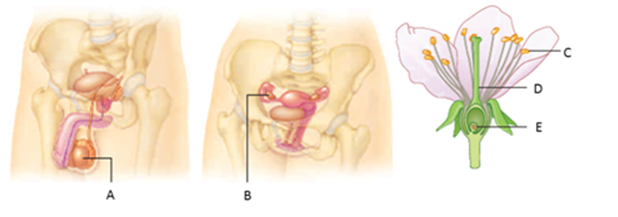
-Identify the locations in the accompanying figure where sperm are produced.
A)A only
B)B only
C)C only
D)B and D
E)A and C

Question
Question
Question
Question
Question
Question
Question
Question
Question
Question
Question
Question
Question
Question
Question
Question
Question
Question
Question
Question
Question
Question
Question
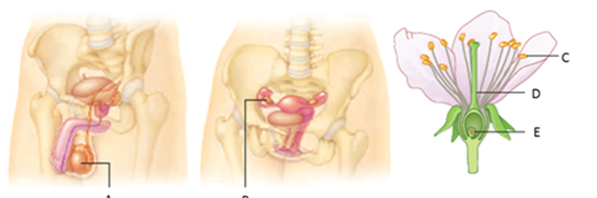
-Identify the locations in the accompanying figure where eggs (ova) are produced.
A)A and D
B)B and C
C)A and B
D)B and D
E)B and E
Question
Question
Question
Question
Question
Question
Question
Question
Question
Question
Question
Question
Question
Question
Question
Question
Question
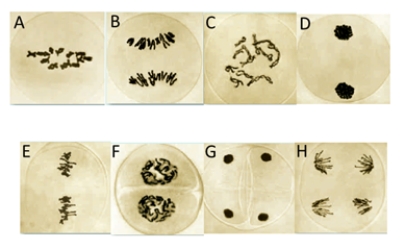
Use the accompanying figure to match the cells in the figure to the correct phase in meiosis. The top figure panel is phases of meiosis I; the bottom panel is phases of meiosis II.
-anaphase I
A)A
B)B
C)C
D)D
E)E
F)F
G)G
H)H
Question
Use the accompanying figure to match the cells in the figure to the correct phase in meiosis. The top figure panel is phases of meiosis I; the bottom panel is phases of meiosis II.
-telophase I?
A)A
B)B
C)C
D)D
E)E
F)F
G)G
H)H
Question
Question
Question
Question
Question
Use the accompanying figure to match the cells in the figure to the correct phase in meiosis. The top figure panel is phases of meiosis I; the bottom panel is phases of meiosis II.
-metaphase II?
A)A
B)B
C)C
D)D
E)E
F)F
G)G
H)H
Question
Use the accompanying figure to match the cells in the figure to the correct phase in meiosis. The top figure panel is phases of meiosis I; the bottom panel is phases of meiosis II.
-metaphase I?
A)A
B)B
C)C
D)D
E)E
F)F
G)G
H)H
Question
Question
Use the accompanying figure to match the cells in the figure to the correct phase in meiosis. The top figure panel is phases of meiosis I; the bottom panel is phases of meiosis II.
-anaphase II?
A)A
B)B
C)C
D)D
E)E
F)F
G)G
H)H
Question
Use the accompanying figure to match the cells in the figure to the correct phase in meiosis. The top figure panel is phases of meiosis I; the bottom panel is phases of meiosis II.
-prophase I
A)A
B)B
C)C
D)D
E)E
F)F
G)G
H)H
Question
Use the accompanying figure to match the cells in the figure to the correct phase in meiosis. The top figure panel is phases of meiosis I; the bottom panel is phases of meiosis II.
-telophase II
A)A
B)B
C)C
D)D
E)E
F)F
G)G
H)H
Question
Question
Question
Question
Question
Question
Question
Question
Use the accompanying figure to match the cells in the figure to the correct phase in meiosis. The top figure panel is phases of meiosis I; the bottom panel is phases of meiosis II.
-prophase II
A)A
B)B
C)C
D)D
E)E
F)F
G)G
H)H
Question
Question
Question
Question
Question
Question
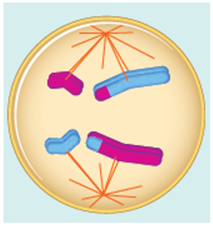
-The cell in the diagram below is in anaphase I, not anaphase II. How do we know this?
Question
Question

Unlock Deck
Sign up to unlock the cards in this deck!
Unlock Deck
Unlock Deck
1/68

Play

Full screen (f)
Deck 12: Meiosis and Sexual Reproduction
1
-Identify the locations in the accompanying figure where sperm are produced.
A)A only
B)B only
C)C only
D)B and D
E)A and C
A and C
2
Which cell is diploid?
A)zygote
B)germ cell
C)egg
D)sperm
E)gamete
A)zygote
B)germ cell
C)egg
D)sperm
E)gamete
A
3
A child more strongly resembles the maternal grandmother than the maternal grandfather. One explanation could be due to random chromosome alignment during which stage of the mother's gamete formation?
A)prophase I
B)metaphase I
C)telophase I
D)metaphase II
E)anaphase II
A)prophase I
B)metaphase I
C)telophase I
D)metaphase II
E)anaphase II
B
4
Dogs have a diploid chromosome number of 78. How many chromosomes do their gametes have?
A)26
B)39
C)78
D)156
E)234
A)26
B)39
C)78
D)156
E)234
Unlock Deck
Unlock for access to all 68 flashcards in this deck.
Unlock Deck
k this deck
5
Asexual reproduction is/was evolutionarily advantageous ____.
A)for organisms that participate in predator/prey relationships
B)only on ancient Earth, as it is not currently observed in any animal species
C)in favorable, unchanging environments
D)in constantly changing environments
E)only when organisms can also reproduce sexually
A)for organisms that participate in predator/prey relationships
B)only on ancient Earth, as it is not currently observed in any animal species
C)in favorable, unchanging environments
D)in constantly changing environments
E)only when organisms can also reproduce sexually
Unlock Deck
Unlock for access to all 68 flashcards in this deck.
Unlock Deck
k this deck
6
During meiosis II, ____.
A)cytokinesis results in the formation of a total of two cells
B)sister chromatids separate
C)homologous chromosomes pair up
D)homologous chromosomes separate
E)sister chromatids exchange parts
A)cytokinesis results in the formation of a total of two cells
B)sister chromatids separate
C)homologous chromosomes pair up
D)homologous chromosomes separate
E)sister chromatids exchange parts
Unlock Deck
Unlock for access to all 68 flashcards in this deck.
Unlock Deck
k this deck
7
The main evolutionary advantage of sexual over asexual reproduction is that sexual reproduction produces _____.
A)more offspring per individual
B)more variation among offspring
C)identical offspring
D)offspring in a method that requires less energy from the parents
E)more specialized offspring
A)more offspring per individual
B)more variation among offspring
C)identical offspring
D)offspring in a method that requires less energy from the parents
E)more specialized offspring
Unlock Deck
Unlock for access to all 68 flashcards in this deck.
Unlock Deck
k this deck
8
The stage of meiosis that makes descendant cells haploid is ____.
A)prophase I
B)prophase II
C)anaphase I
D)anaphase II
E)metaphase I
A)prophase I
B)prophase II
C)anaphase I
D)anaphase II
E)metaphase I
Unlock Deck
Unlock for access to all 68 flashcards in this deck.
Unlock Deck
k this deck
9
Which statement correctly describes chromosome segregation during meiosis?
A)Each new nucleus contains a different number of chromosomes.
B)Homologous chromosomes separate during anaphase II.
C)Maternal and paternal chromosomes segregate randomly.
D)Two nuclei contain only maternal chromosomes and the other two nuclei contain only paternal chromosomes.
E)Each new nucleus contains the maternal and paternal chromosome for each homologous pair.
A)Each new nucleus contains a different number of chromosomes.
B)Homologous chromosomes separate during anaphase II.
C)Maternal and paternal chromosomes segregate randomly.
D)Two nuclei contain only maternal chromosomes and the other two nuclei contain only paternal chromosomes.
E)Each new nucleus contains the maternal and paternal chromosome for each homologous pair.
Unlock Deck
Unlock for access to all 68 flashcards in this deck.
Unlock Deck
k this deck
10
Compare mitosis and meiosis. Which statement is accurate?
A)Both processes are forms of asexual reproduction.
B)Both processes result in four cells.
C)Crossing over occurs in both.
D)Chromatids are present only in mitosis.
E)Meiosis II resembles mitosis.
A)Both processes are forms of asexual reproduction.
B)Both processes result in four cells.
C)Crossing over occurs in both.
D)Chromatids are present only in mitosis.
E)Meiosis II resembles mitosis.
Unlock Deck
Unlock for access to all 68 flashcards in this deck.
Unlock Deck
k this deck
11
Meiosis is necessary for _____.
A)asexual reproduction of single-celled eukaryotes
B)growth in multicelled species
C)sexual reproduction
D)asexual reproduction of single-celled eukaryotes
E)cellular repair in multicelled species
A)asexual reproduction of single-celled eukaryotes
B)growth in multicelled species
C)sexual reproduction
D)asexual reproduction of single-celled eukaryotes
E)cellular repair in multicelled species
Unlock Deck
Unlock for access to all 68 flashcards in this deck.
Unlock Deck
k this deck
12
Crossing over is one of the most important events in meiosis because ____.
A)it produces new combinations of alleles on chromosomes
B)homologous chromosomes must be separated into different daughter cells
C)the number of chromosomes allotted to each daughter cell must be halved
D)homologous chromatids must be separated into different daughter cells
E)it decreases genetic diversity
A)it produces new combinations of alleles on chromosomes
B)homologous chromosomes must be separated into different daughter cells
C)the number of chromosomes allotted to each daughter cell must be halved
D)homologous chromatids must be separated into different daughter cells
E)it decreases genetic diversity
Unlock Deck
Unlock for access to all 68 flashcards in this deck.
Unlock Deck
k this deck
13
The process of crossing over ____.
A)generally results in binary fission
B)involves nucleoli
C)involves breakages and exchanges being made between sister chromatids
D)involves breakages and exchanges being made between homologous chromosomes
E)involves random assortment of homologues during metaphase
A)generally results in binary fission
B)involves nucleoli
C)involves breakages and exchanges being made between sister chromatids
D)involves breakages and exchanges being made between homologous chromosomes
E)involves random assortment of homologues during metaphase
Unlock Deck
Unlock for access to all 68 flashcards in this deck.
Unlock Deck
k this deck
14
Chromosomal DNA is duplicated in ____.
A)prophase I
B)metaphase I
C)interphase
D)prophase II
E)anaphase II
A)prophase I
B)metaphase I
C)interphase
D)prophase II
E)anaphase II
Unlock Deck
Unlock for access to all 68 flashcards in this deck.
Unlock Deck
k this deck
15
In asexual reproduction, new combinations of genes arise by ____.
A)mutation
B)random segregation of chromosomes into gametes
C)random assortment of gametes
D)crossing over
E)random mating
A)mutation
B)random segregation of chromosomes into gametes
C)random assortment of gametes
D)crossing over
E)random mating
Unlock Deck
Unlock for access to all 68 flashcards in this deck.
Unlock Deck
k this deck
16
Homologous chromosomes may differ from each other in terms of ____.
A)size
B)shape
C)position of the centromere
D)alleles
E)number of genes
A)size
B)shape
C)position of the centromere
D)alleles
E)number of genes
Unlock Deck
Unlock for access to all 68 flashcards in this deck.
Unlock Deck
k this deck
17
Which cell type contains only one set of chromosomes?
A)zygote
B)somatic cells
C)gamete
D)diploid
E)skin cells
A)zygote
B)somatic cells
C)gamete
D)diploid
E)skin cells
Unlock Deck
Unlock for access to all 68 flashcards in this deck.
Unlock Deck
k this deck
18
Sister chromatids are separated during ____ of meiosis.
A)metaphase I
B)anaphase I
C)telophase I
D)anaphase II
E)prophase II
A)metaphase I
B)anaphase I
C)telophase I
D)anaphase II
E)prophase II
Unlock Deck
Unlock for access to all 68 flashcards in this deck.
Unlock Deck
k this deck
19
Copies of chromosomes linked together at their centromeres at the beginning of meiosis are called ____ chromatids.
A)mother
B)daughter
C)sister
D)homologous
E)duplicated
A)mother
B)daughter
C)sister
D)homologous
E)duplicated
Unlock Deck
Unlock for access to all 68 flashcards in this deck.
Unlock Deck
k this deck
20
If a diploid organism has a genome consisting of 4 chromosomes, it can produce ____ different combinations of chromosomes through meiosis (disregarding crossing over).
A)4
B)8
C)12
D)16
E)64
A)4
B)8
C)12
D)16
E)64
Unlock Deck
Unlock for access to all 68 flashcards in this deck.
Unlock Deck
k this deck
21
If meiosis did not occur in sexually reproducing organisms, ____.
A)the zygote would be haploid
B)gametes would be haploid
C)mitosis would be sufficient
D)the chromosome number would double in each generation
E)eggs would be diploid but sperm would be haploid
A)the zygote would be haploid
B)gametes would be haploid
C)mitosis would be sufficient
D)the chromosome number would double in each generation
E)eggs would be diploid but sperm would be haploid
Unlock Deck
Unlock for access to all 68 flashcards in this deck.
Unlock Deck
k this deck
22
Match the following stages with the corresponding chromosome number in human cells.
a.23, haploid
b.23, diploid
c.46, haploid
d.46, diploid
gamete
a.23, haploid
b.23, diploid
c.46, haploid
d.46, diploid
gamete
Unlock Deck
Unlock for access to all 68 flashcards in this deck.
Unlock Deck
k this deck
23
Gamete formation ____.
A)is the result of the process of mitosis
B)involves the pairing of nonhomologous chromosomes
C)gives rise to eggs or sperm in animals
D)involves the formation of the zygote
E)is a process that occurs only in asexually reproducing organisms
A)is the result of the process of mitosis
B)involves the pairing of nonhomologous chromosomes
C)gives rise to eggs or sperm in animals
D)involves the formation of the zygote
E)is a process that occurs only in asexually reproducing organisms
Unlock Deck
Unlock for access to all 68 flashcards in this deck.
Unlock Deck
k this deck
24
-Identify the locations in the accompanying figure where eggs (ova) are produced.
A)A and D
B)B and C
C)A and B
D)B and D
E)B and E
Unlock Deck
Unlock for access to all 68 flashcards in this deck.
Unlock Deck
k this deck
25
What is one of the very important differences between mitosis and meiosis?
A)Chromosomes align midway between spindle poles only in meiosis.
B)Homologous chromosomes pair up and exchange genetic material only in meiosis.
C)DNA is replicated only before mitosis.
D)Sister chromatids separate only in meiosis.
E)Interphase occurs only before mitosis.
A)Chromosomes align midway between spindle poles only in meiosis.
B)Homologous chromosomes pair up and exchange genetic material only in meiosis.
C)DNA is replicated only before mitosis.
D)Sister chromatids separate only in meiosis.
E)Interphase occurs only before mitosis.
Unlock Deck
Unlock for access to all 68 flashcards in this deck.
Unlock Deck
k this deck
26
Which process is a nuclear division mechanism that halves the chromosome number and is a necessary part of gamete formation and sexual reproduction?
A)prokaryotic fission
B)mitosis
C)meiosis
D)cytokinesis
E)S phase
A)prokaryotic fission
B)mitosis
C)meiosis
D)cytokinesis
E)S phase
Unlock Deck
Unlock for access to all 68 flashcards in this deck.
Unlock Deck
k this deck
27
Homologous chromosomes separate during ____.
A)anaphase I
B)anaphase II
C)metaphase I
D)metaphase II
E)telophase II
A)anaphase I
B)anaphase II
C)metaphase I
D)metaphase II
E)telophase II
Unlock Deck
Unlock for access to all 68 flashcards in this deck.
Unlock Deck
k this deck
28
Which reproductive strategy would allow the most rapid adaptation to a changing environment?
A)asexual reproduction
B)sexual reproduction
C)simultaneous sexual and asexual reproduction
D)switching between sexual and asexual reproduction
E)all of these strategies are equally adaptive
A)asexual reproduction
B)sexual reproduction
C)simultaneous sexual and asexual reproduction
D)switching between sexual and asexual reproduction
E)all of these strategies are equally adaptive
Unlock Deck
Unlock for access to all 68 flashcards in this deck.
Unlock Deck
k this deck
29
Crossing over occurs in ____.
A)prophase I
B)interphase
C)anaphase II
D)metaphase I
E)telophase II
A)prophase I
B)interphase
C)anaphase II
D)metaphase I
E)telophase II
Unlock Deck
Unlock for access to all 68 flashcards in this deck.
Unlock Deck
k this deck
30
Each of the cells formed after meiosis I are ____.
A)diploid
B)tetraploid
C)in synapsis
D)ready to be fertilized
E)haploid
A)diploid
B)tetraploid
C)in synapsis
D)ready to be fertilized
E)haploid
Unlock Deck
Unlock for access to all 68 flashcards in this deck.
Unlock Deck
k this deck
31
Sexual reproduction ____.
A)leads to uniform characteristics in a population
B)results in new combinations of genetic traits
C)produces genetic clones
D)requires less tissue differentiation than asexual reproduction
E)only requires mitosis
A)leads to uniform characteristics in a population
B)results in new combinations of genetic traits
C)produces genetic clones
D)requires less tissue differentiation than asexual reproduction
E)only requires mitosis
Unlock Deck
Unlock for access to all 68 flashcards in this deck.
Unlock Deck
k this deck
32
Crossing over mixes up ____.
A)alleles on nonhomologous chromosomes
B)alleles on homologous chromosomes
C)zygotes
D)chromosome number
E)sister chromatids
A)alleles on nonhomologous chromosomes
B)alleles on homologous chromosomes
C)zygotes
D)chromosome number
E)sister chromatids
Unlock Deck
Unlock for access to all 68 flashcards in this deck.
Unlock Deck
k this deck
33
Approximately ____ percent of a sexual reproducer's genes is passed on to each offspring.
A)10
B)30
C)50
D)75
E)100
A)10
B)30
C)50
D)75
E)100
Unlock Deck
Unlock for access to all 68 flashcards in this deck.
Unlock Deck
k this deck
34
Meiosis ____ the parental chromosome number.
A)doubles
B)halves
C)maintains
D)mixes up
E)quadruples
A)doubles
B)halves
C)maintains
D)mixes up
E)quadruples
Unlock Deck
Unlock for access to all 68 flashcards in this deck.
Unlock Deck
k this deck
35
If a parent cell of a certain organism has 16 chromosomes and undergoes meiosis, the resulting cells will have ____ chromosomes.
A)64
B)32
C)16
D)8
E)4
A)64
B)32
C)16
D)8
E)4
Unlock Deck
Unlock for access to all 68 flashcards in this deck.
Unlock Deck
k this deck
36
Alleles of a gene ____.
A)are located at different positions on homologous chromosomes
B)are located at different positions on sister chromatids
C)encode identical versions of the gene's product
D)have slightly different DNA sequences
E)are found on different chromosomes
A)are located at different positions on homologous chromosomes
B)are located at different positions on sister chromatids
C)encode identical versions of the gene's product
D)have slightly different DNA sequences
E)are found on different chromosomes
Unlock Deck
Unlock for access to all 68 flashcards in this deck.
Unlock Deck
k this deck
37
Sexually reproducing populations of New Zealand mudsnails are more competitive than asexual reproducers in ____ environments.
A)low-phosphate
B)high-phosphate
C)low-oxygen
D)high-oxygen
E)low-sulfur
A)low-phosphate
B)high-phosphate
C)low-oxygen
D)high-oxygen
E)low-sulfur
Unlock Deck
Unlock for access to all 68 flashcards in this deck.
Unlock Deck
k this deck
38
Match the following stages with the corresponding chromosome number in human cells.
a.23, haploid
b.23, diploid
c.46, haploid
d.46, diploid
germ cell
a.23, haploid
b.23, diploid
c.46, haploid
d.46, diploid
germ cell
Unlock Deck
Unlock for access to all 68 flashcards in this deck.
Unlock Deck
k this deck
39
Meiosis typically results in the production of ____ cell(s).
A)one diploid
B)four diploid
C)four haploid
D)two haploid
E)one triploid
A)one diploid
B)four diploid
C)four haploid
D)two haploid
E)one triploid
Unlock Deck
Unlock for access to all 68 flashcards in this deck.
Unlock Deck
k this deck
40
Which situation is most probable at a metaphase I alignment?
A)All maternal chromosomes are on the same side.
B)All paternal chromosomes are on the same side.
C)Each side has a mixture of maternal and paternal chromosomes.
D)Each side consists of half paternal and half maternal chromosomes.
E)All of these are equally probable.
A)All maternal chromosomes are on the same side.
B)All paternal chromosomes are on the same side.
C)Each side has a mixture of maternal and paternal chromosomes.
D)Each side consists of half paternal and half maternal chromosomes.
E)All of these are equally probable.
Unlock Deck
Unlock for access to all 68 flashcards in this deck.
Unlock Deck
k this deck
41
Use the accompanying figure to match the cells in the figure to the correct phase in meiosis. The top figure panel is phases of meiosis I; the bottom panel is phases of meiosis II.
-anaphase I
A)A
B)B
C)C
D)D
E)E
F)F
G)G
H)H
Unlock Deck
Unlock for access to all 68 flashcards in this deck.
Unlock Deck
k this deck
42
Use the accompanying figure to match the cells in the figure to the correct phase in meiosis. The top figure panel is phases of meiosis I; the bottom panel is phases of meiosis II.
-telophase I?
A)A
B)B
C)C
D)D
E)E
F)F
G)G
H)H
Unlock Deck
Unlock for access to all 68 flashcards in this deck.
Unlock Deck
k this deck
43
Match each term with the correct description.
a.DNA duplication occurs in this phase.b.Homologous chromosomes condense, pair up, and swap segments.c.Homologous chromosome pairs align on the equator.d.Sister chromatids separate and move to opposite poles.e.A nuclear envelope forms around each set of chromosomes to produce four haploid (n) nuclei.f.Homologous chromosomes separate and move to opposite poles.g.As in mitosis, duplicated chromosomes align on the equator.h.Two nuclei formed; each has a complete set of chromosomes.i.Spindle formation in two cells.
prophase II
a.DNA duplication occurs in this phase.b.Homologous chromosomes condense, pair up, and swap segments.c.Homologous chromosome pairs align on the equator.d.Sister chromatids separate and move to opposite poles.e.A nuclear envelope forms around each set of chromosomes to produce four haploid (n) nuclei.f.Homologous chromosomes separate and move to opposite poles.g.As in mitosis, duplicated chromosomes align on the equator.h.Two nuclei formed; each has a complete set of chromosomes.i.Spindle formation in two cells.
prophase II
Unlock Deck
Unlock for access to all 68 flashcards in this deck.
Unlock Deck
k this deck
44
Match each term with the correct description.
a.DNA duplication occurs in this phase.b.Homologous chromosomes condense, pair up, and swap segments.c.Homologous chromosome pairs align on the equator.d.Sister chromatids separate and move to opposite poles.e.A nuclear envelope forms around each set of chromosomes to produce four haploid (n) nuclei.f.Homologous chromosomes separate and move to opposite poles.g.As in mitosis, duplicated chromosomes align on the equator.h.Two nuclei formed; each has a complete set of chromosomes.i.Spindle formation in two cells.
anaphase I
a.DNA duplication occurs in this phase.b.Homologous chromosomes condense, pair up, and swap segments.c.Homologous chromosome pairs align on the equator.d.Sister chromatids separate and move to opposite poles.e.A nuclear envelope forms around each set of chromosomes to produce four haploid (n) nuclei.f.Homologous chromosomes separate and move to opposite poles.g.As in mitosis, duplicated chromosomes align on the equator.h.Two nuclei formed; each has a complete set of chromosomes.i.Spindle formation in two cells.
anaphase I
Unlock Deck
Unlock for access to all 68 flashcards in this deck.
Unlock Deck
k this deck
45
Match the following stages with the corresponding chromosome number in human cells.
a.23, haploid
b.23, diploid
c.46, haploid
d.46, diploid
daughter cell after meiosis I
a.23, haploid
b.23, diploid
c.46, haploid
d.46, diploid
daughter cell after meiosis I
Unlock Deck
Unlock for access to all 68 flashcards in this deck.
Unlock Deck
k this deck
46
Match each term with the correct description.
a.DNA duplication occurs in this phase.b.Homologous chromosomes condense, pair up, and swap segments.c.Homologous chromosome pairs align on the equator.d.Sister chromatids separate and move to opposite poles.e.A nuclear envelope forms around each set of chromosomes to produce four haploid (n) nuclei.f.Homologous chromosomes separate and move to opposite poles.g.As in mitosis, duplicated chromosomes align on the equator.h.Two nuclei formed; each has a complete set of chromosomes.i.Spindle formation in two cells.
metaphase I
a.DNA duplication occurs in this phase.b.Homologous chromosomes condense, pair up, and swap segments.c.Homologous chromosome pairs align on the equator.d.Sister chromatids separate and move to opposite poles.e.A nuclear envelope forms around each set of chromosomes to produce four haploid (n) nuclei.f.Homologous chromosomes separate and move to opposite poles.g.As in mitosis, duplicated chromosomes align on the equator.h.Two nuclei formed; each has a complete set of chromosomes.i.Spindle formation in two cells.
metaphase I
Unlock Deck
Unlock for access to all 68 flashcards in this deck.
Unlock Deck
k this deck
47
Use the accompanying figure to match the cells in the figure to the correct phase in meiosis. The top figure panel is phases of meiosis I; the bottom panel is phases of meiosis II.
-metaphase II?
A)A
B)B
C)C
D)D
E)E
F)F
G)G
H)H
Unlock Deck
Unlock for access to all 68 flashcards in this deck.
Unlock Deck
k this deck
48
Use the accompanying figure to match the cells in the figure to the correct phase in meiosis. The top figure panel is phases of meiosis I; the bottom panel is phases of meiosis II.
-metaphase I?
A)A
B)B
C)C
D)D
E)E
F)F
G)G
H)H
Unlock Deck
Unlock for access to all 68 flashcards in this deck.
Unlock Deck
k this deck
49
Match each term with the correct description.
a.DNA duplication occurs in this phase.b.Homologous chromosomes condense, pair up, and swap segments.c.Homologous chromosome pairs align on the equator.d.Sister chromatids separate and move to opposite poles.e.A nuclear envelope forms around each set of chromosomes to produce four haploid (n) nuclei.f.Homologous chromosomes separate and move to opposite poles.g.As in mitosis, duplicated chromosomes align on the equator.h.Two nuclei formed; each has a complete set of chromosomes.i.Spindle formation in two cells.
telophase I
a.DNA duplication occurs in this phase.b.Homologous chromosomes condense, pair up, and swap segments.c.Homologous chromosome pairs align on the equator.d.Sister chromatids separate and move to opposite poles.e.A nuclear envelope forms around each set of chromosomes to produce four haploid (n) nuclei.f.Homologous chromosomes separate and move to opposite poles.g.As in mitosis, duplicated chromosomes align on the equator.h.Two nuclei formed; each has a complete set of chromosomes.i.Spindle formation in two cells.
telophase I
Unlock Deck
Unlock for access to all 68 flashcards in this deck.
Unlock Deck
k this deck
50
Use the accompanying figure to match the cells in the figure to the correct phase in meiosis. The top figure panel is phases of meiosis I; the bottom panel is phases of meiosis II.
-anaphase II?
A)A
B)B
C)C
D)D
E)E
F)F
G)G
H)H
Unlock Deck
Unlock for access to all 68 flashcards in this deck.
Unlock Deck
k this deck
51
Use the accompanying figure to match the cells in the figure to the correct phase in meiosis. The top figure panel is phases of meiosis I; the bottom panel is phases of meiosis II.
-prophase I
A)A
B)B
C)C
D)D
E)E
F)F
G)G
H)H
Unlock Deck
Unlock for access to all 68 flashcards in this deck.
Unlock Deck
k this deck
52
Use the accompanying figure to match the cells in the figure to the correct phase in meiosis. The top figure panel is phases of meiosis I; the bottom panel is phases of meiosis II.
-telophase II
A)A
B)B
C)C
D)D
E)E
F)F
G)G
H)H
Unlock Deck
Unlock for access to all 68 flashcards in this deck.
Unlock Deck
k this deck
53
Match each term with the correct description.
a.DNA duplication occurs in this phase.b.Homologous chromosomes condense, pair up, and swap segments.c.Homologous chromosome pairs align on the equator.d.Sister chromatids separate and move to opposite poles.e.A nuclear envelope forms around each set of chromosomes to produce four haploid (n) nuclei.f.Homologous chromosomes separate and move to opposite poles.g.As in mitosis, duplicated chromosomes align on the equator.h.Two nuclei formed; each has a complete set of chromosomes.i.Spindle formation in two cells.
metaphase II
a.DNA duplication occurs in this phase.b.Homologous chromosomes condense, pair up, and swap segments.c.Homologous chromosome pairs align on the equator.d.Sister chromatids separate and move to opposite poles.e.A nuclear envelope forms around each set of chromosomes to produce four haploid (n) nuclei.f.Homologous chromosomes separate and move to opposite poles.g.As in mitosis, duplicated chromosomes align on the equator.h.Two nuclei formed; each has a complete set of chromosomes.i.Spindle formation in two cells.
metaphase II
Unlock Deck
Unlock for access to all 68 flashcards in this deck.
Unlock Deck
k this deck
54
Match each term with the correct description.
a.DNA duplication occurs in this phase.b.Homologous chromosomes condense, pair up, and swap segments.c.Homologous chromosome pairs align on the equator.d.Sister chromatids separate and move to opposite poles.e.A nuclear envelope forms around each set of chromosomes to produce four haploid (n) nuclei.f.Homologous chromosomes separate and move to opposite poles.g.As in mitosis, duplicated chromosomes align on the equator.h.Two nuclei formed; each has a complete set of chromosomes.i.Spindle formation in two cells.
anaphase II
a.DNA duplication occurs in this phase.b.Homologous chromosomes condense, pair up, and swap segments.c.Homologous chromosome pairs align on the equator.d.Sister chromatids separate and move to opposite poles.e.A nuclear envelope forms around each set of chromosomes to produce four haploid (n) nuclei.f.Homologous chromosomes separate and move to opposite poles.g.As in mitosis, duplicated chromosomes align on the equator.h.Two nuclei formed; each has a complete set of chromosomes.i.Spindle formation in two cells.
anaphase II
Unlock Deck
Unlock for access to all 68 flashcards in this deck.
Unlock Deck
k this deck
55
Match each term with the correct description.
a.DNA duplication occurs in this phase.b.Homologous chromosomes condense, pair up, and swap segments.c.Homologous chromosome pairs align on the equator.d.Sister chromatids separate and move to opposite poles.e.A nuclear envelope forms around each set of chromosomes to produce four haploid (n) nuclei.f.Homologous chromosomes separate and move to opposite poles.g.As in mitosis, duplicated chromosomes align on the equator.h.Two nuclei formed; each has a complete set of chromosomes.i.Spindle formation in two cells.
interphase
a.DNA duplication occurs in this phase.b.Homologous chromosomes condense, pair up, and swap segments.c.Homologous chromosome pairs align on the equator.d.Sister chromatids separate and move to opposite poles.e.A nuclear envelope forms around each set of chromosomes to produce four haploid (n) nuclei.f.Homologous chromosomes separate and move to opposite poles.g.As in mitosis, duplicated chromosomes align on the equator.h.Two nuclei formed; each has a complete set of chromosomes.i.Spindle formation in two cells.
interphase
Unlock Deck
Unlock for access to all 68 flashcards in this deck.
Unlock Deck
k this deck
56
Match the following stages with the corresponding chromosome number in human cells.
-zygote
A)23, haploid
B)23, diploid
C)46, haploid
D)46, diploid
-zygote
A)23, haploid
B)23, diploid
C)46, haploid
D)46, diploid
Unlock Deck
Unlock for access to all 68 flashcards in this deck.
Unlock Deck
k this deck
57
Match each term with the correct description.
a.DNA duplication occurs in this phase.b.Homologous chromosomes condense, pair up, and swap segments.c.Homologous chromosome pairs align on the equator.d.Sister chromatids separate and move to opposite poles.e.A nuclear envelope forms around each set of chromosomes to produce four haploid (n) nuclei.f.Homologous chromosomes separate and move to opposite poles.g.As in mitosis, duplicated chromosomes align on the equator.h.Two nuclei formed; each has a complete set of chromosomes.i.Spindle formation in two cells.
prophase I
a.DNA duplication occurs in this phase.b.Homologous chromosomes condense, pair up, and swap segments.c.Homologous chromosome pairs align on the equator.d.Sister chromatids separate and move to opposite poles.e.A nuclear envelope forms around each set of chromosomes to produce four haploid (n) nuclei.f.Homologous chromosomes separate and move to opposite poles.g.As in mitosis, duplicated chromosomes align on the equator.h.Two nuclei formed; each has a complete set of chromosomes.i.Spindle formation in two cells.
prophase I
Unlock Deck
Unlock for access to all 68 flashcards in this deck.
Unlock Deck
k this deck
58
Match the following stages with the corresponding chromosome number in human cells.
a.23, haploid
b.23, diploid
c.46, haploid
d.46, diploid
daughter cell after meiosis II
a.23, haploid
b.23, diploid
c.46, haploid
d.46, diploid
daughter cell after meiosis II
Unlock Deck
Unlock for access to all 68 flashcards in this deck.
Unlock Deck
k this deck
59
Match the following stages with the corresponding chromosome number in human cells.
a.23, haploid
b.23, diploid
c.46, haploid
d.46, diploid
daughter cell after mitosis
a.23, haploid
b.23, diploid
c.46, haploid
d.46, diploid
daughter cell after mitosis
Unlock Deck
Unlock for access to all 68 flashcards in this deck.
Unlock Deck
k this deck
60
Use the accompanying figure to match the cells in the figure to the correct phase in meiosis. The top figure panel is phases of meiosis I; the bottom panel is phases of meiosis II.
-prophase II
A)A
B)B
C)C
D)D
E)E
F)F
G)G
H)H
Unlock Deck
Unlock for access to all 68 flashcards in this deck.
Unlock Deck
k this deck
61
Why is meiosis necessary for sexual reproduction?
Unlock Deck
Unlock for access to all 68 flashcards in this deck.
Unlock Deck
k this deck
62
Match each term with the correct description.
-telophase II
A)DNA duplication occurs in this phase.
B)Homologous chromosomes condense, pair up, and swap segments.
C)Homologous chromosome pairs align on the equator.
D)Sister chromatids separate and move to opposite poles.
E)A nuclear envelope forms around each set of chromosomes to produce four haploid (n) nuclei.
F)Homologous chromosomes separate and move to opposite poles.
G)As in mitosis, duplicated chromosomes align on the equator.
H)Two nuclei formed; each has a complete set of chromosomes.
I)Spindle formation in two cells.
-telophase II
A)DNA duplication occurs in this phase.
B)Homologous chromosomes condense, pair up, and swap segments.
C)Homologous chromosome pairs align on the equator.
D)Sister chromatids separate and move to opposite poles.
E)A nuclear envelope forms around each set of chromosomes to produce four haploid (n) nuclei.
F)Homologous chromosomes separate and move to opposite poles.
G)As in mitosis, duplicated chromosomes align on the equator.
H)Two nuclei formed; each has a complete set of chromosomes.
I)Spindle formation in two cells.
Unlock Deck
Unlock for access to all 68 flashcards in this deck.
Unlock Deck
k this deck
63
What adaptation have the freshwater bdelloid rotifers used to allow them to acquire genetic diversity while reproducing only via asexual reproduction?
Unlock Deck
Unlock for access to all 68 flashcards in this deck.
Unlock Deck
k this deck
64
How do the products of meiosis differ from those of mitosis?
Unlock Deck
Unlock for access to all 68 flashcards in this deck.
Unlock Deck
k this deck
65
Imagine that allele "A" of a gene is present on the maternal chromosome and allele "a" is present on the paternal chromosome following crossing over during prophase I. When do the alleles "A" and "a" separate into daughter cells? Does this occur after meiosis I or meiosis II, and why?
Unlock Deck
Unlock for access to all 68 flashcards in this deck.
Unlock Deck
k this deck
66
-The cell in the diagram below is in anaphase I, not anaphase II. How do we know this?
Unlock Deck
Unlock for access to all 68 flashcards in this deck.
Unlock Deck
k this deck
67
Genes for specific traits (e.g., hair color) are located at specific spots on a chromosome. Is it possible for a maternal allele for blonde hair to be switched to the paternal chromosome of the homologous pair during meiosis?
Unlock Deck
Unlock for access to all 68 flashcards in this deck.
Unlock Deck
k this deck
68
Explain the relationship between germ cells and gametes for both plants and animals.
Unlock Deck
Unlock for access to all 68 flashcards in this deck.
Unlock Deck
k this deck
Unlock Deck
Unlock for access to all 68 flashcards in this deck.






