







 Chat with AI

Deck 2: The Chemistry of Life
Full screen (f)

Question

Question
Question
Question
The typical carbon atom is described in the periodic table by the accompanying box.How many protons are in a typical oxygen atom? 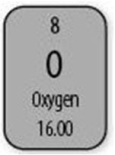
A)8
B)12
C)18
D)Not enough information given
A)8
B)12
C)18
D)Not enough information given
Question
Question
Question
Question
Question
Question
Question
Question
Question
Question
Question
How many neutrons are in a typical oxygen atom? 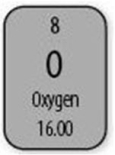
A)8
B)12
C)18
D)Not enough information given
A)8
B)12
C)18
D)Not enough information given
Question
Which number represents the atomic weight of oxygen? 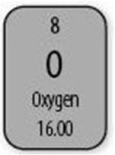
A)6
B)16
C)18
D)Not enough information given
A)6
B)16
C)18
D)Not enough information given
Question
Question
Question
Question
Question
Question
Question
Question
Question
Question
Question
Question
Question
Question
Question
Question
Question
Question
Question
Question
Question
Question
Question
Question
Question
Question
Question
Question
Question
Question
Question
Question
Question
Question
Question
Question
Question
Question
Question
Question
Question
Question
Question
Question
Question
Question
Question
Question
Question
Question

Unlock Deck
Sign up to unlock the cards in this deck!
Unlock Deck
Unlock Deck
1/66

Play

Full screen (f)
Deck 2: The Chemistry of Life
1
Which of the following statements regarding chemical reactions is false?
A)The products of a chemical reaction always have the same mass as the reactants.
B)During a chemical reaction, molecules are rearranged.
C)During a chemical reaction, atoms of one element can be converted into a different element.
D)There are chemical reactions close to you right now.
A)The products of a chemical reaction always have the same mass as the reactants.
B)During a chemical reaction, molecules are rearranged.
C)During a chemical reaction, atoms of one element can be converted into a different element.
D)There are chemical reactions close to you right now.
C
2
What is a trace element?
A)An element that is very common in nature
B)An element that is evenly distributed on the planet
C)An element that is required in miniscule amounts for life
D)An element that is used to identify the location of other elements
A)An element that is very common in nature
B)An element that is evenly distributed on the planet
C)An element that is required in miniscule amounts for life
D)An element that is used to identify the location of other elements
C
3
Why is one side of a single water molecule partially negative while the other side is partially positive?
A)Electron pairs are unevenly shared between the oxygen atom and the two hydrogen atoms.
B)Electron pairs are unevenly shared between the two hydrogen atoms.
C)Oxygen donates its electrons to hydrogen.
D)Hydrogen donates its electrons to oxygen.
A)Electron pairs are unevenly shared between the oxygen atom and the two hydrogen atoms.
B)Electron pairs are unevenly shared between the two hydrogen atoms.
C)Oxygen donates its electrons to hydrogen.
D)Hydrogen donates its electrons to oxygen.
A
4
The typical carbon atom is described in the periodic table by the accompanying box.How many protons are in a typical oxygen atom?
A)8
B)12
C)18
D)Not enough information given
A)8
B)12
C)18
D)Not enough information given
Unlock Deck
Unlock for access to all 66 flashcards in this deck.
Unlock Deck
k this deck
5
The 2+ in Cu2+ tells us that this atom ________.
A)has two more neutrons than protons
B)has two more protons than electrons
C)has two more electrons than neutrons
D)has two more electrons than protons
A)has two more neutrons than protons
B)has two more protons than electrons
C)has two more electrons than neutrons
D)has two more electrons than protons
Unlock Deck
Unlock for access to all 66 flashcards in this deck.
Unlock Deck
k this deck
6
The bond in which bonded atoms share electrons is called a(n) ________.
A)ionic bond
B)covalent bond
C)hydrogen bond
D)polar bond
A)ionic bond
B)covalent bond
C)hydrogen bond
D)polar bond
Unlock Deck
Unlock for access to all 66 flashcards in this deck.
Unlock Deck
k this deck
7
What is the most common element in your body?
A)Oxygen
B)Water
C)Carbon
D)Sugar
A)Oxygen
B)Water
C)Carbon
D)Sugar
Unlock Deck
Unlock for access to all 66 flashcards in this deck.
Unlock Deck
k this deck
8
Which is not one of the four atoms that make up the bulk of living organisms?
A)Oxygen
B)Nitrogen
C)Calcium
D)Carbon
A)Oxygen
B)Nitrogen
C)Calcium
D)Carbon
Unlock Deck
Unlock for access to all 66 flashcards in this deck.
Unlock Deck
k this deck
9
Which of the following bonds is the weakest?
A)The ionic bond
B)The covalent bond
C)The hydrogen bond
D)All three bonds are roughly equal in strength
A)The ionic bond
B)The covalent bond
C)The hydrogen bond
D)All three bonds are roughly equal in strength
Unlock Deck
Unlock for access to all 66 flashcards in this deck.
Unlock Deck
k this deck
10
In an atom, the number of neutrons determines most specifically the ________.
A)chemical element
B)isotope
C)ion state
D)chemical properties
A)chemical element
B)isotope
C)ion state
D)chemical properties
Unlock Deck
Unlock for access to all 66 flashcards in this deck.
Unlock Deck
k this deck
11
What is the maximum number of single covalent bonds a carbon atom can form with other elements?
A)1
B)2
C)3
D)4
A)1
B)2
C)3
D)4
Unlock Deck
Unlock for access to all 66 flashcards in this deck.
Unlock Deck
k this deck
12
The atomic number corresponds to the number of ________ in a specific element, while the atomic weight corresponds to the number of ________ in a specific element.
A)protons; neutrons
B)neutrons; protons
C)protons; protons and neutrons
D)protons and neutrons; neutrons
A)protons; neutrons
B)neutrons; protons
C)protons; protons and neutrons
D)protons and neutrons; neutrons
Unlock Deck
Unlock for access to all 66 flashcards in this deck.
Unlock Deck
k this deck
13
The chemical name for table salt is sodium chloride, or simply NaCl.What type of chemical is NaCl?
A)A compound
B)An element
C)A molecule
D)An ion
A)A compound
B)An element
C)A molecule
D)An ion
Unlock Deck
Unlock for access to all 66 flashcards in this deck.
Unlock Deck
k this deck
14
During a chemical reaction, atoms are ________.
A)destroyed
B)created
C)rearranged
D)destroyed and created
A)destroyed
B)created
C)rearranged
D)destroyed and created
Unlock Deck
Unlock for access to all 66 flashcards in this deck.
Unlock Deck
k this deck
15
How many neutrons are in a typical oxygen atom?
A)8
B)12
C)18
D)Not enough information given
A)8
B)12
C)18
D)Not enough information given
Unlock Deck
Unlock for access to all 66 flashcards in this deck.
Unlock Deck
k this deck
16
Which number represents the atomic weight of oxygen?
A)6
B)16
C)18
D)Not enough information given
A)6
B)16
C)18
D)Not enough information given
Unlock Deck
Unlock for access to all 66 flashcards in this deck.
Unlock Deck
k this deck
17
While the maximum number of electrons required to fill the outermost shell of an atom varies depending on the size of the atom, almost all of the smaller atoms (atomic numbers 2-20) are considered stable, and thus nonreactive, when they contain ________ electron(s) in the outermost shell.
A)1
B)2
C)8
D)16
A)1
B)2
C)8
D)16
Unlock Deck
Unlock for access to all 66 flashcards in this deck.
Unlock Deck
k this deck
18
Individual water molecules are held to one another by relatively weak ________ bonds.
A)covalent
B)hydrogen
C)ionic
D)nonpolar
A)covalent
B)hydrogen
C)ionic
D)nonpolar
Unlock Deck
Unlock for access to all 66 flashcards in this deck.
Unlock Deck
k this deck
19
The number of electrons of an atom determines its ________.
A)chemical element
B)isotope
C)bonding properties
D)all of the above are correct
A)chemical element
B)isotope
C)bonding properties
D)all of the above are correct
Unlock Deck
Unlock for access to all 66 flashcards in this deck.
Unlock Deck
k this deck
20
Identify the reactants in the following chemical reaction: C10H8 + 12 O2 → 10 CO2 + 4 H2O
A)C10H8 and 10 CO2
B)12 O2 and 4 H2O
C)C10H8 and 12 O2
D)10 CO2 and 4 H2O
A)C10H8 and 10 CO2
B)12 O2 and 4 H2O
C)C10H8 and 12 O2
D)10 CO2 and 4 H2O
Unlock Deck
Unlock for access to all 66 flashcards in this deck.
Unlock Deck
k this deck
21
When water melts from a solid ice cube to a liquid, its volume ________ and its mass ________.
A)Increases; decreases
B)Decreases; increases
C)Decreases; stays the same
D)Increases; stays the same
A)Increases; decreases
B)Decreases; increases
C)Decreases; stays the same
D)Increases; stays the same
Unlock Deck
Unlock for access to all 66 flashcards in this deck.
Unlock Deck
k this deck
22
What are the ecological consequences of acidification of rain and oceans?
A)They damage the health of ecosystems.
B)They do not have any consequences on ecosystems.
C)They improve the health of ecosystems.
D)Acid rain damages ecosystems, but ocean acidification improves the health of oceans.
A)They damage the health of ecosystems.
B)They do not have any consequences on ecosystems.
C)They improve the health of ecosystems.
D)Acid rain damages ecosystems, but ocean acidification improves the health of oceans.
Unlock Deck
Unlock for access to all 66 flashcards in this deck.
Unlock Deck
k this deck
23
Why is life based on carbon-based molecules?
A)Because carbon is found everywhere
B)Because carbon has unique ionic properties
C)Because a single carbon can bond with up to four other atoms
D)Because a single carbon can bond with up to eight other atoms
A)Because carbon is found everywhere
B)Because carbon has unique ionic properties
C)Because a single carbon can bond with up to four other atoms
D)Because a single carbon can bond with up to eight other atoms
Unlock Deck
Unlock for access to all 66 flashcards in this deck.
Unlock Deck
k this deck
24
Water is the least dense when it ________.
A)is frozen
B)is just above freezing
C)is at room temperature
D)is just below boiling
A)is frozen
B)is just above freezing
C)is at room temperature
D)is just below boiling
Unlock Deck
Unlock for access to all 66 flashcards in this deck.
Unlock Deck
k this deck
25
Water "beads up" on synthetic fabric such as polyester but binds to cotton.What is the most likely explanation for this?
A)Polyester is not a naturally occurring substance, whereas cotton is a naturally occurring substance.
B)Polyester is more flexible than cotton.
C)Polyester fibers are thinner than cotton fibers.
D)Polyester is nonpolar, whereas cotton is polar.
A)Polyester is not a naturally occurring substance, whereas cotton is a naturally occurring substance.
B)Polyester is more flexible than cotton.
C)Polyester fibers are thinner than cotton fibers.
D)Polyester is nonpolar, whereas cotton is polar.
Unlock Deck
Unlock for access to all 66 flashcards in this deck.
Unlock Deck
k this deck
26
How do buffers minimize change in the pH of biological systems?
A)By absorbing H+ ions when there is an excess
B)By donating H+ ions when there is a shortage
C)Both of these
D)Neither of these
A)By absorbing H+ ions when there is an excess
B)By donating H+ ions when there is a shortage
C)Both of these
D)Neither of these
Unlock Deck
Unlock for access to all 66 flashcards in this deck.
Unlock Deck
k this deck
27
What is an organic compound?
A)A molecule that contains nitrogen bonded to other elements
B)A molecule that contains carbon bonded to other elements
C)A molecule that contains both carbon and nitrogen
D)A molecule that contains a nitrogen skeleton
A)A molecule that contains nitrogen bonded to other elements
B)A molecule that contains carbon bonded to other elements
C)A molecule that contains both carbon and nitrogen
D)A molecule that contains a nitrogen skeleton
Unlock Deck
Unlock for access to all 66 flashcards in this deck.
Unlock Deck
k this deck
28
Select the most complete explanation of what the pH scale measures.
A)The acidity of a solvent
B)The alkalinity of a solvent
C)The concentration of hydrogen ions in a solution
D)The concentration of buffers in a solution
A)The acidity of a solvent
B)The alkalinity of a solvent
C)The concentration of hydrogen ions in a solution
D)The concentration of buffers in a solution
Unlock Deck
Unlock for access to all 66 flashcards in this deck.
Unlock Deck
k this deck
29
The breaking of a large organic molecule into smaller, individual subunits involves multiple ________.
A)hydrolysis reactions
B)osmotic reactions
C)dehydration synthesis reactions
D)hydrosynthetic reactions
A)hydrolysis reactions
B)osmotic reactions
C)dehydration synthesis reactions
D)hydrosynthetic reactions
Unlock Deck
Unlock for access to all 66 flashcards in this deck.
Unlock Deck
k this deck
30
What are the four classes of large organic molecules important to life on Earth?
A)Carbohydrates, lipids, proteins, and enzymes
B)Carbohydrates, lipids, proteins, and sugars
C)Carbohydrates, proteins, nucleic acids, and sugars
D)Carbohydrates, proteins, lipids, and nucleic acids
A)Carbohydrates, lipids, proteins, and enzymes
B)Carbohydrates, lipids, proteins, and sugars
C)Carbohydrates, proteins, nucleic acids, and sugars
D)Carbohydrates, proteins, lipids, and nucleic acids
Unlock Deck
Unlock for access to all 66 flashcards in this deck.
Unlock Deck
k this deck
31
The building of a large organic molecule from small subunits involves multiple ________.
A)hydrolysis reactions
B)osmotic reactions
C)dehydration synthesis reactions
D)hydrosynthetic reactions
A)hydrolysis reactions
B)osmotic reactions
C)dehydration synthesis reactions
D)hydrosynthetic reactions
Unlock Deck
Unlock for access to all 66 flashcards in this deck.
Unlock Deck
k this deck
32
How can we explain that water is a solvent?
A)Water has a polar nature, and as such its polar molecules will bind to substances that have positive or negative charges.
B)Water is a heavy substance, and as such can disrupt pre-existing bonds.
C)Water is highly cohesive and adhesive, which allows it to bind to different substances as a solvent.
D)Water is very dense in its liquid state, which allows it to bind to different substances as a solvent.
A)Water has a polar nature, and as such its polar molecules will bind to substances that have positive or negative charges.
B)Water is a heavy substance, and as such can disrupt pre-existing bonds.
C)Water is highly cohesive and adhesive, which allows it to bind to different substances as a solvent.
D)Water is very dense in its liquid state, which allows it to bind to different substances as a solvent.
Unlock Deck
Unlock for access to all 66 flashcards in this deck.
Unlock Deck
k this deck
33
Which of the following properties of water molecules has important implications to life?
A)High surface tension
B)The ability to dissolve polar substances
C)The ability of ice to float in water
D)All of the above are true
A)High surface tension
B)The ability to dissolve polar substances
C)The ability of ice to float in water
D)All of the above are true
Unlock Deck
Unlock for access to all 66 flashcards in this deck.
Unlock Deck
k this deck
34
Which of the following accurately describes the pH scale?
A)The pH scale runs from 0 (most basic)to 14 (most acidic), with 7 as a neutral.
B)The pH scale runs from 0 (most acidic)to 14 (most basic), with 7 as a neutral.
C)The pH scale runs from 0 (neutral)to 14 (most acidic), with 7 as an average acidity level.
D)The pH scale runs from 0 (most acidic)to 14 (neutral), with 7 as an average acidity level.
A)The pH scale runs from 0 (most basic)to 14 (most acidic), with 7 as a neutral.
B)The pH scale runs from 0 (most acidic)to 14 (most basic), with 7 as a neutral.
C)The pH scale runs from 0 (neutral)to 14 (most acidic), with 7 as an average acidity level.
D)The pH scale runs from 0 (most acidic)to 14 (neutral), with 7 as an average acidity level.
Unlock Deck
Unlock for access to all 66 flashcards in this deck.
Unlock Deck
k this deck
35
Organic compounds are distinguished by molecules that contain ________ bonded to other elements.
A)nitrogen
B)carbon
C)oxygen
D)hydrogen
A)nitrogen
B)carbon
C)oxygen
D)hydrogen
Unlock Deck
Unlock for access to all 66 flashcards in this deck.
Unlock Deck
k this deck
36
Something with a pH of 5 would be ________.
A)acidic
B)basic
C)neutral
D)alkaline
A)acidic
B)basic
C)neutral
D)alkaline
Unlock Deck
Unlock for access to all 66 flashcards in this deck.
Unlock Deck
k this deck
37
What do we call the sum total of all the chemical reactions that take place in your body?
A)Catabolism
B)Anabolism
C)Embolism
D)Metabolism
A)Catabolism
B)Anabolism
C)Embolism
D)Metabolism
Unlock Deck
Unlock for access to all 66 flashcards in this deck.
Unlock Deck
k this deck
38
Which of the following large organic molecules include table sugar?
A)Carbohydrates
B)Lipids
C)Proteins
D)Nucleic acids
A)Carbohydrates
B)Lipids
C)Proteins
D)Nucleic acids
Unlock Deck
Unlock for access to all 66 flashcards in this deck.
Unlock Deck
k this deck
39
A needle can be made to "float" on the surface tension of water.What causes this surface tension to form?
A)The adhesion of water molecules to the needle
B)The cohesion of water molecules to each other
C)The solubility of water
D)The heat capacity of water
A)The adhesion of water molecules to the needle
B)The cohesion of water molecules to each other
C)The solubility of water
D)The heat capacity of water
Unlock Deck
Unlock for access to all 66 flashcards in this deck.
Unlock Deck
k this deck
40
What are the monomers of proteins?
A)Glucose
B)Nucleic acids
C)Fatty acids
D)Amino acids
A)Glucose
B)Nucleic acids
C)Fatty acids
D)Amino acids
Unlock Deck
Unlock for access to all 66 flashcards in this deck.
Unlock Deck
k this deck
41
What kind of bond joins amino acids together to form a protein?
A)Peptide bond
B)Hydrogen bond
C)Polar bond
D)Protein bond
A)Peptide bond
B)Hydrogen bond
C)Polar bond
D)Protein bond
Unlock Deck
Unlock for access to all 66 flashcards in this deck.
Unlock Deck
k this deck
42
Enzymes are a type of ________.
A)carbohydrate
B)protein
C)lipid
D)monomer
A)carbohydrate
B)protein
C)lipid
D)monomer
Unlock Deck
Unlock for access to all 66 flashcards in this deck.
Unlock Deck
k this deck
43
What will be accomplished by lowering the activation energy of a reaction?
A)The reaction will proceed more slowly.
B)The reaction will proceed more quickly.
C)The reaction will stop completely.
D)The reaction will reverse.
A)The reaction will proceed more slowly.
B)The reaction will proceed more quickly.
C)The reaction will stop completely.
D)The reaction will reverse.
Unlock Deck
Unlock for access to all 66 flashcards in this deck.
Unlock Deck
k this deck
44
What is the basic structure of a triglyceride?
A)A glycerol head and three fatty acid tails
B)A linear chain of fatty acids
C)A branched chain of fatty acids
D)A chain of fatty acid tails
A)A glycerol head and three fatty acid tails
B)A linear chain of fatty acids
C)A branched chain of fatty acids
D)A chain of fatty acid tails
Unlock Deck
Unlock for access to all 66 flashcards in this deck.
Unlock Deck
k this deck
45
Which would have the highest concentration of C-H bonds?
A)Saturated fat
B)Unsaturated fat
C)Trans fat
D)Cholesterol
A)Saturated fat
B)Unsaturated fat
C)Trans fat
D)Cholesterol
Unlock Deck
Unlock for access to all 66 flashcards in this deck.
Unlock Deck
k this deck
46
What are inhibitors?
A)Molecules that allow reactions to proceed more quickly
B)Molecules that prevent enzymes from working
C)Molecules that inhibit protein synthesis
D)Molecules that bind to an enzyme to help its reaction
A)Molecules that allow reactions to proceed more quickly
B)Molecules that prevent enzymes from working
C)Molecules that inhibit protein synthesis
D)Molecules that bind to an enzyme to help its reaction
Unlock Deck
Unlock for access to all 66 flashcards in this deck.
Unlock Deck
k this deck
47
To a large extent, a protein's function is dependent upon its shape.What determines a protein's shape?
A)The location of the active site
B)The sequence of amino acids
C)The number of amino acids
D)The number of peptide bonds
A)The location of the active site
B)The sequence of amino acids
C)The number of amino acids
D)The number of peptide bonds
Unlock Deck
Unlock for access to all 66 flashcards in this deck.
Unlock Deck
k this deck
48
Which of the following is not made from long chains of glucose?
A)Starch
B)Sucrose
C)Glycogen
D)Cellulose
A)Starch
B)Sucrose
C)Glycogen
D)Cellulose
Unlock Deck
Unlock for access to all 66 flashcards in this deck.
Unlock Deck
k this deck
49
A polypeptide is ________.
A)a long chain of amino acids
B)a long chain of glucose
C)a long chain of fatty acids
D)a long chain of nucleic acids
A)a long chain of amino acids
B)a long chain of glucose
C)a long chain of fatty acids
D)a long chain of nucleic acids
Unlock Deck
Unlock for access to all 66 flashcards in this deck.
Unlock Deck
k this deck
50
Which of the following represents a simple sugar (also called a monosaccharide)?
A)Lactose
B)Cellulose
C)Glucose
D)Sucrose (table sugar)
A)Lactose
B)Cellulose
C)Glucose
D)Sucrose (table sugar)
Unlock Deck
Unlock for access to all 66 flashcards in this deck.
Unlock Deck
k this deck
51
What might happen if a protein has a change in one amino acid?
A)The amino acid chain folds incorrectly.
B)The protein can no longer function properly.
C)The protein has a new shape.
D)All of these may happen.
A)The amino acid chain folds incorrectly.
B)The protein can no longer function properly.
C)The protein has a new shape.
D)All of these may happen.
Unlock Deck
Unlock for access to all 66 flashcards in this deck.
Unlock Deck
k this deck
52
All lipids are ________.
A)water-loving molecules
B)hydrophilic
C)hydrophobic
D)hydrolytic
A)water-loving molecules
B)hydrophilic
C)hydrophobic
D)hydrolytic
Unlock Deck
Unlock for access to all 66 flashcards in this deck.
Unlock Deck
k this deck
53
Which of the following dietary fats is considered to be the least healthy?
A)Saturated fat
B)Trans unsaturated fat
C)Cholesterol
D)All dietary fats are unhealthy
A)Saturated fat
B)Trans unsaturated fat
C)Cholesterol
D)All dietary fats are unhealthy
Unlock Deck
Unlock for access to all 66 flashcards in this deck.
Unlock Deck
k this deck
54
Which of the following is a polysaccharide?
A)Glucose
B)Cellulose
C)Fructose
D)Sucrose
A)Glucose
B)Cellulose
C)Fructose
D)Sucrose
Unlock Deck
Unlock for access to all 66 flashcards in this deck.
Unlock Deck
k this deck
55
Which of the following molecules is solid at room temperature?
A)Saturated fats
B)Unsaturated fats
C)Cholesterol
D)Both saturated and unsaturated fats
A)Saturated fats
B)Unsaturated fats
C)Cholesterol
D)Both saturated and unsaturated fats
Unlock Deck
Unlock for access to all 66 flashcards in this deck.
Unlock Deck
k this deck
56
What is another name for the polymers of carbohydrates?
A)Triglycerides
B)Polysaccharides
C)Polypeptides
D)Nucleotides
A)Triglycerides
B)Polysaccharides
C)Polypeptides
D)Nucleotides
Unlock Deck
Unlock for access to all 66 flashcards in this deck.
Unlock Deck
k this deck
57
What are isomers?
A)Two molecules that have the same arrangement of atoms
B)Two atoms that have the same ionic properties
C)Two molecules that have the same atoms arranged differently
D)Two elements that can bond with each other
A)Two molecules that have the same arrangement of atoms
B)Two atoms that have the same ionic properties
C)Two molecules that have the same atoms arranged differently
D)Two elements that can bond with each other
Unlock Deck
Unlock for access to all 66 flashcards in this deck.
Unlock Deck
k this deck
58
Oil hydrogenation can produce a product, such as vegetable shortening or margarine, that is spreadable at room temperature because of an unusual bond that does not occur naturally.What is the name of this category of lipid?
A)Saturated fat
B)Healthy fat
C)Trans fat
D)Cholesterol
A)Saturated fat
B)Healthy fat
C)Trans fat
D)Cholesterol
Unlock Deck
Unlock for access to all 66 flashcards in this deck.
Unlock Deck
k this deck
59
________ is the polysaccharide most commonly found in highly fibrous foods such as celery.
A)Starch
B)Cellulose
C)Glycogen
D)Chitin
A)Starch
B)Cellulose
C)Glycogen
D)Chitin
Unlock Deck
Unlock for access to all 66 flashcards in this deck.
Unlock Deck
k this deck
60
Proteins are diverse molecules that perform a wide variety of functions.Which of the following is not a typical function of proteins?
A)Transport
B)Catalyze reactions via enzymes
C)Movement
D)Energy storage
A)Transport
B)Catalyze reactions via enzymes
C)Movement
D)Energy storage
Unlock Deck
Unlock for access to all 66 flashcards in this deck.
Unlock Deck
k this deck
61
The unique chemical qualities of individual amino acids do not directly determine the function of an enzyme.What, then, is the role of the individual amino acid's unique chemical qualities, and what directly determines the function of an enzyme?
Unlock Deck
Unlock for access to all 66 flashcards in this deck.
Unlock Deck
k this deck
62
Which of the three gasses is the easiest to break apart: nitrogen gas (N2), oxygen gas (O2), or hydrogen gas (H2)? Which is the most difficult to break apart? What accounts for the differences?
Unlock Deck
Unlock for access to all 66 flashcards in this deck.
Unlock Deck
k this deck
63
List the different types of macromolecules of life, and for each one, list one of its functions and its main monomer.
Unlock Deck
Unlock for access to all 66 flashcards in this deck.
Unlock Deck
k this deck
64
An old home remedy for anemia was to drink from a jug of water into which was added a handful of iron nails.Why might this have been effective at treating certain forms of anemia?
Unlock Deck
Unlock for access to all 66 flashcards in this deck.
Unlock Deck
k this deck
65
Why does sweating cool your skin on a hot, dry day but make you feel warmer on a hot, humid day?
Unlock Deck
Unlock for access to all 66 flashcards in this deck.
Unlock Deck
k this deck
66
Penicillin is a competitive inhibitor produced by a fungus in order to kill invading bacteria.It does this by mimicking the substrate required by the bacterium to build and repair its cell wall.Describe how mimicking the substrate would result in the death of the bacterium.
Unlock Deck
Unlock for access to all 66 flashcards in this deck.
Unlock Deck
k this deck
Unlock Deck
Unlock for access to all 66 flashcards in this deck.






