







 Chat with AI

Deck 11: Human Body Systems
Full screen (f)

Question

Question
Question
Question
Question
Question
Question
Question
Question
Question
Question
Question
Question
Question
Question
Question
Question
Question
Question
Question
Question
Question
Question
Question
Question
Question
Question
Question
Question
Question
Question
Question
Examine the calculating BMI chart.What is the most a person 5'6" tall could weigh and still be in the normal range (not overweight)? 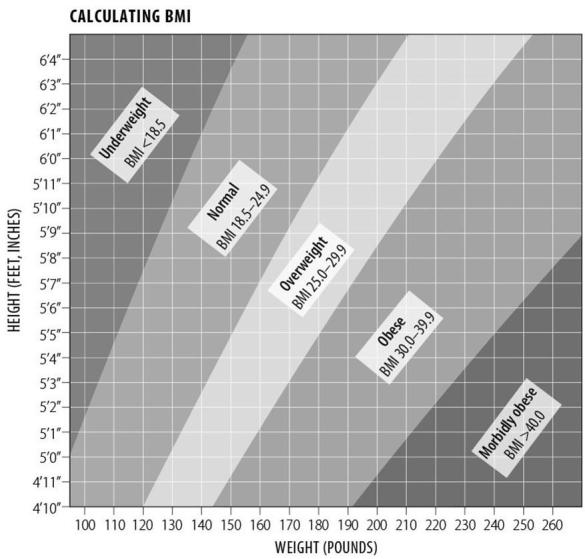
A)120 pounds
B)150 pounds
C)180 pounds
D)240 pounds
A)120 pounds
B)150 pounds
C)180 pounds
D)240 pounds
Question
Question
Question
Question
Question
Question
Question
Question
Question
Question
Question
Question
Question
Question
Question
Question
Question
Question
Question
Question
Question
Question
Question
Question
Question
Question
Question
Question
Question
Question
Question
Question
Question
Question
Question
Question
Question
Question
Question
Question
Question
Question
Question
Question
Question
Question
Question
Question

Unlock Deck
Sign up to unlock the cards in this deck!
Unlock Deck
Unlock Deck
1/103

Play

Full screen (f)
Deck 11: Human Body Systems
1
Most of the absorption of nutrients (besides water) takes place in the ________.
A)esophagus
B)small intestine
C)stomach
D)large intestine
A)esophagus
B)small intestine
C)stomach
D)large intestine
B
2
Which of the following statements about digestion is true?
A)Digestion occurs only in the stomach.
B)Digestion can be both mechanical and chemical, and it occurs both in the mouth and in the stomach.
C)Mechanical digestion occurs only in the stomach; chemical digestion occurs only in the mouth.
D)Digestion is the same thing as ingestion.
A)Digestion occurs only in the stomach.
B)Digestion can be both mechanical and chemical, and it occurs both in the mouth and in the stomach.
C)Mechanical digestion occurs only in the stomach; chemical digestion occurs only in the mouth.
D)Digestion is the same thing as ingestion.
B
3
Organs are made up of ________ to perform a specific function.
A)different types of cells
B)different types of tissues
C)the one type of cells
D)one type of tissues
A)different types of cells
B)different types of tissues
C)the one type of cells
D)one type of tissues
B
4
Response to a stimulus, such that the effect of the stimulus is counteracted, is called a ________ feedback.
A)positive
B)complex
C)complementary
D)negative
A)positive
B)complex
C)complementary
D)negative
Unlock Deck
Unlock for access to all 103 flashcards in this deck.
Unlock Deck
k this deck
5
Tissues are made up of ________ that work together to perform a function.
A)organs
B)similar cells
C)different cells
D)organ systems
A)organs
B)similar cells
C)different cells
D)organ systems
Unlock Deck
Unlock for access to all 103 flashcards in this deck.
Unlock Deck
k this deck
6
Match the correct structure with its correct tissue.
A)Cartilage is a type of epithelial tissue.
B)Muscle fibers are a part of connective tissue.
C)Neurons make up the nervous tissue.
D)Blood make up epithelial tissue.
A)Cartilage is a type of epithelial tissue.
B)Muscle fibers are a part of connective tissue.
C)Neurons make up the nervous tissue.
D)Blood make up epithelial tissue.
Unlock Deck
Unlock for access to all 103 flashcards in this deck.
Unlock Deck
k this deck
7
The alimentary canal is ________.
A)the esophagus
B)the series of digestive organs
C)the small and large intestines
D)the accessory organs
A)the esophagus
B)the series of digestive organs
C)the small and large intestines
D)the accessory organs
Unlock Deck
Unlock for access to all 103 flashcards in this deck.
Unlock Deck
k this deck
8
________ refers to the function of a body part, while ________ refers to the structure of a body part.
A)Anatomy; physiology
B)Biology; zoology
C)Zoology; biology
D)Physiology; anatomy
A)Anatomy; physiology
B)Biology; zoology
C)Zoology; biology
D)Physiology; anatomy
Unlock Deck
Unlock for access to all 103 flashcards in this deck.
Unlock Deck
k this deck
9
Organs are made up of ________ type(s) of tissue.
A)One
B)Two
C)Two or more
D)At least five
A)One
B)Two
C)Two or more
D)At least five
Unlock Deck
Unlock for access to all 103 flashcards in this deck.
Unlock Deck
k this deck
10
What is the correct hierarchy of organization, from biggest to smallest, in your body?
A)Organism, organ, organ system, tissue, cell
B)Organism, tissue, organ system, organ, cell
C)Organism, organ system, organ, tissue, cell
D)Organism, tissue, organ, organ system, cell
A)Organism, organ, organ system, tissue, cell
B)Organism, tissue, organ system, organ, cell
C)Organism, organ system, organ, tissue, cell
D)Organism, tissue, organ, organ system, cell
Unlock Deck
Unlock for access to all 103 flashcards in this deck.
Unlock Deck
k this deck
11
Connective tissue is the most variable of the tissue types.Which one of the following is not categorized as connective tissue?
A)Bone
B)Blood
C)Fat
D)Muscle
A)Bone
B)Blood
C)Fat
D)Muscle
Unlock Deck
Unlock for access to all 103 flashcards in this deck.
Unlock Deck
k this deck
12
How is diabetes linked with homeostasis?
A)Diabetes results from the body having a positive-feedback response to the level of glucose in the blood.
B)Diabetes results from the body responding too strongly to the level of glucose in the blood.
C)Diabetes results from the body not responding with a negative feedback to the level of glucose in the blood.
D)Diabetes is not linked with homeostasis.
A)Diabetes results from the body having a positive-feedback response to the level of glucose in the blood.
B)Diabetes results from the body responding too strongly to the level of glucose in the blood.
C)Diabetes results from the body not responding with a negative feedback to the level of glucose in the blood.
D)Diabetes is not linked with homeostasis.
Unlock Deck
Unlock for access to all 103 flashcards in this deck.
Unlock Deck
k this deck
13
Which of the following describe the integumentary system?
A)Skin, nails, hair
B)Heart and blood vessels
C)Smooth and skeletal muscles
D)Stomach, liver, intestines
A)Skin, nails, hair
B)Heart and blood vessels
C)Smooth and skeletal muscles
D)Stomach, liver, intestines
Unlock Deck
Unlock for access to all 103 flashcards in this deck.
Unlock Deck
k this deck
14
Form refers to ________, and function refers to ________.
A)anatomical structure; physiological actions
B)anatomical structure; environmental actions
C)physiological actions; anatomical structure
D)physiological actions; environmental actions
A)anatomical structure; physiological actions
B)anatomical structure; environmental actions
C)physiological actions; anatomical structure
D)physiological actions; environmental actions
Unlock Deck
Unlock for access to all 103 flashcards in this deck.
Unlock Deck
k this deck
15
Which of the following is an organ system?
A)The heart
B)Epithelial tissue
C)Circulatory system
D)Blood vessels
A)The heart
B)Epithelial tissue
C)Circulatory system
D)Blood vessels
Unlock Deck
Unlock for access to all 103 flashcards in this deck.
Unlock Deck
k this deck
16
What is the role of the villi?
A)To absorb small nutrient molecules from the digestive tract
B)To move food along the digestive tract
C)To secrete digestive enzymes into the digestive tract
D)To secrete water into the digestive tract
A)To absorb small nutrient molecules from the digestive tract
B)To move food along the digestive tract
C)To secrete digestive enzymes into the digestive tract
D)To secrete water into the digestive tract
Unlock Deck
Unlock for access to all 103 flashcards in this deck.
Unlock Deck
k this deck
17
Where are the villi located?
A)In the stomach
B)In the large intestine
C)In the small intestine
D)In the esophagus
A)In the stomach
B)In the large intestine
C)In the small intestine
D)In the esophagus
Unlock Deck
Unlock for access to all 103 flashcards in this deck.
Unlock Deck
k this deck
18
Maintaining a steady-state internal environment, despite a changing external environment, is called ________.
A)heterostasis
B)biofeedback
C)homeostasis
D)bioregulation
A)heterostasis
B)biofeedback
C)homeostasis
D)bioregulation
Unlock Deck
Unlock for access to all 103 flashcards in this deck.
Unlock Deck
k this deck
19
Epithelial tissues covers ________.
A)the outer layer of skin
B)the outer lining of intestines
C)the outer lining of blood vessels
D)All of the above are covered by epithelial tissues
A)the outer layer of skin
B)the outer lining of intestines
C)the outer lining of blood vessels
D)All of the above are covered by epithelial tissues
Unlock Deck
Unlock for access to all 103 flashcards in this deck.
Unlock Deck
k this deck
20
What is the role of the epithelium?
A)Helps protect the body from the external environment
B)Transmits electrical signals throughout the body
C)Contracts to create body movement
D)Provides the padding between the joints
A)Helps protect the body from the external environment
B)Transmits electrical signals throughout the body
C)Contracts to create body movement
D)Provides the padding between the joints
Unlock Deck
Unlock for access to all 103 flashcards in this deck.
Unlock Deck
k this deck
21
The term interface can be used to describe the surface across which molecules and ions are exchanged, often diffusing between external and internal environments or between organ systems.What part of the respiratory system forms the interface between the respiratory system and the circulatory system?
A)Alveoli
B)Trachea
C)Pharynx
D)Bronchioles
A)Alveoli
B)Trachea
C)Pharynx
D)Bronchioles
Unlock Deck
Unlock for access to all 103 flashcards in this deck.
Unlock Deck
k this deck
22
Which of the following statements is correct?
A)Our body can make all 20 amino acids needed.
B)Our body cannot make any of the 20 amino acids and needs proper nutrition to acquire them.
C)Our body can make a subset of the 20 amino acids, and needs proper nutrition to acquire the ones it cannot make.
D)Our body does not require any amino acids to function properly.
A)Our body can make all 20 amino acids needed.
B)Our body cannot make any of the 20 amino acids and needs proper nutrition to acquire them.
C)Our body can make a subset of the 20 amino acids, and needs proper nutrition to acquire the ones it cannot make.
D)Our body does not require any amino acids to function properly.
Unlock Deck
Unlock for access to all 103 flashcards in this deck.
Unlock Deck
k this deck
23
Digestion is ________.
A)Only mechanical
B)Only chemical
C)Both mechanical and chemical
D)Neither mechanical nor chemical
A)Only mechanical
B)Only chemical
C)Both mechanical and chemical
D)Neither mechanical nor chemical
Unlock Deck
Unlock for access to all 103 flashcards in this deck.
Unlock Deck
k this deck
24
What is the role of the epiglottis?
A)Produces vocal sounds
B)Filters dust and other impurities from entering the respiratory system
C)Prevents food from entering the windpipe
D)Produces the positive or negative pressures that force air into or out of the lungs
A)Produces vocal sounds
B)Filters dust and other impurities from entering the respiratory system
C)Prevents food from entering the windpipe
D)Produces the positive or negative pressures that force air into or out of the lungs
Unlock Deck
Unlock for access to all 103 flashcards in this deck.
Unlock Deck
k this deck
25
What causes a stomach ulcer?
A)Lack of a key nutrient
B)Consuming too many calories
C)Chronic consumption of spicy food
D)A bacterial infection
A)Lack of a key nutrient
B)Consuming too many calories
C)Chronic consumption of spicy food
D)A bacterial infection
Unlock Deck
Unlock for access to all 103 flashcards in this deck.
Unlock Deck
k this deck
26
The main role of the large intestine is to ________.
A)absorb nutrients
B)absorb water
C)produce bile, which helps the process of digestion
D)break large food into smaller food bits
A)absorb nutrients
B)absorb water
C)produce bile, which helps the process of digestion
D)break large food into smaller food bits
Unlock Deck
Unlock for access to all 103 flashcards in this deck.
Unlock Deck
k this deck
27
What is the difference between vitamins and minerals?
A)Vitamins are inorganic nutrients, while minerals are organic nutrients.
B)Vitamins are organic nutrients, while minerals are inorganic nutrients.
C)Vitamins cannot be made by our bodies, while minerals can.
D)There are no main difference between vitamins and minerals.
A)Vitamins are inorganic nutrients, while minerals are organic nutrients.
B)Vitamins are organic nutrients, while minerals are inorganic nutrients.
C)Vitamins cannot be made by our bodies, while minerals can.
D)There are no main difference between vitamins and minerals.
Unlock Deck
Unlock for access to all 103 flashcards in this deck.
Unlock Deck
k this deck
28
An essential nutrient is specifically a nutrient that your body ________.
A)requires to grow
B)requires to function
C)cannot make by itself
D)cannot store
A)requires to grow
B)requires to function
C)cannot make by itself
D)cannot store
Unlock Deck
Unlock for access to all 103 flashcards in this deck.
Unlock Deck
k this deck
29
How does a gastric bypass lead to patient losing weight?
A)Gastric fluids are being added to the stomach to improve digestion.
B)The large intestine is bypassed by the surgery so no absorption happens.
C)The small intestine is bypassed by the surgery so no absorption happens.
D)The stomach is reduced in size so patients eat less.
A)Gastric fluids are being added to the stomach to improve digestion.
B)The large intestine is bypassed by the surgery so no absorption happens.
C)The small intestine is bypassed by the surgery so no absorption happens.
D)The stomach is reduced in size so patients eat less.
Unlock Deck
Unlock for access to all 103 flashcards in this deck.
Unlock Deck
k this deck
30
Which of the following is a type of essential nutrient?
A)Minerals
B)Organic vitamins
C)Essential amino acids
D)All of the above are types of essential nutrients.
A)Minerals
B)Organic vitamins
C)Essential amino acids
D)All of the above are types of essential nutrients.
Unlock Deck
Unlock for access to all 103 flashcards in this deck.
Unlock Deck
k this deck
31
The main role of the liver is to ________.
A)absorb nutrients
B)absorb water
C)produce bile, which helps the process of digestion
D)break large food into smaller food bits
A)absorb nutrients
B)absorb water
C)produce bile, which helps the process of digestion
D)break large food into smaller food bits
Unlock Deck
Unlock for access to all 103 flashcards in this deck.
Unlock Deck
k this deck
32
Examine the calculating BMI chart.What is the most a person 5'6" tall could weigh and still be in the normal range (not overweight)?
A)120 pounds
B)150 pounds
C)180 pounds
D)240 pounds
A)120 pounds
B)150 pounds
C)180 pounds
D)240 pounds
Unlock Deck
Unlock for access to all 103 flashcards in this deck.
Unlock Deck
k this deck
33
The pulmonary circuit specifically circulates blood ________.
A)from the heart to the lungs
B)from the heart to the rest of the body
C)from the heart to the brain
D)from the heart to the liver
A)from the heart to the lungs
B)from the heart to the rest of the body
C)from the heart to the brain
D)from the heart to the liver
Unlock Deck
Unlock for access to all 103 flashcards in this deck.
Unlock Deck
k this deck
34
What are the four stages of food processing, ordered from beginning to end?
A)Ingestion, digestion, elimination, absorption
B)Digestion, ingestion, absorption, elimination
C)Digestion, absorption, ingestion, elimination
D)Ingestion, digestion, absorption, elimination
A)Ingestion, digestion, elimination, absorption
B)Digestion, ingestion, absorption, elimination
C)Digestion, absorption, ingestion, elimination
D)Ingestion, digestion, absorption, elimination
Unlock Deck
Unlock for access to all 103 flashcards in this deck.
Unlock Deck
k this deck
35
The respiratory system exchanges which gases?
A)Carbon dioxide is inhaled, while oxygen is exhaled.
B)Oxygen is inhaled, while carbon dioxide is exhaled.
C)Both oxygen and carbon dioxide are inhaled, and only carbon dioxide is exhaled.
D)Oxygen is inhaled and exhaled, the gas exchange does not include carbon dioxide.
A)Carbon dioxide is inhaled, while oxygen is exhaled.
B)Oxygen is inhaled, while carbon dioxide is exhaled.
C)Both oxygen and carbon dioxide are inhaled, and only carbon dioxide is exhaled.
D)Oxygen is inhaled and exhaled, the gas exchange does not include carbon dioxide.
Unlock Deck
Unlock for access to all 103 flashcards in this deck.
Unlock Deck
k this deck
36
What moves the food from your mouth to your stomach when you swallow?
A)Gravity
B)Peristaltic muscle contractions
C)Enzymes excreted by the salivary glands
D)Pressure difference between zones of the esophagus
A)Gravity
B)Peristaltic muscle contractions
C)Enzymes excreted by the salivary glands
D)Pressure difference between zones of the esophagus
Unlock Deck
Unlock for access to all 103 flashcards in this deck.
Unlock Deck
k this deck
37
Which accessory organ's secretions neutralize stomach acid before it reaches the intestines?
A)The salivary glands
B)The gallbladder
C)The liver
D)The pancreas
A)The salivary glands
B)The gallbladder
C)The liver
D)The pancreas
Unlock Deck
Unlock for access to all 103 flashcards in this deck.
Unlock Deck
k this deck
38
How is BMI calculated?
A)By using a person's height and weight
B)By calculating a person's daily calorie intake
C)By using a person's fat index
D)By examining a person's diet
A)By using a person's height and weight
B)By calculating a person's daily calorie intake
C)By using a person's fat index
D)By examining a person's diet
Unlock Deck
Unlock for access to all 103 flashcards in this deck.
Unlock Deck
k this deck
39
What is chemical digestion?
A)The absorption of food in the small intestine
B)The breakdown of food by enzymes
C)The use of physical actions to break down food
D)The use of villi to break down food
A)The absorption of food in the small intestine
B)The breakdown of food by enzymes
C)The use of physical actions to break down food
D)The use of villi to break down food
Unlock Deck
Unlock for access to all 103 flashcards in this deck.
Unlock Deck
k this deck
40
What is mechanical digestion?
A)The absorption of food in the small intestine
B)The breakdown of food by enzymes
C)The use of physical actions to break down food
D)The use of villi to break down food
A)The absorption of food in the small intestine
B)The breakdown of food by enzymes
C)The use of physical actions to break down food
D)The use of villi to break down food
Unlock Deck
Unlock for access to all 103 flashcards in this deck.
Unlock Deck
k this deck
41
The systemic circuit specifically circulates blood ________.
A)from the heart to the lungs
B)from the heart to the rest of the body
C)from the heart to the brain
D)from the heart to the liver
A)from the heart to the lungs
B)from the heart to the rest of the body
C)from the heart to the brain
D)from the heart to the liver
Unlock Deck
Unlock for access to all 103 flashcards in this deck.
Unlock Deck
k this deck
42
What happens during diastole?
A)The heart muscles contract, moving blood to ventricules.
B)The heart muscles contract, moving blood to atria.
C)The heart muscles relax, allowing blood to flow into all chambers of the heart.
D)The heart muscles pause, allowing both atria to empty.
A)The heart muscles contract, moving blood to ventricules.
B)The heart muscles contract, moving blood to atria.
C)The heart muscles relax, allowing blood to flow into all chambers of the heart.
D)The heart muscles pause, allowing both atria to empty.
Unlock Deck
Unlock for access to all 103 flashcards in this deck.
Unlock Deck
k this deck
43
A person with carbohydrates A and B on the surface of their red blood cells will have which of the following blood types?
A)Blood type A, as A is dominant over B
B)Blood type B, as B is dominant over A
C)Blood type AB, as both A and B are present
D)Blood type O, as A and B cancel each other out
A)Blood type A, as A is dominant over B
B)Blood type B, as B is dominant over A
C)Blood type AB, as both A and B are present
D)Blood type O, as A and B cancel each other out
Unlock Deck
Unlock for access to all 103 flashcards in this deck.
Unlock Deck
k this deck
44
What is the primary function of the sinoatrial node?
A)To initiate the contraction of the heart
B)To increase or decrease blood pressure
C)To open and close the heart valves
D)To supply the heart muscle with oxygen
A)To initiate the contraction of the heart
B)To increase or decrease blood pressure
C)To open and close the heart valves
D)To supply the heart muscle with oxygen
Unlock Deck
Unlock for access to all 103 flashcards in this deck.
Unlock Deck
k this deck
45
Which of the following correctly explains what a heart attack is?
A)Arteries that supply the brain with oxygen become blocked.
B)Arteries that supply the heart with oxygen become blocked.
C)Veins that supply the brain with oxygen become blocked.
D)Veins that supply the heart with oxygen become blocked.
A)Arteries that supply the brain with oxygen become blocked.
B)Arteries that supply the heart with oxygen become blocked.
C)Veins that supply the brain with oxygen become blocked.
D)Veins that supply the heart with oxygen become blocked.
Unlock Deck
Unlock for access to all 103 flashcards in this deck.
Unlock Deck
k this deck
46
Which of the following blood cells fights infections?
A)Red blood cells
B)Platelets
C)White blood cells
D)Fibrin
A)Red blood cells
B)Platelets
C)White blood cells
D)Fibrin
Unlock Deck
Unlock for access to all 103 flashcards in this deck.
Unlock Deck
k this deck
47
What is the name of the response to an injury in which fluids leak from dilated blood vessels, causing redness and swelling?
A)Innate response
B)Inflammatory response
C)Clonal selection response
D)Lymphatic response
A)Innate response
B)Inflammatory response
C)Clonal selection response
D)Lymphatic response
Unlock Deck
Unlock for access to all 103 flashcards in this deck.
Unlock Deck
k this deck
48
What is the main role of T cells in the immune response?
A)To secrete antibodies
B)To stimulate the production of immune cells
C)To recognize sites of infection
D)To trigger clonal selection
A)To secrete antibodies
B)To stimulate the production of immune cells
C)To recognize sites of infection
D)To trigger clonal selection
Unlock Deck
Unlock for access to all 103 flashcards in this deck.
Unlock Deck
k this deck
49
Blood types A, B, AB, and O are determined by ________.
A)the capacity of the blood to respond to infections
B)the capacity of the blood to respond to transfusions
C)carbohydrates on the surface of the white blood cells
D)carbohydrates on the surface of the red blood cells
A)the capacity of the blood to respond to infections
B)the capacity of the blood to respond to transfusions
C)carbohydrates on the surface of the white blood cells
D)carbohydrates on the surface of the red blood cells
Unlock Deck
Unlock for access to all 103 flashcards in this deck.
Unlock Deck
k this deck
50
Which type of white blood cells produces defensive proteins called antibodies?
A)Phagocytic cells
B)T cells
C)Natural killer cells
D)B cells
A)Phagocytic cells
B)T cells
C)Natural killer cells
D)B cells
Unlock Deck
Unlock for access to all 103 flashcards in this deck.
Unlock Deck
k this deck
51
Select the feature which is involved in the clotting process.
A)Platelets
B)Fibrin
C)Both platelets and fibrin
D)Neither platelets nor fibrin are involved in the clotting process
A)Platelets
B)Fibrin
C)Both platelets and fibrin
D)Neither platelets nor fibrin are involved in the clotting process
Unlock Deck
Unlock for access to all 103 flashcards in this deck.
Unlock Deck
k this deck
52
What are lymphocytes?
A)Red blood cells
B)A specific type of antigen
C)White blood cells
D)Cells responsible for clotting
A)Red blood cells
B)A specific type of antigen
C)White blood cells
D)Cells responsible for clotting
Unlock Deck
Unlock for access to all 103 flashcards in this deck.
Unlock Deck
k this deck
53
What is the main role of red blood cells?
A)Carry sugars
B)Carry oxygen
C)Fight off infections
D)Aid blood in clotting
A)Carry sugars
B)Carry oxygen
C)Fight off infections
D)Aid blood in clotting
Unlock Deck
Unlock for access to all 103 flashcards in this deck.
Unlock Deck
k this deck
54
Identify the primary role of the lymphatic system.
A)To distribute hormones around the body
B)To deliver oxygen to the deep muscle cells
C)To produce and store large numbers of white blood cells
D)To filter out cellular wastes from the blood
A)To distribute hormones around the body
B)To deliver oxygen to the deep muscle cells
C)To produce and store large numbers of white blood cells
D)To filter out cellular wastes from the blood
Unlock Deck
Unlock for access to all 103 flashcards in this deck.
Unlock Deck
k this deck
55
Veins carry ________.
A)blood low in oxygen
B)blood high in oxygen
C)blood high in carbon dioxide
D)blood low in oxygen and high in carbon dioxide
A)blood low in oxygen
B)blood high in oxygen
C)blood high in carbon dioxide
D)blood low in oxygen and high in carbon dioxide
Unlock Deck
Unlock for access to all 103 flashcards in this deck.
Unlock Deck
k this deck
56
Which are the thinnest blood vessels?
A)Bronchioles
B)Capillaries
C)Arterioles
D)Venules
A)Bronchioles
B)Capillaries
C)Arterioles
D)Venules
Unlock Deck
Unlock for access to all 103 flashcards in this deck.
Unlock Deck
k this deck
57
Select the correct sequence for the pathway of blood through the heart.
A)Body → Left atrium → Left ventricle → Lungs → Right atrium → Right ventricle → Body
B)Body → Left ventricle → Left atrium → Lungs → Right ventricle → Right atrium → Body
C)Body → Right ventricle → Right atrium → Lungs → Left ventricle → Left atrium → Body
D)Body → Right atrium → Right ventricle → Lungs → Left atrium → Left ventricle → Body
A)Body → Left atrium → Left ventricle → Lungs → Right atrium → Right ventricle → Body
B)Body → Left ventricle → Left atrium → Lungs → Right ventricle → Right atrium → Body
C)Body → Right ventricle → Right atrium → Lungs → Left ventricle → Left atrium → Body
D)Body → Right atrium → Right ventricle → Lungs → Left atrium → Left ventricle → Body
Unlock Deck
Unlock for access to all 103 flashcards in this deck.
Unlock Deck
k this deck
58
Choose the defining characteristic of all arteries.
A)They only carry blood back to the heart.
B)They only carry blood away from the heart.
C)They only carry deoxygenated blood.
D)They only carry oxygenated blood.
A)They only carry blood back to the heart.
B)They only carry blood away from the heart.
C)They only carry deoxygenated blood.
D)They only carry oxygenated blood.
Unlock Deck
Unlock for access to all 103 flashcards in this deck.
Unlock Deck
k this deck
59
Which carbohydrates are present on the surface of the red blood cells of a person with blood type O?
A)Carbohydrates A
B)Carbohydrates B
C)Carbohydrates O
D)No carbohydrates are present on the surface of the red blood cells
A)Carbohydrates A
B)Carbohydrates B
C)Carbohydrates O
D)No carbohydrates are present on the surface of the red blood cells
Unlock Deck
Unlock for access to all 103 flashcards in this deck.
Unlock Deck
k this deck
60
The cardiovascular system consists of ________.
A)The heart
B)The blood vessels
C)The blood
D)All of the above are parts of the cardiovascular system
A)The heart
B)The blood vessels
C)The blood
D)All of the above are parts of the cardiovascular system
Unlock Deck
Unlock for access to all 103 flashcards in this deck.
Unlock Deck
k this deck
61
The urinary system ________.
A)produces and excretes urine
B)maintains water balance in the body
C)filters toxins out of the bloodstreams
D)all of the above are roles of the urinary system
A)produces and excretes urine
B)maintains water balance in the body
C)filters toxins out of the bloodstreams
D)all of the above are roles of the urinary system
Unlock Deck
Unlock for access to all 103 flashcards in this deck.
Unlock Deck
k this deck
62
What is the main role of kidneys?
A)To secrete enzymes that help in digestion
B)To filter blood and remove toxins from it
C)To replenish oxygen in the bloodstream
D)To secrete hormones that help in osmoregulation
A)To secrete enzymes that help in digestion
B)To filter blood and remove toxins from it
C)To replenish oxygen in the bloodstream
D)To secrete hormones that help in osmoregulation
Unlock Deck
Unlock for access to all 103 flashcards in this deck.
Unlock Deck
k this deck
63
What type of disorder is AIDS?
A)An autoimmune disease
B)An allergic reaction
C)An immune rejection
D)An immunodeficiency
A)An autoimmune disease
B)An allergic reaction
C)An immune rejection
D)An immunodeficiency
Unlock Deck
Unlock for access to all 103 flashcards in this deck.
Unlock Deck
k this deck
64
What is the condition called when your body's immune system overreacts to an otherwise harmless foreign particle?
A)Arthritis
B)Allergy
C)Diabetes
D)AIDS
A)Arthritis
B)Allergy
C)Diabetes
D)AIDS
Unlock Deck
Unlock for access to all 103 flashcards in this deck.
Unlock Deck
k this deck
65
What is the purpose of dialysis treatments?
A)To constrict blood vessels to prevent death from dehydration
B)To detoxify dangerous chemicals in the bloodstream
C)To replenish oxygen in the bloodstream
D)To keep the airways open so one can breathe
A)To constrict blood vessels to prevent death from dehydration
B)To detoxify dangerous chemicals in the bloodstream
C)To replenish oxygen in the bloodstream
D)To keep the airways open so one can breathe
Unlock Deck
Unlock for access to all 103 flashcards in this deck.
Unlock Deck
k this deck
66
Where do fat-soluble hormones act?
A)They bind to receptors on the cell membranes of target cells.
B)They bind to antigens.
C)They bind to receptors within fat tissues.
D)They bind to receptors in the cytoplasm of target cells after diffusing through the plasma membrane.
A)They bind to receptors on the cell membranes of target cells.
B)They bind to antigens.
C)They bind to receptors within fat tissues.
D)They bind to receptors in the cytoplasm of target cells after diffusing through the plasma membrane.
Unlock Deck
Unlock for access to all 103 flashcards in this deck.
Unlock Deck
k this deck
67
What is the name of the tubes that run from the kidneys to the bladder?
A)Fallopian tubes
B)Urethras
C)Nephrons
D)Ureters
A)Fallopian tubes
B)Urethras
C)Nephrons
D)Ureters
Unlock Deck
Unlock for access to all 103 flashcards in this deck.
Unlock Deck
k this deck
68
Where does the ovule meet the sperm that fertilizes it?
A)In the ovary
B)In the oviduct
C)In the uterus
D)In the vagina
A)In the ovary
B)In the oviduct
C)In the uterus
D)In the vagina
Unlock Deck
Unlock for access to all 103 flashcards in this deck.
Unlock Deck
k this deck
69
What are hormones?
A)They are carbohydrates on the surface of red blood cells that affect targeted cells throughout the body.
B)They are chemicals transported in the blood that affect all cells similarly.
C)They are chemicals transported in the blood that affect target cells throughout the body.
D)They are chemicals that affect cells right next to where they are produced.
A)They are carbohydrates on the surface of red blood cells that affect targeted cells throughout the body.
B)They are chemicals transported in the blood that affect all cells similarly.
C)They are chemicals transported in the blood that affect target cells throughout the body.
D)They are chemicals that affect cells right next to where they are produced.
Unlock Deck
Unlock for access to all 103 flashcards in this deck.
Unlock Deck
k this deck
70
There are many organs and glands of the endocrine system, but which one is the master controller?
A)The pituitary
B)The thyroid
C)The hypothalamus
D)The pancreas
A)The pituitary
B)The thyroid
C)The hypothalamus
D)The pancreas
Unlock Deck
Unlock for access to all 103 flashcards in this deck.
Unlock Deck
k this deck
71
What are gonads?
A)Organs that produce gametes
B)Structures that protect the embryo
C)Tubes that allow sperms and ovules to move
D)The sites where ovule and sperm meet during reproduction
A)Organs that produce gametes
B)Structures that protect the embryo
C)Tubes that allow sperms and ovules to move
D)The sites where ovule and sperm meet during reproduction
Unlock Deck
Unlock for access to all 103 flashcards in this deck.
Unlock Deck
k this deck
72
Which of the following is a similarity between male and female reproductive systems?
A)They both produce haploid gametes.
B)They both store gametes.
C)They both release gametes.
D)All of the above are similarities between the two systems.
A)They both produce haploid gametes.
B)They both store gametes.
C)They both release gametes.
D)All of the above are similarities between the two systems.
Unlock Deck
Unlock for access to all 103 flashcards in this deck.
Unlock Deck
k this deck
73
When is an unborn child called a fetus?
A)From the 9th week of pregnancy to birth
B)From cleavage to the 9th week of pregnancy
C)From conception through birth
D)From cleavage to birth
A)From the 9th week of pregnancy to birth
B)From cleavage to the 9th week of pregnancy
C)From conception through birth
D)From cleavage to birth
Unlock Deck
Unlock for access to all 103 flashcards in this deck.
Unlock Deck
k this deck
74
What is the part of the kidney where urine is formed?
A)The nephron
B)The ureter
C)The liver
D)The blood vessels
A)The nephron
B)The ureter
C)The liver
D)The blood vessels
Unlock Deck
Unlock for access to all 103 flashcards in this deck.
Unlock Deck
k this deck
75
The way the pancreas regulates glucose levels in the blood stream follows ________.
A)a positive feedback mechanism
B)a negative feedback mechanism
C)instructions from the brain
D)The pancreas is not involved in regulating glucose levels in the blood.
A)a positive feedback mechanism
B)a negative feedback mechanism
C)instructions from the brain
D)The pancreas is not involved in regulating glucose levels in the blood.
Unlock Deck
Unlock for access to all 103 flashcards in this deck.
Unlock Deck
k this deck
76
Which medication prevents viral infections by priming the immune system against a specific virus?
A)Vaccines
B)Antibiotics
C)Diuretics
D)Anti-inflammatory medication
A)Vaccines
B)Antibiotics
C)Diuretics
D)Anti-inflammatory medication
Unlock Deck
Unlock for access to all 103 flashcards in this deck.
Unlock Deck
k this deck
77
In spermatogenesis, ________.
A)haploid sperms are produced
B)diploid sperms are produced
C)both sperms and ovules are produced
D)diploid gametes are produced
A)haploid sperms are produced
B)diploid sperms are produced
C)both sperms and ovules are produced
D)diploid gametes are produced
Unlock Deck
Unlock for access to all 103 flashcards in this deck.
Unlock Deck
k this deck
78
How long does it take, on average, for an ovule to go from the ovary to the uterus?
A)One hour
B)One day
C)Seven days
D)The ovule does not reach the uterus, it remains in the oviduct
A)One hour
B)One day
C)Seven days
D)The ovule does not reach the uterus, it remains in the oviduct
Unlock Deck
Unlock for access to all 103 flashcards in this deck.
Unlock Deck
k this deck
79
The release of an egg from an ovary is called ________.
A)oogenesis
B)gametogenesis
C)ovulation
D)menstruation
A)oogenesis
B)gametogenesis
C)ovulation
D)menstruation
Unlock Deck
Unlock for access to all 103 flashcards in this deck.
Unlock Deck
k this deck
80
The urethra ________.
A)adds fluids to semen
B)is a tube that conveys both urine and semen
C)is a structure where semen is stored
D)is where sperms are produced
A)adds fluids to semen
B)is a tube that conveys both urine and semen
C)is a structure where semen is stored
D)is where sperms are produced
Unlock Deck
Unlock for access to all 103 flashcards in this deck.
Unlock Deck
k this deck
Unlock Deck
Unlock for access to all 103 flashcards in this deck.






