







 Chat with AI

Deck 24: Economic Growth, Business Cycles, and Unemployment
Full screen (f)

Question

Question
Question
Question
Question
Question
Question
Question
Question
Question
Question
Question
Question
Question
Question
Question
Question
Question
Question
Question
Question
Question
Question
Question
Question
Question
Question
Question
Question
Question
Question
Question
Question
Question
Question
Question
Question
Question
Question
Question
Question
Question
Question
Question
Question
Question
Question
Question
Question
Question
Question
Question
Question
Question
The growth trend in the graph shown is depicted by: 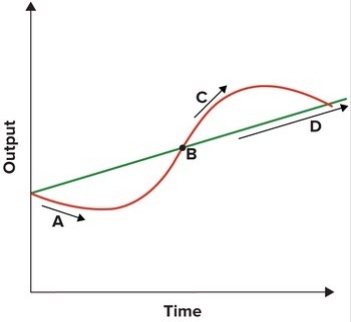
A)A.
B)B.
C)C.
D)D.
A)A.
B)B.
C)C.
D)D.
Question
Question
Question
Question
Question
Question
Question
Question
Question
Question
Refer to the graph shown. 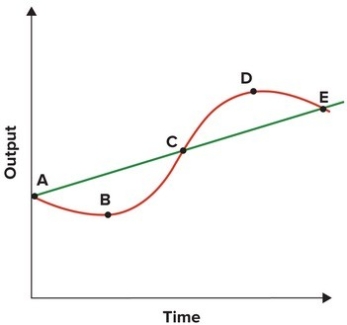 A peak occurs when the economy is at point:
A)A.
B)B.
C)C.
D)D.
A peak occurs when the economy is at point:A)A.
B)B.
C)C.
D)D.
Question
Question
Question
Question
Refer to the graph shown. 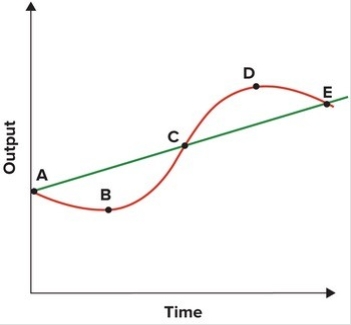 A movement from points A to B represents a(n):
A)trough.
B)downturn.
C)peak.
D)upturn.
A movement from points A to B represents a(n):A)trough.
B)downturn.
C)peak.
D)upturn.
Question
Question
Question
Question
Question
Question
Question
Question
Question
Question
Refer to the graph shown. 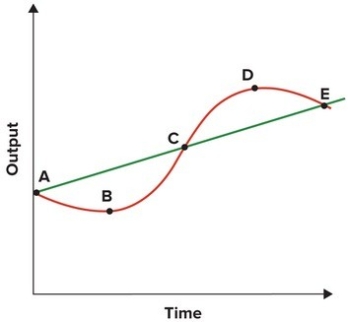 A movement from points B to C represents a(n):
A)trough.
B)peak.
C)recession.
D)upturn.
A movement from points B to C represents a(n):A)trough.
B)peak.
C)recession.
D)upturn.
Question
Refer to the graph shown. 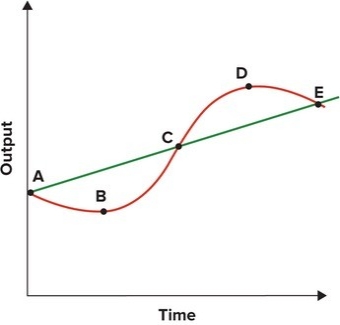 A trough will be arrived at when the economy moves from point:
A)C to point D.
B)B to point C.
C)B to point D.
D)A to point B.
A trough will be arrived at when the economy moves from point:A)C to point D.
B)B to point C.
C)B to point D.
D)A to point B.
Question

Unlock Deck
Sign up to unlock the cards in this deck!
Unlock Deck
Unlock Deck
1/124

Play

Full screen (f)
Deck 24: Economic Growth, Business Cycles, and Unemployment
1
The difference between the long-run and short-run frameworks is that the long-run framework focuses on demand while the short-run framework focuses on supply.
False
2
Keynesian economists believe:
A)government policies do not affect economic activity.
B)governments can implement policy proposals that can positively impact the economy.
C)most government policies would probably make things worse.
D)the economy ought to be left to market forces.
A)government policies do not affect economic activity.
B)governments can implement policy proposals that can positively impact the economy.
C)most government policies would probably make things worse.
D)the economy ought to be left to market forces.
governments can implement policy proposals that can positively impact the economy.
3
The laissez-faire policy prescription to eliminate unemployment was to:
A)eliminate labor unions and government policies that hold real wages too high.
B)strengthen unions and government regulations protecting unions and workers.
C)increase real wages so that people are encouraged to work.
D)have government guarantee jobs for everyone.
A)eliminate labor unions and government policies that hold real wages too high.
B)strengthen unions and government regulations protecting unions and workers.
C)increase real wages so that people are encouraged to work.
D)have government guarantee jobs for everyone.
eliminate labor unions and government policies that hold real wages too high.
4
Laissez-faire economists favor government intervention in the market process.
Unlock Deck
Unlock for access to all 124 flashcards in this deck.
Unlock Deck
k this deck
5
Laissez-faire economists believe:
A)government policies are largely ineffective in coordinating economic activity.
B)government can implement policy proposals that have mostly positive impacts on the economy.
C)most government policies would probably make things worse.
D)government intervention in the market is necessary for a smoothly operating economy.
A)government policies are largely ineffective in coordinating economic activity.
B)government can implement policy proposals that have mostly positive impacts on the economy.
C)most government policies would probably make things worse.
D)government intervention in the market is necessary for a smoothly operating economy.
Unlock Deck
Unlock for access to all 124 flashcards in this deck.
Unlock Deck
k this deck
6
Which of the following statements would a Classical economist of the 1930s most likely disagree with?
A)The market, left to its own devices, is self-adjusting.
B)Wages and prices will adjust to eliminate unemployment.
C)In the short-run the economy might experience some problems.
D)Unions do not impede wage and price adjustment.
A)The market, left to its own devices, is self-adjusting.
B)Wages and prices will adjust to eliminate unemployment.
C)In the short-run the economy might experience some problems.
D)Unions do not impede wage and price adjustment.
Unlock Deck
Unlock for access to all 124 flashcards in this deck.
Unlock Deck
k this deck
7
Cyclical unemployment is caused by fluctuations in economic activity.
Unlock Deck
Unlock for access to all 124 flashcards in this deck.
Unlock Deck
k this deck
8
Before the Great Depression the popular view of government was:
A)laissez-faire; and after the Great Depression, the popular view of government was activist.
B)activist; and after the Great Depression, the popular view of government was laissez-faire.
C)activist; and after the Great Depression, the popular view of government was still activist.
D)laissez-faire; and after the Great Depression, the popular view of government was still laissez-faire.
A)laissez-faire; and after the Great Depression, the popular view of government was activist.
B)activist; and after the Great Depression, the popular view of government was laissez-faire.
C)activist; and after the Great Depression, the popular view of government was still activist.
D)laissez-faire; and after the Great Depression, the popular view of government was still laissez-faire.
Unlock Deck
Unlock for access to all 124 flashcards in this deck.
Unlock Deck
k this deck
9
Policy issues of business cycles are considered in a long-run framework.
Unlock Deck
Unlock for access to all 124 flashcards in this deck.
Unlock Deck
k this deck
10
The four phases of the business cycle are, in order: peak, downturn, trough, upturn.
Unlock Deck
Unlock for access to all 124 flashcards in this deck.
Unlock Deck
k this deck
11
Keynesian economists tend to focus their analysis on:
A)the long run.
B)the short run.
C)aggregate supply.
D)economic growth.
A)the long run.
B)the short run.
C)aggregate supply.
D)economic growth.
Unlock Deck
Unlock for access to all 124 flashcards in this deck.
Unlock Deck
k this deck
12
If the economy is in a structural stagnation, it can be expected to return to its historical trend soon.
Unlock Deck
Unlock for access to all 124 flashcards in this deck.
Unlock Deck
k this deck
13
The terms business cycle and structural stagnation can be used interchangeably.
Unlock Deck
Unlock for access to all 124 flashcards in this deck.
Unlock Deck
k this deck
14
Between 2007 and 2009, the U.S. unemployment rate rose from under 5 percent to over 8 percent. A Keynesian economist would most likely blame this increase in unemployment on:
A)an increase in the minimum wage.
B)an increase in the bargaining power of labor unions.
C)a decline in the level of aggregate demand.
D)a decline in aggregate supply.
A)an increase in the minimum wage.
B)an increase in the bargaining power of labor unions.
C)a decline in the level of aggregate demand.
D)a decline in aggregate supply.
Unlock Deck
Unlock for access to all 124 flashcards in this deck.
Unlock Deck
k this deck
15
Which of the following explains why Keynesian economics lost influence in the 1970s?
A)A change in the how the Federal Reserve was constructed
B)A crash in the stock market
C)The damaging effects of inflation
D)An increase in the marginal tax rate
A)A change in the how the Federal Reserve was constructed
B)A crash in the stock market
C)The damaging effects of inflation
D)An increase in the marginal tax rate
Unlock Deck
Unlock for access to all 124 flashcards in this deck.
Unlock Deck
k this deck
16
If the economy were producing at its potential output, then the unemployment rate would be less than the target rate of unemployment.
Unlock Deck
Unlock for access to all 124 flashcards in this deck.
Unlock Deck
k this deck
17
In the postwar era, the average business expansion has lasted about 59 months.
Unlock Deck
Unlock for access to all 124 flashcards in this deck.
Unlock Deck
k this deck
18
The unemployment rate is the percentage of people in the labor force who are both able to and looking for work but who cannot find jobs.
Unlock Deck
Unlock for access to all 124 flashcards in this deck.
Unlock Deck
k this deck
19
"Classical economist" is often used interchangeably with which term?
A)Laissez-faire economist
B)Keynesian economist
C)Activist economist
D)Marxian economist
A)Laissez-faire economist
B)Keynesian economist
C)Activist economist
D)Marxian economist
Unlock Deck
Unlock for access to all 124 flashcards in this deck.
Unlock Deck
k this deck
20
The sum of the number of employed persons and the number of unemployed persons equals the civilian noninstitutional population.
Unlock Deck
Unlock for access to all 124 flashcards in this deck.
Unlock Deck
k this deck
21
The Classical economists argued that:
A)a market economy will not experience unemployment in the short run.
B)if unemployment occurs, it will cure itself because wages will fall.
C)aggregate expenditures may be too low.
D)if inflation occurs it will cure itself because prices, wages, and interest rates will rise.
A)a market economy will not experience unemployment in the short run.
B)if unemployment occurs, it will cure itself because wages will fall.
C)aggregate expenditures may be too low.
D)if inflation occurs it will cure itself because prices, wages, and interest rates will rise.
Unlock Deck
Unlock for access to all 124 flashcards in this deck.
Unlock Deck
k this deck
22
The long-run growth framework focuses on factors affecting:
A)incentives to spend.
B)incentives to produce.
C)both supply and demand.
D)the business cycle.
A)incentives to spend.
B)incentives to produce.
C)both supply and demand.
D)the business cycle.
Unlock Deck
Unlock for access to all 124 flashcards in this deck.
Unlock Deck
k this deck
23
Which of the following was not a solution to the Great Depression favored by Classical economists?
A)Break up labor unions
B)Hire unemployed workers for public works programs
C)Let market forces operate
D)Stop government measures that held up wages and prices
A)Break up labor unions
B)Hire unemployed workers for public works programs
C)Let market forces operate
D)Stop government measures that held up wages and prices
Unlock Deck
Unlock for access to all 124 flashcards in this deck.
Unlock Deck
k this deck
24
According to Classical economists in the 1930s, a recession will end when:
A)government creates enough jobs for all of the unemployed.
B)wages rise enough to eliminate unemployment.
C)wages fall enough to eliminate unemployment.
D)taxes are cut enough to stimulate private spending.
A)government creates enough jobs for all of the unemployed.
B)wages rise enough to eliminate unemployment.
C)wages fall enough to eliminate unemployment.
D)taxes are cut enough to stimulate private spending.
Unlock Deck
Unlock for access to all 124 flashcards in this deck.
Unlock Deck
k this deck
25
The secular trend growth rate in the United States is approximately:
A)1 to 1.5 percent per year.
B)2.5 to 3.5 percent per year.
C)5 to 5.5 percent per year.
D)7 to 7.5 percent per year.
A)1 to 1.5 percent per year.
B)2.5 to 3.5 percent per year.
C)5 to 5.5 percent per year.
D)7 to 7.5 percent per year.
Unlock Deck
Unlock for access to all 124 flashcards in this deck.
Unlock Deck
k this deck
26
A period of protracted slow growth and high unemployment is called:
A)deflation.
B)cyclical stagnation.
C)structural stagnation.
D)stagflation.
A)deflation.
B)cyclical stagnation.
C)structural stagnation.
D)stagflation.
Unlock Deck
Unlock for access to all 124 flashcards in this deck.
Unlock Deck
k this deck
27
Potential output:
A)is purely a physical phenomenon.
B)is related to the long-term growth trend.
C)requires government expenditures.
D)requires the purchase of new equipment.
A)is purely a physical phenomenon.
B)is related to the long-term growth trend.
C)requires government expenditures.
D)requires the purchase of new equipment.
Unlock Deck
Unlock for access to all 124 flashcards in this deck.
Unlock Deck
k this deck
28
Keynesian economics focuses on:
A)the long run.
B)the short run.
C)both the long run and the short run.
D)neither the long run nor the short run.
A)the long run.
B)the short run.
C)both the long run and the short run.
D)neither the long run nor the short run.
Unlock Deck
Unlock for access to all 124 flashcards in this deck.
Unlock Deck
k this deck
29
If a country of 300 million people has a total output of $12 trillion, its per capita output is:
A)$36,000.
B)$40,000.
C)$360,000.
D)$400,000.
A)$36,000.
B)$40,000.
C)$360,000.
D)$400,000.
Unlock Deck
Unlock for access to all 124 flashcards in this deck.
Unlock Deck
k this deck
30
The two frameworks conventional economists generally use to analyze macroeconomic issues are the:
A)inflation and the unemployment frameworks.
B)short-run and the long-run frameworks.
C)business cycle and the growth cycle frameworks.
D)stagnationist and the Post-Keynesian frameworks.
A)inflation and the unemployment frameworks.
B)short-run and the long-run frameworks.
C)business cycle and the growth cycle frameworks.
D)stagnationist and the Post-Keynesian frameworks.
Unlock Deck
Unlock for access to all 124 flashcards in this deck.
Unlock Deck
k this deck
31
Keynesians:
A)generally favor activist government policies.
B)generally favor laissez-faire policies.
C)believe that frictional unemployment does not exist.
D)believe that all unemployment is cyclical unemployment.
A)generally favor activist government policies.
B)generally favor laissez-faire policies.
C)believe that frictional unemployment does not exist.
D)believe that all unemployment is cyclical unemployment.
Unlock Deck
Unlock for access to all 124 flashcards in this deck.
Unlock Deck
k this deck
32
The short-run business cycle framework focuses primarily on factors:
A)affecting demand.
B)affecting supply.
C)affecting both supply and demand.
D)other than supply and demand.
A)affecting demand.
B)affecting supply.
C)affecting both supply and demand.
D)other than supply and demand.
Unlock Deck
Unlock for access to all 124 flashcards in this deck.
Unlock Deck
k this deck
33
Classicals:
A)generally favor activist government policies.
B)generally favor laissez-faire policies.
C)believe that frictional unemployment does not exist.
D)believe that all unemployment is cyclical unemployment.
A)generally favor activist government policies.
B)generally favor laissez-faire policies.
C)believe that frictional unemployment does not exist.
D)believe that all unemployment is cyclical unemployment.
Unlock Deck
Unlock for access to all 124 flashcards in this deck.
Unlock Deck
k this deck
34
When Classical economists of the 1930s looked at the Great Depression, they:
A)lacked a good explanation of why it was happening.
B)suggested wages were too flexible.
C)blamed it on activist fiscal and monetary policies.
D)thought it was a result of prices adjusting too quickly.
A)lacked a good explanation of why it was happening.
B)suggested wages were too flexible.
C)blamed it on activist fiscal and monetary policies.
D)thought it was a result of prices adjusting too quickly.
Unlock Deck
Unlock for access to all 124 flashcards in this deck.
Unlock Deck
k this deck
35
The highest amount of output an economy can sustainably produce and sell using existing production processes and resources is called:
A)nominal output.
B)actual output.
C)potential output.
D)utilized output.
A)nominal output.
B)actual output.
C)potential output.
D)utilized output.
Unlock Deck
Unlock for access to all 124 flashcards in this deck.
Unlock Deck
k this deck
36
Which of the following statements best depicts laypeople's explanation of the Great Depression at that time?
A)Government policies kept prices too high.
B)An oversupply of goods had glutted the market.
C)Unions were keeping the good jobs for themselves.
D)An oversupply of goods is impossible.
A)Government policies kept prices too high.
B)An oversupply of goods had glutted the market.
C)Unions were keeping the good jobs for themselves.
D)An oversupply of goods is impossible.
Unlock Deck
Unlock for access to all 124 flashcards in this deck.
Unlock Deck
k this deck
37
The Great Depression occurred in the early:
A)1900s.
B)1930s.
C)1950s.
D)1960s.
A)1900s.
B)1930s.
C)1950s.
D)1960s.
Unlock Deck
Unlock for access to all 124 flashcards in this deck.
Unlock Deck
k this deck
38
Classical economists believe that in the short run, in the real world:
A)prices and wages are flexible.
B)prices and wages aren't flexible enough to bring about equilibrium.
C)prices are flexible but wages were not flexible.
D)wages are flexible but prices were not flexible.
A)prices and wages are flexible.
B)prices and wages aren't flexible enough to bring about equilibrium.
C)prices are flexible but wages were not flexible.
D)wages are flexible but prices were not flexible.
Unlock Deck
Unlock for access to all 124 flashcards in this deck.
Unlock Deck
k this deck
39
Classical economists are generally associated with:
A)laissez-faire.
B)their support of inflation.
C)an activist policy.
D)price controls.
A)laissez-faire.
B)their support of inflation.
C)an activist policy.
D)price controls.
Unlock Deck
Unlock for access to all 124 flashcards in this deck.
Unlock Deck
k this deck
40
Issues of growth are generally considered in:
A)the short-run framework.
B)the long-run framework.
C)both the short-run and the long-run frameworks.
D)neither the short-run nor the long-run frameworks.
A)the short-run framework.
B)the long-run framework.
C)both the short-run and the long-run frameworks.
D)neither the short-run nor the long-run frameworks.
Unlock Deck
Unlock for access to all 124 flashcards in this deck.
Unlock Deck
k this deck
41
Fluctuations around the long-term growth rate are called:
A)recessions.
B)depressions.
C)expansions.
D)business cycles.
A)recessions.
B)depressions.
C)expansions.
D)business cycles.
Unlock Deck
Unlock for access to all 124 flashcards in this deck.
Unlock Deck
k this deck
42
Suppose a country's output is $440 billion and its population is 110 million. Now suppose that both its output and its population increase by 24 percent. As a result of these changes, its new level of per capita output will be:
A)$400.
B)$440.
C)$4,000.
D)$4,400.
A)$400.
B)$440.
C)$4,000.
D)$4,400.
Unlock Deck
Unlock for access to all 124 flashcards in this deck.
Unlock Deck
k this deck
43
Policies that affect aggregate expenditures are primarily relevant to the:
A)short-run business cycle framework.
B)long-run growth framework.
C)short-run growth framework.
D)long-run business cycle framework.
A)short-run business cycle framework.
B)long-run growth framework.
C)short-run growth framework.
D)long-run business cycle framework.
Unlock Deck
Unlock for access to all 124 flashcards in this deck.
Unlock Deck
k this deck
44
In order of their occurrence, the phases of the business cycle are:
A)peak, downturn, upturn, trough.
B)peak, upturn, downturn, trough.
C)peak, downturn, trough, upturn.
D)peak, upturn, trough, downturn.
A)peak, downturn, upturn, trough.
B)peak, upturn, downturn, trough.
C)peak, downturn, trough, upturn.
D)peak, upturn, trough, downturn.
Unlock Deck
Unlock for access to all 124 flashcards in this deck.
Unlock Deck
k this deck
45
Over the last ten years which geographic area or country had the highest per capita growth rate?
A)China
B)Western Europe
C)North America
D)Latin America
A)China
B)Western Europe
C)North America
D)Latin America
Unlock Deck
Unlock for access to all 124 flashcards in this deck.
Unlock Deck
k this deck
46
If a country's output and population are, respectively, $500 billion and 200 million, then its per capita output is:
A)$250.
B)$1,000.
C)$2,500.
D)$24,000.
A)$250.
B)$1,000.
C)$2,500.
D)$24,000.
Unlock Deck
Unlock for access to all 124 flashcards in this deck.
Unlock Deck
k this deck
47
What turns a business cycle into a structural stagnation?
A)A trough that is lower than the peak.
B)Multiple business cycles in a short period of time.
C)A slow upturn that keeps the economy below trend.
D)An upturn that exceeds potential.
A)A trough that is lower than the peak.
B)Multiple business cycles in a short period of time.
C)A slow upturn that keeps the economy below trend.
D)An upturn that exceeds potential.
Unlock Deck
Unlock for access to all 124 flashcards in this deck.
Unlock Deck
k this deck
48
In September 2010, the NBER's Business Cycle Dating Committee decided that the recession that began in December of 2007 had ended and that the lowest point of production was July of 2009. The NBER does not use a popular definition of recession-two quarters of falling GDP-but looks at a variety of monthly statistics to date business cycles. In business cycle terminology, what does July 2009 mark?
A)The trough of the cycle
B)The peak of the cycle
C)The depression of the cycle
D)The duration of the recession
A)The trough of the cycle
B)The peak of the cycle
C)The depression of the cycle
D)The duration of the recession
Unlock Deck
Unlock for access to all 124 flashcards in this deck.
Unlock Deck
k this deck
49
During the business cycle, an economic upturn occurs:
A)at the peak of the business cycle.
B)at the trough of the business cycle.
C)in between the peak and trough of the business cycle.
D)in between the trough and peak of the business cycle.
A)at the peak of the business cycle.
B)at the trough of the business cycle.
C)in between the peak and trough of the business cycle.
D)in between the trough and peak of the business cycle.
Unlock Deck
Unlock for access to all 124 flashcards in this deck.
Unlock Deck
k this deck
50
Per capita output would be certain to increase if:
A)both real output and population increase.
B)both real output and population decrease.
C)real output increases and population decreases.
D)real output decreases and population increases.
A)both real output and population increase.
B)both real output and population decrease.
C)real output increases and population decreases.
D)real output decreases and population increases.
Unlock Deck
Unlock for access to all 124 flashcards in this deck.
Unlock Deck
k this deck
51
The top of the business cycle is called:
A)a growth trend.
B)a recession.
C)an upturn.
D)a peak.
A)a growth trend.
B)a recession.
C)an upturn.
D)a peak.
Unlock Deck
Unlock for access to all 124 flashcards in this deck.
Unlock Deck
k this deck
52
The secular trend growth rate is the:
A)rate of growth in any one year.
B)rate of growth in per capita output in any one year.
C)rate of growth of potential output.
D)difference between actual output and the average growth in the economy.
A)rate of growth in any one year.
B)rate of growth in per capita output in any one year.
C)rate of growth of potential output.
D)difference between actual output and the average growth in the economy.
Unlock Deck
Unlock for access to all 124 flashcards in this deck.
Unlock Deck
k this deck
53
Which of the following statements best characterizes the Classical view of business cycles?
A)Fluctuations in business activity occur in regular and predictable patterns.
B)Fluctuations in business activity are to be expected and should be accepted.
C)Business cycles are symptoms of underlying problems and should be addressed by macroeconomic policy.
D)The appropriate macroeconomic policy can eliminate fluctuations in business activity.
A)Fluctuations in business activity occur in regular and predictable patterns.
B)Fluctuations in business activity are to be expected and should be accepted.
C)Business cycles are symptoms of underlying problems and should be addressed by macroeconomic policy.
D)The appropriate macroeconomic policy can eliminate fluctuations in business activity.
Unlock Deck
Unlock for access to all 124 flashcards in this deck.
Unlock Deck
k this deck
54
The growth trend in the graph shown is depicted by:
A)A.
B)B.
C)C.
D)D.
A)A.
B)B.
C)C.
D)D.
Unlock Deck
Unlock for access to all 124 flashcards in this deck.
Unlock Deck
k this deck
55
Business cycles are generally considered in:
A)the short-run framework.
B)the long-run framework.
C)both the short-run and long-run frameworks.
D)neither the short-run nor the long-run frameworks.
A)the short-run framework.
B)the long-run framework.
C)both the short-run and long-run frameworks.
D)neither the short-run nor the long-run frameworks.
Unlock Deck
Unlock for access to all 124 flashcards in this deck.
Unlock Deck
k this deck
56
If U.S. real GDP increases by 3.3 percent, we can infer that the United States experiences:
A)a recession.
B)an upturn.
C)a depression.
D)a trough.
A)a recession.
B)an upturn.
C)a depression.
D)a trough.
Unlock Deck
Unlock for access to all 124 flashcards in this deck.
Unlock Deck
k this deck
57
Which of the following statements best characterizes the Keynesian view of business cycles?
A)Fluctuations in business activity occur in regular and predictable patterns that cannot be altered.
B)Fluctuations in business activity are to be expected and should be accepted just as changes in the seasons are accepted.
C)Business cycles are symptoms of underlying problems and should be dealt with through activist government policies.
D)The appropriate macroeconomic policy can easily eliminate all fluctuations in business activity.
A)Fluctuations in business activity occur in regular and predictable patterns that cannot be altered.
B)Fluctuations in business activity are to be expected and should be accepted just as changes in the seasons are accepted.
C)Business cycles are symptoms of underlying problems and should be dealt with through activist government policies.
D)The appropriate macroeconomic policy can easily eliminate all fluctuations in business activity.
Unlock Deck
Unlock for access to all 124 flashcards in this deck.
Unlock Deck
k this deck
58
In September 2010, the NBER's Business Cycle Dating Committee decided that the recession that began in December of 2007 had ended and that the lowest point of production was July of 2009. The NBER does not use a popular definition of recession-two quarters of falling GDP-but looks at a variety of monthly statistics to date business cycles.What is the NBER?
A)National Bureau of Economic Research, a nonprofit, private organization
B)National Board of Economic Recovery, part of the Department of Commerce
C)National Business Education Roundtable, part of the Federal Reserve
D)National Budget Estimation Review, part of the Congressional Budget Office
A)National Bureau of Economic Research, a nonprofit, private organization
B)National Board of Economic Recovery, part of the Department of Commerce
C)National Business Education Roundtable, part of the Federal Reserve
D)National Budget Estimation Review, part of the Congressional Budget Office
Unlock Deck
Unlock for access to all 124 flashcards in this deck.
Unlock Deck
k this deck
59
Which of the following countries, or groups of countries, has grown at the fastest rate in the last ten years?
A)Western Europe
B)China
C)The United States
D)Eastern Europe
A)Western Europe
B)China
C)The United States
D)Eastern Europe
Unlock Deck
Unlock for access to all 124 flashcards in this deck.
Unlock Deck
k this deck
60
The business cycle is:
A)the term used to describe fluctuations in output around its long-term trend.
B)the length of time required by a firm to buy inputs and produce and sell output.
C)the pattern of increases and decreases in the money supply.
D)regular and predictable.
A)the term used to describe fluctuations in output around its long-term trend.
B)the length of time required by a firm to buy inputs and produce and sell output.
C)the pattern of increases and decreases in the money supply.
D)regular and predictable.
Unlock Deck
Unlock for access to all 124 flashcards in this deck.
Unlock Deck
k this deck
61
The business cycle consists of several stages or phases. Which is the accurate sequence?
A)Recession, peak, upturn, trough
B)Recession, peak, trough, upturn
C)Recession, upturn, peak, trough
D)Recession, trough, upturn, peak
A)Recession, peak, upturn, trough
B)Recession, peak, trough, upturn
C)Recession, upturn, peak, trough
D)Recession, trough, upturn, peak
Unlock Deck
Unlock for access to all 124 flashcards in this deck.
Unlock Deck
k this deck
62
Technological change is most likely to affect:
A)structural unemployment.
B)frictional unemployment.
C)cyclical unemployment.
D)seasonal unemployment.
A)structural unemployment.
B)frictional unemployment.
C)cyclical unemployment.
D)seasonal unemployment.
Unlock Deck
Unlock for access to all 124 flashcards in this deck.
Unlock Deck
k this deck
63
The lowest sustainable rate of unemployment that policy makers believe is achievable under existing conditions is:
A)zero.
B)called the target rate of unemployment.
C)called the optimal rate of unemployment.
D)called cyclical unemployment.
A)zero.
B)called the target rate of unemployment.
C)called the optimal rate of unemployment.
D)called cyclical unemployment.
Unlock Deck
Unlock for access to all 124 flashcards in this deck.
Unlock Deck
k this deck
64
Refer to the graph shown. A peak occurs when the economy is at point:
A)A.
B)B.
C)C.
D)D.
A peak occurs when the economy is at point:A)A.
B)B.
C)C.
D)D.
Unlock Deck
Unlock for access to all 124 flashcards in this deck.
Unlock Deck
k this deck
65
Another term for what the text calls the "target rate of unemployment" is:
A)Keynesian unemployment.
B)nominal unemployment.
C)real unemployment.
D)the natural rate of unemployment.
A)Keynesian unemployment.
B)nominal unemployment.
C)real unemployment.
D)the natural rate of unemployment.
Unlock Deck
Unlock for access to all 124 flashcards in this deck.
Unlock Deck
k this deck
66
A recession is often considered to be:
A)an economic downturn that persists for more than two consecutive quarters of the year.
B)an economic downturn that persists for more than four consecutive quarters of the year.
C)any period of more than six months in which unemployment is rising.
D)any period when the unemployment rate exceeds 6 percent.
A)an economic downturn that persists for more than two consecutive quarters of the year.
B)an economic downturn that persists for more than four consecutive quarters of the year.
C)any period of more than six months in which unemployment is rising.
D)any period when the unemployment rate exceeds 6 percent.
Unlock Deck
Unlock for access to all 124 flashcards in this deck.
Unlock Deck
k this deck
67
The longest business-cycle expansion in U.S. history occurred during the ten years from:
A)1919 until 1929.
B)1938 until 1948.
C)1959 until 1969.
D)1991 until 2001.
A)1919 until 1929.
B)1938 until 1948.
C)1959 until 1969.
D)1991 until 2001.
Unlock Deck
Unlock for access to all 124 flashcards in this deck.
Unlock Deck
k this deck
68
Refer to the graph shown. A movement from points A to B represents a(n):
A)trough.
B)downturn.
C)peak.
D)upturn.
A movement from points A to B represents a(n):A)trough.
B)downturn.
C)peak.
D)upturn.
Unlock Deck
Unlock for access to all 124 flashcards in this deck.
Unlock Deck
k this deck
69
After the Great Depression, until 2008, economic downturns:
A)disappeared.
B)became longer.
C)became shorter.
D)continued more or less as they had prior to the Depression.
A)disappeared.
B)became longer.
C)became shorter.
D)continued more or less as they had prior to the Depression.
Unlock Deck
Unlock for access to all 124 flashcards in this deck.
Unlock Deck
k this deck
70
Unemployment caused by people entering the job market and people quitting a job just long enough to look for and find another one is called:
A)structural unemployment.
B)frictional unemployment.
C)cyclical unemployment.
D)are not counted in the unemployment rate.
A)structural unemployment.
B)frictional unemployment.
C)cyclical unemployment.
D)are not counted in the unemployment rate.
Unlock Deck
Unlock for access to all 124 flashcards in this deck.
Unlock Deck
k this deck
71
Which of the following contributes to structural unemployment?
A)A general short-run downturn in the economy.
B)People quitting a job just long enough to look for and find another one.
C)People over 65 who don't really want to work.
D)People losing a job when their skills become obsolete due to technological innovations.
A)A general short-run downturn in the economy.
B)People quitting a job just long enough to look for and find another one.
C)People over 65 who don't really want to work.
D)People losing a job when their skills become obsolete due to technological innovations.
Unlock Deck
Unlock for access to all 124 flashcards in this deck.
Unlock Deck
k this deck
72
Some economists talk about a nonaccelerating inflation rate of unemployment (NAIRU). The term the text uses for this concept is:
A)the supernatural rate of unemployment.
B)cyclical unemployment.
C)structural unemployment.
D)the target rate of unemployment.
A)the supernatural rate of unemployment.
B)cyclical unemployment.
C)structural unemployment.
D)the target rate of unemployment.
Unlock Deck
Unlock for access to all 124 flashcards in this deck.
Unlock Deck
k this deck
73
A structural stagnation is a:
A)business cycle with greater fluctuations around the trend.
B)slow expansion that involves slower growth than the previous long run trend.
C)business cycle in which unemployment rises during the downturn and rises during the expansion.
D)business cycle with smaller fluctuations around the trend.
A)business cycle with greater fluctuations around the trend.
B)slow expansion that involves slower growth than the previous long run trend.
C)business cycle in which unemployment rises during the downturn and rises during the expansion.
D)business cycle with smaller fluctuations around the trend.
Unlock Deck
Unlock for access to all 124 flashcards in this deck.
Unlock Deck
k this deck
74
Prior to the Industrial Revolution, unemployment was not generally considered a social problem because:
A)there were no fluctuations in how much people spent so there was nothing similar to recessions.
B)a reduction in spending would cause wages and income to fall rather than unemployment to rise.
C)governments, influenced by religious values, provided jobs to anyone unfortunate to be unemployed.
D)employers before the Industrial Revolution generally offered workers lifetime contracts and rarely dismissed them.
A)there were no fluctuations in how much people spent so there was nothing similar to recessions.
B)a reduction in spending would cause wages and income to fall rather than unemployment to rise.
C)governments, influenced by religious values, provided jobs to anyone unfortunate to be unemployed.
D)employers before the Industrial Revolution generally offered workers lifetime contracts and rarely dismissed them.
Unlock Deck
Unlock for access to all 124 flashcards in this deck.
Unlock Deck
k this deck
75
Unemployment caused by a recession, assuming the time it takes to find a job constant, is called:
A)frictional unemployment.
B)cyclical unemployment.
C)natural unemployment.
D)structural unemployment.
A)frictional unemployment.
B)cyclical unemployment.
C)natural unemployment.
D)structural unemployment.
Unlock Deck
Unlock for access to all 124 flashcards in this deck.
Unlock Deck
k this deck
76
Cyclical unemployment is defined as unemployment that results from:
A)fluctuations in economic activity.
B)structural changes in the economy.
C)changes in technology.
D)the aging of the population.
A)fluctuations in economic activity.
B)structural changes in the economy.
C)changes in technology.
D)the aging of the population.
Unlock Deck
Unlock for access to all 124 flashcards in this deck.
Unlock Deck
k this deck
77
Keynesians tend to agree that during a depression:
A)decreasing government spending is likely to improve economic conditions.
B)increasing taxes is likely to improve economic conditions.
C)increasing government spending is likely to improve economic conditions.
D)governments should not do anything because anything they do will likely make the situation worse.
A)decreasing government spending is likely to improve economic conditions.
B)increasing taxes is likely to improve economic conditions.
C)increasing government spending is likely to improve economic conditions.
D)governments should not do anything because anything they do will likely make the situation worse.
Unlock Deck
Unlock for access to all 124 flashcards in this deck.
Unlock Deck
k this deck
78
Refer to the graph shown. A movement from points B to C represents a(n):
A)trough.
B)peak.
C)recession.
D)upturn.
A movement from points B to C represents a(n):A)trough.
B)peak.
C)recession.
D)upturn.
Unlock Deck
Unlock for access to all 124 flashcards in this deck.
Unlock Deck
k this deck
79
Refer to the graph shown. A trough will be arrived at when the economy moves from point:
A)C to point D.
B)B to point C.
C)B to point D.
D)A to point B.
A trough will be arrived at when the economy moves from point:A)C to point D.
B)B to point C.
C)B to point D.
D)A to point B.
Unlock Deck
Unlock for access to all 124 flashcards in this deck.
Unlock Deck
k this deck
80
In contrast to a recession in industrialized nations, a recession in pre-industrial nations:
A)is more visible in its effects on the unemployment rate but it has a smaller effect on wage rates.
B)is less visible in its effects on the unemployment rate but it has a larger effect on wage rates.
C)has larger effects on both unemployment and wage rates.
D)has smaller effects on both unemployment and wage rates.
A)is more visible in its effects on the unemployment rate but it has a smaller effect on wage rates.
B)is less visible in its effects on the unemployment rate but it has a larger effect on wage rates.
C)has larger effects on both unemployment and wage rates.
D)has smaller effects on both unemployment and wage rates.
Unlock Deck
Unlock for access to all 124 flashcards in this deck.
Unlock Deck
k this deck
Unlock Deck
Unlock for access to all 124 flashcards in this deck.






