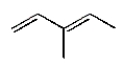
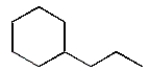
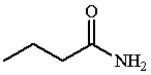
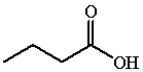
Deck 1: Bonding and Isomerism

Full screen (f)
exit full mode
Question
Given the following electronegativity values, predict the most polar covalent bond below:
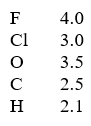
<strong>Given the following electronegativity values, predict the most polar covalent bond below:  </strong> A) -F B) C-Cl C) C-O D) C-H E) C-C <div style=padding-top: 35px>

A) -F
B) C-Cl
C) C-O
D) C-H
E) C-C
Use Space or
up arrow
down arrow
to flip the card.
Question
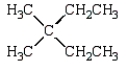
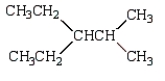
The structural formula for (CH3)2C(CH2CH3)2 is

A) <strong>The structural formula for (CH<sub>3</sub>)<sub>2</sub>C(CH<sub>2</sub>CH<sub>3</sub>)<sub>2</sub> is</strong> A)   B)   C)   D)   E)   <div style=padding-top: 35px>
B) <strong>The structural formula for (CH<sub>3</sub>)<sub>2</sub>C(CH<sub>2</sub>CH<sub>3</sub>)<sub>2</sub> is</strong> A)   B)   C)   D)   E)   <div style=padding-top: 35px>
C) <strong>The structural formula for (CH<sub>3</sub>)<sub>2</sub>C(CH<sub>2</sub>CH<sub>3</sub>)<sub>2</sub> is</strong> A)   B)   C)   D)   E)   <div style=padding-top: 35px>
D) <strong>The structural formula for (CH<sub>3</sub>)<sub>2</sub>C(CH<sub>2</sub>CH<sub>3</sub>)<sub>2</sub> is</strong> A)   B)   C)   D)   E)   <div style=padding-top: 35px>
E) <strong>The structural formula for (CH<sub>3</sub>)<sub>2</sub>C(CH<sub>2</sub>CH<sub>3</sub>)<sub>2</sub> is</strong> A)   B)   C)   D)   E)   <div style=padding-top: 35px>
Question
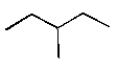
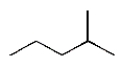
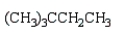
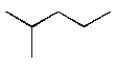
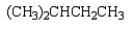
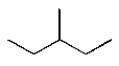
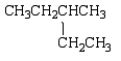
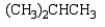
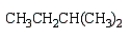
Which of the following abbreviated structural formulas is NOT an isomer of the others?

A) <strong>Which of the following abbreviated structural formulas is NOT an isomer of the others?</strong> A)   B)   C)   D)   E)   <div style=padding-top: 35px>
B) <strong>Which of the following abbreviated structural formulas is NOT an isomer of the others?</strong> A)   B)   C)   D)   E)   <div style=padding-top: 35px>
C) <strong>Which of the following abbreviated structural formulas is NOT an isomer of the others?</strong> A)   B)   C)   D)   E)   <div style=padding-top: 35px>
D) <strong>Which of the following abbreviated structural formulas is NOT an isomer of the others?</strong> A)   B)   C)   D)   E)   <div style=padding-top: 35px>
E) <strong>Which of the following abbreviated structural formulas is NOT an isomer of the others?</strong> A)   B)   C)   D)   E)   <div style=padding-top: 35px>
Question
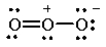
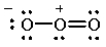
Which of the following Lewis Structures for ozone (O3) is incorrect?

A)<strong>Which of the following Lewis Structures for ozone (O<sub>3</sub>) is incorrect?</strong> A)  B)  C)  D)structures (A) and (B) are incorrect E)none of the above structures are incorrect <div style=padding-top: 35px>
B)<strong>Which of the following Lewis Structures for ozone (O<sub>3</sub>) is incorrect?</strong> A)  B)  C)  D)structures (A) and (B) are incorrect E)none of the above structures are incorrect <div style=padding-top: 35px>
C)<strong>Which of the following Lewis Structures for ozone (O<sub>3</sub>) is incorrect?</strong> A)  B)  C)  D)structures (A) and (B) are incorrect E)none of the above structures are incorrect <div style=padding-top: 35px>
D)structures (A) and (B) are incorrect
E)none of the above structures are incorrect
Question
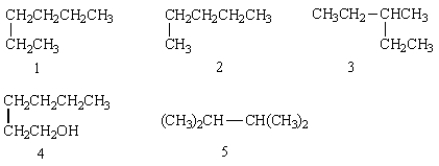
Which of the following molecules are structural isomers? <strong>Which of the following molecules are structural isomers?  </strong> A) 1, 2 and 3 B) 1, 3 and 4 C) 2, 3 and 5 D) 1, 3 and 5 E) 2 and 3 <div style=padding-top: 35px>

A) 1, 2 and 3
B) 1, 3 and 4
C) 2, 3 and 5
D) 1, 3 and 5
E) 2 and 3
Question
Which of the following elements is the most electronegative?

A) O
B) S
C) Se
D) Te
E) Po
Question
If the Cl-Cl bond length is 1.98Å and the C-C bond length is 1.54Å, what would you expect the bond length of Cl-C to be?

A) 0.74Å
B) 1.54Å
C) 1.76Å
D) 1.98Å
E) 3.52Å
Question
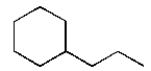
Which of the following structural formulas does not have the molecular formula C6H14?

A) <strong>Which of the following structural formulas does not have the molecular formula C<sub>6</sub>H<sub>14</sub>?</strong> A)   B)   C)   D)   E)   <div style=padding-top: 35px>
B) <strong>Which of the following structural formulas does not have the molecular formula C<sub>6</sub>H<sub>14</sub>?</strong> A)   B)   C)   D)   E)   <div style=padding-top: 35px>
C) <strong>Which of the following structural formulas does not have the molecular formula C<sub>6</sub>H<sub>14</sub>?</strong> A)   B)   C)   D)   E)   <div style=padding-top: 35px>
D) <strong>Which of the following structural formulas does not have the molecular formula C<sub>6</sub>H<sub>14</sub>?</strong> A)   B)   C)   D)   E)   <div style=padding-top: 35px>
E) <strong>Which of the following structural formulas does not have the molecular formula C<sub>6</sub>H<sub>14</sub>?</strong> A)   B)   C)   D)   E)   <div style=padding-top: 35px>
Question
What is the most electropositive element?

A) Li
B) Be
C) B
D) C
E) N
Question
Which of the following would you expect to have polar covalent bonds?

A) MgF2
B) N2
C) F2
D) NF3
E) NaF
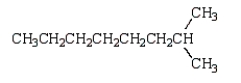
Question
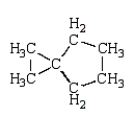
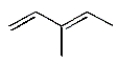
The structural formula <strong>The structural formula   has the molecular formula:</strong> A) C<sub>7</sub>H<sub>16</sub> B) C<sub>6</sub>H<sub>14</sub> C) C<sub>7</sub>H<sub>14</sub> D) C<sub>6</sub>H<sub>12</sub> E) C<sub>7</sub>H<sub>10</sub> <div style=padding-top: 35px> has the molecular formula:

A) C7H16
B) C6H14
C) C7H14
D) C6H12
E) C7H10
Question
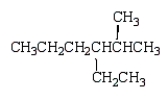
Which of the following structural formulas represents a structural isomer of CH3CH2CH2CH2CH3?

A) <strong>Which of the following structural formulas represents a structural isomer of CH<sub>3</sub>CH<sub>2</sub>CH<sub>2</sub>CH<sub>2</sub>CH<sub>3</sub>?</strong> A)   B)   C)   D)   E)   <div style=padding-top: 35px>
B) <strong>Which of the following structural formulas represents a structural isomer of CH<sub>3</sub>CH<sub>2</sub>CH<sub>2</sub>CH<sub>2</sub>CH<sub>3</sub>?</strong> A)   B)   C)   D)   E)   <div style=padding-top: 35px>
C) <strong>Which of the following structural formulas represents a structural isomer of CH<sub>3</sub>CH<sub>2</sub>CH<sub>2</sub>CH<sub>2</sub>CH<sub>3</sub>?</strong> A)   B)   C)   D)   E)   <div style=padding-top: 35px>
D) <strong>Which of the following structural formulas represents a structural isomer of CH<sub>3</sub>CH<sub>2</sub>CH<sub>2</sub>CH<sub>2</sub>CH<sub>3</sub>?</strong> A)   B)   C)   D)   E)   <div style=padding-top: 35px>
E) <strong>Which of the following structural formulas represents a structural isomer of CH<sub>3</sub>CH<sub>2</sub>CH<sub>2</sub>CH<sub>2</sub>CH<sub>3</sub>?</strong> A)   B)   C)   D)   E)   <div style=padding-top: 35px>
Question
Which molecule has nonpolar covalent bonds?

A) NO
B) N2
C) BCl3
D) HF
E) CCl4
Question
Which of the following abbreviated structural formulas represents a structural isomer of CH3CH2CH2CH2CH3?

A) <strong>Which of the following abbreviated structural formulas represents a structural isomer of CH<sub>3</sub>CH<sub>2</sub>CH<sub>2</sub>CH<sub>2</sub>CH<sub>3</sub>?</strong> A)   B)   C)   D)   E)   <div style=padding-top: 35px>
B) <strong>Which of the following abbreviated structural formulas represents a structural isomer of CH<sub>3</sub>CH<sub>2</sub>CH<sub>2</sub>CH<sub>2</sub>CH<sub>3</sub>?</strong> A)   B)   C)   D)   E)   <div style=padding-top: 35px>
C) <strong>Which of the following abbreviated structural formulas represents a structural isomer of CH<sub>3</sub>CH<sub>2</sub>CH<sub>2</sub>CH<sub>2</sub>CH<sub>3</sub>?</strong> A)   B)   C)   D)   E)   <div style=padding-top: 35px>
D) <strong>Which of the following abbreviated structural formulas represents a structural isomer of CH<sub>3</sub>CH<sub>2</sub>CH<sub>2</sub>CH<sub>2</sub>CH<sub>3</sub>?</strong> A)   B)   C)   D)   E)   <div style=padding-top: 35px>
E) <strong>Which of the following abbreviated structural formulas represents a structural isomer of CH<sub>3</sub>CH<sub>2</sub>CH<sub>2</sub>CH<sub>2</sub>CH<sub>3</sub>?</strong> A)   B)   C)   D)   E)   <div style=padding-top: 35px>
Question
Which of the following would you expect to have ionic bonds?

A) HBr
B) CO
C) ICl
D) CsF
E) NF3
Question
The number of possible acyclic hydrocarbons with the molecular formula C4H6 is

A) 2
B) 3
C) 4
D) 5
E) 6
Question
The number of electrons in the valence shell of sulfur is:

A) 2
B) 3
C) 4
D) 5
E) 6
Question
Which of the following molecules are structural isomers? <strong>Which of the following molecules are structural isomers?  </strong> A) 1, 2, and 4 B) 1, 2, and 3 C) 1, 3, and 4 D) 2, 3, and 4 E) 3 and 4 <div style=padding-top: 35px>

A) 1, 2, and 4
B) 1, 2, and 3
C) 1, 3, and 4
D) 2, 3, and 4
E) 3 and 4
Question
Which of the following elements has three electrons in the valence (outer) shell?

A) C
B) B
C) S
D) F
E) N
Question
The most electronegative elements in the periodic table are generally found

A) toward the left in a horizontal row and toward the top in a column.
B) toward the right in a horizontal row and toward the top in a column.
C) toward the left in a horizontal row and toward the bottom in a column.
D) toward the right in a horizontal row and toward the bottom in a column.
E) distributed randomly throughout the table.
Question
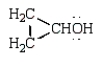
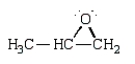
Which of the following molecules is heterocyclic?

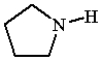
A) <strong>Which of the following molecules is heterocyclic?</strong> A)   B)   C)   D)   E)   <div style=padding-top: 35px>
B) <strong>Which of the following molecules is heterocyclic?</strong> A)   B)   C)   D)   E)   <div style=padding-top: 35px>
C) <strong>Which of the following molecules is heterocyclic?</strong> A)   B)   C)   D)   E)   <div style=padding-top: 35px>
D) <strong>Which of the following molecules is heterocyclic?</strong> A)   B)   C)   D)   E)   <div style=padding-top: 35px>
E) <strong>Which of the following molecules is heterocyclic?</strong> A)   B)   C)   D)   E)   <div style=padding-top: 35px>
Question
Which of the following molecules can be classified as an amide?

A) <strong>Which of the following molecules can be classified as an amide?</strong> A)   B)   C)   D)   E) Answers A and D <div style=padding-top: 35px>
B) <strong>Which of the following molecules can be classified as an amide?</strong> A)   B)   C)   D)   E) Answers A and D <div style=padding-top: 35px>
C) <strong>Which of the following molecules can be classified as an amide?</strong> A)   B)   C)   D)   E) Answers A and D <div style=padding-top: 35px>
D) <strong>Which of the following molecules can be classified as an amide?</strong> A)   B)   C)   D)   E) Answers A and D <div style=padding-top: 35px>
E) Answers A and D
Question
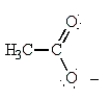
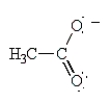
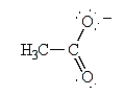
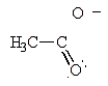
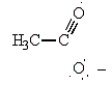
The curved arrows in the resonance structure for the acetate ion shown below indicate the following alternative resonance structure for the acetate ion: <strong>The curved arrows in the resonance structure for the acetate ion shown below indicate the following alternative resonance structure for the acetate ion:  </strong> A)   B)   C)   D)   E)   <div style=padding-top: 35px>

A) <strong>The curved arrows in the resonance structure for the acetate ion shown below indicate the following alternative resonance structure for the acetate ion:  </strong> A)   B)   C)   D)   E)   <div style=padding-top: 35px>
B) <strong>The curved arrows in the resonance structure for the acetate ion shown below indicate the following alternative resonance structure for the acetate ion:  </strong> A)   B)   C)   D)   E)   <div style=padding-top: 35px>
C) <strong>The curved arrows in the resonance structure for the acetate ion shown below indicate the following alternative resonance structure for the acetate ion:  </strong> A)   B)   C)   D)   E)   <div style=padding-top: 35px>
D) <strong>The curved arrows in the resonance structure for the acetate ion shown below indicate the following alternative resonance structure for the acetate ion:  </strong> A)   B)   C)   D)   E)   <div style=padding-top: 35px>
E) <strong>The curved arrows in the resonance structure for the acetate ion shown below indicate the following alternative resonance structure for the acetate ion:  </strong> A)   B)   C)   D)   E)   <div style=padding-top: 35px>
Question
The formal charges in the perchlorate ion are: <strong>The formal charges in the perchlorate ion are:  </strong> A) -1 on each O and +3 on the Cl. B) 0 on each O and -1 on the Cl. C) -1 on each O and +4 on the Cl. D) -1/4 on each O and 0 on the Cl. E) +1 on each O and -1 on the Cl. <div style=padding-top: 35px>

A) -1 on each O and +3 on the Cl.
B) 0 on each O and -1 on the Cl.
C) -1 on each O and +4 on the Cl.
D) -1/4 on each O and 0 on the Cl.
E) +1 on each O and -1 on the Cl.
Question
What is the percent s character in an sp2 hybridized orbital?

A) 25%
B) 33%
C) 50%
D) 67%
E) 75%
Question
What is the formal charge of N in HNO3, as seen below? <strong>What is the formal charge of N in HNO<sub>3</sub>, as seen below?  </strong> A) +1 B) +2 C) 0 D) -1 E) -2 <div style=padding-top: 35px>

A) +1
B) +2
C) 0
D) -1
E) -2
Question
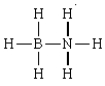
The formal charges in the complex <strong>The formal charges in the complex   are:</strong> A) 0 on each H, +1 on N, and -1 on B. B) +1 on each H, +1 on N, and -1 on B. C) 0 on each H, -1 on N, and +1 on B. D) 0 on each H, 0 on N, and 0 on B. E) -1 on each H, +3 on N, and +3 on B. <div style=padding-top: 35px> are:

A) 0 on each H, +1 on N, and -1 on B.
B) +1 on each H, +1 on N, and -1 on B.
C) 0 on each H, -1 on N, and +1 on B.
D) 0 on each H, 0 on N, and 0 on B.
E) -1 on each H, +3 on N, and +3 on B.
Question
For carbon monoxide, <strong>For carbon monoxide,  formal charge of:</strong> A) +1 B) -1 C) 0 D) -2 E) +2 <div style=padding-top: 35px> formal charge of:

A) +1
B) -1
C) 0
D) -2
E) +2
Question
The maximum number of electrons that a molecular orbital can contain is:

A) 1
B) 2
C) 3
D) 4
E) 5
Question
For carbon monoxide, <strong>For carbon monoxide,  formal charge of:</strong> A) +1 B) -1 C) 0 D) -2 E) +2 <div style=padding-top: 35px> formal charge of:

A) +1
B) -1
C) 0
D) -2
E) +2
Question
The structural formula <strong>The structural formula   has the molecular formula:</strong> A) C<sub>7</sub>H<sub>16</sub> B) C<sub>6</sub>H<sub>14</sub> C) C<sub>7</sub>H<sub>14</sub> D) C<sub>6</sub>H<sub>12</sub> E) C<sub>7</sub>H<sub>10</sub> <div style=padding-top: 35px> has the molecular formula:

A) C7H16
B) C6H14
C) C7H14
D) C6H12
E) C7H10
Question
Which of the following molecules is acyclic?

A) <strong>Which of the following molecules is acyclic?</strong> A)   B)   C)   D)   E)   <div style=padding-top: 35px>
B) <strong>Which of the following molecules is acyclic?</strong> A)   B)   C)   D)   E)   <div style=padding-top: 35px>
C) <strong>Which of the following molecules is acyclic?</strong> A)   B)   C)   D)   E)   <div style=padding-top: 35px>
D) <strong>Which of the following molecules is acyclic?</strong> A)   B)   C)   D)   E)   <div style=padding-top: 35px>
E) <strong>Which of the following molecules is acyclic?</strong> A)   B)   C)   D)   E)   <div style=padding-top: 35px>
Question
The approximate H-C-H bond angle in methane is:

A) 60°
B) 90°
C) 109.5°
D) 120°
E) 180°
Question
Which of the following structures is a resonance structure of <strong>Which of the following structures is a resonance structure of   :</strong> A)   B)   C)   D)   E)   <div style=padding-top: 35px> :

A) <strong>Which of the following structures is a resonance structure of   :</strong> A)   B)   C)   D)   E)   <div style=padding-top: 35px>
B) <strong>Which of the following structures is a resonance structure of   :</strong> A)   B)   C)   D)   E)   <div style=padding-top: 35px>
C) <strong>Which of the following structures is a resonance structure of   :</strong> A)   B)   C)   D)   E)   <div style=padding-top: 35px>
D) <strong>Which of the following structures is a resonance structure of   :</strong> A)   B)   C)   D)   E)   <div style=padding-top: 35px>
E) <strong>Which of the following structures is a resonance structure of   :</strong> A)   B)   C)   D)   E)   <div style=padding-top: 35px>
Question
Which of the following molecules contain the same functional group? <strong>Which of the following molecules contain the same functional group? <sub> </sub>   </strong> A) 2 and 3 B) 1, 2 and 4 C) 2 and 4 D) 1 and 2 E) 1 and 4 <div style=padding-top: 35px>

A) 2 and 3
B) 1, 2 and 4
C) 2 and 4
D) 1 and 2
E) 1 and 4
Question
The Lewis structure of methane is <strong>The Lewis structure of methane is   The shape of the methane can be described as a</strong> A) square planar B) trigonal planar C) trigonal pyramidal D) tetrahedral E) square pyramidal <div style=padding-top: 35px> The shape of the methane can be described as a

A) square planar
B) trigonal planar
C) trigonal pyramidal
D) tetrahedral
E) square pyramidal
Question
Which of the following molecules contain the same functional group?
<strong>Which of the following molecules contain the same functional group?  </strong> A) 1, 2 and 3 B) 1, 3 and 4 C) 1 and 2 D) 2 and 4 E) 3 and 4 <div style=padding-top: 35px>

A) 1, 2 and 3
B) 1, 3 and 4
C) 1 and 2
D) 2 and 4
E) 3 and 4
Question
The structural formula for (CH3CH2)2CHCH2CH(CH3)2 is

A) C9H20
B) <strong>The structural formula for (CH<sub>3</sub>CH<sub>2</sub>)<sub>2</sub>CHCH<sub>2</sub>CH(CH<sub>3</sub>)<sub>2</sub> is</strong> A) C<sub>9</sub>H<sub>20</sub> B)   C)   D)   E)   <div style=padding-top: 35px>
C) <strong>The structural formula for (CH<sub>3</sub>CH<sub>2</sub>)<sub>2</sub>CHCH<sub>2</sub>CH(CH<sub>3</sub>)<sub>2</sub> is</strong> A) C<sub>9</sub>H<sub>20</sub> B)   C)   D)   E)   <div style=padding-top: 35px>
D) <strong>The structural formula for (CH<sub>3</sub>CH<sub>2</sub>)<sub>2</sub>CHCH<sub>2</sub>CH(CH<sub>3</sub>)<sub>2</sub> is</strong> A) C<sub>9</sub>H<sub>20</sub> B)   C)   D)   E)   <div style=padding-top: 35px>
E) <strong>The structural formula for (CH<sub>3</sub>CH<sub>2</sub>)<sub>2</sub>CHCH<sub>2</sub>CH(CH<sub>3</sub>)<sub>2</sub> is</strong> A) C<sub>9</sub>H<sub>20</sub> B)   C)   D)   E)   <div style=padding-top: 35px>
Question
The structural formula <strong>The structural formula   has the molecular formula:</strong> A) C<sub>10</sub>H<sub>16</sub> B) C<sub>9</sub>H<sub>16</sub> C) C<sub>11</sub>H<sub>22</sub> D) C<sub>9</sub>H<sub>14</sub> E) C<sub>10</sub>H<sub>18</sub> <div style=padding-top: 35px> has the molecular formula:

A) C10H16
B) C9H16
C) C11H22
D) C9H14
E) C10H18
Question
Which of the following structural formulas has the molecular formula C6H12? <strong>Which of the following structural formulas has the molecular formula C<sub>6</sub>H<sub>12</sub>?  </strong> A) 2 and 3 B) 1 and 4 C) 1, 4, and 5 D) 1 and 2 E) 4 and 5 <div style=padding-top: 35px>

A) 2 and 3
B) 1 and 4
C) 1, 4, and 5
D) 1 and 2
E) 4 and 5
Unlock Deck
Sign up to unlock the cards in this deck!
Unlock Deck
Unlock Deck
1/40
auto play flashcards
Play
simple tutorial
Full screen (f)
exit full mode
Deck 1: Bonding and Isomerism
1
Given the following electronegativity values, predict the most polar covalent bond below:
<strong>Given the following electronegativity values, predict the most polar covalent bond below:  </strong> A) -F B) C-Cl C) C-O D) C-H E) C-C

A) -F
B) C-Cl
C) C-O
D) C-H
E) C-C
-F
2
The structural formula for (CH3)2C(CH2CH3)2 is

A) <strong>The structural formula for (CH<sub>3</sub>)<sub>2</sub>C(CH<sub>2</sub>CH<sub>3</sub>)<sub>2</sub> is</strong> A)   B)   C)   D)   E)

B) <strong>The structural formula for (CH<sub>3</sub>)<sub>2</sub>C(CH<sub>2</sub>CH<sub>3</sub>)<sub>2</sub> is</strong> A)   B)   C)   D)   E)
C) <strong>The structural formula for (CH<sub>3</sub>)<sub>2</sub>C(CH<sub>2</sub>CH<sub>3</sub>)<sub>2</sub> is</strong> A)   B)   C)   D)   E)
D) <strong>The structural formula for (CH<sub>3</sub>)<sub>2</sub>C(CH<sub>2</sub>CH<sub>3</sub>)<sub>2</sub> is</strong> A)   B)   C)   D)   E)
E) <strong>The structural formula for (CH<sub>3</sub>)<sub>2</sub>C(CH<sub>2</sub>CH<sub>3</sub>)<sub>2</sub> is</strong> A)   B)   C)   D)   E)
3
Which of the following abbreviated structural formulas is NOT an isomer of the others?

A) <strong>Which of the following abbreviated structural formulas is NOT an isomer of the others?</strong> A)   B)   C)   D)   E)
B) <strong>Which of the following abbreviated structural formulas is NOT an isomer of the others?</strong> A)   B)   C)   D)   E)
C) <strong>Which of the following abbreviated structural formulas is NOT an isomer of the others?</strong> A)   B)   C)   D)   E)
D) <strong>Which of the following abbreviated structural formulas is NOT an isomer of the others?</strong> A)   B)   C)   D)   E)
E) <strong>Which of the following abbreviated structural formulas is NOT an isomer of the others?</strong> A)   B)   C)   D)   E)
4
Which of the following Lewis Structures for ozone (O3) is incorrect?

A)<strong>Which of the following Lewis Structures for ozone (O<sub>3</sub>) is incorrect?</strong> A)  B)  C)  D)structures (A) and (B) are incorrect E)none of the above structures are incorrect
B)<strong>Which of the following Lewis Structures for ozone (O<sub>3</sub>) is incorrect?</strong> A)  B)  C)  D)structures (A) and (B) are incorrect E)none of the above structures are incorrect
C)<strong>Which of the following Lewis Structures for ozone (O<sub>3</sub>) is incorrect?</strong> A)  B)  C)  D)structures (A) and (B) are incorrect E)none of the above structures are incorrect
D)structures (A) and (B) are incorrect
E)none of the above structures are incorrect
Unlock Deck
Unlock for access to all 40 flashcards in this deck.
Unlock Deck
k this deck
5
Which of the following molecules are structural isomers? <strong>Which of the following molecules are structural isomers?  </strong> A) 1, 2 and 3 B) 1, 3 and 4 C) 2, 3 and 5 D) 1, 3 and 5 E) 2 and 3
A) 1, 2 and 3
B) 1, 3 and 4
C) 2, 3 and 5
D) 1, 3 and 5
E) 2 and 3
Unlock Deck
Unlock for access to all 40 flashcards in this deck.
Unlock Deck
k this deck
6
Which of the following elements is the most electronegative?

A) O
B) S
C) Se
D) Te
E) Po
Unlock Deck
Unlock for access to all 40 flashcards in this deck.
Unlock Deck
k this deck
7
If the Cl-Cl bond length is 1.98Å and the C-C bond length is 1.54Å, what would you expect the bond length of Cl-C to be?

A) 0.74Å
B) 1.54Å
C) 1.76Å
D) 1.98Å
E) 3.52Å
Unlock Deck
Unlock for access to all 40 flashcards in this deck.
Unlock Deck
k this deck
8
Which of the following structural formulas does not have the molecular formula C6H14?

A) <strong>Which of the following structural formulas does not have the molecular formula C<sub>6</sub>H<sub>14</sub>?</strong> A)   B)   C)   D)   E)
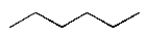
B) <strong>Which of the following structural formulas does not have the molecular formula C<sub>6</sub>H<sub>14</sub>?</strong> A)   B)   C)   D)   E)
C) <strong>Which of the following structural formulas does not have the molecular formula C<sub>6</sub>H<sub>14</sub>?</strong> A)   B)   C)   D)   E)
D) <strong>Which of the following structural formulas does not have the molecular formula C<sub>6</sub>H<sub>14</sub>?</strong> A)   B)   C)   D)   E)
E) <strong>Which of the following structural formulas does not have the molecular formula C<sub>6</sub>H<sub>14</sub>?</strong> A)   B)   C)   D)   E)
Unlock Deck
Unlock for access to all 40 flashcards in this deck.
Unlock Deck
k this deck
9
What is the most electropositive element?

A) Li
B) Be
C) B
D) C
E) N
Unlock Deck
Unlock for access to all 40 flashcards in this deck.
Unlock Deck
k this deck
10
Which of the following would you expect to have polar covalent bonds?

A) MgF2
B) N2
C) F2
D) NF3
E) NaF
Unlock Deck
Unlock for access to all 40 flashcards in this deck.
Unlock Deck
k this deck
11
The structural formula <strong>The structural formula   has the molecular formula:</strong> A) C<sub>7</sub>H<sub>16</sub> B) C<sub>6</sub>H<sub>14</sub> C) C<sub>7</sub>H<sub>14</sub> D) C<sub>6</sub>H<sub>12</sub> E) C<sub>7</sub>H<sub>10</sub> has the molecular formula:

A) C7H16
B) C6H14
C) C7H14
D) C6H12
E) C7H10
Unlock Deck
Unlock for access to all 40 flashcards in this deck.
Unlock Deck
k this deck
12
Which of the following structural formulas represents a structural isomer of CH3CH2CH2CH2CH3?

A) <strong>Which of the following structural formulas represents a structural isomer of CH<sub>3</sub>CH<sub>2</sub>CH<sub>2</sub>CH<sub>2</sub>CH<sub>3</sub>?</strong> A)   B)   C)   D)   E)
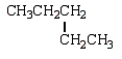
B) <strong>Which of the following structural formulas represents a structural isomer of CH<sub>3</sub>CH<sub>2</sub>CH<sub>2</sub>CH<sub>2</sub>CH<sub>3</sub>?</strong> A)   B)   C)   D)   E)
C) <strong>Which of the following structural formulas represents a structural isomer of CH<sub>3</sub>CH<sub>2</sub>CH<sub>2</sub>CH<sub>2</sub>CH<sub>3</sub>?</strong> A)   B)   C)   D)   E)
D) <strong>Which of the following structural formulas represents a structural isomer of CH<sub>3</sub>CH<sub>2</sub>CH<sub>2</sub>CH<sub>2</sub>CH<sub>3</sub>?</strong> A)   B)   C)   D)   E)
E) <strong>Which of the following structural formulas represents a structural isomer of CH<sub>3</sub>CH<sub>2</sub>CH<sub>2</sub>CH<sub>2</sub>CH<sub>3</sub>?</strong> A)   B)   C)   D)   E)
Unlock Deck
Unlock for access to all 40 flashcards in this deck.
Unlock Deck
k this deck
13
Which molecule has nonpolar covalent bonds?

A) NO
B) N2
C) BCl3
D) HF
E) CCl4
Unlock Deck
Unlock for access to all 40 flashcards in this deck.
Unlock Deck
k this deck
14
Which of the following abbreviated structural formulas represents a structural isomer of CH3CH2CH2CH2CH3?

A) <strong>Which of the following abbreviated structural formulas represents a structural isomer of CH<sub>3</sub>CH<sub>2</sub>CH<sub>2</sub>CH<sub>2</sub>CH<sub>3</sub>?</strong> A)   B)   C)   D)   E)
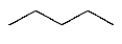
B) <strong>Which of the following abbreviated structural formulas represents a structural isomer of CH<sub>3</sub>CH<sub>2</sub>CH<sub>2</sub>CH<sub>2</sub>CH<sub>3</sub>?</strong> A)   B)   C)   D)   E)
C) <strong>Which of the following abbreviated structural formulas represents a structural isomer of CH<sub>3</sub>CH<sub>2</sub>CH<sub>2</sub>CH<sub>2</sub>CH<sub>3</sub>?</strong> A)   B)   C)   D)   E)
D) <strong>Which of the following abbreviated structural formulas represents a structural isomer of CH<sub>3</sub>CH<sub>2</sub>CH<sub>2</sub>CH<sub>2</sub>CH<sub>3</sub>?</strong> A)   B)   C)   D)   E)
E) <strong>Which of the following abbreviated structural formulas represents a structural isomer of CH<sub>3</sub>CH<sub>2</sub>CH<sub>2</sub>CH<sub>2</sub>CH<sub>3</sub>?</strong> A)   B)   C)   D)   E)
Unlock Deck
Unlock for access to all 40 flashcards in this deck.
Unlock Deck
k this deck
15
Which of the following would you expect to have ionic bonds?

A) HBr
B) CO
C) ICl
D) CsF
E) NF3
Unlock Deck
Unlock for access to all 40 flashcards in this deck.
Unlock Deck
k this deck
16
The number of possible acyclic hydrocarbons with the molecular formula C4H6 is

A) 2
B) 3
C) 4
D) 5
E) 6
Unlock Deck
Unlock for access to all 40 flashcards in this deck.
Unlock Deck
k this deck
17
The number of electrons in the valence shell of sulfur is:

A) 2
B) 3
C) 4
D) 5
E) 6
Unlock Deck
Unlock for access to all 40 flashcards in this deck.
Unlock Deck
k this deck
18
Which of the following molecules are structural isomers? <strong>Which of the following molecules are structural isomers?  </strong> A) 1, 2, and 4 B) 1, 2, and 3 C) 1, 3, and 4 D) 2, 3, and 4 E) 3 and 4

A) 1, 2, and 4
B) 1, 2, and 3
C) 1, 3, and 4
D) 2, 3, and 4
E) 3 and 4
Unlock Deck
Unlock for access to all 40 flashcards in this deck.
Unlock Deck
k this deck
19
Which of the following elements has three electrons in the valence (outer) shell?

A) C
B) B
C) S
D) F
E) N
Unlock Deck
Unlock for access to all 40 flashcards in this deck.
Unlock Deck
k this deck
20
The most electronegative elements in the periodic table are generally found

A) toward the left in a horizontal row and toward the top in a column.
B) toward the right in a horizontal row and toward the top in a column.
C) toward the left in a horizontal row and toward the bottom in a column.
D) toward the right in a horizontal row and toward the bottom in a column.
E) distributed randomly throughout the table.
Unlock Deck
Unlock for access to all 40 flashcards in this deck.
Unlock Deck
k this deck
21
Which of the following molecules is heterocyclic?

A) <strong>Which of the following molecules is heterocyclic?</strong> A)   B)   C)   D)   E)
B) <strong>Which of the following molecules is heterocyclic?</strong> A)   B)   C)   D)   E)
C) <strong>Which of the following molecules is heterocyclic?</strong> A)   B)   C)   D)   E)
D) <strong>Which of the following molecules is heterocyclic?</strong> A)   B)   C)   D)   E)
E) <strong>Which of the following molecules is heterocyclic?</strong> A)   B)   C)   D)   E)
Unlock Deck
Unlock for access to all 40 flashcards in this deck.
Unlock Deck
k this deck
22
Which of the following molecules can be classified as an amide?

A) <strong>Which of the following molecules can be classified as an amide?</strong> A)   B)   C)   D)   E) Answers A and D
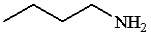
B) <strong>Which of the following molecules can be classified as an amide?</strong> A)   B)   C)   D)   E) Answers A and D
C) <strong>Which of the following molecules can be classified as an amide?</strong> A)   B)   C)   D)   E) Answers A and D
D) <strong>Which of the following molecules can be classified as an amide?</strong> A)   B)   C)   D)   E) Answers A and D
E) Answers A and D
Unlock Deck
Unlock for access to all 40 flashcards in this deck.
Unlock Deck
k this deck
23
The curved arrows in the resonance structure for the acetate ion shown below indicate the following alternative resonance structure for the acetate ion: <strong>The curved arrows in the resonance structure for the acetate ion shown below indicate the following alternative resonance structure for the acetate ion:  </strong> A)   B)   C)   D)   E)

A) <strong>The curved arrows in the resonance structure for the acetate ion shown below indicate the following alternative resonance structure for the acetate ion:  </strong> A)   B)   C)   D)   E)
B) <strong>The curved arrows in the resonance structure for the acetate ion shown below indicate the following alternative resonance structure for the acetate ion:  </strong> A)   B)   C)   D)   E)
C) <strong>The curved arrows in the resonance structure for the acetate ion shown below indicate the following alternative resonance structure for the acetate ion:  </strong> A)   B)   C)   D)   E)
D) <strong>The curved arrows in the resonance structure for the acetate ion shown below indicate the following alternative resonance structure for the acetate ion:  </strong> A)   B)   C)   D)   E)
E) <strong>The curved arrows in the resonance structure for the acetate ion shown below indicate the following alternative resonance structure for the acetate ion:  </strong> A)   B)   C)   D)   E)
Unlock Deck
Unlock for access to all 40 flashcards in this deck.
Unlock Deck
k this deck
24
The formal charges in the perchlorate ion are: <strong>The formal charges in the perchlorate ion are:  </strong> A) -1 on each O and +3 on the Cl. B) 0 on each O and -1 on the Cl. C) -1 on each O and +4 on the Cl. D) -1/4 on each O and 0 on the Cl. E) +1 on each O and -1 on the Cl.
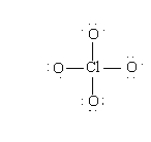
A) -1 on each O and +3 on the Cl.
B) 0 on each O and -1 on the Cl.
C) -1 on each O and +4 on the Cl.
D) -1/4 on each O and 0 on the Cl.
E) +1 on each O and -1 on the Cl.
Unlock Deck
Unlock for access to all 40 flashcards in this deck.
Unlock Deck
k this deck
25
What is the percent s character in an sp2 hybridized orbital?

A) 25%
B) 33%
C) 50%
D) 67%
E) 75%
Unlock Deck
Unlock for access to all 40 flashcards in this deck.
Unlock Deck
k this deck
26
What is the formal charge of N in HNO3, as seen below? <strong>What is the formal charge of N in HNO<sub>3</sub>, as seen below?  </strong> A) +1 B) +2 C) 0 D) -1 E) -2
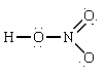
A) +1
B) +2
C) 0
D) -1
E) -2
Unlock Deck
Unlock for access to all 40 flashcards in this deck.
Unlock Deck
k this deck
27
The formal charges in the complex <strong>The formal charges in the complex   are:</strong> A) 0 on each H, +1 on N, and -1 on B. B) +1 on each H, +1 on N, and -1 on B. C) 0 on each H, -1 on N, and +1 on B. D) 0 on each H, 0 on N, and 0 on B. E) -1 on each H, +3 on N, and +3 on B. are:

A) 0 on each H, +1 on N, and -1 on B.
B) +1 on each H, +1 on N, and -1 on B.
C) 0 on each H, -1 on N, and +1 on B.
D) 0 on each H, 0 on N, and 0 on B.
E) -1 on each H, +3 on N, and +3 on B.
Unlock Deck
Unlock for access to all 40 flashcards in this deck.
Unlock Deck
k this deck
28
For carbon monoxide, <strong>For carbon monoxide,  formal charge of:</strong> A) +1 B) -1 C) 0 D) -2 E) +2 formal charge of:

A) +1
B) -1
C) 0
D) -2
E) +2
Unlock Deck
Unlock for access to all 40 flashcards in this deck.
Unlock Deck
k this deck
29
The maximum number of electrons that a molecular orbital can contain is:

A) 1
B) 2
C) 3
D) 4
E) 5
Unlock Deck
Unlock for access to all 40 flashcards in this deck.
Unlock Deck
k this deck
30
For carbon monoxide, <strong>For carbon monoxide,  formal charge of:</strong> A) +1 B) -1 C) 0 D) -2 E) +2 formal charge of:

A) +1
B) -1
C) 0
D) -2
E) +2
Unlock Deck
Unlock for access to all 40 flashcards in this deck.
Unlock Deck
k this deck
31
The structural formula <strong>The structural formula   has the molecular formula:</strong> A) C<sub>7</sub>H<sub>16</sub> B) C<sub>6</sub>H<sub>14</sub> C) C<sub>7</sub>H<sub>14</sub> D) C<sub>6</sub>H<sub>12</sub> E) C<sub>7</sub>H<sub>10</sub> has the molecular formula:

A) C7H16
B) C6H14
C) C7H14
D) C6H12
E) C7H10
Unlock Deck
Unlock for access to all 40 flashcards in this deck.
Unlock Deck
k this deck
32
Which of the following molecules is acyclic?

A) <strong>Which of the following molecules is acyclic?</strong> A)   B)   C)   D)   E)
B) <strong>Which of the following molecules is acyclic?</strong> A)   B)   C)   D)   E)
C) <strong>Which of the following molecules is acyclic?</strong> A)   B)   C)   D)   E)
D) <strong>Which of the following molecules is acyclic?</strong> A)   B)   C)   D)   E)
E) <strong>Which of the following molecules is acyclic?</strong> A)   B)   C)   D)   E)
Unlock Deck
Unlock for access to all 40 flashcards in this deck.
Unlock Deck
k this deck
33
The approximate H-C-H bond angle in methane is:

A) 60°
B) 90°
C) 109.5°
D) 120°
E) 180°
Unlock Deck
Unlock for access to all 40 flashcards in this deck.
Unlock Deck
k this deck
34
Which of the following structures is a resonance structure of <strong>Which of the following structures is a resonance structure of   :</strong> A)   B)   C)   D)   E)   :
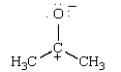
A) <strong>Which of the following structures is a resonance structure of   :</strong> A)   B)   C)   D)   E)
B) <strong>Which of the following structures is a resonance structure of   :</strong> A)   B)   C)   D)   E)
C) <strong>Which of the following structures is a resonance structure of   :</strong> A)   B)   C)   D)   E)
D) <strong>Which of the following structures is a resonance structure of   :</strong> A)   B)   C)   D)   E)
E) <strong>Which of the following structures is a resonance structure of   :</strong> A)   B)   C)   D)   E)
Unlock Deck
Unlock for access to all 40 flashcards in this deck.
Unlock Deck
k this deck
35
Which of the following molecules contain the same functional group? <strong>Which of the following molecules contain the same functional group? <sub> </sub>   </strong> A) 2 and 3 B) 1, 2 and 4 C) 2 and 4 D) 1 and 2 E) 1 and 4


A) 2 and 3
B) 1, 2 and 4
C) 2 and 4
D) 1 and 2
E) 1 and 4
Unlock Deck
Unlock for access to all 40 flashcards in this deck.
Unlock Deck
k this deck
36
The Lewis structure of methane is <strong>The Lewis structure of methane is   The shape of the methane can be described as a</strong> A) square planar B) trigonal planar C) trigonal pyramidal D) tetrahedral E) square pyramidal The shape of the methane can be described as a

A) square planar
B) trigonal planar
C) trigonal pyramidal
D) tetrahedral
E) square pyramidal
Unlock Deck
Unlock for access to all 40 flashcards in this deck.
Unlock Deck
k this deck
37
Which of the following molecules contain the same functional group?
<strong>Which of the following molecules contain the same functional group?  </strong> A) 1, 2 and 3 B) 1, 3 and 4 C) 1 and 2 D) 2 and 4 E) 3 and 4

A) 1, 2 and 3
B) 1, 3 and 4
C) 1 and 2
D) 2 and 4
E) 3 and 4
Unlock Deck
Unlock for access to all 40 flashcards in this deck.
Unlock Deck
k this deck
38
The structural formula for (CH3CH2)2CHCH2CH(CH3)2 is

A) C9H20
B) <strong>The structural formula for (CH<sub>3</sub>CH<sub>2</sub>)<sub>2</sub>CHCH<sub>2</sub>CH(CH<sub>3</sub>)<sub>2</sub> is</strong> A) C<sub>9</sub>H<sub>20</sub> B)   C)   D)   E)
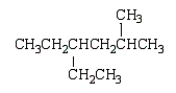
C) <strong>The structural formula for (CH<sub>3</sub>CH<sub>2</sub>)<sub>2</sub>CHCH<sub>2</sub>CH(CH<sub>3</sub>)<sub>2</sub> is</strong> A) C<sub>9</sub>H<sub>20</sub> B)   C)   D)   E)
D) <strong>The structural formula for (CH<sub>3</sub>CH<sub>2</sub>)<sub>2</sub>CHCH<sub>2</sub>CH(CH<sub>3</sub>)<sub>2</sub> is</strong> A) C<sub>9</sub>H<sub>20</sub> B)   C)   D)   E)
E) <strong>The structural formula for (CH<sub>3</sub>CH<sub>2</sub>)<sub>2</sub>CHCH<sub>2</sub>CH(CH<sub>3</sub>)<sub>2</sub> is</strong> A) C<sub>9</sub>H<sub>20</sub> B)   C)   D)   E)
Unlock Deck
Unlock for access to all 40 flashcards in this deck.
Unlock Deck
k this deck
39
The structural formula <strong>The structural formula   has the molecular formula:</strong> A) C<sub>10</sub>H<sub>16</sub> B) C<sub>9</sub>H<sub>16</sub> C) C<sub>11</sub>H<sub>22</sub> D) C<sub>9</sub>H<sub>14</sub> E) C<sub>10</sub>H<sub>18</sub> has the molecular formula:

A) C10H16
B) C9H16
C) C11H22
D) C9H14
E) C10H18
Unlock Deck
Unlock for access to all 40 flashcards in this deck.
Unlock Deck
k this deck
40
Which of the following structural formulas has the molecular formula C6H12? <strong>Which of the following structural formulas has the molecular formula C<sub>6</sub>H<sub>12</sub>?  </strong> A) 2 and 3 B) 1 and 4 C) 1, 4, and 5 D) 1 and 2 E) 4 and 5
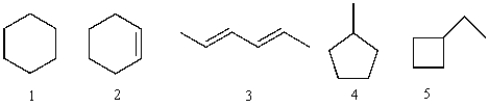
A) 2 and 3
B) 1 and 4
C) 1, 4, and 5
D) 1 and 2
E) 4 and 5
Unlock Deck
Unlock for access to all 40 flashcards in this deck.
Unlock Deck
k this deck
locked card icon
Unlock Deck
Unlock for access to all 40 flashcards in this deck.