







 Chat with AI

Deck 50: Drugs for Eye and Ear Disorders
Full screen (f)

Question

Question
Question
Question
Question
Question
Question
Question
Question
Question
Question
Question
Question
Question
Question
Question
Question
Question
Question
Question
Question
Question
Question
Question
Question
The nurse uses this picture to explain the location of a patient's middle ear infection. The nurse would indicate which area? 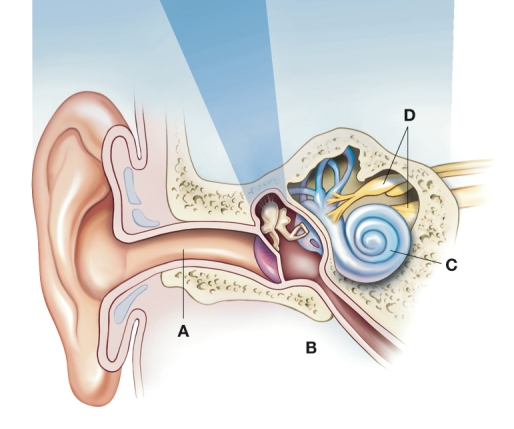
A) A
B) B
C) C
D) D
A) A
B) B
C) C
D) D
Question
The nurse teaches that glaucoma exists when the amount of aqueous humor produced is more than what is drained. The nurse shows the patient this figure and teaches that this aqueous humor is normally located in the posterior chamber of the eye and in which other structure? 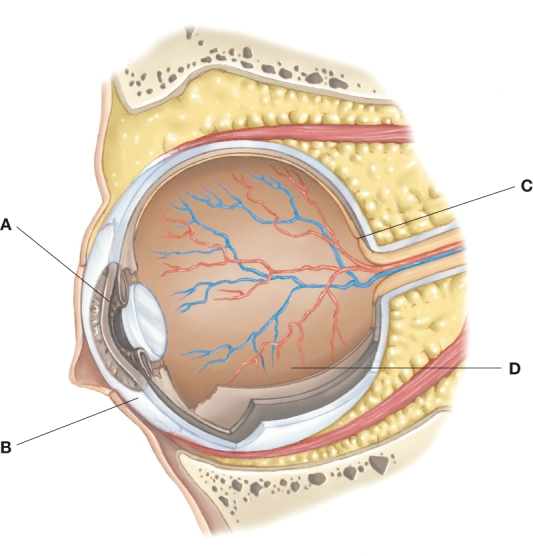
A) A
B) B
C) C
D) D
A) A
B) B
C) C
D) D
Question
Question
The patient has been diagnosed with swimmer's ear. The nurse administers medications focused at treating a disorder of which part of the ear? Indicate the area on this diagram. 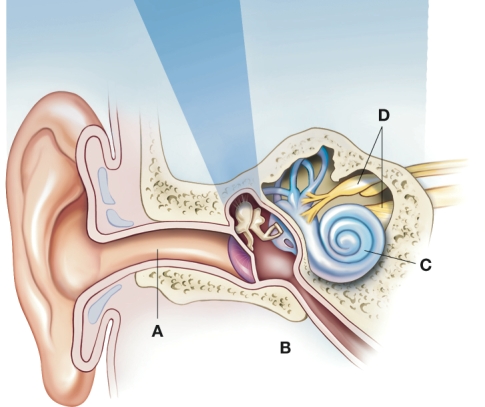
A) A
B) B
C) C
D) D
A) A
B) B
C) C
D) D
Question
Question

Unlock Deck
Sign up to unlock the cards in this deck!
Unlock Deck
Unlock Deck
1/30

Play

Full screen (f)
Deck 50: Drugs for Eye and Ear Disorders
1
The client tells the nurse that when he uses his timolol (Timoptic) eyedrops, they sting his eyes. What is the best response by the nurse?
A) "Hold the next dose and contact your physician."
B) "This is a normal and expected effect of the drops."
C) "Your eyedrops may have expired; check the date."
D) "You should wash your eyes immediately with saline."
A) "Hold the next dose and contact your physician."
B) "This is a normal and expected effect of the drops."
C) "Your eyedrops may have expired; check the date."
D) "You should wash your eyes immediately with saline."
"This is a normal and expected effect of the drops."
2
The client is preparing for an eye examination. Which classification of drugs will be used?
A) Mydriatics
B) Vasoconstrictors
C) Prostaglandins
D) Beta-adrenergic blockers
A) Mydriatics
B) Vasoconstrictors
C) Prostaglandins
D) Beta-adrenergic blockers
Mydriatics
3
Which of the following best describes open-angle glaucoma?
A) It is bilateral with a slow onset.
B) It is less common than closed-angle glaucoma.
C) It is accompanied by eye pain.
D) It is unilateral with a rapid onset.
A) It is bilateral with a slow onset.
B) It is less common than closed-angle glaucoma.
C) It is accompanied by eye pain.
D) It is unilateral with a rapid onset.
It is bilateral with a slow onset.
4
The primary treatment for mastoiditis is
A) topical antibiotics.
B) topical steroids.
C) systemic antibiotics.
D) systemic steroids.
A) topical antibiotics.
B) topical steroids.
C) systemic antibiotics.
D) systemic steroids.
Unlock Deck
Unlock for access to all 30 flashcards in this deck.
Unlock Deck
k this deck
5
The drug most likely to be used to soften or eliminate cerumen is
A) a steroid.
B) a wax softener.
C) an antifungal agent.
D) a local analgesic.
A) a steroid.
B) a wax softener.
C) an antifungal agent.
D) a local analgesic.
Unlock Deck
Unlock for access to all 30 flashcards in this deck.
Unlock Deck
k this deck
6
The client has excess cerumen in his ears. What will the best plan by the nurse include as to the safe removal of the cerumen?
A) Use a sterile cotton-tipped applicator to remove cerumen.
B) Instill 2% acetic acid in each ear.
C) Take hot showers to facilitate drainage.
D) Instill an earwax softener and irrigate with tepid water.
A) Use a sterile cotton-tipped applicator to remove cerumen.
B) Instill 2% acetic acid in each ear.
C) Take hot showers to facilitate drainage.
D) Instill an earwax softener and irrigate with tepid water.
Unlock Deck
Unlock for access to all 30 flashcards in this deck.
Unlock Deck
k this deck
7
The client is to receive eyedrops for glaucoma. What is the correct method of administration?
A) Place the drop in the center of the eye.
B) Place the drop so it falls on the white part of the eye.
C) Place the drop in the conjunctival sac below the eye.
D) Turn the head to the side so that the drop flows to the outer corner.
A) Place the drop in the center of the eye.
B) Place the drop so it falls on the white part of the eye.
C) Place the drop in the conjunctival sac below the eye.
D) Turn the head to the side so that the drop flows to the outer corner.
Unlock Deck
Unlock for access to all 30 flashcards in this deck.
Unlock Deck
k this deck
8
The client has glaucoma. Which assessment finding indicates to the nurse that a client's medical regimen could have contributed to the onset of glaucoma?
A) Taking a beta blocker to treat hypertension
B) Occasional use of antihistamines for allergies
C) Taking glucocorticoids to treat arthritis
D) Regular use of an antidepressant drug
A) Taking a beta blocker to treat hypertension
B) Occasional use of antihistamines for allergies
C) Taking glucocorticoids to treat arthritis
D) Regular use of an antidepressant drug
Unlock Deck
Unlock for access to all 30 flashcards in this deck.
Unlock Deck
k this deck
9
The client tells the nurse that he experiences frequent eye irritation even after using over-the-counter (OTC) medications. What is the best recommendation by the nurse?
A) Increase your fluid intake; you are probably dehydrated.
B) See your eye doctor for further evaluation.
C) This sounds like an allergic response; try an antihistamine.
D) Use normal saline rinses instead of over-the-counter (OTC) preparations.
A) Increase your fluid intake; you are probably dehydrated.
B) See your eye doctor for further evaluation.
C) This sounds like an allergic response; try an antihistamine.
D) Use normal saline rinses instead of over-the-counter (OTC) preparations.
Unlock Deck
Unlock for access to all 30 flashcards in this deck.
Unlock Deck
k this deck
10
The client asks the nurse how glaucoma develops. What is the best response by the nurse?
A) "Having diabetes is a risk factor in the development of glaucoma."
B) "Glaucoma exists when the pressure in your eye is high enough to cause optic nerve damage."
C) "High blood pressure can certainly lead to the development of glaucoma."
D) "Having blue eyes is a risk factor in the development of glaucoma."
E) "Drugs like antihistamines and antidepressants can contribute to glaucoma."
A) "Having diabetes is a risk factor in the development of glaucoma."
B) "Glaucoma exists when the pressure in your eye is high enough to cause optic nerve damage."
C) "High blood pressure can certainly lead to the development of glaucoma."
D) "Having blue eyes is a risk factor in the development of glaucoma."
E) "Drugs like antihistamines and antidepressants can contribute to glaucoma."
Unlock Deck
Unlock for access to all 30 flashcards in this deck.
Unlock Deck
k this deck
11
The client receives eyedrops as treatment for glaucoma. The client calls the clinic one day and tells the nurse that his eye color is changing. What is the best response by the nurse?
A) "This is an expected side effect of the medication."
B) "This is unusual; please come in for an evaluation."
C) "Are you sure that your eyes have changed color?"
D) "What do you mean that your eyes have changed color?"
A) "This is an expected side effect of the medication."
B) "This is unusual; please come in for an evaluation."
C) "Are you sure that your eyes have changed color?"
D) "What do you mean that your eyes have changed color?"
Unlock Deck
Unlock for access to all 30 flashcards in this deck.
Unlock Deck
k this deck
12
The client receives latanoprost (Xalatan) and another eyedrop. The nurse has completed medication education and evaluates that learning has occurred when the client makes which statement?
A) "I will give two drops of one medication, wait 1 minute, and then give two drops of the other medication."
B) "I should lay the dropper against my eyelid for stability when putting in drops."
C) "I will remove my contact lens before instilling these eyedrops."
D) "I may notice that my eyelashes get thinner while I am using this medication."
A) "I will give two drops of one medication, wait 1 minute, and then give two drops of the other medication."
B) "I should lay the dropper against my eyelid for stability when putting in drops."
C) "I will remove my contact lens before instilling these eyedrops."
D) "I may notice that my eyelashes get thinner while I am using this medication."
Unlock Deck
Unlock for access to all 30 flashcards in this deck.
Unlock Deck
k this deck
13
Which finding is an adverse effect of prostaglandins, such as latanoprost (Xaltan)?
A) Hypotension
B) Nausea
C) Tachycardia
D) Eye pain
A) Hypotension
B) Nausea
C) Tachycardia
D) Eye pain
Unlock Deck
Unlock for access to all 30 flashcards in this deck.
Unlock Deck
k this deck
14
Which statements would the nurse interpret as indicating that the client understands the diagnosis of open-angle glaucoma?
A) "My eye cannot drain the fluid that it produces."
B) "One of the first signs of this is pain behind my eyes."
C) "My type of glaucoma is a medical emergency."
D) "This is a gradual process; it may take years to develop."
E) "This is the most common kind of glaucoma."
A) "My eye cannot drain the fluid that it produces."
B) "One of the first signs of this is pain behind my eyes."
C) "My type of glaucoma is a medical emergency."
D) "This is a gradual process; it may take years to develop."
E) "This is the most common kind of glaucoma."
Unlock Deck
Unlock for access to all 30 flashcards in this deck.
Unlock Deck
k this deck
15
The client wears contact lenses and has been prescribed eyedrops for glaucoma. What will the best education by the nurse include with regard to contact lenses?
A) Remove lenses before instilling eyedrops; do not reinsert lenses for 15 minutes.
B) Instill the drops with the contacts in as long as they are the hard kind of contacts.
C) Eyeglasses must be worn for as long as the client must have the eyedrops.
D) Instill the drops with the contacts in as long as they are the soft kind of contacts.
A) Remove lenses before instilling eyedrops; do not reinsert lenses for 15 minutes.
B) Instill the drops with the contacts in as long as they are the hard kind of contacts.
C) Eyeglasses must be worn for as long as the client must have the eyedrops.
D) Instill the drops with the contacts in as long as they are the soft kind of contacts.
Unlock Deck
Unlock for access to all 30 flashcards in this deck.
Unlock Deck
k this deck
16
The nurse is counseling a client with glaucoma. The nurse explains that, if left untreated, the condition can lead to
A) myopia.
B) nearsightedness.
C) diabetes mellitus.
D) blindness.
A) myopia.
B) nearsightedness.
C) diabetes mellitus.
D) blindness.
Unlock Deck
Unlock for access to all 30 flashcards in this deck.
Unlock Deck
k this deck
17
The client receives timolol (Timoptic) eyedrops for glaucoma. The nurse has completed medication education and evaluates learning has occurred when the client makes which statement?
A) "I will discuss use of over-the-counter (OTC) medications with my physician."
B) "I will store my drops in the refrigerator to keep them fresh."
C) "I will restrict my caffeine to one cup of coffee per day."
D) "I will discontinue the drops if my eye looks red."
A) "I will discuss use of over-the-counter (OTC) medications with my physician."
B) "I will store my drops in the refrigerator to keep them fresh."
C) "I will restrict my caffeine to one cup of coffee per day."
D) "I will discontinue the drops if my eye looks red."
Unlock Deck
Unlock for access to all 30 flashcards in this deck.
Unlock Deck
k this deck
18
The primary mechanism of action of beta-adrenergic blockers in the treatment of open-angle glaucoma is to
A) increase the outflow of aqueous humor.
B) constrict the pupil.
C) dilate the pupil to increase outflow.
D) reduce production of aqueous humor.
A) increase the outflow of aqueous humor.
B) constrict the pupil.
C) dilate the pupil to increase outflow.
D) reduce production of aqueous humor.
Unlock Deck
Unlock for access to all 30 flashcards in this deck.
Unlock Deck
k this deck
19
The client is scheduled for an eye exam. Prior to the exam, the physician will put a cycloplegic drug, atropine sulfate (Isopto Atropine), eyedrops in the client's eyes. What will the nurse teach the client about these eyedrops?
A) The drugs will dilate the pupil and lubricate the eye to provide additional comfort during the examination.
B) The drops will paralyze the muscles that move the eye so that examination can take place.
C) The drops will dilate the pupil so that the physician can better visualize the retina during examination.
D) The drops dilate the pupil and paralyze the ciliary muscle to prevent the lens from moving during examination.
A) The drugs will dilate the pupil and lubricate the eye to provide additional comfort during the examination.
B) The drops will paralyze the muscles that move the eye so that examination can take place.
C) The drops will dilate the pupil so that the physician can better visualize the retina during examination.
D) The drops dilate the pupil and paralyze the ciliary muscle to prevent the lens from moving during examination.
Unlock Deck
Unlock for access to all 30 flashcards in this deck.
Unlock Deck
k this deck
20
The nurse has taught the client about open-angle glaucoma. The nurse evaluates learning has occurred when the client makes which statement?
A) "The eyedrops only need to be used when my eyes hurt."
B) "I will need to continually increase the dose of my eyedrops."
C) "I can stop the eyedrops when the glaucoma has resolved."
D) "I must use my eyedrops as prescribed for the rest of my life."
A) "The eyedrops only need to be used when my eyes hurt."
B) "I will need to continually increase the dose of my eyedrops."
C) "I can stop the eyedrops when the glaucoma has resolved."
D) "I must use my eyedrops as prescribed for the rest of my life."
Unlock Deck
Unlock for access to all 30 flashcards in this deck.
Unlock Deck
k this deck
21
A client has had several measurements of intraocular pressure. Which measurements would the nurse interpret as indicating need for pharmacologic intervention?
A) A single reading of 14 mmHg
B) A consistent reading trending between 15 and 16 mmHg.
C) A single reading of 19 mmHg.
D) Readings consistently higher than 21 mmHg.
E) A single reading of 32 mmHg.
A) A single reading of 14 mmHg
B) A consistent reading trending between 15 and 16 mmHg.
C) A single reading of 19 mmHg.
D) Readings consistently higher than 21 mmHg.
E) A single reading of 32 mmHg.
Unlock Deck
Unlock for access to all 30 flashcards in this deck.
Unlock Deck
k this deck
22
The nurse is teaching a patient about the development of glaucoma and about how aqueous humor is circulated. Place the steps of this circulation in order.
A) Anterior chamber
B) Posterior chamber
C) Pupil
D) Ciliary body
E) Canal of Schlemm
Standard Text: Click and drag the options below to move them up or down.
A) Anterior chamber
B) Posterior chamber
C) Pupil
D) Ciliary body
E) Canal of Schlemm
Standard Text: Click and drag the options below to move them up or down.
Unlock Deck
Unlock for access to all 30 flashcards in this deck.
Unlock Deck
k this deck
23
A client presents to the emergency department with symptoms of closed-angle glaucoma. Intraocular pressure is measured at 30 mmHg. Which assessment findings would the nurse anticipate?
A) Absence of eye pain
B) Headache
C) Bloodshot eyes
D) Vomiting
E) Bruising around the orbit
A) Absence of eye pain
B) Headache
C) Bloodshot eyes
D) Vomiting
E) Bruising around the orbit
Unlock Deck
Unlock for access to all 30 flashcards in this deck.
Unlock Deck
k this deck
24
A client has been diagnosed with closed-angle glaucoma. Which findings would the nurse interpret as indicating that the pharmacologic treatment regimen has been successful?
A) The client reports being hungry.
B) The client's last two intraocular pressure readings have been 19 mmHg and 18 mmHg.
C) The client's eye is not as bloodshot.
D) The client reports a sensation of drainage down the nose.
E) The client's cough has diminished.
A) The client reports being hungry.
B) The client's last two intraocular pressure readings have been 19 mmHg and 18 mmHg.
C) The client's eye is not as bloodshot.
D) The client reports a sensation of drainage down the nose.
E) The client's cough has diminished.
Unlock Deck
Unlock for access to all 30 flashcards in this deck.
Unlock Deck
k this deck
25
The nurse uses this picture to explain the location of a patient's middle ear infection. The nurse would indicate which area?
A) A
B) B
C) C
D) D
A) A
B) B
C) C
D) D
Unlock Deck
Unlock for access to all 30 flashcards in this deck.
Unlock Deck
k this deck
26
The nurse teaches that glaucoma exists when the amount of aqueous humor produced is more than what is drained. The nurse shows the patient this figure and teaches that this aqueous humor is normally located in the posterior chamber of the eye and in which other structure?
A) A
B) B
C) C
D) D
A) A
B) B
C) C
D) D
Unlock Deck
Unlock for access to all 30 flashcards in this deck.
Unlock Deck
k this deck
27
A client is prescribed a beta-adrenergic blocker for treatment of glaucoma. The nurse provides specific information on administration technique to avoid which adverse effects?
A) Bronchoconstriction
B) Cardiac dysrhythmias
C) Low blood pressure
D) Rash
E) Vomiting
A) Bronchoconstriction
B) Cardiac dysrhythmias
C) Low blood pressure
D) Rash
E) Vomiting
Unlock Deck
Unlock for access to all 30 flashcards in this deck.
Unlock Deck
k this deck
28
The patient has been diagnosed with swimmer's ear. The nurse administers medications focused at treating a disorder of which part of the ear? Indicate the area on this diagram.
A) A
B) B
C) C
D) D
A) A
B) B
C) C
D) D
Unlock Deck
Unlock for access to all 30 flashcards in this deck.
Unlock Deck
k this deck
29
A patient required pupil dilation with a mydriatic drug. The nurse would provide which discharge instruction?
A) "You may notice periods of blurry vision for several days."
B) "Wear sunglasses while you are outside."
C) "Do not drive until this drug wears off."
D) "Do not eat for at least 8 hours."
E) "Check the size of your pupils at least every hour until they have normal size."
A) "You may notice periods of blurry vision for several days."
B) "Wear sunglasses while you are outside."
C) "Do not drive until this drug wears off."
D) "Do not eat for at least 8 hours."
E) "Check the size of your pupils at least every hour until they have normal size."
Unlock Deck
Unlock for access to all 30 flashcards in this deck.
Unlock Deck
k this deck
30
A client has been prescribed brinzolamide (Azopt). Which findings would the nurse discuss with the prescriber before administering this drug?
A) The client's last potassium level was low.
B) The client is a vegetarian.
C) The client is allergic to sulfa.
D) The client has a history of atopic dermatitis.
E) The client's father had a myocardial infarction at age 35.
A) The client's last potassium level was low.
B) The client is a vegetarian.
C) The client is allergic to sulfa.
D) The client has a history of atopic dermatitis.
E) The client's father had a myocardial infarction at age 35.
Unlock Deck
Unlock for access to all 30 flashcards in this deck.
Unlock Deck
k this deck
Unlock Deck
Unlock for access to all 30 flashcards in this deck.






