







 Chat with AI

Deck 31: Drugs for Coagulation Disorders
Full screen (f)

Question

Question
A patient is receiving a coagulation modifier to prevent a thromboembolic event. The nurse teaching the patient about his disease is using this figure. Indicate the point of origin of a thrombus that would cause a pulmonary embolism. 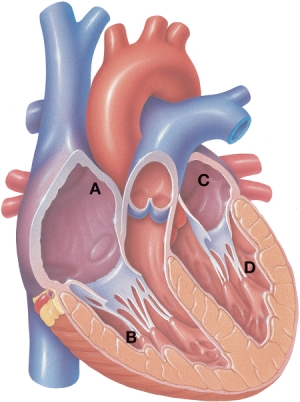
A) A
B) B
C) C
D) D
A) A
B) B
C) C
D) D
Question
Question
Question
Question
Question
Question
Question
Question
Question
Question
Question
Question
Question
Question
Question
Question
Question
Question
Question
Question
Question
Question
Question
Question
Question
Question
Question
Question

Unlock Deck
Sign up to unlock the cards in this deck!
Unlock Deck
Unlock Deck
1/30

Play

Full screen (f)
Deck 31: Drugs for Coagulation Disorders
1
The nurse is managing care for a patient with cirrhosis of the liver. The nurse teaches the patient about how to avoid injury that may result in bleeding. The patient asks the nurse why he is at risk to start bleeding. What is the best response by the nurse?
A) "Because your liver is injured and unable to manufacture platelets."
B) "Because your liver thickens your blood so it is less likely to clot."
C) "Because your liver is injured and cannot make clotting factors."
D) "Because your liver is breaking down your clotting factors too quickly."
A) "Because your liver is injured and unable to manufacture platelets."
B) "Because your liver thickens your blood so it is less likely to clot."
C) "Because your liver is injured and cannot make clotting factors."
D) "Because your liver is breaking down your clotting factors too quickly."
"Because your liver is injured and cannot make clotting factors."
2
A patient is receiving a coagulation modifier to prevent a thromboembolic event. The nurse teaching the patient about his disease is using this figure. Indicate the point of origin of a thrombus that would cause a pulmonary embolism.
A) A
B) B
C) C
D) D
A) A
B) B
C) C
D) D
A
3
Laboratory studies related to heparin therapy include
A) aPtt.
B) serum heparin studies.
C) complete blood studies.
D) sedimentation rate.
A) aPtt.
B) serum heparin studies.
C) complete blood studies.
D) sedimentation rate.
aPtt.
4
The physician orders enoxaparin (Lovenox) for the postoperative patient. What is the best administration technique by the nurse?
A) Administer the medication in the upper arm, subcutaneously.
B) Administer the medication in the abdomen, subcutaneously.
C) Administer the medication via slow intravenous (IV) push in the patient's intravenous (IV) line.
D) Ask the patient where she would like the injection and administer it subcutaneously.
A) Administer the medication in the upper arm, subcutaneously.
B) Administer the medication in the abdomen, subcutaneously.
C) Administer the medication via slow intravenous (IV) push in the patient's intravenous (IV) line.
D) Ask the patient where she would like the injection and administer it subcutaneously.
Unlock Deck
Unlock for access to all 30 flashcards in this deck.
Unlock Deck
k this deck
5
The nurse is managing care for a patient with a DVT (deep vein thrombosis) of the right calf. The patient receives heparin intravenously (IV). What is the priority outcome for this patient?
A) The patient will comply with dietary restrictions.
B) The patient will keep the right leg elevated on two pillows.
C) The patient will not disturb the intravenous infusion.
D) The patient will not experience bleeding.
A) The patient will comply with dietary restrictions.
B) The patient will keep the right leg elevated on two pillows.
C) The patient will not disturb the intravenous infusion.
D) The patient will not experience bleeding.
Unlock Deck
Unlock for access to all 30 flashcards in this deck.
Unlock Deck
k this deck
6
A woman brings her husband to the emergency department and tells the nurse that her husband just had a stroke. The physician verifies a thrombotic stroke occurred and plans to use alteplase (Activase). What priority assessment question will the nurse ask the wife?
A) "What other medications does your husband take?"
B) "Does your husband have hypertension?"
C) "What other medical illnesses does your husband have?"
D) "What time did your husband have the stroke?"
A) "What other medications does your husband take?"
B) "Does your husband have hypertension?"
C) "What other medical illnesses does your husband have?"
D) "What time did your husband have the stroke?"
Unlock Deck
Unlock for access to all 30 flashcards in this deck.
Unlock Deck
k this deck
7
The physician orders pentoxifylline (Trental) for the patient with peripheral vascular disease. The nurse has completed medication education and determines that learning has occurred when the patient makes which statement(s)?
A) "It makes my red blood cells (RBCs) squishy so they can go into the little blood vessels."
B) "It decreases my platelets so my blood is less likely to clot."
C) "It decreases the "stickiness" of my blood."
D) "It changes how my liver makes clotting factors."
E) "It destroys clotting factors."
A) "It makes my red blood cells (RBCs) squishy so they can go into the little blood vessels."
B) "It decreases my platelets so my blood is less likely to clot."
C) "It decreases the "stickiness" of my blood."
D) "It changes how my liver makes clotting factors."
E) "It destroys clotting factors."
Unlock Deck
Unlock for access to all 30 flashcards in this deck.
Unlock Deck
k this deck
8
Rinolysis is to
A) stop blood flow.
B) remove a blood clot.
C) promote enzymes.
D) increase blood flow.
A) stop blood flow.
B) remove a blood clot.
C) promote enzymes.
D) increase blood flow.
Unlock Deck
Unlock for access to all 30 flashcards in this deck.
Unlock Deck
k this deck
9
The nurse educator is reviewing the process of hemostasis. Place the steps of hemostasis in the order they occur.
A) Blood flow is further reduced
B) Platelets become sticky
C) Fibrin strands form
D) Platelets are attracted to the site
E) Vessel spasms
A) Blood flow is further reduced
B) Platelets become sticky
C) Fibrin strands form
D) Platelets are attracted to the site
E) Vessel spasms
Unlock Deck
Unlock for access to all 30 flashcards in this deck.
Unlock Deck
k this deck
10
The patient is being discharged on an anticoagulant following a valve replacement. The nurse has completed medication education and determines that learning has occurred when the patient makes which statement?
A) "I should wear a MedicAlert bracelet that says I'm on an anticoagulant."
B) "I need to eat more protein while I am taking this medication."
C) "I can take enteric-coated aspirin but not plain aspirin for my arthritis."
D) "I must limit my intake of vitamin C while I'm on warfarin (Coumadin)."
A) "I should wear a MedicAlert bracelet that says I'm on an anticoagulant."
B) "I need to eat more protein while I am taking this medication."
C) "I can take enteric-coated aspirin but not plain aspirin for my arthritis."
D) "I must limit my intake of vitamin C while I'm on warfarin (Coumadin)."
Unlock Deck
Unlock for access to all 30 flashcards in this deck.
Unlock Deck
k this deck
11
The patient receives heparin. During the morning assessment of the patient, the nurse notes that the patient's blood pressure and red blood cell (RBC) count are low. There is no evidence of bleeding on the bed linen or the patient's gown. What will the best assessment of this patient reveal?
A) The patient is dehydrated.
B) The patient may be bleeding internally.
C) The patient's activated partial thromboplastin time (aPTT) is too low.
D) The patient has probably formed some clots.
A) The patient is dehydrated.
B) The patient may be bleeding internally.
C) The patient's activated partial thromboplastin time (aPTT) is too low.
D) The patient has probably formed some clots.
Unlock Deck
Unlock for access to all 30 flashcards in this deck.
Unlock Deck
k this deck
12
The patient receives an appropriate dose of warfarin (Coumadin), but the international normalized ratio (INR) is in the high range. The patient denies taking any aspirin products. What is the best assessment question to ask the patient at this time?
A) "Have you been eating much garlic?"
B) "Have you been eating a lot of salads and vegetables?"
C) "Have you been drinking too much milk?"
D) "Are you restricting your fluids too much?"
A) "Have you been eating much garlic?"
B) "Have you been eating a lot of salads and vegetables?"
C) "Have you been drinking too much milk?"
D) "Are you restricting your fluids too much?"
Unlock Deck
Unlock for access to all 30 flashcards in this deck.
Unlock Deck
k this deck
13
The patient receives enoxaparin (Lovenox) postoperatively. The nurse teaches the patient about this medication and evaluates that learning has occurred when he makes which statement?
A) "It inhibits the synthesis of prostaglandins."
B) "It increases the time it takes for me to form a clot."
C) "It dissolves small clots so I won't have a stroke."
D) "It increases the flexibility of my blood cells."
A) "It inhibits the synthesis of prostaglandins."
B) "It increases the time it takes for me to form a clot."
C) "It dissolves small clots so I won't have a stroke."
D) "It increases the flexibility of my blood cells."
Unlock Deck
Unlock for access to all 30 flashcards in this deck.
Unlock Deck
k this deck
14
The most important food for a patient taking anticoagulants to avoid is
A) citrus fruits.
B) garlic.
C) honey.
D) meat.
A) citrus fruits.
B) garlic.
C) honey.
D) meat.
Unlock Deck
Unlock for access to all 30 flashcards in this deck.
Unlock Deck
k this deck
15
The patient receives warfarin (Coumadin). The nurse notes that the patient's morning international normalized ratio (INR) is 7-. What are the priority nursing interventions at this time?
A) Hold the next dose of warfarin (Coumadin) and repeat the international normalized ratio (INR).
B) Administer protamine sulfate and hold the next dose of warfarin (Coumadin).
C) Hold the next dose of warfarin (Coumadin) and contact the physician.
D) Administer vitamin K and hold the next dose of warfarin (Coumadin).
A) Hold the next dose of warfarin (Coumadin) and repeat the international normalized ratio (INR).
B) Administer protamine sulfate and hold the next dose of warfarin (Coumadin).
C) Hold the next dose of warfarin (Coumadin) and contact the physician.
D) Administer vitamin K and hold the next dose of warfarin (Coumadin).
Unlock Deck
Unlock for access to all 30 flashcards in this deck.
Unlock Deck
k this deck
16
A laboratory test used to best measure the effectiveness of warfarin sodium therapy is known as
A) complete blood count.
B) platelet count.
C) aPtt.
D) international normalized ratio (INR).
A) complete blood count.
B) platelet count.
C) aPtt.
D) international normalized ratio (INR).
Unlock Deck
Unlock for access to all 30 flashcards in this deck.
Unlock Deck
k this deck
17
Anticoagulants are used to
A) increase the number of platelets.
B) prevent the formation of blood clots.
C) shorten the prothrombin time.
D) dissolve blood clots.
A) increase the number of platelets.
B) prevent the formation of blood clots.
C) shorten the prothrombin time.
D) dissolve blood clots.
Unlock Deck
Unlock for access to all 30 flashcards in this deck.
Unlock Deck
k this deck
18
The patient receives warfarin (Coumadin). The nurse plans to teach the patient to avoid which foods that are served for lunch?
A) Tomato salad with kale and basil
B) Whole-wheat bread with margarine
C) Salt substitute
D) Fettuccine Alfredo
A) Tomato salad with kale and basil
B) Whole-wheat bread with margarine
C) Salt substitute
D) Fettuccine Alfredo
Unlock Deck
Unlock for access to all 30 flashcards in this deck.
Unlock Deck
k this deck
19
The nursing instructor is teaching student nurses about the process of hemostasis after an injury. What does the nursing instructor include as the initial event in this process?
A) Platelets become sticky.
B) Plasma proteins convert to active forms.
C) The vessel spasms.
D) Von Willebrand's factor is activated.
A) Platelets become sticky.
B) Plasma proteins convert to active forms.
C) The vessel spasms.
D) Von Willebrand's factor is activated.
Unlock Deck
Unlock for access to all 30 flashcards in this deck.
Unlock Deck
k this deck
20
The patient has a deep vein thrombosis (DVT) and is admitted for initial heparin therapy. Which orders would the nurse want to validate with the physician?
A) Heparin 1000 units intravenous (IV) every 6 hours
B) Tylenol as needed (PRN) for headaches
C) Obtaining a daily weight on the patient
D) Advil as needed (PRN) for headaches
E) Low vitamin K diet
A) Heparin 1000 units intravenous (IV) every 6 hours
B) Tylenol as needed (PRN) for headaches
C) Obtaining a daily weight on the patient
D) Advil as needed (PRN) for headaches
E) Low vitamin K diet
Unlock Deck
Unlock for access to all 30 flashcards in this deck.
Unlock Deck
k this deck
21
The nurse is aware that the mechanism of action of anticoagulant drugs is to
A) alter plasma membrane and platelets.
B) convert plasminogen to plasmin.
C) prevent fibrin from dissolving.
D) inhibit clotting factors to prevent clot formation.
A) alter plasma membrane and platelets.
B) convert plasminogen to plasmin.
C) prevent fibrin from dissolving.
D) inhibit clotting factors to prevent clot formation.
Unlock Deck
Unlock for access to all 30 flashcards in this deck.
Unlock Deck
k this deck
22
The nurse is planning care for a patient receiving enoxaparin (Lovenox). Which interventions should be included?
A) Teach the patient or family to give subcutaneous injections at home.
B) Monitor for development of deep vein thrombosis.
C) Monitor multiple lab tests.
D) Teach the patient signs of excessive bleeding.
E) Schedule administration times right before breakfast and the evening meal.
A) Teach the patient or family to give subcutaneous injections at home.
B) Monitor for development of deep vein thrombosis.
C) Monitor multiple lab tests.
D) Teach the patient signs of excessive bleeding.
E) Schedule administration times right before breakfast and the evening meal.
Unlock Deck
Unlock for access to all 30 flashcards in this deck.
Unlock Deck
k this deck
23
A patient has been started on clopidogrel (Plavix) after a myocardial infarction and stent placement. How should the nurse explain the action of this medication to the patient?
A) "Plavix will dissolve any clots that might form in your stent."
B) "Plavix will make the platelets in your blood less sticky."
C) "Plavix will change the way your platelets work their entire lives."
D) "Plavix decreases your blood's ability to clot."
E) "Plavix works just like the heparin you have been on in the hospital."
A) "Plavix will dissolve any clots that might form in your stent."
B) "Plavix will make the platelets in your blood less sticky."
C) "Plavix will change the way your platelets work their entire lives."
D) "Plavix decreases your blood's ability to clot."
E) "Plavix works just like the heparin you have been on in the hospital."
Unlock Deck
Unlock for access to all 30 flashcards in this deck.
Unlock Deck
k this deck
24
A patient has been treated for mild phlebitis. Which discharge teaching should the nurse provide?
A) "You should stop smoking."
B) "Do not travel by air."
C) "Increase your fluid intake."
D) "When you travel, stop frequently and walk around."
E) "Adopt a low-fat diet."
A) "You should stop smoking."
B) "Do not travel by air."
C) "Increase your fluid intake."
D) "When you travel, stop frequently and walk around."
E) "Adopt a low-fat diet."
Unlock Deck
Unlock for access to all 30 flashcards in this deck.
Unlock Deck
k this deck
25
A patient is being treated for a thromboembolic disorder. If the goal is to prevent clot formation, the nurse anticipates the patient will be treated with which classification of drug?
A) Hemostatics
B) Thrombolytics
C) Anticoagulants
D) Antiplatelet agents
E) Clotting factor concentrates
A) Hemostatics
B) Thrombolytics
C) Anticoagulants
D) Antiplatelet agents
E) Clotting factor concentrates
Unlock Deck
Unlock for access to all 30 flashcards in this deck.
Unlock Deck
k this deck
26
The nurse is providing discharge teaching regarding anticoagulant therapy. Which statements by the patient would the nurse evaluate as indicating the need for further instruction?
A) "I'll ask for an electric razor for my birthday next week."
B) "I guess my trip to the amusement park is off for now."
C) "I won't be able to cook anymore."
D) "I'll get one of those new electric toothbrushes with the firm bristles."
E) "I should make an appointment for a B12 injection monthly."
A) "I'll ask for an electric razor for my birthday next week."
B) "I guess my trip to the amusement park is off for now."
C) "I won't be able to cook anymore."
D) "I'll get one of those new electric toothbrushes with the firm bristles."
E) "I should make an appointment for a B12 injection monthly."
Unlock Deck
Unlock for access to all 30 flashcards in this deck.
Unlock Deck
k this deck
27
The nurse is aware that the drug that will most likely be used in the treatment of warfarin sodium overdose is
A) aspirin.
B) heparin.
C) vitamin K.
D) protamine sulfate.
A) aspirin.
B) heparin.
C) vitamin K.
D) protamine sulfate.
Unlock Deck
Unlock for access to all 30 flashcards in this deck.
Unlock Deck
k this deck
28
A patient is taking warfarin sodium. The nurse will reinforce teaching by telling the patient that he should watch for
A) bleeding.
B) pain.
C) headache.
D) rash.
A) bleeding.
B) pain.
C) headache.
D) rash.
Unlock Deck
Unlock for access to all 30 flashcards in this deck.
Unlock Deck
k this deck
29
A clinic nurse is developing a teaching handout for patients who are prescribed warfarin (Coumadin) therapy. Which statement should be included in this information?
A) "Tell your dentist you are taking warfarin prior to any procedures."
B) "Report to the lab for testing of activated partial thromboplastin time (APTT)."
C) "Avoid strenuous activities."
D) "Place ice at the injection site if stinging or burning occurs."
E) "Take nonsteroidal anti-inflammatories (NSAIDs) for minor pain relief."
A) "Tell your dentist you are taking warfarin prior to any procedures."
B) "Report to the lab for testing of activated partial thromboplastin time (APTT)."
C) "Avoid strenuous activities."
D) "Place ice at the injection site if stinging or burning occurs."
E) "Take nonsteroidal anti-inflammatories (NSAIDs) for minor pain relief."
Unlock Deck
Unlock for access to all 30 flashcards in this deck.
Unlock Deck
k this deck
30
Thrombolytic drugs are used to
A) convert plasmin to plasminogen.
B) prevent the liver from making fibrin.
C) prevent a thrombus from forming.
D) lyse a thrombus.
A) convert plasmin to plasminogen.
B) prevent the liver from making fibrin.
C) prevent a thrombus from forming.
D) lyse a thrombus.
Unlock Deck
Unlock for access to all 30 flashcards in this deck.
Unlock Deck
k this deck
Unlock Deck
Unlock for access to all 30 flashcards in this deck.






