







 Chat with AI

Deck 23: Drugs for Lipid Disorders
Full screen (f)

Question

Question
Question
Question
Question
Question
Question
Question
Question
Question
Question
Question
Question
Question
Question
Question
Question
Question
Question
Question
Question
Question
Question
Question
Question
Question
The nurse is providing medication education to a client who was just prescribed ezetimibe (Zetia). Where, on this figure, would the nurse indicate the medication has its effect? 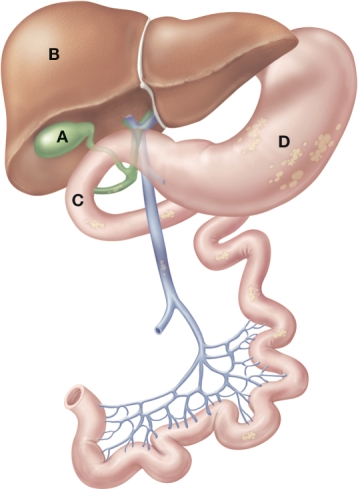
A) A
B) B
C) C
D) D
A) A
B) B
C) C
D) D
Question
Question
Question
Question

Unlock Deck
Sign up to unlock the cards in this deck!
Unlock Deck
Unlock Deck
1/30

Play

Full screen (f)
Deck 23: Drugs for Lipid Disorders
1
The nurse is providing group education about lipids to patients who have been diagnosed with hyperlipidemia. What does the best instruction include?
A) High density lipoprotein (HDL) is called good cholesterol because it removes cholesterol from the body and gets rid of it in the liver.
B) High density lipoprotein (HDL) is called good cholesterol because it increases the oxygen content in the arteries and reduces the amount of plaque buildup.
C) High density lipoprotein (HDL) decreases the bad cholesterol (low density lipoprotein [LDL]), and promotes excretion of it through the kidneys.
D) High density lipoprotein (HDL) decreases low density lipoprotein (LDL) and prevents it from converting to very low density lipoprotein (VDRL), which is the worst kind of cholesterol in the body.
A) High density lipoprotein (HDL) is called good cholesterol because it removes cholesterol from the body and gets rid of it in the liver.
B) High density lipoprotein (HDL) is called good cholesterol because it increases the oxygen content in the arteries and reduces the amount of plaque buildup.
C) High density lipoprotein (HDL) decreases the bad cholesterol (low density lipoprotein [LDL]), and promotes excretion of it through the kidneys.
D) High density lipoprotein (HDL) decreases low density lipoprotein (LDL) and prevents it from converting to very low density lipoprotein (VDRL), which is the worst kind of cholesterol in the body.
High density lipoprotein (HDL) is called good cholesterol because it removes cholesterol from the body and gets rid of it in the liver.
2
Which lipid type is associated with the highest risk of atherosclerosis development?
A) Phospholipids
B) Lecithins
C) Steroids
D) Triglycerides
A) Phospholipids
B) Lecithins
C) Steroids
D) Triglycerides
Steroids
3
Rozil (Lopid). The nurse has completed discharge instructions about this medication. The nurse recognizes that teaching has been effective when the patient makes which statement?
A) "I should take this medication on an empty stomach to help it absorb better."
B) "I must take this medication with food or I can have heartburn."
C) "My doctor said it really doesn't matter how I take this medication."
D) "Taking this medication with yogurt will help it to absorb better."
A) "I should take this medication on an empty stomach to help it absorb better."
B) "I must take this medication with food or I can have heartburn."
C) "My doctor said it really doesn't matter how I take this medication."
D) "Taking this medication with yogurt will help it to absorb better."
"I must take this medication with food or I can have heartburn."
4
Which statement correctly identifies why simply restricting dietary intake of cholesterol generally will not result in a significant reduction of blood cholesterol?
A) Most people are not compliant with the dietary restriction.
B) Cholesterol is found in nearly all foods, and it is not possible to eliminate it from the diet.
C) Cholesterol is made within the body and cannot be absorbed via external sources.
D) The liver reacts to a low-cholesterol diet by making more cholesterol.
A) Most people are not compliant with the dietary restriction.
B) Cholesterol is found in nearly all foods, and it is not possible to eliminate it from the diet.
C) Cholesterol is made within the body and cannot be absorbed via external sources.
D) The liver reacts to a low-cholesterol diet by making more cholesterol.
Unlock Deck
Unlock for access to all 30 flashcards in this deck.
Unlock Deck
k this deck
5
The patient tells the nurse she is confused about what she has been reading about lipids. What are the best responses by the nurse?
A) "Phospholipids will help prevent Alzheimer's disease."
B) "Phospholipids are essential to building plasma membranes."
C) "Cholesterol is a building block for estrogen and testosterone."
D) "Triglycerides are the major form of fat in the body."
E) "Cholesterol in the diet is unnecessary as the liver synthesizes it."
A) "Phospholipids will help prevent Alzheimer's disease."
B) "Phospholipids are essential to building plasma membranes."
C) "Cholesterol is a building block for estrogen and testosterone."
D) "Triglycerides are the major form of fat in the body."
E) "Cholesterol in the diet is unnecessary as the liver synthesizes it."
Unlock Deck
Unlock for access to all 30 flashcards in this deck.
Unlock Deck
k this deck
6
The patient says to the nurse, "My doctor says I have heart disease and I need to decrease cholesterol in my diet. How did this happen?" What is the best response by the nurse?
A) "The arteries around your heart are narrowed by low density lipoprotein (LDL) cholesterol buildup in them."
B) "Low density lipoprotein (LDL) cholesterol is converted to saturated fat, which is stored in your coronary arteries."
C) "It is a good idea to decrease low density lipoprotein (LDL) cholesterol in your diet, although current research has not proven a correlation yet."
D) "Too much low density lipoprotein (LDL) cholesterol narrows all the arteries in your body so your heart does not receive enough blood to be healthy."
A) "The arteries around your heart are narrowed by low density lipoprotein (LDL) cholesterol buildup in them."
B) "Low density lipoprotein (LDL) cholesterol is converted to saturated fat, which is stored in your coronary arteries."
C) "It is a good idea to decrease low density lipoprotein (LDL) cholesterol in your diet, although current research has not proven a correlation yet."
D) "Too much low density lipoprotein (LDL) cholesterol narrows all the arteries in your body so your heart does not receive enough blood to be healthy."
Unlock Deck
Unlock for access to all 30 flashcards in this deck.
Unlock Deck
k this deck
7
The patient is receiving a statin drug. The nurse notes an increase in creatine kinase (CK) levels. What is the nurse's priority action?
A) Hold the drug and obtain another creatine kinase (CK) level in 6 hours.
B) Administer the drug and continue to assess for muscle pain.
C) Administer the drug and obtain another creatine kinase (CK) level in 6 hours.
D) Hold the drug and notify the physician.
A) Hold the drug and obtain another creatine kinase (CK) level in 6 hours.
B) Administer the drug and continue to assess for muscle pain.
C) Administer the drug and obtain another creatine kinase (CK) level in 6 hours.
D) Hold the drug and notify the physician.
Unlock Deck
Unlock for access to all 30 flashcards in this deck.
Unlock Deck
k this deck
8
Which statement provides the best rationale for monitoring HDL and LDL as opposed to total cholesterol?
A) HDL and LDL monitoring is much cheaper than measuring total cholesterol.
B) Total cholesterol does not differentiate the amounts of "good" cholesterol and "bad" cholesterol.
C) HDL and LDL measurements are more general and frequently are used in patients not at risk for heart disease.
D) Total cholesterol measurements are often inaccurate and not as reliable as HDL and LDL.
A) HDL and LDL monitoring is much cheaper than measuring total cholesterol.
B) Total cholesterol does not differentiate the amounts of "good" cholesterol and "bad" cholesterol.
C) HDL and LDL measurements are more general and frequently are used in patients not at risk for heart disease.
D) Total cholesterol measurements are often inaccurate and not as reliable as HDL and LDL.
Unlock Deck
Unlock for access to all 30 flashcards in this deck.
Unlock Deck
k this deck
9
The patient is receiving cholestyramine (Questran) and complains of constipation. The physician orders bisacodyl (Dulcolax) tablets. When is the best time for the nurse to administer the bisacodyl (Dulcolax) tablets?
A) The drugs can be administered together.
B) Four hours after administration of cholestyramine (Questran)
C) Bisacodyl (Dulcolax) can be given any time but must be taken with food.
D) One hour after administration of cholestyramine (Questran)
A) The drugs can be administered together.
B) Four hours after administration of cholestyramine (Questran)
C) Bisacodyl (Dulcolax) can be given any time but must be taken with food.
D) One hour after administration of cholestyramine (Questran)
Unlock Deck
Unlock for access to all 30 flashcards in this deck.
Unlock Deck
k this deck
10
The patient is receiving niacin. Although this drug is effective in lowering lipid levels, the patient complains of uncomfortable flushing. What is the best education by the nurse?
A) "Be sure to take your niacin on an empty stomach as soon as you arise."
B) "Take 1 aspirin 30 minutes before you take your niacin."
C) "Take your niacin tablet with food and at least one full glass of water."
D) "It may be time to ask your doctor about switching to another drug."
A) "Be sure to take your niacin on an empty stomach as soon as you arise."
B) "Take 1 aspirin 30 minutes before you take your niacin."
C) "Take your niacin tablet with food and at least one full glass of water."
D) "It may be time to ask your doctor about switching to another drug."
Unlock Deck
Unlock for access to all 30 flashcards in this deck.
Unlock Deck
k this deck
11
The nurse reviewing medical records would determine that a patient with which lab values is at the highest risk of developing heart disease?
A) Total 200, LDL 104, HDL 30
B) Total 210, LDL 135, HDL 58
C) Total 220, LDL 162, HDL 20
D) Total 186, LDL 125, HDL 54
A) Total 200, LDL 104, HDL 30
B) Total 210, LDL 135, HDL 58
C) Total 220, LDL 162, HDL 20
D) Total 186, LDL 125, HDL 54
Unlock Deck
Unlock for access to all 30 flashcards in this deck.
Unlock Deck
k this deck
12
The patient is receiving cholestyramine (Questran). When assessing for side effects, what will be the primary focus of the nurse?
A) Auscultation of heart sounds
B) Auscultation of bowel sounds in all four abdominal quadrants
C) Assessment of 24-hour urine output
D) Palpation for peripheral edema in the lower extremities
A) Auscultation of heart sounds
B) Auscultation of bowel sounds in all four abdominal quadrants
C) Assessment of 24-hour urine output
D) Palpation for peripheral edema in the lower extremities
Unlock Deck
Unlock for access to all 30 flashcards in this deck.
Unlock Deck
k this deck
13
The patient tells the nurse that his doctor wants him to take a medication for his high cholesterol, but he doesn't know which one would be best. What are the best responses by the nurse?
A) "The best drugs to raise your high density lipoprotein (HDL) levels are the fibric acid drugs."
B) "The statin drugs are good but will cause a lot of flushing if you swallow them with warm fluids."
C) "The bile resins keep cholesterol from being absorbed but have some side effects."
D) "The statin drugs inhibit the making of cholesterol and are considered the best choice."
E) "Fibric acid drugs will decrease triglycerides, but your low density lipoprotein (LDL) will still be high."
A) "The best drugs to raise your high density lipoprotein (HDL) levels are the fibric acid drugs."
B) "The statin drugs are good but will cause a lot of flushing if you swallow them with warm fluids."
C) "The bile resins keep cholesterol from being absorbed but have some side effects."
D) "The statin drugs inhibit the making of cholesterol and are considered the best choice."
E) "Fibric acid drugs will decrease triglycerides, but your low density lipoprotein (LDL) will still be high."
Unlock Deck
Unlock for access to all 30 flashcards in this deck.
Unlock Deck
k this deck
14
The patient tells the nurse, "My doctor says I have high levels of fat in my blood. Is that like big pieces of fat floating around?" What is the best response by the nurse?
A) "No, fats in your blood are carried inside small molecules called phospholipids."
B) "No, actually fats travel in the blood on little proteins called lipoproteins."
C) "No, that is not a good description of fat transport; ask your doctor again."
D) "No, the fats are encapsulated inside little bags known as lecithins."
A) "No, fats in your blood are carried inside small molecules called phospholipids."
B) "No, actually fats travel in the blood on little proteins called lipoproteins."
C) "No, that is not a good description of fat transport; ask your doctor again."
D) "No, the fats are encapsulated inside little bags known as lecithins."
Unlock Deck
Unlock for access to all 30 flashcards in this deck.
Unlock Deck
k this deck
15
The patient has serum cholesterol levels of the following: Low density lipoprotein (LDL) = 105 mg/dl
High density lipoprotein (HDL) = 37 mg/dl
Low density lipoprotein (LDL)/high density lipoprotein (HDL) ratio = 4.1
In planning care with this patient, what is the best outcome?
A) The patient will maintain normal lipid levels without the use of medications.
B) The nurse will educate the patient about diet and exercise.
C) The nurse will validate that the patient understands the importance of lifestyle changes.
D) The patient will achieve normal lipid levels through compliance with medications.
High density lipoprotein (HDL) = 37 mg/dl
Low density lipoprotein (LDL)/high density lipoprotein (HDL) ratio = 4.1
In planning care with this patient, what is the best outcome?
A) The patient will maintain normal lipid levels without the use of medications.
B) The nurse will educate the patient about diet and exercise.
C) The nurse will validate that the patient understands the importance of lifestyle changes.
D) The patient will achieve normal lipid levels through compliance with medications.
Unlock Deck
Unlock for access to all 30 flashcards in this deck.
Unlock Deck
k this deck
16
Which type of lipid serves as fuel for the body when energy is needed?
A) Phospholipids
B) Triglycerides
C) Steroids
D) Lecithins
A) Phospholipids
B) Triglycerides
C) Steroids
D) Lecithins
Unlock Deck
Unlock for access to all 30 flashcards in this deck.
Unlock Deck
k this deck
17
The patient is taking a statin drug. Which assessment data would be a priority for the nurse to report immediately to the physician?
A) "My calves hurt, and I had a hard time walking to the bathroom."
B) "I know I just started this medicine yesterday, but my stomach really is upset."
C) "Will you call my doctor? I have a really bad headache."
D) "My heart rate really went up this morning."
A) "My calves hurt, and I had a hard time walking to the bathroom."
B) "I know I just started this medicine yesterday, but my stomach really is upset."
C) "Will you call my doctor? I have a really bad headache."
D) "My heart rate really went up this morning."
Unlock Deck
Unlock for access to all 30 flashcards in this deck.
Unlock Deck
k this deck
18
The patient is receiving a statin drug. Which assessment data would be a priority for the nurse to report to the physician?
A) Bowel sounds markedly increased in all four quadrants of the abdomen
B) Urine output of 200 mL/hour
C) Urine output of 20 mL/hour
D) Moderate elevation in liver function tests (LFTs)
A) Bowel sounds markedly increased in all four quadrants of the abdomen
B) Urine output of 200 mL/hour
C) Urine output of 20 mL/hour
D) Moderate elevation in liver function tests (LFTs)
Unlock Deck
Unlock for access to all 30 flashcards in this deck.
Unlock Deck
k this deck
19
Which type of lipoprotein is often referred to as "the good type," and why?
A) Triglycerides are good because they are used for energy.
B) HDL is good because it carries cholesterol away from tissues and to the liver for metabolism and excretion.
C) LDL is good because it contains the most cholesterol that will be excreted in the feces.
D) VLDL is good because it contains the lowest amount of cholesterol.
A) Triglycerides are good because they are used for energy.
B) HDL is good because it carries cholesterol away from tissues and to the liver for metabolism and excretion.
C) LDL is good because it contains the most cholesterol that will be excreted in the feces.
D) VLDL is good because it contains the lowest amount of cholesterol.
Unlock Deck
Unlock for access to all 30 flashcards in this deck.
Unlock Deck
k this deck
20
The nurse has completed nutritional teaching with the patient who has a high low density lipoprotein (LDL) level. The nurse recognizes that teaching has been effective when the patient makes which menu choice?
A) Beef tenderloin with gravy and noodles, fruit salad with apples and grapefruit, slice of rye bread, and apple pie
B) Grilled chicken salad with strawberries and pecans, baked macaroni and cheese, and low-fat brownie
C) Grilled chicken with rice and broccoli, tossed salad with walnuts and sliced apples, slice of whole-wheat bread, and low-fat chocolate pudding
D) Low-fat hamburger with whole-wheat bun, tossed salad with walnuts and olive oil, and raisin-oatmeal cookie
A) Beef tenderloin with gravy and noodles, fruit salad with apples and grapefruit, slice of rye bread, and apple pie
B) Grilled chicken salad with strawberries and pecans, baked macaroni and cheese, and low-fat brownie
C) Grilled chicken with rice and broccoli, tossed salad with walnuts and sliced apples, slice of whole-wheat bread, and low-fat chocolate pudding
D) Low-fat hamburger with whole-wheat bun, tossed salad with walnuts and olive oil, and raisin-oatmeal cookie
Unlock Deck
Unlock for access to all 30 flashcards in this deck.
Unlock Deck
k this deck
21
Which statement is accurate regarding the use of nicotinic acid (Niacin) for lowering blood cholesterol levels?
A) It works primarily by lowering LDL and HDL levels.
B) Due to adverse effects, niacin should not be used with statins.
C) Niacin may also reduce triglyceride levels.
D) High doses of 25-30 mg per day are often necessary.
A) It works primarily by lowering LDL and HDL levels.
B) Due to adverse effects, niacin should not be used with statins.
C) Niacin may also reduce triglyceride levels.
D) High doses of 25-30 mg per day are often necessary.
Unlock Deck
Unlock for access to all 30 flashcards in this deck.
Unlock Deck
k this deck
22
The nurse is reviewing the adverse effects associated with statins with a patient who has recently been started on this classification of medication to reduce blood cholesterol levels. The nurse knows the patient has understood the teaching when the patient states that serious adverse effects associated with statins include
A) headache.
B) abdominal pain.
C) myopathy.
D) muscle or joint pain.
E) rhabdomyolysis.
A) headache.
B) abdominal pain.
C) myopathy.
D) muscle or joint pain.
E) rhabdomyolysis.
Unlock Deck
Unlock for access to all 30 flashcards in this deck.
Unlock Deck
k this deck
23
Atorvastatin (Lipitor) is a statin that can be used to lower blood cholesterol levels by
A) binding exogenous cholesterol and excreting it in the feces.
B) increasing excretion by activating enzymes within the hepatic system.
C) preventing dietary absorption within the GI tract.
D) inhibiting an enzyme that is essential for cholesterol synthesis.
A) binding exogenous cholesterol and excreting it in the feces.
B) increasing excretion by activating enzymes within the hepatic system.
C) preventing dietary absorption within the GI tract.
D) inhibiting an enzyme that is essential for cholesterol synthesis.
Unlock Deck
Unlock for access to all 30 flashcards in this deck.
Unlock Deck
k this deck
24
A patient desires to use nonpharmacologic measures to control slightly elevated lipid levels. The nurse discusses the importance of including omega-3 and CoQ10-rich foods. Which foods should the nurse suggest?
A) Sardines
B) Shrimp
C) Almonds
D) Olive oil
E) Carrots
A) Sardines
B) Shrimp
C) Almonds
D) Olive oil
E) Carrots
Unlock Deck
Unlock for access to all 30 flashcards in this deck.
Unlock Deck
k this deck
25
A nurse is reviewing the results of lipid screening with a male patient. The nurse should explain, "The goal is to have your bad cholesterol number no more than _____ times your good cholesterol number."
Standard Text: Record your answer rounding to the nearest whole number.
Standard Text: Record your answer rounding to the nearest whole number.
Unlock Deck
Unlock for access to all 30 flashcards in this deck.
Unlock Deck
k this deck
26
The nurse is providing medication education to a client who was just prescribed ezetimibe (Zetia). Where, on this figure, would the nurse indicate the medication has its effect?
A) A
B) B
C) C
D) D
A) A
B) B
C) C
D) D
Unlock Deck
Unlock for access to all 30 flashcards in this deck.
Unlock Deck
k this deck
27
The nurse is teaching a patient regarding therapeutic lifestyle changes that can be implemented to control cholesterol levels in the blood. The nurse knows the patient has understood the teaching when the patient states,
A) "I will maintain an optimal weight."
B) "I will implement a medically supervised exercise plan."
C) "I will increase saturated fat in my diet."
D) "I will increase insoluble fiber in my diet."
E) "I will eliminate tobacco use."
A) "I will maintain an optimal weight."
B) "I will implement a medically supervised exercise plan."
C) "I will increase saturated fat in my diet."
D) "I will increase insoluble fiber in my diet."
E) "I will eliminate tobacco use."
Unlock Deck
Unlock for access to all 30 flashcards in this deck.
Unlock Deck
k this deck
28
A nursing student is preparing a presentation on the different types of lipids. The student will include which classification of lipids in the presentation?
A) Triglycerides
B) Phospholipids
C) Steroids
D) Lecithins
E) Bile acids
A) Triglycerides
B) Phospholipids
C) Steroids
D) Lecithins
E) Bile acids
Unlock Deck
Unlock for access to all 30 flashcards in this deck.
Unlock Deck
k this deck
29
A patient has been prescribed gemfibrozil (Lopid). The nurse makes a note to be certain which lab tests are checked at the next appointment?
A) Blood glucose
B) Liver enzymes
C) Potassium
D) Hemoglobin and hematocrit
E) Arterial blood gases
A) Blood glucose
B) Liver enzymes
C) Potassium
D) Hemoglobin and hematocrit
E) Arterial blood gases
Unlock Deck
Unlock for access to all 30 flashcards in this deck.
Unlock Deck
k this deck
30
A seasoned nurse is reviewing the different classifications of medications that are used to decrease blood cholesterol levels with a new nurse on a medical-surgical unit. The seasoned nurse knows the new nurse has comprehended the information when she cites these medications as fibric acid agents.
A) Tricor
B) Zetia
C) Lopid
D) Colestid
E) Zocor
A) Tricor
B) Zetia
C) Lopid
D) Colestid
E) Zocor
Unlock Deck
Unlock for access to all 30 flashcards in this deck.
Unlock Deck
k this deck
Unlock Deck
Unlock for access to all 30 flashcards in this deck.






