







 Chat with AI

Deck 25: Africa, the Ottoman Empire, and the New Imperialism, 1800-1914
Full screen (f)

Question

Question
Question
Question
Question
Question
Question
Question
Question
Question
Question
Question
Question
Question
Question
Based on the so-called scientific racism of the late nineteenth century, along with Britain's imperialistic aims, to whom can it be assumed the phrase "the dark corners of the earth" in this soap advertisement refers? 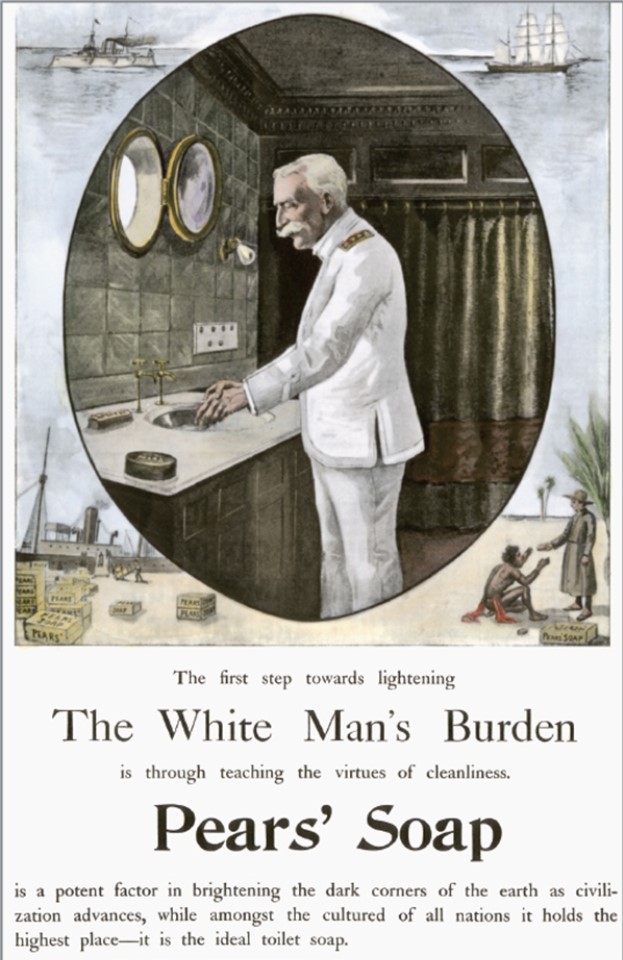
A) Japan
B) Africa
C) Russia
D) Europe
A) Japan
B) Africa
C) Russia
D) Europe
Question
Question
Question
Question
Question
What technological innovation of the late nineteenth century is noticeably absent from this picture of Mulberry Street in New York City? 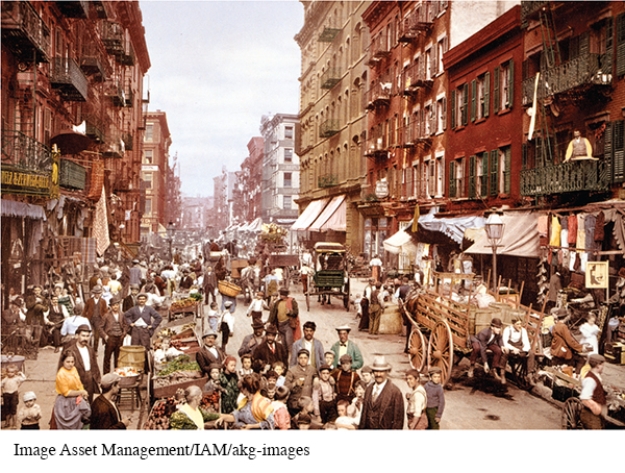
A) Electric streetcars
B) Telegraph wires
C) Hackney carriages
D) Electric streetlights
A) Electric streetcars
B) Telegraph wires
C) Hackney carriages
D) Electric streetlights
Question
Question
Question
Question
Question
Question
Question
How does this photograph demonstrate King Leopold II's willingness to ignore the agreements set forth at the Berlin Conference? 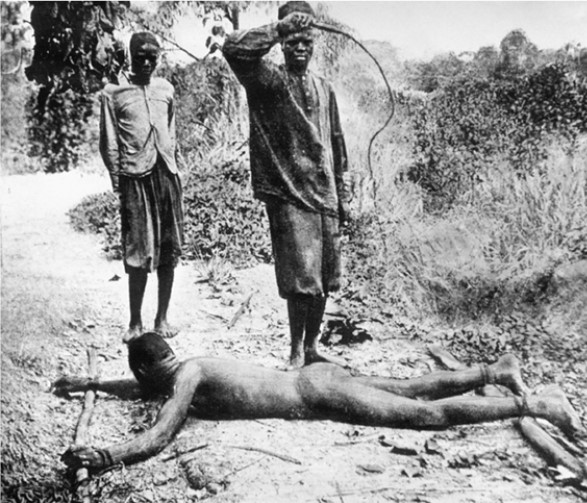
A) He took the Congo by force rather than through treaty.
B) He continued to harvest and profit from raw rubber.
C) He did not protect the native people's moral and physical well-being.
D) He barred missionaries from entering the Congo.
A) He took the Congo by force rather than through treaty.
B) He continued to harvest and profit from raw rubber.
C) He did not protect the native people's moral and physical well-being.
D) He barred missionaries from entering the Congo.
Question
What feature of the Maxim gun, pictured here, was a key factor in the weapon's incredible destructive power? 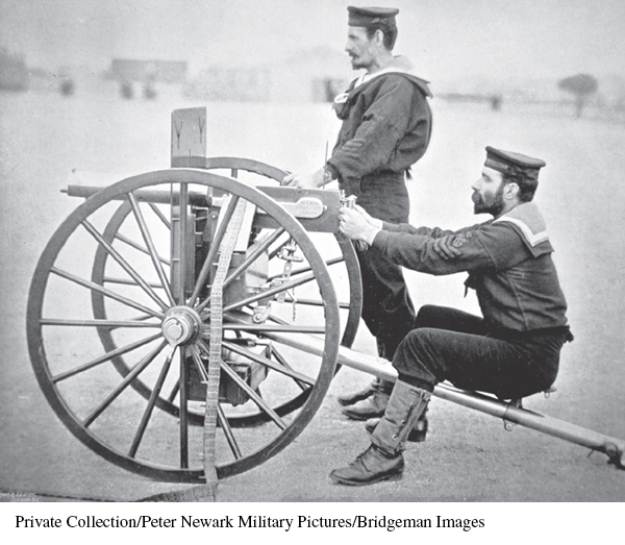
A) The operator had a mid-range line of sight.
B) Its efficient design virtually eliminated mechanical malfunctions.
C) The operator could remain seated to ensure a steady aim.
D) It was highly mobile.
A) The operator had a mid-range line of sight.
B) Its efficient design virtually eliminated mechanical malfunctions.
C) The operator could remain seated to ensure a steady aim.
D) It was highly mobile.
Question
Question
Question
Question
Question
Question
Question
Question
Question
Question
Question
Question
Question
Question
Question
Which of the following is true about this Catholic missionary school in South Africa? 
A) This may have been the first contact these African students had with Europeans.
B) Most Catholics preferred holding classes outside.
C) Only a handful of these schools were necessary as attested to by the small number of students.
D) African students such as these showed little interest in being taught by Europeans.
A) This may have been the first contact these African students had with Europeans.
B) Most Catholics preferred holding classes outside.
C) Only a handful of these schools were necessary as attested to by the small number of students.
D) African students such as these showed little interest in being taught by Europeans.
Question
Question
Question
Question
Question
Question
Question
Question
Question
Question
Question
Question
Question
Question
Question
Question
Question
Question
Question
Question
Question
Question
Question
Question
Question
Question
Question
Question
Question
Question
Question
Question
Question
Question
Question
Question

Unlock Deck
Sign up to unlock the cards in this deck!
Unlock Deck
Unlock Deck
1/79

Play

Full screen (f)
Deck 25: Africa, the Ottoman Empire, and the New Imperialism, 1800-1914
1
King Leopold II became notorious for which of the following?
A) His playboy lifestyle
B) The exploitation of Africans in the Congo
C) The lengths he would go to acquire ivory
D) His micromanagement of Belgium's empire
A) His playboy lifestyle
B) The exploitation of Africans in the Congo
C) The lengths he would go to acquire ivory
D) His micromanagement of Belgium's empire
The exploitation of Africans in the Congo
2
After 1775, a broad-based campaign to abolish slavery began in what country?
A) The United States
B) Britain
C) France
D) Egypt
A) The United States
B) Britain
C) France
D) Egypt
Britain
3
In the view of European imperialists in Africa, what did "good government" mean?
A) The government provided basic services.
B) The government focused on helping all people accumulate material wealth.
C) The government ensured law and order.
D) The government ruled through elected representatives.
A) The government provided basic services.
B) The government focused on helping all people accumulate material wealth.
C) The government ensured law and order.
D) The government ruled through elected representatives.
The government ensured law and order.
4
What was the main economic goal of European imperialists in Africa?
A) To encourage sustainable indigenous industrial development
B) To connect Africa to world markets in a way that would be profitable for the Europeans
C) To develop markets for industrial goods in the European colonies
D) To develop new settlements to be populated by working-class Europeans
A) To encourage sustainable indigenous industrial development
B) To connect Africa to world markets in a way that would be profitable for the Europeans
C) To develop markets for industrial goods in the European colonies
D) To develop new settlements to be populated by working-class Europeans
Unlock Deck
Unlock for access to all 79 flashcards in this deck.
Unlock Deck
k this deck
5
What was one consequence of the spread of Islam in the Sudan?
A) Fewer women married.
B) Slavery was abolished in the region.
C) The trans-Saharan trade doubled.
D) A written constitution was established.
A) Fewer women married.
B) Slavery was abolished in the region.
C) The trans-Saharan trade doubled.
D) A written constitution was established.
Unlock Deck
Unlock for access to all 79 flashcards in this deck.
Unlock Deck
k this deck
6
What European country first colonized the Congo?
A) Belgium
B) Germany
C) France
D) England
A) Belgium
B) Germany
C) France
D) England
Unlock Deck
Unlock for access to all 79 flashcards in this deck.
Unlock Deck
k this deck
7
Who was Shaka, and why was he significant?
A) He was the British-appointed ruler of the Cape Colony who worked to impose and enforce British policies in Africa.
B) He was the leader of Ethiopia's resistance to Italian imperialism and was successful in achieving independence for Ethiopia.
C) He was a Zulu leader who revolutionized African warfare and created the largest and most powerful African society in southern Africa in the nineteenth century.
D) He was the leader of a protest against working conditions at the DeBeers' diamond mines who spread knowledge of the atrocities there throughout Europe.
A) He was the British-appointed ruler of the Cape Colony who worked to impose and enforce British policies in Africa.
B) He was the leader of Ethiopia's resistance to Italian imperialism and was successful in achieving independence for Ethiopia.
C) He was a Zulu leader who revolutionized African warfare and created the largest and most powerful African society in southern Africa in the nineteenth century.
D) He was the leader of a protest against working conditions at the DeBeers' diamond mines who spread knowledge of the atrocities there throughout Europe.
Unlock Deck
Unlock for access to all 79 flashcards in this deck.
Unlock Deck
k this deck
8
What motivated the Afrikaners to make their Great Trek northward in 1836?
A) They were looking for better farmland.
B) They heard that diamonds had been found.
C) They wanted to protest the atrocities being committed against blacks in South Africa.
D) They resented the movements toward black equality taking place in the Cape Colony.
A) They were looking for better farmland.
B) They heard that diamonds had been found.
C) They wanted to protest the atrocities being committed against blacks in South Africa.
D) They resented the movements toward black equality taking place in the Cape Colony.
Unlock Deck
Unlock for access to all 79 flashcards in this deck.
Unlock Deck
k this deck
9
Economically, British abolitionists sought to replace the African slave trade with trade in which of the following?
A) Wheat and barley
B) Gold and silver
C) Coffee and cotton
D) Tropical products
A) Wheat and barley
B) Gold and silver
C) Coffee and cotton
D) Tropical products
Unlock Deck
Unlock for access to all 79 flashcards in this deck.
Unlock Deck
k this deck
10
Who spearheaded Islamic expansion in East Africa from the 1820s on?
A) North African jihadists
B) Persian missionaries
C) Arab merchants and adventurers
D) Delegates from the Sokoto caliphate
A) North African jihadists
B) Persian missionaries
C) Arab merchants and adventurers
D) Delegates from the Sokoto caliphate
Unlock Deck
Unlock for access to all 79 flashcards in this deck.
Unlock Deck
k this deck
11
Leopold and the companies of the Congo made a fortune from the trade of what cash crop?
A) Tea
B) Slaves
C) Raw rubber
D) Iron
A) Tea
B) Slaves
C) Raw rubber
D) Iron
Unlock Deck
Unlock for access to all 79 flashcards in this deck.
Unlock Deck
k this deck
12
Who did Uthman dan Fodio declare a jihad against in 1804?
A) The Ottomans
B) The Egyptians
C) The state of Gobir in the northern Sudan
D) The Swahili states
A) The Ottomans
B) The Egyptians
C) The state of Gobir in the northern Sudan
D) The Swahili states
Unlock Deck
Unlock for access to all 79 flashcards in this deck.
Unlock Deck
k this deck
13
The Berlin Conference was organized by Premier Jules Ferry of France and what other leader?
A) Muhammad Ali of Egypt
B) Leopold II of Belgium
C) Otto von Bismarck of Germany
D) Mahmud II of the Ottomans
A) Muhammad Ali of Egypt
B) Leopold II of Belgium
C) Otto von Bismarck of Germany
D) Mahmud II of the Ottomans
Unlock Deck
Unlock for access to all 79 flashcards in this deck.
Unlock Deck
k this deck
14
The colonization of Africa was so thorough that by 1914 the only independent nations left were Liberia and what other nation?
A) Morocco
B) Sudan
C) Ethiopia
D) Senegal
A) Morocco
B) Sudan
C) Ethiopia
D) Senegal
Unlock Deck
Unlock for access to all 79 flashcards in this deck.
Unlock Deck
k this deck
15
Based on the so-called scientific racism of the late nineteenth century, along with Britain's imperialistic aims, to whom can it be assumed the phrase "the dark corners of the earth" in this soap advertisement refers?
A) Japan
B) Africa
C) Russia
D) Europe
A) Japan
B) Africa
C) Russia
D) Europe
Unlock Deck
Unlock for access to all 79 flashcards in this deck.
Unlock Deck
k this deck
16
Cecil Rhodes and De Beers dominated the African trade in what?
A) Slaves
B) Rubber
C) Diamonds
D) Ivory
A) Slaves
B) Rubber
C) Diamonds
D) Ivory
Unlock Deck
Unlock for access to all 79 flashcards in this deck.
Unlock Deck
k this deck
17
The Berlin Conference established the principle that European claims to African territory had to rest on which of the following in order to be recognized by other states?
A) "Extraterritoriality"
B) "Direct annexation"
C) "Effective occupation"
D) "Military subjugation"
A) "Extraterritoriality"
B) "Direct annexation"
C) "Effective occupation"
D) "Military subjugation"
Unlock Deck
Unlock for access to all 79 flashcards in this deck.
Unlock Deck
k this deck
18
Who won the battle of Omdurman in 1898?
A) Sudanese Muslims
B) The Belgians
C) The Dutch
D) The British
A) Sudanese Muslims
B) The Belgians
C) The Dutch
D) The British
Unlock Deck
Unlock for access to all 79 flashcards in this deck.
Unlock Deck
k this deck
19
By 1880, what united western and central Sudan?
A) Islam
B) The slave trade
C) The palm oil trade
D) European colonialism
A) Islam
B) The slave trade
C) The palm oil trade
D) European colonialism
Unlock Deck
Unlock for access to all 79 flashcards in this deck.
Unlock Deck
k this deck
20
What technological innovation of the late nineteenth century is noticeably absent from this picture of Mulberry Street in New York City?
A) Electric streetcars
B) Telegraph wires
C) Hackney carriages
D) Electric streetlights
A) Electric streetcars
B) Telegraph wires
C) Hackney carriages
D) Electric streetlights
Unlock Deck
Unlock for access to all 79 flashcards in this deck.
Unlock Deck
k this deck
21
Which of the following describes the trend in European spending on colonial social services after World War I?
A) Such expenditures increased but remained small.
B) Such expenditures were reduced to almost nothing.
C) Such expenditures increased rapidly.
D) Such expenditures decreased slowly.
A) Such expenditures increased but remained small.
B) Such expenditures were reduced to almost nothing.
C) Such expenditures increased rapidly.
D) Such expenditures decreased slowly.
Unlock Deck
Unlock for access to all 79 flashcards in this deck.
Unlock Deck
k this deck
22
In the face of European imperialism, what was the most common initial response of African and Asian rulers?
A) They generally deemed it unwise to resist.
B) They immediately began diplomatic negotiations.
C) They displayed measured indifference.
D) They raised violent opposition.
A) They generally deemed it unwise to resist.
B) They immediately began diplomatic negotiations.
C) They displayed measured indifference.
D) They raised violent opposition.
Unlock Deck
Unlock for access to all 79 flashcards in this deck.
Unlock Deck
k this deck
23
Who was the Ottoman governor who led Egypt in the years following the Napoleonic wars?
A) Abbas II
B) Abdul Assar
C) Ataturk
D) Muhammad Ali
A) Abbas II
B) Abdul Assar
C) Ataturk
D) Muhammad Ali
Unlock Deck
Unlock for access to all 79 flashcards in this deck.
Unlock Deck
k this deck
24
Why was Great Britain motivated to engage in imperialism in the 1870s?
A) It had developed no new colonies since the loss of its North American colonies.
B) It wanted to civilize the Africans more than it did the Indians.
C) Its soaring population had created a massive shortage of jobs at home.
D) Its lead in industrial domination was declining.
A) It had developed no new colonies since the loss of its North American colonies.
B) It wanted to civilize the Africans more than it did the Indians.
C) Its soaring population had created a massive shortage of jobs at home.
D) Its lead in industrial domination was declining.
Unlock Deck
Unlock for access to all 79 flashcards in this deck.
Unlock Deck
k this deck
25
What did Europeans fear about Muhammad Ali taking over parts of the Ottoman Empire?
A) That he was a Zionist
B) That he was too friendly with Russia
C) That the Ottomans would cease to be a buffer between western Europe and Egypt
D) That his dynamic personality would revive Ottoman power
A) That he was a Zionist
B) That he was too friendly with Russia
C) That the Ottomans would cease to be a buffer between western Europe and Egypt
D) That his dynamic personality would revive Ottoman power
Unlock Deck
Unlock for access to all 79 flashcards in this deck.
Unlock Deck
k this deck
26
How did the Ibo of Nigeria respond to the British arrival in East Africa?
A) They violently resisted European colonization.
B) They adapted to British rule and ran their colonial state through elected offices.
C) They became highly Christianized.
D) Their tribal officials agreed to build hundreds of miles of railroads.
A) They violently resisted European colonization.
B) They adapted to British rule and ran their colonial state through elected offices.
C) They became highly Christianized.
D) Their tribal officials agreed to build hundreds of miles of railroads.
Unlock Deck
Unlock for access to all 79 flashcards in this deck.
Unlock Deck
k this deck
27
How does this photograph demonstrate King Leopold II's willingness to ignore the agreements set forth at the Berlin Conference?
A) He took the Congo by force rather than through treaty.
B) He continued to harvest and profit from raw rubber.
C) He did not protect the native people's moral and physical well-being.
D) He barred missionaries from entering the Congo.
A) He took the Congo by force rather than through treaty.
B) He continued to harvest and profit from raw rubber.
C) He did not protect the native people's moral and physical well-being.
D) He barred missionaries from entering the Congo.
Unlock Deck
Unlock for access to all 79 flashcards in this deck.
Unlock Deck
k this deck
28
What feature of the Maxim gun, pictured here, was a key factor in the weapon's incredible destructive power?
A) The operator had a mid-range line of sight.
B) Its efficient design virtually eliminated mechanical malfunctions.
C) The operator could remain seated to ensure a steady aim.
D) It was highly mobile.
A) The operator had a mid-range line of sight.
B) Its efficient design virtually eliminated mechanical malfunctions.
C) The operator could remain seated to ensure a steady aim.
D) It was highly mobile.
Unlock Deck
Unlock for access to all 79 flashcards in this deck.
Unlock Deck
k this deck
29
What sparked the Ottoman janissary revolt of 1826?
A) A janissary had been stoned for desertion.
B) The government put pork into rations.
C) The janissaries were ordered to drill in European style.
D) The sultan ordered the disbanding of the janissaries.
A) A janissary had been stoned for desertion.
B) The government put pork into rations.
C) The janissaries were ordered to drill in European style.
D) The sultan ordered the disbanding of the janissaries.
Unlock Deck
Unlock for access to all 79 flashcards in this deck.
Unlock Deck
k this deck
30
Which of the following was a series of Ottoman reforms issued in 1876 and designed to remake the empire on a western European model?
A) Tantuni
B) Tanzimat
C) Janissary
D) Dervishme
A) Tantuni
B) Tanzimat
C) Janissary
D) Dervishme
Unlock Deck
Unlock for access to all 79 flashcards in this deck.
Unlock Deck
k this deck
31
Which of these was a notorious example of Europeans misleading African rulers?
A) The Livingston Agreements
B) The Berlin Conference
C) The Rudd Concession
D) The Treaty of Paris
A) The Livingston Agreements
B) The Berlin Conference
C) The Rudd Concession
D) The Treaty of Paris
Unlock Deck
Unlock for access to all 79 flashcards in this deck.
Unlock Deck
k this deck
32
Why were colonial officials reluctant to move decisively against slavery within Africa?
A) They were fearful of the economic and political consequences of such a move.
B) They had no moral qualms about slavery.
C) They worried about the impact of such a move on public opinion in Europe.
D) They did not see slavery as a significant issue.
A) They were fearful of the economic and political consequences of such a move.
B) They had no moral qualms about slavery.
C) They worried about the impact of such a move on public opinion in Europe.
D) They did not see slavery as a significant issue.
Unlock Deck
Unlock for access to all 79 flashcards in this deck.
Unlock Deck
k this deck
33
By the nineteenth century, the Ottoman janissary corps had been transformed into
A) a corrupt and privileged hereditary elite.
B) elite, innovative infantry units.
C) a slave army of Armenians.
D) Shi'a converts.
A) a corrupt and privileged hereditary elite.
B) elite, innovative infantry units.
C) a slave army of Armenians.
D) Shi'a converts.
Unlock Deck
Unlock for access to all 79 flashcards in this deck.
Unlock Deck
k this deck
34
Western expansion into Asia and Africa reached its peak between what years?
A) 1850 and 1890
B) 1880 and 1914
C) 1871 and 1882
D) 1914 and 1939
A) 1850 and 1890
B) 1880 and 1914
C) 1871 and 1882
D) 1914 and 1939
Unlock Deck
Unlock for access to all 79 flashcards in this deck.
Unlock Deck
k this deck
35
Quinine proved an effective protection against what debilitating disease?
A) Smallpox
B) Malaria
C) Syphilis
D) Yellow fever
A) Smallpox
B) Malaria
C) Syphilis
D) Yellow fever
Unlock Deck
Unlock for access to all 79 flashcards in this deck.
Unlock Deck
k this deck
36
In 1830, France began a long and bloody effort to conquer what province?
A) Syria
B) Algeria
C) Iraq
D) Iran
A) Syria
B) Algeria
C) Iraq
D) Iran
Unlock Deck
Unlock for access to all 79 flashcards in this deck.
Unlock Deck
k this deck
37
Which of these was a consequence of the taxes levied by colonial governments?
A) Africans refused to build new houses.
B) African birthrates declined.
C) Africans were compelled to work for whites.
D) The African economy grew rapidly.
A) Africans refused to build new houses.
B) African birthrates declined.
C) Africans were compelled to work for whites.
D) The African economy grew rapidly.
Unlock Deck
Unlock for access to all 79 flashcards in this deck.
Unlock Deck
k this deck
38
Rudyard Kipling wrote his poem "The White Man's Burden" in response to which of the following?
A) America's seizure of the Philippines
B) The British crown's takeover of India
C) The British victory in the South African War
D) America's sponsorship of the freed slaves' colony of Liberia
A) America's seizure of the Philippines
B) The British crown's takeover of India
C) The British victory in the South African War
D) America's sponsorship of the freed slaves' colony of Liberia
Unlock Deck
Unlock for access to all 79 flashcards in this deck.
Unlock Deck
k this deck
39
What intensified British interest in South Africa in the second half of the nineteenth century?
A) Competition with Germany
B) Mineral resources
C) Labor shortages at home
D) Food shortages at home
A) Competition with Germany
B) Mineral resources
C) Labor shortages at home
D) Food shortages at home
Unlock Deck
Unlock for access to all 79 flashcards in this deck.
Unlock Deck
k this deck
40
How did Muhammad Ali raise money to pay for his army and the industrialization of Egypt?
A) He developed commercial agriculture.
B) He reopened the slave markets.
C) He borrowed money from Russia.
D) He built large cotton mills.
A) He developed commercial agriculture.
B) He reopened the slave markets.
C) He borrowed money from Russia.
D) He built large cotton mills.
Unlock Deck
Unlock for access to all 79 flashcards in this deck.
Unlock Deck
k this deck
41
Why did Qasim Amin believe the Islamic world had fallen behind the West?
A) Because they had not industrialized
B) Because they had failed to educate women
C) Because they lacked strong leadership
D) Because they did not participate in global trade
A) Because they had not industrialized
B) Because they had failed to educate women
C) Because they lacked strong leadership
D) Because they did not participate in global trade
Unlock Deck
Unlock for access to all 79 flashcards in this deck.
Unlock Deck
k this deck
42
As a result of the growth of trade, Europeans made massive foreign investments
A) in Ireland and South Africa.
B) in its colonies in Asia and Africa.
C) in other European countries, the United States, and its old dominions like Canada and Australia.
D) in Russia.
A) in Ireland and South Africa.
B) in its colonies in Asia and Africa.
C) in other European countries, the United States, and its old dominions like Canada and Australia.
D) in Russia.
Unlock Deck
Unlock for access to all 79 flashcards in this deck.
Unlock Deck
k this deck
43
Which of the following is true about this Catholic missionary school in South Africa?
A) This may have been the first contact these African students had with Europeans.
B) Most Catholics preferred holding classes outside.
C) Only a handful of these schools were necessary as attested to by the small number of students.
D) African students such as these showed little interest in being taught by Europeans.
A) This may have been the first contact these African students had with Europeans.
B) Most Catholics preferred holding classes outside.
C) Only a handful of these schools were necessary as attested to by the small number of students.
D) African students such as these showed little interest in being taught by Europeans.
Unlock Deck
Unlock for access to all 79 flashcards in this deck.
Unlock Deck
k this deck
44
Which statement is true about global living standards in 1750?
A) The average living standard in Europe was no higher than in the rest of the world.
B) The average living standard in Europe was significantly higher than in the rest of the world.
C) Living standards in Muslim empires were still higher than in Europe.
D) The living standard in China was higher than the rest of the world.
A) The average living standard in Europe was no higher than in the rest of the world.
B) The average living standard in Europe was significantly higher than in the rest of the world.
C) Living standards in Muslim empires were still higher than in Europe.
D) The living standard in China was higher than the rest of the world.
Unlock Deck
Unlock for access to all 79 flashcards in this deck.
Unlock Deck
k this deck
45
How did the politics of Europe in the late nineteenth century shape the organization of the European colonies in the scramble for Africa?
Unlock Deck
Unlock for access to all 79 flashcards in this deck.
Unlock Deck
k this deck
46
What was one reason the British seized Egypt in 1882?
A) Anti-European riots erupted in Alexandria.
B) British merchants violated Islamic law.
C) An independent Jewish state was declared in Palestine.
D) The French military had attempted to depose the ruler Tewfiq.
A) Anti-European riots erupted in Alexandria.
B) British merchants violated Islamic law.
C) An independent Jewish state was declared in Palestine.
D) The French military had attempted to depose the ruler Tewfiq.
Unlock Deck
Unlock for access to all 79 flashcards in this deck.
Unlock Deck
k this deck
47
What role did slavery play in the internal economy of sub-Saharan Africa?
Unlock Deck
Unlock for access to all 79 flashcards in this deck.
Unlock Deck
k this deck
48
What were the long-term implications of the Sokoto caliphate?
Unlock Deck
Unlock for access to all 79 flashcards in this deck.
Unlock Deck
k this deck
49
What caused tensions between Afrikaners and the British in southern Africa?
Unlock Deck
Unlock for access to all 79 flashcards in this deck.
Unlock Deck
k this deck
50
Jamal al-Din al-Afghani and Muhammad Abduh both advocated for which of the following?
A) Islamic reform and rejuvenation
B) Extreme fundamentalist Islam
C) Islamic accommodation of Christianity
D) Democratic reforms in Egypt
A) Islamic reform and rejuvenation
B) Extreme fundamentalist Islam
C) Islamic accommodation of Christianity
D) Democratic reforms in Egypt
Unlock Deck
Unlock for access to all 79 flashcards in this deck.
Unlock Deck
k this deck
51
During the great migration of the nineteenth and early twentieth centuries, the vast majority of migrants were
A) from China and South Asia.
B) from Europe.
C) African slaves.
D) Jews from Eastern Europe.
A) from China and South Asia.
B) from Europe.
C) African slaves.
D) Jews from Eastern Europe.
Unlock Deck
Unlock for access to all 79 flashcards in this deck.
Unlock Deck
k this deck
52
In America and Australia in the 1880s, "great white walls" were actually what?
A) Physical walls surrounding Asian settlements
B) Discriminatory laws against Asian migrants
C) Laws allowing Asian labor on plantations
D) Factory dormitories to keep Asian and white workers apart
A) Physical walls surrounding Asian settlements
B) Discriminatory laws against Asian migrants
C) Laws allowing Asian labor on plantations
D) Factory dormitories to keep Asian and white workers apart
Unlock Deck
Unlock for access to all 79 flashcards in this deck.
Unlock Deck
k this deck
53
What were the causes of the late-nineteenth-century new imperialism?
Unlock Deck
Unlock for access to all 79 flashcards in this deck.
Unlock Deck
k this deck
54
What did Cecil Rhodes contribute to British imperialism and the history of South Africa?
Unlock Deck
Unlock for access to all 79 flashcards in this deck.
Unlock Deck
k this deck
55
What motivated people to migrate in the nineteenth century?
Unlock Deck
Unlock for access to all 79 flashcards in this deck.
Unlock Deck
k this deck
56
Who built the Suez Canal?
A) The British East India Company
B) A French company
C) Ottoman janissaries
D) Muhammad Ali's army
A) The British East India Company
B) A French company
C) Ottoman janissaries
D) Muhammad Ali's army
Unlock Deck
Unlock for access to all 79 flashcards in this deck.
Unlock Deck
k this deck
57
What role did technology and infrastructure play in developing world markets in the nineteenth century?
Unlock Deck
Unlock for access to all 79 flashcards in this deck.
Unlock Deck
k this deck
58
How was the development of southern Africa different from the development of the rest of sub-Saharan Africa?
Unlock Deck
Unlock for access to all 79 flashcards in this deck.
Unlock Deck
k this deck
59
The European migrant was most often
A) a middle-class professional.
B) an urban, skilled factory worker.
C) a small peasant landowner or rural craftsman.
D) the poorest rural, landless peasant.
A) a middle-class professional.
B) an urban, skilled factory worker.
C) a small peasant landowner or rural craftsman.
D) the poorest rural, landless peasant.
Unlock Deck
Unlock for access to all 79 flashcards in this deck.
Unlock Deck
k this deck
60
How were the Tanzimat reforms "Western" in character?
Unlock Deck
Unlock for access to all 79 flashcards in this deck.
Unlock Deck
k this deck
61
Use the following to answer questions:
Tanzimat
A)A West African tropical product often used to make soap; the British encouraged its cultivation as an alternative to the slave trade.
B)Religious war waged by Muslim scholars and religious leaders against both animist rulers and Islamic states that they deemed corrupt.
C)Founded in 1809 by Uthman dan Fodio, this African state was based on Islamic history and law.
D)A meeting of European leaders held in 1884-1885 to lay down basic rules for imperialist competition in sub-Saharan Africa.
E)An autonomous state or territory partly controlled and protected by a stronger outside power.
F)Descendants of the Dutch settlers in the Cape Colony in southern Africa.
G)The late-nineteenth-century drive by European countries to create vast political empires abroad.
H)An agent that proved effective in controlling attacks of malaria, which had previously decimated Europeans in the tropics.
I)The idea that Europeans could and should civilize more primitive nonwhite peoples and that imperialism would eventually provide nonwhites with modern achievements and higher standards of living.
J)A set of radical reforms designed to remake the Ottoman Empire on a western European model.
K)Fervent patriots who seized power in the revolution of 1908, forcing the conservative sultan to implement reforms; they helped pave the way for the birth of modern secular Turkey.
L)The mass movement of people from Europe in the nineteenth century; one reason that the West's impact on the world was so powerful and complex.
M)The movement of peoples in which one strong individual blazes the way and others follow.
N)Discriminatory laws built by Americans and Australians to keep Asians from settling in their countries in the 1880s.
Tanzimat
A)A West African tropical product often used to make soap; the British encouraged its cultivation as an alternative to the slave trade.
B)Religious war waged by Muslim scholars and religious leaders against both animist rulers and Islamic states that they deemed corrupt.
C)Founded in 1809 by Uthman dan Fodio, this African state was based on Islamic history and law.
D)A meeting of European leaders held in 1884-1885 to lay down basic rules for imperialist competition in sub-Saharan Africa.
E)An autonomous state or territory partly controlled and protected by a stronger outside power.
F)Descendants of the Dutch settlers in the Cape Colony in southern Africa.
G)The late-nineteenth-century drive by European countries to create vast political empires abroad.
H)An agent that proved effective in controlling attacks of malaria, which had previously decimated Europeans in the tropics.
I)The idea that Europeans could and should civilize more primitive nonwhite peoples and that imperialism would eventually provide nonwhites with modern achievements and higher standards of living.
J)A set of radical reforms designed to remake the Ottoman Empire on a western European model.
K)Fervent patriots who seized power in the revolution of 1908, forcing the conservative sultan to implement reforms; they helped pave the way for the birth of modern secular Turkey.
L)The mass movement of people from Europe in the nineteenth century; one reason that the West's impact on the world was so powerful and complex.
M)The movement of peoples in which one strong individual blazes the way and others follow.
N)Discriminatory laws built by Americans and Australians to keep Asians from settling in their countries in the 1880s.
Unlock Deck
Unlock for access to all 79 flashcards in this deck.
Unlock Deck
k this deck
62
Use the following to answer questions:
Afrikaners
A)A West African tropical product often used to make soap; the British encouraged its cultivation as an alternative to the slave trade.
B)Religious war waged by Muslim scholars and religious leaders against both animist rulers and Islamic states that they deemed corrupt.
C)Founded in 1809 by Uthman dan Fodio, this African state was based on Islamic history and law.
D)A meeting of European leaders held in 1884-1885 to lay down basic rules for imperialist competition in sub-Saharan Africa.
E)An autonomous state or territory partly controlled and protected by a stronger outside power.
F)Descendants of the Dutch settlers in the Cape Colony in southern Africa.
G)The late-nineteenth-century drive by European countries to create vast political empires abroad.
H)An agent that proved effective in controlling attacks of malaria, which had previously decimated Europeans in the tropics.
I)The idea that Europeans could and should civilize more primitive nonwhite peoples and that imperialism would eventually provide nonwhites with modern achievements and higher standards of living.
J)A set of radical reforms designed to remake the Ottoman Empire on a western European model.
K)Fervent patriots who seized power in the revolution of 1908, forcing the conservative sultan to implement reforms; they helped pave the way for the birth of modern secular Turkey.
L)The mass movement of people from Europe in the nineteenth century; one reason that the West's impact on the world was so powerful and complex.
M)The movement of peoples in which one strong individual blazes the way and others follow.
N)Discriminatory laws built by Americans and Australians to keep Asians from settling in their countries in the 1880s.
Afrikaners
A)A West African tropical product often used to make soap; the British encouraged its cultivation as an alternative to the slave trade.
B)Religious war waged by Muslim scholars and religious leaders against both animist rulers and Islamic states that they deemed corrupt.
C)Founded in 1809 by Uthman dan Fodio, this African state was based on Islamic history and law.
D)A meeting of European leaders held in 1884-1885 to lay down basic rules for imperialist competition in sub-Saharan Africa.
E)An autonomous state or territory partly controlled and protected by a stronger outside power.
F)Descendants of the Dutch settlers in the Cape Colony in southern Africa.
G)The late-nineteenth-century drive by European countries to create vast political empires abroad.
H)An agent that proved effective in controlling attacks of malaria, which had previously decimated Europeans in the tropics.
I)The idea that Europeans could and should civilize more primitive nonwhite peoples and that imperialism would eventually provide nonwhites with modern achievements and higher standards of living.
J)A set of radical reforms designed to remake the Ottoman Empire on a western European model.
K)Fervent patriots who seized power in the revolution of 1908, forcing the conservative sultan to implement reforms; they helped pave the way for the birth of modern secular Turkey.
L)The mass movement of people from Europe in the nineteenth century; one reason that the West's impact on the world was so powerful and complex.
M)The movement of peoples in which one strong individual blazes the way and others follow.
N)Discriminatory laws built by Americans and Australians to keep Asians from settling in their countries in the 1880s.
Unlock Deck
Unlock for access to all 79 flashcards in this deck.
Unlock Deck
k this deck
63
Use the following to answer questions:
great white walls
A)A West African tropical product often used to make soap; the British encouraged its cultivation as an alternative to the slave trade.
B)Religious war waged by Muslim scholars and religious leaders against both animist rulers and Islamic states that they deemed corrupt.
C)Founded in 1809 by Uthman dan Fodio, this African state was based on Islamic history and law.
D)A meeting of European leaders held in 1884-1885 to lay down basic rules for imperialist competition in sub-Saharan Africa.
E)An autonomous state or territory partly controlled and protected by a stronger outside power.
F)Descendants of the Dutch settlers in the Cape Colony in southern Africa.
G)The late-nineteenth-century drive by European countries to create vast political empires abroad.
H)An agent that proved effective in controlling attacks of malaria, which had previously decimated Europeans in the tropics.
I)The idea that Europeans could and should civilize more primitive nonwhite peoples and that imperialism would eventually provide nonwhites with modern achievements and higher standards of living.
J)A set of radical reforms designed to remake the Ottoman Empire on a western European model.
K)Fervent patriots who seized power in the revolution of 1908, forcing the conservative sultan to implement reforms; they helped pave the way for the birth of modern secular Turkey.
L)The mass movement of people from Europe in the nineteenth century; one reason that the West's impact on the world was so powerful and complex.
M)The movement of peoples in which one strong individual blazes the way and others follow.
N)Discriminatory laws built by Americans and Australians to keep Asians from settling in their countries in the 1880s.
great white walls
A)A West African tropical product often used to make soap; the British encouraged its cultivation as an alternative to the slave trade.
B)Religious war waged by Muslim scholars and religious leaders against both animist rulers and Islamic states that they deemed corrupt.
C)Founded in 1809 by Uthman dan Fodio, this African state was based on Islamic history and law.
D)A meeting of European leaders held in 1884-1885 to lay down basic rules for imperialist competition in sub-Saharan Africa.
E)An autonomous state or territory partly controlled and protected by a stronger outside power.
F)Descendants of the Dutch settlers in the Cape Colony in southern Africa.
G)The late-nineteenth-century drive by European countries to create vast political empires abroad.
H)An agent that proved effective in controlling attacks of malaria, which had previously decimated Europeans in the tropics.
I)The idea that Europeans could and should civilize more primitive nonwhite peoples and that imperialism would eventually provide nonwhites with modern achievements and higher standards of living.
J)A set of radical reforms designed to remake the Ottoman Empire on a western European model.
K)Fervent patriots who seized power in the revolution of 1908, forcing the conservative sultan to implement reforms; they helped pave the way for the birth of modern secular Turkey.
L)The mass movement of people from Europe in the nineteenth century; one reason that the West's impact on the world was so powerful and complex.
M)The movement of peoples in which one strong individual blazes the way and others follow.
N)Discriminatory laws built by Americans and Australians to keep Asians from settling in their countries in the 1880s.
Unlock Deck
Unlock for access to all 79 flashcards in this deck.
Unlock Deck
k this deck
64
Describe the imperial system in Africa. How can we account for the apparent differences of policies in the various regions of the colonized world? What impact did the imperial system have on the native peoples of these regions?
Unlock Deck
Unlock for access to all 79 flashcards in this deck.
Unlock Deck
k this deck
65
Use the following to answer questions:
jihad
A)A West African tropical product often used to make soap; the British encouraged its cultivation as an alternative to the slave trade.
B)Religious war waged by Muslim scholars and religious leaders against both animist rulers and Islamic states that they deemed corrupt.
C)Founded in 1809 by Uthman dan Fodio, this African state was based on Islamic history and law.
D)A meeting of European leaders held in 1884-1885 to lay down basic rules for imperialist competition in sub-Saharan Africa.
E)An autonomous state or territory partly controlled and protected by a stronger outside power.
F)Descendants of the Dutch settlers in the Cape Colony in southern Africa.
G)The late-nineteenth-century drive by European countries to create vast political empires abroad.
H)An agent that proved effective in controlling attacks of malaria, which had previously decimated Europeans in the tropics.
I)The idea that Europeans could and should civilize more primitive nonwhite peoples and that imperialism would eventually provide nonwhites with modern achievements and higher standards of living.
J)A set of radical reforms designed to remake the Ottoman Empire on a western European model.
K)Fervent patriots who seized power in the revolution of 1908, forcing the conservative sultan to implement reforms; they helped pave the way for the birth of modern secular Turkey.
L)The mass movement of people from Europe in the nineteenth century; one reason that the West's impact on the world was so powerful and complex.
M)The movement of peoples in which one strong individual blazes the way and others follow.
N)Discriminatory laws built by Americans and Australians to keep Asians from settling in their countries in the 1880s.
jihad
A)A West African tropical product often used to make soap; the British encouraged its cultivation as an alternative to the slave trade.
B)Religious war waged by Muslim scholars and religious leaders against both animist rulers and Islamic states that they deemed corrupt.
C)Founded in 1809 by Uthman dan Fodio, this African state was based on Islamic history and law.
D)A meeting of European leaders held in 1884-1885 to lay down basic rules for imperialist competition in sub-Saharan Africa.
E)An autonomous state or territory partly controlled and protected by a stronger outside power.
F)Descendants of the Dutch settlers in the Cape Colony in southern Africa.
G)The late-nineteenth-century drive by European countries to create vast political empires abroad.
H)An agent that proved effective in controlling attacks of malaria, which had previously decimated Europeans in the tropics.
I)The idea that Europeans could and should civilize more primitive nonwhite peoples and that imperialism would eventually provide nonwhites with modern achievements and higher standards of living.
J)A set of radical reforms designed to remake the Ottoman Empire on a western European model.
K)Fervent patriots who seized power in the revolution of 1908, forcing the conservative sultan to implement reforms; they helped pave the way for the birth of modern secular Turkey.
L)The mass movement of people from Europe in the nineteenth century; one reason that the West's impact on the world was so powerful and complex.
M)The movement of peoples in which one strong individual blazes the way and others follow.
N)Discriminatory laws built by Americans and Australians to keep Asians from settling in their countries in the 1880s.
Unlock Deck
Unlock for access to all 79 flashcards in this deck.
Unlock Deck
k this deck
66
How can we explain the phenomenal Western expansion at the end of the nineteenth century? How do scholars differ in their interpretation of Western advantages?
Unlock Deck
Unlock for access to all 79 flashcards in this deck.
Unlock Deck
k this deck
67
Use the following to answer questions:
new imperialism
A)A West African tropical product often used to make soap; the British encouraged its cultivation as an alternative to the slave trade.
B)Religious war waged by Muslim scholars and religious leaders against both animist rulers and Islamic states that they deemed corrupt.
C)Founded in 1809 by Uthman dan Fodio, this African state was based on Islamic history and law.
D)A meeting of European leaders held in 1884-1885 to lay down basic rules for imperialist competition in sub-Saharan Africa.
E)An autonomous state or territory partly controlled and protected by a stronger outside power.
F)Descendants of the Dutch settlers in the Cape Colony in southern Africa.
G)The late-nineteenth-century drive by European countries to create vast political empires abroad.
H)An agent that proved effective in controlling attacks of malaria, which had previously decimated Europeans in the tropics.
I)The idea that Europeans could and should civilize more primitive nonwhite peoples and that imperialism would eventually provide nonwhites with modern achievements and higher standards of living.
J)A set of radical reforms designed to remake the Ottoman Empire on a western European model.
K)Fervent patriots who seized power in the revolution of 1908, forcing the conservative sultan to implement reforms; they helped pave the way for the birth of modern secular Turkey.
L)The mass movement of people from Europe in the nineteenth century; one reason that the West's impact on the world was so powerful and complex.
M)The movement of peoples in which one strong individual blazes the way and others follow.
N)Discriminatory laws built by Americans and Australians to keep Asians from settling in their countries in the 1880s.
new imperialism
A)A West African tropical product often used to make soap; the British encouraged its cultivation as an alternative to the slave trade.
B)Religious war waged by Muslim scholars and religious leaders against both animist rulers and Islamic states that they deemed corrupt.
C)Founded in 1809 by Uthman dan Fodio, this African state was based on Islamic history and law.
D)A meeting of European leaders held in 1884-1885 to lay down basic rules for imperialist competition in sub-Saharan Africa.
E)An autonomous state or territory partly controlled and protected by a stronger outside power.
F)Descendants of the Dutch settlers in the Cape Colony in southern Africa.
G)The late-nineteenth-century drive by European countries to create vast political empires abroad.
H)An agent that proved effective in controlling attacks of malaria, which had previously decimated Europeans in the tropics.
I)The idea that Europeans could and should civilize more primitive nonwhite peoples and that imperialism would eventually provide nonwhites with modern achievements and higher standards of living.
J)A set of radical reforms designed to remake the Ottoman Empire on a western European model.
K)Fervent patriots who seized power in the revolution of 1908, forcing the conservative sultan to implement reforms; they helped pave the way for the birth of modern secular Turkey.
L)The mass movement of people from Europe in the nineteenth century; one reason that the West's impact on the world was so powerful and complex.
M)The movement of peoples in which one strong individual blazes the way and others follow.
N)Discriminatory laws built by Americans and Australians to keep Asians from settling in their countries in the 1880s.
Unlock Deck
Unlock for access to all 79 flashcards in this deck.
Unlock Deck
k this deck
68
Use the following to answer questions:
Sokoto caliphate
A)A West African tropical product often used to make soap; the British encouraged its cultivation as an alternative to the slave trade.
B)Religious war waged by Muslim scholars and religious leaders against both animist rulers and Islamic states that they deemed corrupt.
C)Founded in 1809 by Uthman dan Fodio, this African state was based on Islamic history and law.
D)A meeting of European leaders held in 1884-1885 to lay down basic rules for imperialist competition in sub-Saharan Africa.
E)An autonomous state or territory partly controlled and protected by a stronger outside power.
F)Descendants of the Dutch settlers in the Cape Colony in southern Africa.
G)The late-nineteenth-century drive by European countries to create vast political empires abroad.
H)An agent that proved effective in controlling attacks of malaria, which had previously decimated Europeans in the tropics.
I)The idea that Europeans could and should civilize more primitive nonwhite peoples and that imperialism would eventually provide nonwhites with modern achievements and higher standards of living.
J)A set of radical reforms designed to remake the Ottoman Empire on a western European model.
K)Fervent patriots who seized power in the revolution of 1908, forcing the conservative sultan to implement reforms; they helped pave the way for the birth of modern secular Turkey.
L)The mass movement of people from Europe in the nineteenth century; one reason that the West's impact on the world was so powerful and complex.
M)The movement of peoples in which one strong individual blazes the way and others follow.
N)Discriminatory laws built by Americans and Australians to keep Asians from settling in their countries in the 1880s.
Sokoto caliphate
A)A West African tropical product often used to make soap; the British encouraged its cultivation as an alternative to the slave trade.
B)Religious war waged by Muslim scholars and religious leaders against both animist rulers and Islamic states that they deemed corrupt.
C)Founded in 1809 by Uthman dan Fodio, this African state was based on Islamic history and law.
D)A meeting of European leaders held in 1884-1885 to lay down basic rules for imperialist competition in sub-Saharan Africa.
E)An autonomous state or territory partly controlled and protected by a stronger outside power.
F)Descendants of the Dutch settlers in the Cape Colony in southern Africa.
G)The late-nineteenth-century drive by European countries to create vast political empires abroad.
H)An agent that proved effective in controlling attacks of malaria, which had previously decimated Europeans in the tropics.
I)The idea that Europeans could and should civilize more primitive nonwhite peoples and that imperialism would eventually provide nonwhites with modern achievements and higher standards of living.
J)A set of radical reforms designed to remake the Ottoman Empire on a western European model.
K)Fervent patriots who seized power in the revolution of 1908, forcing the conservative sultan to implement reforms; they helped pave the way for the birth of modern secular Turkey.
L)The mass movement of people from Europe in the nineteenth century; one reason that the West's impact on the world was so powerful and complex.
M)The movement of peoples in which one strong individual blazes the way and others follow.
N)Discriminatory laws built by Americans and Australians to keep Asians from settling in their countries in the 1880s.
Unlock Deck
Unlock for access to all 79 flashcards in this deck.
Unlock Deck
k this deck
69
Use the following to answer questions:
white man's burden
A)A West African tropical product often used to make soap; the British encouraged its cultivation as an alternative to the slave trade.
B)Religious war waged by Muslim scholars and religious leaders against both animist rulers and Islamic states that they deemed corrupt.
C)Founded in 1809 by Uthman dan Fodio, this African state was based on Islamic history and law.
D)A meeting of European leaders held in 1884-1885 to lay down basic rules for imperialist competition in sub-Saharan Africa.
E)An autonomous state or territory partly controlled and protected by a stronger outside power.
F)Descendants of the Dutch settlers in the Cape Colony in southern Africa.
G)The late-nineteenth-century drive by European countries to create vast political empires abroad.
H)An agent that proved effective in controlling attacks of malaria, which had previously decimated Europeans in the tropics.
I)The idea that Europeans could and should civilize more primitive nonwhite peoples and that imperialism would eventually provide nonwhites with modern achievements and higher standards of living.
J)A set of radical reforms designed to remake the Ottoman Empire on a western European model.
K)Fervent patriots who seized power in the revolution of 1908, forcing the conservative sultan to implement reforms; they helped pave the way for the birth of modern secular Turkey.
L)The mass movement of people from Europe in the nineteenth century; one reason that the West's impact on the world was so powerful and complex.
M)The movement of peoples in which one strong individual blazes the way and others follow.
N)Discriminatory laws built by Americans and Australians to keep Asians from settling in their countries in the 1880s.
white man's burden
A)A West African tropical product often used to make soap; the British encouraged its cultivation as an alternative to the slave trade.
B)Religious war waged by Muslim scholars and religious leaders against both animist rulers and Islamic states that they deemed corrupt.
C)Founded in 1809 by Uthman dan Fodio, this African state was based on Islamic history and law.
D)A meeting of European leaders held in 1884-1885 to lay down basic rules for imperialist competition in sub-Saharan Africa.
E)An autonomous state or territory partly controlled and protected by a stronger outside power.
F)Descendants of the Dutch settlers in the Cape Colony in southern Africa.
G)The late-nineteenth-century drive by European countries to create vast political empires abroad.
H)An agent that proved effective in controlling attacks of malaria, which had previously decimated Europeans in the tropics.
I)The idea that Europeans could and should civilize more primitive nonwhite peoples and that imperialism would eventually provide nonwhites with modern achievements and higher standards of living.
J)A set of radical reforms designed to remake the Ottoman Empire on a western European model.
K)Fervent patriots who seized power in the revolution of 1908, forcing the conservative sultan to implement reforms; they helped pave the way for the birth of modern secular Turkey.
L)The mass movement of people from Europe in the nineteenth century; one reason that the West's impact on the world was so powerful and complex.
M)The movement of peoples in which one strong individual blazes the way and others follow.
N)Discriminatory laws built by Americans and Australians to keep Asians from settling in their countries in the 1880s.
Unlock Deck
Unlock for access to all 79 flashcards in this deck.
Unlock Deck
k this deck
70
Use the following to answer questions:
great migration
A)A West African tropical product often used to make soap; the British encouraged its cultivation as an alternative to the slave trade.
B)Religious war waged by Muslim scholars and religious leaders against both animist rulers and Islamic states that they deemed corrupt.
C)Founded in 1809 by Uthman dan Fodio, this African state was based on Islamic history and law.
D)A meeting of European leaders held in 1884-1885 to lay down basic rules for imperialist competition in sub-Saharan Africa.
E)An autonomous state or territory partly controlled and protected by a stronger outside power.
F)Descendants of the Dutch settlers in the Cape Colony in southern Africa.
G)The late-nineteenth-century drive by European countries to create vast political empires abroad.
H)An agent that proved effective in controlling attacks of malaria, which had previously decimated Europeans in the tropics.
I)The idea that Europeans could and should civilize more primitive nonwhite peoples and that imperialism would eventually provide nonwhites with modern achievements and higher standards of living.
J)A set of radical reforms designed to remake the Ottoman Empire on a western European model.
K)Fervent patriots who seized power in the revolution of 1908, forcing the conservative sultan to implement reforms; they helped pave the way for the birth of modern secular Turkey.
L)The mass movement of people from Europe in the nineteenth century; one reason that the West's impact on the world was so powerful and complex.
M)The movement of peoples in which one strong individual blazes the way and others follow.
N)Discriminatory laws built by Americans and Australians to keep Asians from settling in their countries in the 1880s.
great migration
A)A West African tropical product often used to make soap; the British encouraged its cultivation as an alternative to the slave trade.
B)Religious war waged by Muslim scholars and religious leaders against both animist rulers and Islamic states that they deemed corrupt.
C)Founded in 1809 by Uthman dan Fodio, this African state was based on Islamic history and law.
D)A meeting of European leaders held in 1884-1885 to lay down basic rules for imperialist competition in sub-Saharan Africa.
E)An autonomous state or territory partly controlled and protected by a stronger outside power.
F)Descendants of the Dutch settlers in the Cape Colony in southern Africa.
G)The late-nineteenth-century drive by European countries to create vast political empires abroad.
H)An agent that proved effective in controlling attacks of malaria, which had previously decimated Europeans in the tropics.
I)The idea that Europeans could and should civilize more primitive nonwhite peoples and that imperialism would eventually provide nonwhites with modern achievements and higher standards of living.
J)A set of radical reforms designed to remake the Ottoman Empire on a western European model.
K)Fervent patriots who seized power in the revolution of 1908, forcing the conservative sultan to implement reforms; they helped pave the way for the birth of modern secular Turkey.
L)The mass movement of people from Europe in the nineteenth century; one reason that the West's impact on the world was so powerful and complex.
M)The movement of peoples in which one strong individual blazes the way and others follow.
N)Discriminatory laws built by Americans and Australians to keep Asians from settling in their countries in the 1880s.
Unlock Deck
Unlock for access to all 79 flashcards in this deck.
Unlock Deck
k this deck
71
Use the following to answer questions:
migration chain
A)A West African tropical product often used to make soap; the British encouraged its cultivation as an alternative to the slave trade.
B)Religious war waged by Muslim scholars and religious leaders against both animist rulers and Islamic states that they deemed corrupt.
C)Founded in 1809 by Uthman dan Fodio, this African state was based on Islamic history and law.
D)A meeting of European leaders held in 1884-1885 to lay down basic rules for imperialist competition in sub-Saharan Africa.
E)An autonomous state or territory partly controlled and protected by a stronger outside power.
F)Descendants of the Dutch settlers in the Cape Colony in southern Africa.
G)The late-nineteenth-century drive by European countries to create vast political empires abroad.
H)An agent that proved effective in controlling attacks of malaria, which had previously decimated Europeans in the tropics.
I)The idea that Europeans could and should civilize more primitive nonwhite peoples and that imperialism would eventually provide nonwhites with modern achievements and higher standards of living.
J)A set of radical reforms designed to remake the Ottoman Empire on a western European model.
K)Fervent patriots who seized power in the revolution of 1908, forcing the conservative sultan to implement reforms; they helped pave the way for the birth of modern secular Turkey.
L)The mass movement of people from Europe in the nineteenth century; one reason that the West's impact on the world was so powerful and complex.
M)The movement of peoples in which one strong individual blazes the way and others follow.
N)Discriminatory laws built by Americans and Australians to keep Asians from settling in their countries in the 1880s.
migration chain
A)A West African tropical product often used to make soap; the British encouraged its cultivation as an alternative to the slave trade.
B)Religious war waged by Muslim scholars and religious leaders against both animist rulers and Islamic states that they deemed corrupt.
C)Founded in 1809 by Uthman dan Fodio, this African state was based on Islamic history and law.
D)A meeting of European leaders held in 1884-1885 to lay down basic rules for imperialist competition in sub-Saharan Africa.
E)An autonomous state or territory partly controlled and protected by a stronger outside power.
F)Descendants of the Dutch settlers in the Cape Colony in southern Africa.
G)The late-nineteenth-century drive by European countries to create vast political empires abroad.
H)An agent that proved effective in controlling attacks of malaria, which had previously decimated Europeans in the tropics.
I)The idea that Europeans could and should civilize more primitive nonwhite peoples and that imperialism would eventually provide nonwhites with modern achievements and higher standards of living.
J)A set of radical reforms designed to remake the Ottoman Empire on a western European model.
K)Fervent patriots who seized power in the revolution of 1908, forcing the conservative sultan to implement reforms; they helped pave the way for the birth of modern secular Turkey.
L)The mass movement of people from Europe in the nineteenth century; one reason that the West's impact on the world was so powerful and complex.
M)The movement of peoples in which one strong individual blazes the way and others follow.
N)Discriminatory laws built by Americans and Australians to keep Asians from settling in their countries in the 1880s.
Unlock Deck
Unlock for access to all 79 flashcards in this deck.
Unlock Deck
k this deck
72
Use the following to answer questions:
palm oil
A)A West African tropical product often used to make soap; the British encouraged its cultivation as an alternative to the slave trade.
B)Religious war waged by Muslim scholars and religious leaders against both animist rulers and Islamic states that they deemed corrupt.
C)Founded in 1809 by Uthman dan Fodio, this African state was based on Islamic history and law.
D)A meeting of European leaders held in 1884-1885 to lay down basic rules for imperialist competition in sub-Saharan Africa.
E)An autonomous state or territory partly controlled and protected by a stronger outside power.
F)Descendants of the Dutch settlers in the Cape Colony in southern Africa.
G)The late-nineteenth-century drive by European countries to create vast political empires abroad.
H)An agent that proved effective in controlling attacks of malaria, which had previously decimated Europeans in the tropics.
I)The idea that Europeans could and should civilize more primitive nonwhite peoples and that imperialism would eventually provide nonwhites with modern achievements and higher standards of living.
J)A set of radical reforms designed to remake the Ottoman Empire on a western European model.
K)Fervent patriots who seized power in the revolution of 1908, forcing the conservative sultan to implement reforms; they helped pave the way for the birth of modern secular Turkey.
L)The mass movement of people from Europe in the nineteenth century; one reason that the West's impact on the world was so powerful and complex.
M)The movement of peoples in which one strong individual blazes the way and others follow.
N)Discriminatory laws built by Americans and Australians to keep Asians from settling in their countries in the 1880s.
palm oil
A)A West African tropical product often used to make soap; the British encouraged its cultivation as an alternative to the slave trade.
B)Religious war waged by Muslim scholars and religious leaders against both animist rulers and Islamic states that they deemed corrupt.
C)Founded in 1809 by Uthman dan Fodio, this African state was based on Islamic history and law.
D)A meeting of European leaders held in 1884-1885 to lay down basic rules for imperialist competition in sub-Saharan Africa.
E)An autonomous state or territory partly controlled and protected by a stronger outside power.
F)Descendants of the Dutch settlers in the Cape Colony in southern Africa.
G)The late-nineteenth-century drive by European countries to create vast political empires abroad.
H)An agent that proved effective in controlling attacks of malaria, which had previously decimated Europeans in the tropics.
I)The idea that Europeans could and should civilize more primitive nonwhite peoples and that imperialism would eventually provide nonwhites with modern achievements and higher standards of living.
J)A set of radical reforms designed to remake the Ottoman Empire on a western European model.
K)Fervent patriots who seized power in the revolution of 1908, forcing the conservative sultan to implement reforms; they helped pave the way for the birth of modern secular Turkey.
L)The mass movement of people from Europe in the nineteenth century; one reason that the West's impact on the world was so powerful and complex.
M)The movement of peoples in which one strong individual blazes the way and others follow.
N)Discriminatory laws built by Americans and Australians to keep Asians from settling in their countries in the 1880s.
Unlock Deck
Unlock for access to all 79 flashcards in this deck.
Unlock Deck
k this deck
73
Use the following to answer questions:
quinine
A)A West African tropical product often used to make soap; the British encouraged its cultivation as an alternative to the slave trade.
B)Religious war waged by Muslim scholars and religious leaders against both animist rulers and Islamic states that they deemed corrupt.
C)Founded in 1809 by Uthman dan Fodio, this African state was based on Islamic history and law.
D)A meeting of European leaders held in 1884-1885 to lay down basic rules for imperialist competition in sub-Saharan Africa.
E)An autonomous state or territory partly controlled and protected by a stronger outside power.
F)Descendants of the Dutch settlers in the Cape Colony in southern Africa.
G)The late-nineteenth-century drive by European countries to create vast political empires abroad.
H)An agent that proved effective in controlling attacks of malaria, which had previously decimated Europeans in the tropics.
I)The idea that Europeans could and should civilize more primitive nonwhite peoples and that imperialism would eventually provide nonwhites with modern achievements and higher standards of living.
J)A set of radical reforms designed to remake the Ottoman Empire on a western European model.
K)Fervent patriots who seized power in the revolution of 1908, forcing the conservative sultan to implement reforms; they helped pave the way for the birth of modern secular Turkey.
L)The mass movement of people from Europe in the nineteenth century; one reason that the West's impact on the world was so powerful and complex.
M)The movement of peoples in which one strong individual blazes the way and others follow.
N)Discriminatory laws built by Americans and Australians to keep Asians from settling in their countries in the 1880s.
quinine
A)A West African tropical product often used to make soap; the British encouraged its cultivation as an alternative to the slave trade.
B)Religious war waged by Muslim scholars and religious leaders against both animist rulers and Islamic states that they deemed corrupt.
C)Founded in 1809 by Uthman dan Fodio, this African state was based on Islamic history and law.
D)A meeting of European leaders held in 1884-1885 to lay down basic rules for imperialist competition in sub-Saharan Africa.
E)An autonomous state or territory partly controlled and protected by a stronger outside power.
F)Descendants of the Dutch settlers in the Cape Colony in southern Africa.
G)The late-nineteenth-century drive by European countries to create vast political empires abroad.
H)An agent that proved effective in controlling attacks of malaria, which had previously decimated Europeans in the tropics.
I)The idea that Europeans could and should civilize more primitive nonwhite peoples and that imperialism would eventually provide nonwhites with modern achievements and higher standards of living.
J)A set of radical reforms designed to remake the Ottoman Empire on a western European model.
K)Fervent patriots who seized power in the revolution of 1908, forcing the conservative sultan to implement reforms; they helped pave the way for the birth of modern secular Turkey.
L)The mass movement of people from Europe in the nineteenth century; one reason that the West's impact on the world was so powerful and complex.
M)The movement of peoples in which one strong individual blazes the way and others follow.
N)Discriminatory laws built by Americans and Australians to keep Asians from settling in their countries in the 1880s.
Unlock Deck
Unlock for access to all 79 flashcards in this deck.
Unlock Deck
k this deck
74
What internal factors influenced African societies? In what ways did those factors overlap with the European influences on the area?
Unlock Deck
Unlock for access to all 79 flashcards in this deck.
Unlock Deck
k this deck
75
Use the following to answer questions:
protectorate
A)A West African tropical product often used to make soap; the British encouraged its cultivation as an alternative to the slave trade.
B)Religious war waged by Muslim scholars and religious leaders against both animist rulers and Islamic states that they deemed corrupt.
C)Founded in 1809 by Uthman dan Fodio, this African state was based on Islamic history and law.
D)A meeting of European leaders held in 1884-1885 to lay down basic rules for imperialist competition in sub-Saharan Africa.
E)An autonomous state or territory partly controlled and protected by a stronger outside power.
F)Descendants of the Dutch settlers in the Cape Colony in southern Africa.
G)The late-nineteenth-century drive by European countries to create vast political empires abroad.
H)An agent that proved effective in controlling attacks of malaria, which had previously decimated Europeans in the tropics.
I)The idea that Europeans could and should civilize more primitive nonwhite peoples and that imperialism would eventually provide nonwhites with modern achievements and higher standards of living.
J)A set of radical reforms designed to remake the Ottoman Empire on a western European model.
K)Fervent patriots who seized power in the revolution of 1908, forcing the conservative sultan to implement reforms; they helped pave the way for the birth of modern secular Turkey.
L)The mass movement of people from Europe in the nineteenth century; one reason that the West's impact on the world was so powerful and complex.
M)The movement of peoples in which one strong individual blazes the way and others follow.
N)Discriminatory laws built by Americans and Australians to keep Asians from settling in their countries in the 1880s.
protectorate
A)A West African tropical product often used to make soap; the British encouraged its cultivation as an alternative to the slave trade.
B)Religious war waged by Muslim scholars and religious leaders against both animist rulers and Islamic states that they deemed corrupt.
C)Founded in 1809 by Uthman dan Fodio, this African state was based on Islamic history and law.
D)A meeting of European leaders held in 1884-1885 to lay down basic rules for imperialist competition in sub-Saharan Africa.
E)An autonomous state or territory partly controlled and protected by a stronger outside power.
F)Descendants of the Dutch settlers in the Cape Colony in southern Africa.
G)The late-nineteenth-century drive by European countries to create vast political empires abroad.
H)An agent that proved effective in controlling attacks of malaria, which had previously decimated Europeans in the tropics.
I)The idea that Europeans could and should civilize more primitive nonwhite peoples and that imperialism would eventually provide nonwhites with modern achievements and higher standards of living.
J)A set of radical reforms designed to remake the Ottoman Empire on a western European model.
K)Fervent patriots who seized power in the revolution of 1908, forcing the conservative sultan to implement reforms; they helped pave the way for the birth of modern secular Turkey.
L)The mass movement of people from Europe in the nineteenth century; one reason that the West's impact on the world was so powerful and complex.
M)The movement of peoples in which one strong individual blazes the way and others follow.
N)Discriminatory laws built by Americans and Australians to keep Asians from settling in their countries in the 1880s.
Unlock Deck
Unlock for access to all 79 flashcards in this deck.
Unlock Deck
k this deck
76
What factors contributed to the weakness of the Ottomans in the nineteenth century? How did this weakness manifest itself?
Unlock Deck
Unlock for access to all 79 flashcards in this deck.
Unlock Deck
k this deck
77
Use the following to answer questions:
Berlin Conference
A)A West African tropical product often used to make soap; the British encouraged its cultivation as an alternative to the slave trade.
B)Religious war waged by Muslim scholars and religious leaders against both animist rulers and Islamic states that they deemed corrupt.
C)Founded in 1809 by Uthman dan Fodio, this African state was based on Islamic history and law.
D)A meeting of European leaders held in 1884-1885 to lay down basic rules for imperialist competition in sub-Saharan Africa.
E)An autonomous state or territory partly controlled and protected by a stronger outside power.
F)Descendants of the Dutch settlers in the Cape Colony in southern Africa.
G)The late-nineteenth-century drive by European countries to create vast political empires abroad.
H)An agent that proved effective in controlling attacks of malaria, which had previously decimated Europeans in the tropics.
I)The idea that Europeans could and should civilize more primitive nonwhite peoples and that imperialism would eventually provide nonwhites with modern achievements and higher standards of living.
J)A set of radical reforms designed to remake the Ottoman Empire on a western European model.
K)Fervent patriots who seized power in the revolution of 1908, forcing the conservative sultan to implement reforms; they helped pave the way for the birth of modern secular Turkey.
L)The mass movement of people from Europe in the nineteenth century; one reason that the West's impact on the world was so powerful and complex.
M)The movement of peoples in which one strong individual blazes the way and others follow.
N)Discriminatory laws built by Americans and Australians to keep Asians from settling in their countries in the 1880s.
Berlin Conference
A)A West African tropical product often used to make soap; the British encouraged its cultivation as an alternative to the slave trade.
B)Religious war waged by Muslim scholars and religious leaders against both animist rulers and Islamic states that they deemed corrupt.
C)Founded in 1809 by Uthman dan Fodio, this African state was based on Islamic history and law.
D)A meeting of European leaders held in 1884-1885 to lay down basic rules for imperialist competition in sub-Saharan Africa.
E)An autonomous state or territory partly controlled and protected by a stronger outside power.
F)Descendants of the Dutch settlers in the Cape Colony in southern Africa.
G)The late-nineteenth-century drive by European countries to create vast political empires abroad.
H)An agent that proved effective in controlling attacks of malaria, which had previously decimated Europeans in the tropics.
I)The idea that Europeans could and should civilize more primitive nonwhite peoples and that imperialism would eventually provide nonwhites with modern achievements and higher standards of living.
J)A set of radical reforms designed to remake the Ottoman Empire on a western European model.
K)Fervent patriots who seized power in the revolution of 1908, forcing the conservative sultan to implement reforms; they helped pave the way for the birth of modern secular Turkey.
L)The mass movement of people from Europe in the nineteenth century; one reason that the West's impact on the world was so powerful and complex.
M)The movement of peoples in which one strong individual blazes the way and others follow.
N)Discriminatory laws built by Americans and Australians to keep Asians from settling in their countries in the 1880s.
Unlock Deck
Unlock for access to all 79 flashcards in this deck.
Unlock Deck
k this deck
78
Use the following to answer questions:
Young Turks
A)A West African tropical product often used to make soap; the British encouraged its cultivation as an alternative to the slave trade.
B)Religious war waged by Muslim scholars and religious leaders against both animist rulers and Islamic states that they deemed corrupt.
C)Founded in 1809 by Uthman dan Fodio, this African state was based on Islamic history and law.
D)A meeting of European leaders held in 1884-1885 to lay down basic rules for imperialist competition in sub-Saharan Africa.
E)An autonomous state or territory partly controlled and protected by a stronger outside power.
F)Descendants of the Dutch settlers in the Cape Colony in southern Africa.
G)The late-nineteenth-century drive by European countries to create vast political empires abroad.
H)An agent that proved effective in controlling attacks of malaria, which had previously decimated Europeans in the tropics.
I)The idea that Europeans could and should civilize more primitive nonwhite peoples and that imperialism would eventually provide nonwhites with modern achievements and higher standards of living.
J)A set of radical reforms designed to remake the Ottoman Empire on a western European model.
K)Fervent patriots who seized power in the revolution of 1908, forcing the conservative sultan to implement reforms; they helped pave the way for the birth of modern secular Turkey.
L)The mass movement of people from Europe in the nineteenth century; one reason that the West's impact on the world was so powerful and complex.
M)The movement of peoples in which one strong individual blazes the way and others follow.
N)Discriminatory laws built by Americans and Australians to keep Asians from settling in their countries in the 1880s.
Young Turks
A)A West African tropical product often used to make soap; the British encouraged its cultivation as an alternative to the slave trade.
B)Religious war waged by Muslim scholars and religious leaders against both animist rulers and Islamic states that they deemed corrupt.
C)Founded in 1809 by Uthman dan Fodio, this African state was based on Islamic history and law.
D)A meeting of European leaders held in 1884-1885 to lay down basic rules for imperialist competition in sub-Saharan Africa.
E)An autonomous state or territory partly controlled and protected by a stronger outside power.
F)Descendants of the Dutch settlers in the Cape Colony in southern Africa.
G)The late-nineteenth-century drive by European countries to create vast political empires abroad.
H)An agent that proved effective in controlling attacks of malaria, which had previously decimated Europeans in the tropics.
I)The idea that Europeans could and should civilize more primitive nonwhite peoples and that imperialism would eventually provide nonwhites with modern achievements and higher standards of living.
J)A set of radical reforms designed to remake the Ottoman Empire on a western European model.
K)Fervent patriots who seized power in the revolution of 1908, forcing the conservative sultan to implement reforms; they helped pave the way for the birth of modern secular Turkey.
L)The mass movement of people from Europe in the nineteenth century; one reason that the West's impact on the world was so powerful and complex.
M)The movement of peoples in which one strong individual blazes the way and others follow.
N)Discriminatory laws built by Americans and Australians to keep Asians from settling in their countries in the 1880s.
Unlock Deck
Unlock for access to all 79 flashcards in this deck.
Unlock Deck
k this deck
79
What were the key components of the new imperialism? How does the British takeover of Egypt exemplify the transition from the old to the new form of imperialism?
Unlock Deck
Unlock for access to all 79 flashcards in this deck.
Unlock Deck
k this deck
Unlock Deck
Unlock for access to all 79 flashcards in this deck.






