







 Chat with AI

Deck 34: Sensory Perception
Full screen (f)

Question

Question
Question
Question
Question
Question
Question
Question
Question
Question
Question
Question
Question
Question
Question
Question
Question
Question
Question
Question
Question
Question
Question
Question
Question
Question
Question
Question
Question
Question
Question
Question
Question
Question
Question
Question
Question
Question
Question
Question
Question
Question
Question
Question
Question
Question
Question
Question
Question
Question
Question
Question
Question
Question
Question
Question
Question
Question
Question
Question
Question
Use the figure above to answer questions
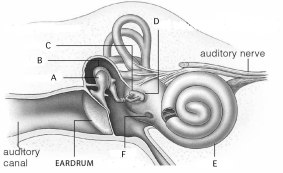
Bones that amplify sound reaching the eardrum are indicated by
A)A and B.
B)A, B, and C.
C)B and C.
D)C and D.
E)none of these.
Bones that amplify sound reaching the eardrum are indicated by
A)A and B.
B)A, B, and C.
C)B and C.
D)C and D.
E)none of these.
Question
Question
Question
Which of the following explains why the owl has its head almost upside down? 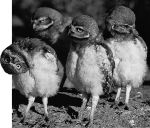
A)Photoreceptors are concentrated near the bottom of the eye.
B)Photoreceptors are concentrated near the top of the eye.
C)Loud music from a passing car caused damage to the sense of balance.
D)It is trying to remove water from its ear after a hard rain.
E)None of these are an accurate explanation.
A)Photoreceptors are concentrated near the bottom of the eye.
B)Photoreceptors are concentrated near the top of the eye.
C)Loud music from a passing car caused damage to the sense of balance.
D)It is trying to remove water from its ear after a hard rain.
E)None of these are an accurate explanation.
Question
Use the figure above to answer questions
The portion of the ear that sorts out pressure waves generated by sound is indicated by
A)A.
B)B.
C)C.
D)D.
E)E.
The portion of the ear that sorts out pressure waves generated by sound is indicated by
A)A.
B)B.
C)C.
D)D.
E)E.
Question
Question
Use the figure above to answer questions
The portion of the ear that allows for balance control is indicated by
A)A.
B)B.
C)C.
D)E.
E)nothing labeled on this figure.
The portion of the ear that allows for balance control is indicated by
A)A.
B)B.
C)C.
D)E.
E)nothing labeled on this figure.
Question
Question
Question
Question
Use the figure above to answer questions
The tectorial and basilar membranes are located within
A)A.
B)B.
C)C.
D)E.
E)another unlabeled region of this figure.
The tectorial and basilar membranes are located within
A)A.
B)B.
C)C.
D)E.
E)another unlabeled region of this figure.
Question
Question
Question
Question
Use the figure above to answer questions
The oval window is indicated by
A)A.
B)B.
C)D.
D)E.
E)F.
The oval window is indicated by
A)A.
B)B.
C)D.
D)E.
E)F.
Question
Question
Question
The adjustable ring of contractile and connective tissues that controls the amount of light entering the eye is the
A)lens.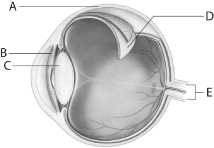
B)cornea.
C)pupil.
D)iris.
E)retina.
A)lens.
B)cornea.
C)pupil.
D)iris.
E)retina.
Question
Question

Unlock Deck
Sign up to unlock the cards in this deck!
Unlock Deck
Unlock Deck
1/95

Play

Full screen (f)
Deck 34: Sensory Perception
1
Oceanic noise pollution from commercial shipping
A)results from large tankers generating low-frequency sounds.
B)may frighten whales.
C)may drown out whales' acoustical signals.
D)is a dilemma with no solution that is both easy and inexpensive.
E)includes all of these.
A)results from large tankers generating low-frequency sounds.
B)may frighten whales.
C)may drown out whales' acoustical signals.
D)is a dilemma with no solution that is both easy and inexpensive.
E)includes all of these.
E
2
Which of the following statements is (are) true?
A)All action potentials transmitted by the same neuron are alike.
B)The brain assesses a stimulus in part by which neuron pathways are active.
C)Different neurons convey different information by transmitting impulses to different areas of the brain.
D)A strong stimulus recruits more receptors than does a weak stimulus.
E)All of these are true.
A)All action potentials transmitted by the same neuron are alike.
B)The brain assesses a stimulus in part by which neuron pathways are active.
C)Different neurons convey different information by transmitting impulses to different areas of the brain.
D)A strong stimulus recruits more receptors than does a weak stimulus.
E)All of these are true.
E
3
Most sensory systems involve
A)sensory neurons.
B)specific nerve pathways.
C)specialized brain regions.
D)sensory neurons and specialized brain regions.
E)all of the above.
A)sensory neurons.
B)specific nerve pathways.
C)specialized brain regions.
D)sensory neurons and specialized brain regions.
E)all of the above.
E
4
The text discusses an incident where a number of whales beached themselves in 2001.What is true about this case?
A)It happened near an area where the United States Navy was testing a sonar system.
B)Very loud, low-frequency sounds were sent through the water.
C)The whales hurriedly surfaced in fear.
D)Rapid change in pressure damaged the whales' acoustic systems.
E)All of these are true.
A)It happened near an area where the United States Navy was testing a sonar system.
B)Very loud, low-frequency sounds were sent through the water.
C)The whales hurriedly surfaced in fear.
D)Rapid change in pressure damaged the whales' acoustic systems.
E)All of these are true.
Unlock Deck
Unlock for access to all 95 flashcards in this deck.
Unlock Deck
k this deck
5
Whales use sound to
A)communicate.
B)locate food.
C)map out their surroundings.
D)communicate and map out their surroundings.
E)do all of these.
A)communicate.
B)locate food.
C)map out their surroundings.
D)communicate and map out their surroundings.
E)do all of these.
Unlock Deck
Unlock for access to all 95 flashcards in this deck.
Unlock Deck
k this deck
6
Which of the following statements is false?
A)All animals placed in the same environment will have the same awareness of it.
B)Nociceptors detect tissue damage.
C)Olfactory receptors detect odors.
D)Pacinian corpuscles are examples of mechanoreceptors.
E)None of these are false.
A)All animals placed in the same environment will have the same awareness of it.
B)Nociceptors detect tissue damage.
C)Olfactory receptors detect odors.
D)Pacinian corpuscles are examples of mechanoreceptors.
E)None of these are false.
Unlock Deck
Unlock for access to all 95 flashcards in this deck.
Unlock Deck
k this deck
7
Which of the following statements is false?
A)Sensory receptors are structured to detect specific stimuli.
B)Sensation is an awareness of a change in external or internal conditions.
C)A stimulus will generate impulses that are different depending on where the signals are sent in the brain.
D)Information about a stimulus is coded in the quantity and frequency of action potentials sent to the brain.
E)Specific regions of the brain translate the information about the signal and convert it into a sensation.
A)Sensory receptors are structured to detect specific stimuli.
B)Sensation is an awareness of a change in external or internal conditions.
C)A stimulus will generate impulses that are different depending on where the signals are sent in the brain.
D)Information about a stimulus is coded in the quantity and frequency of action potentials sent to the brain.
E)Specific regions of the brain translate the information about the signal and convert it into a sensation.
Unlock Deck
Unlock for access to all 95 flashcards in this deck.
Unlock Deck
k this deck
8
"Perception" differs from "sensation" when referring to a stimulus in
A)the type of receptor stimulated.
B)understanding the significance of the stimulus.
C)the number of receptors that depolarize.
D)feeling exactly what is happening at the site.
E)responding to the stimulus.
A)the type of receptor stimulated.
B)understanding the significance of the stimulus.
C)the number of receptors that depolarize.
D)feeling exactly what is happening at the site.
E)responding to the stimulus.
Unlock Deck
Unlock for access to all 95 flashcards in this deck.
Unlock Deck
k this deck
9
Differences in intensity of a stimulus
A)affect the wave form of the transmitted excitation.
B)are encoded by the number of neurons activated.
C)control the part of the brain that receives the stimulus.
D)are encoded by the frequency of action potentials in a single axon.
E)are encoded by the number of neurons activated and by the frequency of action potentials in a single axon.
A)affect the wave form of the transmitted excitation.
B)are encoded by the number of neurons activated.
C)control the part of the brain that receives the stimulus.
D)are encoded by the frequency of action potentials in a single axon.
E)are encoded by the number of neurons activated and by the frequency of action potentials in a single axon.
Unlock Deck
Unlock for access to all 95 flashcards in this deck.
Unlock Deck
k this deck
10
Which of the following statements is false?
A)It is assumed that lower animals are incapable of perception.
B)Humans, as the most complex organisms, have all of the sensory organs found in lower forms.
C)Mechanoreceptors are responsible for the senses of equilibrium and hearing.
D)Nociceptors detect damage to tissues.
E)A lobster reacts to the boiling water in which it is placed to cook.
A)It is assumed that lower animals are incapable of perception.
B)Humans, as the most complex organisms, have all of the sensory organs found in lower forms.
C)Mechanoreceptors are responsible for the senses of equilibrium and hearing.
D)Nociceptors detect damage to tissues.
E)A lobster reacts to the boiling water in which it is placed to cook.
Unlock Deck
Unlock for access to all 95 flashcards in this deck.
Unlock Deck
k this deck
11
The major function of a receptor is to
A)control the autonomic functions of the body.
B)stabilize the internal environment to achieve homeostasis.
C)produce responses to the various stimuli the body receives.
D)give organisms or cells awareness of and sensitivity to their environment.
E)do none of these.
A)control the autonomic functions of the body.
B)stabilize the internal environment to achieve homeostasis.
C)produce responses to the various stimuli the body receives.
D)give organisms or cells awareness of and sensitivity to their environment.
E)do none of these.
Unlock Deck
Unlock for access to all 95 flashcards in this deck.
Unlock Deck
k this deck
12
A diminishing response by receptors to a constant stimulus is
A)perception.
B)neural transduction.
C)sensory adaptation.
D)referred pain.
E)characteristic of all receptors.
A)perception.
B)neural transduction.
C)sensory adaptation.
D)referred pain.
E)characteristic of all receptors.
Unlock Deck
Unlock for access to all 95 flashcards in this deck.
Unlock Deck
k this deck
13
Which of the following is NOT characteristic of sensation?
A)Some sensory receptors are activated only by chemicals.
B)Nerve impulses mediating each of the senses are essentially the same.
C)Sensory neuron activity follows the all-or-none law.
D)All organisms use the same sense organs to perceive their environments.
E)All sensory receptors transduce stimulus energy into action potentials.
A)Some sensory receptors are activated only by chemicals.
B)Nerve impulses mediating each of the senses are essentially the same.
C)Sensory neuron activity follows the all-or-none law.
D)All organisms use the same sense organs to perceive their environments.
E)All sensory receptors transduce stimulus energy into action potentials.
Unlock Deck
Unlock for access to all 95 flashcards in this deck.
Unlock Deck
k this deck
14
Mechanoreceptors mediate the sense(s) of
A)touch.
B)muscle stretch.
C)hearing.
D)balance.
E)all of these.
A)touch.
B)muscle stretch.
C)hearing.
D)balance.
E)all of these.
Unlock Deck
Unlock for access to all 95 flashcards in this deck.
Unlock Deck
k this deck
15
A sensory communication pathway involves
A)reception of stimulus energy.
B)transduction of stimulus energy to electrochemical energy.
C)action potentials traveling along a nerve pathway to the brain.
D)brain response leading to sensation and/or perception.
E)all of these.
A)reception of stimulus energy.
B)transduction of stimulus energy to electrochemical energy.
C)action potentials traveling along a nerve pathway to the brain.
D)brain response leading to sensation and/or perception.
E)all of these.
Unlock Deck
Unlock for access to all 95 flashcards in this deck.
Unlock Deck
k this deck
16
Which of the following is (are) true regarding whale sensory systems?
A)Like fishes, they use lateral line systems for navigation.
B)Their jaws pick up sound vibrations in the water and transmit them to their middle ears.
C)They collect sound waves using external ears.
D)All whales have auditory canals leading to their middle ears.
E)All of these are true.
A)Like fishes, they use lateral line systems for navigation.
B)Their jaws pick up sound vibrations in the water and transmit them to their middle ears.
C)They collect sound waves using external ears.
D)All whales have auditory canals leading to their middle ears.
E)All of these are true.
Unlock Deck
Unlock for access to all 95 flashcards in this deck.
Unlock Deck
k this deck
17
Olfactory centers are responsive to
A)touch.
B)odor.
C)taste.
D)sound.
E)sight.
A)touch.
B)odor.
C)taste.
D)sound.
E)sight.
Unlock Deck
Unlock for access to all 95 flashcards in this deck.
Unlock Deck
k this deck
18
Which of the following statements is false?
A)Neurons in the brain can interpret incoming action potentials only in certain ways.
B)Optic nerve impulses can only be interpreted as light.
C)Sensory neurons do not follow the all-or-none law.
D)The stronger the stimulus, the more action potentials are generated.
E)A strong stimulus activates many adjacent receptors, thereby increasing the number of action potentials and the level of awareness for the stimulus.
A)Neurons in the brain can interpret incoming action potentials only in certain ways.
B)Optic nerve impulses can only be interpreted as light.
C)Sensory neurons do not follow the all-or-none law.
D)The stronger the stimulus, the more action potentials are generated.
E)A strong stimulus activates many adjacent receptors, thereby increasing the number of action potentials and the level of awareness for the stimulus.
Unlock Deck
Unlock for access to all 95 flashcards in this deck.
Unlock Deck
k this deck
19
A loud sound can be distinguished from a soft whisper because
A)more neurons depolarize.
B)each receptor depolarizes more fully.
C)the frequency of neuron depolarization increases.
D)more neurons depolarize, and the frequency of neuron depolarization increases.
E)more neurons depolarize, each receptor depolarizes more fully, and the frequency of neuron depolarization increases.
A)more neurons depolarize.
B)each receptor depolarizes more fully.
C)the frequency of neuron depolarization increases.
D)more neurons depolarize, and the frequency of neuron depolarization increases.
E)more neurons depolarize, each receptor depolarizes more fully, and the frequency of neuron depolarization increases.
Unlock Deck
Unlock for access to all 95 flashcards in this deck.
Unlock Deck
k this deck
20
Which of the following statements is false?
A)Whales use their jaws to hear.
B)Whales lack a pair of middle ears.
C)Killer whales use echolocation and have ears that are sensitive to high-frequency sounds.
D)Humpback whales emit very low-pitched sounds that travel long distances underwater.
E)Sound waves are transmitted through a layer of fat before being transduced in whales.
A)Whales use their jaws to hear.
B)Whales lack a pair of middle ears.
C)Killer whales use echolocation and have ears that are sensitive to high-frequency sounds.
D)Humpback whales emit very low-pitched sounds that travel long distances underwater.
E)Sound waves are transmitted through a layer of fat before being transduced in whales.
Unlock Deck
Unlock for access to all 95 flashcards in this deck.
Unlock Deck
k this deck
21
Pheromones
A)are social signals.
B)are detected by the vomeronasal organ in reptiles and most mammals.
C)may serve as sex attractants.
D)are not detected or responded to by humans.
E)include all EXCEPT "are not detected or responded to by humans."
A)are social signals.
B)are detected by the vomeronasal organ in reptiles and most mammals.
C)may serve as sex attractants.
D)are not detected or responded to by humans.
E)include all EXCEPT "are not detected or responded to by humans."
Unlock Deck
Unlock for access to all 95 flashcards in this deck.
Unlock Deck
k this deck
22
Which of the following is true? The somatic senses
A)use receptors near the body surface, in skeletal muscles, and in joints.
B)reside in certain receptor organs located at a few specific locations.
C)are exemplified by ears and eyes.
D)are most highly developed in fishes and amphibians.
E)include all of these descriptions.
A)use receptors near the body surface, in skeletal muscles, and in joints.
B)reside in certain receptor organs located at a few specific locations.
C)are exemplified by ears and eyes.
D)are most highly developed in fishes and amphibians.
E)include all of these descriptions.
Unlock Deck
Unlock for access to all 95 flashcards in this deck.
Unlock Deck
k this deck
23
Sensory pathways of smell and taste
A)begin with chemoreceptors
B)end up in the cerebral cortex.
C)reach the limbic system.
D)are integrated with stored memories.
E)include all of these.
A)begin with chemoreceptors
B)end up in the cerebral cortex.
C)reach the limbic system.
D)are integrated with stored memories.
E)include all of these.
Unlock Deck
Unlock for access to all 95 flashcards in this deck.
Unlock Deck
k this deck
24
Female silk moths secrete a pheromone as a(n)
A)way to gather young when they scatter.
B)message to stay close to the cocoon.
C)alarm signal.
D)sex attractant.
E)territory marker.
A)way to gather young when they scatter.
B)message to stay close to the cocoon.
C)alarm signal.
D)sex attractant.
E)territory marker.
Unlock Deck
Unlock for access to all 95 flashcards in this deck.
Unlock Deck
k this deck
25
Which of the following is NOT an example of sensory adaptation?
A)a loss of the sense of pressure of clothes against the skin
B)adjustment to repeated jumping into a body of cold water
C)response to lack of oxygen at high altitudes
D)eventual loss of awareness of a constant noise
E)the loss of the ability to smell a person's perfume after being in that person's presence for some time
A)a loss of the sense of pressure of clothes against the skin
B)adjustment to repeated jumping into a body of cold water
C)response to lack of oxygen at high altitudes
D)eventual loss of awareness of a constant noise
E)the loss of the ability to smell a person's perfume after being in that person's presence for some time
Unlock Deck
Unlock for access to all 95 flashcards in this deck.
Unlock Deck
k this deck
26
The receptors that detect the amount of salt in an animal's blood are
A)mechanoreceptors.
B)pain receptors.
C)thermoreceptors.
D)osmoreceptors.
E)all EXCEPT "osmoreceptors."
A)mechanoreceptors.
B)pain receptors.
C)thermoreceptors.
D)osmoreceptors.
E)all EXCEPT "osmoreceptors."
Unlock Deck
Unlock for access to all 95 flashcards in this deck.
Unlock Deck
k this deck
27
Receptors in the human nose are
A)chemoreceptors.
B)mechanoreceptors.
C)photoreceptors.
D)nociceptors.
E)none of these.
A)chemoreceptors.
B)mechanoreceptors.
C)photoreceptors.
D)nociceptors.
E)none of these.
Unlock Deck
Unlock for access to all 95 flashcards in this deck.
Unlock Deck
k this deck
28
The extent to which a particular perception is produced is mainly due to the
A)sensitivity of the receptors.
B)speed of nerve transmission.
C)brain area devoted to interpretation.
D)transmitter substances at the synapses.
E)amount of stimulus.
A)sensitivity of the receptors.
B)speed of nerve transmission.
C)brain area devoted to interpretation.
D)transmitter substances at the synapses.
E)amount of stimulus.
Unlock Deck
Unlock for access to all 95 flashcards in this deck.
Unlock Deck
k this deck
29
Mechanoreceptors are located in
A)internal organs.
B)skin.
C)joints.
D)tendons.
E)all of these.
A)internal organs.
B)skin.
C)joints.
D)tendons.
E)all of these.
Unlock Deck
Unlock for access to all 95 flashcards in this deck.
Unlock Deck
k this deck
30
Hair cells are important in the sense of
A)equilibrium.
B)hearing.
C)taste.
D)smell.
E)both equilibrium and hearing.
A)equilibrium.
B)hearing.
C)taste.
D)smell.
E)both equilibrium and hearing.
Unlock Deck
Unlock for access to all 95 flashcards in this deck.
Unlock Deck
k this deck
31
Sense receptors for "taste" are variously located
A)on insect legs.
B)on octopus tentacles.
C)on arthropod antennae.
D)inside the mouth.
E)in all of these places.
A)on insect legs.
B)on octopus tentacles.
C)on arthropod antennae.
D)inside the mouth.
E)in all of these places.
Unlock Deck
Unlock for access to all 95 flashcards in this deck.
Unlock Deck
k this deck
32
Humans perceive the taste sensations of
A)sweet.
B)salty.
C)bitter.
D)umami.
E)all of these.
A)sweet.
B)salty.
C)bitter.
D)umami.
E)all of these.
Unlock Deck
Unlock for access to all 95 flashcards in this deck.
Unlock Deck
k this deck
33
Nociceptors are also known as
A)mechanoreceptors.
B)pain receptors.
C)thermoreceptors.
D)osmoreceptors.
E)all EXCEPT "osmoreceptors."
A)mechanoreceptors.
B)pain receptors.
C)thermoreceptors.
D)osmoreceptors.
E)all EXCEPT "osmoreceptors."
Unlock Deck
Unlock for access to all 95 flashcards in this deck.
Unlock Deck
k this deck
34
The knee-jerk reflex used by physicians to check nerve response is based on
A)muscle spindles.
B)stretch receptors.
C)spinal cord synapses.
D)muscle spindles and stretch receptors.
E)all of these.
A)muscle spindles.
B)stretch receptors.
C)spinal cord synapses.
D)muscle spindles and stretch receptors.
E)all of these.
Unlock Deck
Unlock for access to all 95 flashcards in this deck.
Unlock Deck
k this deck
35
The somatic senses include all EXCEPT which one of the following sensations?
A)balance
B)pain near the body surface
C)temperature
D)touch
E)pressure
A)balance
B)pain near the body surface
C)temperature
D)touch
E)pressure
Unlock Deck
Unlock for access to all 95 flashcards in this deck.
Unlock Deck
k this deck
36
Equilibrium is sensed by
A)chemoreceptors.
B)mechanoreceptors.
C)photoreceptors.
D)thermoreceptors.
E)none of these.
A)chemoreceptors.
B)mechanoreceptors.
C)photoreceptors.
D)thermoreceptors.
E)none of these.
Unlock Deck
Unlock for access to all 95 flashcards in this deck.
Unlock Deck
k this deck
37
The Pacinian corpuscle is used in detecting
A)sound.
B)pressure.
C)chemicals.
D)sight.
E)chemical differences.
A)sound.
B)pressure.
C)chemicals.
D)sight.
E)chemical differences.
Unlock Deck
Unlock for access to all 95 flashcards in this deck.
Unlock Deck
k this deck
38
The above figure shows areas of referred pain that indicate an internal organ is damaged.Which letter corresponds to heart damage?
A)A
B)B
C)C
D)D
E)none of these
A)A
B)B
C)C
D)D
E)none of these
Unlock Deck
Unlock for access to all 95 flashcards in this deck.
Unlock Deck
k this deck
39
Somatic sensations include all EXCEPT which one of the following?
A)heat and cold
B)pressure and touch
C)pain
D)position of the body's limbs
E)sound
A)heat and cold
B)pressure and touch
C)pain
D)position of the body's limbs
E)sound
Unlock Deck
Unlock for access to all 95 flashcards in this deck.
Unlock Deck
k this deck
40
The primary somatosensory cortex
A)maps the distribution of somatic receptors on the body.
B)consists of white matter.
C)contains interneurons.
D)devotes the largest region to body parts with the greatest sensory acuity.
E)includes all EXCEPT "consists of white matter."
A)maps the distribution of somatic receptors on the body.
B)consists of white matter.
C)contains interneurons.
D)devotes the largest region to body parts with the greatest sensory acuity.
E)includes all EXCEPT "consists of white matter."
Unlock Deck
Unlock for access to all 95 flashcards in this deck.
Unlock Deck
k this deck
41
The sense with which amplitude and frequency are detected with some accuracy is
A)sight.
B)hearing.
C)balance.
D)taste.
E)smell.
A)sight.
B)hearing.
C)balance.
D)taste.
E)smell.
Unlock Deck
Unlock for access to all 95 flashcards in this deck.
Unlock Deck
k this deck
42
The place(s) in the human ear where sound waves are amplified by means of the vibrations of tiny bones is
A)the pinna.
B)the auditory canal.
C)the middle ear.
D)the organ of Corti.
E)all of these.
A)the pinna.
B)the auditory canal.
C)the middle ear.
D)the organ of Corti.
E)all of these.
Unlock Deck
Unlock for access to all 95 flashcards in this deck.
Unlock Deck
k this deck
43
Motion sickness is the result of
A)overstimulation of the hair cells in the vestibular apparatus.
B)visual input that tells the brain that the body is motionless.
C)cell phone use in a moving vehicle.
D)overstimulation of the hair cells in the vestibular apparatus and visual input that tells the brain that the body is motionless.
E)overstimulation of the hair cells in the vestibular apparatus, visual input that tells the brain that the body is motionless, and cell phone use in a moving vehicle.
A)overstimulation of the hair cells in the vestibular apparatus.
B)visual input that tells the brain that the body is motionless.
C)cell phone use in a moving vehicle.
D)overstimulation of the hair cells in the vestibular apparatus and visual input that tells the brain that the body is motionless.
E)overstimulation of the hair cells in the vestibular apparatus, visual input that tells the brain that the body is motionless, and cell phone use in a moving vehicle.
Unlock Deck
Unlock for access to all 95 flashcards in this deck.
Unlock Deck
k this deck
44
The sense of hearing in both invertebrates and vertebrates is dependent on
A)fluid displacement.
B)hair bending.
C)echolocation.
D)vibration of a membrane.
E)all of these.
A)fluid displacement.
B)hair bending.
C)echolocation.
D)vibration of a membrane.
E)all of these.
Unlock Deck
Unlock for access to all 95 flashcards in this deck.
Unlock Deck
k this deck
45
Movable bones are found in the
A)cochlea.
B)external ear.
C)middle ear.
D)inner ear.
E)organ of Corti.
A)cochlea.
B)external ear.
C)middle ear.
D)inner ear.
E)organ of Corti.
Unlock Deck
Unlock for access to all 95 flashcards in this deck.
Unlock Deck
k this deck
46
The place where sound waves are translated into patterns of nerve impulses is
A)the pinna.
B)the auditory canal.
C)the middle ear.
D)the organ of Corti.
E)none of these.
A)the pinna.
B)the auditory canal.
C)the middle ear.
D)the organ of Corti.
E)none of these.
Unlock Deck
Unlock for access to all 95 flashcards in this deck.
Unlock Deck
k this deck
47
The semicircular canals are
A)empty.
B)filled with gas.
C)filled with a liquid.
D)filled with bones or stones.
E)filled with sand grains.
A)empty.
B)filled with gas.
C)filled with a liquid.
D)filled with bones or stones.
E)filled with sand grains.
Unlock Deck
Unlock for access to all 95 flashcards in this deck.
Unlock Deck
k this deck
48
The last place that pressure or sound waves pass through in hearing is the
A)middle ear.
B)tympanic membrane.
C)oval window.
D)round window.
E)tectorial membrane.
A)middle ear.
B)tympanic membrane.
C)oval window.
D)round window.
E)tectorial membrane.
Unlock Deck
Unlock for access to all 95 flashcards in this deck.
Unlock Deck
k this deck
49
The sense of equilibrium or balance detects
A)motion.
B)acceleration.
C)gravity.
D)position.
E)all of these.
A)motion.
B)acceleration.
C)gravity.
D)position.
E)all of these.
Unlock Deck
Unlock for access to all 95 flashcards in this deck.
Unlock Deck
k this deck
50
The acoustical sense deals with the sense of
A)taste.
B)smell.
C)touch.
D)sight.
E)hearing.
A)taste.
B)smell.
C)touch.
D)sight.
E)hearing.
Unlock Deck
Unlock for access to all 95 flashcards in this deck.
Unlock Deck
k this deck
51
How many coiled and fluid-filled ducts are found in each cochlea?
A)1
B)2
C)3
D)4
E)5 or more
A)1
B)2
C)3
D)4
E)5 or more
Unlock Deck
Unlock for access to all 95 flashcards in this deck.
Unlock Deck
k this deck
52
Movable bones are features of the sense organs associated with
A)sight.
B)hearing.
C)taste.
D)smell.
E)touch.
A)sight.
B)hearing.
C)taste.
D)smell.
E)touch.
Unlock Deck
Unlock for access to all 95 flashcards in this deck.
Unlock Deck
k this deck
53
The organ of Corti
A)functions in the awareness of motion and the sense of equilibrium.
B)controls the sense of depth perception.
C)converts sound vibrations into impulses that enable hearing.
D)secretes cerebrospinal fluid.
E)detects light energy.
A)functions in the awareness of motion and the sense of equilibrium.
B)controls the sense of depth perception.
C)converts sound vibrations into impulses that enable hearing.
D)secretes cerebrospinal fluid.
E)detects light energy.
Unlock Deck
Unlock for access to all 95 flashcards in this deck.
Unlock Deck
k this deck
54
The utricle and saccule are functional parts of the
A)eye.
B)Pacinian corpuscle.
C)vestibular apparatus.
D)nasal epithelium.
E)vomeronasal organ.
A)eye.
B)Pacinian corpuscle.
C)vestibular apparatus.
D)nasal epithelium.
E)vomeronasal organ.
Unlock Deck
Unlock for access to all 95 flashcards in this deck.
Unlock Deck
k this deck
55
How many semicircular canals are in each human ear?
A)2
B)3
C)4
D)5
E)more than 6
A)2
B)3
C)4
D)5
E)more than 6
Unlock Deck
Unlock for access to all 95 flashcards in this deck.
Unlock Deck
k this deck
56
The organ of Corti is
A)a chemoreceptor.
B)a mechanoreceptor.
C)a photoreceptor.
D)a nociceptor.
E)all of these.
A)a chemoreceptor.
B)a mechanoreceptor.
C)a photoreceptor.
D)a nociceptor.
E)all of these.
Unlock Deck
Unlock for access to all 95 flashcards in this deck.
Unlock Deck
k this deck
57
The organ of Corti is located in the
A)brain stem.
B)inner ear.
C)abdominal cavity.
D)middle ear.
E)semicircular canals.
A)brain stem.
B)inner ear.
C)abdominal cavity.
D)middle ear.
E)semicircular canals.
Unlock Deck
Unlock for access to all 95 flashcards in this deck.
Unlock Deck
k this deck
58
The utricle and saccule
A)each contain an organ of dynamic equilibrium.
B)detect rotation of the head.
C)detect how the head is oriented relative to the ground.
D)are semicircular canals.
E)organs use the auditory nerve to send information to the brain.
A)each contain an organ of dynamic equilibrium.
B)detect rotation of the head.
C)detect how the head is oriented relative to the ground.
D)are semicircular canals.
E)organs use the auditory nerve to send information to the brain.
Unlock Deck
Unlock for access to all 95 flashcards in this deck.
Unlock Deck
k this deck
59
Vertigo
A)is a sensation that the world is spinning.
B)can be caused by an ear infection.
C)can be caused by a stroke.
D)can be caused by conflicting visual signals and vestibular signals.
E)includes all of these.
A)is a sensation that the world is spinning.
B)can be caused by an ear infection.
C)can be caused by a stroke.
D)can be caused by conflicting visual signals and vestibular signals.
E)includes all of these.
Unlock Deck
Unlock for access to all 95 flashcards in this deck.
Unlock Deck
k this deck
60
Which of the following is false regarding the properties of sound?
A)The amplitude of a sound corresponds to loudness.
B)The frequency of a sound is the number of wave cycles per second.
C)Every ten-decibel increase in loudness represents a tenfold increase in intensity.
D)A soft sound has a greater amplitude than a loud sound.
E)A high note and a low note with the same amplitude are equally loud.
A)The amplitude of a sound corresponds to loudness.
B)The frequency of a sound is the number of wave cycles per second.
C)Every ten-decibel increase in loudness represents a tenfold increase in intensity.
D)A soft sound has a greater amplitude than a loud sound.
E)A high note and a low note with the same amplitude are equally loud.
Unlock Deck
Unlock for access to all 95 flashcards in this deck.
Unlock Deck
k this deck
61
Use the figure above to answer questions
Bones that amplify sound reaching the eardrum are indicated by
A)A and B.
B)A, B, and C.
C)B and C.
D)C and D.
E)none of these.
Bones that amplify sound reaching the eardrum are indicated by
A)A and B.
B)A, B, and C.
C)B and C.
D)C and D.
E)none of these.
Unlock Deck
Unlock for access to all 95 flashcards in this deck.
Unlock Deck
k this deck
62
Eyes are
A)chemoreceptors.
B)mechanoreceptors.
C)photoreceptors.
D)nociceptors.
E)none of these.
A)chemoreceptors.
B)mechanoreceptors.
C)photoreceptors.
D)nociceptors.
E)none of these.
Unlock Deck
Unlock for access to all 95 flashcards in this deck.
Unlock Deck
k this deck
63
Noise louder than __________ decibels can damage hearing.
A)10
B)21
C)90
D)50
E)none of these
A)10
B)21
C)90
D)50
E)none of these
Unlock Deck
Unlock for access to all 95 flashcards in this deck.
Unlock Deck
k this deck
64
Which of the following explains why the owl has its head almost upside down?
A)Photoreceptors are concentrated near the bottom of the eye.
B)Photoreceptors are concentrated near the top of the eye.
C)Loud music from a passing car caused damage to the sense of balance.
D)It is trying to remove water from its ear after a hard rain.
E)None of these are an accurate explanation.
A)Photoreceptors are concentrated near the bottom of the eye.
B)Photoreceptors are concentrated near the top of the eye.
C)Loud music from a passing car caused damage to the sense of balance.
D)It is trying to remove water from its ear after a hard rain.
E)None of these are an accurate explanation.
Unlock Deck
Unlock for access to all 95 flashcards in this deck.
Unlock Deck
k this deck
65
Use the figure above to answer questions
The portion of the ear that sorts out pressure waves generated by sound is indicated by
A)A.
B)B.
C)C.
D)D.
E)E.
The portion of the ear that sorts out pressure waves generated by sound is indicated by
A)A.
B)B.
C)C.
D)D.
E)E.
Unlock Deck
Unlock for access to all 95 flashcards in this deck.
Unlock Deck
k this deck
66
The dark middle layer of the eye that prevents the scattering of light is the
A)fovea.
B)retina.
C)sclera.
D)choroid.
E)cornea.
A)fovea.
B)retina.
C)sclera.
D)choroid.
E)cornea.
Unlock Deck
Unlock for access to all 95 flashcards in this deck.
Unlock Deck
k this deck
67
Use the figure above to answer questions
The portion of the ear that allows for balance control is indicated by
A)A.
B)B.
C)C.
D)E.
E)nothing labeled on this figure.
The portion of the ear that allows for balance control is indicated by
A)A.
B)B.
C)C.
D)E.
E)nothing labeled on this figure.
Unlock Deck
Unlock for access to all 95 flashcards in this deck.
Unlock Deck
k this deck
68
Land animals can be affected by noise pollution by
A)damaging their sense of direction.
B)causing changes in urination patterns.
C)causing them to be more susceptible to predators.
D)causing them to run into glass store fronts.
E)none of these.
A)damaging their sense of direction.
B)causing changes in urination patterns.
C)causing them to be more susceptible to predators.
D)causing them to run into glass store fronts.
E)none of these.
Unlock Deck
Unlock for access to all 95 flashcards in this deck.
Unlock Deck
k this deck
69
Image formation requires information about __________ visual stimuli in addition to photoreceptors.
A)the positions of
B)the shapes of
C)the brightness of
D)the movements of
E)all of these
A)the positions of
B)the shapes of
C)the brightness of
D)the movements of
E)all of these
Unlock Deck
Unlock for access to all 95 flashcards in this deck.
Unlock Deck
k this deck
70
In contrast to eyes, the eyespots of most invertebrates cannot
A)detect light.
B)distinguish darkness from daylight.
C)form distinct images.
D)discern shadows.
E)possess photoreceptors.
A)detect light.
B)distinguish darkness from daylight.
C)form distinct images.
D)discern shadows.
E)possess photoreceptors.
Unlock Deck
Unlock for access to all 95 flashcards in this deck.
Unlock Deck
k this deck
71
Use the figure above to answer questions
The tectorial and basilar membranes are located within
A)A.
B)B.
C)C.
D)E.
E)another unlabeled region of this figure.
The tectorial and basilar membranes are located within
A)A.
B)B.
C)C.
D)E.
E)another unlabeled region of this figure.
Unlock Deck
Unlock for access to all 95 flashcards in this deck.
Unlock Deck
k this deck
72
The part of the eye that may be colored (e.g., brown, blue, green, or gray) is the
A)retina.
B)sclera.
C)choroid.
D)cornea.
E)iris.
A)retina.
B)sclera.
C)choroid.
D)cornea.
E)iris.
Unlock Deck
Unlock for access to all 95 flashcards in this deck.
Unlock Deck
k this deck
73
Canadian researchers found that loud noise had which of the following effects on a local songbird?
A)20% reduction in weight gain
B)15% fewer offspring
C)10% increase in external parasites
D)39% more male offspring
E)none of these
A)20% reduction in weight gain
B)15% fewer offspring
C)10% increase in external parasites
D)39% more male offspring
E)none of these
Unlock Deck
Unlock for access to all 95 flashcards in this deck.
Unlock Deck
k this deck
74
The white protective fibrous tissue of the eye, often called the white of the eye, is the
A)lens.
B)sclera.
C)pupil.
D)iris.
E)retina.
A)lens.
B)sclera.
C)pupil.
D)iris.
E)retina.
Unlock Deck
Unlock for access to all 95 flashcards in this deck.
Unlock Deck
k this deck
75
Use the figure above to answer questions
The oval window is indicated by
A)A.
B)B.
C)D.
D)E.
E)F.
The oval window is indicated by
A)A.
B)B.
C)D.
D)E.
E)F.
Unlock Deck
Unlock for access to all 95 flashcards in this deck.
Unlock Deck
k this deck
76
The repeating units of a compound eye are called
A)ocelli.
B)lenses.
C)rhabdomeres.
D)ommatidia.
E)pupils.
A)ocelli.
B)lenses.
C)rhabdomeres.
D)ommatidia.
E)pupils.
Unlock Deck
Unlock for access to all 95 flashcards in this deck.
Unlock Deck
k this deck
77
The layer of the eye where photoreceptors are located is the
A)lens.
B)cornea.
C)pupil.
D)iris.
E)retina.
A)lens.
B)cornea.
C)pupil.
D)iris.
E)retina.
Unlock Deck
Unlock for access to all 95 flashcards in this deck.
Unlock Deck
k this deck
78
The adjustable ring of contractile and connective tissues that controls the amount of light entering the eye is the
A)lens.
B)cornea.
C)pupil.
D)iris.
E)retina.
A)lens.
B)cornea.
C)pupil.
D)iris.
E)retina.
Unlock Deck
Unlock for access to all 95 flashcards in this deck.
Unlock Deck
k this deck
79
Octopuses and squids, like vertebrates, have
A)simple eyes.
B)ocelli.
C)ciliary eyes.
D)compound eyes.
E)"camera" eyes.
A)simple eyes.
B)ocelli.
C)ciliary eyes.
D)compound eyes.
E)"camera" eyes.
Unlock Deck
Unlock for access to all 95 flashcards in this deck.
Unlock Deck
k this deck
80
Insects have
A)simple eyes.
B)ocelli.
C)ciliary eyes.
D)compound eyes.
E)"camera" eyes.
A)simple eyes.
B)ocelli.
C)ciliary eyes.
D)compound eyes.
E)"camera" eyes.
Unlock Deck
Unlock for access to all 95 flashcards in this deck.
Unlock Deck
k this deck
Unlock Deck
Unlock for access to all 95 flashcards in this deck.






