







 Chat with AI

Deck 27: Environmental Microbiology
Full screen (f)

Question
Figure 27.1
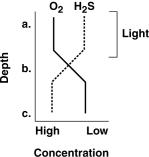
Where are eukaryotic algae most likely to be found in Figure 27.1?
A) A
B) B
C) C
D) A and B
E) B and C
Where are eukaryotic algae most likely to be found in Figure 27.1?
A) A
B) B
C) C
D) A and B
E) B and C

Question
Question
Question
Question
Question
Question
Question
Question
Question
Question
Question
Question
Question
Question
Question
Question
Question
Question
Question
Figure 27.1
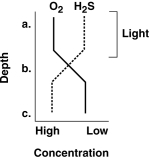
Where are photosynthetic bacteria most likely to be found in Figure 27.1?
A) A
B) B
C) C
D) A and B
E) B and C
Where are photosynthetic bacteria most likely to be found in Figure 27.1?
A) A
B) B
C) C
D) A and B
E) B and C
Question
Question
Question
Question
Question
Question
Question
Question
Question
Question
Question
Question
Question
Question
Question
Question
Question
Question
Question
Question
Question
Question
Question

Unlock Deck
Sign up to unlock the cards in this deck!
Unlock Deck
Unlock Deck
1/43

Play

Full screen (f)
Deck 27: Environmental Microbiology
1
Figure 27.1
Where are eukaryotic algae most likely to be found in Figure 27.1?
A) A
B) B
C) C
D) A and B
E) B and C
Where are eukaryotic algae most likely to be found in Figure 27.1?
A) A
B) B
C) C
D) A and B
E) B and C
A
2
Nitrogen fixation
A) Requires aerobic conditions.
B) Requires anaerobic conditions.
C) The amount of oxygen doesn't make any difference.
A) Requires aerobic conditions.
B) Requires anaerobic conditions.
C) The amount of oxygen doesn't make any difference.
B
3
Residual chlorine must be maintained in
A) Anaerobic sludge digestion
B) Primary sewage treatment
C) Secondary sewage treatment
D) Tertiary sewage treatment
E) Water treatment
A) Anaerobic sludge digestion
B) Primary sewage treatment
C) Secondary sewage treatment
D) Tertiary sewage treatment
E) Water treatment
E
4
Filtration to remove protozoa occurs in
A) Anaerobic sludge digestion.
B) Primary sewage treatment.
C) Secondary sewage treatment.
D) Tertiary sewage treatment.
E) Water treatment.
A) Anaerobic sludge digestion.
B) Primary sewage treatment.
C) Secondary sewage treatment.
D) Tertiary sewage treatment.
E) Water treatment.
Unlock Deck
Unlock for access to all 43 flashcards in this deck.
Unlock Deck
k this deck
5
Which of the following is not a symbiotic pair of organisms?
A) Elk and rumen bacteria
B) Bean plant and Rhizobium
C) Orchid and mycorrhizae
D) Onions and arbuscules
E) Sulfur and Thiobacillus
A) Elk and rumen bacteria
B) Bean plant and Rhizobium
C) Orchid and mycorrhizae
D) Onions and arbuscules
E) Sulfur and Thiobacillus
Unlock Deck
Unlock for access to all 43 flashcards in this deck.
Unlock Deck
k this deck
6
glucose
-Sludge digestion
A) Takes place under aerobic conditions.
B) Takes place under anaerobic conditions.
C) The amount of oxygen doesn't make any difference.
-Sludge digestion
A) Takes place under aerobic conditions.
B) Takes place under anaerobic conditions.
C) The amount of oxygen doesn't make any difference.
Unlock Deck
Unlock for access to all 43 flashcards in this deck.
Unlock Deck
k this deck
7
Coal formation
A) Requires aerobic conditions.
B) Requires anaerobic conditions.
C) The amount of oxygen doesn't make any difference.
A) Requires aerobic conditions.
B) Requires anaerobic conditions.
C) The amount of oxygen doesn't make any difference.
Unlock Deck
Unlock for access to all 43 flashcards in this deck.
Unlock Deck
k this deck
8
Which of the following equations represents anaerobic respiration?
A) Amino acids -H₂S
B) SO42- -Amino acids
C) H₂S -S0
D) NO3- -NO₂-
E) None of the above
A) Amino acids -H₂S
B) SO42- -Amino acids
C) H₂S -S0
D) NO3- -NO₂-
E) None of the above
Unlock Deck
Unlock for access to all 43 flashcards in this deck.
Unlock Deck
k this deck
9
Which of the following is an assimilation process?
A) Thiobacillus: H₂S -S0
B) Desulfovibrio: SO42- -H₂S
C) Redwood tree: SO42- -Amino acids
D) Proteus: Amino acids -H₂S
E) None of the above
A) Thiobacillus: H₂S -S0
B) Desulfovibrio: SO42- -H₂S
C) Redwood tree: SO42- -Amino acids
D) Proteus: Amino acids -H₂S
E) None of the above
Unlock Deck
Unlock for access to all 43 flashcards in this deck.
Unlock Deck
k this deck
10
Aerobic respiration occurs in
A) Anaerobic sludge digestion.
B) Primary sewage treatment.
C) Secondary sewage treatment.
D) Tertiary sewage treatment.
E) Water treatment.
A) Anaerobic sludge digestion.
B) Primary sewage treatment.
C) Secondary sewage treatment.
D) Tertiary sewage treatment.
E) Water treatment.
Unlock Deck
Unlock for access to all 43 flashcards in this deck.
Unlock Deck
k this deck
11
The product of which process contains the highest BOD?
A) Anaerobic sludge digestion
B) Primary sewage treatment
C) Secondary sewage treatment
D) Tertiary sewage treatment
E) Water treatment
A) Anaerobic sludge digestion
B) Primary sewage treatment
C) Secondary sewage treatment
D) Tertiary sewage treatment
E) Water treatment
Unlock Deck
Unlock for access to all 43 flashcards in this deck.
Unlock Deck
k this deck
12
Which of the following is not a habitat for an extremophile?
A) Acid mine wash
B) 100°C water
C) The Atlantic Ocean
D) Inside rock
E) Salt- evaporating pond
A) Acid mine wash
B) 100°C water
C) The Atlantic Ocean
D) Inside rock
E) Salt- evaporating pond
Unlock Deck
Unlock for access to all 43 flashcards in this deck.
Unlock Deck
k this deck
13
Which of the following organisms is using sulfur as a source of energy?
A) Thiobacillus: H₂S -S0
B) Desulfovibrio: SO42- -H₂S
C) Redwood tree: SO42- -Amino acids
D) Proteus: Amino acids -H₂S
E) None of the above
A) Thiobacillus: H₂S -S0
B) Desulfovibrio: SO42- -H₂S
C) Redwood tree: SO42- -Amino acids
D) Proteus: Amino acids -H₂S
E) None of the above
Unlock Deck
Unlock for access to all 43 flashcards in this deck.
Unlock Deck
k this deck
14
Most of the microorganisms in the soil are found at a depth
A) Between 65 and 75 cm.
B) Between 20 and 25 cm.
C) Between 3 and 8 cm.
D) Between 35 and 40 cm.
E) Evenly distributed from the surface to 76 cm.
A) Between 65 and 75 cm.
B) Between 20 and 25 cm.
C) Between 3 and 8 cm.
D) Between 35 and 40 cm.
E) Evenly distributed from the surface to 76 cm.
Unlock Deck
Unlock for access to all 43 flashcards in this deck.
Unlock Deck
k this deck
15
All of the following are true about releasing untreated sewage into a river except
A) It decreases the dissolved oxygen.
B) It increases the BOD.
C) It is a health hazard.
D) It kills bacteria.
E) None of the above.
A) It decreases the dissolved oxygen.
B) It increases the BOD.
C) It is a health hazard.
D) It kills bacteria.
E) None of the above.
Unlock Deck
Unlock for access to all 43 flashcards in this deck.
Unlock Deck
k this deck
16
A trickling filter
A) Requires aerobic conditions.
B) Requires anaerobic conditions.
C) The amount of oxygen doesn't make any difference.
A) Requires aerobic conditions.
B) Requires anaerobic conditions.
C) The amount of oxygen doesn't make any difference.
Unlock Deck
Unlock for access to all 43 flashcards in this deck.
Unlock Deck
k this deck
17
Sedimentation of sludge occurs in
A) Anaerobic sludge digestion
B) Primary sewage treatment.
C) Secondary sewage treatment.
D) Tertiary sewage treatment.
E) Water treatment
A) Anaerobic sludge digestion
B) Primary sewage treatment.
C) Secondary sewage treatment.
D) Tertiary sewage treatment.
E) Water treatment
Unlock Deck
Unlock for access to all 43 flashcards in this deck.
Unlock Deck
k this deck
18
In one hospital, Pseudomonas aeruginosa serotype 10 infected the biliary tract of 10% of 1300 patients who underwent gastrointestinal endoscopic procedures. After each use, endoscopes were washed with an automatic reprocessor that flushed detergent and glutaraldehyde through the endoscopes followed by a tap water rinse. P. aeruginosa 10 was not isolated from the detergent, glutaraldehyde, or tap water. What was the source of the infections?
A) A biofilm in the reprocessor
B) Fecal contamination of the bile ducts
C) Bacterial cell walls in the water
D) Contaminated disinfectant
A) A biofilm in the reprocessor
B) Fecal contamination of the bile ducts
C) Bacterial cell walls in the water
D) Contaminated disinfectant
Unlock Deck
Unlock for access to all 43 flashcards in this deck.
Unlock Deck
k this deck
19
Primary sewage treatment
A) Takes place under aerobic conditions.
B) Takes place under anaerobic conditions.
C) The amount of oxygen doesn't make any difference.
A) Takes place under aerobic conditions.
B) Takes place under anaerobic conditions.
C) The amount of oxygen doesn't make any difference.
Unlock Deck
Unlock for access to all 43 flashcards in this deck.
Unlock Deck
k this deck
20
Figure 27.1
Where are photosynthetic bacteria most likely to be found in Figure 27.1?
A) A
B) B
C) C
D) A and B
E) B and C
Where are photosynthetic bacteria most likely to be found in Figure 27.1?
A) A
B) B
C) C
D) A and B
E) B and C
Unlock Deck
Unlock for access to all 43 flashcards in this deck.
Unlock Deck
k this deck
21
Nitrosomonas and Nitrobacter are capable of
A) Ammonification.
B) Denitrification.
C) Nitrification.
D) Nitrogen fixation.
E) None of the above
A) Ammonification.
B) Denitrification.
C) Nitrification.
D) Nitrogen fixation.
E) None of the above
Unlock Deck
Unlock for access to all 43 flashcards in this deck.
Unlock Deck
k this deck
22
The bacteria contributing most of the bacterial biomass to soil are
A) Coliforms.
B) Rhizobiaceae.
C) Actinomycetes.
D) Photoheterotrophs.
E) Chemoautotrophs.
A) Coliforms.
B) Rhizobiaceae.
C) Actinomycetes.
D) Photoheterotrophs.
E) Chemoautotrophs.
Unlock Deck
Unlock for access to all 43 flashcards in this deck.
Unlock Deck
k this deck
23
Rotating biological contactor are used in
A) Anaerobic sludge digestion.
B) Primary sewage treatment.
C) Secondary sewage treatment.
D) Tertiary sewage treatment.
E) Water treatment.
A) Anaerobic sludge digestion.
B) Primary sewage treatment.
C) Secondary sewage treatment.
D) Tertiary sewage treatment.
E) Water treatment.
Unlock Deck
Unlock for access to all 43 flashcards in this deck.
Unlock Deck
k this deck
24
Which of the following do not fix atmospheric nitrogen?
A) Cyanobacteria
B) Azotobacter
C) Frankia
D) Mycorrhizae
E) Lichens
A) Cyanobacteria
B) Azotobacter
C) Frankia
D) Mycorrhizae
E) Lichens
Unlock Deck
Unlock for access to all 43 flashcards in this deck.
Unlock Deck
k this deck
25
In which of the following animals would you expect to find a specialized organ that holds cellulose- degrading bacteria and fungi?
A) Wolf
B) Human
C) Cat
D) Termite
E) Dog
A) Wolf
B) Human
C) Cat
D) Termite
E) Dog
Unlock Deck
Unlock for access to all 43 flashcards in this deck.
Unlock Deck
k this deck
26
The release of phosphate- containing detergents into a river would
A) Kill algae.
B) Kill bacteria.
C) Increase oxygen in the water.
D) Increase algal growth.
E) None of the above.
A) Kill algae.
B) Kill bacteria.
C) Increase oxygen in the water.
D) Increase algal growth.
E) None of the above.
Unlock Deck
Unlock for access to all 43 flashcards in this deck.
Unlock Deck
k this deck
27
Bacteria can increase the Earth's temperature by
A) Producing CH4, which is a greenhouse gas.
B) Using the greenhouse gas CO₂.
C) Providing nutrients for plant growth.
D) Oxidizing CH4.
E) Generating a great deal of heat in metabolism.
A) Producing CH4, which is a greenhouse gas.
B) Using the greenhouse gas CO₂.
C) Providing nutrients for plant growth.
D) Oxidizing CH4.
E) Generating a great deal of heat in metabolism.
Unlock Deck
Unlock for access to all 43 flashcards in this deck.
Unlock Deck
k this deck
28
Which of the following terms describes NO3- -N2?
A) Ammonification
B) Denitrification
C) Nitrification
D) Nitrogen fixation
E) None of the above
A) Ammonification
B) Denitrification
C) Nitrification
D) Nitrogen fixation
E) None of the above
Unlock Deck
Unlock for access to all 43 flashcards in this deck.
Unlock Deck
k this deck
29
This process is done by Rhizobium and certain cyanobacteria:
A) Ammonification
B) Denitrification
C) Nitrification
D) Nitrogen fixation
E) None of the above
A) Ammonification
B) Denitrification
C) Nitrification
D) Nitrogen fixation
E) None of the above
Unlock Deck
Unlock for access to all 43 flashcards in this deck.
Unlock Deck
k this deck
30
Anaerobic respiration occurs in
A) Anaerobic sludge digestion.
B) Primary sewage treatment.
C) Secondary sewage treatment.
D) Tertiary sewage treatment.
E) Water treatment.
A) Anaerobic sludge digestion.
B) Primary sewage treatment.
C) Secondary sewage treatment.
D) Tertiary sewage treatment.
E) Water treatment.
Unlock Deck
Unlock for access to all 43 flashcards in this deck.
Unlock Deck
k this deck
31
Eighty- one percent of the microorganisms in the soil are
A) Algae
B) Fungi.
C) Actinomycetes.
D) Protozoa.
E) Bacteria.
A) Algae
B) Fungi.
C) Actinomycetes.
D) Protozoa.
E) Bacteria.
Unlock Deck
Unlock for access to all 43 flashcards in this deck.
Unlock Deck
k this deck
32
Which of the following terms describes NH3 -NO₂- -NO3- ?
A) Ammonification
B) Denitrification
C) Nitrification
D) Nitrogen fixation
E) None of the above
A) Ammonification
B) Denitrification
C) Nitrification
D) Nitrogen fixation
E) None of the above
Unlock Deck
Unlock for access to all 43 flashcards in this deck.
Unlock Deck
k this deck
33
The bacteria that grow first in the microbial succession in a compost pile are
A) Aerobic thermophiles.
B) Anaerobic psychrophiles.
C) Anaerobic mesophiles.
D) Aerobic mesophiles.
E) None of the above.
A) Aerobic thermophiles.
B) Anaerobic psychrophiles.
C) Anaerobic mesophiles.
D) Aerobic mesophiles.
E) None of the above.
Unlock Deck
Unlock for access to all 43 flashcards in this deck.
Unlock Deck
k this deck
34
Which wastewater treatment process is responsible for removal of most of the BOD in sewage?
A) Anaerobic sludge digestion
B) Primary sewage treatment
C) Secondary sewage treatment
D) Tertiary sewage treatment
E) Water treatment
A) Anaerobic sludge digestion
B) Primary sewage treatment
C) Secondary sewage treatment
D) Tertiary sewage treatment
E) Water treatment
Unlock Deck
Unlock for access to all 43 flashcards in this deck.
Unlock Deck
k this deck
35
NH3 ?NO?-
A) Takes place under aerobic conditions.
B) Takes place under anaerobic conditions.
C) The amount of oxygen doesn't make any difference.
A) Takes place under aerobic conditions.
B) Takes place under anaerobic conditions.
C) The amount of oxygen doesn't make any difference.
Unlock Deck
Unlock for access to all 43 flashcards in this deck.
Unlock Deck
k this deck
36
Which of the following terms describes Amino acids (- NH₂) -NH3?
A) Ammonification
B) Denitrification
C) Nitrification
D) Nitrogen fixation
E) None of the above
A) Ammonification
B) Denitrification
C) Nitrification
D) Nitrogen fixation
E) None of the above
Unlock Deck
Unlock for access to all 43 flashcards in this deck.
Unlock Deck
k this deck
37
Which of the following terms describes N2 -NH3?
A) Ammonification
B) Denitrification
C) Nitrification
D) Nitrogen fixation
E) None of the above
A) Ammonification
B) Denitrification
C) Nitrification
D) Nitrogen fixation
E) None of the above
Unlock Deck
Unlock for access to all 43 flashcards in this deck.
Unlock Deck
k this deck
38
The addition of untreated sewage to a freshwater lake would cause the biochemical oxygen demand to
A) Decrease.
B) Increase.
C) Stay the same.
D) Can't tell.
A) Decrease.
B) Increase.
C) Stay the same.
D) Can't tell.
Unlock Deck
Unlock for access to all 43 flashcards in this deck.
Unlock Deck
k this deck
39
Which of the following pairs is mismatched?
A) Rhizobium - legumes
B) Bacillus thuringiensis - insect control
C) Thiobacillus ferrooxidans - uranium mining
D) Lichen - an alga and a bacterium
E) Frankia - alders
A) Rhizobium - legumes
B) Bacillus thuringiensis - insect control
C) Thiobacillus ferrooxidans - uranium mining
D) Lichen - an alga and a bacterium
E) Frankia - alders
Unlock Deck
Unlock for access to all 43 flashcards in this deck.
Unlock Deck
k this deck
40
Zoogloea form flocculent masses in
A) Anaerobic sludge digestion.
B) Primary sewage treatment.
C) Secondary sewage treatment.
D) Tertiary sewage treatment.
E) Water treatment.
A) Anaerobic sludge digestion.
B) Primary sewage treatment.
C) Secondary sewage treatment.
D) Tertiary sewage treatment.
E) Water treatment.
Unlock Deck
Unlock for access to all 43 flashcards in this deck.
Unlock Deck
k this deck
41
Biochemical oxygen demand is a measure of
A) The amount of oxygen present in a water sample.
B) The amount of undissolved solid matter present in a water sample.
C) The amount of organic matter present in a water sample.
D) The number of bacteria present in a water sample.
E) All of the above.
A) The amount of oxygen present in a water sample.
B) The amount of undissolved solid matter present in a water sample.
C) The amount of organic matter present in a water sample.
D) The number of bacteria present in a water sample.
E) All of the above.
Unlock Deck
Unlock for access to all 43 flashcards in this deck.
Unlock Deck
k this deck
42
Which wastewater treatment process produces BOD- containing effluent used for irrigation?
A) Anaerobic sludge digestion
B) Primary sewage treatment
C) Secondary sewage treatment
D) Tertiary sewage treatment
E) Water treatment
A) Anaerobic sludge digestion
B) Primary sewage treatment
C) Secondary sewage treatment
D) Tertiary sewage treatment
E) Water treatment
Unlock Deck
Unlock for access to all 43 flashcards in this deck.
Unlock Deck
k this deck
43
Bioremediation of petroleum
A) Takes place under aerobic conditions.
B) Takes place under anaerobic conditions.
C) The amount of oxygen doesn't make any difference.
A) Takes place under aerobic conditions.
B) Takes place under anaerobic conditions.
C) The amount of oxygen doesn't make any difference.
Unlock Deck
Unlock for access to all 43 flashcards in this deck.
Unlock Deck
k this deck
Unlock Deck
Unlock for access to all 43 flashcards in this deck.






