







 Chat with AI

Deck 4: Energy and Metabolism
Full screen (f)

Question

Question
Question
Question
Question
Question
Question
Question
Question
Question
Question
Question
Question
Question
Question
Question
Question
Question
Question
Question
Question
Question
Question
Question
Question
Question
Question
Examine the following figure and answer questions
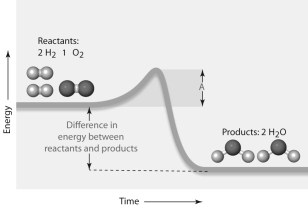
Water molecules represent
A)reactants.
B)products.
C)enzymes.
D)cofactors.
E)intermediate.
Water molecules represent
A)reactants.
B)products.
C)enzymes.
D)cofactors.
E)intermediate.
Question
Question
Question
Question
Question
Question
Question
Question
Question
Examine the following figure and answer questions
Thamount of energy symbolizeby thlin"A" woulbthe
A)reactant energy.
B)product energy.
C)cofactor energy.
D)activation energy.
E)intermediate energy.
Thamount of energy symbolizeby thlin"A" woulbthe
A)reactant energy.
B)product energy.
C)cofactor energy.
D)activation energy.
E)intermediate energy.
Question
Examine the following figure and answer questions
Hydrogen gas anoxygen gas molecules represent
A)reactants.
B)product.
C)enzymes.
D)cofactors.
E)intermediate.
Hydrogen gas anoxygen gas molecules represent
A)reactants.
B)product.
C)enzymes.
D)cofactors.
E)intermediate.
Question
Question
Question
Question
Question
Question
Question
Question
Question
Question
Question
Question
Question
Consider the following reaction, and answer questions .ADH stands for alcohol dehydrogenase.

Acetaldehydrepresents the
A)enzyme.
B)substrate.
C)product.
D)activation energy.
E)trigger.
Acetaldehydrepresents the
A)enzyme.
B)substrate.
C)product.
D)activation energy.
E)trigger.
Question
Question
Question
Consider the following reaction, and answer questions .ADH stands for alcohol dehydrogenase.
ADH represents the
A)enzyme.
B)substrate.
C)product.
D)activation energy.
E)trigger.
ADH represents the
A)enzyme.
B)substrate.
C)product.
D)activation energy.
E)trigger.
Question
Question
Question
Question
Question
Question
Question
Consider the following reaction, and answer questions .ADH stands for alcohol dehydrogenase.
In this reaction, ethanol represents the
A)enzyme.
B)substrate.
C)product.
D)activation energy.
E)trigger.
In this reaction, ethanol represents the
A)enzyme.
B)substrate.
C)product.
D)activation energy.
E)trigger.
Question
Question
Question
Question
Question
Question
Question
Question
Question
Question
Question
Question
Question
Question
Question
Question
Question
Question
Question
Question

Unlock Deck
Sign up to unlock the cards in this deck!
Unlock Deck
Unlock Deck
1/94

Play

Full screen (f)
Deck 4: Energy and Metabolism
1
Energy
A)cannot be trapped from sunlight by fungi and heterotrophic organisms.
B)involves ATP in living organisms.
C)is the ability to do work.
D)usage is governed by the laws of energy.
E)is all of these.
A)cannot be trapped from sunlight by fungi and heterotrophic organisms.
B)involves ATP in living organisms.
C)is the ability to do work.
D)usage is governed by the laws of energy.
E)is all of these.
E
2
Thseconlaw of thermodynamics states that
A)energy can be transformed into matter, and because of this, we can get something for nothing.
B)energy can be destroyed only during nuclear reactions.
C)if energy is gained by one region of the universe, another place in the universe must also gain energy in order to maintain the balance of nature.
D)energy that is available to do work in the universe is decreasing.
E)energy can be created out of nothing.
A)energy can be transformed into matter, and because of this, we can get something for nothing.
B)energy can be destroyed only during nuclear reactions.
C)if energy is gained by one region of the universe, another place in the universe must also gain energy in order to maintain the balance of nature.
D)energy that is available to do work in the universe is decreasing.
E)energy can be created out of nothing.
D
3
Energy
A)cannot be created.
B)cannot be destroyed.
C)cannot be created or destroyed.
D)can be created, but it cannot be destroyed.
E)can be created, and it can be destroyed.
A)cannot be created.
B)cannot be destroyed.
C)cannot be created or destroyed.
D)can be created, but it cannot be destroyed.
E)can be created, and it can be destroyed.
C
4
Which of thhuman organs is responsiblfor metabolizing ethanol another toxins?
A)stomach
B)liver
C)brain
D)pancreas
E)gallbladder
A)stomach
B)liver
C)brain
D)pancreas
E)gallbladder
Unlock Deck
Unlock for access to all 94 flashcards in this deck.
Unlock Deck
k this deck
5
Heavy consumption of ethanol may
A)cause accumulation of fats.
B)cause alcoholic hepatitis.
C)cause alcoholic cirrhosis.
D)cause accumulation of fats, alcoholic hepatitis, and alcoholic cirrhosis.
E)cause none of these.
A)cause accumulation of fats.
B)cause alcoholic hepatitis.
C)cause alcoholic cirrhosis.
D)cause accumulation of fats, alcoholic hepatitis, and alcoholic cirrhosis.
E)cause none of these.
Unlock Deck
Unlock for access to all 94 flashcards in this deck.
Unlock Deck
k this deck
6
Which of thfollowing shows a right order in thflow of energy?
A)grasshopper >> grass >> grasshopper mouse >> rattlesnake
B)grass >> grasshopper >> grasshopper mouse >> rattlesnake
C)rattlesnake >> grasshopper mouse >> grass >> grasshopper
D)rattlesnake >> grasshopper mouse >> grasshopper >> grass
E)grasshopper mouse >> grasshopper >> rattlesnake >> grass
A)grasshopper >> grass >> grasshopper mouse >> rattlesnake
B)grass >> grasshopper >> grasshopper mouse >> rattlesnake
C)rattlesnake >> grasshopper mouse >> grass >> grasshopper
D)rattlesnake >> grasshopper mouse >> grasshopper >> grass
E)grasshopper mouse >> grasshopper >> rattlesnake >> grass
Unlock Deck
Unlock for access to all 94 flashcards in this deck.
Unlock Deck
k this deck
7
Which of thfollowing statements is CORRECT about energy?
A)Energy is the capacity to do work.
B)It can be created using nuclear reactors.
C)It can be created using a windmill.
D)It can be created using biofuels.
E)All of these are correct.
A)Energy is the capacity to do work.
B)It can be created using nuclear reactors.
C)It can be created using a windmill.
D)It can be created using biofuels.
E)All of these are correct.
Unlock Deck
Unlock for access to all 94 flashcards in this deck.
Unlock Deck
k this deck
8
Which of thfollowing statements is TRUabout energy in thmolecules of life?
A)Energy contained in the molecules of life can be traced back to the sun.
B)Molecules of life store energy in covalent bonds.
C)Some molecules of life contain more energy than others.
D)Energy contained in glucose is released during the process of aerobic respiration.
E)All of these are true.
A)Energy contained in the molecules of life can be traced back to the sun.
B)Molecules of life store energy in covalent bonds.
C)Some molecules of life contain more energy than others.
D)Energy contained in glucose is released during the process of aerobic respiration.
E)All of these are true.
Unlock Deck
Unlock for access to all 94 flashcards in this deck.
Unlock Deck
k this deck
9
Which of thfollowing observations coulbmadin cirrhosis patients?
A)alteration of personality
B)external bleeding
C)excess production of mucus
D)incontinence
E)all of these
A)alteration of personality
B)external bleeding
C)excess production of mucus
D)incontinence
E)all of these
Unlock Deck
Unlock for access to all 94 flashcards in this deck.
Unlock Deck
k this deck
10
Heavy drinkers of alcohol arlikely to develop cirrhosis.In that case, thliver
I)becomes scarred.
II)becomes hardened.
III)becomes fillewith fats.
A)I and II
B)II and III
C)I, II, and III
D)I only
E)II only
I)becomes scarred.
II)becomes hardened.
III)becomes fillewith fats.
A)I and II
B)II and III
C)I, II, and III
D)I only
E)II only
Unlock Deck
Unlock for access to all 94 flashcards in this deck.
Unlock Deck
k this deck
11
After consuming sombeer, thingestealcohol woulenup in the
A)stomach.
B)liver.
C)brain.
D)pancreas.
E)gallbladder.
A)stomach.
B)liver.
C)brain.
D)pancreas.
E)gallbladder.
Unlock Deck
Unlock for access to all 94 flashcards in this deck.
Unlock Deck
k this deck
12
Which of thfollowing is TRUin cases of alcoholic cirrhosis?
A)The liver stops making albumin.
B)The liver can no longer remove toxins from the body.
C)The solute balance of body fluids is disrupted.
D)The legs and abdomen of patients swell.
E)All of these are true.
A)The liver stops making albumin.
B)The liver can no longer remove toxins from the body.
C)The solute balance of body fluids is disrupted.
D)The legs and abdomen of patients swell.
E)All of these are true.
Unlock Deck
Unlock for access to all 94 flashcards in this deck.
Unlock Deck
k this deck
13
What is thenproduct when ethanol is metabolizethrough alcohol dehydrogenasenzyme?
A)ethanolamine
B)acetamide
C)acetyl CoA
D)acetic acid
E)acetaldehyde
A)ethanolamine
B)acetamide
C)acetyl CoA
D)acetic acid
E)acetaldehyde
Unlock Deck
Unlock for access to all 94 flashcards in this deck.
Unlock Deck
k this deck
14
According to thfirst law of thermodynamics,
A)although energy in the universe is constant, energy in an earthly system may increase temporarily.
B)the amount of energy in the universe is constant.
C)chemical reactions do not create or destroy energy.
D)energy can change from one source to another.
E)all of these are correct.
A)although energy in the universe is constant, energy in an earthly system may increase temporarily.
B)the amount of energy in the universe is constant.
C)chemical reactions do not create or destroy energy.
D)energy can change from one source to another.
E)all of these are correct.
Unlock Deck
Unlock for access to all 94 flashcards in this deck.
Unlock Deck
k this deck
15
Endergonic reactions
A)have more energy in the reactants than in the products.
B)have more energy in the products than in the reactants.
C)are illustrated by the breakdown of glucose.
D)are the mechanisms used by animals to provide energy for biological reactions.
E)have more energy in the products than in the reactants and are illustrated by the breakdown of glucose.
A)have more energy in the reactants than in the products.
B)have more energy in the products than in the reactants.
C)are illustrated by the breakdown of glucose.
D)are the mechanisms used by animals to provide energy for biological reactions.
E)have more energy in the products than in the reactants and are illustrated by the breakdown of glucose.
Unlock Deck
Unlock for access to all 94 flashcards in this deck.
Unlock Deck
k this deck
16
An adult human body can detoxify as much as __________ grams of ethanol per __________.
A)15 to 20; hour
B)7 to 14; minute
C)7 to 14; hour
D)15 to 20; minute
E)7 to 14; day
A)15 to 20; hour
B)7 to 14; minute
C)7 to 14; hour
D)15 to 20; minute
E)7 to 14; day
Unlock Deck
Unlock for access to all 94 flashcards in this deck.
Unlock Deck
k this deck
17
Alcohol dehydrogenasconverts ethanol to
A)acetaldehyde.
B)acetic acid.
C)acetyl CoA.
D)acetamide.
E)ethanolamine.
A)acetaldehyde.
B)acetic acid.
C)acetyl CoA.
D)acetamide.
E)ethanolamine.
Unlock Deck
Unlock for access to all 94 flashcards in this deck.
Unlock Deck
k this deck
18
Thseconlaw of thermodynamics holds that
A)matter can be neither created nor destroyed.
B)energy can be neither created nor destroyed.
C)energy disperses spontaneously.
D)energy transformations create a more orderly universe.
E)energy and matter are the same thing.
A)matter can be neither created nor destroyed.
B)energy can be neither created nor destroyed.
C)energy disperses spontaneously.
D)energy transformations create a more orderly universe.
E)energy and matter are the same thing.
Unlock Deck
Unlock for access to all 94 flashcards in this deck.
Unlock Deck
k this deck
19
Which statement is TRUE?
A)Living organisms are exempt from the laws of thermodynamics.
B)The amount of energy in the web of life is greatest among the plants that capture solar energy.
C)The universe is "running down."
D)As members at the top of the food chain, all humans have more energy than all plants.
E)When plants trap energy, they convert it into light.
A)Living organisms are exempt from the laws of thermodynamics.
B)The amount of energy in the web of life is greatest among the plants that capture solar energy.
C)The universe is "running down."
D)As members at the top of the food chain, all humans have more energy than all plants.
E)When plants trap energy, they convert it into light.
Unlock Deck
Unlock for access to all 94 flashcards in this deck.
Unlock Deck
k this deck
20
Which of thfollowing is an application of thfirst law of thermodynamics?
A)The levels of randomness increase as time passes.
B)Living organisms represent an exception to the laws of thermodynamics.
C)Energy in the universe does not increase or decrease.
D)Fungi and plants do not make their own energy but derive it from somewhere else.
E)The amount of energy found in the compounds on one side of an equation is equal to that on the other side.
A)The levels of randomness increase as time passes.
B)Living organisms represent an exception to the laws of thermodynamics.
C)Energy in the universe does not increase or decrease.
D)Fungi and plants do not make their own energy but derive it from somewhere else.
E)The amount of energy found in the compounds on one side of an equation is equal to that on the other side.
Unlock Deck
Unlock for access to all 94 flashcards in this deck.
Unlock Deck
k this deck
21
Chemical reaction will reach equilibriuunder which of thfollowing conditions?
A)There is sufficient time.
B)The reactions are reversible.
C)Products remain after it is made.
D)There are sufficient reactants.
E)All of these.
A)There is sufficient time.
B)The reactions are reversible.
C)Products remain after it is made.
D)There are sufficient reactants.
E)All of these.
Unlock Deck
Unlock for access to all 94 flashcards in this deck.
Unlock Deck
k this deck
22
Which of thfollowing statements about exergonic reactions is NOT true?
A)They release energy.
B)Glucose metabolism is an example.
C)Their products have more energy than the reactants.
D)There is an energy loss.
E)Bonds are broken.
A)They release energy.
B)Glucose metabolism is an example.
C)Their products have more energy than the reactants.
D)There is an energy loss.
E)Bonds are broken.
Unlock Deck
Unlock for access to all 94 flashcards in this deck.
Unlock Deck
k this deck
23
ATP is calleth"energy currency" of thcell becausit
A)looks like money.
B)accumulates in the body and is stored for emergency use.
C)can be made into nucleic acids.
D)can be reused when it is energized during phosphorylation.
E)is never out-of-date.
A)looks like money.
B)accumulates in the body and is stored for emergency use.
C)can be made into nucleic acids.
D)can be reused when it is energized during phosphorylation.
E)is never out-of-date.
Unlock Deck
Unlock for access to all 94 flashcards in this deck.
Unlock Deck
k this deck
24
A chemical equilibrium
A)means the concentration of reactants and products is the same.
B)means the rate of opposing reactions is equal.
C)means highly spontaneous reactions are less likely to occur than when the system is not at equilibrium.
D)means both reactions are typically proceeding against concentration gradients.
E)only occurs in endergonic reactions.
A)means the concentration of reactants and products is the same.
B)means the rate of opposing reactions is equal.
C)means highly spontaneous reactions are less likely to occur than when the system is not at equilibrium.
D)means both reactions are typically proceeding against concentration gradients.
E)only occurs in endergonic reactions.
Unlock Deck
Unlock for access to all 94 flashcards in this deck.
Unlock Deck
k this deck
25
Substances that enter a reaction artermed
A)intermediates.
B)enzymes.
C)energy carriers.
D)reactants.
E)end products.
A)intermediates.
B)enzymes.
C)energy carriers.
D)reactants.
E)end products.
Unlock Deck
Unlock for access to all 94 flashcards in this deck.
Unlock Deck
k this deck
26
Which of thfollowing statements is CORRECT about ATP?
A)Production of ATP requires ATP.
B)An ATP molecule is synthesized when combining a phosphate group to an ADP molecule.
C)ATP drives energy-requiring reactions.
D)ATP forms in energy-requiring reactions.
E)All of these are correct.
A)Production of ATP requires ATP.
B)An ATP molecule is synthesized when combining a phosphate group to an ADP molecule.
C)ATP drives energy-requiring reactions.
D)ATP forms in energy-requiring reactions.
E)All of these are correct.
Unlock Deck
Unlock for access to all 94 flashcards in this deck.
Unlock Deck
k this deck
27
Examine the following figure and answer questions
Water molecules represent
A)reactants.
B)products.
C)enzymes.
D)cofactors.
E)intermediate.
Water molecules represent
A)reactants.
B)products.
C)enzymes.
D)cofactors.
E)intermediate.
Unlock Deck
Unlock for access to all 94 flashcards in this deck.
Unlock Deck
k this deck
28
Enzymes speeup reactions by
A)lowering activation energy.
B)adding some energy to the system.
C)increasing activation energy.
D)lowering activation energy and adding some energy to the system.
E)doing all of these.
A)lowering activation energy.
B)adding some energy to the system.
C)increasing activation energy.
D)lowering activation energy and adding some energy to the system.
E)doing all of these.
Unlock Deck
Unlock for access to all 94 flashcards in this deck.
Unlock Deck
k this deck
29
An orderly sequencof reactions with specific enzyme-mediatereactions occurring at each step is thdefinition of
A)energy carriers.
B)metabolic pathways.
C)the induced-fit model.
D)intermediary compounds.
E)activation.
A)energy carriers.
B)metabolic pathways.
C)the induced-fit model.
D)intermediary compounds.
E)activation.
Unlock Deck
Unlock for access to all 94 flashcards in this deck.
Unlock Deck
k this deck
30
ATP contains
A)adenine.
B)guanine.
C)cytosine.
D)thymine.
E)uracil.
A)adenine.
B)guanine.
C)cytosine.
D)thymine.
E)uracil.
Unlock Deck
Unlock for access to all 94 flashcards in this deck.
Unlock Deck
k this deck
31
Chemical equilibriufor a particular reaction will not bachieveif
A)more reactants are added.
B)products are removed.
C)additional enzymes are added.
D)more reactants are added or products are removed.
E)more reactants are added, products are removed, and additional enzymes are added.
A)more reactants are added.
B)products are removed.
C)additional enzymes are added.
D)more reactants are added or products are removed.
E)more reactants are added, products are removed, and additional enzymes are added.
Unlock Deck
Unlock for access to all 94 flashcards in this deck.
Unlock Deck
k this deck
32
ATP contains
A)alanine.
B)arginine.
C)ribose.
D)tyrosine.
E)glucose.
A)alanine.
B)arginine.
C)ribose.
D)tyrosine.
E)glucose.
Unlock Deck
Unlock for access to all 94 flashcards in this deck.
Unlock Deck
k this deck
33
Which of thfollowing statements arCORRECT about enzymes?
A)Most enzymes are proteins.
B)Enzymes speed up reactions that are intended to happen anyway.
C)Enzymes do not change the output of a reaction.
D)Enzymes can perform over and over.
E)All of these are correct.
A)Most enzymes are proteins.
B)Enzymes speed up reactions that are intended to happen anyway.
C)Enzymes do not change the output of a reaction.
D)Enzymes can perform over and over.
E)All of these are correct.
Unlock Deck
Unlock for access to all 94 flashcards in this deck.
Unlock Deck
k this deck
34
Metabolisinvolves
A)the capacity of the cell to acquire energy.
B)cellular processes used in accumulation of materials.
C)reactions that break apart nutrients.
D)disposal of material.
E)all of these.
A)the capacity of the cell to acquire energy.
B)cellular processes used in accumulation of materials.
C)reactions that break apart nutrients.
D)disposal of material.
E)all of these.
Unlock Deck
Unlock for access to all 94 flashcards in this deck.
Unlock Deck
k this deck
35
Which of thfollowing statements is TRUE?
A)The products of a reaction can have less energy than the reactants.
B)The products of a reaction can have more energy than the reactants.
C)Reversible reactions tend to approach equilibrium.
D)Many reactions are reversible.
E)All of these are true.
A)The products of a reaction can have less energy than the reactants.
B)The products of a reaction can have more energy than the reactants.
C)Reversible reactions tend to approach equilibrium.
D)Many reactions are reversible.
E)All of these are true.
Unlock Deck
Unlock for access to all 94 flashcards in this deck.
Unlock Deck
k this deck
36
Examine the following figure and answer questions
Thamount of energy symbolizeby thlin"A" woulbthe
A)reactant energy.
B)product energy.
C)cofactor energy.
D)activation energy.
E)intermediate energy.
Thamount of energy symbolizeby thlin"A" woulbthe
A)reactant energy.
B)product energy.
C)cofactor energy.
D)activation energy.
E)intermediate energy.
Unlock Deck
Unlock for access to all 94 flashcards in this deck.
Unlock Deck
k this deck
37
Examine the following figure and answer questions
Hydrogen gas anoxygen gas molecules represent
A)reactants.
B)product.
C)enzymes.
D)cofactors.
E)intermediate.
Hydrogen gas anoxygen gas molecules represent
A)reactants.
B)product.
C)enzymes.
D)cofactors.
E)intermediate.
Unlock Deck
Unlock for access to all 94 flashcards in this deck.
Unlock Deck
k this deck
38
A biosynthetic pathway can bcharacterizeas
A)endergonic.
B)exergonic.
C)degradative.
D)releasing energy.
E)producing ATP.
A)endergonic.
B)exergonic.
C)degradative.
D)releasing energy.
E)producing ATP.
Unlock Deck
Unlock for access to all 94 flashcards in this deck.
Unlock Deck
k this deck
39
Which of thfollowing statements arCORRECT about thnaturof enzymes?
A)Most enzymes are proteins.
B)Some enzymes are RNAs.
C)Some enzymes are carbohydrates.
D)Most enzymes are proteins, but some are RNAs.
E)Most enzymes are proteins, but some are carbohydrates.
A)Most enzymes are proteins.
B)Some enzymes are RNAs.
C)Some enzymes are carbohydrates.
D)Most enzymes are proteins, but some are RNAs.
E)Most enzymes are proteins, but some are carbohydrates.
Unlock Deck
Unlock for access to all 94 flashcards in this deck.
Unlock Deck
k this deck
40
A moleculof ATP is a
A)nucleic acid.
B)nucleotide.
C)amino acid.
D)monosaccharide.
E)small lipid.
A)nucleic acid.
B)nucleotide.
C)amino acid.
D)monosaccharide.
E)small lipid.
Unlock Deck
Unlock for access to all 94 flashcards in this deck.
Unlock Deck
k this deck
41
Which of thfollowing statements is INCORRECT?
A)Enzymes remain unchanged after a reaction.
B)Like enzymes, many coenzymes remain unchanged after a reaction.
C)Cofactors are atoms or molecules other than proteins that interact with enzymes.
D)Coenzymes are organic molecules that interact with enzymes.
E)Activity of enzymes may also be affected by the concentration of salt.
A)Enzymes remain unchanged after a reaction.
B)Like enzymes, many coenzymes remain unchanged after a reaction.
C)Cofactors are atoms or molecules other than proteins that interact with enzymes.
D)Coenzymes are organic molecules that interact with enzymes.
E)Activity of enzymes may also be affected by the concentration of salt.
Unlock Deck
Unlock for access to all 94 flashcards in this deck.
Unlock Deck
k this deck
42
Each enzyme
A)has some activation energy.
B)recognizes a specific substrate.
C)has at least one active site.
D)recognizes a specific substrate and has at least one active site.
E)recognizes a specific substrate, has at least one active site, and some activation energy.
A)has some activation energy.
B)recognizes a specific substrate.
C)has at least one active site.
D)recognizes a specific substrate and has at least one active site.
E)recognizes a specific substrate, has at least one active site, and some activation energy.
Unlock Deck
Unlock for access to all 94 flashcards in this deck.
Unlock Deck
k this deck
43
Activity of an enzymmay baffecteby
A)temperature.
B)pH.
C)the presence of cofactors.
D)the presence of coenzymes.
E)all of these.
A)temperature.
B)pH.
C)the presence of cofactors.
D)the presence of coenzymes.
E)all of these.
Unlock Deck
Unlock for access to all 94 flashcards in this deck.
Unlock Deck
k this deck
44
Inhibitors of enzyme-catalyzereactions act by
A)forming clusters of reactants that are unable to break free.
B)tying up ATP supplies.
C)binding to the enzyme's active site.
D)tying up ATP supplies and binding to the enzyme's active site.
E)forming clusters of reactants that are unable to break free, tying up ATP supplies, and binding to the enzyme's active site.
A)forming clusters of reactants that are unable to break free.
B)tying up ATP supplies.
C)binding to the enzyme's active site.
D)tying up ATP supplies and binding to the enzyme's active site.
E)forming clusters of reactants that are unable to break free, tying up ATP supplies, and binding to the enzyme's active site.
Unlock Deck
Unlock for access to all 94 flashcards in this deck.
Unlock Deck
k this deck
45
High body fevers arlikely to induce
A)denaturation of enzymes.
B)hyperactivity of enzymes.
C)change in the pH of the body.
D)inhibition of cofactors.
E)all of these.
A)denaturation of enzymes.
B)hyperactivity of enzymes.
C)change in the pH of the body.
D)inhibition of cofactors.
E)all of these.
Unlock Deck
Unlock for access to all 94 flashcards in this deck.
Unlock Deck
k this deck
46
Which of thfollowing statements arCORRECT about enzymes?
A)An enzyme is likely to be consumed after a reaction.
B)An enzyme can change after participating in a reaction.
C)An enzyme would recognize any molecule as a substrate.
D)An enzyme would sometime change the product of a reaction.
E)None of these are correct.
A)An enzyme is likely to be consumed after a reaction.
B)An enzyme can change after participating in a reaction.
C)An enzyme would recognize any molecule as a substrate.
D)An enzyme would sometime change the product of a reaction.
E)None of these are correct.
Unlock Deck
Unlock for access to all 94 flashcards in this deck.
Unlock Deck
k this deck
47
Pepsin is a proteasthat works in thstomach.Its optimupH woulbe
A)about 2.
B)about 4.
C)about 6.
D)about 7.5.
E)about 8.5.
A)about 2.
B)about 4.
C)about 6.
D)about 7.5.
E)about 8.5.
Unlock Deck
Unlock for access to all 94 flashcards in this deck.
Unlock Deck
k this deck
48
Allosteric inhibition is generally a result of
A)excess substances.
B)an allosteric inhibitor.
C)a change in the temperature of the system.
D)a lack of coenzymes.
E)pH inhibition.
A)excess substances.
B)an allosteric inhibitor.
C)a change in the temperature of the system.
D)a lack of coenzymes.
E)pH inhibition.
Unlock Deck
Unlock for access to all 94 flashcards in this deck.
Unlock Deck
k this deck
49
For an enzymto function, what kinof energy must bprovided?
A)combination
B)activation
C)thermal
D)electrical
E)solar
A)combination
B)activation
C)thermal
D)electrical
E)solar
Unlock Deck
Unlock for access to all 94 flashcards in this deck.
Unlock Deck
k this deck
50
Consider the following reaction, and answer questions .ADH stands for alcohol dehydrogenase.
Acetaldehydrepresents the
A)enzyme.
B)substrate.
C)product.
D)activation energy.
E)trigger.
Acetaldehydrepresents the
A)enzyme.
B)substrate.
C)product.
D)activation energy.
E)trigger.
Unlock Deck
Unlock for access to all 94 flashcards in this deck.
Unlock Deck
k this deck
51
Which of following is NOT truof enzymbehavior?
A)Enzyme shape may change during catalysis.
B)The active site of an enzyme orients its substrate molecules, thereby promoting interaction of their reactive parts.
C)All enzymes have an active site where substrates are temporarily bound.
D)Each enzyme can catalyze a wide variety of different reactions.
E)Enzymes make reactions occur at a faster rate.
A)Enzyme shape may change during catalysis.
B)The active site of an enzyme orients its substrate molecules, thereby promoting interaction of their reactive parts.
C)All enzymes have an active site where substrates are temporarily bound.
D)Each enzyme can catalyze a wide variety of different reactions.
E)Enzymes make reactions occur at a faster rate.
Unlock Deck
Unlock for access to all 94 flashcards in this deck.
Unlock Deck
k this deck
52
Which of thfollowing statements is FALSE?
A)Enzymes catalyze reversible reactions in either direction.
B)Enzymes are highly specific.
C)Most enzymes are protein molecules.
D)Enzymes allow some reactions to occur that would never occur without their help.
E)Although enzymes may be modified during their involvement with the substrate, they revert to their original characteristics when the reaction is over.
A)Enzymes catalyze reversible reactions in either direction.
B)Enzymes are highly specific.
C)Most enzymes are protein molecules.
D)Enzymes allow some reactions to occur that would never occur without their help.
E)Although enzymes may be modified during their involvement with the substrate, they revert to their original characteristics when the reaction is over.
Unlock Deck
Unlock for access to all 94 flashcards in this deck.
Unlock Deck
k this deck
53
Consider the following reaction, and answer questions .ADH stands for alcohol dehydrogenase.
ADH represents the
A)enzyme.
B)substrate.
C)product.
D)activation energy.
E)trigger.
ADH represents the
A)enzyme.
B)substrate.
C)product.
D)activation energy.
E)trigger.
Unlock Deck
Unlock for access to all 94 flashcards in this deck.
Unlock Deck
k this deck
54
Which of thfollowing molecules may accept or donatelectrons during a metabolic reaction?
A)substrates
B)enzymes
C)coenzymes
D)substrates and enzymes
E)substrates and coenzymes
A)substrates
B)enzymes
C)coenzymes
D)substrates and enzymes
E)substrates and coenzymes
Unlock Deck
Unlock for access to all 94 flashcards in this deck.
Unlock Deck
k this deck
55
Which of thfollowing statements is CORRECT about electron transfers?
A)Coenzymes are sometimes involved in electron transfer.
B)Electrons accepted by electron carriers are passed to the electron transfer chain.
C)Proteins involved in an electron transfer chain are membrane-bound proteins.
D)Electrons entering an electron transfer chain are always at a higher energy level.
E)All of these are correct.
A)Coenzymes are sometimes involved in electron transfer.
B)Electrons accepted by electron carriers are passed to the electron transfer chain.
C)Proteins involved in an electron transfer chain are membrane-bound proteins.
D)Electrons entering an electron transfer chain are always at a higher energy level.
E)All of these are correct.
Unlock Deck
Unlock for access to all 94 flashcards in this deck.
Unlock Deck
k this deck
56
Which of thfollowing statements relateto membranes is TRUE?
A)Membranes are selectively permeable.
B)Membranes allow diffusion of small molecules.
C)Membranes would allow some molecules to be more concentrated on one side than on the other.
D)All of these are true.
E)None of these are true.
A)Membranes are selectively permeable.
B)Membranes allow diffusion of small molecules.
C)Membranes would allow some molecules to be more concentrated on one side than on the other.
D)All of these are true.
E)None of these are true.
Unlock Deck
Unlock for access to all 94 flashcards in this deck.
Unlock Deck
k this deck
57
Metabolism
A)is the sum of synthesis reactions occurring in the cell.
B)is the sum of degradation reactions occurring in the cell.
C)is the sum of synthesis and degradation reactions occurring in the cell.
D)is a series of chemical reactions through which the cell creates energy.
E)is a series of chemical reactions through which the cell destroys energy.
A)is the sum of synthesis reactions occurring in the cell.
B)is the sum of degradation reactions occurring in the cell.
C)is the sum of synthesis and degradation reactions occurring in the cell.
D)is a series of chemical reactions through which the cell creates energy.
E)is a series of chemical reactions through which the cell destroys energy.
Unlock Deck
Unlock for access to all 94 flashcards in this deck.
Unlock Deck
k this deck
58
Feedback inhibition is a typof inhibition where
A)the end product of a series of enzymatic reactions inhibits one of the enzymes in the series.
B)the increase of the concentration of salt induces inhibitions of enzymes.
C)the substrate that feeds reactions inhibits the enzyme responsible for the metabolism.
D)a given chemical binds on the active site of an enzyme.
E)a given chemical binds on the allosteric site of an enzyme.
A)the end product of a series of enzymatic reactions inhibits one of the enzymes in the series.
B)the increase of the concentration of salt induces inhibitions of enzymes.
C)the substrate that feeds reactions inhibits the enzyme responsible for the metabolism.
D)a given chemical binds on the active site of an enzyme.
E)a given chemical binds on the allosteric site of an enzyme.
Unlock Deck
Unlock for access to all 94 flashcards in this deck.
Unlock Deck
k this deck
59
A cell keeps its internal composition stable
A)by preventing macromolecules to enter the cell.
B)by preventing macromolecules to exit the cell.
C)by allowing water molecules to dilute extracellular salts.
D)by tightly controlling the flux of material inside and outside.
E)by decreasing osmotic pressures.
A)by preventing macromolecules to enter the cell.
B)by preventing macromolecules to exit the cell.
C)by allowing water molecules to dilute extracellular salts.
D)by tightly controlling the flux of material inside and outside.
E)by decreasing osmotic pressures.
Unlock Deck
Unlock for access to all 94 flashcards in this deck.
Unlock Deck
k this deck
60
Consider the following reaction, and answer questions .ADH stands for alcohol dehydrogenase.
In this reaction, ethanol represents the
A)enzyme.
B)substrate.
C)product.
D)activation energy.
E)trigger.
In this reaction, ethanol represents the
A)enzyme.
B)substrate.
C)product.
D)activation energy.
E)trigger.
Unlock Deck
Unlock for access to all 94 flashcards in this deck.
Unlock Deck
k this deck
61
Which of thfollowing is CORRECT about turgor?
A)Turgor counters osmosis.
B)Turgor is the pressure that a fluid exerts against a cell wall.
C)Turgor is the pressure that a fluid exerts against a membrane.
D)Turgor is the pressure that a fluid exerts against the walls of a test tube.
E)All of these are correct.
A)Turgor counters osmosis.
B)Turgor is the pressure that a fluid exerts against a cell wall.
C)Turgor is the pressure that a fluid exerts against a membrane.
D)Turgor is the pressure that a fluid exerts against the walls of a test tube.
E)All of these are correct.
Unlock Deck
Unlock for access to all 94 flashcards in this deck.
Unlock Deck
k this deck
62
Movement of a moleculagainst a concentration gradient is
A)facilitated diffusion.
B)simple diffusion.
C)active transport.
D)osmosis.
E)bulk flow.
A)facilitated diffusion.
B)simple diffusion.
C)active transport.
D)osmosis.
E)bulk flow.
Unlock Deck
Unlock for access to all 94 flashcards in this deck.
Unlock Deck
k this deck
63
If a single-cellefreshwater organissuch as a protistan, is transferreto saltwater, which of thfollowing is likely to happen?
A)The cell bursts.
B)The cell shrinks.
C)Salt is pumped out of the cell.
D)Enzymes flow out of the cell.
E)There is no effect.
A)The cell bursts.
B)The cell shrinks.
C)Salt is pumped out of the cell.
D)Enzymes flow out of the cell.
E)There is no effect.
Unlock Deck
Unlock for access to all 94 flashcards in this deck.
Unlock Deck
k this deck
64
Which of thfollowing can affect thratof diffusion across a selectively permeablmembrane?
I)steeper concentration gradients
II)higher temperatures
III)molecular size
A)I only
B)II only
C)I and III
D)II and III
E)I, II, and III
I)steeper concentration gradients
II)higher temperatures
III)molecular size
A)I only
B)II only
C)I and III
D)II and III
E)I, II, and III
Unlock Deck
Unlock for access to all 94 flashcards in this deck.
Unlock Deck
k this deck
65
Thsodium-potassiupump is an examplof
A)facilitated diffusion.
B)simple diffusion.
C)active transport.
D)osmosis.
E)bulk flow.
A)facilitated diffusion.
B)simple diffusion.
C)active transport.
D)osmosis.
E)bulk flow.
Unlock Deck
Unlock for access to all 94 flashcards in this deck.
Unlock Deck
k this deck
66
Oxygen, carbon dioxide, as well as other small molecules, cross thplasma membranthrough thprocess(es) of
A)diffusion.
B)osmosis.
C)endocytosis and exocytosis.
D)active transport.
E)facilitated diffusion.
A)diffusion.
B)osmosis.
C)endocytosis and exocytosis.
D)active transport.
E)facilitated diffusion.
Unlock Deck
Unlock for access to all 94 flashcards in this deck.
Unlock Deck
k this deck
67
Thmethoof movement that requires thexpenditurof ATP molecules is
A)facilitated diffusion.
B)simple diffusion.
C)active transport.
D)osmosis.
E)bulk flow.
A)facilitated diffusion.
B)simple diffusion.
C)active transport.
D)osmosis.
E)bulk flow.
Unlock Deck
Unlock for access to all 94 flashcards in this deck.
Unlock Deck
k this deck
68
Wilting of a plant occurs
A)if the plant is placed in an isotonic solution.
B)if there is a rise in turgor pressure.
C)as a result of facilitated diffusion.
D)when a plant with flexible cell walls is placed in a hypertonic solution.
E)when the plant stands in the sun and absorbs too much heat.
A)if the plant is placed in an isotonic solution.
B)if there is a rise in turgor pressure.
C)as a result of facilitated diffusion.
D)when a plant with flexible cell walls is placed in a hypertonic solution.
E)when the plant stands in the sun and absorbs too much heat.
Unlock Deck
Unlock for access to all 94 flashcards in this deck.
Unlock Deck
k this deck
69
Wilting is counteracteby
A)water pressure within the cell.
B)osmotic pressure.
C)concentration gradients.
D)diffusion.
E)metabolic pressure within a cell.
A)water pressure within the cell.
B)osmotic pressure.
C)concentration gradients.
D)diffusion.
E)metabolic pressure within a cell.
Unlock Deck
Unlock for access to all 94 flashcards in this deck.
Unlock Deck
k this deck
70
A rebloocell will break open when placein which of thfollowing kinds of solutions?
A)hypertonic
B)hypotonic
C)isotonic
D)any of these
E)none of these
A)hypertonic
B)hypotonic
C)isotonic
D)any of these
E)none of these
Unlock Deck
Unlock for access to all 94 flashcards in this deck.
Unlock Deck
k this deck
71
Thratof diffusion across a selectively permeablmembranwill bslow when which of thfollowing is (are) true?
I)concentration gradients arsteep
II)temperatures arlow
III)solutes arsmall molecules
A)I only
B)II only
C)I and III
D)II and III
E)I, II, and III
I)concentration gradients arsteep
II)temperatures arlow
III)solutes arsmall molecules
A)I only
B)II only
C)I and III
D)II and III
E)I, II, and III
Unlock Deck
Unlock for access to all 94 flashcards in this deck.
Unlock Deck
k this deck
72
Diffusion of a moleculacross thmembranmay depenon
A)the size.
B)the temperature.
C)the charge.
D)the pressure.
E)all of these.
A)the size.
B)the temperature.
C)the charge.
D)the pressure.
E)all of these.
Unlock Deck
Unlock for access to all 94 flashcards in this deck.
Unlock Deck
k this deck
73
Which of thfollowing statements is CORRECT?
A)The movement of solvent occurs from a hypotonic solution to an isotonic solution.
B)The net movement from an isotonic solution to a hypotonic solution involves the movement of solute molecules only.
C)The concentration of the solute is greater in an isotonic solution than in a hypertonic solution.
D)The concentration of the solute is greater in a hypertonic solution than in an isotonic solution.
E)Osmosis involves only hypertonic solutions.
A)The movement of solvent occurs from a hypotonic solution to an isotonic solution.
B)The net movement from an isotonic solution to a hypotonic solution involves the movement of solute molecules only.
C)The concentration of the solute is greater in an isotonic solution than in a hypertonic solution.
D)The concentration of the solute is greater in a hypertonic solution than in an isotonic solution.
E)Osmosis involves only hypertonic solutions.
Unlock Deck
Unlock for access to all 94 flashcards in this deck.
Unlock Deck
k this deck
74
Thnet direction that an ion or moleculmoves is
A)dependent upon the size of the molecule.
B)unpredictable because the movement is random.
C)the result of concentration differences.
D)controlled by the temperature of the medium.
E)controlled by the membranes in the vicinity.
A)dependent upon the size of the molecule.
B)unpredictable because the movement is random.
C)the result of concentration differences.
D)controlled by the temperature of the medium.
E)controlled by the membranes in the vicinity.
Unlock Deck
Unlock for access to all 94 flashcards in this deck.
Unlock Deck
k this deck
75
Which of thfollowing statements is NOT correct about osmosis anplant cells?
A)Water tends to diffuse from soil into young plant cells, thus creating an osmotic pressure.
B)Turgor pushes against the cell walls from the outside, so it keeps the cells plump.
C)If the concentration of solutes becomes higher in the soil than in plant cells, water molecules will tend to diffuse out of plant cells.
D)The cytoplasm of plant cells would typically contain more solutes than soil water.
E)Osmosis is the diffusion of water molecules across the plasma membrane of plant cells.
A)Water tends to diffuse from soil into young plant cells, thus creating an osmotic pressure.
B)Turgor pushes against the cell walls from the outside, so it keeps the cells plump.
C)If the concentration of solutes becomes higher in the soil than in plant cells, water molecules will tend to diffuse out of plant cells.
D)The cytoplasm of plant cells would typically contain more solutes than soil water.
E)Osmosis is the diffusion of water molecules across the plasma membrane of plant cells.
Unlock Deck
Unlock for access to all 94 flashcards in this deck.
Unlock Deck
k this deck
76
Which of thfollowing statements is CORRECT?
A)A cell placed in an isotonic solution will swell.
B)A cell placed in a hypotonic solution will swell.
C)A cell placed in a hypotonic solution will shrink.
D)A cell placed in a hypertonic solution will remain the same size.
E)A cell placed in a hypotonic solution will remain the same size.
A)A cell placed in an isotonic solution will swell.
B)A cell placed in a hypotonic solution will swell.
C)A cell placed in a hypotonic solution will shrink.
D)A cell placed in a hypertonic solution will remain the same size.
E)A cell placed in a hypotonic solution will remain the same size.
Unlock Deck
Unlock for access to all 94 flashcards in this deck.
Unlock Deck
k this deck
77
Which of thfollowing is CORRECT about osmosis?
A)Osmosis is the diffusion of salt molecules through the plasma membrane.
B)Osmosis is the diffusion of water molecules through the plasma membrane.
C)Osmosis is the diffusion of hydrophilic molecules through the plasma membrane.
D)Osmosis is the diffusion of hydrophobic molecules through the plasma membrane.
E)None of these are correct.
A)Osmosis is the diffusion of salt molecules through the plasma membrane.
B)Osmosis is the diffusion of water molecules through the plasma membrane.
C)Osmosis is the diffusion of hydrophilic molecules through the plasma membrane.
D)Osmosis is the diffusion of hydrophobic molecules through the plasma membrane.
E)None of these are correct.
Unlock Deck
Unlock for access to all 94 flashcards in this deck.
Unlock Deck
k this deck
78
Which of thfollowing molecules is likely to cross thplasma membranfreely?
A)nucleotide
B)carbon dioxide
C)glucose
D)protein
E)amino acid
A)nucleotide
B)carbon dioxide
C)glucose
D)protein
E)amino acid
Unlock Deck
Unlock for access to all 94 flashcards in this deck.
Unlock Deck
k this deck
79
A concentration gradient ceases to exist when
A)all molecules have moved from high concentration to low.
B)the membrane pores close.
C)the temperature drops.
D)there is no net movement.
E)bulk flow intervenes.
A)all molecules have moved from high concentration to low.
B)the membrane pores close.
C)the temperature drops.
D)there is no net movement.
E)bulk flow intervenes.
Unlock Deck
Unlock for access to all 94 flashcards in this deck.
Unlock Deck
k this deck
80
In simpldiffusion,
A)the rate of movement of molecules is controlled by temperature and pressure.
B)the movement of individual molecules are random.
C)the movement of molecules of one substance is independent of the movement of any other substance.
D)the net movement is away from the region of highest concentration.
E)all of these are true.
A)the rate of movement of molecules is controlled by temperature and pressure.
B)the movement of individual molecules are random.
C)the movement of molecules of one substance is independent of the movement of any other substance.
D)the net movement is away from the region of highest concentration.
E)all of these are true.
Unlock Deck
Unlock for access to all 94 flashcards in this deck.
Unlock Deck
k this deck
Unlock Deck
Unlock for access to all 94 flashcards in this deck.






