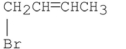
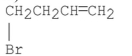
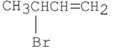
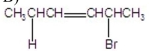
Deck 7: Delocalized Electrons Aromaticity and the Reactions of Benzene

Full screen (f)
exit full mode
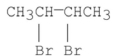
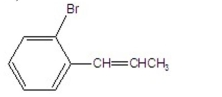
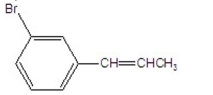
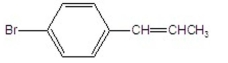
Question
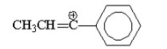
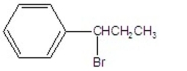
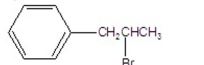
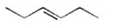
Which of the following is a benzylic cation? I.
<strong>Which of the following is a benzylic cation? I.    II.    III.    IV.    V.    </strong> A) I B) II C) III D) IV E) V <div style=padding-top: 35px>
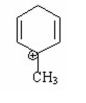
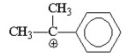
II.
<strong>Which of the following is a benzylic cation? I.    II.    III.    IV.    V.    </strong> A) I B) II C) III D) IV E) V <div style=padding-top: 35px>

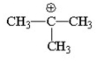
III.
<strong>Which of the following is a benzylic cation? I.    II.    III.    IV.    V.    </strong> A) I B) II C) III D) IV E) V <div style=padding-top: 35px>

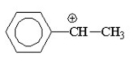
IV.
<strong>Which of the following is a benzylic cation? I.    II.    III.    IV.    V.    </strong> A) I B) II C) III D) IV E) V <div style=padding-top: 35px>

V.
<strong>Which of the following is a benzylic cation? I.    II.    III.    IV.    V.    </strong> A) I B) II C) III D) IV E) V <div style=padding-top: 35px>


A) I
B) II
C) III
D) IV
E) V
Use Space or
up arrow
down arrow
to flip the card.
Question
Which of the following does not have delocalized electrons?

A) allyl cation
B) benzyl anion
C) CO32-
D) benzyl cation
E) cyclohexyl radical
Question
What type of diene is represented by 1,5-octadiene?

A) conjugated diene
B) isolated diene
C) alkynyl diene
D) none of the above
Question
Which has correctly drawn arrows?

A)<strong>Which has correctly drawn arrows? </strong> A)  B)  C)  D)  E)  <div style=padding-top: 35px>

B)<strong>Which has correctly drawn arrows? </strong> A)  B)  C)  D)  E)  <div style=padding-top: 35px>
C)<strong>Which has correctly drawn arrows? </strong> A)  B)  C)  D)  E)  <div style=padding-top: 35px>
D)<strong>Which has correctly drawn arrows? </strong> A)  B)  C)  D)  E)  <div style=padding-top: 35px>
E)<strong>Which has correctly drawn arrows? </strong> A)  B)  C)  D)  E)  <div style=padding-top: 35px>
Question
What type of diene is represented by 2,4-hexadiene?

A) conjugated diene
B) isolated diene
C) alkynyl diene
D) none of the above
Question
Which of the following statements is not correct about benzene?

A) All of the carbon atoms are sp hybridized.
B) It has delocalized electrons.
C) The carbon-carbon bonds are all the same length.
D) The carbon-hydrogen bonds are all the same length.
E) All twelve atoms lie in the same plane.
Question
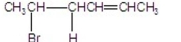
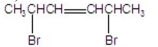
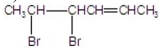
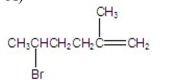
Which of the following is an allylic cation? I.
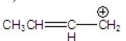
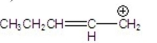
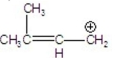
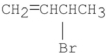
<strong>Which of the following is an allylic cation? I.    II.    III.    IV.    V.   </strong> A) I B) II C) III D) IV E) V <div style=padding-top: 35px>
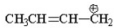
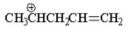
II.
<strong>Which of the following is an allylic cation? I.    II.    III.    IV.    V.   </strong> A) I B) II C) III D) IV E) V <div style=padding-top: 35px>

III.
<strong>Which of the following is an allylic cation? I.    II.    III.    IV.    V.   </strong> A) I B) II C) III D) IV E) V <div style=padding-top: 35px>

IV.
<strong>Which of the following is an allylic cation? I.    II.    III.    IV.    V.   </strong> A) I B) II C) III D) IV E) V <div style=padding-top: 35px>

V.
<strong>Which of the following is an allylic cation? I.    II.    III.    IV.    V.   </strong> A) I B) II C) III D) IV E) V <div style=padding-top: 35px>

A) I
B) II
C) III
D) IV
E) V
Question
Which of the following compounds has the shortest bond between its two middle carbons?

A)<strong>Which of the following compounds has the shortest bond between its two middle carbons? </strong> A)  B)  C)  D)  E)  <div style=padding-top: 35px>

B)<strong>Which of the following compounds has the shortest bond between its two middle carbons? </strong> A)  B)  C)  D)  E)  <div style=padding-top: 35px>
C)<strong>Which of the following compounds has the shortest bond between its two middle carbons? </strong> A)  B)  C)  D)  E)  <div style=padding-top: 35px>
D)<strong>Which of the following compounds has the shortest bond between its two middle carbons? </strong> A)  B)  C)  D)  E)  <div style=padding-top: 35px>
E)<strong>Which of the following compounds has the shortest bond between its two middle carbons? </strong> A)  B)  C)  D)  E)  <div style=padding-top: 35px>
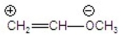
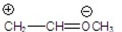
Question
Which of the following is the most stable?

A) CH2=CHOCH3\mathrm { CH } _ { 2 } = \mathrm { CH } - \mathrm { OCH } _ { 3 }
B) CH2CH=OCH3\mathrm { CH } _ { 2 } - \mathrm { CH } = \mathrm { OCH } _ { 3 }
C) <strong>Which of the following is the most stable? </strong> A) \mathrm { CH } _ { 2 } = \mathrm { CH } - \mathrm { OCH } _ { 3 }  B) \mathrm { CH } _ { 2 } - \mathrm { CH } = \mathrm { OCH } _ { 3 }  C)  D)  E)  <div style=padding-top: 35px>
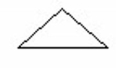
D) <strong>Which of the following is the most stable? </strong> A) \mathrm { CH } _ { 2 } = \mathrm { CH } - \mathrm { OCH } _ { 3 }  B) \mathrm { CH } _ { 2 } - \mathrm { CH } = \mathrm { OCH } _ { 3 }  C)  D)  E)  <div style=padding-top: 35px>
E) <strong>Which of the following is the most stable? </strong> A) \mathrm { CH } _ { 2 } = \mathrm { CH } - \mathrm { OCH } _ { 3 }  B) \mathrm { CH } _ { 2 } - \mathrm { CH } = \mathrm { OCH } _ { 3 }  C)  D)  E)  <div style=padding-top: 35px>
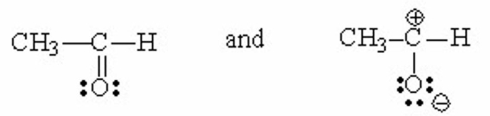
Question
Which of the following pairs are resonance contributors? I. CH2=CHCH3\mathrm { CH } _ { 2 } = \mathrm { CHCH } _ { 3 } and <strong>Which of the following pairs are resonance contributors? I.  \mathrm { CH } _ { 2 } = \mathrm { CHCH } _ { 3 }  and   II.    III.    IV.    V.  </strong> A) I B) II C) III D) IV E) V <div style=padding-top: 35px>

II.
 <strong>Which of the following pairs are resonance contributors? I.  \mathrm { CH } _ { 2 } = \mathrm { CHCH } _ { 3 }  and   II.    III.    IV.    V.  </strong> A) I B) II C) III D) IV E) V <div style=padding-top: 35px>

III.
 <strong>Which of the following pairs are resonance contributors? I.  \mathrm { CH } _ { 2 } = \mathrm { CHCH } _ { 3 }  and   II.    III.    IV.    V.  </strong> A) I B) II C) III D) IV E) V <div style=padding-top: 35px>

IV.
 <strong>Which of the following pairs are resonance contributors? I.  \mathrm { CH } _ { 2 } = \mathrm { CHCH } _ { 3 }  and   II.    III.    IV.    V.  </strong> A) I B) II C) III D) IV E) V <div style=padding-top: 35px>

V.
 <strong>Which of the following pairs are resonance contributors? I.  \mathrm { CH } _ { 2 } = \mathrm { CHCH } _ { 3 }  and   II.    III.    IV.    V.  </strong> A) I B) II C) III D) IV E) V <div style=padding-top: 35px>

A) I
B) II
C) III
D) IV
E) V
Question
Which of the following is the most stable carbocation? I. CH3C=CH2\mathrm{CH}_{3}{ }\mathrm{C}^{\oplus} =\mathrm{CH}_{2}

II.
 <strong>Which of the following is the most stable carbocation? I. \mathrm{CH}_{3}{ }\mathrm{C}^{\oplus} =\mathrm{CH}_{2}   II.    III.    IV.    V.    </strong> A) I B) II C) III D) IV E) V <div style=padding-top: 35px>

III.
 <strong>Which of the following is the most stable carbocation? I. \mathrm{CH}_{3}{ }\mathrm{C}^{\oplus} =\mathrm{CH}_{2}   II.    III.    IV.    V.    </strong> A) I B) II C) III D) IV E) V <div style=padding-top: 35px>

IV.
 <strong>Which of the following is the most stable carbocation? I. \mathrm{CH}_{3}{ }\mathrm{C}^{\oplus} =\mathrm{CH}_{2}   II.    III.    IV.    V.    </strong> A) I B) II C) III D) IV E) V <div style=padding-top: 35px>

V.
 <strong>Which of the following is the most stable carbocation? I. \mathrm{CH}_{3}{ }\mathrm{C}^{\oplus} =\mathrm{CH}_{2}   II.    III.    IV.    V.    </strong> A) I B) II C) III D) IV E) V <div style=padding-top: 35px>


A) I
B) II
C) III
D) IV
E) V
Question
Which of the following statements about resonance contributors and resonance hybrids is not correct?

A) The fewer nearly equivalent resonance contributors, the greater the resonance energy.
B) A resonance hybrid is more stable than the predicted stability of any of its resonance contributors.
C) The greater the number of relatively stable resonance contributors, the greater the resonance energy.
D) The greater the predicted stability of a resonance contributor, the more it contributes to the resonance hybrid.
E) none of the above
Question
Which of the following statements about benzene is correct?

A) All of the carbon atoms are sp3 hybridized.
B) It has no delocalized electrons.
C) The carbon-carbon bonds are longer than the carbon-carbon bond in ethane.
D) It is a planar molecule.
E) The carbon-hydrogen bonds are not the same length.
Question
Which of the following is the most stable diene? I.
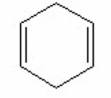
<strong>Which of the following is the most stable diene? I.    II.    III.    IV.    V.   </strong> A) I B) II C) III D) IV E) V <div style=padding-top: 35px>
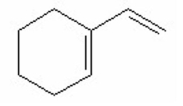
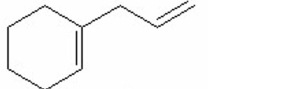
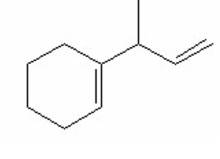
II.
<strong>Which of the following is the most stable diene? I.    II.    III.    IV.    V.   </strong> A) I B) II C) III D) IV E) V <div style=padding-top: 35px>

III.
<strong>Which of the following is the most stable diene? I.    II.    III.    IV.    V.   </strong> A) I B) II C) III D) IV E) V <div style=padding-top: 35px>

IV.
<strong>Which of the following is the most stable diene? I.    II.    III.    IV.    V.   </strong> A) I B) II C) III D) IV E) V <div style=padding-top: 35px>

V.
<strong>Which of the following is the most stable diene? I.    II.    III.    IV.    V.   </strong> A) I B) II C) III D) IV E) V <div style=padding-top: 35px>

A) I
B) II
C) III
D) IV
E) V
Question
Which of the following pairs are resonance contributors? I.
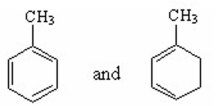
<strong>Which of the following pairs are resonance contributors? I.     II.    III.    IV.   V.   </strong> A) I B) II C) III D) IV E) V <div style=padding-top: 35px>
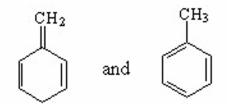
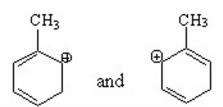
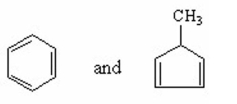
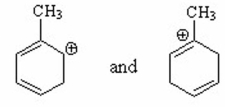

II.
<strong>Which of the following pairs are resonance contributors? I.     II.    III.    IV.   V.   </strong> A) I B) II C) III D) IV E) V <div style=padding-top: 35px>

III. <strong>Which of the following pairs are resonance contributors? I.     II.    III.    IV.   V.   </strong> A) I B) II C) III D) IV E) V <div style=padding-top: 35px>

IV.<strong>Which of the following pairs are resonance contributors? I.     II.    III.    IV.   V.   </strong> A) I B) II C) III D) IV E) V <div style=padding-top: 35px>

V. <strong>Which of the following pairs are resonance contributors? I.     II.    III.    IV.   V.   </strong> A) I B) II C) III D) IV E) V <div style=padding-top: 35px>

A) I
B) II
C) III
D) IV
E) V
Question
Which of the following is a resonance hybrid?

A) <strong>Which of the following is a resonance hybrid? </strong> A)   B)   C)   D)   E) A,B, and C. <div style=padding-top: 35px>

B) <strong>Which of the following is a resonance hybrid? </strong> A)   B)   C)   D)   E) A,B, and C. <div style=padding-top: 35px>
C) <strong>Which of the following is a resonance hybrid? </strong> A)   B)   C)   D)   E) A,B, and C. <div style=padding-top: 35px>
D) <strong>Which of the following is a resonance hybrid? </strong> A)   B)   C)   D)   E) A,B, and C. <div style=padding-top: 35px>
E) A,B, and C.
Question
Which of the following is not a resonance contributor of the species shown below? <strong>Which of the following is not a resonance contributor of the species shown below?    I.    II.    III.    IV.   </strong> A) I B) II C) III D) IV <div style=padding-top: 35px>
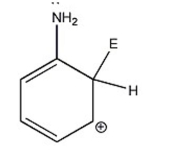
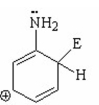
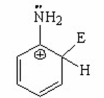
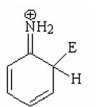
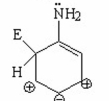
I.
<strong>Which of the following is not a resonance contributor of the species shown below?    I.    II.    III.    IV.   </strong> A) I B) II C) III D) IV <div style=padding-top: 35px>

II.
<strong>Which of the following is not a resonance contributor of the species shown below?    I.    II.    III.    IV.   </strong> A) I B) II C) III D) IV <div style=padding-top: 35px>

III.
<strong>Which of the following is not a resonance contributor of the species shown below?    I.    II.    III.    IV.   </strong> A) I B) II C) III D) IV <div style=padding-top: 35px>

IV.
<strong>Which of the following is not a resonance contributor of the species shown below?    I.    II.    III.    IV.   </strong> A) I B) II C) III D) IV <div style=padding-top: 35px>

A) I
B) II
C) III
D) IV
Question
Which of the following compounds contains the longest carbon-carbon single bond?

A) propene
B) 1,3-butadiyne
C) 1,3-butadiene
D) propyne
E) ethane
Question
Due to electron delocalization, one would predict that the carbon-oxygen bond in CH3CONH2.

A) is nonpolar
B) has more double bond character than the carbon-oxygen bond of (CH3)2CO
C) is longer than the carbon-oxygen bond of (CH3)2O
D) is longer than the carbon-oxygen bond of (CH3)2CO
E) is formed by overlapping sp3 orbitals
Question
The delocalized cloud of π electrons in benzene is formed by the overlap of 6 ________ orbitals.

A) s
B) p
C) sp
D) sp2
E) sp3
Question
What are the major products of the following reaction?
CH2=CHCH=CH2HBr ? \mathrm { CH } _ { 2 } = \mathrm { CH } - \mathrm { CH } = \mathrm { CH } _ { 2 } \stackrel { \mathrm { HBr } } { \longrightarrow } \text { ? }

A) <strong>What are the major products of the following reaction?  \mathrm { CH } _ { 2 } = \mathrm { CH } - \mathrm { CH } = \mathrm { CH } _ { 2 } \stackrel { \mathrm { HBr } } { \longrightarrow } \text { ? }  </strong> A)  B)  C)  D) A and B E) A and C <div style=padding-top: 35px>
B) <strong>What are the major products of the following reaction?  \mathrm { CH } _ { 2 } = \mathrm { CH } - \mathrm { CH } = \mathrm { CH } _ { 2 } \stackrel { \mathrm { HBr } } { \longrightarrow } \text { ? }  </strong> A)  B)  C)  D) A and B E) A and C <div style=padding-top: 35px>
C) <strong>What are the major products of the following reaction?  \mathrm { CH } _ { 2 } = \mathrm { CH } - \mathrm { CH } = \mathrm { CH } _ { 2 } \stackrel { \mathrm { HBr } } { \longrightarrow } \text { ? }  </strong> A)  B)  C)  D) A and B E) A and C <div style=padding-top: 35px>
D) A and B
E) A and C
Question
What are the major products of the following reaction?

CH3CH=CHCH=CHCH3HBr\mathrm { CH } _ { 3 } \mathrm { CH } = \mathrm { CHCH } = \mathrm { CHCH } _ { 3 } \stackrel { \mathrm { HBr } } { \longrightarrow }

A) <strong>What are the major products of the following reaction?   \mathrm { CH } _ { 3 } \mathrm { CH } = \mathrm { CHCH } = \mathrm { CHCH } _ { 3 } \stackrel { \mathrm { HBr } } { \longrightarrow }   </strong> A)  B)  C)  D)  E)  <div style=padding-top: 35px>
B) <strong>What are the major products of the following reaction?   \mathrm { CH } _ { 3 } \mathrm { CH } = \mathrm { CHCH } = \mathrm { CHCH } _ { 3 } \stackrel { \mathrm { HBr } } { \longrightarrow }   </strong> A)  B)  C)  D)  E)  <div style=padding-top: 35px>
C) <strong>What are the major products of the following reaction?   \mathrm { CH } _ { 3 } \mathrm { CH } = \mathrm { CHCH } = \mathrm { CHCH } _ { 3 } \stackrel { \mathrm { HBr } } { \longrightarrow }   </strong> A)  B)  C)  D)  E)  <div style=padding-top: 35px>
D) <strong>What are the major products of the following reaction?   \mathrm { CH } _ { 3 } \mathrm { CH } = \mathrm { CHCH } = \mathrm { CHCH } _ { 3 } \stackrel { \mathrm { HBr } } { \longrightarrow }   </strong> A)  B)  C)  D)  E)  <div style=padding-top: 35px>
E) <strong>What are the major products of the following reaction?   \mathrm { CH } _ { 3 } \mathrm { CH } = \mathrm { CHCH } = \mathrm { CHCH } _ { 3 } \stackrel { \mathrm { HBr } } { \longrightarrow }   </strong> A)  B)  C)  D)  E)  <div style=padding-top: 35px>
Question
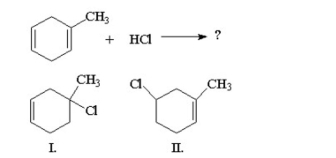
What are the major products of the following reaction? <strong>What are the major products of the following reaction?  </strong> A) I B) II C) I and II with more II and I D) neither I nor II E) equal amounts of I and II <div style=padding-top: 35px>

A) I
B) II
C) I and II with more II and I
D) neither I nor II
E) equal amounts of I and II
Question
What is the major product of the following reaction?
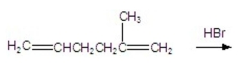
<strong>What is the major product of the following reaction?   </strong> A)   B)   C)   D)   E)  <div style=padding-top: 35px>

A)<strong>What is the major product of the following reaction?   </strong> A)   B)   C)   D)   E)  <div style=padding-top: 35px>
B)<strong>What is the major product of the following reaction?   </strong> A)   B)   C)   D)   E)  <div style=padding-top: 35px>
C)<strong>What is the major product of the following reaction?   </strong> A)   B)   C)   D)   E)  <div style=padding-top: 35px>

D)<strong>What is the major product of the following reaction?   </strong> A)   B)   C)   D)   E)  <div style=padding-top: 35px>

E)<strong>What is the major product of the following reaction?   </strong> A)   B)   C)   D)   E)  <div style=padding-top: 35px>
Question
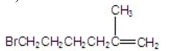
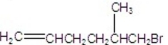
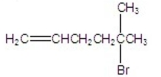
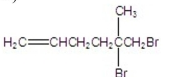
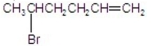
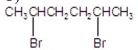
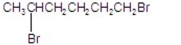
What is the major product of the following reaction?
 <strong>What is the major product of the following reaction?   </strong> A)  B) \mathrm { BrCH } _ { 2 } \mathrm { CH } _ { 2 } \mathrm { CH } _ { 2 } \mathrm { CH } _ { 2 } \mathrm { CH } = \mathrm { CH } _ { 2 }  C)  D) \mathrm { BrCH } _ { 2 } \mathrm { CH } _ { 2 } \mathrm { CH } _ { 2 } \mathrm { CH } _ { 2 } \mathrm { CH } _ { 2 } \mathrm { CH } _ { 2 } \mathrm { Br }  E)  <div style=padding-top: 35px>

A) <strong>What is the major product of the following reaction?   </strong> A)  B) \mathrm { BrCH } _ { 2 } \mathrm { CH } _ { 2 } \mathrm { CH } _ { 2 } \mathrm { CH } _ { 2 } \mathrm { CH } = \mathrm { CH } _ { 2 }  C)  D) \mathrm { BrCH } _ { 2 } \mathrm { CH } _ { 2 } \mathrm { CH } _ { 2 } \mathrm { CH } _ { 2 } \mathrm { CH } _ { 2 } \mathrm { CH } _ { 2 } \mathrm { Br }  E)  <div style=padding-top: 35px>
B) BrCH2CH2CH2CH2CH=CH2\mathrm { BrCH } _ { 2 } \mathrm { CH } _ { 2 } \mathrm { CH } _ { 2 } \mathrm { CH } _ { 2 } \mathrm { CH } = \mathrm { CH } _ { 2 }
C) <strong>What is the major product of the following reaction?   </strong> A)  B) \mathrm { BrCH } _ { 2 } \mathrm { CH } _ { 2 } \mathrm { CH } _ { 2 } \mathrm { CH } _ { 2 } \mathrm { CH } = \mathrm { CH } _ { 2 }  C)  D) \mathrm { BrCH } _ { 2 } \mathrm { CH } _ { 2 } \mathrm { CH } _ { 2 } \mathrm { CH } _ { 2 } \mathrm { CH } _ { 2 } \mathrm { CH } _ { 2 } \mathrm { Br }  E)  <div style=padding-top: 35px>
D) BrCH2CH2CH2CH2CH2CH2Br\mathrm { BrCH } _ { 2 } \mathrm { CH } _ { 2 } \mathrm { CH } _ { 2 } \mathrm { CH } _ { 2 } \mathrm { CH } _ { 2 } \mathrm { CH } _ { 2 } \mathrm { Br }
E) <strong>What is the major product of the following reaction?   </strong> A)  B) \mathrm { BrCH } _ { 2 } \mathrm { CH } _ { 2 } \mathrm { CH } _ { 2 } \mathrm { CH } _ { 2 } \mathrm { CH } = \mathrm { CH } _ { 2 }  C)  D) \mathrm { BrCH } _ { 2 } \mathrm { CH } _ { 2 } \mathrm { CH } _ { 2 } \mathrm { CH } _ { 2 } \mathrm { CH } _ { 2 } \mathrm { CH } _ { 2 } \mathrm { Br }  E)  <div style=padding-top: 35px>
Question
What is the major product of the following reaction?
<strong>What is the major product of the following reaction?   </strong> A)  B)  C)  D)  E) no reaction <div style=padding-top: 35px>

A)<strong>What is the major product of the following reaction?   </strong> A)  B)  C)  D)  E) no reaction <div style=padding-top: 35px>
B)<strong>What is the major product of the following reaction?   </strong> A)  B)  C)  D)  E) no reaction <div style=padding-top: 35px>
C)<strong>What is the major product of the following reaction?   </strong> A)  B)  C)  D)  E) no reaction <div style=padding-top: 35px>
D)<strong>What is the major product of the following reaction?   </strong> A)  B)  C)  D)  E) no reaction <div style=padding-top: 35px>
E) no reaction
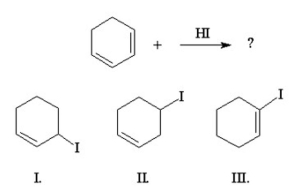
Question
What is the major product of the following reaction? <strong>What is the major product of the following reaction?  </strong> A) I B) I and II C) I and III D) II E) III <div style=padding-top: 35px>

A) I
B) I and II
C) I and III
D) II
E) III
Question
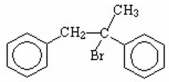
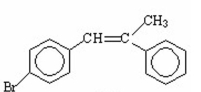
Draw the major product of the following reaction. <strong>Draw the major product of the following reaction.    I.  II.  II.  </strong> A) I B) I and III C) II D) II and III E) III <div style=padding-top: 35px>
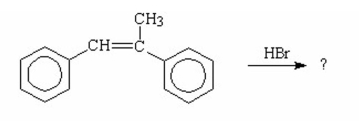
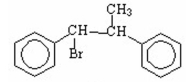
I.<strong>Draw the major product of the following reaction.    I.  II.  II.  </strong> A) I B) I and III C) II D) II and III E) III <div style=padding-top: 35px>
II.<strong>Draw the major product of the following reaction.    I.  II.  II.  </strong> A) I B) I and III C) II D) II and III E) III <div style=padding-top: 35px>

A) I
B) I and III
C) II
D) II and III
E) III
Question
Which of the following is the strongest acid? I.
<strong>Which of the following is the strongest acid? I.    II.    III.    IV.    V.   </strong> A) I B) II C) III D) IV E) V <div style=padding-top: 35px>
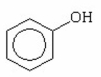
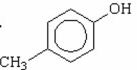
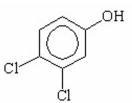
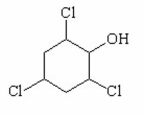
II.
<strong>Which of the following is the strongest acid? I.    II.    III.    IV.    V.   </strong> A) I B) II C) III D) IV E) V <div style=padding-top: 35px>

III.
<strong>Which of the following is the strongest acid? I.    II.    III.    IV.    V.   </strong> A) I B) II C) III D) IV E) V <div style=padding-top: 35px>

IV.
<strong>Which of the following is the strongest acid? I.    II.    III.    IV.    V.   </strong> A) I B) II C) III D) IV E) V <div style=padding-top: 35px>

V.
<strong>Which of the following is the strongest acid? I.    II.    III.    IV.    V.   </strong> A) I B) II C) III D) IV E) V <div style=padding-top: 35px>

A) I
B) II
C) III
D) IV
E) V
Question
Which is the most stable carbocation?

A)<strong>Which is the most stable carbocation? </strong> A)  B)  C)  D)  E)  <div style=padding-top: 35px>
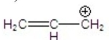
B)<strong>Which is the most stable carbocation? </strong> A)  B)  C)  D)  E)  <div style=padding-top: 35px>
C)<strong>Which is the most stable carbocation? </strong> A)  B)  C)  D)  E)  <div style=padding-top: 35px>
D)<strong>Which is the most stable carbocation? </strong> A)  B)  C)  D)  E)  <div style=padding-top: 35px>
E)<strong>Which is the most stable carbocation? </strong> A)  B)  C)  D)  E)  <div style=padding-top: 35px>
Question
What are the major products of the following reaction? CH2=CHCH=CH2+HBr ? \mathrm { CH } _ { 2 } = \mathrm { CHCH } = \mathrm { CH } _ { 2 } + \mathrm { HBr } \longrightarrow \text { ? }
I.
 <strong>What are the major products of the following reaction?  \mathrm { CH } _ { 2 } = \mathrm { CHCH } = \mathrm { CH } _ { 2 } + \mathrm { HBr } \longrightarrow \text { ? }  I.    II.    III.   </strong> A) I only B) II only C) III only D) I and II E) I and III <div style=padding-top: 35px>

II.
 <strong>What are the major products of the following reaction?  \mathrm { CH } _ { 2 } = \mathrm { CHCH } = \mathrm { CH } _ { 2 } + \mathrm { HBr } \longrightarrow \text { ? }  I.    II.    III.   </strong> A) I only B) II only C) III only D) I and II E) I and III <div style=padding-top: 35px>

III.
 <strong>What are the major products of the following reaction?  \mathrm { CH } _ { 2 } = \mathrm { CHCH } = \mathrm { CH } _ { 2 } + \mathrm { HBr } \longrightarrow \text { ? }  I.    II.    III.   </strong> A) I only B) II only C) III only D) I and II E) I and III <div style=padding-top: 35px>

A) I only
B) II only
C) III only
D) I and II
E) I and III
Question
What compound results from the 1,4-addition of one equivalent of HBr to 1,3-butadiene?

A) 1-bromo-1-butene
B) 2-bromo-2-butene
C) 4-bromo-1-butene
D) 3-bromo-1-butene
E) 1-bromo-2-butene
Question
What is the major product of the following reaction? <strong>What is the major product of the following reaction?    I.   II.   III.   IV.   V.  </strong> A) I B) II C) III D) IV E) V <div style=padding-top: 35px>
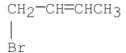
I.
<strong>What is the major product of the following reaction?    I.   II.   III.   IV.   V.  </strong> A) I B) II C) III D) IV E) V <div style=padding-top: 35px>
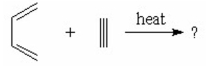
II.
<strong>What is the major product of the following reaction?    I.   II.   III.   IV.   V.  </strong> A) I B) II C) III D) IV E) V <div style=padding-top: 35px>
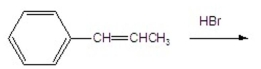
III.
<strong>What is the major product of the following reaction?    I.   II.   III.   IV.   V.  </strong> A) I B) II C) III D) IV E) V <div style=padding-top: 35px>
IV.
<strong>What is the major product of the following reaction?    I.   II.   III.   IV.   V.  </strong> A) I B) II C) III D) IV E) V <div style=padding-top: 35px>
V.
<strong>What is the major product of the following reaction?    I.   II.   III.   IV.   V.  </strong> A) I B) II C) III D) IV E) V <div style=padding-top: 35px>

A) I
B) II
C) III
D) IV
E) V
Question
What is the major product of the following reaction?
<strong>What is the major product of the following reaction?   </strong> A)  B)  C)  D)  E)  <div style=padding-top: 35px>

A)<strong>What is the major product of the following reaction?   </strong> A)  B)  C)  D)  E)  <div style=padding-top: 35px>
B)<strong>What is the major product of the following reaction?   </strong> A)  B)  C)  D)  E)  <div style=padding-top: 35px>
C)<strong>What is the major product of the following reaction?   </strong> A)  B)  C)  D)  E)  <div style=padding-top: 35px>
D)<strong>What is the major product of the following reaction?   </strong> A)  B)  C)  D)  E)  <div style=padding-top: 35px>
E)<strong>What is the major product of the following reaction?   </strong> A)  B)  C)  D)  E)  <div style=padding-top: 35px>
Question
Which of the following ammonium ions is the strongest acid?

A)C6H5NH3+
B)C6H5CH2NH3+
C) (CH3)2CHNH3+
D)CH3CH2NH3+
E)CH3NH3+
Question
When 1,3-butadiene reacts with CH2 = CHCN , which of the following terms describes the product?

A) a mixture of two diastereomers
B) a single compound
C) a racemic mixture
D) optically active
E) a mixture of bicyclic compounds
Question
Which of the following is the weakest base?

A) phenolate ion (C6H5O-)
B) ethoxide ion (CH3CH2O-)
C) hydroxide ion (HO-)
D) acetate ion (CH3CO2-)
E) methoxide ion (CH3O-)
Question
Which of the following is a conjugated diene? I.
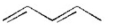
<strong>Which of the following is a conjugated diene? I.    II.    III.    IV.    V.   </strong> A) I B) II C) III D) IV E) V <div style=padding-top: 35px>
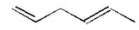
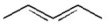
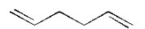
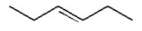
II.
<strong>Which of the following is a conjugated diene? I.    II.    III.    IV.    V.   </strong> A) I B) II C) III D) IV E) V <div style=padding-top: 35px>

III.
<strong>Which of the following is a conjugated diene? I.    II.    III.    IV.    V.   </strong> A) I B) II C) III D) IV E) V <div style=padding-top: 35px>

IV.
<strong>Which of the following is a conjugated diene? I.    II.    III.    IV.    V.   </strong> A) I B) II C) III D) IV E) V <div style=padding-top: 35px>

V.
<strong>Which of the following is a conjugated diene? I.    II.    III.    IV.    V.   </strong> A) I B) II C) III D) IV E) V <div style=padding-top: 35px>

A) I
B) II
C) III
D) IV
E) V
Question
Which of the following is the strongest acid?

A) CH3CH2OH\mathrm { CH } _ { 3 } \mathrm { CH } _ { 2 } \mathrm { OH }
B) CH3OCH3\mathrm { CH } _ { 3 } \mathrm { OCH } _ { 3 }
C) <strong>Which of the following is the strongest acid? </strong> A) \mathrm { CH } _ { 3 } \mathrm { CH } _ { 2 } \mathrm { OH }  B) \mathrm { CH } _ { 3 } \mathrm { OCH } _ { 3 }  C)  D)  E)  <div style=padding-top: 35px>
D) <strong>Which of the following is the strongest acid? </strong> A) \mathrm { CH } _ { 3 } \mathrm { CH } _ { 2 } \mathrm { OH }  B) \mathrm { CH } _ { 3 } \mathrm { OCH } _ { 3 }  C)  D)  E)  <div style=padding-top: 35px>
E) <strong>Which of the following is the strongest acid? </strong> A) \mathrm { CH } _ { 3 } \mathrm { CH } _ { 2 } \mathrm { OH }  B) \mathrm { CH } _ { 3 } \mathrm { OCH } _ { 3 }  C)  D)  E)  <div style=padding-top: 35px>
Question
Which of the following is an isolated diene? I.
<strong>Which of the following is an isolated diene? I.    II.    III.    IV.    V.   </strong> A) I B) II C) III D) IV E) V <div style=padding-top: 35px>

II.
<strong>Which of the following is an isolated diene? I.    II.    III.    IV.    V.   </strong> A) I B) II C) III D) IV E) V <div style=padding-top: 35px>

III.
11ee043e_be72_28fb_854b_9d8e1369c682_TB1829_11

IV.
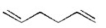
<strong>Which of the following is an isolated diene? I.    II.    III.    IV.    V.   </strong> A) I B) II C) III D) IV E) V <div style=padding-top: 35px>

V.
<strong>Which of the following is an isolated diene? I.    II.    III.    IV.    V.   </strong> A) I B) II C) III D) IV E) V <div style=padding-top: 35px>

A) I
B) II
C) III
D) IV
E) V
Question
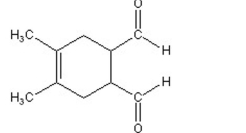
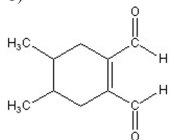
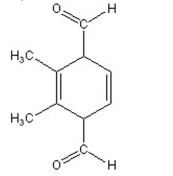
Do the following represent different compounds or resonance contributors? Do the following represent different compounds or resonance contributors?  <div style=padding-top: 35px>
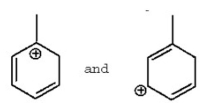
Question
Aromatic molecules contain ________ π electrons.

A) no
B) an odd number of pairs of
C) an even number of pairs of
D) an odd number of
E) an even number of
Question
Which of the oxygens in the acetate ion (CH3CO2-) has a greater negative charge? Explain
your answer.
Question
Draw the resonance contributors for the following species: Draw the resonance contributors for the following species:  <div style=padding-top: 35px>
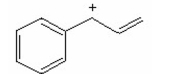
Question
Which of the following is aromatic? I.
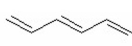
<strong>Which of the following is aromatic? I.   II.   III.   IV.   V.   </strong> A) I B) II C) III D) IV E) V <div style=padding-top: 35px>
II.
<strong>Which of the following is aromatic? I.   II.   III.   IV.   V.   </strong> A) I B) II C) III D) IV E) V <div style=padding-top: 35px>
III.
<strong>Which of the following is aromatic? I.   II.   III.   IV.   V.   </strong> A) I B) II C) III D) IV E) V <div style=padding-top: 35px>
IV.
<strong>Which of the following is aromatic? I.   II.   III.   IV.   V.   </strong> A) I B) II C) III D) IV E) V <div style=padding-top: 35px>
V.
<strong>Which of the following is aromatic? I.   II.   III.   IV.   V.   </strong> A) I B) II C) III D) IV E) V <div style=padding-top: 35px>

A) I
B) II
C) III
D) IV
E) V
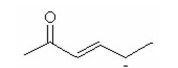
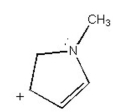
Question
Draw the other two resonance contributors for the following species: Draw the other two resonance contributors for the following species:  <div style=padding-top: 35px>
Question
Draw the other two resonance contributors for the following species: Draw the other two resonance contributors for the following species:  <div style=padding-top: 35px>
Question
What is the hybridization and bond angle of each carbon in benzene?
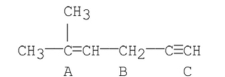
Question
What is the hybridization of the carbons labeled A, B, and C? What is the hybridization of the carbons labeled A, B, and C?  <div style=padding-top: 35px>
Question
Draw the other two resonance contributors for the following species:
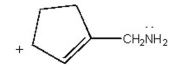
Draw the other two resonance contributors for the following species:   <div style=padding-top: 35px>
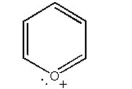
Question
Draw the resonance contributors for the following species: Draw the resonance contributors for the following species:  <div style=padding-top: 35px>
Question
Which of the following is an aromatic hydrocarbon? I.
<strong>Which of the following is an aromatic hydrocarbon? I.   II.   III.   IV.   V.   </strong> A) I B) II C) III D) IV E) V <div style=padding-top: 35px>
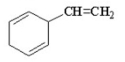
II.
<strong>Which of the following is an aromatic hydrocarbon? I.   II.   III.   IV.   V.   </strong> A) I B) II C) III D) IV E) V <div style=padding-top: 35px>
III.
<strong>Which of the following is an aromatic hydrocarbon? I.   II.   III.   IV.   V.   </strong> A) I B) II C) III D) IV E) V <div style=padding-top: 35px>
IV.
<strong>Which of the following is an aromatic hydrocarbon? I.   II.   III.   IV.   V.   </strong> A) I B) II C) III D) IV E) V <div style=padding-top: 35px>
V.
<strong>Which of the following is an aromatic hydrocarbon? I.   II.   III.   IV.   V.   </strong> A) I B) II C) III D) IV E) V <div style=padding-top: 35px>

A) I
B) II
C) III
D) IV
E) V
Question
Draw the other two resonance contributors for the following species: Draw the other two resonance contributors for the following species:  <div style=padding-top: 35px>
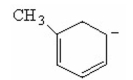
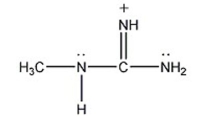
Question
Mark the most electron-rich carbon in the compound below with an asterisk. CH3CH=CHNHCH3
Question
Draw the other two resonance contributors for the following species: Draw the other two resonance contributors for the following species:  <div style=padding-top: 35px>

Question
Which of the following is aromatic?

A) the cyclopentadienyl cation
B) 1,3-cyclohexadiene
C) the cyclobutenyl anion
D) 1,3,5-hexatriene
E) the cycloheptatrienyl cation
Question
Draw the other two resonance contributors for the following species: Draw the other two resonance contributors for the following species:  <div style=padding-top: 35px>
Question
Which of the following is aromatic? I.
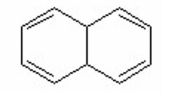
<strong>Which of the following is aromatic? I.   II.   III.   IV.   V.   </strong> A) I B) II C) III D) IV E) V <div style=padding-top: 35px>
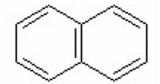
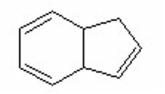
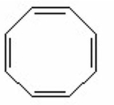
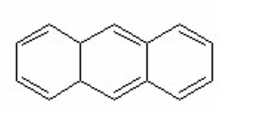
II.
<strong>Which of the following is aromatic? I.   II.   III.   IV.   V.   </strong> A) I B) II C) III D) IV E) V <div style=padding-top: 35px>
III.
<strong>Which of the following is aromatic? I.   II.   III.   IV.   V.   </strong> A) I B) II C) III D) IV E) V <div style=padding-top: 35px>
IV.
<strong>Which of the following is aromatic? I.   II.   III.   IV.   V.   </strong> A) I B) II C) III D) IV E) V <div style=padding-top: 35px>
V.
<strong>Which of the following is aromatic? I.   II.   III.   IV.   V.   </strong> A) I B) II C) III D) IV E) V <div style=padding-top: 35px>

A) I
B) II
C) III
D) IV
E) V
Question
Which of the following is aromatic? <strong>Which of the following is aromatic?  </strong> A) I and IV B) I, III, and IV C) III and IV D) II <div style=padding-top: 35px>
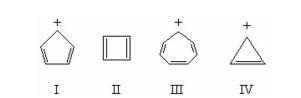
A) I and IV
B) I, III, and IV
C) III and IV
D) II
Question
Draw the resonance contributor for the following carbocation: Draw the resonance contributor for the following carbocation:  <div style=padding-top: 35px>

Question
What is the major product of the following reaction? What is the major product of the following reaction?  <div style=padding-top: 35px>

Question
Which of the following is the strongest acid? Which of the following is the strongest acid?  <div style=padding-top: 35px>
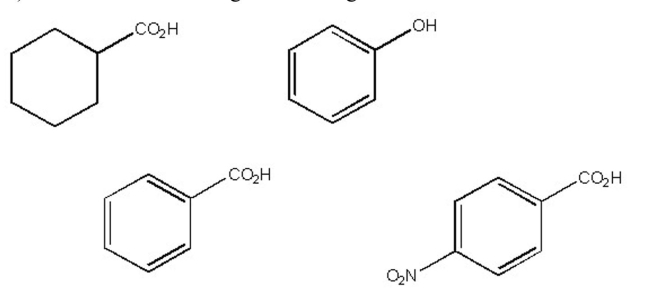
Question
Draw the major product of the following reaction: Draw the major product of the following reaction:  <div style=padding-top: 35px>
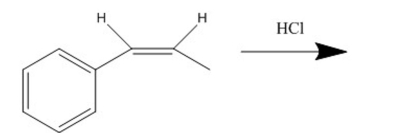
Question
Why is the following compoound not aromatic? Why is the following compoound not aromatic?  <div style=padding-top: 35px>
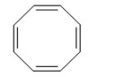
Question
Draw the major product of the following reaction: Draw the major product of the following reaction:  <div style=padding-top: 35px>
Question
Draw the arrows to go from one resonance contributor to another. Draw the arrows to go from one resonance contributor to another.  <div style=padding-top: 35px>

Question
Draw the major product of the following reaction: Draw the major product of the following reaction:  <div style=padding-top: 35px>
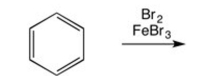
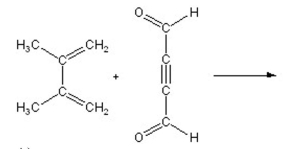
Question
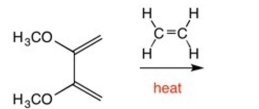
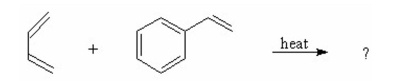
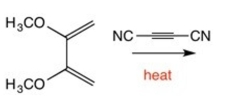
What is the product of the following Diels-Alder reaction? What is the product of the following Diels-Alder reaction?  <div style=padding-top: 35px>
Question
List the criteria that compounds must meet in order to be aromatic.
Question
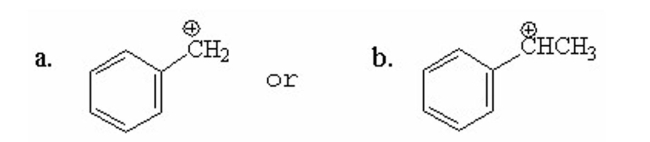
Which of the following carbocations is more stable? Explain. Which of the following carbocations is more stable? Explain.  <div style=padding-top: 35px>
Question
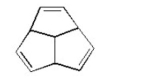
Is the following molecule aromatic? Explain. Is the following molecule aromatic? Explain.  <div style=padding-top: 35px>
Question
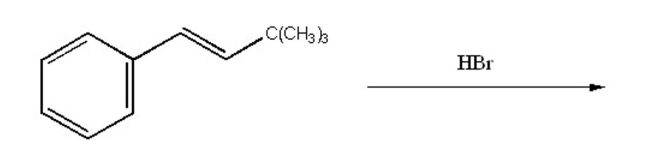
What is the major product of the following reaction? What is the major product of the following reaction?  <div style=padding-top: 35px>
Question
Draw the major product of the following reaction: Draw the major product of the following reaction:  <div style=padding-top: 35px>
Question
Why is benzene's heat of hydrogenation 36 kcal/mol less than three times that of cyclohexene?
Question
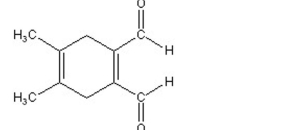
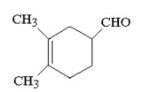
What diene and dienophile will react to form the product shown below? What diene and dienophile will react to form the product shown below?  <div style=padding-top: 35px>
Question
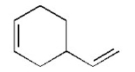
How could the following compound be synthesized using a Diels-Alder reaction? How could the following compound be synthesized using a Diels-Alder reaction?  <div style=padding-top: 35px>
Question
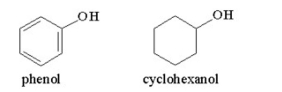
Why is phenol a stronger acid than cyclohexanol? Why is phenol a stronger acid than cyclohexanol?  <div style=padding-top: 35px>
Question
Draw the product that is formed from 1,4-addition of HBr to the following diene: Draw the product that is formed from 1,4-addition of HBr to the following diene:  <div style=padding-top: 35px>
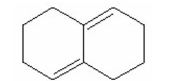
Question
Draw the resonance contributors for the following species: Draw the resonance contributors for the following species:  <div style=padding-top: 35px>
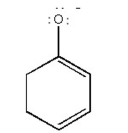
Question
Draw the product that is formed from 1,2-addition of HBr to the following diene: Draw the product that is formed from 1,2-addition of HBr to the following diene:  <div style=padding-top: 35px>
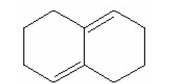
Unlock Deck
Sign up to unlock the cards in this deck!
Unlock Deck
Unlock Deck
1/85
auto play flashcards
Play
simple tutorial
Full screen (f)
exit full mode
Deck 7: Delocalized Electrons Aromaticity and the Reactions of Benzene
1
Which of the following is a benzylic cation? I.
<strong>Which of the following is a benzylic cation? I.    II.    III.    IV.    V.    </strong> A) I B) II C) III D) IV E) V

II.
<strong>Which of the following is a benzylic cation? I.    II.    III.    IV.    V.    </strong> A) I B) II C) III D) IV E) V

III.
<strong>Which of the following is a benzylic cation? I.    II.    III.    IV.    V.    </strong> A) I B) II C) III D) IV E) V

IV.
<strong>Which of the following is a benzylic cation? I.    II.    III.    IV.    V.    </strong> A) I B) II C) III D) IV E) V

V.
<strong>Which of the following is a benzylic cation? I.    II.    III.    IV.    V.    </strong> A) I B) II C) III D) IV E) V


A) I
B) II
C) III
D) IV
E) V
IV
2
Which of the following does not have delocalized electrons?

A) allyl cation
B) benzyl anion
C) CO32-
D) benzyl cation
E) cyclohexyl radical
cyclohexyl radical
3
What type of diene is represented by 1,5-octadiene?

A) conjugated diene
B) isolated diene
C) alkynyl diene
D) none of the above
isolated diene
4
Which has correctly drawn arrows?

A)<strong>Which has correctly drawn arrows? </strong> A)  B)  C)  D)  E)
B)<strong>Which has correctly drawn arrows? </strong> A)  B)  C)  D)  E)
C)<strong>Which has correctly drawn arrows? </strong> A)  B)  C)  D)  E)
D)<strong>Which has correctly drawn arrows? </strong> A)  B)  C)  D)  E)
E)<strong>Which has correctly drawn arrows? </strong> A)  B)  C)  D)  E)
Unlock Deck
Unlock for access to all 85 flashcards in this deck.
Unlock Deck
k this deck
5
What type of diene is represented by 2,4-hexadiene?

A) conjugated diene
B) isolated diene
C) alkynyl diene
D) none of the above
Unlock Deck
Unlock for access to all 85 flashcards in this deck.
Unlock Deck
k this deck
6
Which of the following statements is not correct about benzene?

A) All of the carbon atoms are sp hybridized.
B) It has delocalized electrons.
C) The carbon-carbon bonds are all the same length.
D) The carbon-hydrogen bonds are all the same length.
E) All twelve atoms lie in the same plane.
Unlock Deck
Unlock for access to all 85 flashcards in this deck.
Unlock Deck
k this deck
7
Which of the following is an allylic cation? I.
<strong>Which of the following is an allylic cation? I.    II.    III.    IV.    V.   </strong> A) I B) II C) III D) IV E) V

II.
<strong>Which of the following is an allylic cation? I.    II.    III.    IV.    V.   </strong> A) I B) II C) III D) IV E) V

III.
<strong>Which of the following is an allylic cation? I.    II.    III.    IV.    V.   </strong> A) I B) II C) III D) IV E) V

IV.
<strong>Which of the following is an allylic cation? I.    II.    III.    IV.    V.   </strong> A) I B) II C) III D) IV E) V

V.
<strong>Which of the following is an allylic cation? I.    II.    III.    IV.    V.   </strong> A) I B) II C) III D) IV E) V

A) I
B) II
C) III
D) IV
E) V
Unlock Deck
Unlock for access to all 85 flashcards in this deck.

Unlock Deck
k this deck
8
Which of the following compounds has the shortest bond between its two middle carbons?

A)<strong>Which of the following compounds has the shortest bond between its two middle carbons? </strong> A)  B)  C)  D)  E)
B)<strong>Which of the following compounds has the shortest bond between its two middle carbons? </strong> A)  B)  C)  D)  E)
C)<strong>Which of the following compounds has the shortest bond between its two middle carbons? </strong> A)  B)  C)  D)  E)
D)<strong>Which of the following compounds has the shortest bond between its two middle carbons? </strong> A)  B)  C)  D)  E)
E)<strong>Which of the following compounds has the shortest bond between its two middle carbons? </strong> A)  B)  C)  D)  E)
Unlock Deck
Unlock for access to all 85 flashcards in this deck.

Unlock Deck
k this deck
9
Which of the following is the most stable?

A) CH2=CHOCH3\mathrm { CH } _ { 2 } = \mathrm { CH } - \mathrm { OCH } _ { 3 }
B) CH2CH=OCH3\mathrm { CH } _ { 2 } - \mathrm { CH } = \mathrm { OCH } _ { 3 }
C) <strong>Which of the following is the most stable? </strong> A) \mathrm { CH } _ { 2 } = \mathrm { CH } - \mathrm { OCH } _ { 3 }  B) \mathrm { CH } _ { 2 } - \mathrm { CH } = \mathrm { OCH } _ { 3 }  C)  D)  E)
D) <strong>Which of the following is the most stable? </strong> A) \mathrm { CH } _ { 2 } = \mathrm { CH } - \mathrm { OCH } _ { 3 }  B) \mathrm { CH } _ { 2 } - \mathrm { CH } = \mathrm { OCH } _ { 3 }  C)  D)  E)
E) <strong>Which of the following is the most stable? </strong> A) \mathrm { CH } _ { 2 } = \mathrm { CH } - \mathrm { OCH } _ { 3 }  B) \mathrm { CH } _ { 2 } - \mathrm { CH } = \mathrm { OCH } _ { 3 }  C)  D)  E)
Unlock Deck
Unlock for access to all 85 flashcards in this deck.
Unlock Deck
k this deck
10
Which of the following pairs are resonance contributors? I. CH2=CHCH3\mathrm { CH } _ { 2 } = \mathrm { CHCH } _ { 3 } and <strong>Which of the following pairs are resonance contributors? I.  \mathrm { CH } _ { 2 } = \mathrm { CHCH } _ { 3 }  and   II.    III.    IV.    V.  </strong> A) I B) II C) III D) IV E) V

II.
 <strong>Which of the following pairs are resonance contributors? I.  \mathrm { CH } _ { 2 } = \mathrm { CHCH } _ { 3 }  and   II.    III.    IV.    V.  </strong> A) I B) II C) III D) IV E) V

III.
 <strong>Which of the following pairs are resonance contributors? I.  \mathrm { CH } _ { 2 } = \mathrm { CHCH } _ { 3 }  and   II.    III.    IV.    V.  </strong> A) I B) II C) III D) IV E) V

IV.
 <strong>Which of the following pairs are resonance contributors? I.  \mathrm { CH } _ { 2 } = \mathrm { CHCH } _ { 3 }  and   II.    III.    IV.    V.  </strong> A) I B) II C) III D) IV E) V

V.
 <strong>Which of the following pairs are resonance contributors? I.  \mathrm { CH } _ { 2 } = \mathrm { CHCH } _ { 3 }  and   II.    III.    IV.    V.  </strong> A) I B) II C) III D) IV E) V

A) I
B) II
C) III
D) IV
E) V
Unlock Deck
Unlock for access to all 85 flashcards in this deck.
Unlock Deck
k this deck
11
Which of the following is the most stable carbocation? I. CH3C=CH2\mathrm{CH}_{3}{ }\mathrm{C}^{\oplus} =\mathrm{CH}_{2}

II.
 <strong>Which of the following is the most stable carbocation? I. \mathrm{CH}_{3}{ }\mathrm{C}^{\oplus} =\mathrm{CH}_{2}   II.    III.    IV.    V.    </strong> A) I B) II C) III D) IV E) V

III.
 <strong>Which of the following is the most stable carbocation? I. \mathrm{CH}_{3}{ }\mathrm{C}^{\oplus} =\mathrm{CH}_{2}   II.    III.    IV.    V.    </strong> A) I B) II C) III D) IV E) V

IV.
 <strong>Which of the following is the most stable carbocation? I. \mathrm{CH}_{3}{ }\mathrm{C}^{\oplus} =\mathrm{CH}_{2}   II.    III.    IV.    V.    </strong> A) I B) II C) III D) IV E) V

V.
 <strong>Which of the following is the most stable carbocation? I. \mathrm{CH}_{3}{ }\mathrm{C}^{\oplus} =\mathrm{CH}_{2}   II.    III.    IV.    V.    </strong> A) I B) II C) III D) IV E) V


A) I
B) II
C) III
D) IV
E) V
Unlock Deck
Unlock for access to all 85 flashcards in this deck.
Unlock Deck
k this deck
12
Which of the following statements about resonance contributors and resonance hybrids is not correct?

A) The fewer nearly equivalent resonance contributors, the greater the resonance energy.
B) A resonance hybrid is more stable than the predicted stability of any of its resonance contributors.
C) The greater the number of relatively stable resonance contributors, the greater the resonance energy.
D) The greater the predicted stability of a resonance contributor, the more it contributes to the resonance hybrid.
E) none of the above
Unlock Deck
Unlock for access to all 85 flashcards in this deck.
Unlock Deck
k this deck
13
Which of the following statements about benzene is correct?

A) All of the carbon atoms are sp3 hybridized.
B) It has no delocalized electrons.
C) The carbon-carbon bonds are longer than the carbon-carbon bond in ethane.
D) It is a planar molecule.
E) The carbon-hydrogen bonds are not the same length.
Unlock Deck
Unlock for access to all 85 flashcards in this deck.
Unlock Deck
k this deck
14
Which of the following is the most stable diene? I.
<strong>Which of the following is the most stable diene? I.    II.    III.    IV.    V.   </strong> A) I B) II C) III D) IV E) V

II.
<strong>Which of the following is the most stable diene? I.    II.    III.    IV.    V.   </strong> A) I B) II C) III D) IV E) V

III.
<strong>Which of the following is the most stable diene? I.    II.    III.    IV.    V.   </strong> A) I B) II C) III D) IV E) V

IV.
<strong>Which of the following is the most stable diene? I.    II.    III.    IV.    V.   </strong> A) I B) II C) III D) IV E) V

V.
<strong>Which of the following is the most stable diene? I.    II.    III.    IV.    V.   </strong> A) I B) II C) III D) IV E) V

A) I
B) II
C) III
D) IV
E) V
Unlock Deck
Unlock for access to all 85 flashcards in this deck.
Unlock Deck
k this deck
15
Which of the following pairs are resonance contributors? I.
<strong>Which of the following pairs are resonance contributors? I.     II.    III.    IV.   V.   </strong> A) I B) II C) III D) IV E) V


II.
<strong>Which of the following pairs are resonance contributors? I.     II.    III.    IV.   V.   </strong> A) I B) II C) III D) IV E) V

III. <strong>Which of the following pairs are resonance contributors? I.     II.    III.    IV.   V.   </strong> A) I B) II C) III D) IV E) V

IV.<strong>Which of the following pairs are resonance contributors? I.     II.    III.    IV.   V.   </strong> A) I B) II C) III D) IV E) V

V. <strong>Which of the following pairs are resonance contributors? I.     II.    III.    IV.   V.   </strong> A) I B) II C) III D) IV E) V

A) I
B) II
C) III
D) IV
E) V
Unlock Deck
Unlock for access to all 85 flashcards in this deck.
Unlock Deck
k this deck
16
Which of the following is a resonance hybrid?

A) <strong>Which of the following is a resonance hybrid? </strong> A)   B)   C)   D)   E) A,B, and C.
B) <strong>Which of the following is a resonance hybrid? </strong> A)   B)   C)   D)   E) A,B, and C.
C) <strong>Which of the following is a resonance hybrid? </strong> A)   B)   C)   D)   E) A,B, and C.
D) <strong>Which of the following is a resonance hybrid? </strong> A)   B)   C)   D)   E) A,B, and C.
E) A,B, and C.
Unlock Deck
Unlock for access to all 85 flashcards in this deck.
Unlock Deck
k this deck
17
Which of the following is not a resonance contributor of the species shown below? <strong>Which of the following is not a resonance contributor of the species shown below?    I.    II.    III.    IV.   </strong> A) I B) II C) III D) IV

I.
<strong>Which of the following is not a resonance contributor of the species shown below?    I.    II.    III.    IV.   </strong> A) I B) II C) III D) IV

II.
<strong>Which of the following is not a resonance contributor of the species shown below?    I.    II.    III.    IV.   </strong> A) I B) II C) III D) IV

III.
<strong>Which of the following is not a resonance contributor of the species shown below?    I.    II.    III.    IV.   </strong> A) I B) II C) III D) IV

IV.
<strong>Which of the following is not a resonance contributor of the species shown below?    I.    II.    III.    IV.   </strong> A) I B) II C) III D) IV

A) I
B) II
C) III
D) IV
Unlock Deck
Unlock for access to all 85 flashcards in this deck.
Unlock Deck
k this deck
18
Which of the following compounds contains the longest carbon-carbon single bond?

A) propene
B) 1,3-butadiyne
C) 1,3-butadiene
D) propyne
E) ethane
Unlock Deck
Unlock for access to all 85 flashcards in this deck.
Unlock Deck
k this deck
19
Due to electron delocalization, one would predict that the carbon-oxygen bond in CH3CONH2.

A) is nonpolar
B) has more double bond character than the carbon-oxygen bond of (CH3)2CO
C) is longer than the carbon-oxygen bond of (CH3)2O
D) is longer than the carbon-oxygen bond of (CH3)2CO
E) is formed by overlapping sp3 orbitals
Unlock Deck
Unlock for access to all 85 flashcards in this deck.
Unlock Deck
k this deck
20
The delocalized cloud of π electrons in benzene is formed by the overlap of 6 ________ orbitals.

A) s
B) p
C) sp
D) sp2
E) sp3
Unlock Deck
Unlock for access to all 85 flashcards in this deck.
Unlock Deck
k this deck
21
What are the major products of the following reaction?
CH2=CHCH=CH2HBr ? \mathrm { CH } _ { 2 } = \mathrm { CH } - \mathrm { CH } = \mathrm { CH } _ { 2 } \stackrel { \mathrm { HBr } } { \longrightarrow } \text { ? }

A) <strong>What are the major products of the following reaction?  \mathrm { CH } _ { 2 } = \mathrm { CH } - \mathrm { CH } = \mathrm { CH } _ { 2 } \stackrel { \mathrm { HBr } } { \longrightarrow } \text { ? }  </strong> A)  B)  C)  D) A and B E) A and C
B) <strong>What are the major products of the following reaction?  \mathrm { CH } _ { 2 } = \mathrm { CH } - \mathrm { CH } = \mathrm { CH } _ { 2 } \stackrel { \mathrm { HBr } } { \longrightarrow } \text { ? }  </strong> A)  B)  C)  D) A and B E) A and C
C) <strong>What are the major products of the following reaction?  \mathrm { CH } _ { 2 } = \mathrm { CH } - \mathrm { CH } = \mathrm { CH } _ { 2 } \stackrel { \mathrm { HBr } } { \longrightarrow } \text { ? }  </strong> A)  B)  C)  D) A and B E) A and C
D) A and B
E) A and C
Unlock Deck
Unlock for access to all 85 flashcards in this deck.
Unlock Deck
k this deck
22
What are the major products of the following reaction?

CH3CH=CHCH=CHCH3HBr\mathrm { CH } _ { 3 } \mathrm { CH } = \mathrm { CHCH } = \mathrm { CHCH } _ { 3 } \stackrel { \mathrm { HBr } } { \longrightarrow }

A) <strong>What are the major products of the following reaction?   \mathrm { CH } _ { 3 } \mathrm { CH } = \mathrm { CHCH } = \mathrm { CHCH } _ { 3 } \stackrel { \mathrm { HBr } } { \longrightarrow }   </strong> A)  B)  C)  D)  E)
B) <strong>What are the major products of the following reaction?   \mathrm { CH } _ { 3 } \mathrm { CH } = \mathrm { CHCH } = \mathrm { CHCH } _ { 3 } \stackrel { \mathrm { HBr } } { \longrightarrow }   </strong> A)  B)  C)  D)  E)
C) <strong>What are the major products of the following reaction?   \mathrm { CH } _ { 3 } \mathrm { CH } = \mathrm { CHCH } = \mathrm { CHCH } _ { 3 } \stackrel { \mathrm { HBr } } { \longrightarrow }   </strong> A)  B)  C)  D)  E)
D) <strong>What are the major products of the following reaction?   \mathrm { CH } _ { 3 } \mathrm { CH } = \mathrm { CHCH } = \mathrm { CHCH } _ { 3 } \stackrel { \mathrm { HBr } } { \longrightarrow }   </strong> A)  B)  C)  D)  E)
E) <strong>What are the major products of the following reaction?   \mathrm { CH } _ { 3 } \mathrm { CH } = \mathrm { CHCH } = \mathrm { CHCH } _ { 3 } \stackrel { \mathrm { HBr } } { \longrightarrow }   </strong> A)  B)  C)  D)  E)
Unlock Deck
Unlock for access to all 85 flashcards in this deck.
Unlock Deck
k this deck
23
What are the major products of the following reaction? <strong>What are the major products of the following reaction?  </strong> A) I B) II C) I and II with more II and I D) neither I nor II E) equal amounts of I and II

A) I
B) II
C) I and II with more II and I
D) neither I nor II
E) equal amounts of I and II
Unlock Deck
Unlock for access to all 85 flashcards in this deck.
Unlock Deck
k this deck
24
What is the major product of the following reaction?
<strong>What is the major product of the following reaction?   </strong> A)   B)   C)   D)   E)

A)<strong>What is the major product of the following reaction?   </strong> A)   B)   C)   D)   E)

B)<strong>What is the major product of the following reaction?   </strong> A)   B)   C)   D)   E)

C)<strong>What is the major product of the following reaction?   </strong> A)   B)   C)   D)   E)

D)<strong>What is the major product of the following reaction?   </strong> A)   B)   C)   D)   E)

E)<strong>What is the major product of the following reaction?   </strong> A)   B)   C)   D)   E)
Unlock Deck
Unlock for access to all 85 flashcards in this deck.
Unlock Deck
k this deck
25
What is the major product of the following reaction?
 <strong>What is the major product of the following reaction?   </strong> A)  B) \mathrm { BrCH } _ { 2 } \mathrm { CH } _ { 2 } \mathrm { CH } _ { 2 } \mathrm { CH } _ { 2 } \mathrm { CH } = \mathrm { CH } _ { 2 }  C)  D) \mathrm { BrCH } _ { 2 } \mathrm { CH } _ { 2 } \mathrm { CH } _ { 2 } \mathrm { CH } _ { 2 } \mathrm { CH } _ { 2 } \mathrm { CH } _ { 2 } \mathrm { Br }  E)

A) <strong>What is the major product of the following reaction?   </strong> A)  B) \mathrm { BrCH } _ { 2 } \mathrm { CH } _ { 2 } \mathrm { CH } _ { 2 } \mathrm { CH } _ { 2 } \mathrm { CH } = \mathrm { CH } _ { 2 }  C)  D) \mathrm { BrCH } _ { 2 } \mathrm { CH } _ { 2 } \mathrm { CH } _ { 2 } \mathrm { CH } _ { 2 } \mathrm { CH } _ { 2 } \mathrm { CH } _ { 2 } \mathrm { Br }  E)
B) BrCH2CH2CH2CH2CH=CH2\mathrm { BrCH } _ { 2 } \mathrm { CH } _ { 2 } \mathrm { CH } _ { 2 } \mathrm { CH } _ { 2 } \mathrm { CH } = \mathrm { CH } _ { 2 }
C) <strong>What is the major product of the following reaction?   </strong> A)  B) \mathrm { BrCH } _ { 2 } \mathrm { CH } _ { 2 } \mathrm { CH } _ { 2 } \mathrm { CH } _ { 2 } \mathrm { CH } = \mathrm { CH } _ { 2 }  C)  D) \mathrm { BrCH } _ { 2 } \mathrm { CH } _ { 2 } \mathrm { CH } _ { 2 } \mathrm { CH } _ { 2 } \mathrm { CH } _ { 2 } \mathrm { CH } _ { 2 } \mathrm { Br }  E)
D) BrCH2CH2CH2CH2CH2CH2Br\mathrm { BrCH } _ { 2 } \mathrm { CH } _ { 2 } \mathrm { CH } _ { 2 } \mathrm { CH } _ { 2 } \mathrm { CH } _ { 2 } \mathrm { CH } _ { 2 } \mathrm { Br }
E) <strong>What is the major product of the following reaction?   </strong> A)  B) \mathrm { BrCH } _ { 2 } \mathrm { CH } _ { 2 } \mathrm { CH } _ { 2 } \mathrm { CH } _ { 2 } \mathrm { CH } = \mathrm { CH } _ { 2 }  C)  D) \mathrm { BrCH } _ { 2 } \mathrm { CH } _ { 2 } \mathrm { CH } _ { 2 } \mathrm { CH } _ { 2 } \mathrm { CH } _ { 2 } \mathrm { CH } _ { 2 } \mathrm { Br }  E)
Unlock Deck
Unlock for access to all 85 flashcards in this deck.
Unlock Deck
k this deck
26
What is the major product of the following reaction?
<strong>What is the major product of the following reaction?   </strong> A)  B)  C)  D)  E) no reaction

A)<strong>What is the major product of the following reaction?   </strong> A)  B)  C)  D)  E) no reaction
B)<strong>What is the major product of the following reaction?   </strong> A)  B)  C)  D)  E) no reaction
C)<strong>What is the major product of the following reaction?   </strong> A)  B)  C)  D)  E) no reaction
D)<strong>What is the major product of the following reaction?   </strong> A)  B)  C)  D)  E) no reaction
E) no reaction
Unlock Deck
Unlock for access to all 85 flashcards in this deck.
Unlock Deck
k this deck
27
What is the major product of the following reaction? <strong>What is the major product of the following reaction?  </strong> A) I B) I and II C) I and III D) II E) III

A) I
B) I and II
C) I and III
D) II
E) III
Unlock Deck
Unlock for access to all 85 flashcards in this deck.
Unlock Deck
k this deck
28
Draw the major product of the following reaction. <strong>Draw the major product of the following reaction.    I.  II.  II.  </strong> A) I B) I and III C) II D) II and III E) III

I.<strong>Draw the major product of the following reaction.    I.  II.  II.  </strong> A) I B) I and III C) II D) II and III E) III
II.<strong>Draw the major product of the following reaction.    I.  II.  II.  </strong> A) I B) I and III C) II D) II and III E) III

A) I
B) I and III
C) II
D) II and III
E) III
Unlock Deck
Unlock for access to all 85 flashcards in this deck.
Unlock Deck
k this deck
29
Which of the following is the strongest acid? I.
<strong>Which of the following is the strongest acid? I.    II.    III.    IV.    V.   </strong> A) I B) II C) III D) IV E) V

II.
<strong>Which of the following is the strongest acid? I.    II.    III.    IV.    V.   </strong> A) I B) II C) III D) IV E) V

III.
<strong>Which of the following is the strongest acid? I.    II.    III.    IV.    V.   </strong> A) I B) II C) III D) IV E) V

IV.
<strong>Which of the following is the strongest acid? I.    II.    III.    IV.    V.   </strong> A) I B) II C) III D) IV E) V

V.
<strong>Which of the following is the strongest acid? I.    II.    III.    IV.    V.   </strong> A) I B) II C) III D) IV E) V

A) I
B) II
C) III
D) IV
E) V
Unlock Deck
Unlock for access to all 85 flashcards in this deck.
Unlock Deck
k this deck
30
Which is the most stable carbocation?

A)<strong>Which is the most stable carbocation? </strong> A)  B)  C)  D)  E)
B)<strong>Which is the most stable carbocation? </strong> A)  B)  C)  D)  E)
C)<strong>Which is the most stable carbocation? </strong> A)  B)  C)  D)  E)
D)<strong>Which is the most stable carbocation? </strong> A)  B)  C)  D)  E)
E)<strong>Which is the most stable carbocation? </strong> A)  B)  C)  D)  E)
Unlock Deck
Unlock for access to all 85 flashcards in this deck.
Unlock Deck
k this deck
31
What are the major products of the following reaction? CH2=CHCH=CH2+HBr ? \mathrm { CH } _ { 2 } = \mathrm { CHCH } = \mathrm { CH } _ { 2 } + \mathrm { HBr } \longrightarrow \text { ? }
I.
 <strong>What are the major products of the following reaction?  \mathrm { CH } _ { 2 } = \mathrm { CHCH } = \mathrm { CH } _ { 2 } + \mathrm { HBr } \longrightarrow \text { ? }  I.    II.    III.   </strong> A) I only B) II only C) III only D) I and II E) I and III

II.
 <strong>What are the major products of the following reaction?  \mathrm { CH } _ { 2 } = \mathrm { CHCH } = \mathrm { CH } _ { 2 } + \mathrm { HBr } \longrightarrow \text { ? }  I.    II.    III.   </strong> A) I only B) II only C) III only D) I and II E) I and III

III.
 <strong>What are the major products of the following reaction?  \mathrm { CH } _ { 2 } = \mathrm { CHCH } = \mathrm { CH } _ { 2 } + \mathrm { HBr } \longrightarrow \text { ? }  I.    II.    III.   </strong> A) I only B) II only C) III only D) I and II E) I and III

A) I only
B) II only
C) III only
D) I and II
E) I and III
Unlock Deck
Unlock for access to all 85 flashcards in this deck.
Unlock Deck
k this deck
32
What compound results from the 1,4-addition of one equivalent of HBr to 1,3-butadiene?

A) 1-bromo-1-butene
B) 2-bromo-2-butene
C) 4-bromo-1-butene
D) 3-bromo-1-butene
E) 1-bromo-2-butene
Unlock Deck
Unlock for access to all 85 flashcards in this deck.
Unlock Deck
k this deck
33
What is the major product of the following reaction? <strong>What is the major product of the following reaction?    I.   II.   III.   IV.   V.  </strong> A) I B) II C) III D) IV E) V

I.
<strong>What is the major product of the following reaction?    I.   II.   III.   IV.   V.  </strong> A) I B) II C) III D) IV E) V
II.
<strong>What is the major product of the following reaction?    I.   II.   III.   IV.   V.  </strong> A) I B) II C) III D) IV E) V
III.
<strong>What is the major product of the following reaction?    I.   II.   III.   IV.   V.  </strong> A) I B) II C) III D) IV E) V
IV.
<strong>What is the major product of the following reaction?    I.   II.   III.   IV.   V.  </strong> A) I B) II C) III D) IV E) V
V.
<strong>What is the major product of the following reaction?    I.   II.   III.   IV.   V.  </strong> A) I B) II C) III D) IV E) V

A) I
B) II
C) III
D) IV
E) V
Unlock Deck
Unlock for access to all 85 flashcards in this deck.
Unlock Deck
k this deck
34
What is the major product of the following reaction?
<strong>What is the major product of the following reaction?   </strong> A)  B)  C)  D)  E)

A)<strong>What is the major product of the following reaction?   </strong> A)  B)  C)  D)  E)
B)<strong>What is the major product of the following reaction?   </strong> A)  B)  C)  D)  E)
C)<strong>What is the major product of the following reaction?   </strong> A)  B)  C)  D)  E)
D)<strong>What is the major product of the following reaction?   </strong> A)  B)  C)  D)  E)
E)<strong>What is the major product of the following reaction?   </strong> A)  B)  C)  D)  E)
Unlock Deck
Unlock for access to all 85 flashcards in this deck.
Unlock Deck
k this deck
35
Which of the following ammonium ions is the strongest acid?

A)C6H5NH3+
B)C6H5CH2NH3+
C) (CH3)2CHNH3+
D)CH3CH2NH3+
E)CH3NH3+
Unlock Deck
Unlock for access to all 85 flashcards in this deck.
Unlock Deck
k this deck
36
When 1,3-butadiene reacts with CH2 = CHCN , which of the following terms describes the product?

A) a mixture of two diastereomers
B) a single compound
C) a racemic mixture
D) optically active
E) a mixture of bicyclic compounds
Unlock Deck
Unlock for access to all 85 flashcards in this deck.
Unlock Deck
k this deck
37
Which of the following is the weakest base?

A) phenolate ion (C6H5O-)
B) ethoxide ion (CH3CH2O-)
C) hydroxide ion (HO-)
D) acetate ion (CH3CO2-)
E) methoxide ion (CH3O-)
Unlock Deck
Unlock for access to all 85 flashcards in this deck.
Unlock Deck
k this deck
38
Which of the following is a conjugated diene? I.
<strong>Which of the following is a conjugated diene? I.    II.    III.    IV.    V.   </strong> A) I B) II C) III D) IV E) V

II.
<strong>Which of the following is a conjugated diene? I.    II.    III.    IV.    V.   </strong> A) I B) II C) III D) IV E) V

III.
<strong>Which of the following is a conjugated diene? I.    II.    III.    IV.    V.   </strong> A) I B) II C) III D) IV E) V

IV.
<strong>Which of the following is a conjugated diene? I.    II.    III.    IV.    V.   </strong> A) I B) II C) III D) IV E) V

V.
<strong>Which of the following is a conjugated diene? I.    II.    III.    IV.    V.   </strong> A) I B) II C) III D) IV E) V

A) I
B) II
C) III
D) IV
E) V
Unlock Deck
Unlock for access to all 85 flashcards in this deck.
Unlock Deck
k this deck
39
Which of the following is the strongest acid?

A) CH3CH2OH\mathrm { CH } _ { 3 } \mathrm { CH } _ { 2 } \mathrm { OH }
B) CH3OCH3\mathrm { CH } _ { 3 } \mathrm { OCH } _ { 3 }
C) <strong>Which of the following is the strongest acid? </strong> A) \mathrm { CH } _ { 3 } \mathrm { CH } _ { 2 } \mathrm { OH }  B) \mathrm { CH } _ { 3 } \mathrm { OCH } _ { 3 }  C)  D)  E)
D) <strong>Which of the following is the strongest acid? </strong> A) \mathrm { CH } _ { 3 } \mathrm { CH } _ { 2 } \mathrm { OH }  B) \mathrm { CH } _ { 3 } \mathrm { OCH } _ { 3 }  C)  D)  E)
E) <strong>Which of the following is the strongest acid? </strong> A) \mathrm { CH } _ { 3 } \mathrm { CH } _ { 2 } \mathrm { OH }  B) \mathrm { CH } _ { 3 } \mathrm { OCH } _ { 3 }  C)  D)  E)
Unlock Deck
Unlock for access to all 85 flashcards in this deck.
Unlock Deck
k this deck
40
Which of the following is an isolated diene? I.
<strong>Which of the following is an isolated diene? I.    II.    III.    IV.    V.   </strong> A) I B) II C) III D) IV E) V

II.
<strong>Which of the following is an isolated diene? I.    II.    III.    IV.    V.   </strong> A) I B) II C) III D) IV E) V

III.
11ee043e_be72_28fb_854b_9d8e1369c682_TB1829_11

IV.
<strong>Which of the following is an isolated diene? I.    II.    III.    IV.    V.   </strong> A) I B) II C) III D) IV E) V

V.
<strong>Which of the following is an isolated diene? I.    II.    III.    IV.    V.   </strong> A) I B) II C) III D) IV E) V

A) I
B) II
C) III
D) IV
E) V
Unlock Deck
Unlock for access to all 85 flashcards in this deck.
Unlock Deck
k this deck
41
Do the following represent different compounds or resonance contributors? Do the following represent different compounds or resonance contributors?
Unlock Deck
Unlock for access to all 85 flashcards in this deck.
Unlock Deck
k this deck
42
Aromatic molecules contain ________ π electrons.

A) no
B) an odd number of pairs of
C) an even number of pairs of
D) an odd number of
E) an even number of
Unlock Deck
Unlock for access to all 85 flashcards in this deck.
Unlock Deck
k this deck
43
Which of the oxygens in the acetate ion (CH3CO2-) has a greater negative charge? Explain
your answer.
Unlock Deck
Unlock for access to all 85 flashcards in this deck.
Unlock Deck
k this deck
44
Draw the resonance contributors for the following species: Draw the resonance contributors for the following species:
Unlock Deck
Unlock for access to all 85 flashcards in this deck.
Unlock Deck
k this deck
45
Which of the following is aromatic? I.
<strong>Which of the following is aromatic? I.   II.   III.   IV.   V.   </strong> A) I B) II C) III D) IV E) V
II.
<strong>Which of the following is aromatic? I.   II.   III.   IV.   V.   </strong> A) I B) II C) III D) IV E) V
III.
<strong>Which of the following is aromatic? I.   II.   III.   IV.   V.   </strong> A) I B) II C) III D) IV E) V
IV.
<strong>Which of the following is aromatic? I.   II.   III.   IV.   V.   </strong> A) I B) II C) III D) IV E) V
V.
<strong>Which of the following is aromatic? I.   II.   III.   IV.   V.   </strong> A) I B) II C) III D) IV E) V

A) I
B) II
C) III
D) IV
E) V
Unlock Deck
Unlock for access to all 85 flashcards in this deck.
Unlock Deck
k this deck
46
Draw the other two resonance contributors for the following species: Draw the other two resonance contributors for the following species:
Unlock Deck
Unlock for access to all 85 flashcards in this deck.
Unlock Deck
k this deck
47
Draw the other two resonance contributors for the following species: Draw the other two resonance contributors for the following species:
Unlock Deck
Unlock for access to all 85 flashcards in this deck.
Unlock Deck
k this deck
48
What is the hybridization and bond angle of each carbon in benzene?
Unlock Deck
Unlock for access to all 85 flashcards in this deck.
Unlock Deck
k this deck
49
What is the hybridization of the carbons labeled A, B, and C? What is the hybridization of the carbons labeled A, B, and C?
Unlock Deck
Unlock for access to all 85 flashcards in this deck.
Unlock Deck
k this deck
50
Draw the other two resonance contributors for the following species:
Unlock Deck
Unlock for access to all 85 flashcards in this deck.
Unlock Deck
k this deck
51
Draw the resonance contributors for the following species: Draw the resonance contributors for the following species:
Unlock Deck
Unlock for access to all 85 flashcards in this deck.
Unlock Deck
k this deck
52
Which of the following is an aromatic hydrocarbon? I.
<strong>Which of the following is an aromatic hydrocarbon? I.   II.   III.   IV.   V.   </strong> A) I B) II C) III D) IV E) V
II.
<strong>Which of the following is an aromatic hydrocarbon? I.   II.   III.   IV.   V.   </strong> A) I B) II C) III D) IV E) V
III.
<strong>Which of the following is an aromatic hydrocarbon? I.   II.   III.   IV.   V.   </strong> A) I B) II C) III D) IV E) V
IV.
<strong>Which of the following is an aromatic hydrocarbon? I.   II.   III.   IV.   V.   </strong> A) I B) II C) III D) IV E) V
V.
<strong>Which of the following is an aromatic hydrocarbon? I.   II.   III.   IV.   V.   </strong> A) I B) II C) III D) IV E) V

A) I
B) II
C) III
D) IV
E) V
Unlock Deck
Unlock for access to all 85 flashcards in this deck.
Unlock Deck
k this deck
53
Draw the other two resonance contributors for the following species: Draw the other two resonance contributors for the following species:
Unlock Deck
Unlock for access to all 85 flashcards in this deck.
Unlock Deck
k this deck
54
Mark the most electron-rich carbon in the compound below with an asterisk. CH3CH=CHNHCH3
Unlock Deck
Unlock for access to all 85 flashcards in this deck.
Unlock Deck
k this deck
55
Draw the other two resonance contributors for the following species: Draw the other two resonance contributors for the following species:
Unlock Deck
Unlock for access to all 85 flashcards in this deck.
Unlock Deck
k this deck
56
Which of the following is aromatic?

A) the cyclopentadienyl cation
B) 1,3-cyclohexadiene
C) the cyclobutenyl anion
D) 1,3,5-hexatriene
E) the cycloheptatrienyl cation
Unlock Deck
Unlock for access to all 85 flashcards in this deck.
Unlock Deck
k this deck
57
Draw the other two resonance contributors for the following species: Draw the other two resonance contributors for the following species:
Unlock Deck
Unlock for access to all 85 flashcards in this deck.
Unlock Deck
k this deck
58
Which of the following is aromatic? I.
<strong>Which of the following is aromatic? I.   II.   III.   IV.   V.   </strong> A) I B) II C) III D) IV E) V
II.
<strong>Which of the following is aromatic? I.   II.   III.   IV.   V.   </strong> A) I B) II C) III D) IV E) V
III.
<strong>Which of the following is aromatic? I.   II.   III.   IV.   V.   </strong> A) I B) II C) III D) IV E) V
IV.
<strong>Which of the following is aromatic? I.   II.   III.   IV.   V.   </strong> A) I B) II C) III D) IV E) V
V.
<strong>Which of the following is aromatic? I.   II.   III.   IV.   V.   </strong> A) I B) II C) III D) IV E) V

A) I
B) II
C) III
D) IV
E) V
Unlock Deck
Unlock for access to all 85 flashcards in this deck.
Unlock Deck
k this deck
59
Which of the following is aromatic? <strong>Which of the following is aromatic?  </strong> A) I and IV B) I, III, and IV C) III and IV D) II

A) I and IV
B) I, III, and IV
C) III and IV
D) II
Unlock Deck
Unlock for access to all 85 flashcards in this deck.
Unlock Deck
k this deck
60
Draw the resonance contributor for the following carbocation: Draw the resonance contributor for the following carbocation:
Unlock Deck
Unlock for access to all 85 flashcards in this deck.
Unlock Deck
k this deck
61
What is the major product of the following reaction? What is the major product of the following reaction?
Unlock Deck
Unlock for access to all 85 flashcards in this deck.
Unlock Deck
k this deck
62
Which of the following is the strongest acid? Which of the following is the strongest acid?
Unlock Deck
Unlock for access to all 85 flashcards in this deck.
Unlock Deck
k this deck
63
Draw the major product of the following reaction: Draw the major product of the following reaction:
Unlock Deck
Unlock for access to all 85 flashcards in this deck.
Unlock Deck
k this deck
64
Why is the following compoound not aromatic? Why is the following compoound not aromatic?
Unlock Deck
Unlock for access to all 85 flashcards in this deck.
Unlock Deck
k this deck
65
Draw the major product of the following reaction: Draw the major product of the following reaction:
Unlock Deck
Unlock for access to all 85 flashcards in this deck.
Unlock Deck
k this deck
66
Draw the arrows to go from one resonance contributor to another. Draw the arrows to go from one resonance contributor to another.
Unlock Deck
Unlock for access to all 85 flashcards in this deck.
Unlock Deck
k this deck
67
Draw the major product of the following reaction: Draw the major product of the following reaction:
Unlock Deck
Unlock for access to all 85 flashcards in this deck.
Unlock Deck
k this deck
68
What is the product of the following Diels-Alder reaction? What is the product of the following Diels-Alder reaction?
Unlock Deck
Unlock for access to all 85 flashcards in this deck.
Unlock Deck
k this deck
69
List the criteria that compounds must meet in order to be aromatic.
Unlock Deck
Unlock for access to all 85 flashcards in this deck.
Unlock Deck
k this deck
70
Which of the following carbocations is more stable? Explain. Which of the following carbocations is more stable? Explain.
Unlock Deck
Unlock for access to all 85 flashcards in this deck.
Unlock Deck
k this deck
71
Is the following molecule aromatic? Explain. Is the following molecule aromatic? Explain.
Unlock Deck
Unlock for access to all 85 flashcards in this deck.
Unlock Deck
k this deck
72
What is the major product of the following reaction? What is the major product of the following reaction?
Unlock Deck
Unlock for access to all 85 flashcards in this deck.
Unlock Deck
k this deck
73
Draw the major product of the following reaction: Draw the major product of the following reaction:
Unlock Deck
Unlock for access to all 85 flashcards in this deck.
Unlock Deck
k this deck
74
Why is benzene's heat of hydrogenation 36 kcal/mol less than three times that of cyclohexene?
Unlock Deck
Unlock for access to all 85 flashcards in this deck.
Unlock Deck
k this deck
75
What diene and dienophile will react to form the product shown below? What diene and dienophile will react to form the product shown below?
Unlock Deck
Unlock for access to all 85 flashcards in this deck.
Unlock Deck
k this deck
76
How could the following compound be synthesized using a Diels-Alder reaction? How could the following compound be synthesized using a Diels-Alder reaction?
Unlock Deck
Unlock for access to all 85 flashcards in this deck.
Unlock Deck
k this deck
77
Why is phenol a stronger acid than cyclohexanol? Why is phenol a stronger acid than cyclohexanol?
Unlock Deck
Unlock for access to all 85 flashcards in this deck.
Unlock Deck
k this deck
78
Draw the product that is formed from 1,4-addition of HBr to the following diene: Draw the product that is formed from 1,4-addition of HBr to the following diene:
Unlock Deck
Unlock for access to all 85 flashcards in this deck.
Unlock Deck
k this deck
79
Draw the resonance contributors for the following species: Draw the resonance contributors for the following species:
Unlock Deck
Unlock for access to all 85 flashcards in this deck.
Unlock Deck
k this deck
80
Draw the product that is formed from 1,2-addition of HBr to the following diene: Draw the product that is formed from 1,2-addition of HBr to the following diene:
Unlock Deck
Unlock for access to all 85 flashcards in this deck.
Unlock Deck
k this deck
locked card icon
Unlock Deck
Unlock for access to all 85 flashcards in this deck.