







 Chat with AI

Deck 15: Radical Reactions
Full screen (f)

Question

Question
Question
Question
Question
What is the product in the following sequence of reactions?
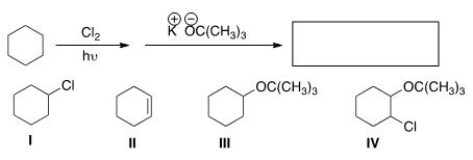
A)I
B)II
C)III
D)IV
A)I
B)II
C)III
D)IV
Question
Which of the following compounds contain tertiary (3°) radical carbons?

A)Only I
B)Only II
C)Only III
D)Only II and IV
A)Only I
B)Only II
C)Only III
D)Only II and IV
Question
Question
Question
Question
Question
Question
What is the product in the following sequence of reactions?

A)I
B)II
C)III
D)IV
A)I
B)II
C)III
D)IV
Question
Which of the following compounds contain primary (1°) radical carbons?

A)Only I
B)Only II
C)Only III
D)Only II and IV
A)Only I
B)Only II
C)Only III
D)Only II and IV
Question
Question
Question
Question
Question
Question
Question
Question
Rank the following radicals in order of increasing stability, putting the least stable first. 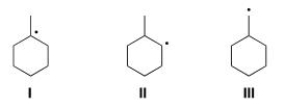
A)III< I < II
B)I < II < III
C)III < II < I
D)I < III < II
A)III< I < II
B)I < II < III
C)III < II < I
D)I < III < II
Question
A possible reaction of ethane with chlorine is shown below.This reaction could conceivably occur by the following chain mechanisms [1], [2], and [3].The chain initiating step(s) is (are) _____. ![<strong><sup> </sup>A possible reaction of ethane with chlorine is shown below.This reaction could conceivably occur by the following chain mechanisms [1], [2], and [3].The chain initiating step(s) is (are) _____. </strong> A)Only [1] B)Only [2] C)Only [3] D)Only [1] and [2] <div style=padding-top: 35px>](https://d2lvgg3v3hfg70.cloudfront.net/TB5872/11eb4ad7_6c21_07d3_99b2_c76be01cdddc_TB5872_00.jpg)
![<strong><sup> </sup>A possible reaction of ethane with chlorine is shown below.This reaction could conceivably occur by the following chain mechanisms [1], [2], and [3].The chain initiating step(s) is (are) _____. </strong> A)Only [1] B)Only [2] C)Only [3] D)Only [1] and [2] <div style=padding-top: 35px>](https://d2lvgg3v3hfg70.cloudfront.net/TB5872/11eb4ad7_6c21_07d4_99b2_8f6433e81fea_TB5872_00.jpg)
A)Only [1]
B)Only [2]
C)Only [3]
D)Only [1] and [2]
A)Only [1]
B)Only [2]
C)Only [3]
D)Only [1] and [2]
Question
What is the product of the following reaction?
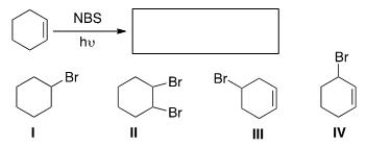
A)I
B)II
C)III
D)IV
A)I
B)II
C)III
D)IV
Question
A possible reaction of ethane with chlorine is shown below.This reaction could conceivably occur by the following chain mechanisms [1], [2], and [3].Determine DH for step [2].Bond dissociation energies (kcal/mol):
![<strong><sup> </sup>A possible reaction of ethane with chlorine is shown below.This reaction could conceivably occur by the following chain mechanisms [1], [2], and [3].Determine DH for step [2].Bond dissociation energies (kcal/mol): </strong> A)-5 kcal/mol B)+58 kcal/mol C)-28 kcal/mol D)None of the choices are correct. <div style=padding-top: 35px>](https://d2lvgg3v3hfg70.cloudfront.net/TB5872/11eb4ad7_6c21_55fa_99b2_2f4993d51432_TB5872_00.jpg)
![<strong><sup> </sup>A possible reaction of ethane with chlorine is shown below.This reaction could conceivably occur by the following chain mechanisms [1], [2], and [3].Determine DH for step [2].Bond dissociation energies (kcal/mol): </strong> A)-5 kcal/mol B)+58 kcal/mol C)-28 kcal/mol D)None of the choices are correct. <div style=padding-top: 35px>](https://d2lvgg3v3hfg70.cloudfront.net/TB5872/11eb4ad7_6c21_55fb_99b2_0b1c67345706_TB5872_00.jpg)
![<strong><sup> </sup>A possible reaction of ethane with chlorine is shown below.This reaction could conceivably occur by the following chain mechanisms [1], [2], and [3].Determine DH for step [2].Bond dissociation energies (kcal/mol): </strong> A)-5 kcal/mol B)+58 kcal/mol C)-28 kcal/mol D)None of the choices are correct. <div style=padding-top: 35px>](https://d2lvgg3v3hfg70.cloudfront.net/TB5872/11eb4ad7_6c21_55fc_99b2_b13226f8d121_TB5872_00.jpg)
A)-5 kcal/mol
B)+58 kcal/mol
C)-28 kcal/mol
D)None of the choices are correct.
A)-5 kcal/mol
B)+58 kcal/mol
C)-28 kcal/mol
D)None of the choices are correct.
Question
Determine the product(s) of the following reaction. 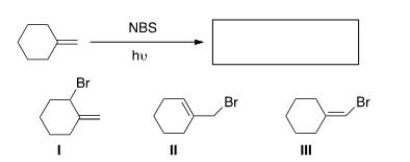
A)Only I
B)Only II
C)Only III
D)Only I and II
A)Only I
B)Only II
C)Only III
D)Only I and II
Question
A possible reaction of ethane with chlorine is shown below.This reaction could conceivably occur by the following chain mechanisms [1], [2], and [3].The chain propagating step(s) is (are) _______. ![<strong><sup> </sup>A possible reaction of ethane with chlorine is shown below.This reaction could conceivably occur by the following chain mechanisms [1], [2], and [3].The chain propagating step(s) is (are) _______. </strong> A)Only [1] and [2] B)Only [2] and [3] C)Only [1] and [3] D)Only [3] <div style=padding-top: 35px>](https://d2lvgg3v3hfg70.cloudfront.net/TB5872/11eb4ad7_6c21_2ee5_99b2_653221a06289_TB5872_00.jpg)
![<strong><sup> </sup>A possible reaction of ethane with chlorine is shown below.This reaction could conceivably occur by the following chain mechanisms [1], [2], and [3].The chain propagating step(s) is (are) _______. </strong> A)Only [1] and [2] B)Only [2] and [3] C)Only [1] and [3] D)Only [3] <div style=padding-top: 35px>](https://d2lvgg3v3hfg70.cloudfront.net/TB5872/11eb4ad7_6c21_2ee6_99b2_69398e7b04d2_TB5872_00.jpg)
A)Only [1] and [2]
B)Only [2] and [3]
C)Only [1] and [3]
D)Only [3]
A)Only [1] and [2]
B)Only [2] and [3]
C)Only [1] and [3]
D)Only [3]
Question
What is the product of the following reaction?
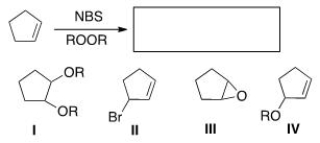
A)I
B)II
C)III
D)IV
A)I
B)II
C)III
D)IV
Question
How many monochlorination products, including stereoisomers, are formed from (S,S)-1,2-dimethylcyclopropane?
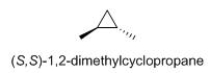
A)4
B)3
C)6
D)5
A)4
B)3
C)6
D)5
Question
Identify the monomer used to make the following polymer. 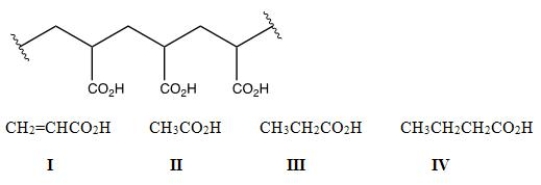
A)I
B)II
C)III
D)IV
A)I
B)II
C)III
D)IV
Question
Which of the following alkenes undergoes allylic bromination to form a single monobrominated product?

A)I
B)II
C)III
D)IV
A)I
B)II
C)III
D)IV
Question
Determine the product of the following reaction. 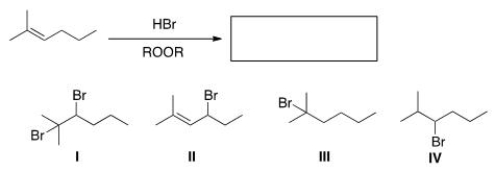
A)I
B)II
C)III
D)IV
A)I
B)II
C)III
D)IV
Question
Determine the monochlorination product(s). 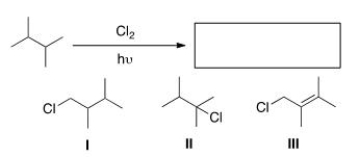
A)Only I
B)Only II
C)Only III
D)Only I and II
A)Only I
B)Only II
C)Only III
D)Only I and II
Question
Question
Question
Which of the indicated hydrogens is most readily abstracted in a free radical halogenation reaction?

A)I
B)II
C)III
D)IV
A)I
B)II
C)III
D)IV
Question
Question
A possible reaction of ethane with chlorine is shown below.This reaction could conceivably occur by the following chain mechanisms [1], [2], and [3].Determine DH for step [1]. ![<strong><sup> </sup>A possible reaction of ethane with chlorine is shown below.This reaction could conceivably occur by the following chain mechanisms [1], [2], and [3].Determine DH for step [1]. Bond dissociation energies (kcal/mol): </strong> A)-5 kcal/mol B)+58 kcal/mol C)-28 kcal/mol D)None of the choices are correct. <div style=padding-top: 35px>](https://d2lvgg3v3hfg70.cloudfront.net/TB5872/11eb4ad7_6c21_2ee7_99b2_b937db53832c_TB5872_00.jpg)
![<strong><sup> </sup>A possible reaction of ethane with chlorine is shown below.This reaction could conceivably occur by the following chain mechanisms [1], [2], and [3].Determine DH for step [1]. Bond dissociation energies (kcal/mol): </strong> A)-5 kcal/mol B)+58 kcal/mol C)-28 kcal/mol D)None of the choices are correct. <div style=padding-top: 35px>](https://d2lvgg3v3hfg70.cloudfront.net/TB5872/11eb4ad7_6c21_2ee8_99b2_91f86270d818_TB5872_00.jpg)
Bond dissociation energies (kcal/mol):
![<strong><sup> </sup>A possible reaction of ethane with chlorine is shown below.This reaction could conceivably occur by the following chain mechanisms [1], [2], and [3].Determine DH for step [1]. Bond dissociation energies (kcal/mol): </strong> A)-5 kcal/mol B)+58 kcal/mol C)-28 kcal/mol D)None of the choices are correct. <div style=padding-top: 35px>](https://d2lvgg3v3hfg70.cloudfront.net/TB5872/11eb4ad7_6c21_2ee9_99b2_e911be36ac36_TB5872_00.jpg)
A)-5 kcal/mol
B)+58 kcal/mol
C)-28 kcal/mol
D)None of the choices are correct.
Bond dissociation energies (kcal/mol):
A)-5 kcal/mol
B)+58 kcal/mol
C)-28 kcal/mol
D)None of the choices are correct.
Question
What is the product of the following reaction?
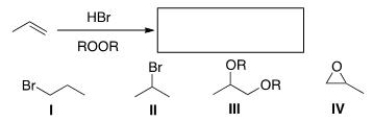
A)I
B)II
C)III
D)IV
A)I
B)II
C)III
D)IV
Question
Identify the monomer used to make the following polymer. 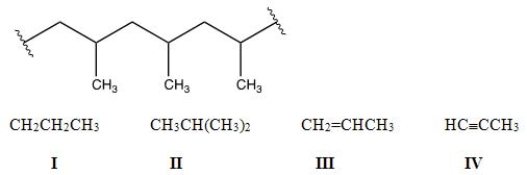
A)I
B)II
C)III
D)IV
A)I
B)II
C)III
D)IV
Question
Identify the monomer used to make the following polymer. 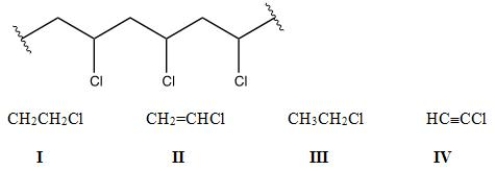
A)I
B)II
C)III
D)IV
A)I
B)II
C)III
D)IV
Question
Question

Unlock Deck
Sign up to unlock the cards in this deck!
Unlock Deck
Unlock Deck
1/42

Play

Full screen (f)
Deck 15: Radical Reactions
1
Which of the following statements about the propagation steps in the chlorination of ethane is true?
A)Radical chlorination consists of two propagation steps.
B)The energy diagram for the propagation steps has three energy barriers.
C)The first of the propagation steps is rate-determining because its transition state is at lower energy.
D)The second of the propagation steps is rate-determining because its transition state is at higher energy.
A)Radical chlorination consists of two propagation steps.
B)The energy diagram for the propagation steps has three energy barriers.
C)The first of the propagation steps is rate-determining because its transition state is at lower energy.
D)The second of the propagation steps is rate-determining because its transition state is at higher energy.
Radical chlorination consists of two propagation steps.
2
How many monochlorination products can be formed (constitutional isomers only) from the reaction of CH3CH2CH2CH2CH2CH3 with Cl2 and hn?
A)3
B)4
C)5
D)6
A)3
B)4
C)5
D)6
3
3
Which of the following statements about radicals and radical reactions is not true?
A)Most radicals are unstable.
B)A radical contains an atom that has an octet of electrons.
C)Half-headed arrows are used to show the movement of lone electrons.
D)A radical is formed by homolysis of a covalent bond.
A)Most radicals are unstable.
B)A radical contains an atom that has an octet of electrons.
C)Half-headed arrows are used to show the movement of lone electrons.
D)A radical is formed by homolysis of a covalent bond.
A radical contains an atom that has an octet of electrons.
4
How many monochlorination products can be formed (constitutional isomers only) from the reaction of (CH3)2CHCH2CH3 with Cl2 and hn?
A)2
B)3
C)4
D)5
A)2
B)3
C)4
D)5
Unlock Deck
Unlock for access to all 42 flashcards in this deck.
Unlock Deck
k this deck
5
What is the product in the following sequence of reactions?
A)I
B)II
C)III
D)IV
A)I
B)II
C)III
D)IV
Unlock Deck
Unlock for access to all 42 flashcards in this deck.
Unlock Deck
k this deck
6
Which of the following compounds contain tertiary (3°) radical carbons?
A)Only I
B)Only II
C)Only III
D)Only II and IV
A)Only I
B)Only II
C)Only III
D)Only II and IV
Unlock Deck
Unlock for access to all 42 flashcards in this deck.
Unlock Deck
k this deck
7
Which of the following statements about chlorination is true?
A)The rate-determining step in chlorination is endothermic.
B)The transition state resembles the product.
C)The more stable radical is formed faster.
D)A mixture of products results.
A)The rate-determining step in chlorination is endothermic.
B)The transition state resembles the product.
C)The more stable radical is formed faster.
D)A mixture of products results.
Unlock Deck
Unlock for access to all 42 flashcards in this deck.
Unlock Deck
k this deck
8
Which of the following statements about radical reactions is not true?
A)Light or heat provides the energy needed for homolytic bond cleavage to form radicals.
B)Breaking the weak O-O bond of peroxides initiates radical reactions.
C)The diradical O2 removes radicals from a reaction mixture.
D)Radicals rearrange.
A)Light or heat provides the energy needed for homolytic bond cleavage to form radicals.
B)Breaking the weak O-O bond of peroxides initiates radical reactions.
C)The diradical O2 removes radicals from a reaction mixture.
D)Radicals rearrange.
Unlock Deck
Unlock for access to all 42 flashcards in this deck.
Unlock Deck
k this deck
9
Which of the following statements about the stereochemistry of halogenation reactions is true?
A)An achiral starting material always gives an achiral product only.
B)An achiral starting material always gives a racemic product only.
C)The configuration at a stereogenic center of a product must change even if a reaction does not occur at a stereogenic center.
D)An achiral starting material always gives either an achiral or a racemic product.
A)An achiral starting material always gives an achiral product only.
B)An achiral starting material always gives a racemic product only.
C)The configuration at a stereogenic center of a product must change even if a reaction does not occur at a stereogenic center.
D)An achiral starting material always gives either an achiral or a racemic product.
Unlock Deck
Unlock for access to all 42 flashcards in this deck.
Unlock Deck
k this deck
10
Which steps are the rate-determining step in the mechanism of radical halogenation?
A)Initiation
B)Propagation
C)Termination
D)Initiation and Propagation
A)Initiation
B)Propagation
C)Termination
D)Initiation and Propagation
Unlock Deck
Unlock for access to all 42 flashcards in this deck.
Unlock Deck
k this deck
11
How many monochlorination products can be formed from the reaction of (CH3)3CH with Cl2 and hn?
A)1
B)2
C)3
D)4
A)1
B)2
C)3
D)4
Unlock Deck
Unlock for access to all 42 flashcards in this deck.
Unlock Deck
k this deck
12
What is the product in the following sequence of reactions?
A)I
B)II
C)III
D)IV
A)I
B)II
C)III
D)IV
Unlock Deck
Unlock for access to all 42 flashcards in this deck.
Unlock Deck
k this deck
13
Which of the following compounds contain primary (1°) radical carbons?
A)Only I
B)Only II
C)Only III
D)Only II and IV
A)Only I
B)Only II
C)Only III
D)Only II and IV
Unlock Deck
Unlock for access to all 42 flashcards in this deck.
Unlock Deck
k this deck
14
Which of the following is a radical scavenger?
A)O3
B)O2
C)Vitamin C
D)CO2
A)O3
B)O2
C)Vitamin C
D)CO2
Unlock Deck
Unlock for access to all 42 flashcards in this deck.
Unlock Deck
k this deck
15
How many monochlorination products (constitutional isomers and stereoisomers) are formed from the reaction of pentane with Cl2 and hn?
A)2
B)3
C)4
D)5
A)2
B)3
C)4
D)5
Unlock Deck
Unlock for access to all 42 flashcards in this deck.
Unlock Deck
k this deck
16
Which of the following statements about carbon radicals is not true?
A)Carbon radicals are classified as primary, secondary, tertiary, or quaternary.
B)A carbon radical is sp2 hybridized.
C)The geometry of a carbon radical is trigonal planar.
D)The unhybridized p orbital in a carbon radical contains the unpaired electron.
A)Carbon radicals are classified as primary, secondary, tertiary, or quaternary.
B)A carbon radical is sp2 hybridized.
C)The geometry of a carbon radical is trigonal planar.
D)The unhybridized p orbital in a carbon radical contains the unpaired electron.
Unlock Deck
Unlock for access to all 42 flashcards in this deck.
Unlock Deck
k this deck
17
Which of the following statements about chlorination and bromination is true?
A)Bromination is unselective, yielding a mixture of products.
B)Chlorination is often selective, yielding one major product.
C)Chlorination is faster than bromination.
D)Bromination is faster than chlorination.
A)Bromination is unselective, yielding a mixture of products.
B)Chlorination is often selective, yielding one major product.
C)Chlorination is faster than bromination.
D)Bromination is faster than chlorination.
Unlock Deck
Unlock for access to all 42 flashcards in this deck.
Unlock Deck
k this deck
18
Which of the following statements about radicals is true?
A)Cleavage of a stronger bond forms the more stable radical.
B)The stability of a radical increases as the number of alkyl groups bonded to the radical carbon decreases.
C)The higher the bond dissociation energy for a C-H bond, the more stable the resulting carbon radical.
D)Less stable radicals generally do not rearrange to more stable radicals.
A)Cleavage of a stronger bond forms the more stable radical.
B)The stability of a radical increases as the number of alkyl groups bonded to the radical carbon decreases.
C)The higher the bond dissociation energy for a C-H bond, the more stable the resulting carbon radical.
D)Less stable radicals generally do not rearrange to more stable radicals.
Unlock Deck
Unlock for access to all 42 flashcards in this deck.
Unlock Deck
k this deck
19
How many monochlorination products (constitutional isomers and stereoisomers) are formed from the reaction of butane with Cl2 and hn?
A)2
B)3
C)4
D)5
A)2
B)3
C)4
D)5
Unlock Deck
Unlock for access to all 42 flashcards in this deck.
Unlock Deck
k this deck
20
Which of the following statements about bromination is true?
A)The rate-determining step in bromination is exothermic.
B)Both radicals are formed.
C)A mixture of products results.
D)A single radical halogenation product predominates.
A)The rate-determining step in bromination is exothermic.
B)Both radicals are formed.
C)A mixture of products results.
D)A single radical halogenation product predominates.
Unlock Deck
Unlock for access to all 42 flashcards in this deck.
Unlock Deck
k this deck
21
Rank the following radicals in order of increasing stability, putting the least stable first.
A)III< I < II
B)I < II < III
C)III < II < I
D)I < III < II
A)III< I < II
B)I < II < III
C)III < II < I
D)I < III < II
Unlock Deck
Unlock for access to all 42 flashcards in this deck.
Unlock Deck
k this deck
22
A possible reaction of ethane with chlorine is shown below.This reaction could conceivably occur by the following chain mechanisms [1], [2], and [3].The chain initiating step(s) is (are) _____.
A)Only [1]
B)Only [2]
C)Only [3]
D)Only [1] and [2]
A)Only [1]
B)Only [2]
C)Only [3]
D)Only [1] and [2]
Unlock Deck
Unlock for access to all 42 flashcards in this deck.
Unlock Deck
k this deck
23
What is the product of the following reaction?
A)I
B)II
C)III
D)IV
A)I
B)II
C)III
D)IV
Unlock Deck
Unlock for access to all 42 flashcards in this deck.
Unlock Deck
k this deck
24
A possible reaction of ethane with chlorine is shown below.This reaction could conceivably occur by the following chain mechanisms [1], [2], and [3].Determine DH for step [2].Bond dissociation energies (kcal/mol):
A)-5 kcal/mol
B)+58 kcal/mol
C)-28 kcal/mol
D)None of the choices are correct.
A)-5 kcal/mol
B)+58 kcal/mol
C)-28 kcal/mol
D)None of the choices are correct.
Unlock Deck
Unlock for access to all 42 flashcards in this deck.
Unlock Deck
k this deck
25
Determine the product(s) of the following reaction.
A)Only I
B)Only II
C)Only III
D)Only I and II
A)Only I
B)Only II
C)Only III
D)Only I and II
Unlock Deck
Unlock for access to all 42 flashcards in this deck.
Unlock Deck
k this deck
26
A possible reaction of ethane with chlorine is shown below.This reaction could conceivably occur by the following chain mechanisms [1], [2], and [3].The chain propagating step(s) is (are) _______.
A)Only [1] and [2]
B)Only [2] and [3]
C)Only [1] and [3]
D)Only [3]
A)Only [1] and [2]
B)Only [2] and [3]
C)Only [1] and [3]
D)Only [3]
Unlock Deck
Unlock for access to all 42 flashcards in this deck.
Unlock Deck
k this deck
27
What is the product of the following reaction?
A)I
B)II
C)III
D)IV
A)I
B)II
C)III
D)IV
Unlock Deck
Unlock for access to all 42 flashcards in this deck.
Unlock Deck
k this deck
28
How many monochlorination products, including stereoisomers, are formed from (S,S)-1,2-dimethylcyclopropane?
A)4
B)3
C)6
D)5
A)4
B)3
C)6
D)5
Unlock Deck
Unlock for access to all 42 flashcards in this deck.
Unlock Deck
k this deck
29
Identify the monomer used to make the following polymer.
A)I
B)II
C)III
D)IV
A)I
B)II
C)III
D)IV
Unlock Deck
Unlock for access to all 42 flashcards in this deck.
Unlock Deck
k this deck
30
Which of the following alkenes undergoes allylic bromination to form a single monobrominated product?
A)I
B)II
C)III
D)IV
A)I
B)II
C)III
D)IV
Unlock Deck
Unlock for access to all 42 flashcards in this deck.
Unlock Deck
k this deck
31
Determine the product of the following reaction.
A)I
B)II
C)III
D)IV
A)I
B)II
C)III
D)IV
Unlock Deck
Unlock for access to all 42 flashcards in this deck.
Unlock Deck
k this deck
32
Determine the monochlorination product(s).
A)Only I
B)Only II
C)Only III
D)Only I and II
A)Only I
B)Only II
C)Only III
D)Only I and II
Unlock Deck
Unlock for access to all 42 flashcards in this deck.
Unlock Deck
k this deck
33
Which of the following statements is (are) true about free radical halogenation of alkanes?
A)The first of the chain-propagating steps is rate-determining.
B)The reaction proceeds by way of a flat sp2 hybridized free radical.
C)The chain-initiating step involves cleavage of a carbon-hydrogen bond to afford a carbon radical and a hydrogen atom.
D)Statements (The first of the chain-propagating steps is rate-determining) and (The reaction proceeds by way of a flat sp2 hybridized free radical) are both true.
A)The first of the chain-propagating steps is rate-determining.
B)The reaction proceeds by way of a flat sp2 hybridized free radical.
C)The chain-initiating step involves cleavage of a carbon-hydrogen bond to afford a carbon radical and a hydrogen atom.
D)Statements (The first of the chain-propagating steps is rate-determining) and (The reaction proceeds by way of a flat sp2 hybridized free radical) are both true.
Unlock Deck
Unlock for access to all 42 flashcards in this deck.
Unlock Deck
k this deck
34
How many allylic halides can be formed when 3-methycyclohexene undergoes allylic halogenation with one equivalent of NBS and light?
A)1
B)2
C)3
D)4
A)1
B)2
C)3
D)4
Unlock Deck
Unlock for access to all 42 flashcards in this deck.
Unlock Deck
k this deck
35
Which of the indicated hydrogens is most readily abstracted in a free radical halogenation reaction?
A)I
B)II
C)III
D)IV
A)I
B)II
C)III
D)IV
Unlock Deck
Unlock for access to all 42 flashcards in this deck.
Unlock Deck
k this deck
36
What type of reactive intermediate is formed in the reaction of propene with N-bromosuccinimide (NBS) to give 3-bromo-1-propene?
A)Cyclic bromonium ion
B)Allylic carbocation
C)Allylic carbanion
D)Allylic radical
A)Cyclic bromonium ion
B)Allylic carbocation
C)Allylic carbanion
D)Allylic radical
Unlock Deck
Unlock for access to all 42 flashcards in this deck.
Unlock Deck
k this deck
37
A possible reaction of ethane with chlorine is shown below.This reaction could conceivably occur by the following chain mechanisms [1], [2], and [3].Determine DH for step [1].
Bond dissociation energies (kcal/mol):
A)-5 kcal/mol
B)+58 kcal/mol
C)-28 kcal/mol
D)None of the choices are correct.
Bond dissociation energies (kcal/mol):
A)-5 kcal/mol
B)+58 kcal/mol
C)-28 kcal/mol
D)None of the choices are correct.
Unlock Deck
Unlock for access to all 42 flashcards in this deck.
Unlock Deck
k this deck
38
What is the product of the following reaction?
A)I
B)II
C)III
D)IV
A)I
B)II
C)III
D)IV
Unlock Deck
Unlock for access to all 42 flashcards in this deck.
Unlock Deck
k this deck
39
Identify the monomer used to make the following polymer.
A)I
B)II
C)III
D)IV
A)I
B)II
C)III
D)IV
Unlock Deck
Unlock for access to all 42 flashcards in this deck.
Unlock Deck
k this deck
40
Identify the monomer used to make the following polymer.
A)I
B)II
C)III
D)IV
A)I
B)II
C)III
D)IV
Unlock Deck
Unlock for access to all 42 flashcards in this deck.
Unlock Deck
k this deck
41
How many products, including stereoisomers, are formed when 2-methylpent-2-ene is treated with HBr in presence of peroxides?
A)1
B)2
C)3
D)4
A)1
B)2
C)3
D)4
Unlock Deck
Unlock for access to all 42 flashcards in this deck.
Unlock Deck
k this deck
42
How many products, including stereoisomers, are formed when (R)-2,4-dimethylpent-2-ene is treated with HBr in presence of peroxides?
A)1
B)2
C)3
D)4
A)1
B)2
C)3
D)4
Unlock Deck
Unlock for access to all 42 flashcards in this deck.
Unlock Deck
k this deck
Unlock Deck
Unlock for access to all 42 flashcards in this deck.






