







 Chat with AI

Deck 12: Medical-Surgical Asepsis and Infection Prevention and Control
Full screen (f)

Question

Question
Question
Question
Question
Question
Question
Question
Question
Question
Question
Question
Question
Question
Question
Question
Question
Question
Question
Question
Question
Question
Question
Question
Question
Question
Question
Question
Question
Question
Question
Question
Question
Question
Question
Question
Question
Question
Question
Question
Question
Question
Question
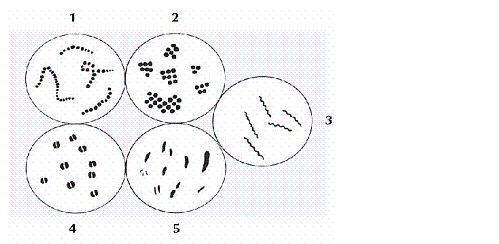
Which numbered portion of the illustration below depicts the bacterial class bacilli?

Unlock Deck
Sign up to unlock the cards in this deck!
Unlock Deck
Unlock Deck
1/43

Play

Full screen (f)
Deck 12: Medical-Surgical Asepsis and Infection Prevention and Control
1
Most hospitals require that all needlesticks to a staff member be reported to begin proper treatment against:
A) hepatitis B.
B) streptococcal infections.
C) staphylococcal infections.
D) influenza.
A) hepatitis B.
B) streptococcal infections.
C) staphylococcal infections.
D) influenza.
hepatitis B.
2
Surgical asepsis:
A) inhibits growth of pathogenic organisms.
B) is known as a cleaning technique.
C) includes hand hygiene.
D) is known as a sterile technique.
A) inhibits growth of pathogenic organisms.
B) is known as a cleaning technique.
C) includes hand hygiene.
D) is known as a sterile technique.
is known as a sterile technique.
3
A major threat to health care workers is blood-contaminated sharps.As a safety precaution,the nurse should discard a used syringe in a:
A) waste basket.
B) sink.
C) puncture-proof container.
D) disinfecting soap.
A) waste basket.
B) sink.
C) puncture-proof container.
D) disinfecting soap.
puncture-proof container.
4
The nurse practices medical asepsis in performing daily care by:
A) lifting a sterile swab from a sterile field.
B) using disposable sterile gowns.
C) washing hands for 5 minutes between patients.
D) keeping bed linens off the floor.
A) lifting a sterile swab from a sterile field.
B) using disposable sterile gowns.
C) washing hands for 5 minutes between patients.
D) keeping bed linens off the floor.
Unlock Deck
Unlock for access to all 43 flashcards in this deck.
Unlock Deck
k this deck
5
The infection control practitioner plans an in-service on control of health care-associated infections.The program should concentrate on:
A) observing nurses caring for patients.
B) screening patients who are admitted to the hospital.
C) educating hospital personnel about aseptic practices.
D) discharging infectious patients from the hospital.
A) observing nurses caring for patients.
B) screening patients who are admitted to the hospital.
C) educating hospital personnel about aseptic practices.
D) discharging infectious patients from the hospital.
Unlock Deck
Unlock for access to all 43 flashcards in this deck.
Unlock Deck
k this deck
6
The nurse instructs the patient that the most important preventive technique for breaking the chain of infection is:
A) sterilization.
B) standard precautions.
C) hand hygiene.
D) medical asepsis.
A) sterilization.
B) standard precautions.
C) hand hygiene.
D) medical asepsis.
Unlock Deck
Unlock for access to all 43 flashcards in this deck.
Unlock Deck
k this deck
7
When wearing a mask,the nurse should change it every:
A) 5-10 minutes.
B) 10-20 minutes.
C) 20-30 minutes.
D) 30-40 minutes.
A) 5-10 minutes.
B) 10-20 minutes.
C) 20-30 minutes.
D) 30-40 minutes.
Unlock Deck
Unlock for access to all 43 flashcards in this deck.
Unlock Deck
k this deck
8
The bacterium responsible for more diseases than any other organism is:
A) Staphylococcus.
B) Pseudomonas aeruginosa.
C) Haemophilus influenzae.
D) Streptococcus.
A) Staphylococcus.
B) Pseudomonas aeruginosa.
C) Haemophilus influenzae.
D) Streptococcus.
Unlock Deck
Unlock for access to all 43 flashcards in this deck.
Unlock Deck
k this deck
9
Before beginning care of a patient,the nurse should perform hand hygiene for a period of:
A) 5 minutes.
B) 2 minutes.
C) 1 minute.
D) 30 seconds.
A) 5 minutes.
B) 2 minutes.
C) 1 minute.
D) 30 seconds.
Unlock Deck
Unlock for access to all 43 flashcards in this deck.
Unlock Deck
k this deck
10
The nurse prioritizes the care of four patients.Which patient has a systemic infection?
A) 14-year-old with acute appendicitis
B) 80-year-old with a urinary tract infection
C) 40-year-old with AIDS
D) 50-year-old with arthritis
A) 14-year-old with acute appendicitis
B) 80-year-old with a urinary tract infection
C) 40-year-old with AIDS
D) 50-year-old with arthritis
Unlock Deck
Unlock for access to all 43 flashcards in this deck.
Unlock Deck
k this deck
11
The nurse instructs a patient that when conditions for bacterial growth are not favorable,the bacteria can lie dormant as:
A) residue.
B) capsules.
C) spores.
D) flagella.
A) residue.
B) capsules.
C) spores.
D) flagella.
Unlock Deck
Unlock for access to all 43 flashcards in this deck.
Unlock Deck
k this deck
12
When giving an example of a fomite vehicle,the nurse describes a(n):
A) rabid dog.
B) person with AIDS.
C) contaminated stethoscope.
D) infected wound.
A) rabid dog.
B) person with AIDS.
C) contaminated stethoscope.
D) infected wound.
Unlock Deck
Unlock for access to all 43 flashcards in this deck.
Unlock Deck
k this deck
13
The nurse recognizes that a patient has an inflammatory response in a surgical wound on the leg when:
A) a foul drainage is coming from the wound.
B) the affected leg is cooler than the other leg.
C) there are raised,red,pruritic welts on the leg.
D) rubor and edema appear around the wound.
A) a foul drainage is coming from the wound.
B) the affected leg is cooler than the other leg.
C) there are raised,red,pruritic welts on the leg.
D) rubor and edema appear around the wound.
Unlock Deck
Unlock for access to all 43 flashcards in this deck.
Unlock Deck
k this deck
14
A disease caused by a virus has an additional complication compared to a disease caused by bacteria because a virus:
A) multiplies rapidly.
B) returns frequently.
C) is not killed by antibiotics.
D) is unable to be cultured.
A) multiplies rapidly.
B) returns frequently.
C) is not killed by antibiotics.
D) is unable to be cultured.
Unlock Deck
Unlock for access to all 43 flashcards in this deck.
Unlock Deck
k this deck
15
The nurse who observes standard precautions when disposing of linens contaminated with feces will:
A) don gown,gloves,and mask.
B) wash hands for 5 minutes after disposal.
C) don gloves only.
D) double-bag the sheets.
A) don gown,gloves,and mask.
B) wash hands for 5 minutes after disposal.
C) don gloves only.
D) double-bag the sheets.
Unlock Deck
Unlock for access to all 43 flashcards in this deck.
Unlock Deck
k this deck
16
The nurse assesses the need for further instruction in wound cleaning when observing the patient:
A) using sterile gloves to perform the cleaning.
B) applying an antiseptic to the area.
C) cleaning the area from the outside in.
D) washing hands with soap.
A) using sterile gloves to perform the cleaning.
B) applying an antiseptic to the area.
C) cleaning the area from the outside in.
D) washing hands with soap.
Unlock Deck
Unlock for access to all 43 flashcards in this deck.
Unlock Deck
k this deck
17
To provide a safe environment for the patient,the nurse should be diligent in:
A) keeping a light on at night to prevent falls.
B) hand hygiene between patient contacts.
C) regulating the temperature to avoid drafts.
D) changing the bed linen to diminish microorganisms.
A) keeping a light on at night to prevent falls.
B) hand hygiene between patient contacts.
C) regulating the temperature to avoid drafts.
D) changing the bed linen to diminish microorganisms.
Unlock Deck
Unlock for access to all 43 flashcards in this deck.
Unlock Deck
k this deck
18
The nurse is concerned when a patient admitted with a diagnosis of pneumonia suddenly develops a urinary tract infection (UTI)because the nurse recognizes the UTI as a:
A) viral infection.
B) bacterial infection.
C) health care-associated infection.
D) spore infection.
A) viral infection.
B) bacterial infection.
C) health care-associated infection.
D) spore infection.
Unlock Deck
Unlock for access to all 43 flashcards in this deck.
Unlock Deck
k this deck
19
A patient with ringworm asks the nurse if she has worms.The nurse instructs the patient that ringworm is caused by:
A) bacteria.
B) protozoa.
C) virus.
D) fungi.
A) bacteria.
B) protozoa.
C) virus.
D) fungi.
Unlock Deck
Unlock for access to all 43 flashcards in this deck.
Unlock Deck
k this deck
20
When a patient with a respiratory infection complains that he is not yet on an antibiotic,the nurse explains that the physician is waiting on the results of the culture and sensitivity because this test determines:
A) what media the bacteria requires to grow.
B) how fast the bacteria grow.
C) which antibiotics stop bacterial growth.
D) when the bacteria colonize.
A) what media the bacteria requires to grow.
B) how fast the bacteria grow.
C) which antibiotics stop bacterial growth.
D) when the bacteria colonize.
Unlock Deck
Unlock for access to all 43 flashcards in this deck.
Unlock Deck
k this deck
21
If a body fluid is spilled,the nurse should first don gloves,then spray the fluid with:
A) liquid detergent.
B) 20% bleach solution.
C) 10% bleach solution.
D) warm soapy water.
A) liquid detergent.
B) 20% bleach solution.
C) 10% bleach solution.
D) warm soapy water.
Unlock Deck
Unlock for access to all 43 flashcards in this deck.
Unlock Deck
k this deck
22
A nurse performing an admission assessment on a patient with suspected tuberculosis knows that the risk of exposure to tuberculosis is greatest:
A) after a diagnosis is made.
B) before a diagnosis is made.
C) after the patient has begun medication therapy.
D) after implementation of isolation precautions.
A) after a diagnosis is made.
B) before a diagnosis is made.
C) after the patient has begun medication therapy.
D) after implementation of isolation precautions.
Unlock Deck
Unlock for access to all 43 flashcards in this deck.
Unlock Deck
k this deck
23
When a patient in respiratory isolation is to be transported to the radiology department,the nurse should:
A) cover the patient with a sheet.
B) take the patient down the service elevator.
C) apply a mask to the patient.
D) call x-ray to come and get the patient.
A) cover the patient with a sheet.
B) take the patient down the service elevator.
C) apply a mask to the patient.
D) call x-ray to come and get the patient.
Unlock Deck
Unlock for access to all 43 flashcards in this deck.
Unlock Deck
k this deck
24
Malaria is caused by a:
A) bacterium.
B) virus.
C) protozoan.
D) fungus.
A) bacterium.
B) virus.
C) protozoan.
D) fungus.
Unlock Deck
Unlock for access to all 43 flashcards in this deck.
Unlock Deck
k this deck
25
When the nurse performs hand hygiene and uses sterile supplies,the patient's:
A) hospital stay is shortened.
B) sense of self-worth is improved.
C) risk of infection is reduced.
D) nursing care needed is reduced.
A) hospital stay is shortened.
B) sense of self-worth is improved.
C) risk of infection is reduced.
D) nursing care needed is reduced.
Unlock Deck
Unlock for access to all 43 flashcards in this deck.
Unlock Deck
k this deck
26
When sterilizing instruments for the operating room,the most dependable and practical method is to use:
A) chemical solution.
B) boiling water.
C) steam under pressure.
D) dry heat.
A) chemical solution.
B) boiling water.
C) steam under pressure.
D) dry heat.
Unlock Deck
Unlock for access to all 43 flashcards in this deck.
Unlock Deck
k this deck
27
Recognizing the stages of an infection assists the nurse in identifying the progression of an infection.The nonspecific to specific symptom stage is termed:
A) convalescent.
B) illness.
C) prodromal.
D) incubation.
A) convalescent.
B) illness.
C) prodromal.
D) incubation.
Unlock Deck
Unlock for access to all 43 flashcards in this deck.
Unlock Deck
k this deck
28
The infection control officer recognizes the need for more instruction on surgical asepsis after observing a nurse:
A) facing the sterile field.
B) placing a sterile dressing on a sterile field.
C) touching the edges of the sterile field with sterile gloves.
D) keeping gloved hands above the waist.
A) facing the sterile field.
B) placing a sterile dressing on a sterile field.
C) touching the edges of the sterile field with sterile gloves.
D) keeping gloved hands above the waist.
Unlock Deck
Unlock for access to all 43 flashcards in this deck.
Unlock Deck
k this deck
29
The nurse instructs an anxious mother of a child with Rocky Mountain spotted fever that the disease is:
A) extremely contagious among humans.
B) contracted from handling unvaccinated animals.
C) a hemolytic B Streptococcus infection spread by droplet transmission.
D) a serious disease contracted from the bite of a tick.
A) extremely contagious among humans.
B) contracted from handling unvaccinated animals.
C) a hemolytic B Streptococcus infection spread by droplet transmission.
D) a serious disease contracted from the bite of a tick.
Unlock Deck
Unlock for access to all 43 flashcards in this deck.
Unlock Deck
k this deck
30
When describing a vector to a patient,the nurse gives the example of a:
A) child with measles giving it to his sister.
B) tick whose bite causes Lyme disease.
C) woman with syphilis infecting her partner.
D) dog whose bite causes rabies.
A) child with measles giving it to his sister.
B) tick whose bite causes Lyme disease.
C) woman with syphilis infecting her partner.
D) dog whose bite causes rabies.
Unlock Deck
Unlock for access to all 43 flashcards in this deck.
Unlock Deck
k this deck
31
The emergency department nurse assessing a puncture wound of the foot knows that the most likely type of infection to this wound is a(n):
A) aerobic bacterial infection.
B) anaerobic bacterial infection.
C) viral infection.
D) fungal infection.
A) aerobic bacterial infection.
B) anaerobic bacterial infection.
C) viral infection.
D) fungal infection.
Unlock Deck
Unlock for access to all 43 flashcards in this deck.
Unlock Deck
k this deck
32
A nurse performing an admission assessment on a patient with suspected tuberculosis knows that assessment findings consistent with tuberculosis include:
A) hemoptysis.
B) weight gain.
C) night terrors.
D) hypothermia.
A) hemoptysis.
B) weight gain.
C) night terrors.
D) hypothermia.
Unlock Deck
Unlock for access to all 43 flashcards in this deck.
Unlock Deck
k this deck
33
The nurse instructing a bioterrorism class teaches that anthrax can be transmitted:
A) from person to person.
B) through microscopic skin punctures.
C) through inhalation of the spores.
D) by exposure to animals that have anthrax.
A) from person to person.
B) through microscopic skin punctures.
C) through inhalation of the spores.
D) by exposure to animals that have anthrax.
Unlock Deck
Unlock for access to all 43 flashcards in this deck.
Unlock Deck
k this deck
34
The patient in isolation may experience psychological or emotional deprivation.To help minimize these feelings,the nurse should:
A) be cheerful.
B) spend extra time with the patient.
C) protect the patient from additional infection.
D) answer the call light quickly.
A) be cheerful.
B) spend extra time with the patient.
C) protect the patient from additional infection.
D) answer the call light quickly.
Unlock Deck
Unlock for access to all 43 flashcards in this deck.
Unlock Deck
k this deck
35
A patient is distressed that an antibiotic has not been effective for the control of the infection.The nurse explains that some bacteria are capable of defending against antibiotics by the formation of a _______.
Unlock Deck
Unlock for access to all 43 flashcards in this deck.
Unlock Deck
k this deck
36
A person can spread a bacterial infection by which actions? (Select all that apply.)
A) Kissing others
B) Sneezing at work
C) Donating blood
D) Coming in contact with blood products
E) Leaving used tissue on the lavatory
A) Kissing others
B) Sneezing at work
C) Donating blood
D) Coming in contact with blood products
E) Leaving used tissue on the lavatory
Unlock Deck
Unlock for access to all 43 flashcards in this deck.
Unlock Deck
k this deck
37
Joseph Lister contributed to medical practice through the introduction of:
A) isolation of infected patients.
B) iodine and alcohol use as disinfectants.
C) the autoclave.
D) aseptic technique.
A) isolation of infected patients.
B) iodine and alcohol use as disinfectants.
C) the autoclave.
D) aseptic technique.
Unlock Deck
Unlock for access to all 43 flashcards in this deck.
Unlock Deck
k this deck
38
When assessing a patient for signs of an infection,the nurse recognizes which laboratory result as indicative of an infection?
A) Lowered red blood cell count
B) Increased white blood cell count
C) Lowered white blood cell count
D) Increased red blood cell count
A) Lowered red blood cell count
B) Increased white blood cell count
C) Lowered white blood cell count
D) Increased red blood cell count
Unlock Deck
Unlock for access to all 43 flashcards in this deck.
Unlock Deck
k this deck
39
A method used to kill all microorganisms,including spores,is:
A) disinfecting.
B) using an antiseptic.
C) using chlorine bleach.
D) sterilizing.
A) disinfecting.
B) using an antiseptic.
C) using chlorine bleach.
D) sterilizing.
Unlock Deck
Unlock for access to all 43 flashcards in this deck.
Unlock Deck
k this deck
40
When the nurse is pouring a sterile solution,the bottle should be held with the label:
A) facing outward.
B) covered.
C) facing downward.
D) in the palm of the hand.
A) facing outward.
B) covered.
C) facing downward.
D) in the palm of the hand.
Unlock Deck
Unlock for access to all 43 flashcards in this deck.
Unlock Deck
k this deck
41
The nurse reminds a group of nursing students that the type of asepsis that destroys all microorganisms and their spores is _______ asepsis.
Unlock Deck
Unlock for access to all 43 flashcards in this deck.
Unlock Deck
k this deck
42
What are some characteristics of microorganisms? (Select all that apply.)
A) Involved in a life process of their own
B) Pathogens that cause disease
C) Nonpathological organisms that do not cause disease
D) May be infectious
E) Can enter the body via skin,air,or blood
A) Involved in a life process of their own
B) Pathogens that cause disease
C) Nonpathological organisms that do not cause disease
D) May be infectious
E) Can enter the body via skin,air,or blood
Unlock Deck
Unlock for access to all 43 flashcards in this deck.
Unlock Deck
k this deck
43
Which numbered portion of the illustration below depicts the bacterial class bacilli?
Unlock Deck
Unlock for access to all 43 flashcards in this deck.
Unlock Deck
k this deck
Unlock Deck
Unlock for access to all 43 flashcards in this deck.






