Deck 3: Alkenes and Alkynes

Full screen (f)
exit full mode
Question
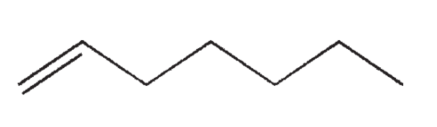
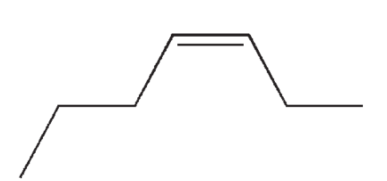
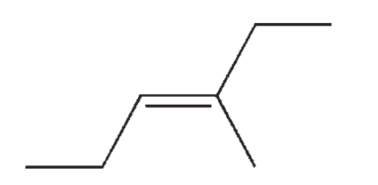
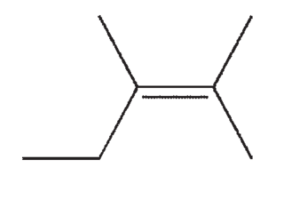
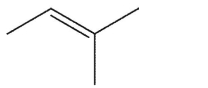
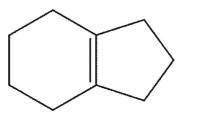
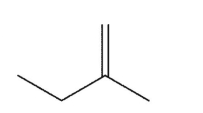
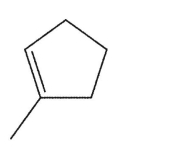
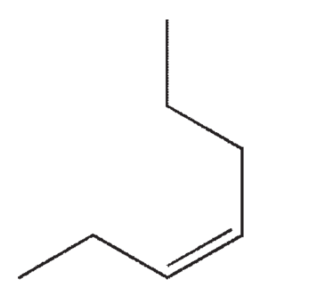
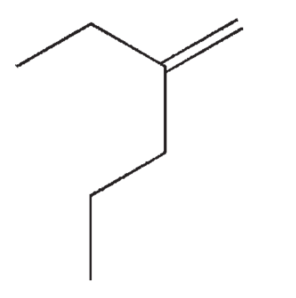
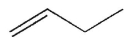
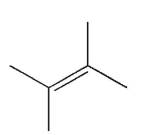
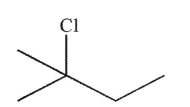
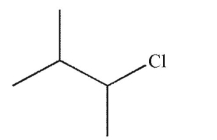
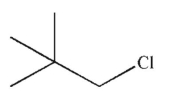
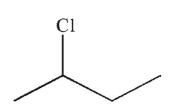
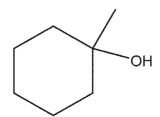
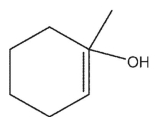
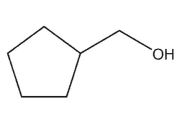
Which of the following isomers of C7H14 do you expect to be most stable?

A)<strong>Which of the following isomers of C<sub>7</sub>H<sub>14</sub>  do you expect to be most stable?</strong> A)  B)  C)  D)  E)  <div style=padding-top: 35px>
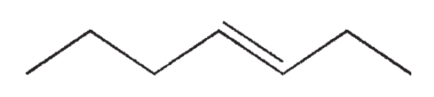
B)<strong>Which of the following isomers of C<sub>7</sub>H<sub>14</sub>  do you expect to be most stable?</strong> A)  B)  C)  D)  E)  <div style=padding-top: 35px>
C)<strong>Which of the following isomers of C<sub>7</sub>H<sub>14</sub>  do you expect to be most stable?</strong> A)  B)  C)  D)  E)  <div style=padding-top: 35px>
D)<strong>Which of the following isomers of C<sub>7</sub>H<sub>14</sub>  do you expect to be most stable?</strong> A)  B)  C)  D)  E)  <div style=padding-top: 35px>
E)<strong>Which of the following isomers of C<sub>7</sub>H<sub>14</sub>  do you expect to be most stable?</strong> A)  B)  C)  D)  E)  <div style=padding-top: 35px>
Use Space or
up arrow
down arrow
to flip the card.
Question
What is the approximate value of the indicated bond angle in the following structure?
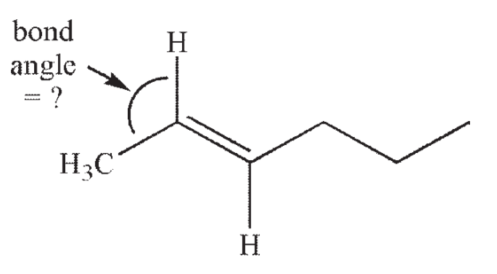
<strong>What is the approximate value of the indicated bond angle in the following structure?  </strong> A)  60° B)  90° C)  109.5° D)  120° E)  180° <div style=padding-top: 35px>

A) 60°
B) 90°
C) 109.5°
D) 120°
E) 180°
Question
Which alkene is the least stable?

A) <strong>Which alkene is the least stable? </strong> A)   B)  C)   D)   E)  <div style=padding-top: 35px>
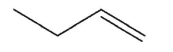
B)<strong>Which alkene is the least stable? </strong> A)   B)  C)   D)   E)  <div style=padding-top: 35px>
C) <strong>Which alkene is the least stable? </strong> A)   B)  C)   D)   E)  <div style=padding-top: 35px>
D) <strong>Which alkene is the least stable? </strong> A)   B)  C)   D)   E)  <div style=padding-top: 35px>
E)<strong>Which alkene is the least stable? </strong> A)   B)  C)   D)   E)  <div style=padding-top: 35px>
Question
How many signals do you expect to see in the 13C NMR spectrum of the structure shown?
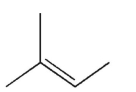
<strong>How many signals do you expect to see in the  <sup>13</sup>C NMR spectrum of the structure shown?  </strong> A) 1 B) 3 C) 4 D) 5 E) 10 <div style=padding-top: 35px>

A) 1
B) 3
C) 4
D) 5
E) 10
Question
How many σ and π antibonding molecular orbitals are there in acetylene?

A) 2 σ*, 1 π*
B) 3 σ*, 1 π*
C) 3 σ*, 2 π *
D) 1 σ*, 3 π*
E) 1 σ*, 4 π*
Question
How many σ bonds and how many π bonds are in ethylene, C2H4?

A) 4 σ bonds and 1 π bond
B) 4 σ bonds and 2 π bonds
C) 5 σ bonds and 1 π bond
D) 1 σ bond and 1 π bond
E) 2 σ bonds and 5 π bonds
Question
What atomic orbitals are involved in the formation of the σ bond between the two carbons indicated in this structure?
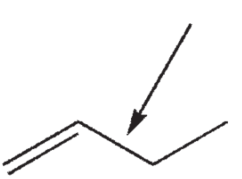
<strong>What atomic orbitals are involved in the formation of the σ bond between the two carbons indicated in this structure?   </strong> A)  C sp<sup>2</sup>  and  C sp<sup>2 </sup> B)  C  sp<sup>2</sup> and  C sp<sup>3 </sup> C)   C  sp<sup>3</sup>  and  C sp<sup>3</sup> D)  C p  and  C p E)  C p  and  C sp<sup>3</sup> <div style=padding-top: 35px>

A) C sp2 and C sp2
B) C sp2 and C sp3
C) C sp3 and C sp3
D) C p and C p
E) C p and C sp3
Question
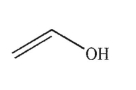
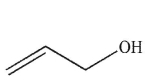
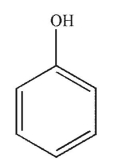
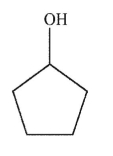
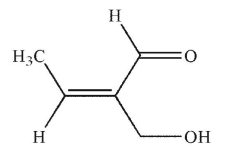
Which of the following structures is allyl alcohol?

A) <strong>Which of the following structures is allyl alcohol? </strong> A)    B)   C)   D)   E)  <div style=padding-top: 35px>
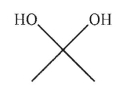
B) <strong>Which of the following structures is allyl alcohol? </strong> A)    B)   C)   D)   E)  <div style=padding-top: 35px>
C) <strong>Which of the following structures is allyl alcohol? </strong> A)    B)   C)   D)   E)  <div style=padding-top: 35px>
D) <strong>Which of the following structures is allyl alcohol? </strong> A)    B)   C)   D)   E)  <div style=padding-top: 35px>
E)<strong>Which of the following structures is allyl alcohol? </strong> A)    B)   C)   D)   E)  <div style=padding-top: 35px>
Question
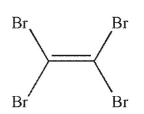
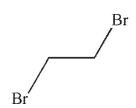
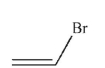
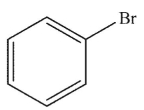
Which of the following structures is vinyl bromide?

A) <strong>Which of the following structures is vinyl bromide? </strong> A)   B)   C)   D)   E)   <div style=padding-top: 35px>
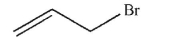
B) <strong>Which of the following structures is vinyl bromide? </strong> A)   B)   C)   D)   E)   <div style=padding-top: 35px>
C) <strong>Which of the following structures is vinyl bromide? </strong> A)   B)   C)   D)   E)   <div style=padding-top: 35px>
D) <strong>Which of the following structures is vinyl bromide? </strong> A)   B)   C)   D)   E)   <div style=padding-top: 35px>
E) <strong>Which of the following structures is vinyl bromide? </strong> A)   B)   C)   D)   E)   <div style=padding-top: 35px>
Question
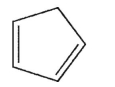
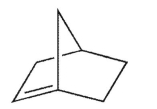
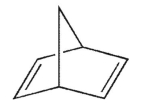
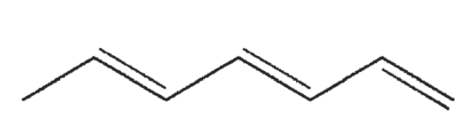
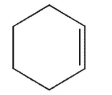
According to Bredt's rule, which of the following cycloalkenes is unlikely to exist?

A) <strong>According to Bredt's rule, which of the following cycloalkenes is unlikely to exist? </strong> A)   B)   C)   D)   E)   <div style=padding-top: 35px>
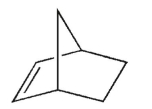
B) <strong>According to Bredt's rule, which of the following cycloalkenes is unlikely to exist? </strong> A)   B)   C)   D)   E)   <div style=padding-top: 35px>
C) <strong>According to Bredt's rule, which of the following cycloalkenes is unlikely to exist? </strong> A)   B)   C)   D)   E)   <div style=padding-top: 35px>
D) <strong>According to Bredt's rule, which of the following cycloalkenes is unlikely to exist? </strong> A)   B)   C)   D)   E)   <div style=padding-top: 35px>
E) <strong>According to Bredt's rule, which of the following cycloalkenes is unlikely to exist? </strong> A)   B)   C)   D)   E)   <div style=padding-top: 35px>
Question
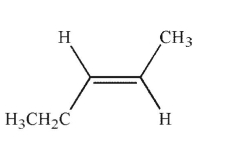
Which of the following structures correctly represents trans-3-heptene?

A)<strong>Which of the following structures correctly represents trans-3-heptene?</strong> A)  B)  C)  D)  E)  <div style=padding-top: 35px>
B)<strong>Which of the following structures correctly represents trans-3-heptene?</strong> A)  B)  C)  D)  E)  <div style=padding-top: 35px>
C)<strong>Which of the following structures correctly represents trans-3-heptene?</strong> A)  B)  C)  D)  E)  <div style=padding-top: 35px>
D)<strong>Which of the following structures correctly represents trans-3-heptene?</strong> A)  B)  C)  D)  E)  <div style=padding-top: 35px>
E)<strong>Which of the following structures correctly represents trans-3-heptene?</strong> A)  B)  C)  D)  E)  <div style=padding-top: 35px>
Question
How many σ bonds and how many π bonds are present in propyne?

A) 2 σ bonds, 1 π bond
B) 5 σ bonds, 2 π bonds
C) 6 σ bonds, 2 π bonds
D) 7 σ bonds, 1 π bond
E) 7 σ bonds, 2 π bonds
Question
What is the indicated bond angle in the following structure? <strong>What is the indicated bond angle in the following structure?  </strong> A)  60° B)  90° C)  109.5° D)  120° E)  180° <div style=padding-top: 35px>
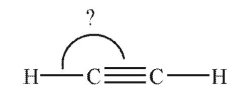
A) 60°
B) 90°
C) 109.5°
D) 120°
E) 180°
Question
Which of these compounds would you expect to be stable? <strong>Which of these compounds would you expect to be stable?  </strong> A)  A B)  B C)  C D) D E) None of these <div style=padding-top: 35px>
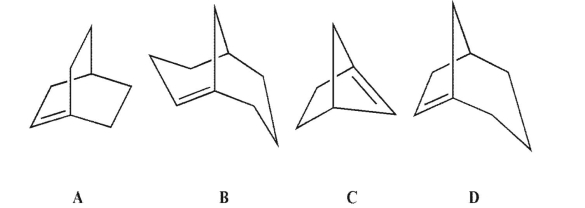
A) A
B) B
C) C
D) D
E) None of these
Question
Which of the following structures represents a trans alkene?

A) <strong>Which of the following structures represents a trans alkene? </strong> A)    B)   C)   D)   E)   <div style=padding-top: 35px>
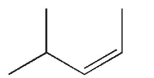
B) <strong>Which of the following structures represents a trans alkene? </strong> A)    B)   C)   D)   E)   <div style=padding-top: 35px>
C) <strong>Which of the following structures represents a trans alkene? </strong> A)    B)   C)   D)   E)   <div style=padding-top: 35px>
D) <strong>Which of the following structures represents a trans alkene? </strong> A)    B)   C)   D)   E)   <div style=padding-top: 35px>
E) <strong>Which of the following structures represents a trans alkene? </strong> A)    B)   C)   D)   E)   <div style=padding-top: 35px>
Question
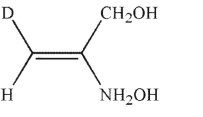
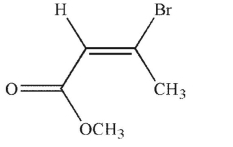
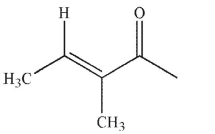
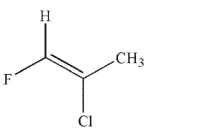
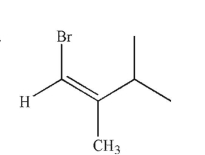
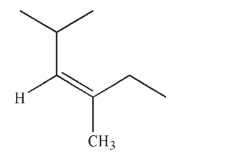
Which of the following structures is properly designated as a Z alkene?

A) <strong>Which of the following structures is properly designated as a Z alkene? </strong> A)   B)   C)   D)   E)   <div style=padding-top: 35px>
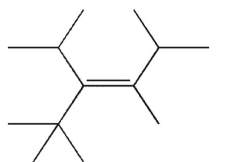
B) <strong>Which of the following structures is properly designated as a Z alkene? </strong> A)   B)   C)   D)   E)   <div style=padding-top: 35px>
C) <strong>Which of the following structures is properly designated as a Z alkene? </strong> A)   B)   C)   D)   E)   <div style=padding-top: 35px>
D) <strong>Which of the following structures is properly designated as a Z alkene? </strong> A)   B)   C)   D)   E)   <div style=padding-top: 35px>
E) <strong>Which of the following structures is properly designated as a Z alkene? </strong> A)   B)   C)   D)   E)   <div style=padding-top: 35px>
Question
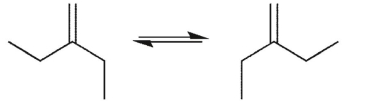
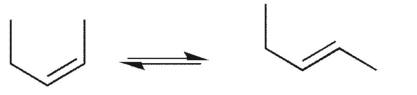
Which conformational equilibrium would you expect to be slow at room temperature?

A) <strong>Which conformational equilibrium would you expect to be slow at room temperature? </strong> A)   B)   C)   D)   E)   <div style=padding-top: 35px>
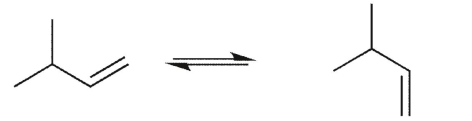
B) <strong>Which conformational equilibrium would you expect to be slow at room temperature? </strong> A)   B)   C)   D)   E)   <div style=padding-top: 35px>
C) <strong>Which conformational equilibrium would you expect to be slow at room temperature? </strong> A)   B)   C)   D)   E)   <div style=padding-top: 35px>
D) <strong>Which conformational equilibrium would you expect to be slow at room temperature? </strong> A)   B)   C)   D)   E)   <div style=padding-top: 35px>
E) <strong>Which conformational equilibrium would you expect to be slow at room temperature? </strong> A)   B)   C)   D)   E)   <div style=padding-top: 35px>
Question
Which of the following structures is properly designated as an E alkene?

A) <strong>Which of the following structures is properly designated as an E alkene? </strong> A)   B)   C)   D)   E)   <div style=padding-top: 35px>
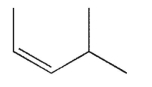
B) <strong>Which of the following structures is properly designated as an E alkene? </strong> A)   B)   C)   D)   E)   <div style=padding-top: 35px>
C) <strong>Which of the following structures is properly designated as an E alkene? </strong> A)   B)   C)   D)   E)   <div style=padding-top: 35px>
D) <strong>Which of the following structures is properly designated as an E alkene? </strong> A)   B)   C)   D)   E)   <div style=padding-top: 35px>
E) <strong>Which of the following structures is properly designated as an E alkene? </strong> A)   B)   C)   D)   E)   <div style=padding-top: 35px>
Question
Which set of atomic orbitals could be used to make an sp2 hybrid on carbon?

A) C 2 pz , C 2 px and C 2 py
B) H 1s, C 2 py, and C 2 px
C) C 2 s, 2 py , and C 2 pz
D) C 1 s , C 2 py, and C 2 pz
E) C 2 s , H 2 px and C 2 pz
Question
How many σ bonds and how many π bonds are in the following structure?
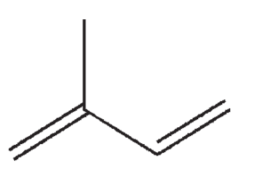
<strong>How many  σ bonds and how many  π  bonds are in the following structure?  </strong> A)  2 σ  bonds and  4 π bonds B)  4 σ  bonds and  2 π bonds C)  7 σ bonds and  2 π  bonds D)  8 σ bonds and  2 π  bonds E)  12 σ  bonds and  2π bonds <div style=padding-top: 35px>

A) 2 σ bonds and 4 π bonds
B) 4 σ bonds and 2 π bonds
C) 7 σ bonds and 2 π bonds
D) 8 σ bonds and 2 π bonds
E) 12 σ bonds and 2π bonds
Question
In the first step of the reaction between HBr and 2-methylpropene shown here, identify the HOMO and the LUMO. <strong>In the first step of the reaction between HBr and 2-methylpropene shown here, identify the HOMO and the LUMO.  </strong> A)  HOMO}  is  C-C π,  is  H-Br σ. B) HOMO is  C-C π, LUMO is H-Br σ*. C) HOMO is C-C  σ, LUMO is H-Br  σ. D) HOMO is C-C  π * , LUMO is H-Br σ. E) HOMO is H-Br  σ and LUMO is C-C  π . <div style=padding-top: 35px>
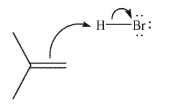
A) HOMO} is C-C π, is H-Br σ.
B) HOMO is C-C π, LUMO is H-Br σ*.
C) HOMO is C-C σ, LUMO is H-Br σ.
D) HOMO is C-C π * , LUMO is H-Br σ.
E) HOMO is H-Br σ and LUMO is C-C π .
Question
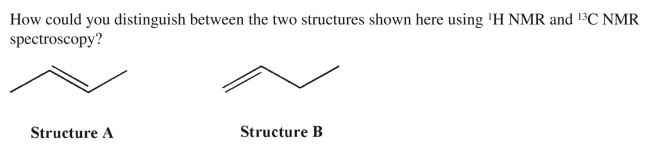
 <div style=padding-top: 35px>
Question
What is the major product of the reaction shown here? <strong>What is the major product of the reaction shown here?  </strong> A)   B)   C)   D)   E)   <div style=padding-top: 35px>

A) <strong>What is the major product of the reaction shown here?  </strong> A)   B)   C)   D)   E)   <div style=padding-top: 35px>
B) <strong>What is the major product of the reaction shown here?  </strong> A)   B)   C)   D)   E)   <div style=padding-top: 35px>
C) <strong>What is the major product of the reaction shown here?  </strong> A)   B)   C)   D)   E)   <div style=padding-top: 35px>
D) <strong>What is the major product of the reaction shown here?  </strong> A)   B)   C)   D)   E)   <div style=padding-top: 35px>
E) <strong>What is the major product of the reaction shown here?  </strong> A)   B)   C)   D)   E)   <div style=padding-top: 35px>
Question
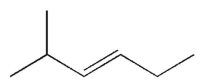
Draw all geometric isomers of 2-methyl-3-hexene.
Question
Which of the following choices is the correct name for the structure shown here?
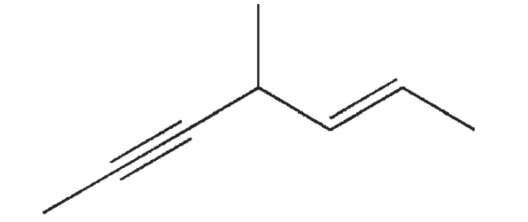
<strong>Which of the following choices is the correct name for the structure shown here?  </strong> A) 4-methylhept-  (E)-2 -en-5-yne B) 4-methylhept-(Z)-2-en-5-yne C) 4-methylhept-  (E)-5 D) 4-methylhept-(Z)-5-en-2-yne E) 4-methylheptyne-en-2-yne <div style=padding-top: 35px>

A) 4-methylhept- (E)-2 -en-5-yne
B) 4-methylhept-(Z)-2-en-5-yne
C) 4-methylhept- (E)-5
D) 4-methylhept-(Z)-5-en-2-yne
E) 4-methylheptyne-en-2-yne
Question
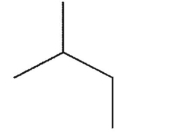
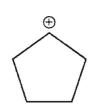
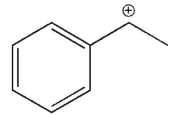
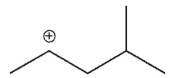
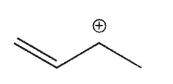
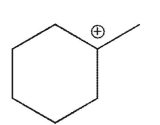
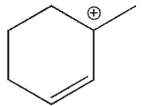
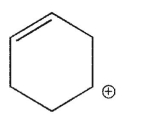
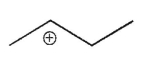
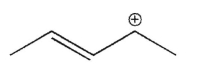
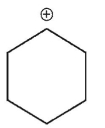
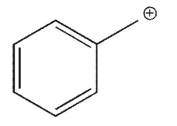
Which of the following is the most stable carbocation?

A)<strong>Which of the following is the most stable carbocation? </strong> A)  B)   C)   D)   E) All arecequaly sable. <div style=padding-top: 35px>
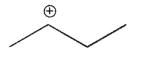
B) <strong>Which of the following is the most stable carbocation? </strong> A)  B)   C)   D)   E) All arecequaly sable. <div style=padding-top: 35px>
C) <strong>Which of the following is the most stable carbocation? </strong> A)  B)   C)   D)   E) All arecequaly sable. <div style=padding-top: 35px>
D) <strong>Which of the following is the most stable carbocation? </strong> A)  B)   C)   D)   E) All arecequaly sable. <div style=padding-top: 35px>
E) All arecequaly sable.
Question
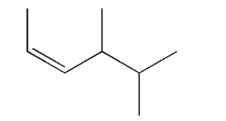
Provide an acceptable IUPAC name for the structure shown here. Provide an acceptable IUPAC name for the structure shown here.  <div style=padding-top: 35px>
Question
Calculate the degree of unsaturation for a compound with molecular formula C9H14BrCl.

A) 0
B) 1
C) 2
D) 3
E) Not enough information is given to answer the question.
Question
Draw a line structure for trans-4-methyl-2-pentene.
Question
For ethylene, C2H4, indicate the hybridization of each carbon atom in the molecule, the types of bonds each carbon forms, the orbitals involved in forming each of these bonds, and all bond angles.
Question
 <div style=padding-top: 35px>
Question
Which molecule would not have an unsaturation number of 5?

A) <strong>Which molecule would not have an unsaturation number of 5? </strong> A)   B)   C)   D)   E)   <div style=padding-top: 35px>
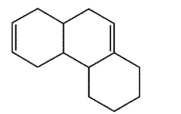
B) <strong>Which molecule would not have an unsaturation number of 5? </strong> A)   B)   C)   D)   E)   <div style=padding-top: 35px>
C) <strong>Which molecule would not have an unsaturation number of 5? </strong> A)   B)   C)   D)   E)   <div style=padding-top: 35px>
D) <strong>Which molecule would not have an unsaturation number of 5? </strong> A)   B)   C)   D)   E)   <div style=padding-top: 35px>
E) <strong>Which molecule would not have an unsaturation number of 5? </strong> A)   B)   C)   D)   E)   <div style=padding-top: 35px>
Question
Which of these bases can deprotonate acetylene (pKa 26)? The pKa values for the conjugate acids are shown in parentheses.

A) NaOH(15.7)
B) Butyllithium (50-60)
C) NaNH2(36)
D) NaHCO3(6.3)
E) Both b and c
Question
How many signals do you expect to find in the 1H NMR and 13C NMR spectra for the following molecule?
<strong>How many signals do you expect to find in the  <sup>1</sup>H  NMR and  <sup>13</sup>C  NMR spectra for the following molecule?  </strong> A) 2 signals in the  <sup>1</sup>H NMR and 3 signals in the  <sup>13</sup>C  NMR B) 3 signals in the <sup>1</sup>H  NMR and 3 signals in the  <sup>13</sup>C  NMR C) 3 signals in the  <sup>1</sup>H NMR and 4 signals in the  <sup>13 </sup>C  NMR D) 5 signals in the  <sup>1</sup>H NMR and 5 signals in the  <sup>13 </sup>C  NMR E) 8 signals in the  <sup>1</sup>H NMR and 5 signals in the  <sup>13</sup> C  NMR <div style=padding-top: 35px>

A) 2 signals in the 1H NMR and 3 signals in the 13C NMR
B) 3 signals in the 1H NMR and 3 signals in the 13C NMR
C) 3 signals in the 1H NMR and 4 signals in the 13 C NMR
D) 5 signals in the 1H NMR and 5 signals in the 13 C NMR
E) 8 signals in the 1H NMR and 5 signals in the 13 C NMR
Question
Which reaction is the most endothermic?

A) <strong>Which reaction is the most endothermic? </strong> A)   B)   C)   D)   E)   <div style=padding-top: 35px>
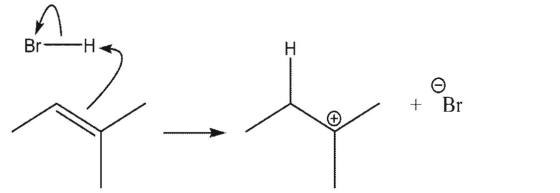
B) <strong>Which reaction is the most endothermic? </strong> A)   B)   C)   D)   E)   <div style=padding-top: 35px>
C) <strong>Which reaction is the most endothermic? </strong> A)   B)   C)   D)   E)   <div style=padding-top: 35px>
D) <strong>Which reaction is the most endothermic? </strong> A)   B)   C)   D)   E)   <div style=padding-top: 35px>
E) <strong>Which reaction is the most endothermic? </strong> A)   B)   C)   D)   E)   <div style=padding-top: 35px>
Question
Which of the following is the most stable carbocation?

A) <strong>Which of the following is the most stable carbocation? </strong> A)   B)   C)   D)   E)   <div style=padding-top: 35px>
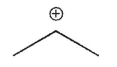
B) <strong>Which of the following is the most stable carbocation? </strong> A)   B)   C)   D)   E)   <div style=padding-top: 35px>
C) <strong>Which of the following is the most stable carbocation? </strong> A)   B)   C)   D)   E)   <div style=padding-top: 35px>
D) <strong>Which of the following is the most stable carbocation? </strong> A)   B)   C)   D)   E)   <div style=padding-top: 35px>
E) <strong>Which of the following is the most stable carbocation? </strong> A)   B)   C)   D)   E)   <div style=padding-top: 35px>
Question
Which of the following is the most acidic hydrocarbon?

A)<strong>Which of the following is the most acidic hydrocarbon?</strong> A)  B)  C)  D)  E)  <div style=padding-top: 35px>

B)<strong>Which of the following is the most acidic hydrocarbon?</strong> A)  B)  C)  D)  E)  <div style=padding-top: 35px>
C)<strong>Which of the following is the most acidic hydrocarbon?</strong> A)  B)  C)  D)  E)  <div style=padding-top: 35px>
D)<strong>Which of the following is the most acidic hydrocarbon?</strong> A)  B)  C)  D)  E)  <div style=padding-top: 35px>
E)<strong>Which of the following is the most acidic hydrocarbon?</strong> A)  B)  C)  D)  E)  <div style=padding-top: 35px>
Question
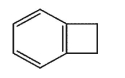
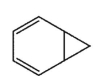
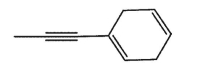
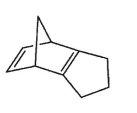
Which of the following compounds do not have three degrees of unsaturation? <strong>Which of the following compounds do not have three degrees of unsaturation?  </strong> A) I, II, and III B) II and III C) I, II, III, and IV D) I and III E) I and IV <div style=padding-top: 35px>
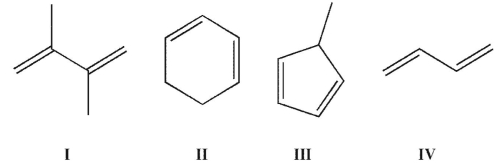
A) I, II, and III
B) II and III
C) I, II, III, and IV
D) I and III
E) I and IV
Question
Which of the following is a tertiary carbocation?

A) <strong>Which of the following is a tertiary carbocation? </strong> A)   B)   C)   D)   E)   <div style=padding-top: 35px>
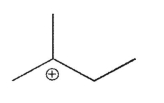
B) <strong>Which of the following is a tertiary carbocation? </strong> A)   B)   C)   D)   E)   <div style=padding-top: 35px>
C) <strong>Which of the following is a tertiary carbocation? </strong> A)   B)   C)   D)   E)   <div style=padding-top: 35px>
D) <strong>Which of the following is a tertiary carbocation? </strong> A)   B)   C)   D)   E)   <div style=padding-top: 35px>
E) <strong>Which of the following is a tertiary carbocation? </strong> A)   B)   C)   D)   E)   <div style=padding-top: 35px>
Question
What is the major product of the reaction shown here? <strong>What is the major product of the reaction shown here?  </strong> A)   B)   C)   D)   E)   <div style=padding-top: 35px>

A) <strong>What is the major product of the reaction shown here?  </strong> A)   B)   C)   D)   E)   <div style=padding-top: 35px>
B) <strong>What is the major product of the reaction shown here?  </strong> A)   B)   C)   D)   E)   <div style=padding-top: 35px>
C) <strong>What is the major product of the reaction shown here?  </strong> A)   B)   C)   D)   E)   <div style=padding-top: 35px>
D) <strong>What is the major product of the reaction shown here?  </strong> A)   B)   C)   D)   E)   <div style=padding-top: 35px>
E) <strong>What is the major product of the reaction shown here?  </strong> A)   B)   C)   D)   E)   <div style=padding-top: 35px>
Question
Using E and Z nomenclature where necessary, draw and name all alkene isomers with the formula C6H12 that can be named as pentenes.
Question
How many degrees of unsaturation are there in this compound? How many degrees of unsaturation are there in this compound?  <div style=padding-top: 35px>
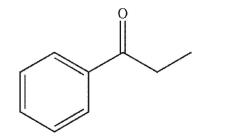
Question
Estimate the energy change for the reaction shown here. Estimate the energy change for the reaction shown here.  <div style=padding-top: 35px>
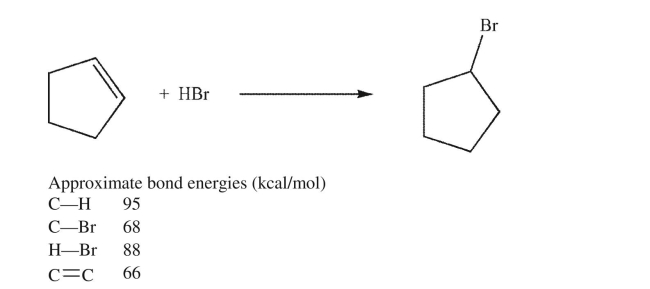
Question
Draw two possible alkene starting materials that would give the product shown here when treated with HCl.
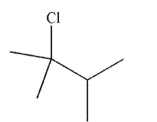
Draw two possible alkene starting materials that would give the product shown here when treated with HCl.  <div style=padding-top: 35px>
Question
Draw the structure of 2-methyl-3-hexyne.
Question
Explain why small and medium cycloalkenes are much more stable as cis isomers than as trans
isomers.
Question
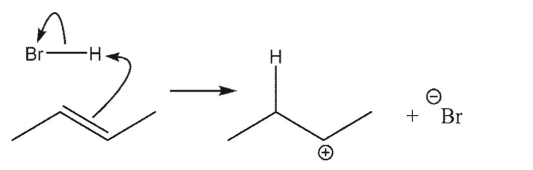
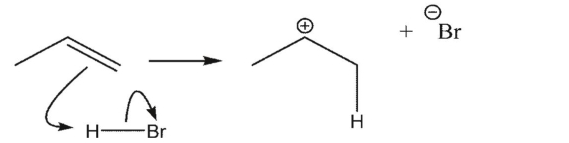
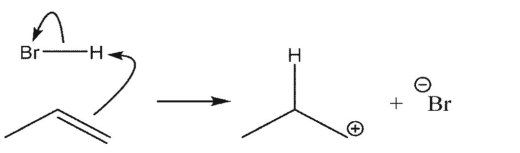
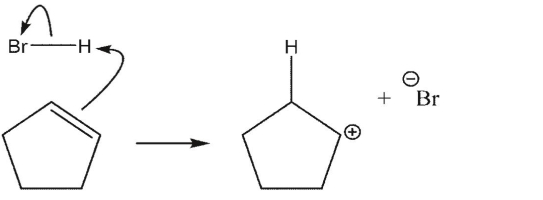
Draw the structure that results from the mechanistic step shown here. Draw the structure that results from the mechanistic step shown here.  <div style=padding-top: 35px>
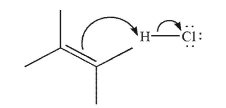
Question
Calculate the degree of unsaturation and draw six constitutional isomers for the molecular formula C8H12.
Question
Draw the product of the following reaction. Draw the product of the following reaction.  <div style=padding-top: 35px>
Question
What is the product of the following reaction? What is the product of the following reaction?  <div style=padding-top: 35px>

Question
Arrange in order of acidity (most acidic to least acidic): Arrange in order of acidity (most acidic to least acidic):  <div style=padding-top: 35px>

Question
 <div style=padding-top: 35px>
Question
 <div style=padding-top: 35px>
Question
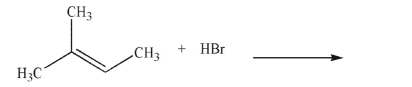
Predict the product of the following reaction and draw a mechanism to account for its formation.
Include all curved arrows, lone pairs of electrons, and nonzero formal charges. Predict the product of the following reaction and draw a mechanism to account for its formation. Include all curved arrows, lone pairs of electrons, and nonzero formal charges.  <div style=padding-top: 35px>
Question
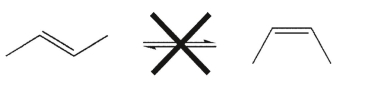
At room temperature, cis and trans alkene isomers do not equilibrate; that is, they do not interconvert.Explain why. At room temperature, cis and trans alkene isomers do not equilibrate; that is, they do not interconvert.Explain why.  <div style=padding-top: 35px>
Question
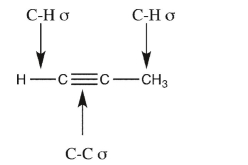
Name the orbitals that overlap to form each of the indicated bonds in propyne. Name the orbitals that overlap to form each of the indicated bonds in propyne.  <div style=padding-top: 35px>
Question
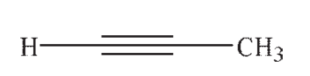
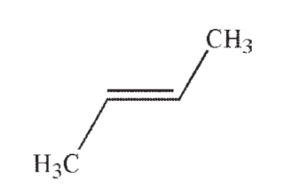
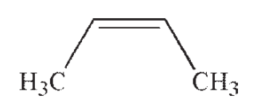
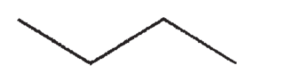
Place the following alkene isomers in order of increasing stability and indicate which of them has the most negative value for ΔHf°.

Place the following alkene isomers in order of increasing stability and indicate which of them has the most negative value for 	ΔH<sub>f</sub>°.  <div style=padding-top: 35px>
Question
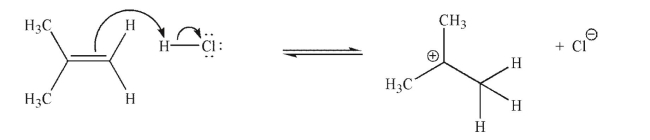
Is the mechanistic step shown here endothermic or exothermic? Explain your answer briefly. Is the mechanistic step shown here endothermic or exothermic? Explain your answer briefly.  <div style=padding-top: 35px>
Question
Draw the structure of (Z)-4, 7-dimethyloct-2-en-5-yne.
Question
Describe all possible combinations of structural units consistent with an unsaturation number of 4.
Question
Write a reaction mechanism for the following reaction. Write a reaction mechanism for the following reaction.  <div style=padding-top: 35px>
Question
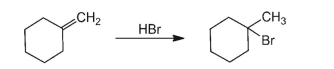
Provide the product for the reaction below. Provide the product for the reaction below.  <div style=padding-top: 35px>
Question
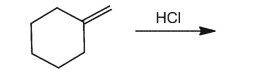
What is the LUMO in the mechanistic step shown here? What is the LUMO in the mechanistic step shown here?  <div style=padding-top: 35px>
Question
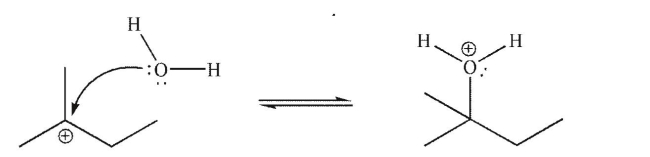
Draw a reaction coordinate diagram, including the structures of any intermediates, illustrating the
competing reaction pathways below.Indicate the key energy difference on the diagram that makes
path b the predominant one (that is, the one that gives the major product). Draw a reaction coordinate diagram, including the structures of any intermediates, illustrating the competing reaction pathways below.Indicate the key energy difference on the diagram that makes path b the predominant one (that is, the one that gives the major product).  <div style=padding-top: 35px>

Question
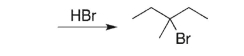
Provide an alkene starting material for the reaction below. Provide an alkene starting material for the reaction below.  <div style=padding-top: 35px>
Question
Predict the reaction product, and provide a mechanism for its formation. Predict the reaction product, and provide a mechanism for its formation.  <div style=padding-top: 35px>
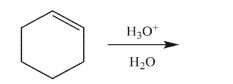
Question
Which carbocation is the most stable? Which carbocation is the most stable?  <div style=padding-top: 35px>

Question
Predict the product of the following reaction and draw a mechanism to account for its formation.
Include all curved arrows, lone pairs of electrons, and nonzero formal charges. Predict the product of the following reaction and draw a mechanism to account for its formation. Include all curved arrows, lone pairs of electrons, and nonzero formal charges.  <div style=padding-top: 35px>
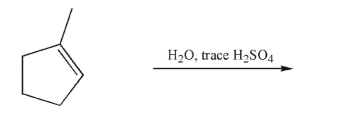
Question
Predict the reaction product. Predict the reaction product.  <div style=padding-top: 35px>
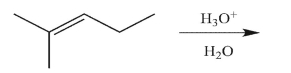
Question
Predict the reaction product, and write a mechanism for its formation. Predict the reaction product, and write a mechanism for its formation.  <div style=padding-top: 35px>
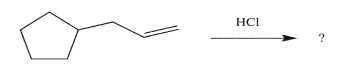
Unlock Deck
Sign up to unlock the cards in this deck!
Unlock Deck
Unlock Deck
1/70
auto play flashcards
Play
simple tutorial
Full screen (f)
exit full mode
Deck 3: Alkenes and Alkynes
1
Which of the following isomers of C7H14 do you expect to be most stable?

A)<strong>Which of the following isomers of C<sub>7</sub>H<sub>14</sub>  do you expect to be most stable?</strong> A)  B)  C)  D)  E)
B)<strong>Which of the following isomers of C<sub>7</sub>H<sub>14</sub>  do you expect to be most stable?</strong> A)  B)  C)  D)  E)
C)<strong>Which of the following isomers of C<sub>7</sub>H<sub>14</sub>  do you expect to be most stable?</strong> A)  B)  C)  D)  E)
D)<strong>Which of the following isomers of C<sub>7</sub>H<sub>14</sub>  do you expect to be most stable?</strong> A)  B)  C)  D)  E)
E)<strong>Which of the following isomers of C<sub>7</sub>H<sub>14</sub>  do you expect to be most stable?</strong> A)  B)  C)  D)  E)
2
What is the approximate value of the indicated bond angle in the following structure?
<strong>What is the approximate value of the indicated bond angle in the following structure?  </strong> A)  60° B)  90° C)  109.5° D)  120° E)  180°

A) 60°
B) 90°
C) 109.5°
D) 120°
E) 180°
120°
3
Which alkene is the least stable?

A) <strong>Which alkene is the least stable? </strong> A)   B)  C)   D)   E)
B)<strong>Which alkene is the least stable? </strong> A)   B)  C)   D)   E)
C) <strong>Which alkene is the least stable? </strong> A)   B)  C)   D)   E)
D) <strong>Which alkene is the least stable? </strong> A)   B)  C)   D)   E)
E)<strong>Which alkene is the least stable? </strong> A)   B)  C)   D)   E)
4
How many signals do you expect to see in the 13C NMR spectrum of the structure shown?
<strong>How many signals do you expect to see in the  <sup>13</sup>C NMR spectrum of the structure shown?  </strong> A) 1 B) 3 C) 4 D) 5 E) 10

A) 1
B) 3
C) 4
D) 5
E) 10
Unlock Deck
Unlock for access to all 70 flashcards in this deck.
Unlock Deck
k this deck
5
How many σ and π antibonding molecular orbitals are there in acetylene?

A) 2 σ*, 1 π*
B) 3 σ*, 1 π*
C) 3 σ*, 2 π *
D) 1 σ*, 3 π*
E) 1 σ*, 4 π*
Unlock Deck
Unlock for access to all 70 flashcards in this deck.
Unlock Deck
k this deck
6
How many σ bonds and how many π bonds are in ethylene, C2H4?

A) 4 σ bonds and 1 π bond
B) 4 σ bonds and 2 π bonds
C) 5 σ bonds and 1 π bond
D) 1 σ bond and 1 π bond
E) 2 σ bonds and 5 π bonds
Unlock Deck
Unlock for access to all 70 flashcards in this deck.
Unlock Deck
k this deck
7
What atomic orbitals are involved in the formation of the σ bond between the two carbons indicated in this structure?
<strong>What atomic orbitals are involved in the formation of the σ bond between the two carbons indicated in this structure?   </strong> A)  C sp<sup>2</sup>  and  C sp<sup>2 </sup> B)  C  sp<sup>2</sup> and  C sp<sup>3 </sup> C)   C  sp<sup>3</sup>  and  C sp<sup>3</sup> D)  C p  and  C p E)  C p  and  C sp<sup>3</sup>

A) C sp2 and C sp2
B) C sp2 and C sp3
C) C sp3 and C sp3
D) C p and C p
E) C p and C sp3
Unlock Deck
Unlock for access to all 70 flashcards in this deck.

Unlock Deck
k this deck
8
Which of the following structures is allyl alcohol?

A) <strong>Which of the following structures is allyl alcohol? </strong> A)    B)   C)   D)   E)

B) <strong>Which of the following structures is allyl alcohol? </strong> A)    B)   C)   D)   E)
C) <strong>Which of the following structures is allyl alcohol? </strong> A)    B)   C)   D)   E)
D) <strong>Which of the following structures is allyl alcohol? </strong> A)    B)   C)   D)   E)
E)<strong>Which of the following structures is allyl alcohol? </strong> A)    B)   C)   D)   E)
Unlock Deck
Unlock for access to all 70 flashcards in this deck.

Unlock Deck
k this deck
9
Which of the following structures is vinyl bromide?

A) <strong>Which of the following structures is vinyl bromide? </strong> A)   B)   C)   D)   E)
B) <strong>Which of the following structures is vinyl bromide? </strong> A)   B)   C)   D)   E)
C) <strong>Which of the following structures is vinyl bromide? </strong> A)   B)   C)   D)   E)
D) <strong>Which of the following structures is vinyl bromide? </strong> A)   B)   C)   D)   E)
E) <strong>Which of the following structures is vinyl bromide? </strong> A)   B)   C)   D)   E)
Unlock Deck
Unlock for access to all 70 flashcards in this deck.
Unlock Deck
k this deck
10
According to Bredt's rule, which of the following cycloalkenes is unlikely to exist?

A) <strong>According to Bredt's rule, which of the following cycloalkenes is unlikely to exist? </strong> A)   B)   C)   D)   E)
B) <strong>According to Bredt's rule, which of the following cycloalkenes is unlikely to exist? </strong> A)   B)   C)   D)   E)
C) <strong>According to Bredt's rule, which of the following cycloalkenes is unlikely to exist? </strong> A)   B)   C)   D)   E)
D) <strong>According to Bredt's rule, which of the following cycloalkenes is unlikely to exist? </strong> A)   B)   C)   D)   E)
E) <strong>According to Bredt's rule, which of the following cycloalkenes is unlikely to exist? </strong> A)   B)   C)   D)   E)
Unlock Deck
Unlock for access to all 70 flashcards in this deck.
Unlock Deck
k this deck
11
Which of the following structures correctly represents trans-3-heptene?

A)<strong>Which of the following structures correctly represents trans-3-heptene?</strong> A)  B)  C)  D)  E)
B)<strong>Which of the following structures correctly represents trans-3-heptene?</strong> A)  B)  C)  D)  E)
C)<strong>Which of the following structures correctly represents trans-3-heptene?</strong> A)  B)  C)  D)  E)
D)<strong>Which of the following structures correctly represents trans-3-heptene?</strong> A)  B)  C)  D)  E)
E)<strong>Which of the following structures correctly represents trans-3-heptene?</strong> A)  B)  C)  D)  E)
Unlock Deck
Unlock for access to all 70 flashcards in this deck.
Unlock Deck
k this deck
12
How many σ bonds and how many π bonds are present in propyne?

A) 2 σ bonds, 1 π bond
B) 5 σ bonds, 2 π bonds
C) 6 σ bonds, 2 π bonds
D) 7 σ bonds, 1 π bond
E) 7 σ bonds, 2 π bonds
Unlock Deck
Unlock for access to all 70 flashcards in this deck.
Unlock Deck
k this deck
13
What is the indicated bond angle in the following structure? <strong>What is the indicated bond angle in the following structure?  </strong> A)  60° B)  90° C)  109.5° D)  120° E)  180°

A) 60°
B) 90°
C) 109.5°
D) 120°
E) 180°
Unlock Deck
Unlock for access to all 70 flashcards in this deck.
Unlock Deck
k this deck
14
Which of these compounds would you expect to be stable? <strong>Which of these compounds would you expect to be stable?  </strong> A)  A B)  B C)  C D) D E) None of these

A) A
B) B
C) C
D) D
E) None of these
Unlock Deck
Unlock for access to all 70 flashcards in this deck.
Unlock Deck
k this deck
15
Which of the following structures represents a trans alkene?

A) <strong>Which of the following structures represents a trans alkene? </strong> A)    B)   C)   D)   E)

B) <strong>Which of the following structures represents a trans alkene? </strong> A)    B)   C)   D)   E)
C) <strong>Which of the following structures represents a trans alkene? </strong> A)    B)   C)   D)   E)
D) <strong>Which of the following structures represents a trans alkene? </strong> A)    B)   C)   D)   E)
E) <strong>Which of the following structures represents a trans alkene? </strong> A)    B)   C)   D)   E)
Unlock Deck
Unlock for access to all 70 flashcards in this deck.
Unlock Deck
k this deck
16
Which of the following structures is properly designated as a Z alkene?

A) <strong>Which of the following structures is properly designated as a Z alkene? </strong> A)   B)   C)   D)   E)
B) <strong>Which of the following structures is properly designated as a Z alkene? </strong> A)   B)   C)   D)   E)
C) <strong>Which of the following structures is properly designated as a Z alkene? </strong> A)   B)   C)   D)   E)
D) <strong>Which of the following structures is properly designated as a Z alkene? </strong> A)   B)   C)   D)   E)
E) <strong>Which of the following structures is properly designated as a Z alkene? </strong> A)   B)   C)   D)   E)
Unlock Deck
Unlock for access to all 70 flashcards in this deck.
Unlock Deck
k this deck
17
Which conformational equilibrium would you expect to be slow at room temperature?

A) <strong>Which conformational equilibrium would you expect to be slow at room temperature? </strong> A)   B)   C)   D)   E)
B) <strong>Which conformational equilibrium would you expect to be slow at room temperature? </strong> A)   B)   C)   D)   E)
C) <strong>Which conformational equilibrium would you expect to be slow at room temperature? </strong> A)   B)   C)   D)   E)
D) <strong>Which conformational equilibrium would you expect to be slow at room temperature? </strong> A)   B)   C)   D)   E)
E) <strong>Which conformational equilibrium would you expect to be slow at room temperature? </strong> A)   B)   C)   D)   E)
Unlock Deck
Unlock for access to all 70 flashcards in this deck.
Unlock Deck
k this deck
18
Which of the following structures is properly designated as an E alkene?

A) <strong>Which of the following structures is properly designated as an E alkene? </strong> A)   B)   C)   D)   E)
B) <strong>Which of the following structures is properly designated as an E alkene? </strong> A)   B)   C)   D)   E)
C) <strong>Which of the following structures is properly designated as an E alkene? </strong> A)   B)   C)   D)   E)
D) <strong>Which of the following structures is properly designated as an E alkene? </strong> A)   B)   C)   D)   E)
E) <strong>Which of the following structures is properly designated as an E alkene? </strong> A)   B)   C)   D)   E)
Unlock Deck
Unlock for access to all 70 flashcards in this deck.
Unlock Deck
k this deck
19
Which set of atomic orbitals could be used to make an sp2 hybrid on carbon?

A) C 2 pz , C 2 px and C 2 py
B) H 1s, C 2 py, and C 2 px
C) C 2 s, 2 py , and C 2 pz
D) C 1 s , C 2 py, and C 2 pz
E) C 2 s , H 2 px and C 2 pz
Unlock Deck
Unlock for access to all 70 flashcards in this deck.
Unlock Deck
k this deck
20
How many σ bonds and how many π bonds are in the following structure?
<strong>How many  σ bonds and how many  π  bonds are in the following structure?  </strong> A)  2 σ  bonds and  4 π bonds B)  4 σ  bonds and  2 π bonds C)  7 σ bonds and  2 π  bonds D)  8 σ bonds and  2 π  bonds E)  12 σ  bonds and  2π bonds

A) 2 σ bonds and 4 π bonds
B) 4 σ bonds and 2 π bonds
C) 7 σ bonds and 2 π bonds
D) 8 σ bonds and 2 π bonds
E) 12 σ bonds and 2π bonds
Unlock Deck
Unlock for access to all 70 flashcards in this deck.
Unlock Deck
k this deck
21
In the first step of the reaction between HBr and 2-methylpropene shown here, identify the HOMO and the LUMO. <strong>In the first step of the reaction between HBr and 2-methylpropene shown here, identify the HOMO and the LUMO.  </strong> A)  HOMO}  is  C-C π,  is  H-Br σ. B) HOMO is  C-C π, LUMO is H-Br σ*. C) HOMO is C-C  σ, LUMO is H-Br  σ. D) HOMO is C-C  π * , LUMO is H-Br σ. E) HOMO is H-Br  σ and LUMO is C-C  π .

A) HOMO} is C-C π, is H-Br σ.
B) HOMO is C-C π, LUMO is H-Br σ*.
C) HOMO is C-C σ, LUMO is H-Br σ.
D) HOMO is C-C π * , LUMO is H-Br σ.
E) HOMO is H-Br σ and LUMO is C-C π .
Unlock Deck
Unlock for access to all 70 flashcards in this deck.
Unlock Deck
k this deck
22
Unlock Deck
Unlock for access to all 70 flashcards in this deck.
Unlock Deck
k this deck
23
What is the major product of the reaction shown here? <strong>What is the major product of the reaction shown here?  </strong> A)   B)   C)   D)   E)

A) <strong>What is the major product of the reaction shown here?  </strong> A)   B)   C)   D)   E)
B) <strong>What is the major product of the reaction shown here?  </strong> A)   B)   C)   D)   E)
C) <strong>What is the major product of the reaction shown here?  </strong> A)   B)   C)   D)   E)
D) <strong>What is the major product of the reaction shown here?  </strong> A)   B)   C)   D)   E)
E) <strong>What is the major product of the reaction shown here?  </strong> A)   B)   C)   D)   E)
Unlock Deck
Unlock for access to all 70 flashcards in this deck.
Unlock Deck
k this deck
24
Draw all geometric isomers of 2-methyl-3-hexene.
Unlock Deck
Unlock for access to all 70 flashcards in this deck.
Unlock Deck
k this deck
25
Which of the following choices is the correct name for the structure shown here?
<strong>Which of the following choices is the correct name for the structure shown here?  </strong> A) 4-methylhept-  (E)-2 -en-5-yne B) 4-methylhept-(Z)-2-en-5-yne C) 4-methylhept-  (E)-5 D) 4-methylhept-(Z)-5-en-2-yne E) 4-methylheptyne-en-2-yne

A) 4-methylhept- (E)-2 -en-5-yne
B) 4-methylhept-(Z)-2-en-5-yne
C) 4-methylhept- (E)-5
D) 4-methylhept-(Z)-5-en-2-yne
E) 4-methylheptyne-en-2-yne
Unlock Deck
Unlock for access to all 70 flashcards in this deck.
Unlock Deck
k this deck
26
Which of the following is the most stable carbocation?

A)<strong>Which of the following is the most stable carbocation? </strong> A)  B)   C)   D)   E) All arecequaly sable.
B) <strong>Which of the following is the most stable carbocation? </strong> A)  B)   C)   D)   E) All arecequaly sable.
C) <strong>Which of the following is the most stable carbocation? </strong> A)  B)   C)   D)   E) All arecequaly sable.
D) <strong>Which of the following is the most stable carbocation? </strong> A)  B)   C)   D)   E) All arecequaly sable.
E) All arecequaly sable.
Unlock Deck
Unlock for access to all 70 flashcards in this deck.
Unlock Deck
k this deck
27
Provide an acceptable IUPAC name for the structure shown here. Provide an acceptable IUPAC name for the structure shown here.
Unlock Deck
Unlock for access to all 70 flashcards in this deck.
Unlock Deck
k this deck
28
Calculate the degree of unsaturation for a compound with molecular formula C9H14BrCl.

A) 0
B) 1
C) 2
D) 3
E) Not enough information is given to answer the question.
Unlock Deck
Unlock for access to all 70 flashcards in this deck.
Unlock Deck
k this deck
29
Draw a line structure for trans-4-methyl-2-pentene.
Unlock Deck
Unlock for access to all 70 flashcards in this deck.
Unlock Deck
k this deck
30
For ethylene, C2H4, indicate the hybridization of each carbon atom in the molecule, the types of bonds each carbon forms, the orbitals involved in forming each of these bonds, and all bond angles.
Unlock Deck
Unlock for access to all 70 flashcards in this deck.
Unlock Deck
k this deck
31
Unlock Deck
Unlock for access to all 70 flashcards in this deck.
Unlock Deck
k this deck
32
Which molecule would not have an unsaturation number of 5?

A) <strong>Which molecule would not have an unsaturation number of 5? </strong> A)   B)   C)   D)   E)
B) <strong>Which molecule would not have an unsaturation number of 5? </strong> A)   B)   C)   D)   E)
C) <strong>Which molecule would not have an unsaturation number of 5? </strong> A)   B)   C)   D)   E)
D) <strong>Which molecule would not have an unsaturation number of 5? </strong> A)   B)   C)   D)   E)
E) <strong>Which molecule would not have an unsaturation number of 5? </strong> A)   B)   C)   D)   E)
Unlock Deck
Unlock for access to all 70 flashcards in this deck.
Unlock Deck
k this deck
33
Which of these bases can deprotonate acetylene (pKa 26)? The pKa values for the conjugate acids are shown in parentheses.

A) NaOH(15.7)
B) Butyllithium (50-60)
C) NaNH2(36)
D) NaHCO3(6.3)
E) Both b and c
Unlock Deck
Unlock for access to all 70 flashcards in this deck.
Unlock Deck
k this deck
34
How many signals do you expect to find in the 1H NMR and 13C NMR spectra for the following molecule?
<strong>How many signals do you expect to find in the  <sup>1</sup>H  NMR and  <sup>13</sup>C  NMR spectra for the following molecule?  </strong> A) 2 signals in the  <sup>1</sup>H NMR and 3 signals in the  <sup>13</sup>C  NMR B) 3 signals in the <sup>1</sup>H  NMR and 3 signals in the  <sup>13</sup>C  NMR C) 3 signals in the  <sup>1</sup>H NMR and 4 signals in the  <sup>13 </sup>C  NMR D) 5 signals in the  <sup>1</sup>H NMR and 5 signals in the  <sup>13 </sup>C  NMR E) 8 signals in the  <sup>1</sup>H NMR and 5 signals in the  <sup>13</sup> C  NMR

A) 2 signals in the 1H NMR and 3 signals in the 13C NMR
B) 3 signals in the 1H NMR and 3 signals in the 13C NMR
C) 3 signals in the 1H NMR and 4 signals in the 13 C NMR
D) 5 signals in the 1H NMR and 5 signals in the 13 C NMR
E) 8 signals in the 1H NMR and 5 signals in the 13 C NMR
Unlock Deck
Unlock for access to all 70 flashcards in this deck.
Unlock Deck
k this deck
35
Which reaction is the most endothermic?

A) <strong>Which reaction is the most endothermic? </strong> A)   B)   C)   D)   E)
B) <strong>Which reaction is the most endothermic? </strong> A)   B)   C)   D)   E)
C) <strong>Which reaction is the most endothermic? </strong> A)   B)   C)   D)   E)
D) <strong>Which reaction is the most endothermic? </strong> A)   B)   C)   D)   E)
E) <strong>Which reaction is the most endothermic? </strong> A)   B)   C)   D)   E)
Unlock Deck
Unlock for access to all 70 flashcards in this deck.
Unlock Deck
k this deck
36
Which of the following is the most stable carbocation?

A) <strong>Which of the following is the most stable carbocation? </strong> A)   B)   C)   D)   E)
B) <strong>Which of the following is the most stable carbocation? </strong> A)   B)   C)   D)   E)
C) <strong>Which of the following is the most stable carbocation? </strong> A)   B)   C)   D)   E)
D) <strong>Which of the following is the most stable carbocation? </strong> A)   B)   C)   D)   E)
E) <strong>Which of the following is the most stable carbocation? </strong> A)   B)   C)   D)   E)
Unlock Deck
Unlock for access to all 70 flashcards in this deck.
Unlock Deck
k this deck
37
Which of the following is the most acidic hydrocarbon?

A)<strong>Which of the following is the most acidic hydrocarbon?</strong> A)  B)  C)  D)  E)
B)<strong>Which of the following is the most acidic hydrocarbon?</strong> A)  B)  C)  D)  E)
C)<strong>Which of the following is the most acidic hydrocarbon?</strong> A)  B)  C)  D)  E)
D)<strong>Which of the following is the most acidic hydrocarbon?</strong> A)  B)  C)  D)  E)
E)<strong>Which of the following is the most acidic hydrocarbon?</strong> A)  B)  C)  D)  E)
Unlock Deck
Unlock for access to all 70 flashcards in this deck.
Unlock Deck
k this deck
38
Which of the following compounds do not have three degrees of unsaturation? <strong>Which of the following compounds do not have three degrees of unsaturation?  </strong> A) I, II, and III B) II and III C) I, II, III, and IV D) I and III E) I and IV

A) I, II, and III
B) II and III
C) I, II, III, and IV
D) I and III
E) I and IV
Unlock Deck
Unlock for access to all 70 flashcards in this deck.
Unlock Deck
k this deck
39
Which of the following is a tertiary carbocation?

A) <strong>Which of the following is a tertiary carbocation? </strong> A)   B)   C)   D)   E)
B) <strong>Which of the following is a tertiary carbocation? </strong> A)   B)   C)   D)   E)
C) <strong>Which of the following is a tertiary carbocation? </strong> A)   B)   C)   D)   E)
D) <strong>Which of the following is a tertiary carbocation? </strong> A)   B)   C)   D)   E)
E) <strong>Which of the following is a tertiary carbocation? </strong> A)   B)   C)   D)   E)
Unlock Deck
Unlock for access to all 70 flashcards in this deck.
Unlock Deck
k this deck
40
What is the major product of the reaction shown here? <strong>What is the major product of the reaction shown here?  </strong> A)   B)   C)   D)   E)

A) <strong>What is the major product of the reaction shown here?  </strong> A)   B)   C)   D)   E)
B) <strong>What is the major product of the reaction shown here?  </strong> A)   B)   C)   D)   E)
C) <strong>What is the major product of the reaction shown here?  </strong> A)   B)   C)   D)   E)
D) <strong>What is the major product of the reaction shown here?  </strong> A)   B)   C)   D)   E)
E) <strong>What is the major product of the reaction shown here?  </strong> A)   B)   C)   D)   E)
Unlock Deck
Unlock for access to all 70 flashcards in this deck.
Unlock Deck
k this deck
41
Using E and Z nomenclature where necessary, draw and name all alkene isomers with the formula C6H12 that can be named as pentenes.
Unlock Deck
Unlock for access to all 70 flashcards in this deck.
Unlock Deck
k this deck
42
How many degrees of unsaturation are there in this compound? How many degrees of unsaturation are there in this compound?
Unlock Deck
Unlock for access to all 70 flashcards in this deck.
Unlock Deck
k this deck
43
Estimate the energy change for the reaction shown here. Estimate the energy change for the reaction shown here.
Unlock Deck
Unlock for access to all 70 flashcards in this deck.
Unlock Deck
k this deck
44
Draw two possible alkene starting materials that would give the product shown here when treated with HCl.
Unlock Deck
Unlock for access to all 70 flashcards in this deck.
Unlock Deck
k this deck
45
Draw the structure of 2-methyl-3-hexyne.
Unlock Deck
Unlock for access to all 70 flashcards in this deck.
Unlock Deck
k this deck
46
Explain why small and medium cycloalkenes are much more stable as cis isomers than as trans
isomers.
Unlock Deck
Unlock for access to all 70 flashcards in this deck.
Unlock Deck
k this deck
47
Draw the structure that results from the mechanistic step shown here. Draw the structure that results from the mechanistic step shown here.
Unlock Deck
Unlock for access to all 70 flashcards in this deck.
Unlock Deck
k this deck
48
Calculate the degree of unsaturation and draw six constitutional isomers for the molecular formula C8H12.
Unlock Deck
Unlock for access to all 70 flashcards in this deck.
Unlock Deck
k this deck
49
Draw the product of the following reaction. Draw the product of the following reaction.
Unlock Deck
Unlock for access to all 70 flashcards in this deck.
Unlock Deck
k this deck
50
What is the product of the following reaction? What is the product of the following reaction?
Unlock Deck
Unlock for access to all 70 flashcards in this deck.
Unlock Deck
k this deck
51
Arrange in order of acidity (most acidic to least acidic): Arrange in order of acidity (most acidic to least acidic):
Unlock Deck
Unlock for access to all 70 flashcards in this deck.
Unlock Deck
k this deck
52
Unlock Deck
Unlock for access to all 70 flashcards in this deck.
Unlock Deck
k this deck
53
Unlock Deck
Unlock for access to all 70 flashcards in this deck.
Unlock Deck
k this deck
54
Predict the product of the following reaction and draw a mechanism to account for its formation.
Include all curved arrows, lone pairs of electrons, and nonzero formal charges. Predict the product of the following reaction and draw a mechanism to account for its formation. Include all curved arrows, lone pairs of electrons, and nonzero formal charges.
Unlock Deck
Unlock for access to all 70 flashcards in this deck.
Unlock Deck
k this deck
55
At room temperature, cis and trans alkene isomers do not equilibrate; that is, they do not interconvert.Explain why. At room temperature, cis and trans alkene isomers do not equilibrate; that is, they do not interconvert.Explain why.
Unlock Deck
Unlock for access to all 70 flashcards in this deck.
Unlock Deck
k this deck
56
Name the orbitals that overlap to form each of the indicated bonds in propyne. Name the orbitals that overlap to form each of the indicated bonds in propyne.
Unlock Deck
Unlock for access to all 70 flashcards in this deck.
Unlock Deck
k this deck
57
Place the following alkene isomers in order of increasing stability and indicate which of them has the most negative value for ΔHf°.
Place the following alkene isomers in order of increasing stability and indicate which of them has the most negative value for 	ΔH<sub>f</sub>°.
Unlock Deck
Unlock for access to all 70 flashcards in this deck.
Unlock Deck
k this deck
58
Is the mechanistic step shown here endothermic or exothermic? Explain your answer briefly. Is the mechanistic step shown here endothermic or exothermic? Explain your answer briefly.
Unlock Deck
Unlock for access to all 70 flashcards in this deck.
Unlock Deck
k this deck
59
Draw the structure of (Z)-4, 7-dimethyloct-2-en-5-yne.
Unlock Deck
Unlock for access to all 70 flashcards in this deck.
Unlock Deck
k this deck
60
Describe all possible combinations of structural units consistent with an unsaturation number of 4.
Unlock Deck
Unlock for access to all 70 flashcards in this deck.
Unlock Deck
k this deck
61
Write a reaction mechanism for the following reaction. Write a reaction mechanism for the following reaction.
Unlock Deck
Unlock for access to all 70 flashcards in this deck.
Unlock Deck
k this deck
62
Provide the product for the reaction below. Provide the product for the reaction below.
Unlock Deck
Unlock for access to all 70 flashcards in this deck.
Unlock Deck
k this deck
63
What is the LUMO in the mechanistic step shown here? What is the LUMO in the mechanistic step shown here?
Unlock Deck
Unlock for access to all 70 flashcards in this deck.
Unlock Deck
k this deck
64
Draw a reaction coordinate diagram, including the structures of any intermediates, illustrating the
competing reaction pathways below.Indicate the key energy difference on the diagram that makes
path b the predominant one (that is, the one that gives the major product). Draw a reaction coordinate diagram, including the structures of any intermediates, illustrating the competing reaction pathways below.Indicate the key energy difference on the diagram that makes path b the predominant one (that is, the one that gives the major product).
Unlock Deck
Unlock for access to all 70 flashcards in this deck.
Unlock Deck
k this deck
65
Provide an alkene starting material for the reaction below. Provide an alkene starting material for the reaction below.
Unlock Deck
Unlock for access to all 70 flashcards in this deck.
Unlock Deck
k this deck
66
Predict the reaction product, and provide a mechanism for its formation. Predict the reaction product, and provide a mechanism for its formation.
Unlock Deck
Unlock for access to all 70 flashcards in this deck.
Unlock Deck
k this deck
67
Which carbocation is the most stable? Which carbocation is the most stable?
Unlock Deck
Unlock for access to all 70 flashcards in this deck.
Unlock Deck
k this deck
68
Predict the product of the following reaction and draw a mechanism to account for its formation.
Include all curved arrows, lone pairs of electrons, and nonzero formal charges. Predict the product of the following reaction and draw a mechanism to account for its formation. Include all curved arrows, lone pairs of electrons, and nonzero formal charges.
Unlock Deck
Unlock for access to all 70 flashcards in this deck.
Unlock Deck
k this deck
69
Predict the reaction product. Predict the reaction product.
Unlock Deck
Unlock for access to all 70 flashcards in this deck.
Unlock Deck
k this deck
70
Predict the reaction product, and write a mechanism for its formation. Predict the reaction product, and write a mechanism for its formation.
Unlock Deck
Unlock for access to all 70 flashcards in this deck.
Unlock Deck
k this deck
locked card icon
Unlock Deck
Unlock for access to all 70 flashcards in this deck.