







 Chat with AI

Deck 25: Applied Microbiology and Food and Water Safety
Full screen (f)

Question

Question
Question
Question
Question
Question
Question
Question
Question
Question
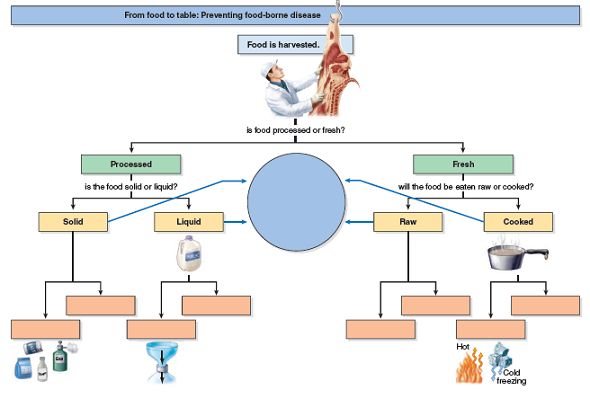
What precautions are taken at the harvesting step of food production to prevent food-borne diseases
Question
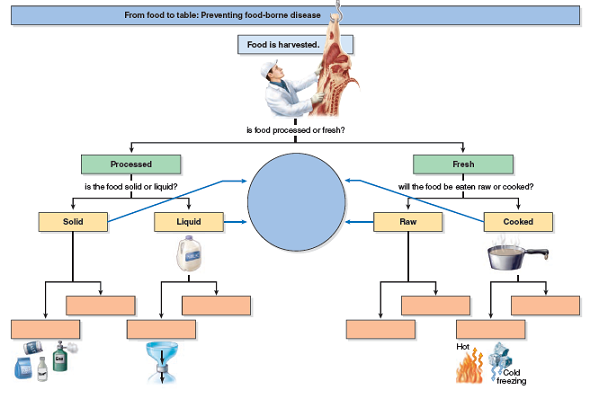
What precautions should be taken with raw foods to prevent the growth of microbes and prevent food-borne disease
Question
Question
Question
Raw Milk: Worth the Risk
In 2011, federal officials arrested three members of Rawesome Foods, an organic food collective in Ventura County, California, after a yearlong investigation. Their crime: selling raw or unpasteurized milk. Sale and consumption of raw milk is legal in California and 28 other states, but the milk is subject to inspection and regulation and, in some states, may not be sold in grocery stores. Other small farmers in California and other states have been subject to similar raids and criminal charges for distributing raw milk. Passionate proponents of raw milk believe that there is a higher nutritional content in unpasteurized milk and that the pasteurization process kills helpful bacteria, denatures enzymes, and inactivates beneficial compounds in milk. They believe that lactose intolerance, food allergies, and other maladies can be traced to the consumption of pasteurized milk. In addition, they claim that the flavor and texture of unpasteurized and non-homogenized milk far exceed what can be bought in the grocery store.
Why is most milk in the United States pasteurized
Why is raw or unpasteurized milk a health concern
In 1856, Louis Pasteur was tasked by Emperor Napoleon III to determine what was causing the spoilage of wine in France. Because of his understanding of the germ theory of disease (see chapter 1), Pasteur discovered that unwanted microbes in the wine were causing it to spoil and turn to vinegar. He developed a method of heating the wine to a specific temperature for a short period of time to kill the harmful microbes without changing the taste of the wine. This process, which came to be known as pasteurization , was used for many years to treat beer and wine before it was used with milk. Pasteurization of milk in the United States did not begin until the 1920s. Before that time, diseases such as bovine tuberculosis, brucellosis, scarlet fever, and even anthrax were contracted by consuming raw cow's milk. Raw milk can harbor microbes such as Campylobacter, Listeria, Salmonella, and Escherichia coli from fecal contamination or infection of the cow's udders, skin biota of cows, or contamination of the milking equipment. By the 1950s, pasteurization was implemented as a standard procedure in the United States, which greatly reduced the number of infections and diseases transmitted by cow's milk and other dairy products.
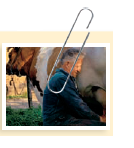
Raw milk has been a serious concern in recent years due to a number of outbreaks that have been linked to dairies and cooperative farms that sell raw milk products. The CDC reports that between 1993 and 2006, there were 73 outbreaks of disease linked to raw milk or cheese; it is estimated that the risk of disease from raw milk and milk products is 150 times greater than outbreaks caused by pasteurized milk. According to the CDC, many of the outbreaks associated with raw milk were caused by E. coli O157:H7, which causes hemolytic uremic syndrome (HUS), kidney failure, and death. Sixty percent of those sickened by raw milk were under the age of 20 and the number of reported cases is higher in states where the sale of raw milk is legal. In January of 2012, the family of a 5-year-old child in Washington State filed a lawsuit against the Cozy Valley Dairy after the child developed HUS after drinking raw milk from the dairy. Numerous other parents have witnessed their children suffer from HUS and other debilitating diseases as a result of consuming raw milk.
Are there any benefits to the consumption of raw milk
Does pasteurization remove or reduce beneficial microbes, enzymes, and chemicals in raw milk
In 2011, federal officials arrested three members of Rawesome Foods, an organic food collective in Ventura County, California, after a yearlong investigation. Their crime: selling raw or unpasteurized milk. Sale and consumption of raw milk is legal in California and 28 other states, but the milk is subject to inspection and regulation and, in some states, may not be sold in grocery stores. Other small farmers in California and other states have been subject to similar raids and criminal charges for distributing raw milk. Passionate proponents of raw milk believe that there is a higher nutritional content in unpasteurized milk and that the pasteurization process kills helpful bacteria, denatures enzymes, and inactivates beneficial compounds in milk. They believe that lactose intolerance, food allergies, and other maladies can be traced to the consumption of pasteurized milk. In addition, they claim that the flavor and texture of unpasteurized and non-homogenized milk far exceed what can be bought in the grocery store.
Why is most milk in the United States pasteurized
Why is raw or unpasteurized milk a health concern
In 1856, Louis Pasteur was tasked by Emperor Napoleon III to determine what was causing the spoilage of wine in France. Because of his understanding of the germ theory of disease (see chapter 1), Pasteur discovered that unwanted microbes in the wine were causing it to spoil and turn to vinegar. He developed a method of heating the wine to a specific temperature for a short period of time to kill the harmful microbes without changing the taste of the wine. This process, which came to be known as pasteurization , was used for many years to treat beer and wine before it was used with milk. Pasteurization of milk in the United States did not begin until the 1920s. Before that time, diseases such as bovine tuberculosis, brucellosis, scarlet fever, and even anthrax were contracted by consuming raw cow's milk. Raw milk can harbor microbes such as Campylobacter, Listeria, Salmonella, and Escherichia coli from fecal contamination or infection of the cow's udders, skin biota of cows, or contamination of the milking equipment. By the 1950s, pasteurization was implemented as a standard procedure in the United States, which greatly reduced the number of infections and diseases transmitted by cow's milk and other dairy products.
Raw milk has been a serious concern in recent years due to a number of outbreaks that have been linked to dairies and cooperative farms that sell raw milk products. The CDC reports that between 1993 and 2006, there were 73 outbreaks of disease linked to raw milk or cheese; it is estimated that the risk of disease from raw milk and milk products is 150 times greater than outbreaks caused by pasteurized milk. According to the CDC, many of the outbreaks associated with raw milk were caused by E. coli O157:H7, which causes hemolytic uremic syndrome (HUS), kidney failure, and death. Sixty percent of those sickened by raw milk were under the age of 20 and the number of reported cases is higher in states where the sale of raw milk is legal. In January of 2012, the family of a 5-year-old child in Washington State filed a lawsuit against the Cozy Valley Dairy after the child developed HUS after drinking raw milk from the dairy. Numerous other parents have witnessed their children suffer from HUS and other debilitating diseases as a result of consuming raw milk.
Are there any benefits to the consumption of raw milk
Does pasteurization remove or reduce beneficial microbes, enzymes, and chemicals in raw milk
Question
Question
Question
Question
Question
Question
Question
Question
Question
Question
Question
Question
Question
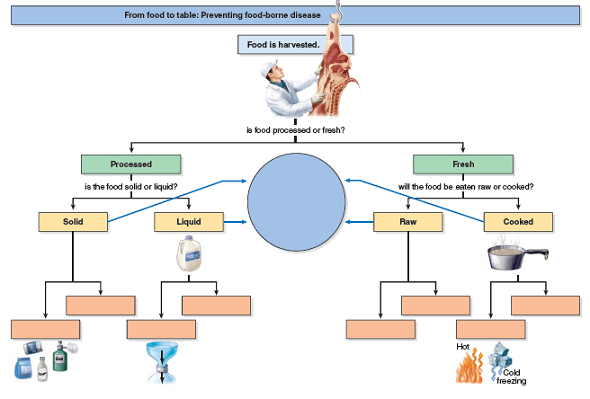
What precautions should be taken with food cooked at home or in a restaurant
Question
Question
Question
Question
Question
Question
Question
From chapter 3, figure 3.5 b. If this MacConkey agar plate was inoculated with well water, would you report that coliforms were present in the water
Figure 3.5 b: Examples of media that are both selective and differential. (b) MacConkey agar selects against gram-positive bacteria. It also differentiates between lactose-fermenting bacteria (indicated by a pink-red reaction in the center of the colony) and lactose-negative bacteria (indicated by an off-white colony with no dye reaction).
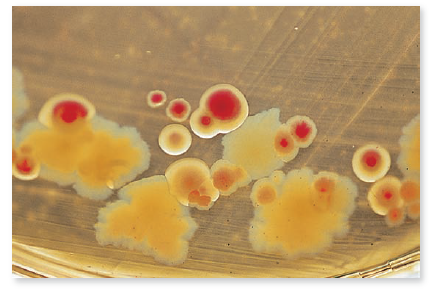
Figure 3.5 b: Examples of media that are both selective and differential. (b) MacConkey agar selects against gram-positive bacteria. It also differentiates between lactose-fermenting bacteria (indicated by a pink-red reaction in the center of the colony) and lactose-negative bacteria (indicated by an off-white colony with no dye reaction).
Question
Question
Question
Question
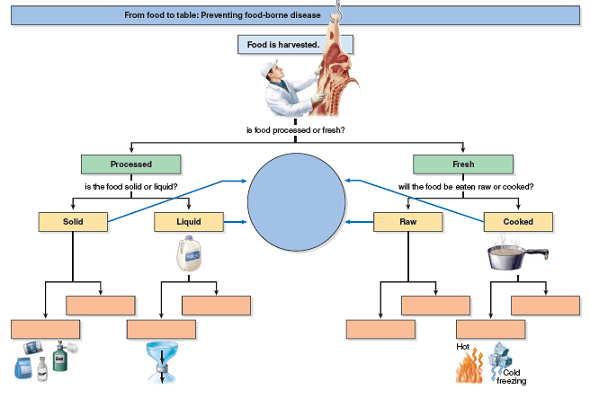
What processes do liquid foods go through to remove or destroy microbes
Question
Question
Question
Question
Critical thinking is the ability to reason and solve problems using facts and concepts. These questions can be approached from a number of angles and, in most cases, they do not have a single correct answer.
Every year, supposedly safe municipal water supplies cause outbreaks of enteric illness.
a. Using the Wisconsin outbreak example from the 1990s, explain how pathogens can slip through the processes of water analysis and treatment undetected and untreated.
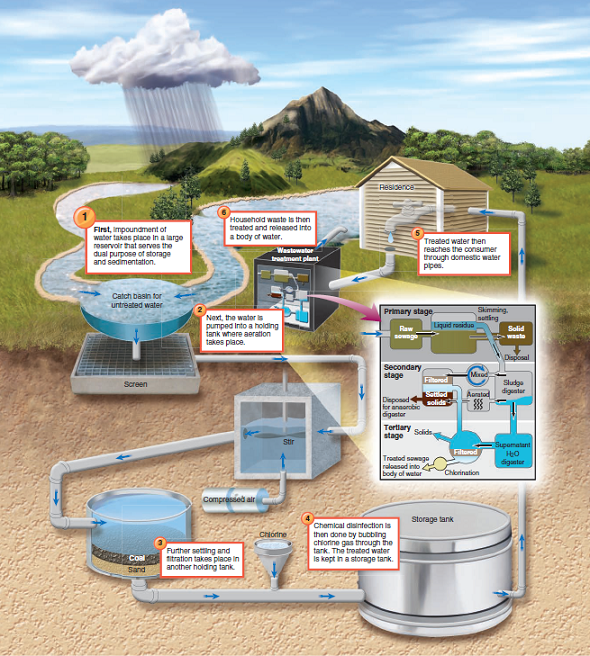
b. Looking at process figure 25.1, discuss how bioterrorists could target municipal water supplies and what pathogens would be utilized for this type of dispersal.
Figure 25.1: The major steps in water purification and sewage treatment.
Every year, supposedly safe municipal water supplies cause outbreaks of enteric illness.
a. Using the Wisconsin outbreak example from the 1990s, explain how pathogens can slip through the processes of water analysis and treatment undetected and untreated.
b. Looking at process figure 25.1, discuss how bioterrorists could target municipal water supplies and what pathogens would be utilized for this type of dispersal.
Figure 25.1: The major steps in water purification and sewage treatment.
Question
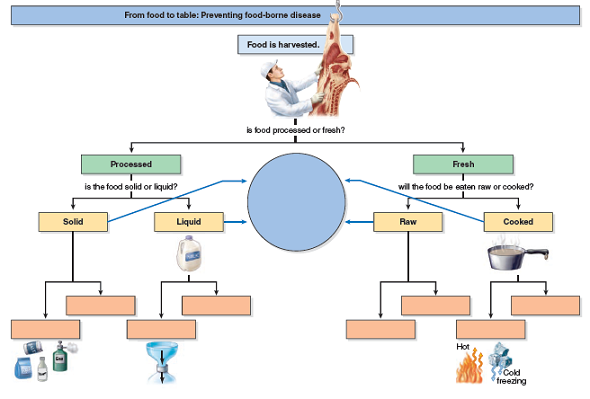
What single process is fundamental in preventing food-borne disease
Question
Question
Question
Question
Question
Question
Question
Question
Question
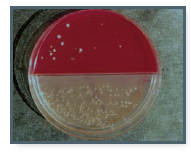
From chapter 3, selective and differential media. This is a plate with blood agar on the top and MacConkey agar on the bottom. (You studied both of these agars in chapter 3.) It has been inoculated with samples from a wooden cutting board that had been exposed to a raw chicken carcass. Knowing what you know about the properties of these two agars, say as much as you can about the bacteria growing on them.
Question
Question
Question
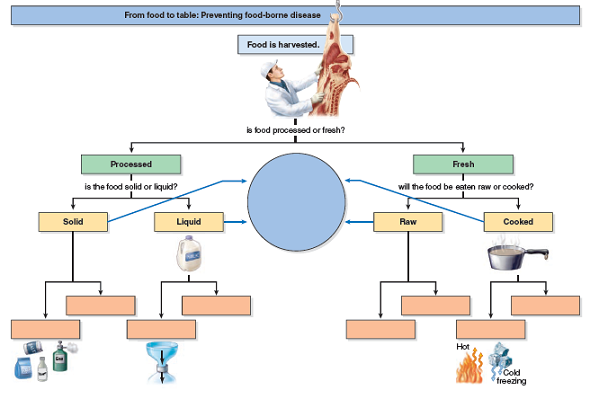
How can the growth of microbes in solid processed foods be prevented
Question
Are there any circumstances in which food should be sterilized

Question

Unlock Deck
Sign up to unlock the cards in this deck!
Unlock Deck
Unlock Deck
1/57

Play

Full screen (f)
Deck 25: Applied Microbiology and Food and Water Safety
1
Critical thinking is the ability to reason and solve problems using facts and concepts. These questions can be approached from a number of angles and, in most cases, they do not have a single correct answer.
Provide evidence in support of or refuting the following statement: Humans consume microbes every day with little health risk.
Provide evidence in support of or refuting the following statement: Humans consume microbes every day with little health risk.
Microbes cover just about every surface. We as humans consume a very large amount of microbes every day without ill effect. This is for several reasons. First, many microbes are harmless and do not cause pathogenic diseases. Another is our immune system. Some microbes enter through our airways but cells and mucus trap and kill microbes. Also, the destination of food and drink consumed orally is the stomach, a very low pH solution with acid that kills many microbes.
2
Critical thinking is the ability to reason and solve problems using facts and concepts. These questions can be approached from a number of angles and, in most cases, they do not have a single correct answer.
You are working for the county health department this summer, and your job is to regularly survey the local beaches for microbial contamination.
a. Describe the tests you may use to analyze the water quality in these recreational areas.
b. You identify high levels of Enterobacter species in a sample one day. Summarize how you will convey this information to the beach supervisor who asks, "Are we shutting down today "
c. Explain why there is little tolerance for fecal coliforms in drinking or recreational water.
You are working for the county health department this summer, and your job is to regularly survey the local beaches for microbial contamination.
a. Describe the tests you may use to analyze the water quality in these recreational areas.
b. You identify high levels of Enterobacter species in a sample one day. Summarize how you will convey this information to the beach supervisor who asks, "Are we shutting down today "
c. Explain why there is little tolerance for fecal coliforms in drinking or recreational water.
Imagine you are working over the summer for the health department and your duties include testing beaches for microbial contamination.
(a)To test the water supply, a water quality assay is performed. This involves a plate count. A sample of the water is put over a solid medium. The population of the water is determined by how many colonies develop on the medium.
(b)Enterobacter is not a fecal coliform; instead it is a facultative coliform. These types of coliforms can be natural and not be disease causing. So the beach would not be closed. On a fecal contamination would result is beach closing.
(c)Fecal coliforms can cause serious illness in humans. That is why they are so fervently tested for in water supplies and at recreational locations such as beaches and lakes.
(a)To test the water supply, a water quality assay is performed. This involves a plate count. A sample of the water is put over a solid medium. The population of the water is determined by how many colonies develop on the medium.
(b)Enterobacter is not a fecal coliform; instead it is a facultative coliform. These types of coliforms can be natural and not be disease causing. So the beach would not be closed. On a fecal contamination would result is beach closing.
(c)Fecal coliforms can cause serious illness in humans. That is why they are so fervently tested for in water supplies and at recreational locations such as beaches and lakes.
3
Discuss how microorganisms themselves are useful as food products today.
Microbes are used to make food and are even in food. Yogurt is an example of a food that is made with microbes. The milk is fermented and the starter bacteria are what give yogurt the flavor and texture. Milk cream fermented with bacteria makes cultured butter, with versions made with two types of bacteria.
Cheese making uses microbes in its production. Blue cheese is made with bacteria and they remain on the cheese when we eat it. Diary products such as these retain the microbes and we consume them. Spirulina is a bacterium found on lakes. It is taken as a health supplement and is nutritious like green plants. Mycoprotein is made from a fungus. This is used to make meat alternatives.
Cheese making uses microbes in its production. Blue cheese is made with bacteria and they remain on the cheese when we eat it. Diary products such as these retain the microbes and we consume them. Spirulina is a bacterium found on lakes. It is taken as a health supplement and is nutritious like green plants. Mycoprotein is made from a fungus. This is used to make meat alternatives.
4
During sewage treatment, microbial action on a large scale first takes place in the
A) primary phase.
B) secondary phase.
C) Microbial action is not a part of sewage treatment.
D) Microbial action takes place after the secondary phase.
A) primary phase.
B) secondary phase.
C) Microbial action is not a part of sewage treatment.
D) Microbial action takes place after the secondary phase.
Unlock Deck
Unlock for access to all 57 flashcards in this deck.
Unlock Deck
k this deck
5
Secondary metabolites of microbes are formed during the ___________ phase of growth.
A) exponential
B) stationary
C) trophophase
D) idiophase
A) exponential
B) stationary
C) trophophase
D) idiophase
Unlock Deck
Unlock for access to all 57 flashcards in this deck.
Unlock Deck
k this deck
6
If the statement is true, leave as is. If it is false, correct it by rewriting the sentence.
Alcoholic beverages are produced by the fermentation of sugar to ethanol and carbon dioxide.
Alcoholic beverages are produced by the fermentation of sugar to ethanol and carbon dioxide.
Unlock Deck
Unlock for access to all 57 flashcards in this deck.
Unlock Deck
k this deck
7
Outline the steps in water purification.
Unlock Deck
Unlock for access to all 57 flashcards in this deck.
Unlock Deck
k this deck
8
List five important pathogens of drinking water.
Unlock Deck
Unlock for access to all 57 flashcards in this deck.
Unlock Deck
k this deck
9
Provide background on current HACCP guidelines, and describe how they are used to maintain food safety.
Unlock Deck
Unlock for access to all 57 flashcards in this deck.
Unlock Deck
k this deck
10
What precautions are taken at the harvesting step of food production to prevent food-borne diseases
Unlock Deck
Unlock for access to all 57 flashcards in this deck.
Unlock Deck
k this deck
11
What precautions should be taken with raw foods to prevent the growth of microbes and prevent food-borne disease
Unlock Deck
Unlock for access to all 57 flashcards in this deck.
Unlock Deck
k this deck
12
Critical thinking is the ability to reason and solve problems using facts and concepts. These questions can be approached from a number of angles and, in most cases, they do not have a single correct answer.
Further investigate the HACCP system, and summarize two methods currently used to detect unsafe food industry practices. Provide examples illustrating how these observations have changed how food is harvested, manufactured, and dispersed in the United States today.
Further investigate the HACCP system, and summarize two methods currently used to detect unsafe food industry practices. Provide examples illustrating how these observations have changed how food is harvested, manufactured, and dispersed in the United States today.
Unlock Deck
Unlock for access to all 57 flashcards in this deck.
Unlock Deck
k this deck
13
If the statement is true, leave as is. If it is false, correct it by rewriting the sentence.
The incidence of many food-borne illnesses declined in the period between 1998 and 2008.
The incidence of many food-borne illnesses declined in the period between 1998 and 2008.
Unlock Deck
Unlock for access to all 57 flashcards in this deck.
Unlock Deck
k this deck
14
Raw Milk: Worth the Risk
In 2011, federal officials arrested three members of Rawesome Foods, an organic food collective in Ventura County, California, after a yearlong investigation. Their crime: selling raw or unpasteurized milk. Sale and consumption of raw milk is legal in California and 28 other states, but the milk is subject to inspection and regulation and, in some states, may not be sold in grocery stores. Other small farmers in California and other states have been subject to similar raids and criminal charges for distributing raw milk. Passionate proponents of raw milk believe that there is a higher nutritional content in unpasteurized milk and that the pasteurization process kills helpful bacteria, denatures enzymes, and inactivates beneficial compounds in milk. They believe that lactose intolerance, food allergies, and other maladies can be traced to the consumption of pasteurized milk. In addition, they claim that the flavor and texture of unpasteurized and non-homogenized milk far exceed what can be bought in the grocery store.
Why is most milk in the United States pasteurized
Why is raw or unpasteurized milk a health concern
In 1856, Louis Pasteur was tasked by Emperor Napoleon III to determine what was causing the spoilage of wine in France. Because of his understanding of the germ theory of disease (see chapter 1), Pasteur discovered that unwanted microbes in the wine were causing it to spoil and turn to vinegar. He developed a method of heating the wine to a specific temperature for a short period of time to kill the harmful microbes without changing the taste of the wine. This process, which came to be known as pasteurization , was used for many years to treat beer and wine before it was used with milk. Pasteurization of milk in the United States did not begin until the 1920s. Before that time, diseases such as bovine tuberculosis, brucellosis, scarlet fever, and even anthrax were contracted by consuming raw cow's milk. Raw milk can harbor microbes such as Campylobacter, Listeria, Salmonella, and Escherichia coli from fecal contamination or infection of the cow's udders, skin biota of cows, or contamination of the milking equipment. By the 1950s, pasteurization was implemented as a standard procedure in the United States, which greatly reduced the number of infections and diseases transmitted by cow's milk and other dairy products.
Raw milk has been a serious concern in recent years due to a number of outbreaks that have been linked to dairies and cooperative farms that sell raw milk products. The CDC reports that between 1993 and 2006, there were 73 outbreaks of disease linked to raw milk or cheese; it is estimated that the risk of disease from raw milk and milk products is 150 times greater than outbreaks caused by pasteurized milk. According to the CDC, many of the outbreaks associated with raw milk were caused by E. coli O157:H7, which causes hemolytic uremic syndrome (HUS), kidney failure, and death. Sixty percent of those sickened by raw milk were under the age of 20 and the number of reported cases is higher in states where the sale of raw milk is legal. In January of 2012, the family of a 5-year-old child in Washington State filed a lawsuit against the Cozy Valley Dairy after the child developed HUS after drinking raw milk from the dairy. Numerous other parents have witnessed their children suffer from HUS and other debilitating diseases as a result of consuming raw milk.
Are there any benefits to the consumption of raw milk
Does pasteurization remove or reduce beneficial microbes, enzymes, and chemicals in raw milk
In 2011, federal officials arrested three members of Rawesome Foods, an organic food collective in Ventura County, California, after a yearlong investigation. Their crime: selling raw or unpasteurized milk. Sale and consumption of raw milk is legal in California and 28 other states, but the milk is subject to inspection and regulation and, in some states, may not be sold in grocery stores. Other small farmers in California and other states have been subject to similar raids and criminal charges for distributing raw milk. Passionate proponents of raw milk believe that there is a higher nutritional content in unpasteurized milk and that the pasteurization process kills helpful bacteria, denatures enzymes, and inactivates beneficial compounds in milk. They believe that lactose intolerance, food allergies, and other maladies can be traced to the consumption of pasteurized milk. In addition, they claim that the flavor and texture of unpasteurized and non-homogenized milk far exceed what can be bought in the grocery store.
Why is most milk in the United States pasteurized
Why is raw or unpasteurized milk a health concern
In 1856, Louis Pasteur was tasked by Emperor Napoleon III to determine what was causing the spoilage of wine in France. Because of his understanding of the germ theory of disease (see chapter 1), Pasteur discovered that unwanted microbes in the wine were causing it to spoil and turn to vinegar. He developed a method of heating the wine to a specific temperature for a short period of time to kill the harmful microbes without changing the taste of the wine. This process, which came to be known as pasteurization , was used for many years to treat beer and wine before it was used with milk. Pasteurization of milk in the United States did not begin until the 1920s. Before that time, diseases such as bovine tuberculosis, brucellosis, scarlet fever, and even anthrax were contracted by consuming raw cow's milk. Raw milk can harbor microbes such as Campylobacter, Listeria, Salmonella, and Escherichia coli from fecal contamination or infection of the cow's udders, skin biota of cows, or contamination of the milking equipment. By the 1950s, pasteurization was implemented as a standard procedure in the United States, which greatly reduced the number of infections and diseases transmitted by cow's milk and other dairy products.
Raw milk has been a serious concern in recent years due to a number of outbreaks that have been linked to dairies and cooperative farms that sell raw milk products. The CDC reports that between 1993 and 2006, there were 73 outbreaks of disease linked to raw milk or cheese; it is estimated that the risk of disease from raw milk and milk products is 150 times greater than outbreaks caused by pasteurized milk. According to the CDC, many of the outbreaks associated with raw milk were caused by E. coli O157:H7, which causes hemolytic uremic syndrome (HUS), kidney failure, and death. Sixty percent of those sickened by raw milk were under the age of 20 and the number of reported cases is higher in states where the sale of raw milk is legal. In January of 2012, the family of a 5-year-old child in Washington State filed a lawsuit against the Cozy Valley Dairy after the child developed HUS after drinking raw milk from the dairy. Numerous other parents have witnessed their children suffer from HUS and other debilitating diseases as a result of consuming raw milk.
Are there any benefits to the consumption of raw milk
Does pasteurization remove or reduce beneficial microbes, enzymes, and chemicals in raw milk
Unlock Deck
Unlock for access to all 57 flashcards in this deck.
Unlock Deck
k this deck
15
Critical thinking is the ability to reason and solve problems using facts and concepts. These questions can be approached from a number of angles and, in most cases, they do not have a single correct answer.
a. List examples of microbes used in the production of fermented products such as beer, cheese, and pickles.
b. Explain why only specific microbes are selected to produce each of these distinct fermented products.
a. List examples of microbes used in the production of fermented products such as beer, cheese, and pickles.
b. Explain why only specific microbes are selected to produce each of these distinct fermented products.
Unlock Deck
Unlock for access to all 57 flashcards in this deck.
Unlock Deck
k this deck
16
In industrial fermentation, which step precedes downstream processing
A) removal of waste
B) introduction of microbes into chamber
C) packaging of product
D) fermentation
A) removal of waste
B) introduction of microbes into chamber
C) packaging of product
D) fermentation
Unlock Deck
Unlock for access to all 57 flashcards in this deck.
Unlock Deck
k this deck
17
Report 10-year trends in the incidence of food-borne illness within the United States.
Unlock Deck
Unlock for access to all 57 flashcards in this deck.
Unlock Deck
k this deck
18
Appendix D provides guidance for working with concept maps.
Using the words that follow, please create a concept map illustrating the relationships among these key terms from chapter 25.
primary metabolites
secondary metabolites
fermentation
microbes
downstream processing
substrate
pH
biotransformations
Using the words that follow, please create a concept map illustrating the relationships among these key terms from chapter 25.
primary metabolites
secondary metabolites
fermentation
microbes
downstream processing
substrate
pH
biotransformations
Unlock Deck
Unlock for access to all 57 flashcards in this deck.
Unlock Deck
k this deck
19
Which of the following is unlikely to be a waterborne pathogen
A) Giardia lamblia
B) Salmonella
C) Vibrio
D) Staphylococcus
A) Giardia lamblia
B) Salmonella
C) Vibrio
D) Staphylococcus
Unlock Deck
Unlock for access to all 57 flashcards in this deck.
Unlock Deck
k this deck
20
Provide examples of indicator bacteria, and describe their role in the survey of water quality.
Unlock Deck
Unlock for access to all 57 flashcards in this deck.
Unlock Deck
k this deck
21
If the statement is true, leave as is. If it is false, correct it by rewriting the sentence.
Refrigerating food prevents the growth of all bacteria.
Refrigerating food prevents the growth of all bacteria.
Unlock Deck
Unlock for access to all 57 flashcards in this deck.
Unlock Deck
k this deck
22
Critical thinking is the ability to reason and solve problems using facts and concepts. These questions can be approached from a number of angles and, in most cases, they do not have a single correct answer.
a. Summarize one beneficial use of sludge today, and discuss one potential environmental risk in the use of this substance.
b. Explain how waste is handled in the United States when the household is not connected to a sewage treatment facility.
a. Summarize one beneficial use of sludge today, and discuss one potential environmental risk in the use of this substance.
b. Explain how waste is handled in the United States when the household is not connected to a sewage treatment facility.
Unlock Deck
Unlock for access to all 57 flashcards in this deck.
Unlock Deck
k this deck
23
Differentiate water purification from sewage treatment.
Unlock Deck
Unlock for access to all 57 flashcards in this deck.
Unlock Deck
k this deck
24
Critical thinking is the ability to reason and solve problems using facts and concepts. These questions can be approached from a number of angles and, in most cases, they do not have a single correct answer.
Conduct additional research and discuss current studies supporting the feasibility of using applied microbiology to offset the global energy challenges that exist today.
Conduct additional research and discuss current studies supporting the feasibility of using applied microbiology to offset the global energy challenges that exist today.
Unlock Deck
Unlock for access to all 57 flashcards in this deck.
Unlock Deck
k this deck
25
Outline basic principles of using temperature to preserve food.
Unlock Deck
Unlock for access to all 57 flashcards in this deck.
Unlock Deck
k this deck
26
Drinking water utilities monitor their production system for the occurrence of
A) methanogens.
B) coliform bacteria.
C) nematodes.
D) yeasts.
A) methanogens.
B) coliform bacteria.
C) nematodes.
D) yeasts.
Unlock Deck
Unlock for access to all 57 flashcards in this deck.
Unlock Deck
k this deck
27
What precautions should be taken with food cooked at home or in a restaurant
Unlock Deck
Unlock for access to all 57 flashcards in this deck.
Unlock Deck
k this deck
28
Which of the following is/are currently being produced through biotechnology
A) glycerol
B) vitamins
C) steroids
D) all of the above
A) glycerol
B) vitamins
C) steroids
D) all of the above
Unlock Deck
Unlock for access to all 57 flashcards in this deck.
Unlock Deck
k this deck
29
List methods other than temperature currently used for preservation in the food industry.
Unlock Deck
Unlock for access to all 57 flashcards in this deck.
Unlock Deck
k this deck
30
Compose a sentence about the history of applied microbiology.
Unlock Deck
Unlock for access to all 57 flashcards in this deck.
Unlock Deck
k this deck
31
Critical thinking is the ability to reason and solve problems using facts and concepts. These questions can be approached from a number of angles and, in most cases, they do not have a single correct answer.
a. If fermentation of sugars to produce alcohol in wine is anaerobic, why do winemakers make sure that the early phase of yeast growth is aerobic
b. In many cases, the identification of bacteria in a tank of beer signals trouble for the brewing process. Explain biochemically why this is so.
a. If fermentation of sugars to produce alcohol in wine is anaerobic, why do winemakers make sure that the early phase of yeast growth is aerobic
b. In many cases, the identification of bacteria in a tank of beer signals trouble for the brewing process. Explain biochemically why this is so.
Unlock Deck
Unlock for access to all 57 flashcards in this deck.
Unlock Deck
k this deck
32
Summarize methods for identifying and quantifying microbial contaminants in water supplies.
Unlock Deck
Unlock for access to all 57 flashcards in this deck.
Unlock Deck
k this deck
33
State the general aim(s) of industrial microbiology.
Unlock Deck
Unlock for access to all 57 flashcards in this deck.
Unlock Deck
k this deck
34
From chapter 3, figure 3.5 b. If this MacConkey agar plate was inoculated with well water, would you report that coliforms were present in the water
Figure 3.5 b: Examples of media that are both selective and differential. (b) MacConkey agar selects against gram-positive bacteria. It also differentiates between lactose-fermenting bacteria (indicated by a pink-red reaction in the center of the colony) and lactose-negative bacteria (indicated by an off-white colony with no dye reaction).
Figure 3.5 b: Examples of media that are both selective and differential. (b) MacConkey agar selects against gram-positive bacteria. It also differentiates between lactose-fermenting bacteria (indicated by a pink-red reaction in the center of the colony) and lactose-negative bacteria (indicated by an off-white colony with no dye reaction).
Unlock Deck
Unlock for access to all 57 flashcards in this deck.
Unlock Deck
k this deck
35
The "bloom" in wine making refers to
A) the flowering of the grape plant.
B) the biofilm on the skin of the grapes.
C) the fermentation taking place in vats.
D) none of the above.
A) the flowering of the grape plant.
B) the biofilm on the skin of the grapes.
C) the fermentation taking place in vats.
D) none of the above.
Unlock Deck
Unlock for access to all 57 flashcards in this deck.
Unlock Deck
k this deck
36
Critical thinking is the ability to reason and solve problems using facts and concepts. These questions can be approached from a number of angles and, in most cases, they do not have a single correct answer.
Summarize examples of how modern biotechnology is aiding humans medically, nutritionally, and environmentally.
Summarize examples of how modern biotechnology is aiding humans medically, nutritionally, and environmentally.
Unlock Deck
Unlock for access to all 57 flashcards in this deck.
Unlock Deck
k this deck
37
Distinguish between primary and secondary metabolites.
Unlock Deck
Unlock for access to all 57 flashcards in this deck.
Unlock Deck
k this deck
38
What processes do liquid foods go through to remove or destroy microbes
Unlock Deck
Unlock for access to all 57 flashcards in this deck.
Unlock Deck
k this deck
39
Describe the primary and secondary phases of sewage treatment.
Unlock Deck
Unlock for access to all 57 flashcards in this deck.
Unlock Deck
k this deck
40
In biotechnology, fermentation refers to
A) the anaerobic metabolism of microorganisms.
B) the creation of alcoholic beverages.
C) the mass culturing of microorganisms to yield large quantities of products.
D) all of the above.
A) the anaerobic metabolism of microorganisms.
B) the creation of alcoholic beverages.
C) the mass culturing of microorganisms to yield large quantities of products.
D) all of the above.
Unlock Deck
Unlock for access to all 57 flashcards in this deck.
Unlock Deck
k this deck
41
List the four steps of industrial product production from microbes.
Unlock Deck
Unlock for access to all 57 flashcards in this deck.
Unlock Deck
k this deck
42
Critical thinking is the ability to reason and solve problems using facts and concepts. These questions can be approached from a number of angles and, in most cases, they do not have a single correct answer.
Every year, supposedly safe municipal water supplies cause outbreaks of enteric illness.
a. Using the Wisconsin outbreak example from the 1990s, explain how pathogens can slip through the processes of water analysis and treatment undetected and untreated.
b. Looking at process figure 25.1, discuss how bioterrorists could target municipal water supplies and what pathogens would be utilized for this type of dispersal.
Figure 25.1: The major steps in water purification and sewage treatment.
Every year, supposedly safe municipal water supplies cause outbreaks of enteric illness.
a. Using the Wisconsin outbreak example from the 1990s, explain how pathogens can slip through the processes of water analysis and treatment undetected and untreated.
b. Looking at process figure 25.1, discuss how bioterrorists could target municipal water supplies and what pathogens would be utilized for this type of dispersal.
Figure 25.1: The major steps in water purification and sewage treatment.
Unlock Deck
Unlock for access to all 57 flashcards in this deck.
Unlock Deck
k this deck
43
What single process is fundamental in preventing food-borne disease
Unlock Deck
Unlock for access to all 57 flashcards in this deck.
Unlock Deck
k this deck
44
Name five foods and/or beverages that are produced using microbial fermentation.
Unlock Deck
Unlock for access to all 57 flashcards in this deck.
Unlock Deck
k this deck
45
Identify five industrial products made by microorganisms, and describe their applications.
Unlock Deck
Unlock for access to all 57 flashcards in this deck.
Unlock Deck
k this deck
46
Milk is usually pasteurized by
A) the high-temperature short-time method.
B) ultrapasteurization.
C) the batch method.
D) electrical currents.
A) the high-temperature short-time method.
B) ultrapasteurization.
C) the batch method.
D) electrical currents.
Unlock Deck
Unlock for access to all 57 flashcards in this deck.
Unlock Deck
k this deck
47
Critical thinking is the ability to reason and solve problems using facts and concepts. These questions can be approached from a number of angles and, in most cases, they do not have a single correct answer.
a. Predict the differences in the outcome if raw milk is incubated for 48 hours versus pasteurized milk being incubated for the same length of time.
b. Many soldiers are deployed to areas of the world where there is no refrigeration. Explain how these individuals can still have safe dairy products to consume each day.
a. Predict the differences in the outcome if raw milk is incubated for 48 hours versus pasteurized milk being incubated for the same length of time.
b. Many soldiers are deployed to areas of the world where there is no refrigeration. Explain how these individuals can still have safe dairy products to consume each day.
Unlock Deck
Unlock for access to all 57 flashcards in this deck.
Unlock Deck
k this deck
48
Summarize the microbial process that leads to leavening in bread.
Unlock Deck
Unlock for access to all 57 flashcards in this deck.
Unlock Deck
k this deck
49
Define biotechnology, and explain how its uses have changed in modern times.
Unlock Deck
Unlock for access to all 57 flashcards in this deck.
Unlock Deck
k this deck
50
When algae produce biofuels, what is the other significant by-product of photosynthesis
A) CO 2
B) energy
C) waste
D) O 2
A) CO 2
B) energy
C) waste
D) O 2
Unlock Deck
Unlock for access to all 57 flashcards in this deck.
Unlock Deck
k this deck
51
If the statement is true, leave as is. If it is false, correct it by rewriting the sentence.
Raw sewage is still being dumped into the aquatic environment in many places around the world.
Raw sewage is still being dumped into the aquatic environment in many places around the world.
Unlock Deck
Unlock for access to all 57 flashcards in this deck.
Unlock Deck
k this deck
52
From chapter 3, selective and differential media. This is a plate with blood agar on the top and MacConkey agar on the bottom. (You studied both of these agars in chapter 3.) It has been inoculated with samples from a wooden cutting board that had been exposed to a raw chicken carcass. Knowing what you know about the properties of these two agars, say as much as you can about the bacteria growing on them.
Unlock Deck
Unlock for access to all 57 flashcards in this deck.
Unlock Deck
k this deck
53
Discuss how wastes can be converted into usable forms of energy.
Unlock Deck
Unlock for access to all 57 flashcards in this deck.
Unlock Deck
k this deck
54
Write the equation showing how yeasts convert sugar into alcoholic beverages.
Unlock Deck
Unlock for access to all 57 flashcards in this deck.
Unlock Deck
k this deck
55
How can the growth of microbes in solid processed foods be prevented
Unlock Deck
Unlock for access to all 57 flashcards in this deck.
Unlock Deck
k this deck
56
Are there any circumstances in which food should be sterilized
Unlock Deck
Unlock for access to all 57 flashcards in this deck.
Unlock Deck
k this deck
57
If the statement is true, leave as is. If it is false, correct it by rewriting the sentence.
Food products should always be kept completely free of microorganisms.
Food products should always be kept completely free of microorganisms.
Unlock Deck
Unlock for access to all 57 flashcards in this deck.
Unlock Deck
k this deck
Unlock Deck
Unlock for access to all 57 flashcards in this deck.






