







 Chat with AI

Deck 24: Therapies
Full screen (f)

Question
If you go to medical school, receive an MD degree, and then take a psychiatric residency, you can become a (a) _____. If you go to graduate school in clinical psychology and complete a PhD program, including at least one year of work in a clinical setting, you can become a (b) _____. If you go to graduate school in psychology or education and complete a PhD program, including work in a counseling setting, you can become a (c) _____. 

Question
One approach combines changing negative, unhealthy, or distorted thoughts and beliefs by substituting positive, healthy, and realistic ones and changing one's undesirable or disruptive behaviors by learning and practicing new skills to improve functioning. This approach, which combines two therapies, is called _____ therapy. 
Question
Freud developed two techniques to uncover unconscious thoughts. One was to encourage clients to talk about any thoughts or images that entered their heads, which is called (a) _____. The second technique was based on the assumption that dreams contain hidden meanings and symbols and the therapist's role was to (b) _____ these dream symbols. 
Question
Rogers believed that the therapist's characteristics foster growth and change. The therapist needs to have the ability to understand what the client is saying and feeling, a trait called (a) _____; the ability to communicate caring, respect, and regard for the client, called (b) _____; and the ability to be real and nondefensive in interactions with the client, called (c) _____. 
Question
Virtual Reality Can Be More than Fun Games
Most people experience a traumatic event at some point in their life, but for some, the trauma has lasting effects that interfere with their daily functioning. People who are plagued by nightmares, flashbacks, and constant stress as a result of a traumatic experience, such as abuse, rape, burglary, or watching a person die, are often in desperate need of treatment. For many years, therapists have been working with such clients by helping them confront their fears in a systematic, step-by-step approach.
As you may expect, many clients who have intense fears are reluctant to undergo therapy that requires them to confront the very fear they so badly want to avoid. A relatively new treatment option for these clients is virtualreality therapy, where they can vividly experience the feared object or situation in a safe and controlled manner. That's right, virtual reality is no longer only about experiencing fun adventures or fantasies. It's a powerful treatment technique. For instance, virtual-reality therapy can help a socially anxious client speak to intimidating crowds of people, or help a client with a phobia of spiders to approach and hold a hideouslooking spider, or even help a client with an intense fear of heights stand on a 30-story building and look straight down.
The virtual worlds are so realistic that when someone with social anxiety is asked a question by a virtual stranger, the resulting tension mimics that which takes place in real-life encounters. And, the reaction is the same when someone with a substance addiction is offered a virtual beer or a virtual line of cocaine.
One of the major advantages of virtual-reality therapy is that it can be used when a client's fear is not something a therapist can easily expose him or her to. For this reason, virtualreality therapy is being used to treat Iraq war veterans diagnosed with PTSD as a result of traumatic combat experiences. Therapists use a computer program to create a virtual environment that consists of the key elements of the reported traumatic experience. The handheld joystick is used to navigate through the three-dimensional scene, and special goggles help make the scene more real. The reenactment takes place on a vibrating platform so the veteran can feel the humming of the tank's motor or the rumbling of explosives being set off. Sounds and smells (such as voices, gunshots, and odors) can be incorporated to add to the realness of the situation. This process is gradual, beginning with only a few elements of the traumatic experience and adding more elements until the scenes become gruesomely realistic, with images of people getting blown up and terrifying sounds of screaming. The goal is that eventually the veteran can go through an intense re-creation without being overcome with fear.
Although the current technology is not nearly as advanced as the world portrayed in The Matrix films, based on clients' intense reactions, the virtual scenes are sophisticated enough.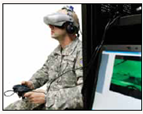
Question
What type of mental health professional(s) would most likely administer virtual-reality therapy?
Most people experience a traumatic event at some point in their life, but for some, the trauma has lasting effects that interfere with their daily functioning. People who are plagued by nightmares, flashbacks, and constant stress as a result of a traumatic experience, such as abuse, rape, burglary, or watching a person die, are often in desperate need of treatment. For many years, therapists have been working with such clients by helping them confront their fears in a systematic, step-by-step approach.
As you may expect, many clients who have intense fears are reluctant to undergo therapy that requires them to confront the very fear they so badly want to avoid. A relatively new treatment option for these clients is virtualreality therapy, where they can vividly experience the feared object or situation in a safe and controlled manner. That's right, virtual reality is no longer only about experiencing fun adventures or fantasies. It's a powerful treatment technique. For instance, virtual-reality therapy can help a socially anxious client speak to intimidating crowds of people, or help a client with a phobia of spiders to approach and hold a hideouslooking spider, or even help a client with an intense fear of heights stand on a 30-story building and look straight down.
The virtual worlds are so realistic that when someone with social anxiety is asked a question by a virtual stranger, the resulting tension mimics that which takes place in real-life encounters. And, the reaction is the same when someone with a substance addiction is offered a virtual beer or a virtual line of cocaine.
One of the major advantages of virtual-reality therapy is that it can be used when a client's fear is not something a therapist can easily expose him or her to. For this reason, virtualreality therapy is being used to treat Iraq war veterans diagnosed with PTSD as a result of traumatic combat experiences. Therapists use a computer program to create a virtual environment that consists of the key elements of the reported traumatic experience. The handheld joystick is used to navigate through the three-dimensional scene, and special goggles help make the scene more real. The reenactment takes place on a vibrating platform so the veteran can feel the humming of the tank's motor or the rumbling of explosives being set off. Sounds and smells (such as voices, gunshots, and odors) can be incorporated to add to the realness of the situation. This process is gradual, beginning with only a few elements of the traumatic experience and adding more elements until the scenes become gruesomely realistic, with images of people getting blown up and terrifying sounds of screaming. The goal is that eventually the veteran can go through an intense re-creation without being overcome with fear.
Although the current technology is not nearly as advanced as the world portrayed in The Matrix films, based on clients' intense reactions, the virtual scenes are sophisticated enough.
Question
What type of mental health professional(s) would most likely administer virtual-reality therapy?
Question
There is a technique of behavior therapy in which the client is gradually exposed to the feared object while simultaneously practicing relaxation. This technique, which involves three steps-learning to relax, constructing a hierarchy with the least feared situation on the bottom and the most feared situation at the top, and being progressively exposed to the feared situation-is called _____. 
Question
Therapy in which the therapist and client talk about the client's symptoms and problems with the goal of reaching or identifying the cause of the problem is called (a) _____ therapy. Therapy that involves the application of learning principles and focuses on identifying and changing specific behaviors is called (b) _____ therapy. Therapy that involves the use of interventions to treat mental disorders that change biological factors is called (c) _____ therapy. 
Question
Another form of insight therapy is the cognitive therapy developed by Aaron Beck. The basic assumption of Beck's cognitive theory is that our (a) _____ negative thoughts distort how we perceive and interpret things, thus influencing our behaviors and feelings. For example, making blanket judgments about yourself on the basis of a single incident is called (b) _____. Sorting information into one of two categories is (c) _____. Focusing on one detail so much that you do not notice other events is using (d) _____. Beck believes that maladaptive thought patterns cause a distorted view of one's world, which in turn may lead to various emotional problems. 
Question
Freud said that, during therapy, a patient may respond as if the therapist were a father or mother and project strong feelings toward the therapist. This process is called (a) _____. Also during therapy, a patient may be reluctant to work through feelings or to recognize unconscious conflicts and repressed thoughts; this is called (b) _____. 
Question
Question
Virtual Reality Can Be More than Fun Games
Most people experience a traumatic event at some point in their life, but for some, the trauma has lasting effects that interfere with their daily functioning. People who are plagued by nightmares, flashbacks, and constant stress as a result of a traumatic experience, such as abuse, rape, burglary, or watching a person die, are often in desperate need of treatment. For many years, therapists have been working with such clients by helping them confront their fears in a systematic, step-by-step approach.
As you may expect, many clients who have intense fears are reluctant to undergo therapy that requires them to confront the very fear they so badly want to avoid. A relatively new treatment option for these clients is virtualreality therapy, where they can vividly experience the feared object or situation in a safe and controlled manner. That's right, virtual reality is no longer only about experiencing fun adventures or fantasies. It's a powerful treatment technique. For instance, virtual-reality therapy can help a socially anxious client speak to intimidating crowds of people, or help a client with a phobia of spiders to approach and hold a hideouslooking spider, or even help a client with an intense fear of heights stand on a 30-story building and look straight down.
The virtual worlds are so realistic that when someone with social anxiety is asked a question by a virtual stranger, the resulting tension mimics that which takes place in real-life encounters. And, the reaction is the same when someone with a substance addiction is offered a virtual beer or a virtual line of cocaine.
One of the major advantages of virtual-reality therapy is that it can be used when a client's fear is not something a therapist can easily expose him or her to. For this reason, virtualreality therapy is being used to treat Iraq war veterans diagnosed with PTSD as a result of traumatic combat experiences. Therapists use a computer program to create a virtual environment that consists of the key elements of the reported traumatic experience. The handheld joystick is used to navigate through the three-dimensional scene, and special goggles help make the scene more real. The reenactment takes place on a vibrating platform so the veteran can feel the humming of the tank's motor or the rumbling of explosives being set off. Sounds and smells (such as voices, gunshots, and odors) can be incorporated to add to the realness of the situation. This process is gradual, beginning with only a few elements of the traumatic experience and adding more elements until the scenes become gruesomely realistic, with images of people getting blown up and terrifying sounds of screaming. The goal is that eventually the veteran can go through an intense re-creation without being overcome with fear.
Although the current technology is not nearly as advanced as the world portrayed in The Matrix films, based on clients' intense reactions, the virtual scenes are sophisticated enough.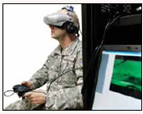
Question
What are some of the physical symptoms you would expect these veterans to exhibit during the reenactment that seems so real?
Most people experience a traumatic event at some point in their life, but for some, the trauma has lasting effects that interfere with their daily functioning. People who are plagued by nightmares, flashbacks, and constant stress as a result of a traumatic experience, such as abuse, rape, burglary, or watching a person die, are often in desperate need of treatment. For many years, therapists have been working with such clients by helping them confront their fears in a systematic, step-by-step approach.
As you may expect, many clients who have intense fears are reluctant to undergo therapy that requires them to confront the very fear they so badly want to avoid. A relatively new treatment option for these clients is virtualreality therapy, where they can vividly experience the feared object or situation in a safe and controlled manner. That's right, virtual reality is no longer only about experiencing fun adventures or fantasies. It's a powerful treatment technique. For instance, virtual-reality therapy can help a socially anxious client speak to intimidating crowds of people, or help a client with a phobia of spiders to approach and hold a hideouslooking spider, or even help a client with an intense fear of heights stand on a 30-story building and look straight down.
The virtual worlds are so realistic that when someone with social anxiety is asked a question by a virtual stranger, the resulting tension mimics that which takes place in real-life encounters. And, the reaction is the same when someone with a substance addiction is offered a virtual beer or a virtual line of cocaine.
One of the major advantages of virtual-reality therapy is that it can be used when a client's fear is not something a therapist can easily expose him or her to. For this reason, virtualreality therapy is being used to treat Iraq war veterans diagnosed with PTSD as a result of traumatic combat experiences. Therapists use a computer program to create a virtual environment that consists of the key elements of the reported traumatic experience. The handheld joystick is used to navigate through the three-dimensional scene, and special goggles help make the scene more real. The reenactment takes place on a vibrating platform so the veteran can feel the humming of the tank's motor or the rumbling of explosives being set off. Sounds and smells (such as voices, gunshots, and odors) can be incorporated to add to the realness of the situation. This process is gradual, beginning with only a few elements of the traumatic experience and adding more elements until the scenes become gruesomely realistic, with images of people getting blown up and terrifying sounds of screaming. The goal is that eventually the veteran can go through an intense re-creation without being overcome with fear.
Although the current technology is not nearly as advanced as the world portrayed in The Matrix films, based on clients' intense reactions, the virtual scenes are sophisticated enough.
Question
What are some of the physical symptoms you would expect these veterans to exhibit during the reenactment that seems so real?
Question
Cognitive therapy has been shown to have approximately the same effectiveness as do drugs in treating major _____ and has been used effectively to treat other psychological problems. 
Question
Freud developed one of the first forms of insight therapy, which he called (a) _____. At the core of psychoanalysis is the idea that psychological and physical symptoms arise from (b) _____ that a person cannot voluntarily uncover or recall. 
Question
Therapy that emphasizes the treatment of specific behaviors and working toward specific goals without focusing on mental events or underlying unconscious factors is known as behavior therapy. This form of therapy is based on (a) _____ and (b) _____ conditioning principles. 
Question
The popular approach to therapy shares many of the features of psychoanalysis-for example, discussing the client's feelings, breaking down the client's defenses and resistances, and interpreting the client's behaviors-but may not necessarily use free association or agree that many problems result from unconscious sexual conflicts. This approach, which takes less time than psychoanalysis, is called _____ psychotherapy. 
Question
A technique of behavior therapy in which the client is gradually exposed to the feared object while simultaneously practicing relaxation is called (a) _____. As part of this technique, the client must prepare a list of feared stimuli, arranged in order from least to most feared; this is called a (b) _____ hierarchy. Another technique is for the client to be gradually exposed to the actual feared or anxiety-producing situation; this is called (c) _____ exposure. 
Question
If you first trained as a physician and then went into a psychiatric residency, which involves additional training in pharmacology, neurology, and psychotherapeutic techniques, you would be a (a) _____. If you completed a PhD program in psychology, including one year of work in a clinical setting, you would be a (b) _____. If you completed a PhD program in psychology or education, including work in a counseling setting, you would be a (c) _____. 
Question
Virtual Reality Can Be More than Fun Games
Most people experience a traumatic event at some point in their life, but for some, the trauma has lasting effects that interfere with their daily functioning. People who are plagued by nightmares, flashbacks, and constant stress as a result of a traumatic experience, such as abuse, rape, burglary, or watching a person die, are often in desperate need of treatment. For many years, therapists have been working with such clients by helping them confront their fears in a systematic, step-by-step approach.
As you may expect, many clients who have intense fears are reluctant to undergo therapy that requires them to confront the very fear they so badly want to avoid. A relatively new treatment option for these clients is virtualreality therapy, where they can vividly experience the feared object or situation in a safe and controlled manner. That's right, virtual reality is no longer only about experiencing fun adventures or fantasies. It's a powerful treatment technique. For instance, virtual-reality therapy can help a socially anxious client speak to intimidating crowds of people, or help a client with a phobia of spiders to approach and hold a hideouslooking spider, or even help a client with an intense fear of heights stand on a 30-story building and look straight down.
The virtual worlds are so realistic that when someone with social anxiety is asked a question by a virtual stranger, the resulting tension mimics that which takes place in real-life encounters. And, the reaction is the same when someone with a substance addiction is offered a virtual beer or a virtual line of cocaine.
One of the major advantages of virtual-reality therapy is that it can be used when a client's fear is not something a therapist can easily expose him or her to. For this reason, virtualreality therapy is being used to treat Iraq war veterans diagnosed with PTSD as a result of traumatic combat experiences. Therapists use a computer program to create a virtual environment that consists of the key elements of the reported traumatic experience. The handheld joystick is used to navigate through the three-dimensional scene, and special goggles help make the scene more real. The reenactment takes place on a vibrating platform so the veteran can feel the humming of the tank's motor or the rumbling of explosives being set off. Sounds and smells (such as voices, gunshots, and odors) can be incorporated to add to the realness of the situation. This process is gradual, beginning with only a few elements of the traumatic experience and adding more elements until the scenes become gruesomely realistic, with images of people getting blown up and terrifying sounds of screaming. The goal is that eventually the veteran can go through an intense re-creation without being overcome with fear.
Although the current technology is not nearly as advanced as the world portrayed in The Matrix films, based on clients' intense reactions, the virtual scenes are sophisticated enough.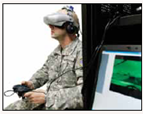
Question
Which type of therapeutic approach and technique is virtual-reality therapy most like?
Most people experience a traumatic event at some point in their life, but for some, the trauma has lasting effects that interfere with their daily functioning. People who are plagued by nightmares, flashbacks, and constant stress as a result of a traumatic experience, such as abuse, rape, burglary, or watching a person die, are often in desperate need of treatment. For many years, therapists have been working with such clients by helping them confront their fears in a systematic, step-by-step approach.
As you may expect, many clients who have intense fears are reluctant to undergo therapy that requires them to confront the very fear they so badly want to avoid. A relatively new treatment option for these clients is virtualreality therapy, where they can vividly experience the feared object or situation in a safe and controlled manner. That's right, virtual reality is no longer only about experiencing fun adventures or fantasies. It's a powerful treatment technique. For instance, virtual-reality therapy can help a socially anxious client speak to intimidating crowds of people, or help a client with a phobia of spiders to approach and hold a hideouslooking spider, or even help a client with an intense fear of heights stand on a 30-story building and look straight down.
The virtual worlds are so realistic that when someone with social anxiety is asked a question by a virtual stranger, the resulting tension mimics that which takes place in real-life encounters. And, the reaction is the same when someone with a substance addiction is offered a virtual beer or a virtual line of cocaine.
One of the major advantages of virtual-reality therapy is that it can be used when a client's fear is not something a therapist can easily expose him or her to. For this reason, virtualreality therapy is being used to treat Iraq war veterans diagnosed with PTSD as a result of traumatic combat experiences. Therapists use a computer program to create a virtual environment that consists of the key elements of the reported traumatic experience. The handheld joystick is used to navigate through the three-dimensional scene, and special goggles help make the scene more real. The reenactment takes place on a vibrating platform so the veteran can feel the humming of the tank's motor or the rumbling of explosives being set off. Sounds and smells (such as voices, gunshots, and odors) can be incorporated to add to the realness of the situation. This process is gradual, beginning with only a few elements of the traumatic experience and adding more elements until the scenes become gruesomely realistic, with images of people getting blown up and terrifying sounds of screaming. The goal is that eventually the veteran can go through an intense re-creation without being overcome with fear.
Although the current technology is not nearly as advanced as the world portrayed in The Matrix films, based on clients' intense reactions, the virtual scenes are sophisticated enough.
Question
Which type of therapeutic approach and technique is virtual-reality therapy most like?
Question
Question
Virtual Reality Can Be More than Fun Games
Most people experience a traumatic event at some point in their life, but for some, the trauma has lasting effects that interfere with their daily functioning. People who are plagued by nightmares, flashbacks, and constant stress as a result of a traumatic experience, such as abuse, rape, burglary, or watching a person die, are often in desperate need of treatment. For many years, therapists have been working with such clients by helping them confront their fears in a systematic, step-by-step approach.
As you may expect, many clients who have intense fears are reluctant to undergo therapy that requires them to confront the very fear they so badly want to avoid. A relatively new treatment option for these clients is virtualreality therapy, where they can vividly experience the feared object or situation in a safe and controlled manner. That's right, virtual reality is no longer only about experiencing fun adventures or fantasies. It's a powerful treatment technique. For instance, virtual-reality therapy can help a socially anxious client speak to intimidating crowds of people, or help a client with a phobia of spiders to approach and hold a hideouslooking spider, or even help a client with an intense fear of heights stand on a 30-story building and look straight down.
The virtual worlds are so realistic that when someone with social anxiety is asked a question by a virtual stranger, the resulting tension mimics that which takes place in real-life encounters. And, the reaction is the same when someone with a substance addiction is offered a virtual beer or a virtual line of cocaine.
One of the major advantages of virtual-reality therapy is that it can be used when a client's fear is not something a therapist can easily expose him or her to. For this reason, virtualreality therapy is being used to treat Iraq war veterans diagnosed with PTSD as a result of traumatic combat experiences. Therapists use a computer program to create a virtual environment that consists of the key elements of the reported traumatic experience. The handheld joystick is used to navigate through the three-dimensional scene, and special goggles help make the scene more real. The reenactment takes place on a vibrating platform so the veteran can feel the humming of the tank's motor or the rumbling of explosives being set off. Sounds and smells (such as voices, gunshots, and odors) can be incorporated to add to the realness of the situation. This process is gradual, beginning with only a few elements of the traumatic experience and adding more elements until the scenes become gruesomely realistic, with images of people getting blown up and terrifying sounds of screaming. The goal is that eventually the veteran can go through an intense re-creation without being overcome with fear.
Although the current technology is not nearly as advanced as the world portrayed in The Matrix films, based on clients' intense reactions, the virtual scenes are sophisticated enough.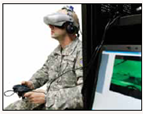
Question
Can virtual-reality therapy be used to treat drug addiction, even though it isn't a fear resulting from a traumatic experience? Explain.
Most people experience a traumatic event at some point in their life, but for some, the trauma has lasting effects that interfere with their daily functioning. People who are plagued by nightmares, flashbacks, and constant stress as a result of a traumatic experience, such as abuse, rape, burglary, or watching a person die, are often in desperate need of treatment. For many years, therapists have been working with such clients by helping them confront their fears in a systematic, step-by-step approach.
As you may expect, many clients who have intense fears are reluctant to undergo therapy that requires them to confront the very fear they so badly want to avoid. A relatively new treatment option for these clients is virtualreality therapy, where they can vividly experience the feared object or situation in a safe and controlled manner. That's right, virtual reality is no longer only about experiencing fun adventures or fantasies. It's a powerful treatment technique. For instance, virtual-reality therapy can help a socially anxious client speak to intimidating crowds of people, or help a client with a phobia of spiders to approach and hold a hideouslooking spider, or even help a client with an intense fear of heights stand on a 30-story building and look straight down.
The virtual worlds are so realistic that when someone with social anxiety is asked a question by a virtual stranger, the resulting tension mimics that which takes place in real-life encounters. And, the reaction is the same when someone with a substance addiction is offered a virtual beer or a virtual line of cocaine.
One of the major advantages of virtual-reality therapy is that it can be used when a client's fear is not something a therapist can easily expose him or her to. For this reason, virtualreality therapy is being used to treat Iraq war veterans diagnosed with PTSD as a result of traumatic combat experiences. Therapists use a computer program to create a virtual environment that consists of the key elements of the reported traumatic experience. The handheld joystick is used to navigate through the three-dimensional scene, and special goggles help make the scene more real. The reenactment takes place on a vibrating platform so the veteran can feel the humming of the tank's motor or the rumbling of explosives being set off. Sounds and smells (such as voices, gunshots, and odors) can be incorporated to add to the realness of the situation. This process is gradual, beginning with only a few elements of the traumatic experience and adding more elements until the scenes become gruesomely realistic, with images of people getting blown up and terrifying sounds of screaming. The goal is that eventually the veteran can go through an intense re-creation without being overcome with fear.
Although the current technology is not nearly as advanced as the world portrayed in The Matrix films, based on clients' intense reactions, the virtual scenes are sophisticated enough.
Question
Can virtual-reality therapy be used to treat drug addiction, even though it isn't a fear resulting from a traumatic experience? Explain.
Question
Freud developed two techniques that he believed provide clues to unconscious thoughts and conflicts: When clients are encouraged to talk about any thoughts or images that enter their heads, this is called (a) _____; when a therapist looks for hidden meanings and symbols in dreams, this is called (b) _____. 
Question
One reason different therapies tend to be equally effective is that they all share _____. For example, the development of a supportive and trusting relationship between therapist and client results in an accepting atmosphere in which the client feels willing to admit problems and is motivated to work on changing. 
Question
In the early 1800s, the popular belief that mental patients could be helped to function better by providing humane treatment in a relaxed and decent environment was called (a) _____. In the early 1950s, the first drugs to reduce schizophrenic symptoms were discovered. These drugs, called (b) _____, reduced the effects of the neurotransmitter (c) _____. 
Question
One approach to therapy assumes that each person has an actualizing tendency-that is, a tendency to develop his or her full potential. In this approach, the therapist's task is to show compassion and positive regard in helping the client reach his or her potential. This approach was developed by (a) _____and is called (b) _____therapy. 
Question
Providing psychological services remotely, via telephone, e-mail, or videoconferencing, is called (a) _____. Specifically, delivering therapy over the Internet is called (b) _____. 
Question
Question
During the course of therapy, a patient will project conflict-ridden emotions onto the therapist; this process is called (a) _____. Working through transference is one of the two essential requirements for improvement in psychoanalysis; the other is that the patient achieves (b) _____ into the causes of his or her problem. A patient's reluctance to work through feelings or recognize unconscious conflicts and repressed thoughts is called (c) _____. 
Question
Eye Movement Desensitization and Reprocessing (EMDR) involves having the client talk about or imagine a troubling traumatic memory while visually focusing on and following the movement of a therapist's (a) _____. Researchers believe that EMDR may work because it is similar to another therapy called (b) _____. 
Question
Virtual Reality Can Be More than Fun Games
Most people experience a traumatic event at some point in their life, but for some, the trauma has lasting effects that interfere with their daily functioning. People who are plagued by nightmares, flashbacks, and constant stress as a result of a traumatic experience, such as abuse, rape, burglary, or watching a person die, are often in desperate need of treatment. For many years, therapists have been working with such clients by helping them confront their fears in a systematic, step-by-step approach.
As you may expect, many clients who have intense fears are reluctant to undergo therapy that requires them to confront the very fear they so badly want to avoid. A relatively new treatment option for these clients is virtualreality therapy, where they can vividly experience the feared object or situation in a safe and controlled manner. That's right, virtual reality is no longer only about experiencing fun adventures or fantasies. It's a powerful treatment technique. For instance, virtual-reality therapy can help a socially anxious client speak to intimidating crowds of people, or help a client with a phobia of spiders to approach and hold a hideouslooking spider, or even help a client with an intense fear of heights stand on a 30-story building and look straight down.
The virtual worlds are so realistic that when someone with social anxiety is asked a question by a virtual stranger, the resulting tension mimics that which takes place in real-life encounters. And, the reaction is the same when someone with a substance addiction is offered a virtual beer or a virtual line of cocaine.
One of the major advantages of virtual-reality therapy is that it can be used when a client's fear is not something a therapist can easily expose him or her to. For this reason, virtualreality therapy is being used to treat Iraq war veterans diagnosed with PTSD as a result of traumatic combat experiences. Therapists use a computer program to create a virtual environment that consists of the key elements of the reported traumatic experience. The handheld joystick is used to navigate through the three-dimensional scene, and special goggles help make the scene more real. The reenactment takes place on a vibrating platform so the veteran can feel the humming of the tank's motor or the rumbling of explosives being set off. Sounds and smells (such as voices, gunshots, and odors) can be incorporated to add to the realness of the situation. This process is gradual, beginning with only a few elements of the traumatic experience and adding more elements until the scenes become gruesomely realistic, with images of people getting blown up and terrifying sounds of screaming. The goal is that eventually the veteran can go through an intense re-creation without being overcome with fear.
Although the current technology is not nearly as advanced as the world portrayed in The Matrix films, based on clients' intense reactions, the virtual scenes are sophisticated enough.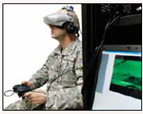
Question
What type of DSM-IV-TR disorder is fear of spiders and fear of heights?
Most people experience a traumatic event at some point in their life, but for some, the trauma has lasting effects that interfere with their daily functioning. People who are plagued by nightmares, flashbacks, and constant stress as a result of a traumatic experience, such as abuse, rape, burglary, or watching a person die, are often in desperate need of treatment. For many years, therapists have been working with such clients by helping them confront their fears in a systematic, step-by-step approach.
As you may expect, many clients who have intense fears are reluctant to undergo therapy that requires them to confront the very fear they so badly want to avoid. A relatively new treatment option for these clients is virtualreality therapy, where they can vividly experience the feared object or situation in a safe and controlled manner. That's right, virtual reality is no longer only about experiencing fun adventures or fantasies. It's a powerful treatment technique. For instance, virtual-reality therapy can help a socially anxious client speak to intimidating crowds of people, or help a client with a phobia of spiders to approach and hold a hideouslooking spider, or even help a client with an intense fear of heights stand on a 30-story building and look straight down.
The virtual worlds are so realistic that when someone with social anxiety is asked a question by a virtual stranger, the resulting tension mimics that which takes place in real-life encounters. And, the reaction is the same when someone with a substance addiction is offered a virtual beer or a virtual line of cocaine.
One of the major advantages of virtual-reality therapy is that it can be used when a client's fear is not something a therapist can easily expose him or her to. For this reason, virtualreality therapy is being used to treat Iraq war veterans diagnosed with PTSD as a result of traumatic combat experiences. Therapists use a computer program to create a virtual environment that consists of the key elements of the reported traumatic experience. The handheld joystick is used to navigate through the three-dimensional scene, and special goggles help make the scene more real. The reenactment takes place on a vibrating platform so the veteran can feel the humming of the tank's motor or the rumbling of explosives being set off. Sounds and smells (such as voices, gunshots, and odors) can be incorporated to add to the realness of the situation. This process is gradual, beginning with only a few elements of the traumatic experience and adding more elements until the scenes become gruesomely realistic, with images of people getting blown up and terrifying sounds of screaming. The goal is that eventually the veteran can go through an intense re-creation without being overcome with fear.
Although the current technology is not nearly as advanced as the world portrayed in The Matrix films, based on clients' intense reactions, the virtual scenes are sophisticated enough.
Question
What type of DSM-IV-TR disorder is fear of spiders and fear of heights?
Question
Another approach to therapy assumes that we have automatic negative thoughts that ' we say to ourselves without paying much attention. By continually repeating these automatic negative thoughts, we color and distort how we perceive and interpret our world and influence how we behave and feel. This approach to therapy was developed by (a) _____ and is called (b) _____ therapy. 
Question
In many cases, the healers in Asia and Africa are as effective as Western therapists. One explanation is that these healers may rely on the (a) _____ effect, which is found to produce significant improvement in 10-30% of Western patients. Another is that the healers' ceremonies may involve some of the (b) _____ that underlie the effectiveness of Western therapy. 
Question
Following the use of phenothiazines, many mental patients were released from mental hospitals and returned to the community to develop more independent and fulfilling lives; this process was called (a) _____. People with mental disorders that do not require hospitalization often seek treatment in (b) _____ centers. 
Question
Increasing pressure to use briefer versions of psychotherapy resulted in a shortened form of traditional psychoanalysis. This new version uses some of the same principles, such as dealing with transference, but has the therapist taking a more active role and dealing with a more specific problem; this approach is called _____ psychotherapy. 
Question
Biomedical therapy involves the use of interventions to treat mental disorders that change _____ factors, such as the level of neurotransmitters in the brain. 
Question
One approach to therapy is characterized by the idea that we have an unconscious part whose activities and thoughts are hidden behind a mental barrier that we cannot voluntarily remove. Behind this barrier are repressed and psychologically dangerous thoughts that give rise to unconscious conflicts, which, in turn, can result in psychological and physical symptoms. This approach is called _____. 
Question
One approach to therapy uses primarily the principles of classical and operant conditioning to change disruptive behaviors and improve human functioning. This approach, which focuses on changing particular behaviors rather than on the underlying mental events or possible unconscious factors, is called _____ therapy. 
Question
Medications that reduce anxiety by lowering physiological arousal, resulting in a state of tranquility, belong to a class of chemicals known as (a) _____ Medications that help to even out the highs and lows of mood disorders, such as bipolar disorder, are known as (b) _____. 
Question
Virtual Reality Can Be More than Fun Games
Most people experience a traumatic event at some point in their life, but for some, the trauma has lasting effects that interfere with their daily functioning. People who are plagued by nightmares, flashbacks, and constant stress as a result of a traumatic experience, such as abuse, rape, burglary, or watching a person die, are often in desperate need of treatment. For many years, therapists have been working with such clients by helping them confront their fears in a systematic, step-by-step approach.
As you may expect, many clients who have intense fears are reluctant to undergo therapy that requires them to confront the very fear they so badly want to avoid. A relatively new treatment option for these clients is virtualreality therapy, where they can vividly experience the feared object or situation in a safe and controlled manner. That's right, virtual reality is no longer only about experiencing fun adventures or fantasies. It's a powerful treatment technique. For instance, virtual-reality therapy can help a socially anxious client speak to intimidating crowds of people, or help a client with a phobia of spiders to approach and hold a hideouslooking spider, or even help a client with an intense fear of heights stand on a 30-story building and look straight down.
The virtual worlds are so realistic that when someone with social anxiety is asked a question by a virtual stranger, the resulting tension mimics that which takes place in real-life encounters. And, the reaction is the same when someone with a substance addiction is offered a virtual beer or a virtual line of cocaine.
One of the major advantages of virtual-reality therapy is that it can be used when a client's fear is not something a therapist can easily expose him or her to. For this reason, virtualreality therapy is being used to treat Iraq war veterans diagnosed with PTSD as a result of traumatic combat experiences. Therapists use a computer program to create a virtual environment that consists of the key elements of the reported traumatic experience. The handheld joystick is used to navigate through the three-dimensional scene, and special goggles help make the scene more real. The reenactment takes place on a vibrating platform so the veteran can feel the humming of the tank's motor or the rumbling of explosives being set off. Sounds and smells (such as voices, gunshots, and odors) can be incorporated to add to the realness of the situation. This process is gradual, beginning with only a few elements of the traumatic experience and adding more elements until the scenes become gruesomely realistic, with images of people getting blown up and terrifying sounds of screaming. The goal is that eventually the veteran can go through an intense re-creation without being overcome with fear.
Although the current technology is not nearly as advanced as the world portrayed in The Matrix films, based on clients' intense reactions, the virtual scenes are sophisticated enough.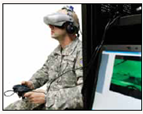
Question
What are some other advantages of virtual-reality therapy over traditional therapy methods?
Most people experience a traumatic event at some point in their life, but for some, the trauma has lasting effects that interfere with their daily functioning. People who are plagued by nightmares, flashbacks, and constant stress as a result of a traumatic experience, such as abuse, rape, burglary, or watching a person die, are often in desperate need of treatment. For many years, therapists have been working with such clients by helping them confront their fears in a systematic, step-by-step approach.
As you may expect, many clients who have intense fears are reluctant to undergo therapy that requires them to confront the very fear they so badly want to avoid. A relatively new treatment option for these clients is virtualreality therapy, where they can vividly experience the feared object or situation in a safe and controlled manner. That's right, virtual reality is no longer only about experiencing fun adventures or fantasies. It's a powerful treatment technique. For instance, virtual-reality therapy can help a socially anxious client speak to intimidating crowds of people, or help a client with a phobia of spiders to approach and hold a hideouslooking spider, or even help a client with an intense fear of heights stand on a 30-story building and look straight down.
The virtual worlds are so realistic that when someone with social anxiety is asked a question by a virtual stranger, the resulting tension mimics that which takes place in real-life encounters. And, the reaction is the same when someone with a substance addiction is offered a virtual beer or a virtual line of cocaine.
One of the major advantages of virtual-reality therapy is that it can be used when a client's fear is not something a therapist can easily expose him or her to. For this reason, virtualreality therapy is being used to treat Iraq war veterans diagnosed with PTSD as a result of traumatic combat experiences. Therapists use a computer program to create a virtual environment that consists of the key elements of the reported traumatic experience. The handheld joystick is used to navigate through the three-dimensional scene, and special goggles help make the scene more real. The reenactment takes place on a vibrating platform so the veteran can feel the humming of the tank's motor or the rumbling of explosives being set off. Sounds and smells (such as voices, gunshots, and odors) can be incorporated to add to the realness of the situation. This process is gradual, beginning with only a few elements of the traumatic experience and adding more elements until the scenes become gruesomely realistic, with images of people getting blown up and terrifying sounds of screaming. The goal is that eventually the veteran can go through an intense re-creation without being overcome with fear.
Although the current technology is not nearly as advanced as the world portrayed in The Matrix films, based on clients' intense reactions, the virtual scenes are sophisticated enough.
Question
What are some other advantages of virtual-reality therapy over traditional therapy methods?
Question
A form of insight therapy developed by Carl Rogers emphasizes our creative and constructive tendencies and the importance of building caring relationships. This is called (a) _____ therapy. One of its basic techniques is to restate or (b) _____ the client's concerns and feelings. 
Question
Behavior or cognitive-behavioral therapy usually involves three steps in changing thought patterns. The first step is observing one's own behavior without making any changes; this is called (a) _____. The second step is to identify those (b) _____ thoughts that need to be changed. The third step is to (c) _____ a positive thought for a negative one. Another step that is sometimes included is to actively stop (d) _____thoughts. 

Unlock Deck
Sign up to unlock the cards in this deck!
Unlock Deck
Unlock Deck
1/40

Play

Full screen (f)
Deck 24: Therapies
1
If you go to medical school, receive an MD degree, and then take a psychiatric residency, you can become a (a) _____. If you go to graduate school in clinical psychology and complete a PhD program, including at least one year of work in a clinical setting, you can become a (b) _____. If you go to graduate school in psychology or education and complete a PhD program, including work in a counseling setting, you can become a (c) _____.
A medical doctor having specialization in mental health disorders related to mental and behavioral illness. They are well qualified to treat the entire psychological problem related to the combination of mental and physical illness.
Psychiatrists receive an MD degree from medical school after that they enroll for psychiatrist residency for special training in psychopathology, pharmacology, neurology and techniques of psychotherapeutic. Psychiatrists provide medicines and therapy to for the disorders related to the mental health.
Clinical psychologists earn a graduation degree in clinical psychology and then they join for a doctorate degree. Training in applied clinical setting work for duration of one year in addition to that four to six year of work experience after bachelors is essential.
They use psychotherapy as treatment for mental disorders. They do not prescribe drugs or medicines to the patients without doing advance medical training in medications. Clinical psychologists focus more on psychological as well as environmental factors for further treatment.
Counseling psychologists joins the graduation school in the subject either psychology or education and then they earn a doctorate degree. After gaining a bachelor's degree approximately four to six year training in a counseling setting is required.
They have major role in setting of schools, industries and private practice.Their work is more focused on counseling in setting of real world. Counseling psychologists deal majorly with the problem related with living.
So, the blank (a) can be filled with . Blank (b) can be filled with
  and blank (c) can be filled with
  .
.
Psychiatrists receive an MD degree from medical school after that they enroll for psychiatrist residency for special training in psychopathology, pharmacology, neurology and techniques of psychotherapeutic. Psychiatrists provide medicines and therapy to for the disorders related to the mental health.
Clinical psychologists earn a graduation degree in clinical psychology and then they join for a doctorate degree. Training in applied clinical setting work for duration of one year in addition to that four to six year of work experience after bachelors is essential.
They use psychotherapy as treatment for mental disorders. They do not prescribe drugs or medicines to the patients without doing advance medical training in medications. Clinical psychologists focus more on psychological as well as environmental factors for further treatment.
Counseling psychologists joins the graduation school in the subject either psychology or education and then they earn a doctorate degree. After gaining a bachelor's degree approximately four to six year training in a counseling setting is required.
They have major role in setting of schools, industries and private practice.Their work is more focused on counseling in setting of real world. Counseling psychologists deal majorly with the problem related with living.
So, the blank (a) can be filled with
. Blank (b) can be filled with and blank (c) can be filled with . 2
One approach combines changing negative, unhealthy, or distorted thoughts and beliefs by substituting positive, healthy, and realistic ones and changing one's undesirable or disruptive behaviors by learning and practicing new skills to improve functioning. This approach, which combines two therapies, is called _____ therapy.
In cognitive-behavioral therapy, behavior therapy and the cognitive therapy are combined together, where cognitive therapy technique is used to change the negative, distorted thought patterns and behavior therapy technique involves changes in maladaptive behaviors by practicing new skills in order to achieve improved or better functioning.
Cognitive-behavioral therapists use various techniques in combination to achieve desirable changes in thoughts as well as in behavior of the clients to improve clients personal psychological functioning.
Cognitive-behavioral therapy techniques involve own thoughts monitoring, identification of behaviors and thoughts that need to be improved or changed followed by learning and imitating the new behaviors then finally, substituting positive thoughts on the place of negative ones.
Regular practice of newly learnt behavior is essential before applying them into the real world. Actually the cognitive-behavior therapy techniques act as a foundation to various self-help programs, later on, which may be done or performed without the help of the therapists.
So, the blank can be filled with .
.
Cognitive-behavioral therapists use various techniques in combination to achieve desirable changes in thoughts as well as in behavior of the clients to improve clients personal psychological functioning.
Cognitive-behavioral therapy techniques involve own thoughts monitoring, identification of behaviors and thoughts that need to be improved or changed followed by learning and imitating the new behaviors then finally, substituting positive thoughts on the place of negative ones.
Regular practice of newly learnt behavior is essential before applying them into the real world. Actually the cognitive-behavior therapy techniques act as a foundation to various self-help programs, later on, which may be done or performed without the help of the therapists.
So, the blank can be filled with
. 3
Freud developed two techniques to uncover unconscious thoughts. One was to encourage clients to talk about any thoughts or images that entered their heads, which is called (a) _____. The second technique was based on the assumption that dreams contain hidden meanings and symbols and the therapist's role was to (b) _____ these dream symbols.
A technique, which motivates the patients to talk about their thoughts, memories or images present in their brain to get the clue about the unconscious materials is known as Free association. It was presumed that uncensored, free flowing talk will give the hint about the things present in unconscious part of the brain.
During the session of free-association patients are allowed to talk, whatever coming to their mind, whether it is relevant or senseless or even unimportant. The main goal of the talk was to discover the unconscious conflicts or repressed thoughts to treat the mental disorder as they were the main reason behind the patient's illness.
Dream interpretation is a technique based on psychoanalysis theory. This technique is founded on assumptions like our dreams have some unrevealed, hidden meanings, which provide the hints about unconscious desires, memories and thoughts. Freud defined the dreams as bizarre disguises and signs to discover clues out of it to reach unconscious feelings, memories and conflicts.
So, the blank (a) can be filled with and blank (b) can be filled with
  .
.
During the session of free-association patients are allowed to talk, whatever coming to their mind, whether it is relevant or senseless or even unimportant. The main goal of the talk was to discover the unconscious conflicts or repressed thoughts to treat the mental disorder as they were the main reason behind the patient's illness.
Dream interpretation is a technique based on psychoanalysis theory. This technique is founded on assumptions like our dreams have some unrevealed, hidden meanings, which provide the hints about unconscious desires, memories and thoughts. Freud defined the dreams as bizarre disguises and signs to discover clues out of it to reach unconscious feelings, memories and conflicts.
So, the blank (a) can be filled with
and blank (b) can be filled with . 4
Rogers believed that the therapist's characteristics foster growth and change. The therapist needs to have the ability to understand what the client is saying and feeling, a trait called (a) _____; the ability to communicate caring, respect, and regard for the client, called (b) _____; and the ability to be real and nondefensive in interactions with the client, called (c) _____.
Unlock Deck
Unlock for access to all 40 flashcards in this deck.
Unlock Deck
k this deck
5
Virtual Reality Can Be More than Fun Games
Most people experience a traumatic event at some point in their life, but for some, the trauma has lasting effects that interfere with their daily functioning. People who are plagued by nightmares, flashbacks, and constant stress as a result of a traumatic experience, such as abuse, rape, burglary, or watching a person die, are often in desperate need of treatment. For many years, therapists have been working with such clients by helping them confront their fears in a systematic, step-by-step approach.
As you may expect, many clients who have intense fears are reluctant to undergo therapy that requires them to confront the very fear they so badly want to avoid. A relatively new treatment option for these clients is virtualreality therapy, where they can vividly experience the feared object or situation in a safe and controlled manner. That's right, virtual reality is no longer only about experiencing fun adventures or fantasies. It's a powerful treatment technique. For instance, virtual-reality therapy can help a socially anxious client speak to intimidating crowds of people, or help a client with a phobia of spiders to approach and hold a hideouslooking spider, or even help a client with an intense fear of heights stand on a 30-story building and look straight down.
The virtual worlds are so realistic that when someone with social anxiety is asked a question by a virtual stranger, the resulting tension mimics that which takes place in real-life encounters. And, the reaction is the same when someone with a substance addiction is offered a virtual beer or a virtual line of cocaine.
One of the major advantages of virtual-reality therapy is that it can be used when a client's fear is not something a therapist can easily expose him or her to. For this reason, virtualreality therapy is being used to treat Iraq war veterans diagnosed with PTSD as a result of traumatic combat experiences. Therapists use a computer program to create a virtual environment that consists of the key elements of the reported traumatic experience. The handheld joystick is used to navigate through the three-dimensional scene, and special goggles help make the scene more real. The reenactment takes place on a vibrating platform so the veteran can feel the humming of the tank's motor or the rumbling of explosives being set off. Sounds and smells (such as voices, gunshots, and odors) can be incorporated to add to the realness of the situation. This process is gradual, beginning with only a few elements of the traumatic experience and adding more elements until the scenes become gruesomely realistic, with images of people getting blown up and terrifying sounds of screaming. The goal is that eventually the veteran can go through an intense re-creation without being overcome with fear.
Although the current technology is not nearly as advanced as the world portrayed in The Matrix films, based on clients' intense reactions, the virtual scenes are sophisticated enough.
Question
What type of mental health professional(s) would most likely administer virtual-reality therapy?
Most people experience a traumatic event at some point in their life, but for some, the trauma has lasting effects that interfere with their daily functioning. People who are plagued by nightmares, flashbacks, and constant stress as a result of a traumatic experience, such as abuse, rape, burglary, or watching a person die, are often in desperate need of treatment. For many years, therapists have been working with such clients by helping them confront their fears in a systematic, step-by-step approach.
As you may expect, many clients who have intense fears are reluctant to undergo therapy that requires them to confront the very fear they so badly want to avoid. A relatively new treatment option for these clients is virtualreality therapy, where they can vividly experience the feared object or situation in a safe and controlled manner. That's right, virtual reality is no longer only about experiencing fun adventures or fantasies. It's a powerful treatment technique. For instance, virtual-reality therapy can help a socially anxious client speak to intimidating crowds of people, or help a client with a phobia of spiders to approach and hold a hideouslooking spider, or even help a client with an intense fear of heights stand on a 30-story building and look straight down.
The virtual worlds are so realistic that when someone with social anxiety is asked a question by a virtual stranger, the resulting tension mimics that which takes place in real-life encounters. And, the reaction is the same when someone with a substance addiction is offered a virtual beer or a virtual line of cocaine.
One of the major advantages of virtual-reality therapy is that it can be used when a client's fear is not something a therapist can easily expose him or her to. For this reason, virtualreality therapy is being used to treat Iraq war veterans diagnosed with PTSD as a result of traumatic combat experiences. Therapists use a computer program to create a virtual environment that consists of the key elements of the reported traumatic experience. The handheld joystick is used to navigate through the three-dimensional scene, and special goggles help make the scene more real. The reenactment takes place on a vibrating platform so the veteran can feel the humming of the tank's motor or the rumbling of explosives being set off. Sounds and smells (such as voices, gunshots, and odors) can be incorporated to add to the realness of the situation. This process is gradual, beginning with only a few elements of the traumatic experience and adding more elements until the scenes become gruesomely realistic, with images of people getting blown up and terrifying sounds of screaming. The goal is that eventually the veteran can go through an intense re-creation without being overcome with fear.
Although the current technology is not nearly as advanced as the world portrayed in The Matrix films, based on clients' intense reactions, the virtual scenes are sophisticated enough.
Question
What type of mental health professional(s) would most likely administer virtual-reality therapy?
Unlock Deck
Unlock for access to all 40 flashcards in this deck.
Unlock Deck
k this deck
6
There is a technique of behavior therapy in which the client is gradually exposed to the feared object while simultaneously practicing relaxation. This technique, which involves three steps-learning to relax, constructing a hierarchy with the least feared situation on the bottom and the most feared situation at the top, and being progressively exposed to the feared situation-is called _____.
Unlock Deck
Unlock for access to all 40 flashcards in this deck.
Unlock Deck
k this deck
7
Therapy in which the therapist and client talk about the client's symptoms and problems with the goal of reaching or identifying the cause of the problem is called (a) _____ therapy. Therapy that involves the application of learning principles and focuses on identifying and changing specific behaviors is called (b) _____ therapy. Therapy that involves the use of interventions to treat mental disorders that change biological factors is called (c) _____ therapy.
Unlock Deck
Unlock for access to all 40 flashcards in this deck.
Unlock Deck
k this deck
8
Another form of insight therapy is the cognitive therapy developed by Aaron Beck. The basic assumption of Beck's cognitive theory is that our (a) _____ negative thoughts distort how we perceive and interpret things, thus influencing our behaviors and feelings. For example, making blanket judgments about yourself on the basis of a single incident is called (b) _____. Sorting information into one of two categories is (c) _____. Focusing on one detail so much that you do not notice other events is using (d) _____. Beck believes that maladaptive thought patterns cause a distorted view of one's world, which in turn may lead to various emotional problems.
Unlock Deck
Unlock for access to all 40 flashcards in this deck.
Unlock Deck
k this deck
9
Freud said that, during therapy, a patient may respond as if the therapist were a father or mother and project strong feelings toward the therapist. This process is called (a) _____. Also during therapy, a patient may be reluctant to work through feelings or to recognize unconscious conflicts and repressed thoughts; this is called (b) _____.
Unlock Deck
Unlock for access to all 40 flashcards in this deck.
Unlock Deck
k this deck
10
Because of its effectiveness, cognitive-behavioral therapy has become the basis for many self-help programs to stop smoking, reduce insomnia, decrease conditioned nausea, help autistic children develop academic and social skills, and reduce intense and irrational fears called _____.
Unlock Deck
Unlock for access to all 40 flashcards in this deck.
Unlock Deck
k this deck
11
Virtual Reality Can Be More than Fun Games
Most people experience a traumatic event at some point in their life, but for some, the trauma has lasting effects that interfere with their daily functioning. People who are plagued by nightmares, flashbacks, and constant stress as a result of a traumatic experience, such as abuse, rape, burglary, or watching a person die, are often in desperate need of treatment. For many years, therapists have been working with such clients by helping them confront their fears in a systematic, step-by-step approach.
As you may expect, many clients who have intense fears are reluctant to undergo therapy that requires them to confront the very fear they so badly want to avoid. A relatively new treatment option for these clients is virtualreality therapy, where they can vividly experience the feared object or situation in a safe and controlled manner. That's right, virtual reality is no longer only about experiencing fun adventures or fantasies. It's a powerful treatment technique. For instance, virtual-reality therapy can help a socially anxious client speak to intimidating crowds of people, or help a client with a phobia of spiders to approach and hold a hideouslooking spider, or even help a client with an intense fear of heights stand on a 30-story building and look straight down.
The virtual worlds are so realistic that when someone with social anxiety is asked a question by a virtual stranger, the resulting tension mimics that which takes place in real-life encounters. And, the reaction is the same when someone with a substance addiction is offered a virtual beer or a virtual line of cocaine.
One of the major advantages of virtual-reality therapy is that it can be used when a client's fear is not something a therapist can easily expose him or her to. For this reason, virtualreality therapy is being used to treat Iraq war veterans diagnosed with PTSD as a result of traumatic combat experiences. Therapists use a computer program to create a virtual environment that consists of the key elements of the reported traumatic experience. The handheld joystick is used to navigate through the three-dimensional scene, and special goggles help make the scene more real. The reenactment takes place on a vibrating platform so the veteran can feel the humming of the tank's motor or the rumbling of explosives being set off. Sounds and smells (such as voices, gunshots, and odors) can be incorporated to add to the realness of the situation. This process is gradual, beginning with only a few elements of the traumatic experience and adding more elements until the scenes become gruesomely realistic, with images of people getting blown up and terrifying sounds of screaming. The goal is that eventually the veteran can go through an intense re-creation without being overcome with fear.
Although the current technology is not nearly as advanced as the world portrayed in The Matrix films, based on clients' intense reactions, the virtual scenes are sophisticated enough.
Question
What are some of the physical symptoms you would expect these veterans to exhibit during the reenactment that seems so real?
Most people experience a traumatic event at some point in their life, but for some, the trauma has lasting effects that interfere with their daily functioning. People who are plagued by nightmares, flashbacks, and constant stress as a result of a traumatic experience, such as abuse, rape, burglary, or watching a person die, are often in desperate need of treatment. For many years, therapists have been working with such clients by helping them confront their fears in a systematic, step-by-step approach.
As you may expect, many clients who have intense fears are reluctant to undergo therapy that requires them to confront the very fear they so badly want to avoid. A relatively new treatment option for these clients is virtualreality therapy, where they can vividly experience the feared object or situation in a safe and controlled manner. That's right, virtual reality is no longer only about experiencing fun adventures or fantasies. It's a powerful treatment technique. For instance, virtual-reality therapy can help a socially anxious client speak to intimidating crowds of people, or help a client with a phobia of spiders to approach and hold a hideouslooking spider, or even help a client with an intense fear of heights stand on a 30-story building and look straight down.
The virtual worlds are so realistic that when someone with social anxiety is asked a question by a virtual stranger, the resulting tension mimics that which takes place in real-life encounters. And, the reaction is the same when someone with a substance addiction is offered a virtual beer or a virtual line of cocaine.
One of the major advantages of virtual-reality therapy is that it can be used when a client's fear is not something a therapist can easily expose him or her to. For this reason, virtualreality therapy is being used to treat Iraq war veterans diagnosed with PTSD as a result of traumatic combat experiences. Therapists use a computer program to create a virtual environment that consists of the key elements of the reported traumatic experience. The handheld joystick is used to navigate through the three-dimensional scene, and special goggles help make the scene more real. The reenactment takes place on a vibrating platform so the veteran can feel the humming of the tank's motor or the rumbling of explosives being set off. Sounds and smells (such as voices, gunshots, and odors) can be incorporated to add to the realness of the situation. This process is gradual, beginning with only a few elements of the traumatic experience and adding more elements until the scenes become gruesomely realistic, with images of people getting blown up and terrifying sounds of screaming. The goal is that eventually the veteran can go through an intense re-creation without being overcome with fear.
Although the current technology is not nearly as advanced as the world portrayed in The Matrix films, based on clients' intense reactions, the virtual scenes are sophisticated enough.
Question
What are some of the physical symptoms you would expect these veterans to exhibit during the reenactment that seems so real?
Unlock Deck
Unlock for access to all 40 flashcards in this deck.
Unlock Deck
k this deck
12
Cognitive therapy has been shown to have approximately the same effectiveness as do drugs in treating major _____ and has been used effectively to treat other psychological problems.
Unlock Deck
Unlock for access to all 40 flashcards in this deck.
Unlock Deck
k this deck
13
Freud developed one of the first forms of insight therapy, which he called (a) _____. At the core of psychoanalysis is the idea that psychological and physical symptoms arise from (b) _____ that a person cannot voluntarily uncover or recall.
Unlock Deck
Unlock for access to all 40 flashcards in this deck.
Unlock Deck
k this deck
14
Therapy that emphasizes the treatment of specific behaviors and working toward specific goals without focusing on mental events or underlying unconscious factors is known as behavior therapy. This form of therapy is based on (a) _____ and (b) _____ conditioning principles.
Unlock Deck
Unlock for access to all 40 flashcards in this deck.
Unlock Deck
k this deck
15
The popular approach to therapy shares many of the features of psychoanalysis-for example, discussing the client's feelings, breaking down the client's defenses and resistances, and interpreting the client's behaviors-but may not necessarily use free association or agree that many problems result from unconscious sexual conflicts. This approach, which takes less time than psychoanalysis, is called _____ psychotherapy.
Unlock Deck
Unlock for access to all 40 flashcards in this deck.
Unlock Deck
k this deck
16
A technique of behavior therapy in which the client is gradually exposed to the feared object while simultaneously practicing relaxation is called (a) _____. As part of this technique, the client must prepare a list of feared stimuli, arranged in order from least to most feared; this is called a (b) _____ hierarchy. Another technique is for the client to be gradually exposed to the actual feared or anxiety-producing situation; this is called (c) _____ exposure.
Unlock Deck
Unlock for access to all 40 flashcards in this deck.
Unlock Deck
k this deck
17
If you first trained as a physician and then went into a psychiatric residency, which involves additional training in pharmacology, neurology, and psychotherapeutic techniques, you would be a (a) _____. If you completed a PhD program in psychology, including one year of work in a clinical setting, you would be a (b) _____. If you completed a PhD program in psychology or education, including work in a counseling setting, you would be a (c) _____.
Unlock Deck
Unlock for access to all 40 flashcards in this deck.
Unlock Deck
k this deck
18
Virtual Reality Can Be More than Fun Games
Most people experience a traumatic event at some point in their life, but for some, the trauma has lasting effects that interfere with their daily functioning. People who are plagued by nightmares, flashbacks, and constant stress as a result of a traumatic experience, such as abuse, rape, burglary, or watching a person die, are often in desperate need of treatment. For many years, therapists have been working with such clients by helping them confront their fears in a systematic, step-by-step approach.
As you may expect, many clients who have intense fears are reluctant to undergo therapy that requires them to confront the very fear they so badly want to avoid. A relatively new treatment option for these clients is virtualreality therapy, where they can vividly experience the feared object or situation in a safe and controlled manner. That's right, virtual reality is no longer only about experiencing fun adventures or fantasies. It's a powerful treatment technique. For instance, virtual-reality therapy can help a socially anxious client speak to intimidating crowds of people, or help a client with a phobia of spiders to approach and hold a hideouslooking spider, or even help a client with an intense fear of heights stand on a 30-story building and look straight down.
The virtual worlds are so realistic that when someone with social anxiety is asked a question by a virtual stranger, the resulting tension mimics that which takes place in real-life encounters. And, the reaction is the same when someone with a substance addiction is offered a virtual beer or a virtual line of cocaine.
One of the major advantages of virtual-reality therapy is that it can be used when a client's fear is not something a therapist can easily expose him or her to. For this reason, virtualreality therapy is being used to treat Iraq war veterans diagnosed with PTSD as a result of traumatic combat experiences. Therapists use a computer program to create a virtual environment that consists of the key elements of the reported traumatic experience. The handheld joystick is used to navigate through the three-dimensional scene, and special goggles help make the scene more real. The reenactment takes place on a vibrating platform so the veteran can feel the humming of the tank's motor or the rumbling of explosives being set off. Sounds and smells (such as voices, gunshots, and odors) can be incorporated to add to the realness of the situation. This process is gradual, beginning with only a few elements of the traumatic experience and adding more elements until the scenes become gruesomely realistic, with images of people getting blown up and terrifying sounds of screaming. The goal is that eventually the veteran can go through an intense re-creation without being overcome with fear.
Although the current technology is not nearly as advanced as the world portrayed in The Matrix films, based on clients' intense reactions, the virtual scenes are sophisticated enough.
Question
Which type of therapeutic approach and technique is virtual-reality therapy most like?
Most people experience a traumatic event at some point in their life, but for some, the trauma has lasting effects that interfere with their daily functioning. People who are plagued by nightmares, flashbacks, and constant stress as a result of a traumatic experience, such as abuse, rape, burglary, or watching a person die, are often in desperate need of treatment. For many years, therapists have been working with such clients by helping them confront their fears in a systematic, step-by-step approach.
As you may expect, many clients who have intense fears are reluctant to undergo therapy that requires them to confront the very fear they so badly want to avoid. A relatively new treatment option for these clients is virtualreality therapy, where they can vividly experience the feared object or situation in a safe and controlled manner. That's right, virtual reality is no longer only about experiencing fun adventures or fantasies. It's a powerful treatment technique. For instance, virtual-reality therapy can help a socially anxious client speak to intimidating crowds of people, or help a client with a phobia of spiders to approach and hold a hideouslooking spider, or even help a client with an intense fear of heights stand on a 30-story building and look straight down.
The virtual worlds are so realistic that when someone with social anxiety is asked a question by a virtual stranger, the resulting tension mimics that which takes place in real-life encounters. And, the reaction is the same when someone with a substance addiction is offered a virtual beer or a virtual line of cocaine.
One of the major advantages of virtual-reality therapy is that it can be used when a client's fear is not something a therapist can easily expose him or her to. For this reason, virtualreality therapy is being used to treat Iraq war veterans diagnosed with PTSD as a result of traumatic combat experiences. Therapists use a computer program to create a virtual environment that consists of the key elements of the reported traumatic experience. The handheld joystick is used to navigate through the three-dimensional scene, and special goggles help make the scene more real. The reenactment takes place on a vibrating platform so the veteran can feel the humming of the tank's motor or the rumbling of explosives being set off. Sounds and smells (such as voices, gunshots, and odors) can be incorporated to add to the realness of the situation. This process is gradual, beginning with only a few elements of the traumatic experience and adding more elements until the scenes become gruesomely realistic, with images of people getting blown up and terrifying sounds of screaming. The goal is that eventually the veteran can go through an intense re-creation without being overcome with fear.
Although the current technology is not nearly as advanced as the world portrayed in The Matrix films, based on clients' intense reactions, the virtual scenes are sophisticated enough.
Question
Which type of therapeutic approach and technique is virtual-reality therapy most like?
Unlock Deck
Unlock for access to all 40 flashcards in this deck.
Unlock Deck
k this deck
19
Cognitive-behavioral therapy combines two methods: changing negative (a) _____ by substituting positive ones, and changing unwanted or disruptive (b) _____ by learning and practicing new skills to improve functioning.
Unlock Deck
Unlock for access to all 40 flashcards in this deck.
Unlock Deck
k this deck
20
Virtual Reality Can Be More than Fun Games
Most people experience a traumatic event at some point in their life, but for some, the trauma has lasting effects that interfere with their daily functioning. People who are plagued by nightmares, flashbacks, and constant stress as a result of a traumatic experience, such as abuse, rape, burglary, or watching a person die, are often in desperate need of treatment. For many years, therapists have been working with such clients by helping them confront their fears in a systematic, step-by-step approach.
As you may expect, many clients who have intense fears are reluctant to undergo therapy that requires them to confront the very fear they so badly want to avoid. A relatively new treatment option for these clients is virtualreality therapy, where they can vividly experience the feared object or situation in a safe and controlled manner. That's right, virtual reality is no longer only about experiencing fun adventures or fantasies. It's a powerful treatment technique. For instance, virtual-reality therapy can help a socially anxious client speak to intimidating crowds of people, or help a client with a phobia of spiders to approach and hold a hideouslooking spider, or even help a client with an intense fear of heights stand on a 30-story building and look straight down.
The virtual worlds are so realistic that when someone with social anxiety is asked a question by a virtual stranger, the resulting tension mimics that which takes place in real-life encounters. And, the reaction is the same when someone with a substance addiction is offered a virtual beer or a virtual line of cocaine.
One of the major advantages of virtual-reality therapy is that it can be used when a client's fear is not something a therapist can easily expose him or her to. For this reason, virtualreality therapy is being used to treat Iraq war veterans diagnosed with PTSD as a result of traumatic combat experiences. Therapists use a computer program to create a virtual environment that consists of the key elements of the reported traumatic experience. The handheld joystick is used to navigate through the three-dimensional scene, and special goggles help make the scene more real. The reenactment takes place on a vibrating platform so the veteran can feel the humming of the tank's motor or the rumbling of explosives being set off. Sounds and smells (such as voices, gunshots, and odors) can be incorporated to add to the realness of the situation. This process is gradual, beginning with only a few elements of the traumatic experience and adding more elements until the scenes become gruesomely realistic, with images of people getting blown up and terrifying sounds of screaming. The goal is that eventually the veteran can go through an intense re-creation without being overcome with fear.
Although the current technology is not nearly as advanced as the world portrayed in The Matrix films, based on clients' intense reactions, the virtual scenes are sophisticated enough.
Question
Can virtual-reality therapy be used to treat drug addiction, even though it isn't a fear resulting from a traumatic experience? Explain.
Most people experience a traumatic event at some point in their life, but for some, the trauma has lasting effects that interfere with their daily functioning. People who are plagued by nightmares, flashbacks, and constant stress as a result of a traumatic experience, such as abuse, rape, burglary, or watching a person die, are often in desperate need of treatment. For many years, therapists have been working with such clients by helping them confront their fears in a systematic, step-by-step approach.
As you may expect, many clients who have intense fears are reluctant to undergo therapy that requires them to confront the very fear they so badly want to avoid. A relatively new treatment option for these clients is virtualreality therapy, where they can vividly experience the feared object or situation in a safe and controlled manner. That's right, virtual reality is no longer only about experiencing fun adventures or fantasies. It's a powerful treatment technique. For instance, virtual-reality therapy can help a socially anxious client speak to intimidating crowds of people, or help a client with a phobia of spiders to approach and hold a hideouslooking spider, or even help a client with an intense fear of heights stand on a 30-story building and look straight down.
The virtual worlds are so realistic that when someone with social anxiety is asked a question by a virtual stranger, the resulting tension mimics that which takes place in real-life encounters. And, the reaction is the same when someone with a substance addiction is offered a virtual beer or a virtual line of cocaine.
One of the major advantages of virtual-reality therapy is that it can be used when a client's fear is not something a therapist can easily expose him or her to. For this reason, virtualreality therapy is being used to treat Iraq war veterans diagnosed with PTSD as a result of traumatic combat experiences. Therapists use a computer program to create a virtual environment that consists of the key elements of the reported traumatic experience. The handheld joystick is used to navigate through the three-dimensional scene, and special goggles help make the scene more real. The reenactment takes place on a vibrating platform so the veteran can feel the humming of the tank's motor or the rumbling of explosives being set off. Sounds and smells (such as voices, gunshots, and odors) can be incorporated to add to the realness of the situation. This process is gradual, beginning with only a few elements of the traumatic experience and adding more elements until the scenes become gruesomely realistic, with images of people getting blown up and terrifying sounds of screaming. The goal is that eventually the veteran can go through an intense re-creation without being overcome with fear.
Although the current technology is not nearly as advanced as the world portrayed in The Matrix films, based on clients' intense reactions, the virtual scenes are sophisticated enough.
Question
Can virtual-reality therapy be used to treat drug addiction, even though it isn't a fear resulting from a traumatic experience? Explain.
Unlock Deck
Unlock for access to all 40 flashcards in this deck.
Unlock Deck
k this deck
21
Freud developed two techniques that he believed provide clues to unconscious thoughts and conflicts: When clients are encouraged to talk about any thoughts or images that enter their heads, this is called (a) _____; when a therapist looks for hidden meanings and symbols in dreams, this is called (b) _____.
Unlock Deck
Unlock for access to all 40 flashcards in this deck.
Unlock Deck
k this deck
22
One reason different therapies tend to be equally effective is that they all share _____. For example, the development of a supportive and trusting relationship between therapist and client results in an accepting atmosphere in which the client feels willing to admit problems and is motivated to work on changing.
Unlock Deck
Unlock for access to all 40 flashcards in this deck.
Unlock Deck
k this deck
23
In the early 1800s, the popular belief that mental patients could be helped to function better by providing humane treatment in a relaxed and decent environment was called (a) _____. In the early 1950s, the first drugs to reduce schizophrenic symptoms were discovered. These drugs, called (b) _____, reduced the effects of the neurotransmitter (c) _____.
Unlock Deck
Unlock for access to all 40 flashcards in this deck.
Unlock Deck
k this deck
24
One approach to therapy assumes that each person has an actualizing tendency-that is, a tendency to develop his or her full potential. In this approach, the therapist's task is to show compassion and positive regard in helping the client reach his or her potential. This approach was developed by (a) _____and is called (b) _____therapy.
Unlock Deck
Unlock for access to all 40 flashcards in this deck.
Unlock Deck
k this deck
25
Providing psychological services remotely, via telephone, e-mail, or videoconferencing, is called (a) _____. Specifically, delivering therapy over the Internet is called (b) _____.
Unlock Deck
Unlock for access to all 40 flashcards in this deck.
Unlock Deck
k this deck
26
A process characterized by verbal interaction between therapist and client and the development of a supportive relationship, during which a therapist may analyze or suggest ways for the client to deal with and overcome his or her problems, is called _____.
Unlock Deck
Unlock for access to all 40 flashcards in this deck.
Unlock Deck
k this deck
27
During the course of therapy, a patient will project conflict-ridden emotions onto the therapist; this process is called (a) _____. Working through transference is one of the two essential requirements for improvement in psychoanalysis; the other is that the patient achieves (b) _____ into the causes of his or her problem. A patient's reluctance to work through feelings or recognize unconscious conflicts and repressed thoughts is called (c) _____.
Unlock Deck
Unlock for access to all 40 flashcards in this deck.
Unlock Deck
k this deck
28
Eye Movement Desensitization and Reprocessing (EMDR) involves having the client talk about or imagine a troubling traumatic memory while visually focusing on and following the movement of a therapist's (a) _____. Researchers believe that EMDR may work because it is similar to another therapy called (b) _____.
Unlock Deck
Unlock for access to all 40 flashcards in this deck.
Unlock Deck
k this deck
29
Virtual Reality Can Be More than Fun Games
Most people experience a traumatic event at some point in their life, but for some, the trauma has lasting effects that interfere with their daily functioning. People who are plagued by nightmares, flashbacks, and constant stress as a result of a traumatic experience, such as abuse, rape, burglary, or watching a person die, are often in desperate need of treatment. For many years, therapists have been working with such clients by helping them confront their fears in a systematic, step-by-step approach.
As you may expect, many clients who have intense fears are reluctant to undergo therapy that requires them to confront the very fear they so badly want to avoid. A relatively new treatment option for these clients is virtualreality therapy, where they can vividly experience the feared object or situation in a safe and controlled manner. That's right, virtual reality is no longer only about experiencing fun adventures or fantasies. It's a powerful treatment technique. For instance, virtual-reality therapy can help a socially anxious client speak to intimidating crowds of people, or help a client with a phobia of spiders to approach and hold a hideouslooking spider, or even help a client with an intense fear of heights stand on a 30-story building and look straight down.
The virtual worlds are so realistic that when someone with social anxiety is asked a question by a virtual stranger, the resulting tension mimics that which takes place in real-life encounters. And, the reaction is the same when someone with a substance addiction is offered a virtual beer or a virtual line of cocaine.
One of the major advantages of virtual-reality therapy is that it can be used when a client's fear is not something a therapist can easily expose him or her to. For this reason, virtualreality therapy is being used to treat Iraq war veterans diagnosed with PTSD as a result of traumatic combat experiences. Therapists use a computer program to create a virtual environment that consists of the key elements of the reported traumatic experience. The handheld joystick is used to navigate through the three-dimensional scene, and special goggles help make the scene more real. The reenactment takes place on a vibrating platform so the veteran can feel the humming of the tank's motor or the rumbling of explosives being set off. Sounds and smells (such as voices, gunshots, and odors) can be incorporated to add to the realness of the situation. This process is gradual, beginning with only a few elements of the traumatic experience and adding more elements until the scenes become gruesomely realistic, with images of people getting blown up and terrifying sounds of screaming. The goal is that eventually the veteran can go through an intense re-creation without being overcome with fear.
Although the current technology is not nearly as advanced as the world portrayed in The Matrix films, based on clients' intense reactions, the virtual scenes are sophisticated enough.
Question
What type of DSM-IV-TR disorder is fear of spiders and fear of heights?
Most people experience a traumatic event at some point in their life, but for some, the trauma has lasting effects that interfere with their daily functioning. People who are plagued by nightmares, flashbacks, and constant stress as a result of a traumatic experience, such as abuse, rape, burglary, or watching a person die, are often in desperate need of treatment. For many years, therapists have been working with such clients by helping them confront their fears in a systematic, step-by-step approach.
As you may expect, many clients who have intense fears are reluctant to undergo therapy that requires them to confront the very fear they so badly want to avoid. A relatively new treatment option for these clients is virtualreality therapy, where they can vividly experience the feared object or situation in a safe and controlled manner. That's right, virtual reality is no longer only about experiencing fun adventures or fantasies. It's a powerful treatment technique. For instance, virtual-reality therapy can help a socially anxious client speak to intimidating crowds of people, or help a client with a phobia of spiders to approach and hold a hideouslooking spider, or even help a client with an intense fear of heights stand on a 30-story building and look straight down.
The virtual worlds are so realistic that when someone with social anxiety is asked a question by a virtual stranger, the resulting tension mimics that which takes place in real-life encounters. And, the reaction is the same when someone with a substance addiction is offered a virtual beer or a virtual line of cocaine.
One of the major advantages of virtual-reality therapy is that it can be used when a client's fear is not something a therapist can easily expose him or her to. For this reason, virtualreality therapy is being used to treat Iraq war veterans diagnosed with PTSD as a result of traumatic combat experiences. Therapists use a computer program to create a virtual environment that consists of the key elements of the reported traumatic experience. The handheld joystick is used to navigate through the three-dimensional scene, and special goggles help make the scene more real. The reenactment takes place on a vibrating platform so the veteran can feel the humming of the tank's motor or the rumbling of explosives being set off. Sounds and smells (such as voices, gunshots, and odors) can be incorporated to add to the realness of the situation. This process is gradual, beginning with only a few elements of the traumatic experience and adding more elements until the scenes become gruesomely realistic, with images of people getting blown up and terrifying sounds of screaming. The goal is that eventually the veteran can go through an intense re-creation without being overcome with fear.
Although the current technology is not nearly as advanced as the world portrayed in The Matrix films, based on clients' intense reactions, the virtual scenes are sophisticated enough.
Question
What type of DSM-IV-TR disorder is fear of spiders and fear of heights?
Unlock Deck
Unlock for access to all 40 flashcards in this deck.
Unlock Deck
k this deck
30
Another approach to therapy assumes that we have automatic negative thoughts that ' we say to ourselves without paying much attention. By continually repeating these automatic negative thoughts, we color and distort how we perceive and interpret our world and influence how we behave and feel. This approach to therapy was developed by (a) _____ and is called (b) _____ therapy.
Unlock Deck
Unlock for access to all 40 flashcards in this deck.
Unlock Deck
k this deck
31
In many cases, the healers in Asia and Africa are as effective as Western therapists. One explanation is that these healers may rely on the (a) _____ effect, which is found to produce significant improvement in 10-30% of Western patients. Another is that the healers' ceremonies may involve some of the (b) _____ that underlie the effectiveness of Western therapy.
Unlock Deck
Unlock for access to all 40 flashcards in this deck.
Unlock Deck
k this deck
32
Following the use of phenothiazines, many mental patients were released from mental hospitals and returned to the community to develop more independent and fulfilling lives; this process was called (a) _____. People with mental disorders that do not require hospitalization often seek treatment in (b) _____ centers.
Unlock Deck
Unlock for access to all 40 flashcards in this deck.
Unlock Deck
k this deck
33
Increasing pressure to use briefer versions of psychotherapy resulted in a shortened form of traditional psychoanalysis. This new version uses some of the same principles, such as dealing with transference, but has the therapist taking a more active role and dealing with a more specific problem; this approach is called _____ psychotherapy.
Unlock Deck
Unlock for access to all 40 flashcards in this deck.
Unlock Deck
k this deck
34
Biomedical therapy involves the use of interventions to treat mental disorders that change _____ factors, such as the level of neurotransmitters in the brain.
Unlock Deck
Unlock for access to all 40 flashcards in this deck.
Unlock Deck
k this deck
35
One approach to therapy is characterized by the idea that we have an unconscious part whose activities and thoughts are hidden behind a mental barrier that we cannot voluntarily remove. Behind this barrier are repressed and psychologically dangerous thoughts that give rise to unconscious conflicts, which, in turn, can result in psychological and physical symptoms. This approach is called _____.
Unlock Deck
Unlock for access to all 40 flashcards in this deck.
Unlock Deck
k this deck
36
One approach to therapy uses primarily the principles of classical and operant conditioning to change disruptive behaviors and improve human functioning. This approach, which focuses on changing particular behaviors rather than on the underlying mental events or possible unconscious factors, is called _____ therapy.
Unlock Deck
Unlock for access to all 40 flashcards in this deck.
Unlock Deck
k this deck
37
Medications that reduce anxiety by lowering physiological arousal, resulting in a state of tranquility, belong to a class of chemicals known as (a) _____ Medications that help to even out the highs and lows of mood disorders, such as bipolar disorder, are known as (b) _____.
Unlock Deck
Unlock for access to all 40 flashcards in this deck.
Unlock Deck
k this deck
38
Virtual Reality Can Be More than Fun Games
Most people experience a traumatic event at some point in their life, but for some, the trauma has lasting effects that interfere with their daily functioning. People who are plagued by nightmares, flashbacks, and constant stress as a result of a traumatic experience, such as abuse, rape, burglary, or watching a person die, are often in desperate need of treatment. For many years, therapists have been working with such clients by helping them confront their fears in a systematic, step-by-step approach.
As you may expect, many clients who have intense fears are reluctant to undergo therapy that requires them to confront the very fear they so badly want to avoid. A relatively new treatment option for these clients is virtualreality therapy, where they can vividly experience the feared object or situation in a safe and controlled manner. That's right, virtual reality is no longer only about experiencing fun adventures or fantasies. It's a powerful treatment technique. For instance, virtual-reality therapy can help a socially anxious client speak to intimidating crowds of people, or help a client with a phobia of spiders to approach and hold a hideouslooking spider, or even help a client with an intense fear of heights stand on a 30-story building and look straight down.
The virtual worlds are so realistic that when someone with social anxiety is asked a question by a virtual stranger, the resulting tension mimics that which takes place in real-life encounters. And, the reaction is the same when someone with a substance addiction is offered a virtual beer or a virtual line of cocaine.
One of the major advantages of virtual-reality therapy is that it can be used when a client's fear is not something a therapist can easily expose him or her to. For this reason, virtualreality therapy is being used to treat Iraq war veterans diagnosed with PTSD as a result of traumatic combat experiences. Therapists use a computer program to create a virtual environment that consists of the key elements of the reported traumatic experience. The handheld joystick is used to navigate through the three-dimensional scene, and special goggles help make the scene more real. The reenactment takes place on a vibrating platform so the veteran can feel the humming of the tank's motor or the rumbling of explosives being set off. Sounds and smells (such as voices, gunshots, and odors) can be incorporated to add to the realness of the situation. This process is gradual, beginning with only a few elements of the traumatic experience and adding more elements until the scenes become gruesomely realistic, with images of people getting blown up and terrifying sounds of screaming. The goal is that eventually the veteran can go through an intense re-creation without being overcome with fear.
Although the current technology is not nearly as advanced as the world portrayed in The Matrix films, based on clients' intense reactions, the virtual scenes are sophisticated enough.
Question
What are some other advantages of virtual-reality therapy over traditional therapy methods?
Most people experience a traumatic event at some point in their life, but for some, the trauma has lasting effects that interfere with their daily functioning. People who are plagued by nightmares, flashbacks, and constant stress as a result of a traumatic experience, such as abuse, rape, burglary, or watching a person die, are often in desperate need of treatment. For many years, therapists have been working with such clients by helping them confront their fears in a systematic, step-by-step approach.
As you may expect, many clients who have intense fears are reluctant to undergo therapy that requires them to confront the very fear they so badly want to avoid. A relatively new treatment option for these clients is virtualreality therapy, where they can vividly experience the feared object or situation in a safe and controlled manner. That's right, virtual reality is no longer only about experiencing fun adventures or fantasies. It's a powerful treatment technique. For instance, virtual-reality therapy can help a socially anxious client speak to intimidating crowds of people, or help a client with a phobia of spiders to approach and hold a hideouslooking spider, or even help a client with an intense fear of heights stand on a 30-story building and look straight down.
The virtual worlds are so realistic that when someone with social anxiety is asked a question by a virtual stranger, the resulting tension mimics that which takes place in real-life encounters. And, the reaction is the same when someone with a substance addiction is offered a virtual beer or a virtual line of cocaine.
One of the major advantages of virtual-reality therapy is that it can be used when a client's fear is not something a therapist can easily expose him or her to. For this reason, virtualreality therapy is being used to treat Iraq war veterans diagnosed with PTSD as a result of traumatic combat experiences. Therapists use a computer program to create a virtual environment that consists of the key elements of the reported traumatic experience. The handheld joystick is used to navigate through the three-dimensional scene, and special goggles help make the scene more real. The reenactment takes place on a vibrating platform so the veteran can feel the humming of the tank's motor or the rumbling of explosives being set off. Sounds and smells (such as voices, gunshots, and odors) can be incorporated to add to the realness of the situation. This process is gradual, beginning with only a few elements of the traumatic experience and adding more elements until the scenes become gruesomely realistic, with images of people getting blown up and terrifying sounds of screaming. The goal is that eventually the veteran can go through an intense re-creation without being overcome with fear.
Although the current technology is not nearly as advanced as the world portrayed in The Matrix films, based on clients' intense reactions, the virtual scenes are sophisticated enough.
Question
What are some other advantages of virtual-reality therapy over traditional therapy methods?
Unlock Deck
Unlock for access to all 40 flashcards in this deck.
Unlock Deck
k this deck
39
A form of insight therapy developed by Carl Rogers emphasizes our creative and constructive tendencies and the importance of building caring relationships. This is called (a) _____ therapy. One of its basic techniques is to restate or (b) _____ the client's concerns and feelings.
Unlock Deck
Unlock for access to all 40 flashcards in this deck.
Unlock Deck
k this deck
40
Behavior or cognitive-behavioral therapy usually involves three steps in changing thought patterns. The first step is observing one's own behavior without making any changes; this is called (a) _____. The second step is to identify those (b) _____ thoughts that need to be changed. The third step is to (c) _____ a positive thought for a negative one. Another step that is sometimes included is to actively stop (d) _____thoughts.
Unlock Deck
Unlock for access to all 40 flashcards in this deck.
Unlock Deck
k this deck
Unlock Deck
Unlock for access to all 40 flashcards in this deck.






