







 Chat with AI

Deck 5: Ethical, Social, and Legal Responsibilities of Management
Full screen (f)

Question
Debating the Sarbanes-Oxley Act
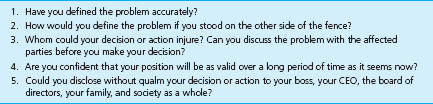
The major points of the Sarbanes-Oxley Act of 2002 are summarized in Figure 5.3. Carefully study Figure 5.3 and develop an argument either supporting the rise and necessity of the act or in opposition to the act. Your instructor may allow you to gather additional information through library or Internet research. Summarize your argument points in outline form, and be prepared to debate classmates who take the other side of the argument.
FIGURE 5.3
Solving Ethical Dilemmas
Source: L. Nash, "Ethics without the Sermon," Harvard Business Review 59 (1981), p. 78.
The major points of the Sarbanes-Oxley Act of 2002 are summarized in Figure 5.3. Carefully study Figure 5.3 and develop an argument either supporting the rise and necessity of the act or in opposition to the act. Your instructor may allow you to gather additional information through library or Internet research. Summarize your argument points in outline form, and be prepared to debate classmates who take the other side of the argument.
FIGURE 5.3
Solving Ethical Dilemmas
Source: L. Nash, "Ethics without the Sermon," Harvard Business Review 59 (1981), p. 78.

Question
Question
Question
Question
Question
Question
Padding the Expense Account?
Principals:
Rick Bell-residence accounts manager in Midland for United Electric Company. Rick is 25 years old, is considered to have good potential as a manager, and was promoted to his present job one month ago.
Stan Holloway-district manager for United Electric in Midland. He is 33 years old and has been in his present job 2½ years. His district, Midland, has strong political influence in the company, as the current president of United Electric was raised in Midland.
Stan is Rick's boss.
Chester "Chet" House-division manager for United. He is 61 years old and is located at company headquarters about 30 miles from Midland. He is Stan's boss and is also a close personal friend of the president of United.
At 7:45 am on the 28th of March, Rick Bell was preparing to leave Stan Holloway's office after chatting with him for a few minutes about the week's activities.
 Rick Bell leaves Stan's office with the itemized list in his hand. During the morning, Rick gives much thought to Stan's request. At about 10 am , Stan calls Rick on the intercom and informs him that he (Stan) won't be able to go to lunch with them (Rick and Chet) that day because the local congressman is making an unscheduled stop in Midland to confer with some selected business leaders on some local issues that will be dominant in the upcoming fall election. He asks Rick to take Chet out to lunch and give him his regrets and to tell Chet that he (Stan) will see them after lunch around 2 pm. When Chet arrives, he and Rick leave for lunch and during the meal, the following conversation ensues:
 Rick and Chet finished their meal in relative silence and went back to the office where they met Stan for their conference. After the conference, Rick went back to his office and gave some thought to the events of the day. That evening after work Rick went back to Stan's office with the results of his decision.
Questions
1. What would you have done if you were Rick?
2. Do you agree with Mr. House?s response to Rick?
Principals:
Rick Bell-residence accounts manager in Midland for United Electric Company. Rick is 25 years old, is considered to have good potential as a manager, and was promoted to his present job one month ago.
Stan Holloway-district manager for United Electric in Midland. He is 33 years old and has been in his present job 2½ years. His district, Midland, has strong political influence in the company, as the current president of United Electric was raised in Midland.
Stan is Rick's boss.
Chester "Chet" House-division manager for United. He is 61 years old and is located at company headquarters about 30 miles from Midland. He is Stan's boss and is also a close personal friend of the president of United.
At 7:45 am on the 28th of March, Rick Bell was preparing to leave Stan Holloway's office after chatting with him for a few minutes about the week's activities.
Rick Bell leaves Stan's office with the itemized list in his hand. During the morning, Rick gives much thought to Stan's request. At about 10 am , Stan calls Rick on the intercom and informs him that he (Stan) won't be able to go to lunch with them (Rick and Chet) that day because the local congressman is making an unscheduled stop in Midland to confer with some selected business leaders on some local issues that will be dominant in the upcoming fall election. He asks Rick to take Chet out to lunch and give him his regrets and to tell Chet that he (Stan) will see them after lunch around 2 pm. When Chet arrives, he and Rick leave for lunch and during the meal, the following conversation ensues: Rick and Chet finished their meal in relative silence and went back to the office where they met Stan for their conference. After the conference, Rick went back to his office and gave some thought to the events of the day. That evening after work Rick went back to Stan's office with the results of his decision.Questions
1. What would you have done if you were Rick?
2. Do you agree with Mr. House?s response to Rick?
Question
Question
Question
Question
Question
Question
Question
Question
Question
Question
Question
Padding the Expense Account?
Principals:
Rick Bell-residence accounts manager in Midland for United Electric Company. Rick is 25 years old, is considered to have good potential as a manager, and was promoted to his present job one month ago.
Stan Holloway-district manager for United Electric in Midland. He is 33 years old and has been in his present job 2½ years. His district, Midland, has strong political influence in the company, as the current president of United Electric was raised in Midland.
Stan is Rick's boss.
Chester "Chet" House-division manager for United. He is 61 years old and is located at company headquarters about 30 miles from Midland. He is Stan's boss and is also a close personal friend of the president of United.
At 7:45 AM on the 28th of March, Rick Bell was preparing to leave Stan Holloway's office after chatting with him for a few minutes about the week's activities.
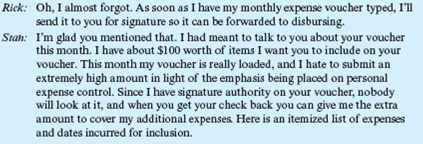
Also, don't forget that Chet House is coming by today, and we are to go to lunch with him.
Rick Bell leaves Stan's office with the itemized list in his hand. During the morning, Rick gives much thought to Stan's request. At about 10 AM, Stan calls Rick on the intercom and informs him that he (Stan) won't be able to go to lunch with them (Rick and Chet) that day because the local congressman is making an unscheduled stop in Midland to confer with some selected business leaders on some local issues that will be dominant in the upcoming fall election. He asks Rick to take Chet out to lunch and give him his regrets and to tell Chet that he (Stan) will see them after lunch around 2 PM. When Chet arrives, he and Rick leave for lunch and during the meal, the following conversation ensues:
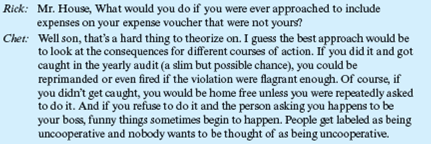
So I guess that every man at some time has to make a decision that determines his survival among the fittest. This situation could be one of them.
Rick and Chet finished their meal in relative silence and went back to the office where they met Stan for their conference. After the conference, Rick went back to his office and gave some thought to the events of the day. That evening after work Rick went back to Stan's office with the results of his decision.
What would you have done if you were Rick?
Principals:
Rick Bell-residence accounts manager in Midland for United Electric Company. Rick is 25 years old, is considered to have good potential as a manager, and was promoted to his present job one month ago.
Stan Holloway-district manager for United Electric in Midland. He is 33 years old and has been in his present job 2½ years. His district, Midland, has strong political influence in the company, as the current president of United Electric was raised in Midland.
Stan is Rick's boss.
Chester "Chet" House-division manager for United. He is 61 years old and is located at company headquarters about 30 miles from Midland. He is Stan's boss and is also a close personal friend of the president of United.
At 7:45 AM on the 28th of March, Rick Bell was preparing to leave Stan Holloway's office after chatting with him for a few minutes about the week's activities.
Also, don't forget that Chet House is coming by today, and we are to go to lunch with him.
Rick Bell leaves Stan's office with the itemized list in his hand. During the morning, Rick gives much thought to Stan's request. At about 10 AM, Stan calls Rick on the intercom and informs him that he (Stan) won't be able to go to lunch with them (Rick and Chet) that day because the local congressman is making an unscheduled stop in Midland to confer with some selected business leaders on some local issues that will be dominant in the upcoming fall election. He asks Rick to take Chet out to lunch and give him his regrets and to tell Chet that he (Stan) will see them after lunch around 2 PM. When Chet arrives, he and Rick leave for lunch and during the meal, the following conversation ensues:
So I guess that every man at some time has to make a decision that determines his survival among the fittest. This situation could be one of them.
Rick and Chet finished their meal in relative silence and went back to the office where they met Stan for their conference. After the conference, Rick went back to his office and gave some thought to the events of the day. That evening after work Rick went back to Stan's office with the results of his decision.
What would you have done if you were Rick?
Question
Question
Question
Question
Padding the Expense Account?
Principals:
Rick Bell-residence accounts manager in Midland for United Electric Company. Rick is 25 years old, is considered to have good potential as a manager, and was promoted to his present job one month ago.
Stan Holloway-district manager for United Electric in Midland. He is 33 years old and has been in his present job 2½ years. His district, Midland, has strong political influence in the company, as the current president of United Electric was raised in Midland.
Stan is Rick's boss.
Chester "Chet" House-division manager for United. He is 61 years old and is located at company headquarters about 30 miles from Midland. He is Stan's boss and is also a close personal friend of the president of United.
At 7:45 AM on the 28th of March, Rick Bell was preparing to leave Stan Holloway's office after chatting with him for a few minutes about the week's activities.
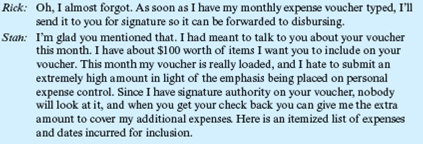
Also, don't forget that Chet House is coming by today, and we are to go to lunch with him.
Rick Bell leaves Stan's office with the itemized list in his hand. During the morning, Rick gives much thought to Stan's request. At about 10 AM, Stan calls Rick on the intercom and informs him that he (Stan) won't be able to go to lunch with them (Rick and Chet) that day because the local congressman is making an unscheduled stop in Midland to confer with some selected business leaders on some local issues that will be dominant in the upcoming fall election. He asks Rick to take Chet out to lunch and give him his regrets and to tell Chet that he (Stan) will see them after lunch around 2 PM. When Chet arrives, he and Rick leave for lunch and during the meal, the following conversation ensues:
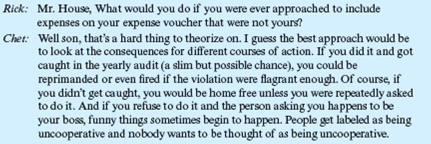
So I guess that every man at some time has to make a decision that determines his survival among the fittest. This situation could be one of them.
Rick and Chet finished their meal in relative silence and went back to the office where they met Stan for their conference. After the conference, Rick went back to his office and gave some thought to the events of the day. That evening after work Rick went back to Stan's office with the results of his decision.
Do you agree with Mr. House's response to Rick?
Principals:
Rick Bell-residence accounts manager in Midland for United Electric Company. Rick is 25 years old, is considered to have good potential as a manager, and was promoted to his present job one month ago.
Stan Holloway-district manager for United Electric in Midland. He is 33 years old and has been in his present job 2½ years. His district, Midland, has strong political influence in the company, as the current president of United Electric was raised in Midland.
Stan is Rick's boss.
Chester "Chet" House-division manager for United. He is 61 years old and is located at company headquarters about 30 miles from Midland. He is Stan's boss and is also a close personal friend of the president of United.
At 7:45 AM on the 28th of March, Rick Bell was preparing to leave Stan Holloway's office after chatting with him for a few minutes about the week's activities.
Also, don't forget that Chet House is coming by today, and we are to go to lunch with him.
Rick Bell leaves Stan's office with the itemized list in his hand. During the morning, Rick gives much thought to Stan's request. At about 10 AM, Stan calls Rick on the intercom and informs him that he (Stan) won't be able to go to lunch with them (Rick and Chet) that day because the local congressman is making an unscheduled stop in Midland to confer with some selected business leaders on some local issues that will be dominant in the upcoming fall election. He asks Rick to take Chet out to lunch and give him his regrets and to tell Chet that he (Stan) will see them after lunch around 2 PM. When Chet arrives, he and Rick leave for lunch and during the meal, the following conversation ensues:
So I guess that every man at some time has to make a decision that determines his survival among the fittest. This situation could be one of them.
Rick and Chet finished their meal in relative silence and went back to the office where they met Stan for their conference. After the conference, Rick went back to his office and gave some thought to the events of the day. That evening after work Rick went back to Stan's office with the results of his decision.
Do you agree with Mr. House's response to Rick?
Question
Question
Question

Unlock Deck
Sign up to unlock the cards in this deck!
Unlock Deck
Unlock Deck
1/25

Play

Full screen (f)
Deck 5: Ethical, Social, and Legal Responsibilities of Management
1
Debating the Sarbanes-Oxley Act
The major points of the Sarbanes-Oxley Act of 2002 are summarized in Figure 5.3. Carefully study Figure 5.3 and develop an argument either supporting the rise and necessity of the act or in opposition to the act. Your instructor may allow you to gather additional information through library or Internet research. Summarize your argument points in outline form, and be prepared to debate classmates who take the other side of the argument.
FIGURE 5.3
Solving Ethical Dilemmas
Source: L. Nash, "Ethics without the Sermon," Harvard Business Review 59 (1981), p. 78.
The major points of the Sarbanes-Oxley Act of 2002 are summarized in Figure 5.3. Carefully study Figure 5.3 and develop an argument either supporting the rise and necessity of the act or in opposition to the act. Your instructor may allow you to gather additional information through library or Internet research. Summarize your argument points in outline form, and be prepared to debate classmates who take the other side of the argument.
FIGURE 5.3
Solving Ethical Dilemmas
Source: L. Nash, "Ethics without the Sermon," Harvard Business Review 59 (1981), p. 78.
Students' responses will vary. This exercise will help students understand the Sarbanes-Oxley Act and its provisions better. The discussion will bring to light different perspectives.
2
James F. Lincoln stated: "'Do unto others as you would have them do unto you' is a proper labor-management policy." Do you agree or disagree? Why?
Labors are the assets of any organization. Skilled labors increases productivity and performance of the firm. Various policies are being followed in the business world regarding the labor-management.
In addition to the various processes in the organization, managing the work force is also a significant task. Skilled labors should be retained in order to reduce the turn over cost. Organizations do investment to get the labors trained and skilled enough to perform the various operations of the firm.
The statement mentioned in the case could be applicable to the organizations based on situation. It can be agreed to a large extend that when the labors are treated well, by giving incentives and better working atmosphere, they tend to perform well. The efficiency of the labors will be higher if they are motivated and treated well. When the labors are treated well, they will not quit the job and the turn over cost to the company will be less. Based on the job performed by the labor, the benefits and allowances should be given. However, providing them with undesired privilege can reduce their efficiency as well.
In addition to the various processes in the organization, managing the work force is also a significant task. Skilled labors should be retained in order to reduce the turn over cost. Organizations do investment to get the labors trained and skilled enough to perform the various operations of the firm.
The statement mentioned in the case could be applicable to the organizations based on situation. It can be agreed to a large extend that when the labors are treated well, by giving incentives and better working atmosphere, they tend to perform well. The efficiency of the labors will be higher if they are motivated and treated well. When the labors are treated well, they will not quit the job and the turn over cost to the company will be less. Based on the job performed by the labor, the benefits and allowances should be given. However, providing them with undesired privilege can reduce their efficiency as well.
3
Identify the laws that deal with ethical issues in business.
Employees of the firm will be expected to behave ethically and follow the principles of code of ethics. In order to ensure that the business activities are happening ethically, certain laws are being enacted.
Business operations are vast and involves large number of people. It will be important that the people associated with the business should follow ethical practices. In order to streamline the business activities and regulate the unethical practices, various laws have been enacted.
The laws that are formulated to deal with the ethical issues in business could be as listed below:
Competitive behavior: The laws under this category prohibits the business people from involving in anticompetitive behavior. All the companies are supposed to follow this law. Some of the acts that came in to existence to ensure the implementation of this law are The S act, the C act, the W act and the SO act. The S act forbidden the companies from monopolizing the trade. The C act ensures that the same prices are fixed for the products for different whole sale customers. The W act prohibits false advertising, the customers should be informed about the negative side of the products as well along with the positive results. The S-O act emphasis on independence of the work performed by the auditors and the firm's board members. The employees can complaint against their employers or top officials, if they are found to be involved in fraud activities.
Corporate governance: The rules and regulations that control the internal as well as the external factors comes under the corporate governance. The corporate companies will have to function as per the rules of the government.
Consumer protection: Various laws are also formulated to regulate the unethical business practices and ensure customer welfare. Laws under this category will cover the food and drugs, consumer products and loans. The laws concerned with the food and drugs have the power to prohibit the manufacturers from selling products, if they are found unsafe for the users. The law to prevent unethical practices in the consumers products, have the rights to force the business organization to withdraw the products from the market, if they were found to be defective or hazardous. The unfair money lending practices are also found unethical and the government have enacted laws to protect the civilians. In this regard, the customers have the right to know the interest rates and hidden charges while availing loan. This will prevent the existence of unethical practices in lending loans to a very large extend.
Environmental protection: People involved in business should consider the social as well as economic issues, while running their business. The surrounding environment and the society should not be affected because of the business activities. However, the business people will try to follow unethical practices and ignore the policies to be followed. Some laws that might prevent the business organizations from involving in unethical practices and polluting the surroundings might be the NEP act, CA act, TSC act and the CW act. Where, NEP prohibits the firm from polluting the environment, CA controls the emissions from the industries and maintains the air clean, TSC prohibits the industries from using toxic substances in the manufacturing process and the CW controls the illegal disposal of effluents in to the water bodies and polluting it.
Business operations are vast and involves large number of people. It will be important that the people associated with the business should follow ethical practices. In order to streamline the business activities and regulate the unethical practices, various laws have been enacted.
The laws that are formulated to deal with the ethical issues in business could be as listed below:
Competitive behavior: The laws under this category prohibits the business people from involving in anticompetitive behavior. All the companies are supposed to follow this law. Some of the acts that came in to existence to ensure the implementation of this law are The S act, the C act, the W act and the SO act. The S act forbidden the companies from monopolizing the trade. The C act ensures that the same prices are fixed for the products for different whole sale customers. The W act prohibits false advertising, the customers should be informed about the negative side of the products as well along with the positive results. The S-O act emphasis on independence of the work performed by the auditors and the firm's board members. The employees can complaint against their employers or top officials, if they are found to be involved in fraud activities.
Corporate governance: The rules and regulations that control the internal as well as the external factors comes under the corporate governance. The corporate companies will have to function as per the rules of the government.
Consumer protection: Various laws are also formulated to regulate the unethical business practices and ensure customer welfare. Laws under this category will cover the food and drugs, consumer products and loans. The laws concerned with the food and drugs have the power to prohibit the manufacturers from selling products, if they are found unsafe for the users. The law to prevent unethical practices in the consumers products, have the rights to force the business organization to withdraw the products from the market, if they were found to be defective or hazardous. The unfair money lending practices are also found unethical and the government have enacted laws to protect the civilians. In this regard, the customers have the right to know the interest rates and hidden charges while availing loan. This will prevent the existence of unethical practices in lending loans to a very large extend.
Environmental protection: People involved in business should consider the social as well as economic issues, while running their business. The surrounding environment and the society should not be affected because of the business activities. However, the business people will try to follow unethical practices and ignore the policies to be followed. Some laws that might prevent the business organizations from involving in unethical practices and polluting the surroundings might be the NEP act, CA act, TSC act and the CW act. Where, NEP prohibits the firm from polluting the environment, CA controls the emissions from the industries and maintains the air clean, TSC prohibits the industries from using toxic substances in the manufacturing process and the CW controls the illegal disposal of effluents in to the water bodies and polluting it.
4
Explain what is meant by "sustainability."
Unlock Deck
Unlock for access to all 25 flashcards in this deck.
Unlock Deck
k this deck
5
Lightbulb Sellers
You receive the following telephone call: "Hello, Mr. Smith. This is Sam. I am a handicapped person." Sam wants to sell you a high-priced lightbulb, guaranteed to last up to five years. He may also want to sell you vitamins and household cleaning solutions. The lightbulbs sold in this manner cost about twice as much as they do at a local hardware store.
However, few of the lightbulb sales organizations are charities. They are for-profit companies whose business is selling lightbulbs by phone. United Handicapped Workers, Lifeline Industries Inc., Handicapped Workers of America, United Handicapped Workers of Charlotte (North Carolina), and American Handicapped Workers are among the larger for-profit companies selling lightbulbs by phone.
The people who make the phone calls are normally paid an hourly wage, a commission, or some combination of the two. The fact that you are dealing with a for-profit business is not always clear, even though the caller may say, "We're not asking for charity or a handout."
Questions
1. Do you believe the practices of these organizations are ethical? Explain.
2. What are the pros and cons of these practices?
Source: "Lightbulb Sellers' Employers Often Not Charity," Atlanta Journal and Constitution , May 28, 1990, p. B3.
You receive the following telephone call: "Hello, Mr. Smith. This is Sam. I am a handicapped person." Sam wants to sell you a high-priced lightbulb, guaranteed to last up to five years. He may also want to sell you vitamins and household cleaning solutions. The lightbulbs sold in this manner cost about twice as much as they do at a local hardware store.
However, few of the lightbulb sales organizations are charities. They are for-profit companies whose business is selling lightbulbs by phone. United Handicapped Workers, Lifeline Industries Inc., Handicapped Workers of America, United Handicapped Workers of Charlotte (North Carolina), and American Handicapped Workers are among the larger for-profit companies selling lightbulbs by phone.
The people who make the phone calls are normally paid an hourly wage, a commission, or some combination of the two. The fact that you are dealing with a for-profit business is not always clear, even though the caller may say, "We're not asking for charity or a handout."
Questions
1. Do you believe the practices of these organizations are ethical? Explain.
2. What are the pros and cons of these practices?
Source: "Lightbulb Sellers' Employers Often Not Charity," Atlanta Journal and Constitution , May 28, 1990, p. B3.
Unlock Deck
Unlock for access to all 25 flashcards in this deck.
Unlock Deck
k this deck
6
Explain social responsibility.
Unlock Deck
Unlock for access to all 25 flashcards in this deck.
Unlock Deck
k this deck
7
Padding the Expense Account?
Principals:
Rick Bell-residence accounts manager in Midland for United Electric Company. Rick is 25 years old, is considered to have good potential as a manager, and was promoted to his present job one month ago.
Stan Holloway-district manager for United Electric in Midland. He is 33 years old and has been in his present job 2½ years. His district, Midland, has strong political influence in the company, as the current president of United Electric was raised in Midland.
Stan is Rick's boss.
Chester "Chet" House-division manager for United. He is 61 years old and is located at company headquarters about 30 miles from Midland. He is Stan's boss and is also a close personal friend of the president of United.
At 7:45 am on the 28th of March, Rick Bell was preparing to leave Stan Holloway's office after chatting with him for a few minutes about the week's activities.
Rick Bell leaves Stan's office with the itemized list in his hand. During the morning, Rick gives much thought to Stan's request. At about 10 am , Stan calls Rick on the intercom and informs him that he (Stan) won't be able to go to lunch with them (Rick and Chet) that day because the local congressman is making an unscheduled stop in Midland to confer with some selected business leaders on some local issues that will be dominant in the upcoming fall election. He asks Rick to take Chet out to lunch and give him his regrets and to tell Chet that he (Stan) will see them after lunch around 2 pm. When Chet arrives, he and Rick leave for lunch and during the meal, the following conversation ensues:
Rick and Chet finished their meal in relative silence and went back to the office where they met Stan for their conference. After the conference, Rick went back to his office and gave some thought to the events of the day. That evening after work Rick went back to Stan's office with the results of his decision.
Questions
1. What would you have done if you were Rick?
2. Do you agree with Mr. House?s response to Rick?
Principals:
Rick Bell-residence accounts manager in Midland for United Electric Company. Rick is 25 years old, is considered to have good potential as a manager, and was promoted to his present job one month ago.
Stan Holloway-district manager for United Electric in Midland. He is 33 years old and has been in his present job 2½ years. His district, Midland, has strong political influence in the company, as the current president of United Electric was raised in Midland.
Stan is Rick's boss.
Chester "Chet" House-division manager for United. He is 61 years old and is located at company headquarters about 30 miles from Midland. He is Stan's boss and is also a close personal friend of the president of United.
At 7:45 am on the 28th of March, Rick Bell was preparing to leave Stan Holloway's office after chatting with him for a few minutes about the week's activities.
Rick Bell leaves Stan's office with the itemized list in his hand. During the morning, Rick gives much thought to Stan's request. At about 10 am , Stan calls Rick on the intercom and informs him that he (Stan) won't be able to go to lunch with them (Rick and Chet) that day because the local congressman is making an unscheduled stop in Midland to confer with some selected business leaders on some local issues that will be dominant in the upcoming fall election. He asks Rick to take Chet out to lunch and give him his regrets and to tell Chet that he (Stan) will see them after lunch around 2 pm. When Chet arrives, he and Rick leave for lunch and during the meal, the following conversation ensues: Rick and Chet finished their meal in relative silence and went back to the office where they met Stan for their conference. After the conference, Rick went back to his office and gave some thought to the events of the day. That evening after work Rick went back to Stan's office with the results of his decision.Questions
1. What would you have done if you were Rick?
2. Do you agree with Mr. House?s response to Rick?
Unlock Deck
Unlock for access to all 25 flashcards in this deck.
Unlock Deck
k this deck
8
What are the six areas of law that affect business organizations?
Unlock Deck
Unlock for access to all 25 flashcards in this deck.
Unlock Deck
k this deck
9
Define ethics.
Unlock Deck
Unlock for access to all 25 flashcards in this deck.
Unlock Deck
k this deck
10
Explain the laws regulating the three kinds of business entities or ownership.
Unlock Deck
Unlock for access to all 25 flashcards in this deck.
Unlock Deck
k this deck
11
Where Do You Stand?
Read each of the following situations and decide how you would respond. Be prepared to justify your position in a class discussion.
Situation 1: Family versus Ethics
Jim, a 56-year-old middle manager with children in college, discovers that the owners of his company are cheating the government out of several thousand dollars a year in taxes. Jim is the only employee in a position to know this. Should Jim report the owners to the Internal Revenue Service at the risk of endangering his own livelihood, or should he disregard the discovery to protect his family's livelihood?
Situation 2: The Roundabout Raise
When Joe asks for a raise, his boss praises his work but says the company's rigid budget won't allow any further merit raises for the time being. Instead, the boss suggests the company "won't look too closely at your expense accounts for a while." Should Joe take this as authorization to pad his expense account because he is simply getting the money he deserves through a different route, or should he not take this roundabout "raise"?
Situation 3: The Faked Degree
Bill has done a sound job for over a year; he got the job by claiming to have a college degree. Bill's boss learns Bill actually never graduated. Should his boss dismiss him for a false résumé? Should he overlook the false claim, since Bill is otherwise conscientious and honorable and dismissal might ruin Bill's career?
Situation 4: Sneaking Phone Calls
Helen discovers that a co-worker makes about $100 a month in personal long-distance telephone calls from an office telephone. Should Helen report the employee or disregard the calls, since many people make personal calls at the office?
Situation 5: Cover-Up Temptation
José discovers that the chemical plant he manages is creating slightly more water pollution in a nearby lake than is legally permitted. Revealing the problem will bring negative publicity to the plant, hurt the lakeside town's resort business, and scare the community. Solving the problem will cost the company well over $100,000. It is unlikely that outsiders will discover the problem. The violation poses no danger whatever to people; at most, it will endanger a small number of fi sh. Should José reveal the problem despite the cost to his company, or should he consider the problem as a mere technicality and disregard it?
Situation 6: Actual Salary
Dorothy finds out that the best-qualified candidate for a job really earned only $18,000 a year in his last job, not the $28,000 he claimed. Should Dorothy hire the candidate anyway, or should she choose someone considerably less qualified?
Source: The Wall Street Journal by Roger Rickles. Copyright (©) 1983 by Dow Jones Co., Inc. via Copyright Clearance Center.
Read each of the following situations and decide how you would respond. Be prepared to justify your position in a class discussion.
Situation 1: Family versus Ethics
Jim, a 56-year-old middle manager with children in college, discovers that the owners of his company are cheating the government out of several thousand dollars a year in taxes. Jim is the only employee in a position to know this. Should Jim report the owners to the Internal Revenue Service at the risk of endangering his own livelihood, or should he disregard the discovery to protect his family's livelihood?
Situation 2: The Roundabout Raise
When Joe asks for a raise, his boss praises his work but says the company's rigid budget won't allow any further merit raises for the time being. Instead, the boss suggests the company "won't look too closely at your expense accounts for a while." Should Joe take this as authorization to pad his expense account because he is simply getting the money he deserves through a different route, or should he not take this roundabout "raise"?
Situation 3: The Faked Degree
Bill has done a sound job for over a year; he got the job by claiming to have a college degree. Bill's boss learns Bill actually never graduated. Should his boss dismiss him for a false résumé? Should he overlook the false claim, since Bill is otherwise conscientious and honorable and dismissal might ruin Bill's career?
Situation 4: Sneaking Phone Calls
Helen discovers that a co-worker makes about $100 a month in personal long-distance telephone calls from an office telephone. Should Helen report the employee or disregard the calls, since many people make personal calls at the office?
Situation 5: Cover-Up Temptation
José discovers that the chemical plant he manages is creating slightly more water pollution in a nearby lake than is legally permitted. Revealing the problem will bring negative publicity to the plant, hurt the lakeside town's resort business, and scare the community. Solving the problem will cost the company well over $100,000. It is unlikely that outsiders will discover the problem. The violation poses no danger whatever to people; at most, it will endanger a small number of fi sh. Should José reveal the problem despite the cost to his company, or should he consider the problem as a mere technicality and disregard it?
Situation 6: Actual Salary
Dorothy finds out that the best-qualified candidate for a job really earned only $18,000 a year in his last job, not the $28,000 he claimed. Should Dorothy hire the candidate anyway, or should she choose someone considerably less qualified?
Source: The Wall Street Journal by Roger Rickles. Copyright (©) 1983 by Dow Jones Co., Inc. via Copyright Clearance Center.
Unlock Deck
Unlock for access to all 25 flashcards in this deck.
Unlock Deck
k this deck
12
Describe the three kinds of intellectual property protections.
Unlock Deck
Unlock for access to all 25 flashcards in this deck.
Unlock Deck
k this deck
13
Why does the government regulate businesses?
Unlock Deck
Unlock for access to all 25 flashcards in this deck.
Unlock Deck
k this deck
14
What is the Uniform Commercial Code?
Unlock Deck
Unlock for access to all 25 flashcards in this deck.
Unlock Deck
k this deck
15
Identify some common unethical Internet practices.
Unlock Deck
Unlock for access to all 25 flashcards in this deck.
Unlock Deck
k this deck
16
Lightbulb Sellers
You receive the following telephone call: "Hello, Mr. Smith. This is Sam. I am a handicapped person." Sam wants to sell you a high-priced lightbulb, guaranteed to last up to five years. He may also want to sell you vitamins and household cleaning solutions. The lightbulbs sold in this manner cost about twice as much as they do at a local hardware store.
However, few of the lightbulb sales organizations are charities. They are for-profit companies whose business is selling lightbulbs by phone. United Handicapped Workers, Lifeline Industries Inc., Handicapped Workers of America, United Handicapped Workers of Charlotte (North Carolina), and American Handicapped Workers are among the larger for-profit companies selling lightbulbs by phone.
The people who make the phone calls are normally paid an hourly wage, a commission, or some combination of the two. The fact that you are dealing with a for-profit business is not always clear, even though the caller may say, "We're not asking for charity or a handout."
Do you believe the practices of these organizations are ethical? Explain.
You receive the following telephone call: "Hello, Mr. Smith. This is Sam. I am a handicapped person." Sam wants to sell you a high-priced lightbulb, guaranteed to last up to five years. He may also want to sell you vitamins and household cleaning solutions. The lightbulbs sold in this manner cost about twice as much as they do at a local hardware store.
However, few of the lightbulb sales organizations are charities. They are for-profit companies whose business is selling lightbulbs by phone. United Handicapped Workers, Lifeline Industries Inc., Handicapped Workers of America, United Handicapped Workers of Charlotte (North Carolina), and American Handicapped Workers are among the larger for-profit companies selling lightbulbs by phone.
The people who make the phone calls are normally paid an hourly wage, a commission, or some combination of the two. The fact that you are dealing with a for-profit business is not always clear, even though the caller may say, "We're not asking for charity or a handout."
Do you believe the practices of these organizations are ethical? Explain.
Unlock Deck
Unlock for access to all 25 flashcards in this deck.
Unlock Deck
k this deck
17
Truthfulness in Advertising
Advertising claims may be totally inaccurate ("sticker price is a low $11,998" may omit all transportation costs, state taxes, dealer charges, and factory options, which together add 25 percent to 30 percent to the price of a car). Other claims are greatly exaggerated ("12-hour relief from sore throat pain"), verbally misleading ("you'll have to eat 12 bowls of Shredded Wheat to get the vitamins and nutrition in 1 bowl of Total"), or visually misleading (healthy, active people shown in pleasant social situations to advertise liquor, beer, or cigarettes).
Questions
From magazines, newspapers, or television, select an advertisement you believe to be untruthful.
1. Why do you think the claims are untruthful?
2. Into what group (inaccurate, exaggerated, or misleading) do you think they fall?
Source: La Rue Tone Hosmer, The Ethics of Management (Homewood, IL: Richard D. Irwin, 1987), p. 86.
Advertising claims may be totally inaccurate ("sticker price is a low $11,998" may omit all transportation costs, state taxes, dealer charges, and factory options, which together add 25 percent to 30 percent to the price of a car). Other claims are greatly exaggerated ("12-hour relief from sore throat pain"), verbally misleading ("you'll have to eat 12 bowls of Shredded Wheat to get the vitamins and nutrition in 1 bowl of Total"), or visually misleading (healthy, active people shown in pleasant social situations to advertise liquor, beer, or cigarettes).
Questions
From magazines, newspapers, or television, select an advertisement you believe to be untruthful.
1. Why do you think the claims are untruthful?
2. Into what group (inaccurate, exaggerated, or misleading) do you think they fall?
Source: La Rue Tone Hosmer, The Ethics of Management (Homewood, IL: Richard D. Irwin, 1987), p. 86.
Unlock Deck
Unlock for access to all 25 flashcards in this deck.
Unlock Deck
k this deck
18
Padding the Expense Account?
Principals:
Rick Bell-residence accounts manager in Midland for United Electric Company. Rick is 25 years old, is considered to have good potential as a manager, and was promoted to his present job one month ago.
Stan Holloway-district manager for United Electric in Midland. He is 33 years old and has been in his present job 2½ years. His district, Midland, has strong political influence in the company, as the current president of United Electric was raised in Midland.
Stan is Rick's boss.
Chester "Chet" House-division manager for United. He is 61 years old and is located at company headquarters about 30 miles from Midland. He is Stan's boss and is also a close personal friend of the president of United.
At 7:45 AM on the 28th of March, Rick Bell was preparing to leave Stan Holloway's office after chatting with him for a few minutes about the week's activities.
Also, don't forget that Chet House is coming by today, and we are to go to lunch with him.
Rick Bell leaves Stan's office with the itemized list in his hand. During the morning, Rick gives much thought to Stan's request. At about 10 AM, Stan calls Rick on the intercom and informs him that he (Stan) won't be able to go to lunch with them (Rick and Chet) that day because the local congressman is making an unscheduled stop in Midland to confer with some selected business leaders on some local issues that will be dominant in the upcoming fall election. He asks Rick to take Chet out to lunch and give him his regrets and to tell Chet that he (Stan) will see them after lunch around 2 PM. When Chet arrives, he and Rick leave for lunch and during the meal, the following conversation ensues:
So I guess that every man at some time has to make a decision that determines his survival among the fittest. This situation could be one of them.
Rick and Chet finished their meal in relative silence and went back to the office where they met Stan for their conference. After the conference, Rick went back to his office and gave some thought to the events of the day. That evening after work Rick went back to Stan's office with the results of his decision.
What would you have done if you were Rick?
Principals:
Rick Bell-residence accounts manager in Midland for United Electric Company. Rick is 25 years old, is considered to have good potential as a manager, and was promoted to his present job one month ago.
Stan Holloway-district manager for United Electric in Midland. He is 33 years old and has been in his present job 2½ years. His district, Midland, has strong political influence in the company, as the current president of United Electric was raised in Midland.
Stan is Rick's boss.
Chester "Chet" House-division manager for United. He is 61 years old and is located at company headquarters about 30 miles from Midland. He is Stan's boss and is also a close personal friend of the president of United.
At 7:45 AM on the 28th of March, Rick Bell was preparing to leave Stan Holloway's office after chatting with him for a few minutes about the week's activities.
Also, don't forget that Chet House is coming by today, and we are to go to lunch with him.
Rick Bell leaves Stan's office with the itemized list in his hand. During the morning, Rick gives much thought to Stan's request. At about 10 AM, Stan calls Rick on the intercom and informs him that he (Stan) won't be able to go to lunch with them (Rick and Chet) that day because the local congressman is making an unscheduled stop in Midland to confer with some selected business leaders on some local issues that will be dominant in the upcoming fall election. He asks Rick to take Chet out to lunch and give him his regrets and to tell Chet that he (Stan) will see them after lunch around 2 PM. When Chet arrives, he and Rick leave for lunch and during the meal, the following conversation ensues:
So I guess that every man at some time has to make a decision that determines his survival among the fittest. This situation could be one of them.
Rick and Chet finished their meal in relative silence and went back to the office where they met Stan for their conference. After the conference, Rick went back to his office and gave some thought to the events of the day. That evening after work Rick went back to Stan's office with the results of his decision.
What would you have done if you were Rick?
Unlock Deck
Unlock for access to all 25 flashcards in this deck.
Unlock Deck
k this deck
19
What are three ways in which corporations can demonstrate a sense of social responsibility?
Unlock Deck
Unlock for access to all 25 flashcards in this deck.
Unlock Deck
k this deck
20
Lightbulb Sellers
You receive the following telephone call: "Hello, Mr. Smith. This is Sam. I am a handicapped person." Sam wants to sell you a high-priced lightbulb, guaranteed to last up to five years. He may also want to sell you vitamins and household cleaning solutions. The lightbulbs sold in this manner cost about twice as much as they do at a local hardware store.
However, few of the lightbulb sales organizations are charities. They are for-profit companies whose business is selling lightbulbs by phone. United Handicapped Workers, Lifeline Industries Inc., Handicapped Workers of America, United Handicapped Workers of Charlotte (North Carolina), and American Handicapped Workers are among the larger for-profit companies selling lightbulbs by phone.
The people who make the phone calls are normally paid an hourly wage, a commission, or some combination of the two. The fact that you are dealing with a for-profit business is not always clear, even though the caller may say, "We're not asking for charity or a handout."
What are the pros and cons of these practices?
Source: "Lightbulb Sellers' Employers Often Not Charity," Atlanta Journal and Constitution, May 28, 1990, p. B3.
You receive the following telephone call: "Hello, Mr. Smith. This is Sam. I am a handicapped person." Sam wants to sell you a high-priced lightbulb, guaranteed to last up to five years. He may also want to sell you vitamins and household cleaning solutions. The lightbulbs sold in this manner cost about twice as much as they do at a local hardware store.
However, few of the lightbulb sales organizations are charities. They are for-profit companies whose business is selling lightbulbs by phone. United Handicapped Workers, Lifeline Industries Inc., Handicapped Workers of America, United Handicapped Workers of Charlotte (North Carolina), and American Handicapped Workers are among the larger for-profit companies selling lightbulbs by phone.
The people who make the phone calls are normally paid an hourly wage, a commission, or some combination of the two. The fact that you are dealing with a for-profit business is not always clear, even though the caller may say, "We're not asking for charity or a handout."
What are the pros and cons of these practices?
Source: "Lightbulb Sellers' Employers Often Not Charity," Atlanta Journal and Constitution, May 28, 1990, p. B3.
Unlock Deck
Unlock for access to all 25 flashcards in this deck.
Unlock Deck
k this deck
21
What is a code of ethics?
Unlock Deck
Unlock for access to all 25 flashcards in this deck.
Unlock Deck
k this deck
22
Padding the Expense Account?
Principals:
Rick Bell-residence accounts manager in Midland for United Electric Company. Rick is 25 years old, is considered to have good potential as a manager, and was promoted to his present job one month ago.
Stan Holloway-district manager for United Electric in Midland. He is 33 years old and has been in his present job 2½ years. His district, Midland, has strong political influence in the company, as the current president of United Electric was raised in Midland.
Stan is Rick's boss.
Chester "Chet" House-division manager for United. He is 61 years old and is located at company headquarters about 30 miles from Midland. He is Stan's boss and is also a close personal friend of the president of United.
At 7:45 AM on the 28th of March, Rick Bell was preparing to leave Stan Holloway's office after chatting with him for a few minutes about the week's activities.
Also, don't forget that Chet House is coming by today, and we are to go to lunch with him.
Rick Bell leaves Stan's office with the itemized list in his hand. During the morning, Rick gives much thought to Stan's request. At about 10 AM, Stan calls Rick on the intercom and informs him that he (Stan) won't be able to go to lunch with them (Rick and Chet) that day because the local congressman is making an unscheduled stop in Midland to confer with some selected business leaders on some local issues that will be dominant in the upcoming fall election. He asks Rick to take Chet out to lunch and give him his regrets and to tell Chet that he (Stan) will see them after lunch around 2 PM. When Chet arrives, he and Rick leave for lunch and during the meal, the following conversation ensues:
So I guess that every man at some time has to make a decision that determines his survival among the fittest. This situation could be one of them.
Rick and Chet finished their meal in relative silence and went back to the office where they met Stan for their conference. After the conference, Rick went back to his office and gave some thought to the events of the day. That evening after work Rick went back to Stan's office with the results of his decision.
Do you agree with Mr. House's response to Rick?
Principals:
Rick Bell-residence accounts manager in Midland for United Electric Company. Rick is 25 years old, is considered to have good potential as a manager, and was promoted to his present job one month ago.
Stan Holloway-district manager for United Electric in Midland. He is 33 years old and has been in his present job 2½ years. His district, Midland, has strong political influence in the company, as the current president of United Electric was raised in Midland.
Stan is Rick's boss.
Chester "Chet" House-division manager for United. He is 61 years old and is located at company headquarters about 30 miles from Midland. He is Stan's boss and is also a close personal friend of the president of United.
At 7:45 AM on the 28th of March, Rick Bell was preparing to leave Stan Holloway's office after chatting with him for a few minutes about the week's activities.
Also, don't forget that Chet House is coming by today, and we are to go to lunch with him.
Rick Bell leaves Stan's office with the itemized list in his hand. During the morning, Rick gives much thought to Stan's request. At about 10 AM, Stan calls Rick on the intercom and informs him that he (Stan) won't be able to go to lunch with them (Rick and Chet) that day because the local congressman is making an unscheduled stop in Midland to confer with some selected business leaders on some local issues that will be dominant in the upcoming fall election. He asks Rick to take Chet out to lunch and give him his regrets and to tell Chet that he (Stan) will see them after lunch around 2 PM. When Chet arrives, he and Rick leave for lunch and during the meal, the following conversation ensues:
So I guess that every man at some time has to make a decision that determines his survival among the fittest. This situation could be one of them.
Rick and Chet finished their meal in relative silence and went back to the office where they met Stan for their conference. After the conference, Rick went back to his office and gave some thought to the events of the day. That evening after work Rick went back to Stan's office with the results of his decision.
Do you agree with Mr. House's response to Rick?
Unlock Deck
Unlock for access to all 25 flashcards in this deck.
Unlock Deck
k this deck
23
Code of Ethics
Most companies develop a code of ethics to help managers respond to different business situations. A code of ethics is a written document that outlines the principles of conduct to be used in making decisions within an organization. Managers should be aware, however, that merely establishing a code of ethics does not prevent unethical behavior. To be effective, ethical codes must be enforced.
You are president of Acme Corporation, which produces and markets copy equipment. You are planning to develop a code of ethics for your president of the company. Prepare an outline of topics that you want to include in the code of ethics.
Questions
1. How difficult was it to develop a code of ethics?
2. Do you feel that a code of ethics can be used by a company or is it just something nobody pays any attention to?
Most companies develop a code of ethics to help managers respond to different business situations. A code of ethics is a written document that outlines the principles of conduct to be used in making decisions within an organization. Managers should be aware, however, that merely establishing a code of ethics does not prevent unethical behavior. To be effective, ethical codes must be enforced.
You are president of Acme Corporation, which produces and markets copy equipment. You are planning to develop a code of ethics for your president of the company. Prepare an outline of topics that you want to include in the code of ethics.
Questions
1. How difficult was it to develop a code of ethics?
2. Do you feel that a code of ethics can be used by a company or is it just something nobody pays any attention to?
Unlock Deck
Unlock for access to all 25 flashcards in this deck.
Unlock Deck
k this deck
24
Why are ethical codes more common today than they were 50 years ago?
Unlock Deck
Unlock for access to all 25 flashcards in this deck.
Unlock Deck
k this deck
25
What is intellectual property?
Unlock Deck
Unlock for access to all 25 flashcards in this deck.
Unlock Deck
k this deck
Unlock Deck
Unlock for access to all 25 flashcards in this deck.






