







 Chat with AI

Deck 4: Fat: How Much is Right for You? Enzymes, Metabolism, and Cellular Respiration
Full screen (f)

Question

Question
Question
Question
Question
Question
Question
Question
Question
Question
Question
Question
Question
Question
Question
Question
Question
Question
Question
Question
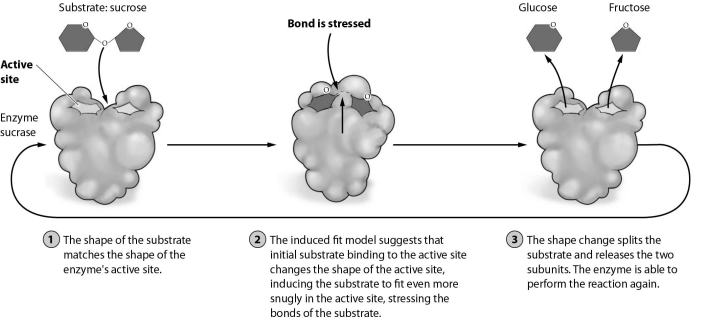
Assume that a newly developed chemical agent blocks the active site of the enzyme shown in the figure. This drug must be similar in shape and size to
A) glucose.
B) fructose.
C) sucrase.
D) sucrose.
Question
Question
Question
Question
Question
Question
Question
Question
Question
Question
Question
Question
Question
Question
Question
Question
Question
Question
Question
Question
Question
Question
Question
Question
Question
Question
Question
Question
Question
Question
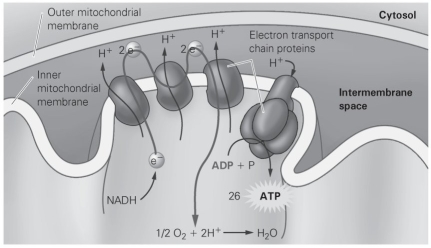
According to the diagram, how many molecules of oxygen (O?)combine with electrons and hydrogen ions to form one molecule of water (H?O)at the end of the electron transport chain?
A) 1/2
B) 1
C) 2
D) none
Question
Question
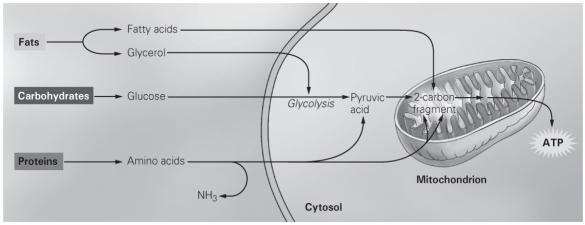
The figure shows the different pathways taken by the subunits of macronutrients during cellular respiration. Which macronutrient subunit is never converted into pyruvic acid before entering the citric acid cycle?
A) an amino acid
B) a fatty acid
C) glycerol
D) glucose
Question
Question
Question
Question
Question
Question
Question
Question
Question
Question
Question
Question
Question
Question
Question
Question
Question
Question
Question
Question

Unlock Deck
Sign up to unlock the cards in this deck!
Unlock Deck
Unlock Deck
1/72

Play

Full screen (f)
Deck 4: Fat: How Much is Right for You? Enzymes, Metabolism, and Cellular Respiration
1
To lose one pound of fat in a week, what combination of changes in your diet and exercise is needed?
A) Reduce food intake by 200 Calories per day and increase exercise to burn off 300 more Calories per day.
B) Reduce food intake by 300 Calories per day and increase exercise to burn off 100 more Calories per day.
C) Reduce food intake by 400 Calories per day with no change in exercise.
D) Increase exercise to burn off 400 more Calories per day with no change in diet.
A) Reduce food intake by 200 Calories per day and increase exercise to burn off 300 more Calories per day.
B) Reduce food intake by 300 Calories per day and increase exercise to burn off 100 more Calories per day.
C) Reduce food intake by 400 Calories per day with no change in exercise.
D) Increase exercise to burn off 400 more Calories per day with no change in diet.
A
2
Which of these people is most likely to use the most Calories during 20 minutes of exercise?
A) a 70-year-old woman who weighs 120 pounds
B) a 30-year-old man who weighs 250 pounds
C) a 25-year-old woman who weighs 135 pounds
D) a 45-year-old man who weighs 180 pounds
A) a 70-year-old woman who weighs 120 pounds
B) a 30-year-old man who weighs 250 pounds
C) a 25-year-old woman who weighs 135 pounds
D) a 45-year-old man who weighs 180 pounds
B
3
Which of the following is true regarding enzymes?
A) Enzymes are not very specific.
B) Enzymes are not affected by high heat, as proteins are.
C) Enzymes can be recycled and used over and over again.
D) Enzymes are "used up" during chemical reactions.
A) Enzymes are not very specific.
B) Enzymes are not affected by high heat, as proteins are.
C) Enzymes can be recycled and used over and over again.
D) Enzymes are "used up" during chemical reactions.
C
4
Which of the following is most likely an enzyme?
A) proline
B) stearic acid
C) endopeptidase
D) acetylcholine
A) proline
B) stearic acid
C) endopeptidase
D) acetylcholine
Unlock Deck
Unlock for access to all 72 flashcards in this deck.
Unlock Deck
k this deck
5
What is the source of chemical energy used to power a muscle cell in your arm?
A) pyruvic acid
B) adenosine triphosphate (ATP)
C) nicotinamide adenine dinucleotide (NAD)
D) ribulose bisphosphate (RuBP)
A) pyruvic acid
B) adenosine triphosphate (ATP)
C) nicotinamide adenine dinucleotide (NAD)
D) ribulose bisphosphate (RuBP)
Unlock Deck
Unlock for access to all 72 flashcards in this deck.
Unlock Deck
k this deck
6
An infinite variety of enzymes and other proteins could be produced from the ________ amino acids in the human body.
A) 10
B) 20
C) millions of
D) infinite variety of
A) 10
B) 20
C) millions of
D) infinite variety of
Unlock Deck
Unlock for access to all 72 flashcards in this deck.
Unlock Deck
k this deck
7
The proteins that catalyze chemical reactions in the body are called
A) enzymes.
B) coenzymes.
C) antioxidants.
D) high-density lipoproteins (HDLs).
A) enzymes.
B) coenzymes.
C) antioxidants.
D) high-density lipoproteins (HDLs).
Unlock Deck
Unlock for access to all 72 flashcards in this deck.
Unlock Deck
k this deck
8
In the human body, the enzyme lactase acts on which substrate?
A) lactose
B) galactose
C) lactic acid
D) glucose
A) lactose
B) galactose
C) lactic acid
D) glucose
Unlock Deck
Unlock for access to all 72 flashcards in this deck.
Unlock Deck
k this deck
9
How does ATP provide energy to a cell?
A) It loses a phosphate group, releasing energy in the process.
B) It releases electrons, which are a source of energy.
C) It releases protons, which are used in the mitochondrion to create energy.
D) It shuttles electrons across the mitochondrial membrane to create potential energy.
A) It loses a phosphate group, releasing energy in the process.
B) It releases electrons, which are a source of energy.
C) It releases protons, which are used in the mitochondrion to create energy.
D) It shuttles electrons across the mitochondrial membrane to create potential energy.
Unlock Deck
Unlock for access to all 72 flashcards in this deck.
Unlock Deck
k this deck
10
What makes some people "lactose intolerant" as adults?
A) Some people don't produce any enzymes, including the one needed to digest lactose.
B) Lactose can only be digested by people who produce enough lactic acid to digest it.
C) Lactose-intolerant people don't produce adequate amounts of lactase.
D) The active site of the lactose-digesting enzyme can vary from person to person.
A) Some people don't produce any enzymes, including the one needed to digest lactose.
B) Lactose can only be digested by people who produce enough lactic acid to digest it.
C) Lactose-intolerant people don't produce adequate amounts of lactase.
D) The active site of the lactose-digesting enzyme can vary from person to person.
Unlock Deck
Unlock for access to all 72 flashcards in this deck.
Unlock Deck
k this deck
11
How many calories would be needed to heat up one kilogram (1000 grams)of water by 1 degree Celsius?
A) 1
B) 10
C) 100
D) 1000
A) 1
B) 10
C) 100
D) 1000
Unlock Deck
Unlock for access to all 72 flashcards in this deck.
Unlock Deck
k this deck
12
The resting energy requirement of a person who is awake but not active is called ________ (three words).
Unlock Deck
Unlock for access to all 72 flashcards in this deck.
Unlock Deck
k this deck
13
More ________ will not increase an individual's basal metabolic rate.
A) exercise
B) testosterone
C) muscle mass
D) caloric intake
A) exercise
B) testosterone
C) muscle mass
D) caloric intake
Unlock Deck
Unlock for access to all 72 flashcards in this deck.
Unlock Deck
k this deck
14
Which of the following is a true statement about caloric energy conversions?
A) A calorie is the same as a Calorie.
B) A kilocalorie is the same as a calorie.
C) A kilocalorie is the same as 1000 calories.
D) A kilocalorie is the same as 1000 Calories.
A) A calorie is the same as a Calorie.
B) A kilocalorie is the same as a calorie.
C) A kilocalorie is the same as 1000 calories.
D) A kilocalorie is the same as 1000 Calories.
Unlock Deck
Unlock for access to all 72 flashcards in this deck.
Unlock Deck
k this deck
15
What would happen if activation energy barriers didn't exist?
A) Substrates would not bind properly to enzymes.
B) Chemical reactions in the body would never occur.
C) Coenzymes would not work, but enzyme function would not be affected.
D) All chemical reactions in the body would proceed whether they were needed or not.
A) Substrates would not bind properly to enzymes.
B) Chemical reactions in the body would never occur.
C) Coenzymes would not work, but enzyme function would not be affected.
D) All chemical reactions in the body would proceed whether they were needed or not.
Unlock Deck
Unlock for access to all 72 flashcards in this deck.
Unlock Deck
k this deck
16
Where does the carbon dioxide you exhale come from?
A) aerobic respiration
B) anaerobic respiration
C) glycolysis
D) transpiration
A) aerobic respiration
B) anaerobic respiration
C) glycolysis
D) transpiration
Unlock Deck
Unlock for access to all 72 flashcards in this deck.
Unlock Deck
k this deck
17
Chemical work within cells is powered by
A) NAD?.
B) NADPH.
C) CO?.
D) ATP.
A) NAD?.
B) NADPH.
C) CO?.
D) ATP.
Unlock Deck
Unlock for access to all 72 flashcards in this deck.
Unlock Deck
k this deck
18
After glycolysis, pyruvic acid loses a carbon dioxide molecule. In other words, the pyruvic acid is
A) denatured.
B) phosphorylated.
C) decarboxylated.
D) oxidated.
A) denatured.
B) phosphorylated.
C) decarboxylated.
D) oxidated.
Unlock Deck
Unlock for access to all 72 flashcards in this deck.
Unlock Deck
k this deck
19
Activation energy is similar to the "push" needed to start rolling a stalled car down a hill. How do enzymes fit into this analogy?
A) Enzymes increase the effort that's needed to start the car moving.
B) Enzymes decrease the effort that's needed to start the car moving.
C) Enzymes increase the steepness of the hill that the car will roll down.
D) Enzymes decrease the distance the car needs to move to reach the bottom of the hill.
A) Enzymes increase the effort that's needed to start the car moving.
B) Enzymes decrease the effort that's needed to start the car moving.
C) Enzymes increase the steepness of the hill that the car will roll down.
D) Enzymes decrease the distance the car needs to move to reach the bottom of the hill.
Unlock Deck
Unlock for access to all 72 flashcards in this deck.
Unlock Deck
k this deck
20
Assume that a newly developed chemical agent blocks the active site of the enzyme shown in the figure. This drug must be similar in shape and size to
A) glucose.
B) fructose.
C) sucrase.
D) sucrose.
Unlock Deck
Unlock for access to all 72 flashcards in this deck.
Unlock Deck
k this deck
21
Creatine phosphate (marketed as "creatine")is a popular supplement taken by weightlifters and other athletes. This supplement provides phosphates that
A) readily allow for the regeneration of ATP.
B) break down glucose during the citric acid cycle.
C) accept electrons at the end of the electron transport chain.
D) ensure ATP is never broken down into ADP.
A) readily allow for the regeneration of ATP.
B) break down glucose during the citric acid cycle.
C) accept electrons at the end of the electron transport chain.
D) ensure ATP is never broken down into ADP.
Unlock Deck
Unlock for access to all 72 flashcards in this deck.
Unlock Deck
k this deck
22
In cellular respiration, ________ is produced during ________.
A) oxygen; the citric acid cycle
B) carbon dioxide; the citric acid cycle
C) oxygen; the electron transport chain
D) carbon dioxide; the electron transport chain
A) oxygen; the citric acid cycle
B) carbon dioxide; the citric acid cycle
C) oxygen; the electron transport chain
D) carbon dioxide; the electron transport chain
Unlock Deck
Unlock for access to all 72 flashcards in this deck.
Unlock Deck
k this deck
23
ATP helps to power ________ work when a muscle cell contracts.
A) chemical
B) transport
C) mechanical
D) potential
A) chemical
B) transport
C) mechanical
D) potential
Unlock Deck
Unlock for access to all 72 flashcards in this deck.
Unlock Deck
k this deck
24
What happens to an ATP molecule after it has released a phosphate?
A) It becomes AMP and is recycled into proteins.
B) It is phosphorylated and becomes ADP.
C) It is converted into lactic acid and transported to the liver for disposal.
D) It is secreted in urine as a waste product of cellular respiration.
A) It becomes AMP and is recycled into proteins.
B) It is phosphorylated and becomes ADP.
C) It is converted into lactic acid and transported to the liver for disposal.
D) It is secreted in urine as a waste product of cellular respiration.
Unlock Deck
Unlock for access to all 72 flashcards in this deck.
Unlock Deck
k this deck
25
The products of cellular respiration are ________ and ________.
Unlock Deck
Unlock for access to all 72 flashcards in this deck.
Unlock Deck
k this deck
26
Transport work across cell membranes is powered by the release of energy from
A) ADP.
B) ATP.
C) NADP.
D) NADPH.
A) ADP.
B) ATP.
C) NADP.
D) NADPH.
Unlock Deck
Unlock for access to all 72 flashcards in this deck.
Unlock Deck
k this deck
27
During cellular respiration, where does the energy released from glucose go as it is metabolized into the low-energy compounds carbon dioxide and water? The energy released from glucose goes
A) into ATP.
B) into lactic acid.
C) out of the cell as heat.
D) into electrons that directly power the cell.
A) into ATP.
B) into lactic acid.
C) out of the cell as heat.
D) into electrons that directly power the cell.
Unlock Deck
Unlock for access to all 72 flashcards in this deck.
Unlock Deck
k this deck
28
Most of the large, fast-flowing rivers in the northwest United States are blocked by human-made dams. Water is directed through pipes in each dam that lead to hydroelectric generators. The generators in these dams create electricity as water rushes past them. This is most similar to which of the following metabolic processes?
A) the splitting of glucose during glycolysis
B) the release of carbon dioxide during the citric acid cycle
C) the transport of electrons by NADH
D) the passage of hydrogen ions through ATP synthase to make ADP into ATP
A) the splitting of glucose during glycolysis
B) the release of carbon dioxide during the citric acid cycle
C) the transport of electrons by NADH
D) the passage of hydrogen ions through ATP synthase to make ADP into ATP
Unlock Deck
Unlock for access to all 72 flashcards in this deck.
Unlock Deck
k this deck
29
If loading and shooting a dart gun is analogous to how ATP functions, which of the following components of ATP is similar to the dart?
A) the nitrogenous base
B) the sugar
C) a phosphate
D) a photon
A) the nitrogenous base
B) the sugar
C) a phosphate
D) a photon
Unlock Deck
Unlock for access to all 72 flashcards in this deck.
Unlock Deck
k this deck
30
Metabolic pathways that require oxygen are referred to as
A) aerobic.
B) anaerobic.
C) photosynthetic.
D) fermentative.
A) aerobic.
B) anaerobic.
C) photosynthetic.
D) fermentative.
Unlock Deck
Unlock for access to all 72 flashcards in this deck.
Unlock Deck
k this deck
31
During glycolysis, a 6-carbon glucose molecule is broken into two 3-carbon molecules of ________ (two words).
Unlock Deck
Unlock for access to all 72 flashcards in this deck.
Unlock Deck
k this deck
32
Which of the following processes creates the most ATP per glucose molecule metabolized?
A) glycolysis
B) fermentation
C) anaerobic respiration
D) aerobic cellular respiration
A) glycolysis
B) fermentation
C) anaerobic respiration
D) aerobic cellular respiration
Unlock Deck
Unlock for access to all 72 flashcards in this deck.
Unlock Deck
k this deck
33
During the process of cellular respiration, what is the final acceptor for electrons at the end of the electron transport chain?
A) oxygen
B) carbon
C) carbon dioxide
D) hydrogen
A) oxygen
B) carbon
C) carbon dioxide
D) hydrogen
Unlock Deck
Unlock for access to all 72 flashcards in this deck.
Unlock Deck
k this deck
34
Which of the following occurs inside the mitochondria?
A) glycolysis
B) fermentation
C) citric acid cycle and electron transport
D) glycolysis and electron transport
A) glycolysis
B) fermentation
C) citric acid cycle and electron transport
D) glycolysis and electron transport
Unlock Deck
Unlock for access to all 72 flashcards in this deck.
Unlock Deck
k this deck
35
If necessary, our muscles can rely upon an anaerobic (fermentative)pathway to metabolize glucose, but this can only last a short period of time. Why can't our cells survive very long under such anaerobic conditions?
A) Fermentation doesn't extract enough ATP from glucose to sustain our energy-craving cells.
B) Anaerobic conditions creates a "carbon dioxide debt" that needs to be repaid quickly before the cells die.
C) The ethyl alcohol that builds up in muscles as a result of fermentation is a toxin.
D) Lactic acid causes the cell to die when it's exposed to even lower concentrations.
A) Fermentation doesn't extract enough ATP from glucose to sustain our energy-craving cells.
B) Anaerobic conditions creates a "carbon dioxide debt" that needs to be repaid quickly before the cells die.
C) The ethyl alcohol that builds up in muscles as a result of fermentation is a toxin.
D) Lactic acid causes the cell to die when it's exposed to even lower concentrations.
Unlock Deck
Unlock for access to all 72 flashcards in this deck.
Unlock Deck
k this deck
36
What is the name and function of the protein channel where H? ions escape into the matrix of the mitochondrion?
A) ATP synthase; to add a phosphate to ADP
B) OAA; to remove a phosphate from ATP
C) grana; to break the bonds of ATP
D) pyruvic acid; to create ADP from ATP
A) ATP synthase; to add a phosphate to ADP
B) OAA; to remove a phosphate from ATP
C) grana; to break the bonds of ATP
D) pyruvic acid; to create ADP from ATP
Unlock Deck
Unlock for access to all 72 flashcards in this deck.
Unlock Deck
k this deck
37
The main biochemical function of the electron transport chain is to
A) break glucose into pyruvic acid.
B) add phosphate groups to ATP.
C) regenerate OAA.
D) force hydrogen ions through ATP synthase.
A) break glucose into pyruvic acid.
B) add phosphate groups to ATP.
C) regenerate OAA.
D) force hydrogen ions through ATP synthase.
Unlock Deck
Unlock for access to all 72 flashcards in this deck.
Unlock Deck
k this deck
38
The first reactant in the citric acid cycle is
A) pyruvic acid (C?H?O?).
B) glucose (C?H??O?).
C) carbon dioxide (CO?).
D) oxalaoacetate (OAA).
A) pyruvic acid (C?H?O?).
B) glucose (C?H??O?).
C) carbon dioxide (CO?).
D) oxalaoacetate (OAA).
Unlock Deck
Unlock for access to all 72 flashcards in this deck.
Unlock Deck
k this deck
39
Which of the following macromolecules can't be broken down in the body and used to produce ATP?
A) carbohydrates
B) proteins
C) fats
D) vitamins
A) carbohydrates
B) proteins
C) fats
D) vitamins
Unlock Deck
Unlock for access to all 72 flashcards in this deck.
Unlock Deck
k this deck
40
Which of the following is a "metabolic taxicab" that shuttles electrons?
A) OAA
B) NADH
C) ATP
D) ADP
A) OAA
B) NADH
C) ATP
D) ADP
Unlock Deck
Unlock for access to all 72 flashcards in this deck.
Unlock Deck
k this deck
41
During glycolysis, NAD? picks up a hydrogen atom along with its electron to form
A) NADP.
B) NADPH.
C) NADH.
D) H?O.
A) NADP.
B) NADPH.
C) NADH.
D) H?O.
Unlock Deck
Unlock for access to all 72 flashcards in this deck.
Unlock Deck
k this deck
42
If no oxygen is available in a cell, then ________ will follow glycolysis.
A) fermentation
B) cellular respiration
C) phosphorylation
D) the conversion of CO? into O?
A) fermentation
B) cellular respiration
C) phosphorylation
D) the conversion of CO? into O?
Unlock Deck
Unlock for access to all 72 flashcards in this deck.
Unlock Deck
k this deck
43
Which of the following is a true statement about the differences in fat and energy storage between average men and women?
A) Men have proportionally more energy stores (fat) than women.
B) Women store proportionally more fat in their breasts, hips, and thighs than men.
C) Women need less body fat than men in order to maintain normal menstruation and to become pregnant.
D) Women store less energy as fat and burn more energy, proportionally, than men.
A) Men have proportionally more energy stores (fat) than women.
B) Women store proportionally more fat in their breasts, hips, and thighs than men.
C) Women need less body fat than men in order to maintain normal menstruation and to become pregnant.
D) Women store less energy as fat and burn more energy, proportionally, than men.
Unlock Deck
Unlock for access to all 72 flashcards in this deck.
Unlock Deck
k this deck
44
Which of the following are made during glycolysis?
A) NADH and ATP
B) ADP and NADPH
C) water and NAD?
D) oxygen and water
A) NADH and ATP
B) ADP and NADPH
C) water and NAD?
D) oxygen and water
Unlock Deck
Unlock for access to all 72 flashcards in this deck.
Unlock Deck
k this deck
45
Why is oxygen needed in cellular respiration?
A) Oxygen combines with ADP to create ATP.
B) Oxygen is the final electron acceptor in the electron transport chain.
C) Oxygen carries electrons from the citric acid cycle to the electron transport chain.
D) Fermentation in muscle cells relies upon oxygen as an electron acceptor.
A) Oxygen combines with ADP to create ATP.
B) Oxygen is the final electron acceptor in the electron transport chain.
C) Oxygen carries electrons from the citric acid cycle to the electron transport chain.
D) Fermentation in muscle cells relies upon oxygen as an electron acceptor.
Unlock Deck
Unlock for access to all 72 flashcards in this deck.
Unlock Deck
k this deck
46
The reactions of the citric acid cycle are catalyzed by a series of ________.
Unlock Deck
Unlock for access to all 72 flashcards in this deck.
Unlock Deck
k this deck
47
Ethanol and carbon dioxide are released from the cell during
A) glycolysis.
B) the citric acid cycle.
C) the electron transport chain.
D) alcohol fermentation.
A) glycolysis.
B) the citric acid cycle.
C) the electron transport chain.
D) alcohol fermentation.
Unlock Deck
Unlock for access to all 72 flashcards in this deck.
Unlock Deck
k this deck
48
Why isn't a BMI (Body Mass Index)a perfectly reliable way to estimate your health?
A) It considers your height but not your weight.
B) It considers your weight but not your height.
C) It doesn't account for differences in muscle mass between individuals.
D) Your relative amount of body fat is not correlated with the risk of illness and death.
A) It considers your height but not your weight.
B) It considers your weight but not your height.
C) It doesn't account for differences in muscle mass between individuals.
D) Your relative amount of body fat is not correlated with the risk of illness and death.
Unlock Deck
Unlock for access to all 72 flashcards in this deck.
Unlock Deck
k this deck
49
Which of these statements is generally true?
A) Men have a thicker dermis than women, causing male muscles to appear larger.
B) People with larger body frames carry more body fat than people with smaller body frames.
C) Younger people tend to carry more fat than older people.
D) Larger muscles contain more fatty tissue than smaller muscles.
A) Men have a thicker dermis than women, causing male muscles to appear larger.
B) People with larger body frames carry more body fat than people with smaller body frames.
C) Younger people tend to carry more fat than older people.
D) Larger muscles contain more fatty tissue than smaller muscles.
Unlock Deck
Unlock for access to all 72 flashcards in this deck.
Unlock Deck
k this deck
50
According to the diagram, how many molecules of oxygen (O?)combine with electrons and hydrogen ions to form one molecule of water (H?O)at the end of the electron transport chain?
A) 1/2
B) 1
C) 2
D) none
Unlock Deck
Unlock for access to all 72 flashcards in this deck.
Unlock Deck
k this deck
51
Why is a very low level of body fat unhealthy in young women?
A) Women need a certain amount of fat to maintain their fertility.
B) Reduced levels of body fat make a woman unable to expend any energy.
C) Women with very low body fat have an increased risk of developing diabetes.
D) Women with very low body fat have an increased risk of having very heavy menstrual bleeding.
A) Women need a certain amount of fat to maintain their fertility.
B) Reduced levels of body fat make a woman unable to expend any energy.
C) Women with very low body fat have an increased risk of developing diabetes.
D) Women with very low body fat have an increased risk of having very heavy menstrual bleeding.
Unlock Deck
Unlock for access to all 72 flashcards in this deck.
Unlock Deck
k this deck
52
The figure shows the different pathways taken by the subunits of macronutrients during cellular respiration. Which macronutrient subunit is never converted into pyruvic acid before entering the citric acid cycle?
A) an amino acid
B) a fatty acid
C) glycerol
D) glucose
Unlock Deck
Unlock for access to all 72 flashcards in this deck.
Unlock Deck
k this deck
53
A person with a BMI of 23 is considered to be ________.
Unlock Deck
Unlock for access to all 72 flashcards in this deck.
Unlock Deck
k this deck
54
What amount of body fat is normal and healthy for a 19-year-old woman?
A) 3%
B) 8%
C) 10%
D) 20%
A) 3%
B) 8%
C) 10%
D) 20%
Unlock Deck
Unlock for access to all 72 flashcards in this deck.
Unlock Deck
k this deck
55
What happens to the lactic acid created during fermentation in human muscle cells?
A) It is directly converted into ATP.
B) It donates a phosphate to ADP to recharge ATP.
C) It goes to the liver, where it's converted into pyruvic acid.
D) It joins with electrons and hydrogen ions to form H?O.
A) It is directly converted into ATP.
B) It donates a phosphate to ADP to recharge ATP.
C) It goes to the liver, where it's converted into pyruvic acid.
D) It joins with electrons and hydrogen ions to form H?O.
Unlock Deck
Unlock for access to all 72 flashcards in this deck.
Unlock Deck
k this deck
56
The tart flavor of sour cream is due to
A) ADP produced by microbes during glycolysis.
B) lactic acid, produced anaerobically by microbes.
C) ethyl alcohol that forms as the cream is broken down by microbes.
D) citric acid released by microbes as they undergo the citric acid cycle.
A) ADP produced by microbes during glycolysis.
B) lactic acid, produced anaerobically by microbes.
C) ethyl alcohol that forms as the cream is broken down by microbes.
D) citric acid released by microbes as they undergo the citric acid cycle.
Unlock Deck
Unlock for access to all 72 flashcards in this deck.
Unlock Deck
k this deck
57
Which of the following diseases is associated with a BMI of 16 or lower?
A) diabetes
B) hypertension
C) heart attack
D) osteoporosis
A) diabetes
B) hypertension
C) heart attack
D) osteoporosis
Unlock Deck
Unlock for access to all 72 flashcards in this deck.
Unlock Deck
k this deck
58
Which molecule results from the process of fermentation?
A) ADP
B) NADPH
C) NADH
D) NAD?
A) ADP
B) NADPH
C) NADH
D) NAD?
Unlock Deck
Unlock for access to all 72 flashcards in this deck.
Unlock Deck
k this deck
59
How much ATP is produced from one glucose molecule if no oxygen is available to a muscle cell during contraction?
A) none
B) 1 molecule
C) 2 molecules
D) 26 molecules
A) none
B) 1 molecule
C) 2 molecules
D) 26 molecules
Unlock Deck
Unlock for access to all 72 flashcards in this deck.
Unlock Deck
k this deck
60
Fats are composed of fatty acids and ________, which can both be metabolized for the production of ATP.
A) amino acids
B) monosaccharides
C) nucleic acids
D) glycerol
A) amino acids
B) monosaccharides
C) nucleic acids
D) glycerol
Unlock Deck
Unlock for access to all 72 flashcards in this deck.
Unlock Deck
k this deck
61
Which of the following is associated with obesity?
A) Type 1, insulin-dependent diabetes mellitus
B) Type 2, noninsulin-dependent diabetes mellitus
C) osteoporosis
D) altered heart rhythms
A) Type 1, insulin-dependent diabetes mellitus
B) Type 2, noninsulin-dependent diabetes mellitus
C) osteoporosis
D) altered heart rhythms
Unlock Deck
Unlock for access to all 72 flashcards in this deck.
Unlock Deck
k this deck
62
Which of the following is generally true, regarding differences in fat deposition between healthy men and healthy women?
A) Men have more fat under their skin than women do.
B) Men have less fat stored on their thighs than women do.
C) Men have a higher body fat percentage than women do.
D) Men need more body fat than women to maintain their fertility.
A) Men have more fat under their skin than women do.
B) Men have less fat stored on their thighs than women do.
C) Men have a higher body fat percentage than women do.
D) Men need more body fat than women to maintain their fertility.
Unlock Deck
Unlock for access to all 72 flashcards in this deck.
Unlock Deck
k this deck
63
Which of the following is true regarding the BMI of healthy men and women?
A) Healthy men always have a higher BMI than healthy women.
B) A BMI of 10 or less is ideal for both sexes.
C) Both healthy men and women have a BMI of at least 20 but less than 25.
D) The BMI of both healthy men and healthy women tends to decrease with age.
A) Healthy men always have a higher BMI than healthy women.
B) A BMI of 10 or less is ideal for both sexes.
C) Both healthy men and women have a BMI of at least 20 but less than 25.
D) The BMI of both healthy men and healthy women tends to decrease with age.
Unlock Deck
Unlock for access to all 72 flashcards in this deck.
Unlock Deck
k this deck
64
Eating large amounts of food, followed by self-induced vomiting, is a type of eating disorder called
A) anorexia.
B) bulimia.
C) osteoporosis.
D) atherosclerosis.
A) anorexia.
B) bulimia.
C) osteoporosis.
D) atherosclerosis.
Unlock Deck
Unlock for access to all 72 flashcards in this deck.
Unlock Deck
k this deck
65
Marquisha is 5 foot 6 inches, weighs 155 pounds, and has a body fat percentage of 27%. Although she's not obese, she doesn't fit the body image of the models in her magazines. How would biologists view Marquisha's health?
A) She is at elevated risk for amenorrhea.
B) Her BMI is alarmingly high.
C) She is unhealthy because of her weight and needs to lose weight.
D) Her body fat percentage falls within the ideal range for women, and she's not overweight.
A) She is at elevated risk for amenorrhea.
B) Her BMI is alarmingly high.
C) She is unhealthy because of her weight and needs to lose weight.
D) Her body fat percentage falls within the ideal range for women, and she's not overweight.
Unlock Deck
Unlock for access to all 72 flashcards in this deck.
Unlock Deck
k this deck
66
Which is a correct statement about diet, exercise, and disease?
A) Type II diabetes is a disorder that can't be controlled by a change in diet or exercise.
B) Hypertension is a major disease associated with lack of exercise and an unhealthy diet.
C) Heart attacks are due to factors such as a lack of diet and exercise but are not due to genetics.
D) Increased exercise and a better diet can clear away all HDL and LDL cholesterol from blood vessels.
A) Type II diabetes is a disorder that can't be controlled by a change in diet or exercise.
B) Hypertension is a major disease associated with lack of exercise and an unhealthy diet.
C) Heart attacks are due to factors such as a lack of diet and exercise but are not due to genetics.
D) Increased exercise and a better diet can clear away all HDL and LDL cholesterol from blood vessels.
Unlock Deck
Unlock for access to all 72 flashcards in this deck.
Unlock Deck
k this deck
67
Approximately one out of every ________ Americans has a BMI greater than 30 and is considered ________.
A) 3; underweight
B) 3; overweight
C) 20; overweight
D) 20; underweight
A) 3; underweight
B) 3; overweight
C) 20; overweight
D) 20; underweight
Unlock Deck
Unlock for access to all 72 flashcards in this deck.
Unlock Deck
k this deck
68
Jim has a total cholesterol level of 220. What could he do to reduce his risk of stroke or heart attack?
A) eat only one meal per day
B) consume more vegetables and fruit
C) eat only high-protein foods
D) eat more protein and more calories
A) eat only one meal per day
B) consume more vegetables and fruit
C) eat only high-protein foods
D) eat more protein and more calories
Unlock Deck
Unlock for access to all 72 flashcards in this deck.
Unlock Deck
k this deck
69
Eating disorders in which the body is starved of calories are dangerous because
A) menstruation can cease, causing sterility.
B) the risk of stroke can increase.
C) they can cause adult-onset diabetes or noninsulin-dependent diabetes.
D) they can lead to high blood pressure and weakened heart muscles.
A) menstruation can cease, causing sterility.
B) the risk of stroke can increase.
C) they can cause adult-onset diabetes or noninsulin-dependent diabetes.
D) they can lead to high blood pressure and weakened heart muscles.
Unlock Deck
Unlock for access to all 72 flashcards in this deck.
Unlock Deck
k this deck
70
The role of insulin in the human body is to
A) increase the level of sugar in the blood.
B) decrease the amount of body fat.
C) trigger body cells to take up glucose.
D) trigger the immune system to destroy the beta cells in the pancreas.
A) increase the level of sugar in the blood.
B) decrease the amount of body fat.
C) trigger body cells to take up glucose.
D) trigger the immune system to destroy the beta cells in the pancreas.
Unlock Deck
Unlock for access to all 72 flashcards in this deck.
Unlock Deck
k this deck
71
Shannon has considered herself an extremely healthy person for most of her life. She is a marathon runner and watches her diet very carefully. She has 8% body fat, weighs 105 pounds, and is 5 foot 10 inches tall. Shannon might not actually be as healthy as she thinks because she
A) is overweight for her height.
B) likely has metabolic problems associated with high blood pressure.
C) doesn't have enough body fat for menstruation or pregnancy.
D) doesn't consume enough nutrients for normal bodily functions.
A) is overweight for her height.
B) likely has metabolic problems associated with high blood pressure.
C) doesn't have enough body fat for menstruation or pregnancy.
D) doesn't consume enough nutrients for normal bodily functions.
Unlock Deck
Unlock for access to all 72 flashcards in this deck.
Unlock Deck
k this deck
72
Another term for high blood pressure is ________.
Unlock Deck
Unlock for access to all 72 flashcards in this deck.
Unlock Deck
k this deck
Unlock Deck
Unlock for access to all 72 flashcards in this deck.






