







 Chat with AI

Deck 14: Essentials of Leadership
Full screen (f)

Question

Question
Question
Question
Question
Question
Question
Question
Question
Question
Question
Question
MAKE DATA YOUR FRIEND
Only 37% of workers in a Harris survey believe leaders display "integrity and morality."
Followers Report Shortcomings of Leaders

H arris Interactive periodically conducts surveys of workers' attitudes toward their jobs and employers. The results for "leaders" and "top managers" reveal some surprising shortcomings:
37% believe their top managers display integrity and morality.
39% believe leaders most often act in the best interest of the organization.
22% see leaders as ready to admit mistakes.
46% believe their organizations give them freedom to do their jobs.
25% of women and 16% of men believe their organizations pick the best people for leadership.
33% of managers are perceived by followers as "strong leaders."
YOUR THOUGHTS
How do the leaders you have had experience with stack up Which ones rate as strong or weak, or as moral or immoral How would you describe your best leader and his or her impact on you What makes the greatest difference in the ways leaders are viewed by followers
Only 37% of workers in a Harris survey believe leaders display "integrity and morality."
Followers Report Shortcomings of Leaders
H arris Interactive periodically conducts surveys of workers' attitudes toward their jobs and employers. The results for "leaders" and "top managers" reveal some surprising shortcomings:
37% believe their top managers display integrity and morality.
39% believe leaders most often act in the best interest of the organization.
22% see leaders as ready to admit mistakes.
46% believe their organizations give them freedom to do their jobs.
25% of women and 16% of men believe their organizations pick the best people for leadership.
33% of managers are perceived by followers as "strong leaders."
YOUR THOUGHTS
How do the leaders you have had experience with stack up Which ones rate as strong or weak, or as moral or immoral How would you describe your best leader and his or her impact on you What makes the greatest difference in the ways leaders are viewed by followers
Question
Question
THINK BEFORE YOU ACT
Sooner or later someone in "authority" is going to ask us to do something that seems odd or incorrect, or just plain suspicious.
Sometimes "No" May Be Your Best Answer

M cDonald's Restaurant -A telephone caller claiming to be a police officer and having "corporate" on the line, directs the assistant store manager to take a female employee into the back room and interrogate her while he is on the line. The assistant manager does so for over three hours and follows "Officer Scott's" instructions to the point where the 18-year-old employee is naked and doing jumping jacks. The hoax was discovered only when the assistant manager called her boss to check out the story. The caller was later arrested and found to have tried similar tricks at over 70 McDonald's restaurants.
Managers are supposed to make decisions, and employees are supposed to follow their lead. Although that is certainly the conventional wisdom, sometimes saying "Yes" to an authority figure isn't the correct thing to do. There may be times when it's best to disobey. Sooner or later someone in "authority" is going to ask for something that seems odd or incorrect or just plain suspicious. If what's asked is wrong, but you still comply with the request, you'll share the blame. Blind followership can't be excused with the claim: "I was just following orders." But, who's prepared for the unexpected
YOUR TAKE
If obedience isn't always the right choice, how can you know when it's time to disobey Should students get more training on both spotting bad directives and learning how to say "No" Do management courses have enough to say about tendencies to obey, how to double-check decisions to make sure obedience to a manager's request is justified, and even about the price of disobedience Is it possible to educate and train students to be "principled" followers who don't always follow orders and sometimes question them
Sooner or later someone in "authority" is going to ask us to do something that seems odd or incorrect, or just plain suspicious.
Sometimes "No" May Be Your Best Answer
M cDonald's Restaurant -A telephone caller claiming to be a police officer and having "corporate" on the line, directs the assistant store manager to take a female employee into the back room and interrogate her while he is on the line. The assistant manager does so for over three hours and follows "Officer Scott's" instructions to the point where the 18-year-old employee is naked and doing jumping jacks. The hoax was discovered only when the assistant manager called her boss to check out the story. The caller was later arrested and found to have tried similar tricks at over 70 McDonald's restaurants.
Managers are supposed to make decisions, and employees are supposed to follow their lead. Although that is certainly the conventional wisdom, sometimes saying "Yes" to an authority figure isn't the correct thing to do. There may be times when it's best to disobey. Sooner or later someone in "authority" is going to ask for something that seems odd or incorrect or just plain suspicious. If what's asked is wrong, but you still comply with the request, you'll share the blame. Blind followership can't be excused with the claim: "I was just following orders." But, who's prepared for the unexpected
YOUR TAKE
If obedience isn't always the right choice, how can you know when it's time to disobey Should students get more training on both spotting bad directives and learning how to say "No" Do management courses have enough to say about tendencies to obey, how to double-check decisions to make sure obedience to a manager's request is justified, and even about the price of disobedience Is it possible to educate and train students to be "principled" followers who don't always follow orders and sometimes question them
Question
Question
KNOW RIGHT FROM WRONG
The boss expects you to spend part of your workday on one of her community fundraising activities.
A Step over the Line into Community Service

W hat if your company's CEO is active in a local community group It sounds great and she gets a lot of press for philanthropy and leadership in the local Red Cross, homeless shelter, food bank, and more. The company's reputation for social responsibility also gains from her outreach efforts. But, first thing this morning she appeared in your office and asked you to spend a good part of the workweek helping organize a fundraising event for one of her local charities. Caught off guard, you've given her a weak "okay."
Now that you've had time to think a bit more about it, you're not sure you should comply. After all, you've already got a lot of top priority work on your desk, there's no direct connection between the charity and the firm's business, and the charity isn't one that you personally support.
Helping your boss with this request will obviously be good for her. You'll also probably benefit from increased goodwill in your relationship with her. However, the organization could actually end up being worse off as your regular work slips behind schedule, affecting not only you but client activities that depend on you. Sure, you're getting paid to do what she asks-but who benefits
WHAT DO YOU THINK
Is it ethical to help your manager in the situation just described Are you doing a disservice to the organization's other stakeholders if you go along with this request Is it acceptable for a manager or team leader or top executive to ask others to help them with tasks and activities that are not directly tied to work Just where would you draw the line on requests like these
The boss expects you to spend part of your workday on one of her community fundraising activities.
A Step over the Line into Community Service
W hat if your company's CEO is active in a local community group It sounds great and she gets a lot of press for philanthropy and leadership in the local Red Cross, homeless shelter, food bank, and more. The company's reputation for social responsibility also gains from her outreach efforts. But, first thing this morning she appeared in your office and asked you to spend a good part of the workweek helping organize a fundraising event for one of her local charities. Caught off guard, you've given her a weak "okay."
Now that you've had time to think a bit more about it, you're not sure you should comply. After all, you've already got a lot of top priority work on your desk, there's no direct connection between the charity and the firm's business, and the charity isn't one that you personally support.
Helping your boss with this request will obviously be good for her. You'll also probably benefit from increased goodwill in your relationship with her. However, the organization could actually end up being worse off as your regular work slips behind schedule, affecting not only you but client activities that depend on you. Sure, you're getting paid to do what she asks-but who benefits
WHAT DO YOU THINK
Is it ethical to help your manager in the situation just described Are you doing a disservice to the organization's other stakeholders if you go along with this request Is it acceptable for a manager or team leader or top executive to ask others to help them with tasks and activities that are not directly tied to work Just where would you draw the line on requests like these
Question
Question
LEARN ABOUT YOURSELF
Our personal character gets revealed by how we treat those with no power.
There's No Substitute for Integrity
W hether you call it ethical leadership or moral leadership, the lesson is the same: Respect flows toward leaders who behave with integrity. If you have integrity, you'll be honest, credible, and consistent in all that you do. This seems obvious. "This is what we have been taught since we were kids," you might say.
So, why are there so many well-publicized examples of leaders who act without integrity Where, so to speak, does integrity go when some people find themselves in positions of leadership CEO coach Kenny Moore says that our personal character gets "revealed by how we treat those with no power." Look closely at how people in leadership positions treat everyday workers-servers, technicians, custodians, and clerks, for example. Moore says that the ways we deal with people who are powerless "brings out our real dispositions."
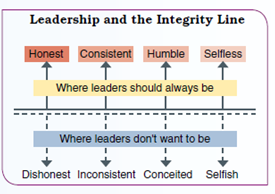
The "integrity line" in the figure marks the difference between where we should and should not be. Below the line are leaders who lie, blame others for personal mistakes, want others to fail, and take credit for others' ideas. They're conceited, and they're also selfish. Above the integrity line are honest, consistent, humble, and selfless leaders. Some call such leaders "servants" of the organization and its members.
GET TO KNOW YOURSELF BETTER
Why is it that in the news and in everyday experience we so often end up wondering where leadership integrity has gone Ask: How often have I worked for someone who behaved below the "integrity line" How did I feel about it, and what did I do Write a set of notes on your behavior in situations where your own leadership integrity could be questioned. What are some of the lessons available from this experience Who are your leadership exemplars, the ones you most admire and would like to emulate At this point in your life, who is the real leader in you
Our personal character gets revealed by how we treat those with no power.
There's No Substitute for Integrity
W hether you call it ethical leadership or moral leadership, the lesson is the same: Respect flows toward leaders who behave with integrity. If you have integrity, you'll be honest, credible, and consistent in all that you do. This seems obvious. "This is what we have been taught since we were kids," you might say.
So, why are there so many well-publicized examples of leaders who act without integrity Where, so to speak, does integrity go when some people find themselves in positions of leadership CEO coach Kenny Moore says that our personal character gets "revealed by how we treat those with no power." Look closely at how people in leadership positions treat everyday workers-servers, technicians, custodians, and clerks, for example. Moore says that the ways we deal with people who are powerless "brings out our real dispositions."
The "integrity line" in the figure marks the difference between where we should and should not be. Below the line are leaders who lie, blame others for personal mistakes, want others to fail, and take credit for others' ideas. They're conceited, and they're also selfish. Above the integrity line are honest, consistent, humble, and selfless leaders. Some call such leaders "servants" of the organization and its members.
GET TO KNOW YOURSELF BETTER
Why is it that in the news and in everyday experience we so often end up wondering where leadership integrity has gone Ask: How often have I worked for someone who behaved below the "integrity line" How did I feel about it, and what did I do Write a set of notes on your behavior in situations where your own leadership integrity could be questioned. What are some of the lessons available from this experience Who are your leadership exemplars, the ones you most admire and would like to emulate At this point in your life, who is the real leader in you
Question
Question
Question
Question
Question
Question
LEARN FROM ROLE MODELS
"The job of the leader is to uplift her people... as individuals of infinite worth...."
Educator Turns Leadership Vision into Inspiration
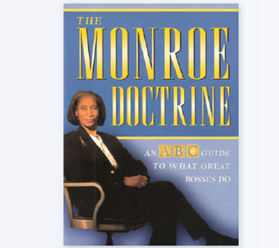
D r. Lorraine Monroe's career in the New York City public schools began as a teacher. She went on to serve as assistant principal, principal, and vice-chancellor for curriculum and instruction. She then founded the Frederick Douglass Academy, a public school in Harlem, where she grew up. Like its namesake, an escaped slave who later became a prominent abolitionist and civil rights leader, the school became highly respected for educational excellence.
Through her experiences, Monroe formed a set of beliefs centered on a leader being vision-driven and follower-centered. They are summarized in what is called the "Monroe Doctrine." It begins with this advice: The job of the leader is to uplift her people-not just as members of and contributors to the organization, but as individuals of infinite worth in their own right. "We can reform society," she says, "only if every place we live-every school, workplace, church, and family-becomes a site of reform."
Monroe believes leaders must always start at the "heart of the matter" and that "the job of a good leader is to articulate a vision that others are inspired to follow." She also believes in ensuring that all workers know they are valued, that their advice is welcome, and that workers and managers should always try to help and support one another. "I have never undertaken any project," she says, "without first imagining on paper what it would ultimately look like.... All the doers who would be responsible for carrying out my imaginings have to be informed and let in on the dream."
FIND THE INSPIRATION
Is visionary leadership something that works only at the very top of organizations Should the leader of a work team also have a vision What about this notion that leaders should be follower centered Does that mean that followers get to determine what gets done and when What are the lessons of the Monroe Doctrine for everyday leaders at all levels in organizations of all types and sizes How could this doctrine serve you
"The job of the leader is to uplift her people... as individuals of infinite worth...."
Educator Turns Leadership Vision into Inspiration
D r. Lorraine Monroe's career in the New York City public schools began as a teacher. She went on to serve as assistant principal, principal, and vice-chancellor for curriculum and instruction. She then founded the Frederick Douglass Academy, a public school in Harlem, where she grew up. Like its namesake, an escaped slave who later became a prominent abolitionist and civil rights leader, the school became highly respected for educational excellence.
Through her experiences, Monroe formed a set of beliefs centered on a leader being vision-driven and follower-centered. They are summarized in what is called the "Monroe Doctrine." It begins with this advice: The job of the leader is to uplift her people-not just as members of and contributors to the organization, but as individuals of infinite worth in their own right. "We can reform society," she says, "only if every place we live-every school, workplace, church, and family-becomes a site of reform."
Monroe believes leaders must always start at the "heart of the matter" and that "the job of a good leader is to articulate a vision that others are inspired to follow." She also believes in ensuring that all workers know they are valued, that their advice is welcome, and that workers and managers should always try to help and support one another. "I have never undertaken any project," she says, "without first imagining on paper what it would ultimately look like.... All the doers who would be responsible for carrying out my imaginings have to be informed and let in on the dream."
FIND THE INSPIRATION
Is visionary leadership something that works only at the very top of organizations Should the leader of a work team also have a vision What about this notion that leaders should be follower centered Does that mean that followers get to determine what gets done and when What are the lessons of the Monroe Doctrine for everyday leaders at all levels in organizations of all types and sizes How could this doctrine serve you
Question
Question
Question
Question
Question

Unlock Deck
Sign up to unlock the cards in this deck!
Unlock Deck
Unlock Deck
1/29

Play

Full screen (f)
Deck 14: Essentials of Leadership
1
A manager who says "Because I am the boss, you must do what I ask" is relying on __________ power.
(a) reward
(b) legitimate
(c) expert
(d) referent
(a) reward
(b) legitimate
(c) expert
(d) referent
Legitimate The Legitimate power is the capacity to influence other people by virtue of formal authority, or the rights of office. To mobilize legitimate power, a manager says, in effect: "I am the boss, therefore, you are supposed to do as I ask.
2
What is the major insight of the Vroom-Jago leaderparticipation model
Vroom Jago leader participation model links leadership success with choices among alternative decision making methods. According to this model, leadership is effective when the decision making used best fits for the problem being faced. The leaders' choices are making decisions fall into Authority, Consultative or Group decisions. The three decision making methods are governed by the following factors like decision quality, decision acceptance and decision time. Each of the decision methods is appropriate in certain situations, so the effective leaders should be continually shifting from among individual, consultative and group decisions as they deal with the different problems and opportunities every day.
3
What are the contingency approaches to leadership
Fiedler's contingency model of leadership:
This model emphasizes on the situational demanded leadership. Here, Fiedler's has focused on the traits which the leader should possess based on the situation being faced by the business. According to this theory, leader should use the personal traits to overcome the situation, and that defines the ability of a good leader.
In order to have a career development implication, a leader should emphasize on leadership style and situations favorableness.
• Leadership style: According to this model, there is no fixed style of leadership that a leader should possess. The role of the leader is to decide on what style of leadership better matches the situation. The areas wherein a leader has to decide for better outcome are as follows:
• Uncooperative or cooperative
• Supportive or guarded
• Situation favorableness: In order to make the situation favorable, a leader has to focus on three dimension as follows:
• Task to be accomplished: The tasks have to be made crystal clear for the team members.
• Relationship: There should be trust among the members of the organization.
The efficiency of the leader is based on identifying the best style that fits the situation being faced by the business.
This model emphasizes on the situational demanded leadership. Here, Fiedler's has focused on the traits which the leader should possess based on the situation being faced by the business. According to this theory, leader should use the personal traits to overcome the situation, and that defines the ability of a good leader.
In order to have a career development implication, a leader should emphasize on leadership style and situations favorableness.
• Leadership style: According to this model, there is no fixed style of leadership that a leader should possess. The role of the leader is to decide on what style of leadership better matches the situation. The areas wherein a leader has to decide for better outcome are as follows:
• Uncooperative or cooperative
• Supportive or guarded
• Situation favorableness: In order to make the situation favorable, a leader has to focus on three dimension as follows:
• Task to be accomplished: The tasks have to be made crystal clear for the team members.
• Relationship: There should be trust among the members of the organization.
The efficiency of the leader is based on identifying the best style that fits the situation being faced by the business.
4
What are the three variables that Fiedler's contingency model uses to diagnose the favorability of leadership situations, and what does each mean
Unlock Deck
Unlock for access to all 29 flashcards in this deck.
Unlock Deck
k this deck
5
When a leader assumes that others will do as she asks because they want to positively identify with her, she is relying on __________ power to influence their behavior.
(a) expert
(b) referent
(c) legitimate
(d) reward
(a) expert
(b) referent
(c) legitimate
(d) reward
Unlock Deck
Unlock for access to all 29 flashcards in this deck.
Unlock Deck
k this deck
6
How does Peter Drucker's view of "good old-fashioned leadership" differ from the popular concept of transformational leadership
Unlock Deck
Unlock for access to all 29 flashcards in this deck.
Unlock Deck
k this deck
7
What are the challenges of personal leadership development
Unlock Deck
Unlock for access to all 29 flashcards in this deck.
Unlock Deck
k this deck
8
When Marcel Henry took over as leader of a new product development team, he was both excited and apprehensive. "I wonder," he said to himself on the first day in his new assignment, "if I can meet the challenges of leadership." Later that day, Marcel shared this concern with you during a coffee break. Based on the insights offered in this chapter, how would you describe the implications of current thinking on transformational leadership and moral leadership for his personal leadership development
Unlock Deck
Unlock for access to all 29 flashcards in this deck.
Unlock Deck
k this deck
9
The personal traits now considered important for managerial success include __________. (a) self-confidence
(b) gender
(c) age
(d) height
(b) gender
(c) age
(d) height
Unlock Deck
Unlock for access to all 29 flashcards in this deck.
Unlock Deck
k this deck
10
In the leader-behavior approaches to leadership, someone who does a very good job of planning work, setting standards, and monitoring results would be considered a(n) __________ leader. (a) task-oriented
(b) control-oriented
(c) achievement-oriented
(d) employee-centered
(b) control-oriented
(c) achievement-oriented
(d) employee-centered
Unlock Deck
Unlock for access to all 29 flashcards in this deck.
Unlock Deck
k this deck
11
When leader behavior researchers concluded that "high-high" was the pathway to leadership success, what were they referring to
(a) High initiating structure and high integrity.
(b) High concern for task and high concern for people.
(c) High emotional intelligence and high charisma.
(d) High job stress and high task goals.
(a) High initiating structure and high integrity.
(b) High concern for task and high concern for people.
(c) High emotional intelligence and high charisma.
(d) High job stress and high task goals.
Unlock Deck
Unlock for access to all 29 flashcards in this deck.
Unlock Deck
k this deck
12
MAKE DATA YOUR FRIEND
Only 37% of workers in a Harris survey believe leaders display "integrity and morality."
Followers Report Shortcomings of Leaders
H arris Interactive periodically conducts surveys of workers' attitudes toward their jobs and employers. The results for "leaders" and "top managers" reveal some surprising shortcomings:
37% believe their top managers display integrity and morality.
39% believe leaders most often act in the best interest of the organization.
22% see leaders as ready to admit mistakes.
46% believe their organizations give them freedom to do their jobs.
25% of women and 16% of men believe their organizations pick the best people for leadership.
33% of managers are perceived by followers as "strong leaders."
YOUR THOUGHTS
How do the leaders you have had experience with stack up Which ones rate as strong or weak, or as moral or immoral How would you describe your best leader and his or her impact on you What makes the greatest difference in the ways leaders are viewed by followers
Only 37% of workers in a Harris survey believe leaders display "integrity and morality."
Followers Report Shortcomings of Leaders
H arris Interactive periodically conducts surveys of workers' attitudes toward their jobs and employers. The results for "leaders" and "top managers" reveal some surprising shortcomings:
37% believe their top managers display integrity and morality.
39% believe leaders most often act in the best interest of the organization.
22% see leaders as ready to admit mistakes.
46% believe their organizations give them freedom to do their jobs.
25% of women and 16% of men believe their organizations pick the best people for leadership.
33% of managers are perceived by followers as "strong leaders."
YOUR THOUGHTS
How do the leaders you have had experience with stack up Which ones rate as strong or weak, or as moral or immoral How would you describe your best leader and his or her impact on you What makes the greatest difference in the ways leaders are viewed by followers
Unlock Deck
Unlock for access to all 29 flashcards in this deck.
Unlock Deck
k this deck
13
A leader whose actions indicate an attitude of "do as you want, and don't bother me" would be described as having a(n) __________ leadership style. (a) autocratic
(b) country club
(c) democratic
(d) laissez-faire
(b) country club
(c) democratic
(d) laissez-faire
Unlock Deck
Unlock for access to all 29 flashcards in this deck.
Unlock Deck
k this deck
14
THINK BEFORE YOU ACT
Sooner or later someone in "authority" is going to ask us to do something that seems odd or incorrect, or just plain suspicious.
Sometimes "No" May Be Your Best Answer
M cDonald's Restaurant -A telephone caller claiming to be a police officer and having "corporate" on the line, directs the assistant store manager to take a female employee into the back room and interrogate her while he is on the line. The assistant manager does so for over three hours and follows "Officer Scott's" instructions to the point where the 18-year-old employee is naked and doing jumping jacks. The hoax was discovered only when the assistant manager called her boss to check out the story. The caller was later arrested and found to have tried similar tricks at over 70 McDonald's restaurants.
Managers are supposed to make decisions, and employees are supposed to follow their lead. Although that is certainly the conventional wisdom, sometimes saying "Yes" to an authority figure isn't the correct thing to do. There may be times when it's best to disobey. Sooner or later someone in "authority" is going to ask for something that seems odd or incorrect or just plain suspicious. If what's asked is wrong, but you still comply with the request, you'll share the blame. Blind followership can't be excused with the claim: "I was just following orders." But, who's prepared for the unexpected
YOUR TAKE
If obedience isn't always the right choice, how can you know when it's time to disobey Should students get more training on both spotting bad directives and learning how to say "No" Do management courses have enough to say about tendencies to obey, how to double-check decisions to make sure obedience to a manager's request is justified, and even about the price of disobedience Is it possible to educate and train students to be "principled" followers who don't always follow orders and sometimes question them
Sooner or later someone in "authority" is going to ask us to do something that seems odd or incorrect, or just plain suspicious.
Sometimes "No" May Be Your Best Answer
M cDonald's Restaurant -A telephone caller claiming to be a police officer and having "corporate" on the line, directs the assistant store manager to take a female employee into the back room and interrogate her while he is on the line. The assistant manager does so for over three hours and follows "Officer Scott's" instructions to the point where the 18-year-old employee is naked and doing jumping jacks. The hoax was discovered only when the assistant manager called her boss to check out the story. The caller was later arrested and found to have tried similar tricks at over 70 McDonald's restaurants.
Managers are supposed to make decisions, and employees are supposed to follow their lead. Although that is certainly the conventional wisdom, sometimes saying "Yes" to an authority figure isn't the correct thing to do. There may be times when it's best to disobey. Sooner or later someone in "authority" is going to ask for something that seems odd or incorrect or just plain suspicious. If what's asked is wrong, but you still comply with the request, you'll share the blame. Blind followership can't be excused with the claim: "I was just following orders." But, who's prepared for the unexpected
YOUR TAKE
If obedience isn't always the right choice, how can you know when it's time to disobey Should students get more training on both spotting bad directives and learning how to say "No" Do management courses have enough to say about tendencies to obey, how to double-check decisions to make sure obedience to a manager's request is justified, and even about the price of disobedience Is it possible to educate and train students to be "principled" followers who don't always follow orders and sometimes question them
Unlock Deck
Unlock for access to all 29 flashcards in this deck.
Unlock Deck
k this deck
15
In Fiedler's contingency model, both highly favorable and highly unfavorable leadership situations are best dealt with by a __________ leader. (a) task-motivated
(b) laissez-faire
(c) participative
(d) relationship-motivated
(b) laissez-faire
(c) participative
(d) relationship-motivated
Unlock Deck
Unlock for access to all 29 flashcards in this deck.
Unlock Deck
k this deck
16
KNOW RIGHT FROM WRONG
The boss expects you to spend part of your workday on one of her community fundraising activities.
A Step over the Line into Community Service
W hat if your company's CEO is active in a local community group It sounds great and she gets a lot of press for philanthropy and leadership in the local Red Cross, homeless shelter, food bank, and more. The company's reputation for social responsibility also gains from her outreach efforts. But, first thing this morning she appeared in your office and asked you to spend a good part of the workweek helping organize a fundraising event for one of her local charities. Caught off guard, you've given her a weak "okay."
Now that you've had time to think a bit more about it, you're not sure you should comply. After all, you've already got a lot of top priority work on your desk, there's no direct connection between the charity and the firm's business, and the charity isn't one that you personally support.
Helping your boss with this request will obviously be good for her. You'll also probably benefit from increased goodwill in your relationship with her. However, the organization could actually end up being worse off as your regular work slips behind schedule, affecting not only you but client activities that depend on you. Sure, you're getting paid to do what she asks-but who benefits
WHAT DO YOU THINK
Is it ethical to help your manager in the situation just described Are you doing a disservice to the organization's other stakeholders if you go along with this request Is it acceptable for a manager or team leader or top executive to ask others to help them with tasks and activities that are not directly tied to work Just where would you draw the line on requests like these
The boss expects you to spend part of your workday on one of her community fundraising activities.
A Step over the Line into Community Service
W hat if your company's CEO is active in a local community group It sounds great and she gets a lot of press for philanthropy and leadership in the local Red Cross, homeless shelter, food bank, and more. The company's reputation for social responsibility also gains from her outreach efforts. But, first thing this morning she appeared in your office and asked you to spend a good part of the workweek helping organize a fundraising event for one of her local charities. Caught off guard, you've given her a weak "okay."
Now that you've had time to think a bit more about it, you're not sure you should comply. After all, you've already got a lot of top priority work on your desk, there's no direct connection between the charity and the firm's business, and the charity isn't one that you personally support.
Helping your boss with this request will obviously be good for her. You'll also probably benefit from increased goodwill in your relationship with her. However, the organization could actually end up being worse off as your regular work slips behind schedule, affecting not only you but client activities that depend on you. Sure, you're getting paid to do what she asks-but who benefits
WHAT DO YOU THINK
Is it ethical to help your manager in the situation just described Are you doing a disservice to the organization's other stakeholders if you go along with this request Is it acceptable for a manager or team leader or top executive to ask others to help them with tasks and activities that are not directly tied to work Just where would you draw the line on requests like these
Unlock Deck
Unlock for access to all 29 flashcards in this deck.
Unlock Deck
k this deck
17
__________ leadership model suggests that leadership style is strongly anchored in personality and therefore hard to change. (a) Trait
(b) Fiedler's
(c) Transformational
(d) Path-goal
(b) Fiedler's
(c) Transformational
(d) Path-goal
Unlock Deck
Unlock for access to all 29 flashcards in this deck.
Unlock Deck
k this deck
18
LEARN ABOUT YOURSELF
Our personal character gets revealed by how we treat those with no power.
There's No Substitute for Integrity
W hether you call it ethical leadership or moral leadership, the lesson is the same: Respect flows toward leaders who behave with integrity. If you have integrity, you'll be honest, credible, and consistent in all that you do. This seems obvious. "This is what we have been taught since we were kids," you might say.
So, why are there so many well-publicized examples of leaders who act without integrity Where, so to speak, does integrity go when some people find themselves in positions of leadership CEO coach Kenny Moore says that our personal character gets "revealed by how we treat those with no power." Look closely at how people in leadership positions treat everyday workers-servers, technicians, custodians, and clerks, for example. Moore says that the ways we deal with people who are powerless "brings out our real dispositions."
The "integrity line" in the figure marks the difference between where we should and should not be. Below the line are leaders who lie, blame others for personal mistakes, want others to fail, and take credit for others' ideas. They're conceited, and they're also selfish. Above the integrity line are honest, consistent, humble, and selfless leaders. Some call such leaders "servants" of the organization and its members.
GET TO KNOW YOURSELF BETTER
Why is it that in the news and in everyday experience we so often end up wondering where leadership integrity has gone Ask: How often have I worked for someone who behaved below the "integrity line" How did I feel about it, and what did I do Write a set of notes on your behavior in situations where your own leadership integrity could be questioned. What are some of the lessons available from this experience Who are your leadership exemplars, the ones you most admire and would like to emulate At this point in your life, who is the real leader in you
Our personal character gets revealed by how we treat those with no power.
There's No Substitute for Integrity
W hether you call it ethical leadership or moral leadership, the lesson is the same: Respect flows toward leaders who behave with integrity. If you have integrity, you'll be honest, credible, and consistent in all that you do. This seems obvious. "This is what we have been taught since we were kids," you might say.
So, why are there so many well-publicized examples of leaders who act without integrity Where, so to speak, does integrity go when some people find themselves in positions of leadership CEO coach Kenny Moore says that our personal character gets "revealed by how we treat those with no power." Look closely at how people in leadership positions treat everyday workers-servers, technicians, custodians, and clerks, for example. Moore says that the ways we deal with people who are powerless "brings out our real dispositions."
The "integrity line" in the figure marks the difference between where we should and should not be. Below the line are leaders who lie, blame others for personal mistakes, want others to fail, and take credit for others' ideas. They're conceited, and they're also selfish. Above the integrity line are honest, consistent, humble, and selfless leaders. Some call such leaders "servants" of the organization and its members.
GET TO KNOW YOURSELF BETTER
Why is it that in the news and in everyday experience we so often end up wondering where leadership integrity has gone Ask: How often have I worked for someone who behaved below the "integrity line" How did I feel about it, and what did I do Write a set of notes on your behavior in situations where your own leadership integrity could be questioned. What are some of the lessons available from this experience Who are your leadership exemplars, the ones you most admire and would like to emulate At this point in your life, who is the real leader in you
Unlock Deck
Unlock for access to all 29 flashcards in this deck.
Unlock Deck
k this deck
19
House's __________ theory of leadership says that successful leaders find ways to add value to leadership situations.
(a) trait
(c) transformational
(b) path-goal
(d) life-cycle
(a) trait
(c) transformational
(b) path-goal
(d) life-cycle
Unlock Deck
Unlock for access to all 29 flashcards in this deck.
Unlock Deck
k this deck
20
Someone with a clear sense of the future and the actions needed to get there is considered a __________ leader. (a) task-oriented
(b) people-oriented
(c) transactional
(d) visionary
(b) people-oriented
(c) transactional
(d) visionary
Unlock Deck
Unlock for access to all 29 flashcards in this deck.
Unlock Deck
k this deck
21
A leader who __________ would be described as achievement-oriented in the path-goal theory.
(a) sets challenging goals for others
(b) works hard to achieve high performance
(c) gives directions and monitors results
(d) builds commitment through participation
(a) sets challenging goals for others
(b) works hard to achieve high performance
(c) gives directions and monitors results
(d) builds commitment through participation
Unlock Deck
Unlock for access to all 29 flashcards in this deck.
Unlock Deck
k this deck
22
What is the nature of leadership
Unlock Deck
Unlock for access to all 29 flashcards in this deck.
Unlock Deck
k this deck
23
The critical contingency variable in the Hersey- Blanchard situational model of leadership is __________. (a) followers' maturity
(b) LPC
(c) task structure
(d) LMX
(b) LPC
(c) task structure
(d) LMX
Unlock Deck
Unlock for access to all 29 flashcards in this deck.
Unlock Deck
k this deck
24
LEARN FROM ROLE MODELS
"The job of the leader is to uplift her people... as individuals of infinite worth...."
Educator Turns Leadership Vision into Inspiration
D r. Lorraine Monroe's career in the New York City public schools began as a teacher. She went on to serve as assistant principal, principal, and vice-chancellor for curriculum and instruction. She then founded the Frederick Douglass Academy, a public school in Harlem, where she grew up. Like its namesake, an escaped slave who later became a prominent abolitionist and civil rights leader, the school became highly respected for educational excellence.
Through her experiences, Monroe formed a set of beliefs centered on a leader being vision-driven and follower-centered. They are summarized in what is called the "Monroe Doctrine." It begins with this advice: The job of the leader is to uplift her people-not just as members of and contributors to the organization, but as individuals of infinite worth in their own right. "We can reform society," she says, "only if every place we live-every school, workplace, church, and family-becomes a site of reform."
Monroe believes leaders must always start at the "heart of the matter" and that "the job of a good leader is to articulate a vision that others are inspired to follow." She also believes in ensuring that all workers know they are valued, that their advice is welcome, and that workers and managers should always try to help and support one another. "I have never undertaken any project," she says, "without first imagining on paper what it would ultimately look like.... All the doers who would be responsible for carrying out my imaginings have to be informed and let in on the dream."
FIND THE INSPIRATION
Is visionary leadership something that works only at the very top of organizations Should the leader of a work team also have a vision What about this notion that leaders should be follower centered Does that mean that followers get to determine what gets done and when What are the lessons of the Monroe Doctrine for everyday leaders at all levels in organizations of all types and sizes How could this doctrine serve you
"The job of the leader is to uplift her people... as individuals of infinite worth...."
Educator Turns Leadership Vision into Inspiration
D r. Lorraine Monroe's career in the New York City public schools began as a teacher. She went on to serve as assistant principal, principal, and vice-chancellor for curriculum and instruction. She then founded the Frederick Douglass Academy, a public school in Harlem, where she grew up. Like its namesake, an escaped slave who later became a prominent abolitionist and civil rights leader, the school became highly respected for educational excellence.
Through her experiences, Monroe formed a set of beliefs centered on a leader being vision-driven and follower-centered. They are summarized in what is called the "Monroe Doctrine." It begins with this advice: The job of the leader is to uplift her people-not just as members of and contributors to the organization, but as individuals of infinite worth in their own right. "We can reform society," she says, "only if every place we live-every school, workplace, church, and family-becomes a site of reform."
Monroe believes leaders must always start at the "heart of the matter" and that "the job of a good leader is to articulate a vision that others are inspired to follow." She also believes in ensuring that all workers know they are valued, that their advice is welcome, and that workers and managers should always try to help and support one another. "I have never undertaken any project," she says, "without first imagining on paper what it would ultimately look like.... All the doers who would be responsible for carrying out my imaginings have to be informed and let in on the dream."
FIND THE INSPIRATION
Is visionary leadership something that works only at the very top of organizations Should the leader of a work team also have a vision What about this notion that leaders should be follower centered Does that mean that followers get to determine what gets done and when What are the lessons of the Monroe Doctrine for everyday leaders at all levels in organizations of all types and sizes How could this doctrine serve you
Unlock Deck
Unlock for access to all 29 flashcards in this deck.
Unlock Deck
k this deck
25
Vision, charisma, integrity, and symbolism are all on the list of attributes typically associated with __________ leaders.
(a) contingency
(b) informal
(c) transformational
(d) transactional
(a) contingency
(b) informal
(c) transformational
(d) transactional
Unlock Deck
Unlock for access to all 29 flashcards in this deck.
Unlock Deck
k this deck
26
Leader power = __________ power + __________ power. (a) reward, punishment
(b) reward, expert
(c) legitimate, position
(d) position, personal
(b) reward, expert
(c) legitimate, position
(d) position, personal
Unlock Deck
Unlock for access to all 29 flashcards in this deck.
Unlock Deck
k this deck
27
The interactive leadership style, sometimes associated with women, is characterized by __________. (a) inclusion and information sharing
(b) use of rewards and punishments
(c) command and control
(d) emphasis on position power
(b) use of rewards and punishments
(c) command and control
(d) emphasis on position power
Unlock Deck
Unlock for access to all 29 flashcards in this deck.
Unlock Deck
k this deck
28
What are the important leadership traits and behaviors
Unlock Deck
Unlock for access to all 29 flashcards in this deck.
Unlock Deck
k this deck
29
Why does a person need both position power and personal power to achieve long-term managerial effectiveness
Unlock Deck
Unlock for access to all 29 flashcards in this deck.
Unlock Deck
k this deck
Unlock Deck
Unlock for access to all 29 flashcards in this deck.






