







 Chat with AI

Deck 21: The Organic Chemistry of Metabolism
Full screen (f)

Question

Question
Question
Question
Which is the oxidizing agent for the following reaction? 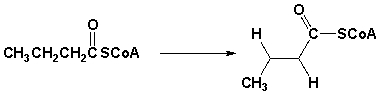
A) FAD
B) FADH2
C) NAD+
D) NADH
A) FAD
B) FADH2
C) NAD+
D) NADH
Question
If deuterium is substituted for hydrogen in NADH, where will the deuterium be in the final product of the metabolic reduction of pyruvate to lactate? 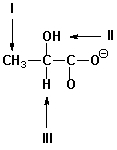
A) I
B) II
C) III
D) II, III
A) I
B) II
C) III
D) II, III
Question
Question
Question
Which is the oxidizing agent for the following reaction? 
A) FAD
B) FADH2
C) NAD+
D) NADH
A) FAD
B) FADH2
C) NAD+
D) NADH
Question
Question
The following are key steps in fatty acid metabolism. What is the best description for the first step (A)? 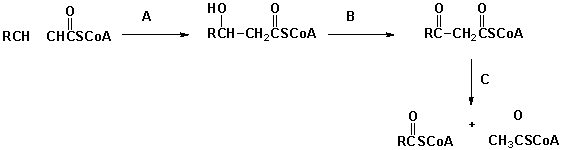
A) oxidation
B) hydration
C) reverse-Claisen condensation
D) selective reduction
A) oxidation
B) hydration
C) reverse-Claisen condensation
D) selective reduction
Question
Question
The following are key steps in fatty acid metabolism. What is the best description for the second step (B)? 
A) oxidation
B) hydration
C) reverse-Claisen condensation
D) selective reduction
A) oxidation
B) hydration
C) reverse-Claisen condensation
D) selective reduction
Question
Which is reagent X and product Y in this reaction? 
A) X= acetyl CoA, Y= coenzyme A
B) X=coenzyme A, Y= acetyl CoA
C) X= FAD, Y= FADH2
D) X= NAD+, Y= NADH
A) X= acetyl CoA, Y= coenzyme A
B) X=coenzyme A, Y= acetyl CoA
C) X= FAD, Y= FADH2
D) X= NAD+, Y= NADH
Question
Question
Question
The following are key steps in fatty acid metabolism. What is the best description for the third step (C)? 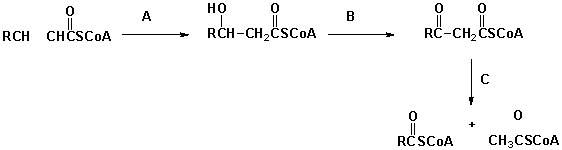
A) oxidation
B) hydration
C) reverse-Claisen condensation
D) selective reduction
A) oxidation
B) hydration
C) reverse-Claisen condensation
D) selective reduction
Question
Question
Question
Question
Question
Question
Question
Which of the following structures represents coenzyme Q? 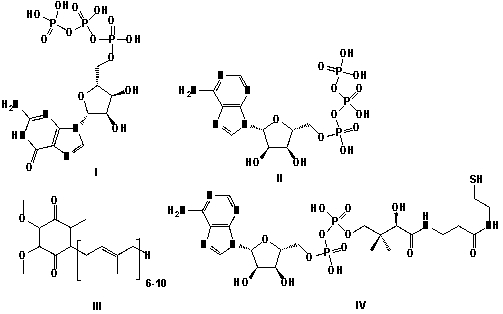
A) I
B) II
C) III
D) IV
A) I
B) II
C) III
D) IV
Question
Question
Provide the product of the following reaction. 
Question
Provide the product of the following reaction. 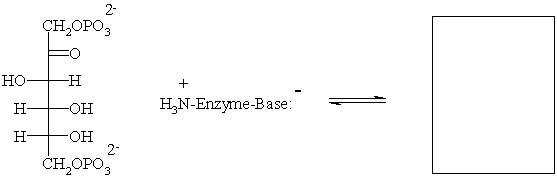
Question
Which best describes this reaction? 
A) reverse aldol reaction
B) aldol reaction
C) reverse-Claisen condensation
D) Claisen condensation
A) reverse aldol reaction
B) aldol reaction
C) reverse-Claisen condensation
D) Claisen condensation
Question
Which of the following structures represents coenzyme A? 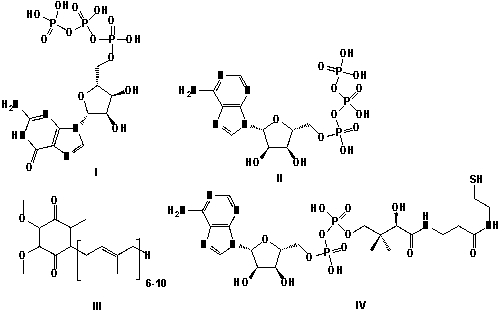
A) I
B) II
C) III
D) IV
A) I
B) II
C) III
D) IV
Question
Question
Complete the structure of nicotinamide adenine dinucleotide (NAD). 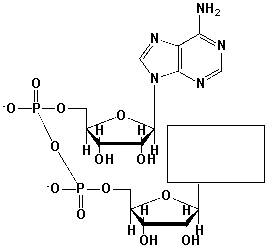
Question
Complete the following reaction mechanism by providing the correct mechanism arrows. 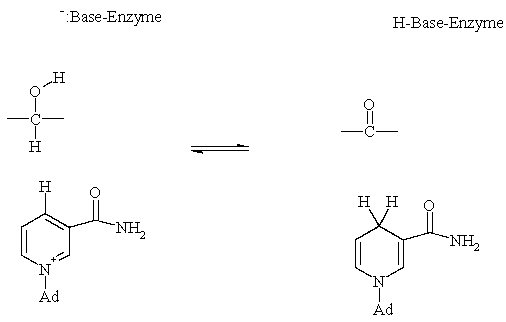
Question
Provide the products of the following reaction. 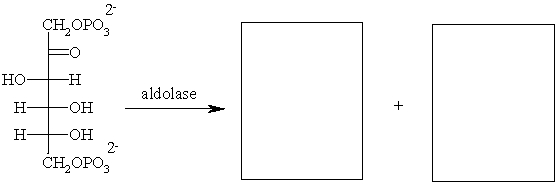
Question
Provide the product of the following reaction. 
Question
Question
Provide the product of the following reaction. 
Question
Question
The biosynthesis of butanoic acid proceeds via a Claisen reaction of Acetyl-CoA. If the starting material is labeled at the methyl carbon atom, which atoms will be labeled in the product? 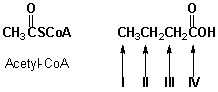
A) I, II
B) I, III
C) II, III
D) II, IV
A) I, II
B) I, III
C) II, III
D) II, IV
Question
Provide the product of the following reaction. 
Question
Question
Which of the following structures represents GTP? 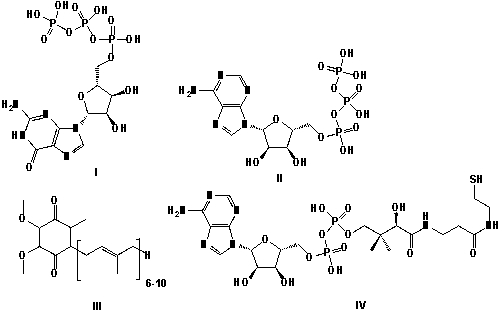
A) I
B) II
C) III
D) IV
A) I
B) II
C) III
D) IV
Question
Succinic dehydrogenase catalyzes the synthesis of fumarate from succinate under simultaneous reduction of coenzyme Q. Draw the structure of fumarate in the box. 
Question
Oxidation of D-isocitrate and simultaneous reduction of NAD+ to NADH and H+, followed by subsequent decarboxylation, leads to -ketoglutarate. Complete the reaction scheme. 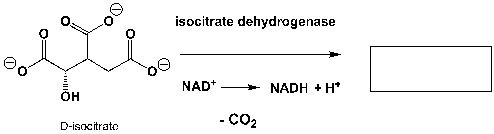
Question
The fumarase-catalyzed addition of water to fumarate leads to L-malate. Draw the structure of L-malate in the
box.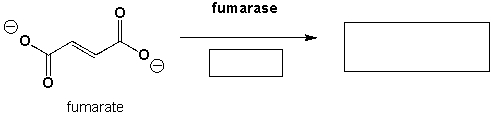
box.
Question
Water-addition to cis-aconitate leads to D-isocitrate. Complete the reaction scheme. 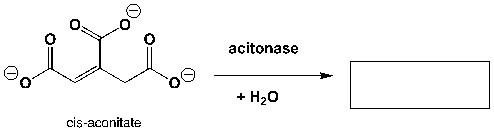
Question
Provide the product of the following reaction. 
Question
Pyruvate is the conjugate base of a -keto carboxylic acid. 
Question
The following reaction is a reduction of the alcohol, oxidation of NAD+. 
Question
Oxidation of L-malate by NAD+ catalyzed by malate dehydrogenase reduces NAD+ to NADH+ + H+ and transforms malate into oxaloacetate. Complete the reaction scheme and begin the next cycle 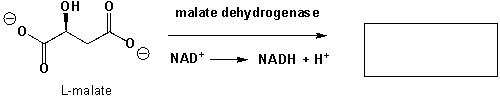
Question
The second reaction of the Citric Acid cycle is the water-elimination from citrate. Complete the reaction scheme. 
Question
Transamination (amino-group transfer) of L-glutamic acid provides a link between the metabolism of sugars and amino acids. Complete the reaction scheme. 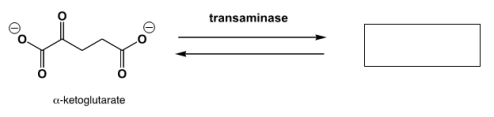
Question
FAD is reduced in the following reaction. 
Question
The following structure is ADP. 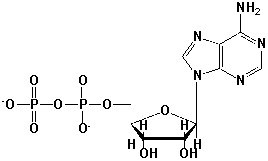
Question
Provide the product of the following reaction. 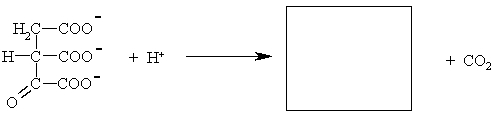
Question
Question
Transamination (amino-group transfer) of L-asparaginic acid provides a link between the metabolism of sugars and amino acids. Complete the reaction scheme. 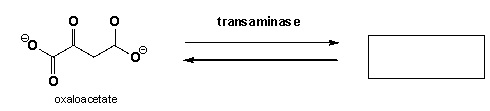
Question
-Ketoglutarate reacts under simultaneous decarboxylation and NAD+ - reduction to NADH and H+, followed by GTP-formation (guanosine-triphosphate, an ATP-analog) from GDP and phosphate, to succinate. Complete the reaction scheme. 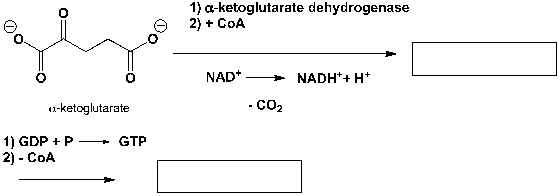
Question
Question
The Citric Acid Cycle starts with the aldol-type of reaction of acetyl-CoA with oxaloacetate. Complete the reaction scheme 
Question
The following structure is FAD. 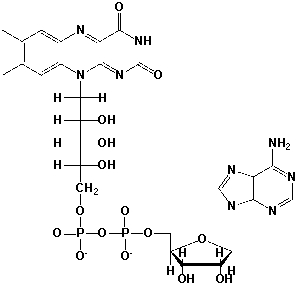
Question
Question
Question

Unlock Deck
Sign up to unlock the cards in this deck!
Unlock Deck
Unlock Deck
1/62

Play

Full screen (f)
Deck 21: The Organic Chemistry of Metabolism
1
Which describes Step 4 of glycolysis, the cleavage of fructose 1,6-bisphosphate to two trioses?
A) Claisen condensation
B) aldol addition reaction
C) reverse-Claisen condensation
D) reverse-Aldol reaction
A) Claisen condensation
B) aldol addition reaction
C) reverse-Claisen condensation
D) reverse-Aldol reaction
reverse-Aldol reaction
2
Which reagents are necessary in the glycolysis of glucose to pyruvate?
I. NAD+
II. ADP
III. HPO42-
IV. FAD
V. ATP
A) I, II, III, V
B) II, III, IV, V
C) I, III, V
D) III, IV, V
I. NAD+
II. ADP
III. HPO42-
IV. FAD
V. ATP
A) I, II, III, V
B) II, III, IV, V
C) I, III, V
D) III, IV, V
I, II, III, V
3
Which describes the effect of lactate fermentation of glucose on blood pH and CO2 concentration?
A) pH increases, CO2 concentration increases
B) pH decreases, CO2 concentration is unchanged
C) pH is unchanged, CO2 concentration decreases
D) pH decreases, CO2 concentration decreases
A) pH increases, CO2 concentration increases
B) pH decreases, CO2 concentration is unchanged
C) pH is unchanged, CO2 concentration decreases
D) pH decreases, CO2 concentration decreases
pH decreases, CO2 concentration is unchanged
4
Which is the oxidizing agent for the following reaction?
A) FAD
B) FADH2
C) NAD+
D) NADH
A) FAD
B) FADH2
C) NAD+
D) NADH
Unlock Deck
Unlock for access to all 62 flashcards in this deck.
Unlock Deck
k this deck
5
If deuterium is substituted for hydrogen in NADH, where will the deuterium be in the final product of the metabolic reduction of pyruvate to lactate?
A) I
B) II
C) III
D) II, III
A) I
B) II
C) III
D) II, III
Unlock Deck
Unlock for access to all 62 flashcards in this deck.
Unlock Deck
k this deck
6
Which are agents for energy storage and transport?
I. ATP
II. ADP
III. NAD+ / NADH
IV. FAD / FADH2
A) I, II
B) III, IV
C) I, III
D) II, IV
I. ATP
II. ADP
III. NAD+ / NADH
IV. FAD / FADH2
A) I, II
B) III, IV
C) I, III
D) II, IV
Unlock Deck
Unlock for access to all 62 flashcards in this deck.
Unlock Deck
k this deck
7
How many moles of ethanol and CO2 are produced in the glycolysis and fermentation of sucrose?
A) 2 moles ethanol, 2 moles CO2
B) 2 moles ethanol, 4 moles CO2
C) 4 moles ethanol, 2 moles CO2
D) 4 moles ethanol, 4 moles CO2
A) 2 moles ethanol, 2 moles CO2
B) 2 moles ethanol, 4 moles CO2
C) 4 moles ethanol, 2 moles CO2
D) 4 moles ethanol, 4 moles CO2
Unlock Deck
Unlock for access to all 62 flashcards in this deck.
Unlock Deck
k this deck
8
Which is the oxidizing agent for the following reaction?
A) FAD
B) FADH2
C) NAD+
D) NADH
A) FAD
B) FADH2
C) NAD+
D) NADH
Unlock Deck
Unlock for access to all 62 flashcards in this deck.
Unlock Deck
k this deck
9
How many steps are there in the fatty acid -oxidation pathway?
A) 4
B) 6
C) 8
D) 10
A) 4
B) 6
C) 8
D) 10
Unlock Deck
Unlock for access to all 62 flashcards in this deck.
Unlock Deck
k this deck
10
The following are key steps in fatty acid metabolism. What is the best description for the first step (A)?
A) oxidation
B) hydration
C) reverse-Claisen condensation
D) selective reduction
A) oxidation
B) hydration
C) reverse-Claisen condensation
D) selective reduction
Unlock Deck
Unlock for access to all 62 flashcards in this deck.
Unlock Deck
k this deck
11
If carbon atom 3 of glucose is labeled with 13C, which carbon atom is labeled after oxidation to pyruvate?
A) carbon atom 1
B) carbon atom 2
C) carbon atom 3
D) carbon atoms 1 and 2
A) carbon atom 1
B) carbon atom 2
C) carbon atom 3
D) carbon atoms 1 and 2
Unlock Deck
Unlock for access to all 62 flashcards in this deck.
Unlock Deck
k this deck
12
The following are key steps in fatty acid metabolism. What is the best description for the second step (B)?
A) oxidation
B) hydration
C) reverse-Claisen condensation
D) selective reduction
A) oxidation
B) hydration
C) reverse-Claisen condensation
D) selective reduction
Unlock Deck
Unlock for access to all 62 flashcards in this deck.
Unlock Deck
k this deck
13
Which is reagent X and product Y in this reaction?
A) X= acetyl CoA, Y= coenzyme A
B) X=coenzyme A, Y= acetyl CoA
C) X= FAD, Y= FADH2
D) X= NAD+, Y= NADH
A) X= acetyl CoA, Y= coenzyme A
B) X=coenzyme A, Y= acetyl CoA
C) X= FAD, Y= FADH2
D) X= NAD+, Y= NADH
Unlock Deck
Unlock for access to all 62 flashcards in this deck.
Unlock Deck
k this deck
14
If carbon 2 of glucose is labeled with 13C, which carbon is labeled in the alcohol fermentation products?
A) CO2
B) ethanol carbon 1
C) ethanol carbon 2
D) ethanol carbon 1 and carbon 2
A) CO2
B) ethanol carbon 1
C) ethanol carbon 2
D) ethanol carbon 1 and carbon 2
Unlock Deck
Unlock for access to all 62 flashcards in this deck.
Unlock Deck
k this deck
15
Which statement is true concerning the balanced half reaction for the oxidation of glucose to pyruvate?
A) The reaction produces two moles of oxygen.
B) The reaction is a four-electron oxidation.
C) The reaction uses two moles of NAD+.
D) The reaction uses two moles of FAD
A) The reaction produces two moles of oxygen.
B) The reaction is a four-electron oxidation.
C) The reaction uses two moles of NAD+.
D) The reaction uses two moles of FAD
Unlock Deck
Unlock for access to all 62 flashcards in this deck.
Unlock Deck
k this deck
16
The following are key steps in fatty acid metabolism. What is the best description for the third step (C)?
A) oxidation
B) hydration
C) reverse-Claisen condensation
D) selective reduction
A) oxidation
B) hydration
C) reverse-Claisen condensation
D) selective reduction
Unlock Deck
Unlock for access to all 62 flashcards in this deck.
Unlock Deck
k this deck
17
Which statements about carbohydrate digestion and absorption are true?
I. The main function of carbohydrates is as a carbon source.
II. Hydrolysis begins in the mouth with -amylase in saliva.
III. Starch is hydrolyzed directly to glucose.
IV. Hydrolysis is completed in the small intestine.
A) I, III
B) II, IV
C) I, IV
D) II, III
I. The main function of carbohydrates is as a carbon source.
II. Hydrolysis begins in the mouth with -amylase in saliva.
III. Starch is hydrolyzed directly to glucose.
IV. Hydrolysis is completed in the small intestine.
A) I, III
B) II, IV
C) I, IV
D) II, III
Unlock Deck
Unlock for access to all 62 flashcards in this deck.
Unlock Deck
k this deck
18
Which is the key intermediate in the enzyme catalyzed reverse-aldol reaction of fructose 1,6-bisphosphate to two trioses?
A) an amine
B) an aldehyde
C) an imine
D) an amide
A) an amine
B) an aldehyde
C) an imine
D) an amide
Unlock Deck
Unlock for access to all 62 flashcards in this deck.
Unlock Deck
k this deck
19
How many steps are there in the glycolysis pathway?
A) 4
B) 6
C) 8
D) 10
A) 4
B) 6
C) 8
D) 10
Unlock Deck
Unlock for access to all 62 flashcards in this deck.
Unlock Deck
k this deck
20
Which reactions are involved in the conversion of pyruvate to ethanol?
I. oxidation
II. reduction
III. decarboxylation
IV. keto-enol tautomerization
A) I, III
B) II, IV
C) II, III
D) III, IV
I. oxidation
II. reduction
III. decarboxylation
IV. keto-enol tautomerization
A) I, III
B) II, IV
C) II, III
D) III, IV
Unlock Deck
Unlock for access to all 62 flashcards in this deck.
Unlock Deck
k this deck
21
Which agent initially activates fatty acids for further reaction?
A) NAD+
B) FAD
C) Coenzyme A + ATP
D) ADP
A) NAD+
B) FAD
C) Coenzyme A + ATP
D) ADP
Unlock Deck
Unlock for access to all 62 flashcards in this deck.
Unlock Deck
k this deck
22
If palmitic acid is labeled at carbon 2 with 13C, which carbon will be labeled in acetyl-CoA after -oxidation?
A) the methyl carbon
B) the carbonyl carbon
C) both carbons
D) neither carbon
A) the methyl carbon
B) the carbonyl carbon
C) both carbons
D) neither carbon
Unlock Deck
Unlock for access to all 62 flashcards in this deck.
Unlock Deck
k this deck
23
Which of the following structures represents coenzyme Q?
A) I
B) II
C) III
D) IV
A) I
B) II
C) III
D) IV
Unlock Deck
Unlock for access to all 62 flashcards in this deck.
Unlock Deck
k this deck
24
What could a patient suffering from ketoacidosis do in the absence of any carbohydrate source?
I. Eat proteins: aminoacids (e.g. glutamic acid and aspartic acid) are coupled to the citric acid cycle via transamination reactions.
II. Eat fats: Acetyl-CoA from the fatty acid metabolism can be integrated in the citric acid cycle
A) I
B) II
C) both I and II
I. Eat proteins: aminoacids (e.g. glutamic acid and aspartic acid) are coupled to the citric acid cycle via transamination reactions.
II. Eat fats: Acetyl-CoA from the fatty acid metabolism can be integrated in the citric acid cycle
A) I
B) II
C) both I and II
Unlock Deck
Unlock for access to all 62 flashcards in this deck.
Unlock Deck
k this deck
25
Provide the product of the following reaction.
Unlock Deck
Unlock for access to all 62 flashcards in this deck.
Unlock Deck
k this deck
26
Provide the product of the following reaction.
Unlock Deck
Unlock for access to all 62 flashcards in this deck.
Unlock Deck
k this deck
27
Which best describes this reaction?
A) reverse aldol reaction
B) aldol reaction
C) reverse-Claisen condensation
D) Claisen condensation
A) reverse aldol reaction
B) aldol reaction
C) reverse-Claisen condensation
D) Claisen condensation
Unlock Deck
Unlock for access to all 62 flashcards in this deck.
Unlock Deck
k this deck
28
Which of the following structures represents coenzyme A?
A) I
B) II
C) III
D) IV
A) I
B) II
C) III
D) IV
Unlock Deck
Unlock for access to all 62 flashcards in this deck.
Unlock Deck
k this deck
29
Which statements describing -oxidation of fatty acid are true?
I. More energy is released in the oxidation of fatty acids than sugars.
II. Only NAD+ / NADH are involved in the reactions.
III. The series of four reactions is repeated until the entire fatty acid chain is degraded to acetyl-
CoA)
IV. The activated fatty acid is a carboxylic-diphosphoric mixed anhydride.
A) II, IV
B) I, III
C) II, III
D) I, IV
I. More energy is released in the oxidation of fatty acids than sugars.
II. Only NAD+ / NADH are involved in the reactions.
III. The series of four reactions is repeated until the entire fatty acid chain is degraded to acetyl-
CoA)
IV. The activated fatty acid is a carboxylic-diphosphoric mixed anhydride.
A) II, IV
B) I, III
C) II, III
D) I, IV
Unlock Deck
Unlock for access to all 62 flashcards in this deck.
Unlock Deck
k this deck
30
Complete the structure of nicotinamide adenine dinucleotide (NAD).
Unlock Deck
Unlock for access to all 62 flashcards in this deck.
Unlock Deck
k this deck
31
Complete the following reaction mechanism by providing the correct mechanism arrows.
Unlock Deck
Unlock for access to all 62 flashcards in this deck.
Unlock Deck
k this deck
32
Provide the products of the following reaction.
Unlock Deck
Unlock for access to all 62 flashcards in this deck.
Unlock Deck
k this deck
33
Provide the product of the following reaction.
Unlock Deck
Unlock for access to all 62 flashcards in this deck.
Unlock Deck
k this deck
34
Which are oxidation / reduction reagents in the metabolism of fatty acids?
I. ATP
II. ADP
III. NAD+ / NADH
IV. FAD / FADH2
A) I, II
B) III, IV
C) I, III
D) II, IV
I. ATP
II. ADP
III. NAD+ / NADH
IV. FAD / FADH2
A) I, II
B) III, IV
C) I, III
D) II, IV
Unlock Deck
Unlock for access to all 62 flashcards in this deck.
Unlock Deck
k this deck
35
Provide the product of the following reaction.
Unlock Deck
Unlock for access to all 62 flashcards in this deck.
Unlock Deck
k this deck
36
In the absence of oxaloacetate in the mitochondria . Beside a severe acidification of the body, acetoacetic acid can undergo spontaneous decarboxylation to form what aliphatic compound, which is quite toxic?
A) 2-butanone
B) 2-propanone (acetone)
C) 1-butanone
D) acetic acid
A) 2-butanone
B) 2-propanone (acetone)
C) 1-butanone
D) acetic acid
Unlock Deck
Unlock for access to all 62 flashcards in this deck.
Unlock Deck
k this deck
37
The biosynthesis of butanoic acid proceeds via a Claisen reaction of Acetyl-CoA. If the starting material is labeled at the methyl carbon atom, which atoms will be labeled in the product?
A) I, II
B) I, III
C) II, III
D) II, IV
A) I, II
B) I, III
C) II, III
D) II, IV
Unlock Deck
Unlock for access to all 62 flashcards in this deck.
Unlock Deck
k this deck
38
Provide the product of the following reaction.
Unlock Deck
Unlock for access to all 62 flashcards in this deck.
Unlock Deck
k this deck
39
Unsaturated fatty acids require an additional enzyme in the metabolic pathway. Which process involves this enzyme?
A) oxidation
B) reduction
C) enol / keto isomerization
D) cis / trans isomerization
A) oxidation
B) reduction
C) enol / keto isomerization
D) cis / trans isomerization
Unlock Deck
Unlock for access to all 62 flashcards in this deck.
Unlock Deck
k this deck
40
Which of the following structures represents GTP?
A) I
B) II
C) III
D) IV
A) I
B) II
C) III
D) IV
Unlock Deck
Unlock for access to all 62 flashcards in this deck.
Unlock Deck
k this deck
41
Succinic dehydrogenase catalyzes the synthesis of fumarate from succinate under simultaneous reduction of coenzyme Q. Draw the structure of fumarate in the box.
Unlock Deck
Unlock for access to all 62 flashcards in this deck.
Unlock Deck
k this deck
42
Oxidation of D-isocitrate and simultaneous reduction of NAD+ to NADH and H+, followed by subsequent decarboxylation, leads to -ketoglutarate. Complete the reaction scheme.
Unlock Deck
Unlock for access to all 62 flashcards in this deck.
Unlock Deck
k this deck
43
The fumarase-catalyzed addition of water to fumarate leads to L-malate. Draw the structure of L-malate in the
box.
box.
Unlock Deck
Unlock for access to all 62 flashcards in this deck.
Unlock Deck
k this deck
44
Water-addition to cis-aconitate leads to D-isocitrate. Complete the reaction scheme.
Unlock Deck
Unlock for access to all 62 flashcards in this deck.
Unlock Deck
k this deck
45
Provide the product of the following reaction.
Unlock Deck
Unlock for access to all 62 flashcards in this deck.
Unlock Deck
k this deck
46
Pyruvate is the conjugate base of a -keto carboxylic acid.
Unlock Deck
Unlock for access to all 62 flashcards in this deck.
Unlock Deck
k this deck
47
The following reaction is a reduction of the alcohol, oxidation of NAD+.
Unlock Deck
Unlock for access to all 62 flashcards in this deck.
Unlock Deck
k this deck
48
Oxidation of L-malate by NAD+ catalyzed by malate dehydrogenase reduces NAD+ to NADH+ + H+ and transforms malate into oxaloacetate. Complete the reaction scheme and begin the next cycle
Unlock Deck
Unlock for access to all 62 flashcards in this deck.
Unlock Deck
k this deck
49
The second reaction of the Citric Acid cycle is the water-elimination from citrate. Complete the reaction scheme.
Unlock Deck
Unlock for access to all 62 flashcards in this deck.
Unlock Deck
k this deck
50
Transamination (amino-group transfer) of L-glutamic acid provides a link between the metabolism of sugars and amino acids. Complete the reaction scheme.
Unlock Deck
Unlock for access to all 62 flashcards in this deck.
Unlock Deck
k this deck
51
FAD is reduced in the following reaction.
Unlock Deck
Unlock for access to all 62 flashcards in this deck.
Unlock Deck
k this deck
52
The following structure is ADP.
Unlock Deck
Unlock for access to all 62 flashcards in this deck.
Unlock Deck
k this deck
53
Provide the product of the following reaction.
Unlock Deck
Unlock for access to all 62 flashcards in this deck.
Unlock Deck
k this deck
54
Acetyl-CoA is derived from the degradation of food.
Unlock Deck
Unlock for access to all 62 flashcards in this deck.
Unlock Deck
k this deck
55
Transamination (amino-group transfer) of L-asparaginic acid provides a link between the metabolism of sugars and amino acids. Complete the reaction scheme.
Unlock Deck
Unlock for access to all 62 flashcards in this deck.
Unlock Deck
k this deck
56
-Ketoglutarate reacts under simultaneous decarboxylation and NAD+ - reduction to NADH and H+, followed by GTP-formation (guanosine-triphosphate, an ATP-analog) from GDP and phosphate, to succinate. Complete the reaction scheme.
Unlock Deck
Unlock for access to all 62 flashcards in this deck.
Unlock Deck
k this deck
57
The cleavage of fructose-1,6-bisphosphate to two triose phosphates (reaction 4 of the glycolysis sequence) is an example of an aldol reaction.
Unlock Deck
Unlock for access to all 62 flashcards in this deck.
Unlock Deck
k this deck
58
The Citric Acid Cycle starts with the aldol-type of reaction of acetyl-CoA with oxaloacetate. Complete the reaction scheme
Unlock Deck
Unlock for access to all 62 flashcards in this deck.
Unlock Deck
k this deck
59
The following structure is FAD.
Unlock Deck
Unlock for access to all 62 flashcards in this deck.
Unlock Deck
k this deck
60
Cleavage of the -ketoacyl-CoA in reaction 4 of the -oxidation of fatty acids is an example of a reverse Claisen condensation.
Unlock Deck
Unlock for access to all 62 flashcards in this deck.
Unlock Deck
k this deck
61
The Citric acid cycle is the main metabolic pathway under anaerobic conditions.
Unlock Deck
Unlock for access to all 62 flashcards in this deck.
Unlock Deck
k this deck
62
The Citric acid cycle oxidizes acetyl-CoA to CO2, producing NADH and FADH2.
Unlock Deck
Unlock for access to all 62 flashcards in this deck.
Unlock Deck
k this deck
Unlock Deck
Unlock for access to all 62 flashcards in this deck.






