







 Chat with AI

Deck 1: A Brief Economic History of the United States
Full screen (f)

Question

Question
Question
Question
Question
Question
Question
Question
Question
Question
Question
Question
Question
Question
Question
Question
Question
Question
Question
Question
Question
Question
Question
Question
Question
Question
Question
Question
Question
Question
Question
Question
Question
Question
Question
Question
Question
Question
Question
Question
Question
Question
Question
Question
Question
Question
Question
Question
Question
Question
Question
Question
Question
Question
Question
Question
Question
Question

Unlock Deck
Sign up to unlock the cards in this deck!
Unlock Deck
Unlock Deck
1/58

Play

Full screen (f)
Deck 1: A Brief Economic History of the United States
1
The country with the world's largest output is _________.
The United States is the sole superpower and a way ahead from all its competitors. The nation has the highest standard of living, low poverty rates, low unemployment rates, rapidly expanding industries etc.
Thus, the national output is more than that of its competitors combined.
Conclusion
Thus, the country with the world's largest output is the United States.
Thus, the national output is more than that of its competitors combined.
Conclusion
Thus, the country with the world's largest output is the United States.
2
Each of the following was a year of high unemployment except ______.
A) 1933
B) 1938
C) 1944
D) 1975
E) 1982
A) 1933
B) 1938
C) 1944
D) 1975
E) 1982
Unemployment is a term which refers to the person in the labor force who are willing to work but are unable to fund the job.
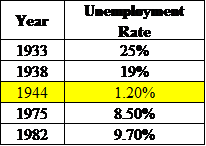
The table below shows the unemployment rate of nation- U in different years.
 Conclusion
It is clear from the above table that the unemployment is maximum in all the years except 1944.
Thus, the correct option is (C), that is, 1944
The table below shows the unemployment rate of nation- U in different years.
Conclusion It is clear from the above table that the unemployment is maximum in all the years except 1944.
Thus, the correct option is (C), that is, 1944
3
Most of the recessions since World War II lasted __________.
A) less than 6 months
B) 6 to 12 months
C) 12 to 18 months
D) 18 to 24 months
E) 24 to 36 months
A) less than 6 months
B) 6 to 12 months
C) 12 to 18 months
D) 18 to 24 months
E) 24 to 36 months
Recession is a phase of business cycle and there is decline in all economic activities like fall in growth rate of GDP, rise in unemployment rate etc.
Since World War-II, the economy has faced around 11 recessions.
9 out of these 11 recessions lasts for 6 to 12 months.
Conclusion
Thus, most of the recessions after world war-II last for 6 to 12 months.
The correct option is (B).
Since World War-II, the economy has faced around 11 recessions.
9 out of these 11 recessions lasts for 6 to 12 months.
Conclusion
Thus, most of the recessions after world war-II last for 6 to 12 months.
The correct option is (B).
4
Our most rapid job growth was in the period from __________.
A) 2000 to 2005
B) 1995 to 2000
C) 1978 to 1983
D) 1953 to 1958
A) 2000 to 2005
B) 1995 to 2000
C) 1978 to 1983
D) 1953 to 1958
Unlock Deck
Unlock for access to all 58 flashcards in this deck.
Unlock Deck
k this deck
5
Which statement is true?
A) There was a great deal of stagflation in the 1970s.
B) We had full employment for most of the 1980s.
C) We have had seven recessions since World War II.
D) None of the above.
A) There was a great deal of stagflation in the 1970s.
B) We had full employment for most of the 1980s.
C) We have had seven recessions since World War II.
D) None of the above.
Unlock Deck
Unlock for access to all 58 flashcards in this deck.
Unlock Deck
k this deck
6
The main factor in finally bringing us out of the Great Depression was ___________.
Unlock Deck
Unlock for access to all 58 flashcards in this deck.
Unlock Deck
k this deck
7
Which statement is true?
A) President Eisenhower attempted to undo most of the New Deal.
B) There was a major tax cut in 1964.
C) The federal budget deficit was reduced during President Lyndon Johnson's administration.
D) None of the above.
A) President Eisenhower attempted to undo most of the New Deal.
B) There was a major tax cut in 1964.
C) The federal budget deficit was reduced during President Lyndon Johnson's administration.
D) None of the above.
Unlock Deck
Unlock for access to all 58 flashcards in this deck.
Unlock Deck
k this deck
8
Inflation has been a persistent problem for most of the 20th century. What were some of its consequences?
Unlock Deck
Unlock for access to all 58 flashcards in this deck.
Unlock Deck
k this deck
9
The year 2007 could be described as having had a relatively ____ unemployment rate and a relatively ____ rate of inflation.
A) low, low
B) high, high
C) high, low
D) low, high
A) low, low
B) high, high
C) high, low
D) low, high
Unlock Deck
Unlock for access to all 58 flashcards in this deck.
Unlock Deck
k this deck
10
There was a major tax cut in __________.
A) both 1964 and 1981
B) neither 1964 nor 1981
C) 1964, but not in 1981
D) 1981, but not 1964
A) both 1964 and 1981
B) neither 1964 nor 1981
C) 1964, but not in 1981
D) 1981, but not 1964
Unlock Deck
Unlock for access to all 58 flashcards in this deck.
Unlock Deck
k this deck
11
In 1933, our official unemployment rate was__________ %.
Unlock Deck
Unlock for access to all 58 flashcards in this deck.
Unlock Deck
k this deck
12
Since the end of World War II there have been __________ recessions.
Unlock Deck
Unlock for access to all 58 flashcards in this deck.
Unlock Deck
k this deck
13
Our economic growth began to slow markedly _______.
A) in the early 1940s
B) in the early 1960s
C) in the early 1970s
D) between 1982 and 1985
A) in the early 1940s
B) in the early 1960s
C) in the early 1970s
D) between 1982 and 1985
Unlock Deck
Unlock for access to all 58 flashcards in this deck.
Unlock Deck
k this deck
14
Each of the following were elements of the New Deal except __________.
A) relief, recovery, reform
B) a massive employment program
C) unemployment insurance and bank deposit insurance
D) a balanced budget
A) relief, recovery, reform
B) a massive employment program
C) unemployment insurance and bank deposit insurance
D) a balanced budget
Unlock Deck
Unlock for access to all 58 flashcards in this deck.
Unlock Deck
k this deck
15
Between 1929 and 1933, output fell ________.
A) by about one-tenth
B) by about one-third
C) by about one-half
D) by about two-thirds
A) by about one-tenth
B) by about one-third
C) by about one-half
D) by about two-thirds
Unlock Deck
Unlock for access to all 58 flashcards in this deck.
Unlock Deck
k this deck
16
During World War II most of the people who got jobs in defense plants were _____who had_______ experience building planes, tanks, and warships.
A) men, substantial
B) men, no
C) women, substantial
D) women, no
A) men, substantial
B) men, no
C) women, substantial
D) women, no
Unlock Deck
Unlock for access to all 58 flashcards in this deck.
Unlock Deck
k this deck
17
In what ways were the 1990s like the 1920s, and in what ways were the two decades different?
Unlock Deck
Unlock for access to all 58 flashcards in this deck.
Unlock Deck
k this deck
18
The quarter century that was completely dominated by the great industrialists like Andrew Carnegie and John D. Rockefeller began in the year ___________.
Unlock Deck
Unlock for access to all 58 flashcards in this deck.
Unlock Deck
k this deck
19
In the 1970s, our economy suffered from _______
A) inflation but not stagnation
B) stagnation but not inflation
C) inflation and stagnation
D) neither inflation nor stagnation
A) inflation but not stagnation
B) stagnation but not inflation
C) inflation and stagnation
D) neither inflation nor stagnation
Unlock Deck
Unlock for access to all 58 flashcards in this deck.
Unlock Deck
k this deck
20
Bills providing for Medicare and Medicaid were passed during the administration of President___________.
Unlock Deck
Unlock for access to all 58 flashcards in this deck.
Unlock Deck
k this deck
21
The inflation rate declined during the presidency of __________.
A) both Eisenhower and Reagan
B) neither Eisenhower nor Reagan
C) Reagan
D) Eisenhower
A) both Eisenhower and Reagan
B) neither Eisenhower nor Reagan
C) Reagan
D) Eisenhower
Unlock Deck
Unlock for access to all 58 flashcards in this deck.
Unlock Deck
k this deck
22
There were no recessions during the administration of _________.
A) Dwight D. Eisenhower
B) Ronald Reagan
C) Bill Clinton
D) George W. Bush
A) Dwight D. Eisenhower
B) Ronald Reagan
C) Bill Clinton
D) George W. Bush
Unlock Deck
Unlock for access to all 58 flashcards in this deck.
Unlock Deck
k this deck
23
The low point of the Great Depression was reached in the year _________.
Unlock Deck
Unlock for access to all 58 flashcards in this deck.
Unlock Deck
k this deck
24
Which of these best describes the post-World War II recessions in the United States?
A) They were all very mild, except for the 1981-82 recession.
B) They were all caused by rising interest rates.
C) None lasted more than one year.
D) Each was accompanied by a decline in output of goods and services and an increase in unemployment.
A) They were all very mild, except for the 1981-82 recession.
B) They were all caused by rising interest rates.
C) None lasted more than one year.
D) Each was accompanied by a decline in output of goods and services and an increase in unemployment.
Unlock Deck
Unlock for access to all 58 flashcards in this deck.
Unlock Deck
k this deck
25
Passage of the __________ in 1944 enabled nearly 8 million veterans to go to school.
Unlock Deck
Unlock for access to all 58 flashcards in this deck.
Unlock Deck
k this deck
26
Our longest uninterrupted economic expansion took place mainly in the decade of the_______.
A) 1940s
B) 1950s
C) 1960s
D) 1970s
E) 1980s
F) 1990s
A) 1940s
B) 1950s
C) 1960s
D) 1970s
E) 1980s
F) 1990s
Unlock Deck
Unlock for access to all 58 flashcards in this deck.
Unlock Deck
k this deck
27
Which statement is true? (LO 2 )
A) Twenty-five million Americans were officially unemployed in 1933.
B) Our economy expanded steadily from 1933 to 1945.
C) Once the Great Depression began in 1929, our economy moved almost steadily downhill until the beginning of 1940.
D) None of the above.
A) Twenty-five million Americans were officially unemployed in 1933.
B) Our economy expanded steadily from 1933 to 1945.
C) Once the Great Depression began in 1929, our economy moved almost steadily downhill until the beginning of 1940.
D) None of the above.
Unlock Deck
Unlock for access to all 58 flashcards in this deck.
Unlock Deck
k this deck
28
When our country was being settled, there was an acute shortage of agricultural labor. Over the last 100 years millions of Americans have left the farms. How have we managed to feed our growing population with fewer and fewer farmers?
Unlock Deck
Unlock for access to all 58 flashcards in this deck.
Unlock Deck
k this deck
29
Which of the following would be the most accurate description of our economy since the beginning of the new millennium?
A) We have had virtually no economic problems.
B) We are in the worst economic mess since the Great Depression.
C) Aside from the federal budget deficit, we have no major economic problems.
D) Our unemployment and inflation rates have generally been relatively low.
A) We have had virtually no economic problems.
B) We are in the worst economic mess since the Great Depression.
C) Aside from the federal budget deficit, we have no major economic problems.
D) Our unemployment and inflation rates have generally been relatively low.
Unlock Deck
Unlock for access to all 58 flashcards in this deck.
Unlock Deck
k this deck
30
In the 1990s our economy has generated more than ______ million additional jobs.
A) 5
B) 10
C) 15
D) 20
A) 5
B) 10
C) 15
D) 20
Unlock Deck
Unlock for access to all 58 flashcards in this deck.
Unlock Deck
k this deck
31
Describe, in as much detail as possible, the impact of the Great Depression on the lives of those who lived through it. If you know anyone who remembers the 1930s, ask him or her to describe those times.
Unlock Deck
Unlock for access to all 58 flashcards in this deck.
Unlock Deck
k this deck
32
Today one full-time American farmer feeds about __________ people.
Unlock Deck
Unlock for access to all 58 flashcards in this deck.
Unlock Deck
k this deck
33
The _______ century was termed "The American Century."
Unlock Deck
Unlock for access to all 58 flashcards in this deck.
Unlock Deck
k this deck
34
Compared to today, in 1945, ____.
A) our economy was plagued by high unemployment and slow economic growth
B) we faced much greater competition from our economic rivals in Europe and Asia
C) we were a much more dominant global economic power
D) we accounted for almost one-quarter of the world's manufacturing output and slightly more than one-third of its output of automobiles
A) our economy was plagued by high unemployment and slow economic growth
B) we faced much greater competition from our economic rivals in Europe and Asia
C) we were a much more dominant global economic power
D) we accounted for almost one-quarter of the world's manufacturing output and slightly more than one-third of its output of automobiles
Unlock Deck
Unlock for access to all 58 flashcards in this deck.
Unlock Deck
k this deck
35
In 1790, about________ of every 10 Americans lived on farms.
Unlock Deck
Unlock for access to all 58 flashcards in this deck.
Unlock Deck
k this deck
36
At the time of the American Revolution, about ________ of every 10 Americans lived on a farm.
A) one
B) three
C) five
D) seven
E) nine
A) one
B) three
C) five
D) seven
E) nine
Unlock Deck
Unlock for access to all 58 flashcards in this deck.
Unlock Deck
k this deck
37
The transcontinental railroads completed in the 1860s, 1870s, and 1880s all bypassed the_________.
A) Northeast
B) Midwest
C) South
D) mountain states
E) Far West
A) Northeast
B) Midwest
C) South
D) mountain states
E) Far West
Unlock Deck
Unlock for access to all 58 flashcards in this deck.
Unlock Deck
k this deck
38
Which statement is the most accurate?
A) The South had some very substantial economic grievances against the North in the years immediately preceding the Civil War.
B) The South seceded from the Union when President Lincoln proclaimed that he was freeing the slaves.
C) Aside from slavery, southern and northern agriculture were very similar.
D) Most of the nation's industries were relocated from the North and Midwest to the South in the years immediately following the Civil War.
A) The South had some very substantial economic grievances against the North in the years immediately preceding the Civil War.
B) The South seceded from the Union when President Lincoln proclaimed that he was freeing the slaves.
C) Aside from slavery, southern and northern agriculture were very similar.
D) Most of the nation's industries were relocated from the North and Midwest to the South in the years immediately following the Civil War.
Unlock Deck
Unlock for access to all 58 flashcards in this deck.
Unlock Deck
k this deck
39
In the early 19th century, the United States suffered from a scarcity of _____.(LO1)
A) land and labor
B) land-relative to labor
C) labor-relative to land
D) neither land nor labor
A) land and labor
B) land-relative to labor
C) labor-relative to land
D) neither land nor labor
Unlock Deck
Unlock for access to all 58 flashcards in this deck.
Unlock Deck
k this deck
40
Today America has the world's largest economy as well as a very high standard of living. What factors in our economic history helped make this possible?
Unlock Deck
Unlock for access to all 58 flashcards in this deck.
Unlock Deck
k this deck
41
Compared to our economic history between 1870 and 1945, our economic history since 1945 could be considered __________.
A) much more stable
B) about as stable
C) much less stable
A) much more stable
B) about as stable
C) much less stable
Unlock Deck
Unlock for access to all 58 flashcards in this deck.
Unlock Deck
k this deck
42
The massive shift of population and industry out of the large central cities from the late 1940s through the 1960s was caused by ____________.
A) wars
B) the mechanization of agriculture
C) suburbanization
D) immigration
E) fear of nuclear war
A) wars
B) the mechanization of agriculture
C) suburbanization
D) immigration
E) fear of nuclear war
Unlock Deck
Unlock for access to all 58 flashcards in this deck.
Unlock Deck
k this deck
43
What were the main agricultural developments over the last two centuries?
Unlock Deck
Unlock for access to all 58 flashcards in this deck.
Unlock Deck
k this deck
44
During President Dwight D. Eisenhower's two terms, there were __________recessions.
Unlock Deck
Unlock for access to all 58 flashcards in this deck.
Unlock Deck
k this deck
45
The longest economic expansion in our history began in ________.
A) the spring of 1961
B) the winter of 1982
C) the spring of 1991
D) the fall of 1993
A) the spring of 1961
B) the winter of 1982
C) the spring of 1991
D) the fall of 1993
Unlock Deck
Unlock for access to all 58 flashcards in this deck.
Unlock Deck
k this deck
46
Each of the following was a major contributing factor to suburbanization except _________.
A) low-interest federal loans
B) a federal highway building program
C) the pent-up demand for housing
D) the baby boom
E) federal subsidies for public transportation
A) low-interest federal loans
B) a federal highway building program
C) the pent-up demand for housing
D) the baby boom
E) federal subsidies for public transportation
Unlock Deck
Unlock for access to all 58 flashcards in this deck.
Unlock Deck
k this deck
47
The worst recession we had since World War II occurred in ________.
Unlock Deck
Unlock for access to all 58 flashcards in this deck.
Unlock Deck
k this deck
48
Between 1939 and 1944, federal government spending rose by more than _____.
A) 100%
B) 200%
C) 300%
D) 400%
E) 500%
A) 100%
B) 200%
C) 300%
D) 400%
E) 500%
Unlock Deck
Unlock for access to all 58 flashcards in this deck.
Unlock Deck
k this deck
49
The age of the great industrial capitalists like Carnegie, Rockefeller, and Swift was in the __________.
A) second quarter of the 19th century
B) third quarter of the 19th century
C) fourth quarter of the 19th century
D) first quarter of the 20th century
E) second quarter of the 20th century
A) second quarter of the 19th century
B) third quarter of the 19th century
C) fourth quarter of the 19th century
D) first quarter of the 20th century
E) second quarter of the 20th century
Unlock Deck
Unlock for access to all 58 flashcards in this deck.
Unlock Deck
k this deck
50
Which statement is true?
A) Subsidy payments to farmers were almost completely phased out in 2005.
B) The so-called new economy of the 1990s was neither new, nor very different from the economy of the previous 25 years.
C) Until the time of the Great Depression, the United States was primarily an agricultural nation.
D) There were no recessions during the presidency of Bill Clinton (January 1993-January 2001).
A) Subsidy payments to farmers were almost completely phased out in 2005.
B) The so-called new economy of the 1990s was neither new, nor very different from the economy of the previous 25 years.
C) Until the time of the Great Depression, the United States was primarily an agricultural nation.
D) There were no recessions during the presidency of Bill Clinton (January 1993-January 2001).
Unlock Deck
Unlock for access to all 58 flashcards in this deck.
Unlock Deck
k this deck
51
Which statement is false?
A) President Eisenhower presided over three recessions.
B) Our economy has not had an unemployment rate below 5 percent since the early 1940s.
C) There were six straight years of economic expansion under President Reagan.
D) None of the above. (All of the above are true.)
A) President Eisenhower presided over three recessions.
B) Our economy has not had an unemployment rate below 5 percent since the early 1940s.
C) There were six straight years of economic expansion under President Reagan.
D) None of the above. (All of the above are true.)
Unlock Deck
Unlock for access to all 58 flashcards in this deck.
Unlock Deck
k this deck
52
List the main ways the "new economy" (since the early 1990s) differs from the "old economy."
Unlock Deck
Unlock for access to all 58 flashcards in this deck.
Unlock Deck
k this deck
53
________ completely changed the face of the United States in the 25 years following World War II.
A) Almost constant warfare
B) Suburbanization
C) Welfare spending
D) The loss of jobs to Japan, India, and China
A) Almost constant warfare
B) Suburbanization
C) Welfare spending
D) The loss of jobs to Japan, India, and China
Unlock Deck
Unlock for access to all 58 flashcards in this deck.
Unlock Deck
k this deck
54
Who made this statement? "Once upon a time my opponents honored me as possessing the fabulous intellectual and economic power by which I created a worldwide depression all by myself."
A) Franklin D. Roosevelt
B) Herbert Hoover
C) John F. Kennedy
D) Ronald Reagan
E) Bill Clinton
A) Franklin D. Roosevelt
B) Herbert Hoover
C) John F. Kennedy
D) Ronald Reagan
E) Bill Clinton
Unlock Deck
Unlock for access to all 58 flashcards in this deck.
Unlock Deck
k this deck
55
How have wars affected our economy? Use specific examples.
Unlock Deck
Unlock for access to all 58 flashcards in this deck.
Unlock Deck
k this deck
56
Rapid technological change in agriculture during the first half of the 19th century was brought on mainly by __________.
Unlock Deck
Unlock for access to all 58 flashcards in this deck.
Unlock Deck
k this deck
57
Medicare and Medicaid were inaugurated under the administration of _________.
A) Franklin D. Roosevelt
B) Harry S. Truman
C) Dwight D. Eisenhower
D) John F. Kennedy
E) Lyndon B. Johnson
A) Franklin D. Roosevelt
B) Harry S. Truman
C) Dwight D. Eisenhower
D) John F. Kennedy
E) Lyndon B. Johnson
Unlock Deck
Unlock for access to all 58 flashcards in this deck.
Unlock Deck
k this deck
58
Which statement is the most accurate?
A) The 21st century will almost definitely be another "American Century."
B) The 21st, rather than the 20th, will be called "The American Century."
C) The 21st century will definitely not be an "American Century."
D) Although we got off to a rocky start, this century may well turn out to be another "American Century."
A) The 21st century will almost definitely be another "American Century."
B) The 21st, rather than the 20th, will be called "The American Century."
C) The 21st century will definitely not be an "American Century."
D) Although we got off to a rocky start, this century may well turn out to be another "American Century."
Unlock Deck
Unlock for access to all 58 flashcards in this deck.
Unlock Deck
k this deck
Unlock Deck
Unlock for access to all 58 flashcards in this deck.






