







 Chat with AI

Deck 56: Community Ecology
Full screen (f)

Question

Question
Refer to figure 57.22. Are there alternative hypotheses that might explain the increase followed by the decrease in ant colony numbers subsequent to rodent removal in the experiment described in figure 57.22 If so, how would you test the mechanism hypothesized in the figure
a.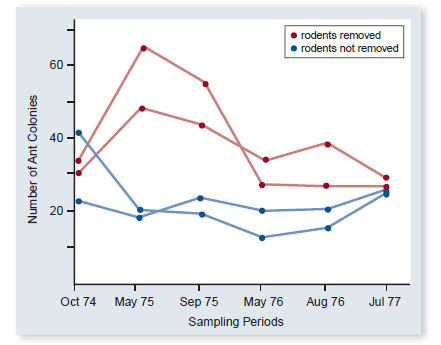
b.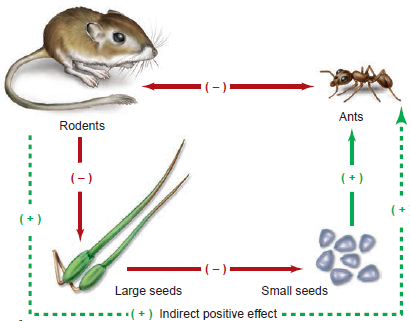
a.
b.
Question
Question
Refer to figure 57.7. Examine the pattern of beak size distributions of two species of finches on the Galápagos Islands. One hypothesis that can be drawn from this pattern is that character displacement has taken place. Are there other hypotheses If so, how would you test them 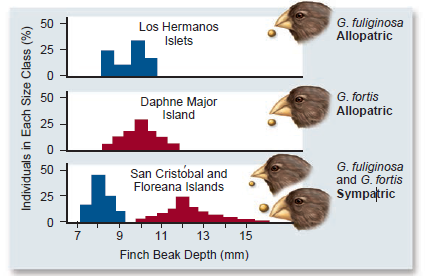
Question
Question
Question
Question
Question
Question
Question
Question
Question
Question
Question
Question
Question
Question
Refer to figure 57.9. If the single prey species of Paramecium was replaced by several different potential prey species that varied in their palatability or ease of subduing by the predator (leading to different levels of preference by the predator) what would you expect the dynamics of the system to look like; that is, would the system be more or less likely to go to extinction 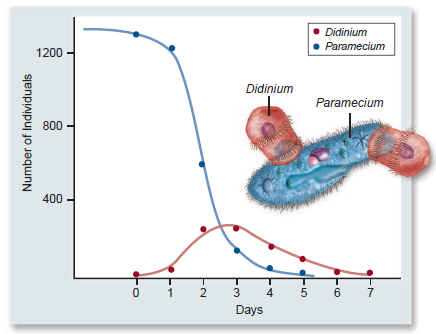

Unlock Deck
Sign up to unlock the cards in this deck!
Unlock Deck
Unlock Deck
1/18

Play

Full screen (f)
Deck 56: Community Ecology
1
If two species have very similar realized niches and are forced to coexist and share a limiting resource indefinitely,
A) both species would be expected to coexist.
B) both species would be expected to go extinct.
C) the species that uses the limiting resource most efficiently should drive the other species extinct.
D) both species would be expected to become more similar to one another.
A) both species would be expected to coexist.
B) both species would be expected to go extinct.
C) the species that uses the limiting resource most efficiently should drive the other species extinct.
D) both species would be expected to become more similar to one another.
(C)
The actual set of environmental conditions, including the presence or absence of other species, in which the species can establish a stable population is its realized niche. Because of interspecific interactions, the realized niche of a species may be considerably smaller. According to the principle of competitive exclusion by Gauss, if two species are competing for a limited resource, the species that uses the resource more efficiently will eventually eliminate the other locally. In other words, no two species with the same niche can coexist when resources are limiting
The actual set of environmental conditions, including the presence or absence of other species, in which the species can establish a stable population is its realized niche. Because of interspecific interactions, the realized niche of a species may be considerably smaller. According to the principle of competitive exclusion by Gauss, if two species are competing for a limited resource, the species that uses the resource more efficiently will eventually eliminate the other locally. In other words, no two species with the same niche can coexist when resources are limiting
2
Refer to figure 57.22. Are there alternative hypotheses that might explain the increase followed by the decrease in ant colony numbers subsequent to rodent removal in the experiment described in figure 57.22 If so, how would you test the mechanism hypothesized in the figure
a.
b.
a.
b.
In many cases, the outcome of one type of interaction is modified or even reversed when another type of interaction is also occurring. When resources are limiting, a superior competitor can eliminate other species from a community through competitive exclusion. Predators can prevent or greatly reduce exclusion by lowering the numbers of individuals of competing species. Parasites may affect sympatric species differently and thus influence the outcome of interspecific interactions. In some cases, species may not directly interact, yet the presence of one species may affect a second by way of interactions with a third, such effects are termed indirect effects. The desert rodents like the kangaroo rats eat seeds, and so do the ants in their community; thus it is expected that they compete with each other. But when all rodents were completely removed from large experimental enclosures and not allowed back in, ant population first increase but then declined. As rodents prefer large seeds, whereas ants prefer smaller ones. Furthermore, in this system, plants with large seeds are competitively superior to plants with small seeds. The removal of rodents therefore led to an increase in the number of plants with large seeds, which reduced the number of small seeds available to ants, which in turn led to a decline in ant populations.
3
According to the idea of coevolution between predator and prey, when a prey species evolves a novel defense against a predator
A) the predator is expected to always go extinct.
B) the prey population should increase irreversibly out of control of the predator.
C) the predator population should increase.
D) evolution of a predator response should be favoured by natural selection.
A) the predator is expected to always go extinct.
B) the prey population should increase irreversibly out of control of the predator.
C) the predator population should increase.
D) evolution of a predator response should be favoured by natural selection.
(D) Predation provides strong selective pressures on prey populations. Any feature that would decrease the probability of capture should be strongly favored. The evolution of such features causes natural selection to favor counteradaptations in predator populations. The process by which these adaptations are selected in lockstep fashion in both predator and prey is termed coevolution. A coevolutionary race may ensue in which predators and prey are constantly evolving better defenses means and better means of circumventing these defenses.
4
Refer to figure 57.7. Examine the pattern of beak size distributions of two species of finches on the Galápagos Islands. One hypothesis that can be drawn from this pattern is that character displacement has taken place. Are there other hypotheses If so, how would you test them
Unlock Deck
Unlock for access to all 18 flashcards in this deck.
Unlock Deck
k this deck
5
In order for mimicry to be effective in protecting a species from predation, it must
A) occur in a palatable species that looks like a distasteful species.
B) have cryptic coloration.
C) occur such that mimics look and act like models.
D) occur in only poisonous or dangerous species.
A) occur in a palatable species that looks like a distasteful species.
B) have cryptic coloration.
C) occur such that mimics look and act like models.
D) occur in only poisonous or dangerous species.
Unlock Deck
Unlock for access to all 18 flashcards in this deck.
Unlock Deck
k this deck
6
Which of the following is an example of commensalism
A) A tapeworm living in the gut of its host
B) A clownfish living among the tentacles of a sea anemone
C) An acacia tree and acacia ants
D) Bees feeding on nectar from a flower
A) A tapeworm living in the gut of its host
B) A clownfish living among the tentacles of a sea anemone
C) An acacia tree and acacia ants
D) Bees feeding on nectar from a flower
Unlock Deck
Unlock for access to all 18 flashcards in this deck.
Unlock Deck
k this deck
7
Oxpeckers' eating
A) noninjurious insects off mammals is an example of commensalism.
B) injurious ectoparasites off mammals is an example of mutualism.
C) scabs so they can feed on a mammal's blood is an example of parasitism.
D) All of the above.
A) noninjurious insects off mammals is an example of commensalism.
B) injurious ectoparasites off mammals is an example of mutualism.
C) scabs so they can feed on a mammal's blood is an example of parasitism.
D) All of the above.
Unlock Deck
Unlock for access to all 18 flashcards in this deck.
Unlock Deck
k this deck
8
A species whose effect on the composition of a community is greater than expected based on its abundance can be called a
A) predator.
B) primary succession species.
C) secondary succession species.
D) keystone species.
A) predator.
B) primary succession species.
C) secondary succession species.
D) keystone species.
Unlock Deck
Unlock for access to all 18 flashcards in this deck.
Unlock Deck
k this deck
9
When a predator preferentially eats the superior competitor in a pair of competing species
A) the inferior competitor is more likely to go extinct.
B) the superior competitor is more likely to persist.
C) coexistence of the competing species is more likely.
D) None of the above
A) the inferior competitor is more likely to go extinct.
B) the superior competitor is more likely to persist.
C) coexistence of the competing species is more likely.
D) None of the above
Unlock Deck
Unlock for access to all 18 flashcards in this deck.
Unlock Deck
k this deck
10
Keystone species
A) always tend to increase species diversity.
B) always tend to decrease species diversity.
C) are always predators.
D) None of the above.
A) always tend to increase species diversity.
B) always tend to decrease species diversity.
C) are always predators.
D) None of the above.
Unlock Deck
Unlock for access to all 18 flashcards in this deck.
Unlock Deck
k this deck
11
Species that are the first colonists in a habitat undergoing primary succession
A) are usually the fiercest competitors.
B) help maintain their habitat constant so their persistence is ensured.
C) may change their habitat in a way that favors the invasion of other species.
D) must first be successful secondary succession specialists.
A) are usually the fiercest competitors.
B) help maintain their habitat constant so their persistence is ensured.
C) may change their habitat in a way that favors the invasion of other species.
D) must first be successful secondary succession specialists.
Unlock Deck
Unlock for access to all 18 flashcards in this deck.
Unlock Deck
k this deck
12
Species diversity of very early and late successional stages
A) is expected to be low.
B) is expected to be high.
C) is always at equilibrium.
D) depends only on the physical characteristics of the habitat.
A) is expected to be low.
B) is expected to be high.
C) is always at equilibrium.
D) depends only on the physical characteristics of the habitat.
Unlock Deck
Unlock for access to all 18 flashcards in this deck.
Unlock Deck
k this deck
13
The fundamental niche of an organism
A) is always more restricted than its realized niche.
B) is usually less restricted than its realized niche.
C) takes into account actual environmental conditions and the presence of other species.
D) None of the above.
A) is always more restricted than its realized niche.
B) is usually less restricted than its realized niche.
C) takes into account actual environmental conditions and the presence of other species.
D) None of the above.
Unlock Deck
Unlock for access to all 18 flashcards in this deck.
Unlock Deck
k this deck
14
Competition is traditionally indicated by documenting the effect of one species on the population of another. Are there alternative ways to study the potential effects of competition on organisms that are impractical to study with experimental manipulations because they are too big or live too long
Unlock Deck
Unlock for access to all 18 flashcards in this deck.
Unlock Deck
k this deck
15
Unlock Deck
Unlock for access to all 18 flashcards in this deck.
Unlock Deck
k this deck
16
Studies that demonstrate that species living in an ecological community change independently of one another in space and time
A) support the individualistic concept of ecological communities.
B) support the holistic concept of ecological communities.
C) suggest species interactions are the sole determinant of which species coexist in a community.
D) None of the above
A) support the individualistic concept of ecological communities.
B) support the holistic concept of ecological communities.
C) suggest species interactions are the sole determinant of which species coexist in a community.
D) None of the above
Unlock Deck
Unlock for access to all 18 flashcards in this deck.
Unlock Deck
k this deck
17
Lichen growing on the surface of rocks provides an example of
A) facilitation.
B) tolerance.
C) inhibition.
D) secondary succession.
A) facilitation.
B) tolerance.
C) inhibition.
D) secondary succession.
Unlock Deck
Unlock for access to all 18 flashcards in this deck.
Unlock Deck
k this deck
18
Refer to figure 57.9. If the single prey species of Paramecium was replaced by several different potential prey species that varied in their palatability or ease of subduing by the predator (leading to different levels of preference by the predator) what would you expect the dynamics of the system to look like; that is, would the system be more or less likely to go to extinction
Unlock Deck
Unlock for access to all 18 flashcards in this deck.
Unlock Deck
k this deck
Unlock Deck
Unlock for access to all 18 flashcards in this deck.






