







 Chat with AI

Deck 19: International Trade
Full screen (f)

Question

Question
Question
Question
Question
Question
Question
Question
Question
Question
Question
Question
Question
Question
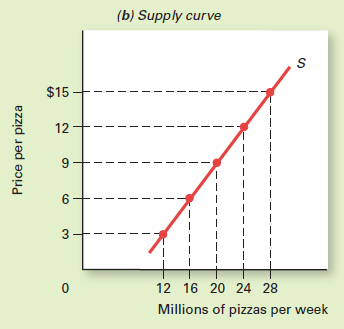
AGGREGATE DEMAND AND SUPPLY Review the information on demand and supply curves in Chapter 4. How do the aggregate demand and aggregate supply curves presented in this chapter differ from the market curves of Chapter 4?

Question
Question
Question

Unlock Deck
Sign up to unlock the cards in this deck!
Unlock Deck
Unlock Deck
1/17

Play

Full screen (f)
Deck 19: International Trade
1
THE HUMAN BODY AND THE U.S. ECONOMY Based on your own experiences, extend the list of analogies between the human body and the economy as outlined in this chapter. Then, determine which variables in your list are stocks and which are flows.
Parallels between human body and an economy:
One can describe the parallels between medicines that the human body needs to recover from illness and an Economic mechanism that an economy adopts to overcome the worse economic scenario, such as inflationary pressure or deflationary pressure.Just as medicine is injected into the human body to overcome the alien effects, monetary and fiscal policies play vital roles in the stabilization of an economy.
Since monetary policy controls the money supply, it has greater impact on the supply side. However, fiscal policy controls the demand side through tax revenue or public expenditure.The parallels can be drawn between the dosages of medicine administered to an individual after diagnosing his/her illness and administering interest rate hike or cut after assessing the inflationary or deflationary tendency in an economy.
While the interest rate over the years is a flow variable, the interest rate for a particular period is a stock variable.
One can describe the parallels between medicines that the human body needs to recover from illness and an Economic mechanism that an economy adopts to overcome the worse economic scenario, such as inflationary pressure or deflationary pressure.Just as medicine is injected into the human body to overcome the alien effects, monetary and fiscal policies play vital roles in the stabilization of an economy.
Since monetary policy controls the money supply, it has greater impact on the supply side. However, fiscal policy controls the demand side through tax revenue or public expenditure.The parallels can be drawn between the dosages of medicine administered to an individual after diagnosing his/her illness and administering interest rate hike or cut after assessing the inflationary or deflationary tendency in an economy.
While the interest rate over the years is a flow variable, the interest rate for a particular period is a stock variable.
2
STOCKS AND FLOWS Differentiate between stock and flow variables. Give an example of each.
Stock variables:
Stock variables are generally measured at a particular point of time or at a given point of time. Stock variable can be referred to the amount of money at some place, such as deposit of amount $2000 in your bank account.
In time series analysis, point estimate of a particular variable at a particular point of time is called stock.
Examples: Wealth, deposits , capital stock or inventory of a manufacturing firm, current account balance of an individual and cash in hand, etc.Another example is everything in the balance sheet of a company, such as amount of assets and liabilities, finished and unfinished goods, stock of raw materials are considered as stock variable.Flow variables:
Flow variables are measured over a period of time or over an interval. In other words, amount of money, such as income received during a period of time could also be considered as a flow variable.In time series analysis, flow variables are the interval estimates.
Examples: Monthly income, savings and expenditure of an individual, monthly or annual budget, interest on fixed deposits or savings, everything in the profit and loss statement is a flow variable.
Stock variables are generally measured at a particular point of time or at a given point of time. Stock variable can be referred to the amount of money at some place, such as deposit of amount $2000 in your bank account.
In time series analysis, point estimate of a particular variable at a particular point of time is called stock.
Examples: Wealth, deposits , capital stock or inventory of a manufacturing firm, current account balance of an individual and cash in hand, etc.Another example is everything in the balance sheet of a company, such as amount of assets and liabilities, finished and unfinished goods, stock of raw materials are considered as stock variable.Flow variables:
Flow variables are measured over a period of time or over an interval. In other words, amount of money, such as income received during a period of time could also be considered as a flow variable.In time series analysis, flow variables are the interval estimates.
Examples: Monthly income, savings and expenditure of an individual, monthly or annual budget, interest on fixed deposits or savings, everything in the profit and loss statement is a flow variable.
3
ECONOMIC FLUCTUATIONS Describe fluctuations in economic activity over time. Because economic activity fluctuates, how is long-term growth possible?
Economic fluctuations:
An economy's economic fluctuations can be captured through periods of expansion and periods of contraction.
In general, one period of expansion will be succeeded by another. Similarly, one period of contraction will be succeeded by several other periods of contraction.
Contraction:
Periods of contraction can be either recessions or depressions. Initially, the periods of contraction are marked by several periods of recessions and later by several periods of depressions.
Considering the reduction in aggregate output and the level of unemployment, recessions are less severe than depressions.
The tenure of recessions is smaller than that of depressions. According to classical economists, recession lasts at least two consecutive quarters, while depression lasts more than a year.
However, the continuity of recessions or depressions throughout different periods depends on the economy's leading economic indicators.
The end of the contraction is marked by the lowest point or trough.Expansion:
After trough, the economy enters an expansion period. Initially, the expansion period is marked by recovery and in the later stage by boom.
In the expansion period, total output increases until the economy moves through the recovery period, and then the boom period to achieve its peak.
Long-term growth of the economy:
Long-term growth of the economy is possible because of an increase in effective demand over time as the population increases.
Increase in effective demand will induce an increase in the level of aggregate output.
Hence, the growth during expansions is more than the growth during recessions over time. As a result, expansions and contractions are measured as movements above and below the long-term trend line.
An economy's economic fluctuations can be captured through periods of expansion and periods of contraction.
In general, one period of expansion will be succeeded by another. Similarly, one period of contraction will be succeeded by several other periods of contraction.
Contraction:
Periods of contraction can be either recessions or depressions. Initially, the periods of contraction are marked by several periods of recessions and later by several periods of depressions.
Considering the reduction in aggregate output and the level of unemployment, recessions are less severe than depressions.
The tenure of recessions is smaller than that of depressions. According to classical economists, recession lasts at least two consecutive quarters, while depression lasts more than a year.
However, the continuity of recessions or depressions throughout different periods depends on the economy's leading economic indicators.
The end of the contraction is marked by the lowest point or trough.Expansion:
After trough, the economy enters an expansion period. Initially, the expansion period is marked by recovery and in the later stage by boom.
In the expansion period, total output increases until the economy moves through the recovery period, and then the boom period to achieve its peak.
Long-term growth of the economy:
Long-term growth of the economy is possible because of an increase in effective demand over time as the population increases.
Increase in effective demand will induce an increase in the level of aggregate output.
Hence, the growth during expansions is more than the growth during recessions over time. As a result, expansions and contractions are measured as movements above and below the long-term trend line.
4
ECONOMIC FLUCTUATIONS Why doesn't the National Bureau of Economic Research identify the turning points in economic activity until months or even a year after they occur?
Unlock Deck
Unlock for access to all 17 flashcards in this deck.
Unlock Deck
k this deck
5
THE GREAT RECESSION The recession of 2007-2009 was made worse by a global financial crisis. Show the effect of the Great Recession on the economy by shifting aggregate demand and/or aggregate supply curves as appropriate.
Unlock Deck
Unlock for access to all 17 flashcards in this deck.
Unlock Deck
k this deck
6
LEADING ECONOMIC INDICATORS Define leading economic indicators and give some examples. You may wish to take a look at the Conference Board's index of leading economic indicators at http://www.conference-board.org/data/.
Unlock Deck
Unlock for access to all 17 flashcards in this deck.
Unlock Deck
k this deck
7
AGGREGATE DEMAND AND AGGREGATE SUPPLY Why does a decrease of the aggregate demand curve result in less employment, given an aggregate supply curve?
Unlock Deck
Unlock for access to all 17 flashcards in this deck.
Unlock Deck
k this deck
8
AGGREGATE DEMAND AND AGGREGATE SUPPLY Is it possible for the price level to fall while production and employment both rise? If it is possible, how could this happen? If it is not possible, explain why not.
Unlock Deck
Unlock for access to all 17 flashcards in this deck.
Unlock Deck
k this deck
9
AGGREGATE DEMAND CURVE Describe the relationship illustrated by the aggregate demand curve. Why does this relationship exist?
Unlock Deck
Unlock for access to all 17 flashcards in this deck.
Unlock Deck
k this deck
10
DEMAND-SIDE ECONOMICS What is the relationship between demand-side economics and the federal budget deficit?
Unlock Deck
Unlock for access to all 17 flashcards in this deck.
Unlock Deck
k this deck
11
STAGFLATION What were some of the causes of the stagflations of 1973 and 1979? In what ways were these episodes of stagflation different from the Great Depression of the 1930s?
Unlock Deck
Unlock for access to all 17 flashcards in this deck.
Unlock Deck
k this deck
12
GREAT RECESSION OF 2007-2009 Discuss the role of the housing sector as a contributing factor in this recession.
Unlock Deck
Unlock for access to all 17 flashcards in this deck.
Unlock Deck
k this deck
13
Case Study: Eight Decades of Real GDP and Price Levels
The price level grew slightly faster than real GDP between 1947 and 2011. Does this mean that the rising price level masked an actual decline in output? Why or why not?
The price level grew slightly faster than real GDP between 1947 and 2011. Does this mean that the rising price level masked an actual decline in output? Why or why not?
Unlock Deck
Unlock for access to all 17 flashcards in this deck.
Unlock Deck
k this deck
14
AGGREGATE DEMAND AND SUPPLY Review the information on demand and supply curves in Chapter 4. How do the aggregate demand and aggregate supply curves presented in this chapter differ from the market curves of Chapter 4?
Unlock Deck
Unlock for access to all 17 flashcards in this deck.
Unlock Deck
k this deck
15
AGGREGATE DEMAND AND SUPPLY Determine whether each of the following would cause a shift of the aggregate demand curve, a shift of the aggregate supply curve, neither, or both. Which curve would shift, and in which direction? What happens to aggregate output and the price level in each case?
a. The price level changes
b. Consumer confidence declines
c. The supply of resources increases
d. The wage rate increases
a. The price level changes
b. Consumer confidence declines
c. The supply of resources increases
d. The wage rate increases
Unlock Deck
Unlock for access to all 17 flashcards in this deck.
Unlock Deck
k this deck
16
THE NATIONAL ECONOMY Why do economists pay more attention to national economies (for example, the U.S. or Canadian economies) than to state or provincial economies (such as California or Ontario)?
Unlock Deck
Unlock for access to all 17 flashcards in this deck.
Unlock Deck
k this deck
17
SUPPLY-SIDE ECONOMICS One supply-side measure introduced by the Reagan administration was a cut in income tax rates. Use an aggregate demand/aggregate supply diagram to show what effect was intended. What might happen if such a tax cut also shifted the aggregate demand curve?
Unlock Deck
Unlock for access to all 17 flashcards in this deck.
Unlock Deck
k this deck
Unlock Deck
Unlock for access to all 17 flashcards in this deck.






